Egyptian Sham el-Nessim
شم النسيم
About Egyptian Sham el-Nessim
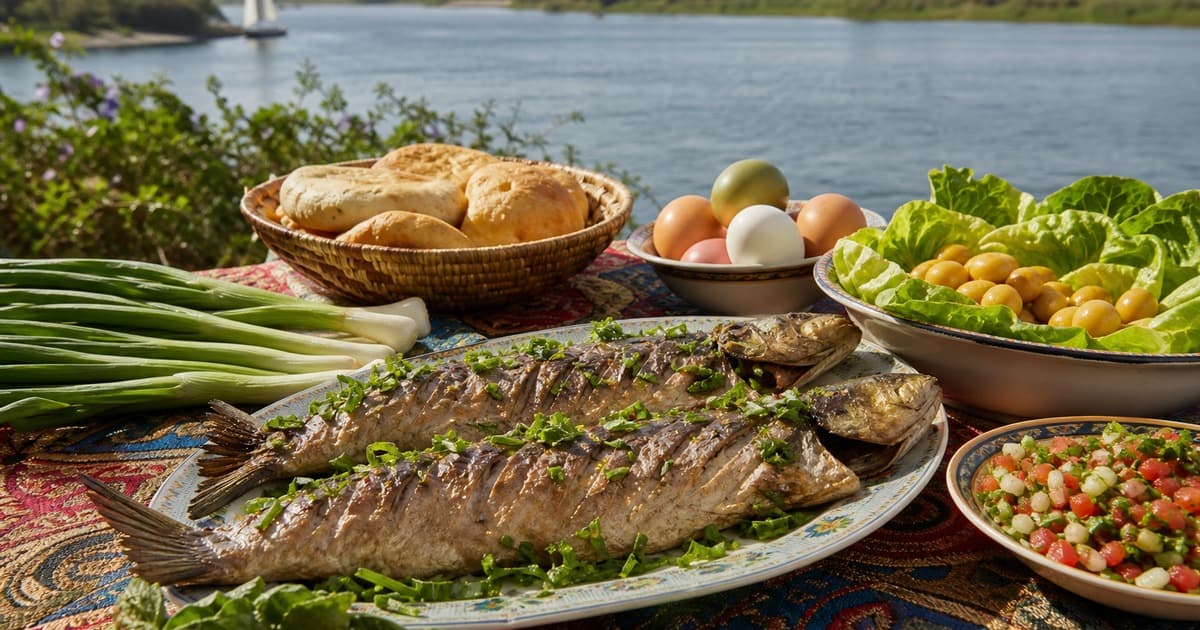
Sham el-Nessim, meaning 'Smelling the Breeze,' is Egypt's ancient spring festival, observed on the Monday after Coptic Easter and rooted in Pharaonic-era Shemu harvest traditions that predate both Christianity and Islam in the Nile Valley. Across Cairo's parks, Alexandria's Mediterranean shore, and the Nile-side gardens of Upper Egypt, Muslim and Coptic Christian families alike spread picnic blankets and share the day's signature foods. Feseekh — pungent salt-cured fermented gray mullet — is the centerpiece, traditionally eaten with lemon, raw onion, and baladi bread; those preferring a milder bite reach for Renga, salted smoked herring. Hard-boiled eggs, sometimes decorated, carry pre-Christian symbolism of creation and rebirth, while crisp Spring onions/scallions are said to chase away evil spirits, and Lettuce with lupini beans (termis) nods to Min, the ancient fertility god. In Alexandria, the seafood leans coastal; in the Delta, agricultural villages mark the green renewal of the fields.
Signature Dishes
Feseekh
فسيخ
Renga
رنجة
Hard-boiled eggs
Spring onions/scallions
Lettuce with lupini beans
Regional Variations
Cairo / Greater Cairo
Mass picnic migration to Al-Azhar Park, Gezira Island, and Nile-side; Fesikh and Ringa stalls in Khan el-Khalili and Old Cairo; cross-religious joint observance.
Alexandria
Mediterranean beach picnics with strong sea-side fish traditions; Alexandrian preserved-fish and herring emphasis.
Upper Egypt (Aswan, Luxor)
Nile-side picnic gatherings with Sa'idi (Upper Egyptian) regional customs and foods.
Delta / Lower Egypt (Mansoura, Tanta, Zagazig)
Agricultural community spring celebrations rooted in Pharaonic Shemu harvest-season framework.
Coptic Christian Egyptian communities
Observed as Easter Monday spring festival following Coptic Orthodox Pascha; family gatherings extend paschal celebration.
Egyptian Sunni Muslim families (nationwide)
Participate equally as a national cultural (not religious) holiday — cross-religious unity day rooted in Pharaonic heritage.
Egyptian diaspora (USA, UK, Canada, Australia, Gulf)
Community park gatherings and family picnics preserving Fesikh, Ringa, boiled eggs, and spring onion traditions abroad.
Observance Practices
Outdoor family picnics at parks, gardens, Nile-side, and beaches
Consumption of Fesikh (salted/fermented gray mullet), a signature Pharaonic-rooted dish
Consumption of Ringa (salted/smoked herring) as a milder preserved-fish alternative
Eating lettuce, green/spring onion, and boiled eggs with Pharaonic symbolism (fertility, evil-spirit warding, rebirth)
Preparation of Mulukhiyya (Jew's mallow soup), an ancient Egyptian spring-green dish
Serving Termis (lupini beans), hummus, ful medames, and Aysh Baladi flatbread
Decorating boiled eggs (Pharaonic-rooted rebirth symbolism, distinct from Western Easter eggs)
Children's outdoor games and kite flying
Family visits and cross-religious community gatherings (Muslim + Coptic + secular Egyptians)
Egypt
Coptic Orthodox paschal Mass on Sunday preceding Sham el-Nessim Monday
Coptic Christian Egyptian communities
Fesikh and Ringa market stalls active in Khan el-Khalili and Old Cairo
Cairo
Mediterranean beach gatherings with seafood emphasis
Alexandria
Nile-side family picnics
Upper Egypt
Public-holiday observance as national cultural day transcending religion
Egypt
Regions
Cuisines
Related Recipes
Dolmeh Tokhm Morgh (دلمه تخم مرغ) — Persian Stuffed Eggs
commonly served·Egypt
Foul Mudammas (فول مدمس) — Lebanese Slow-Cooked Fava Beans with Lemon and Garlic
commonly served·Egypt
Ashak (آشک) — Afghan Scallion Dumplings with Yogurt and Tomato Sauce
commonly served
Fattoush (فتوش) — Lebanese Toasted Pita Salad with Sumac Dressing
commonly served
Fried Salt Cod with Skordalia (Μπακαλιάρος σκορδαλιά) — Crisp cod with garlicky potato dip
regional variant