Japanese Hanami
花見
About Japanese Hanami
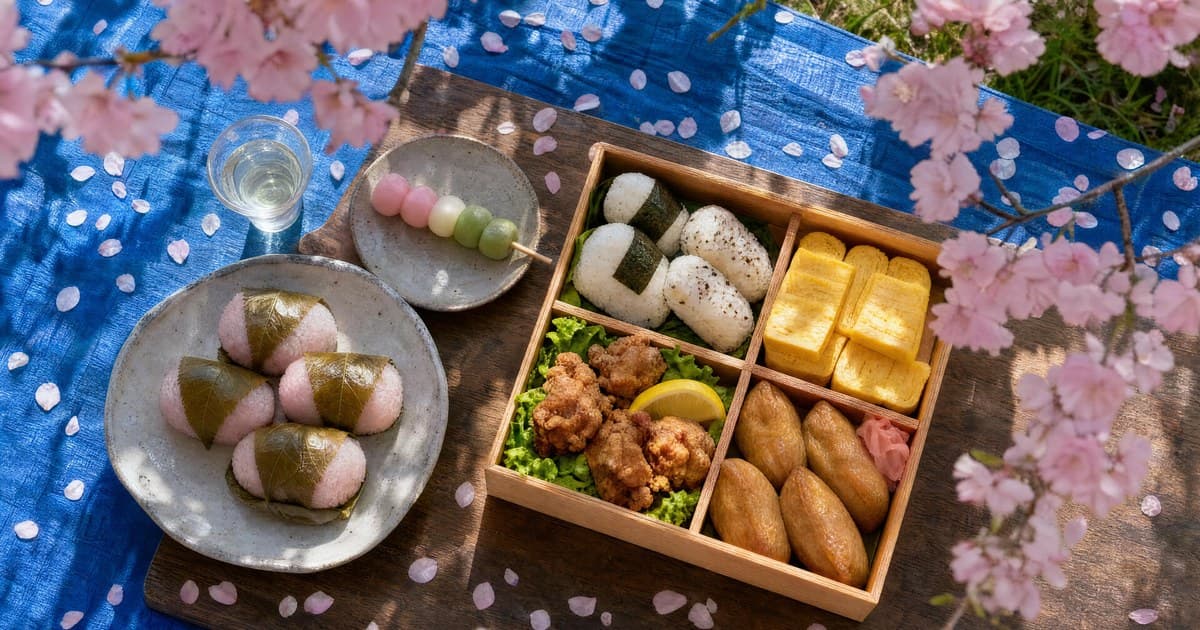
Japanese Hanami (花見, "flower viewing") is the seasonal tradition of picnicking under blooming sakura (cherry blossom) trees during the brief two-week peak each spring, when the country turns pink with millions of cherry blossoms. The exact date varies by latitude and weather: Okinawa blooms in late January, Tokyo and Kyoto in late March-early April, Hokkaido in late April-early May. Beneath the trees, family, friends, and coworkers spread blue tarps and share hanami bento (花見弁当, picnic boxes) — multi-compartment lacquered or wooden boxes filled with seasonal foods: sakura mochi (桜餅, sticky-rice cakes wrapped in pickled cherry leaves, two regional styles — Domyoji from Kansai with coarse glutinous rice, Chomeiji from Kanto with crepe-style wrapping); dango (団子, three-color skewered rice dumplings — pink, white, green, representing cherry blossoms, snow, and new grass); chirashi sushi (scattered sushi with seasonal toppings); karaage (fried chicken); tamagoyaki (rolled sweet omelet); and inari sushi (rice in sweet tofu pouches). Sake and sake flavored with sakura petals accompany the meal. The aesthetic philosophy of mono no aware (物の哀れ, "the pathos of things") — the gentle sadness at the impermanence of beauty — frames the hanami experience: blossoms fall within days, a poetic reminder of life's transience.
Signature Dishes
Hanami bento
花見弁当
Sakura mochi
桜餅
Dango
団子
Chirashi sushi
Sake and seasonal snacks
Regional Variations
Tokyo / Kanto
Famous hanami spots: Ueno Park, Shinjuku Gyoen, Yoyogi Park, Chidorigafuchi Imperial Palace moat. Chomeiji-style sakura mochi (crepe-wrapped). Hanami bento often store-bought from premium grocers.
Kyoto / Kansai
Hanami at Maruyama Park, Philosopher's Path, Arashiyama, and along the Kamo River. Domyoji-style sakura mochi (chunky glutinous rice texture). Imperial-tradition refined kaiseki-influenced hanami bento.
Hokkaido / Northern Japan
Late-season hanami in early May at Matsumae and Goryokaku; emphasis on outdoor barbecue (jingisukan, mutton grill) under blossoms; rice-based comfort foods.
Okinawa
Earliest Japanese hanami in late January-February — Kanhizakura (Ryukyu cherry) blooming with deeper pink; Okinawa-specific picnic foods (rafute pork, taco rice, awamori sake).
Yoshino / Mount Yoshino (Nara)
Famous historical hanami site with 30,000 cherry trees across 'thousand-trees views' (senbon zakura). Heritage hanami traditions inherited from Heian-period imperial court; sake and refined seasonal foods.
Observance Practices
Cherry blossom forecast (sakura zensen, 桜前線) tracked nationally — peak bloom date predicted city-by-city
Hanami picnics under blooming trees — blue tarps spread, food shared, sake passed — workplaces often organize group hanami parties (yozakura nighttime hanami popular)
Sakura-flavored seasonal foods sold widely: sakura mochi, sakura tea (cherry-blossom infusion), sakura ice cream, sakura lattes
Mono no aware aesthetic — appreciation of impermanence and gentle melancholy at falling petals
Some companies reserve premium spots for hanami parties days in advance with junior employees assigned to 'tarp-sitting' duty