Japanese Oshogatsu
お正月
About Japanese Oshogatsu
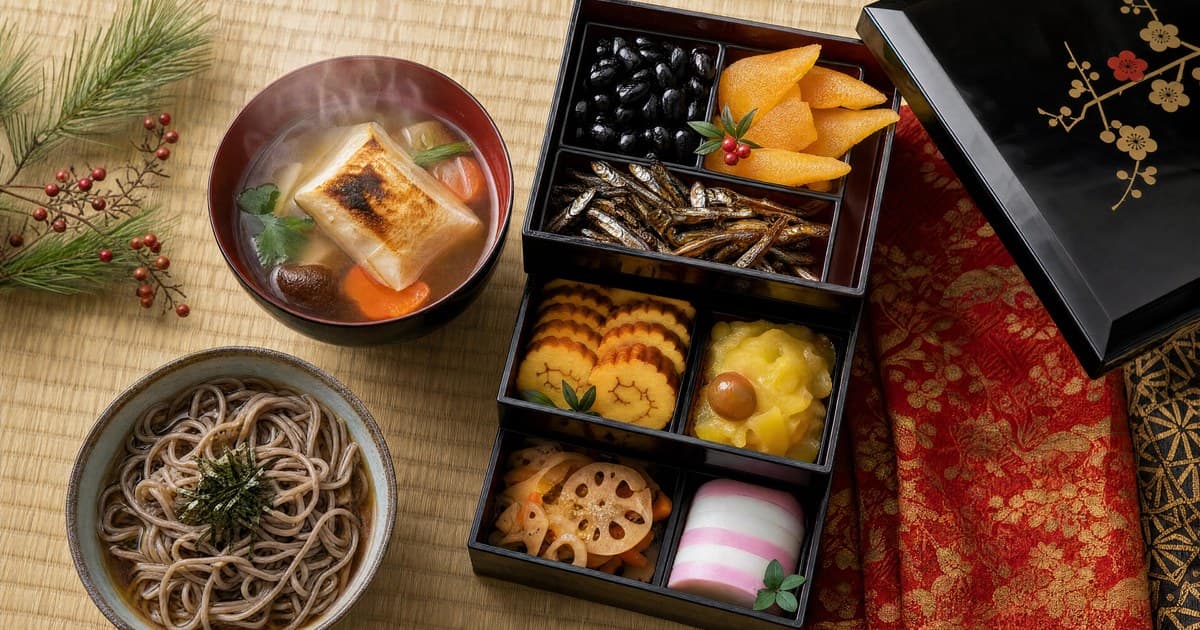
Japanese Oshogatsu (お正月) is the Japanese New Year, observed on the Gregorian calendar from January 1st (with the festive period extending through January 3rd) — distinct from East Asian lunar New Year traditions. The festival's defining food is osechi ryori (御節料理), an elaborate multi-course meal arranged in three or four stacked lacquered boxes (jubako, 重箱), where each compartment holds a food with specific symbolic meaning: black soybeans (kuromame, 黒豆) for health and diligence; herring roe (kazunoko, 数の子) for fertility and many children; dried sardines candied in soy (tazukuri, 田作り) for a good harvest; sweet rolled omelet (datemaki, 伊達巻) for scholarship; chestnut sweet potato (kuri kinton, 栗きんとん) for wealth. Ozoni (お雑煮, mochi rice-cake soup) is eaten on New Year's morning — regional broths vary dramatically: Tokyo-style clear bonito broth with square mochi; Kyoto/Kansai-style miso broth with round mochi; Hokkaido-style chicken-vegetable. Toshikoshi soba (年越し蕎麦, year-crossing buckwheat noodles) is eaten on New Year's Eve, the long noodles symbolizing longevity. Families visit Shinto shrines (hatsumode, 初詣) in the first 3 days to pray for the new year.
Signature Dishes
Osechi ryori
お節料理
Ozoni
お雑煮
Toshikoshi soba
年越し蕎麦
Mochi
餅
Zenzai
Regional Variations
Kanto (Tokyo, Eastern Japan)
Ozoni with clear bonito-soy broth, square grilled mochi, chicken, vegetables. Osechi tends to be sweeter and lighter; iwashi (sardines) and kobumaki (kelp roll) common.
Kansai (Osaka, Kyoto, Western Japan)
Ozoni with white miso broth and round mochi (boiled, not grilled); taro root (satoimo); dashi-rich subtle flavor. Osechi tends to be richer and saltier; Kyoto-imperial heritage.
Hokkaido / Northern Japan
Hearty winter Ozoni with salmon and root vegetables; ikura salmon-roe garnish; emphasis on warming dishes.
Kyushu / Southern Japan
Ozoni with chicken broth; sweet potato (satsumaimo); regional fish and citrus garnishes; Nagasaki-Chinese-influenced osechi variants.
Okinawa
Distinct Ryukyuan tradition: Okinawa New Year was historically observed on lunar date until WWII; pork-based dishes (rafute braised pork belly); awamori rice spirits; mochi varieties unique to islands.
Observance Practices
3-day public holiday (San-ga-nichi, January 1-3); businesses traditionally closed; family-focused
Osechi ryori prepared in advance so cooks can rest during the New Year days; foods last 3-5 days in the lacquered jubako
Hatsumode (初詣) — first Shinto shrine visit of the year, in the first 3 days, to pray for the new year
Toshikoshi soba on New Year's Eve — long buckwheat noodles symbolizing longevity and 'crossing' from the old year
Otoshidama (お年玉) — money envelopes given by parents and grandparents to children
Kohaku Uta Gassen — annual TV music competition Red-vs-White on NHK on New Year's Eve