Japanese Setsubun
節分
About Japanese Setsubun
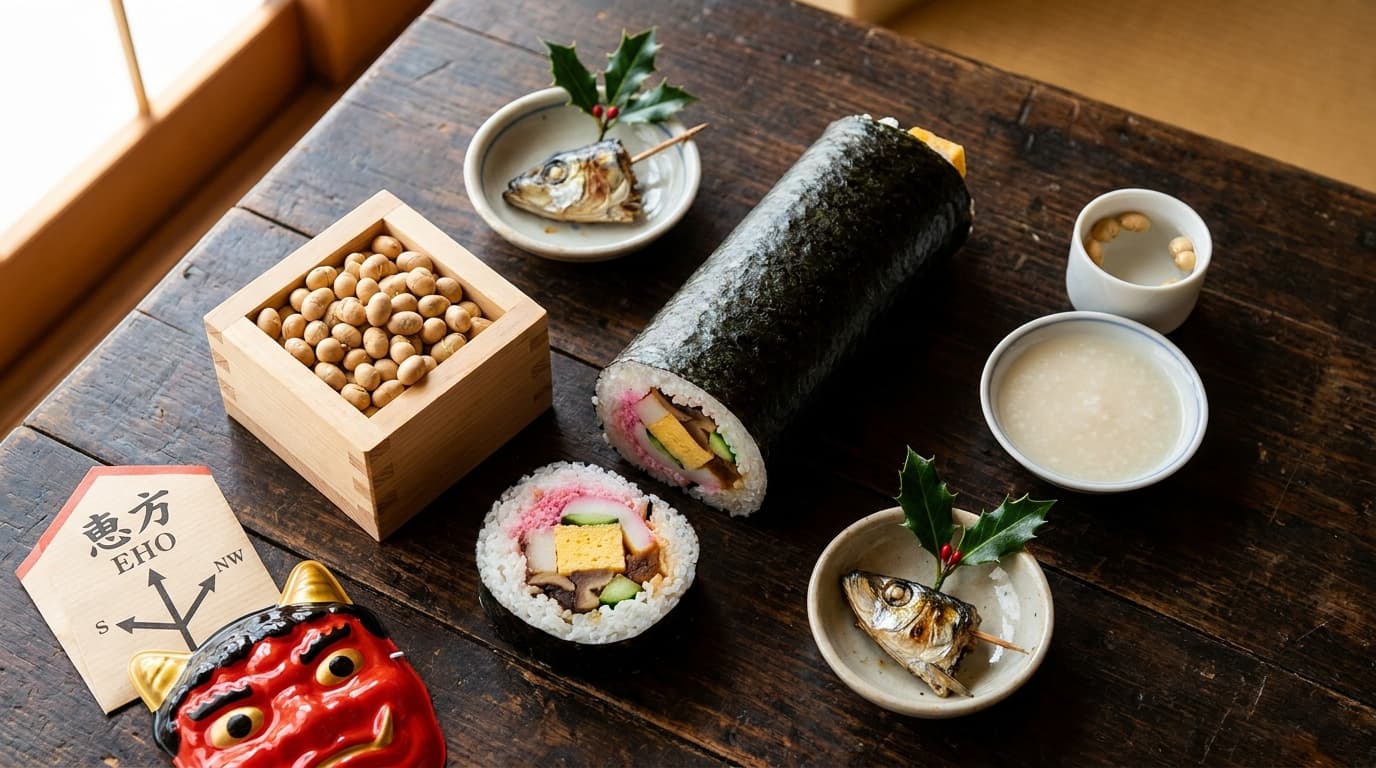
Setsubun (節分) marks the eve of risshun, the lunar-calendar start of spring, observed on February 3rd across Japan. The day's defining ritual is mamemaki — throwing roasted soybeans (fukumame, 福豆) while shouting «oni wa soto, fuku wa uchi» («demons out, fortune in») to drive evil from the household. Eating one bean for each year of age, plus one extra, secures health for the coming year. The festival's signature dish is ehomaki (恵方巻), an uncut futomaki sushi roll filled with seven ingredients honoring the seven gods of fortune, eaten in silence while facing the year's lucky compass direction. The roll must be consumed in one continuous session without speaking or cutting, lest the luck be severed. In Kansai households, holly-and-sardine charms (hiragi-iwashi) hang at doorways, and small sardine dishes accompany the meal as a secondary anti-demon food. Sake and amazake often round out the family table.
Signature Dishes
Ehomaki
恵方巻
Roasted soybeans
福豆
Sardines with holly leaves
Sake
Konnichiwa snacks
Regional Variations
Kansai (Osaka/Kyoto — ehomaki origin)
Strict silent-eating convention, hiragi-iwashi holly-sardine doorway charms widespread, mamemaki performed by household head.
Kanto (Tokyo/Yokohama)
Ehomaki adopted via 1990s convenience-store campaign (originally Kansai-only), mamemaki bean-throwing dominant ritual, less hiragi-iwashi.
Tohoku and northern Japan
Peanuts replace soybeans in mamemaki due to cold-climate accessibility and easier outdoor cleanup; ehomaki largely imported via national chains.
Kyushu
Mixed Kanto/Kansai practices, regional sweet variants accompany the roll, sardine dishes more prominent than in Kanto.
Diaspora Japanese-American (Hawaii/California)
Buddhist-temple-organized simplified mamemaki + ehomaki without strict compass-direction convention.
Observance Practices
Mamemaki (豆まき): throwing roasted soybeans while shouting «oni wa soto, fuku wa uchi» — household head or eldest child performs; aim is doorways and windows.
Fukumame age-plus-one consumption: eating one bean per year of age plus one extra for the year ahead, accompanied by hot tea (mame-cha).
Ehomaki silent eating: uncut futomaki consumed facing the year's eho (lucky direction) without speaking; cutting the roll severs the luck (eho varies annually per zodiac year).
Hiragi-iwashi (holly-sardine charm): grilled sardine head pierced with holly branch, hung at the doorway to repel demons (Kansai-rooted tradition).
Kansai (Osaka/Kyoto)
Risshun spring-eve transition: Setsubun marks the lunar-calendar boundary between winter and spring; many families perform the rituals at dusk to align with the spring-eve threshold.