Navruz
Uzbek/Tajik/Kazakh
About Navruz
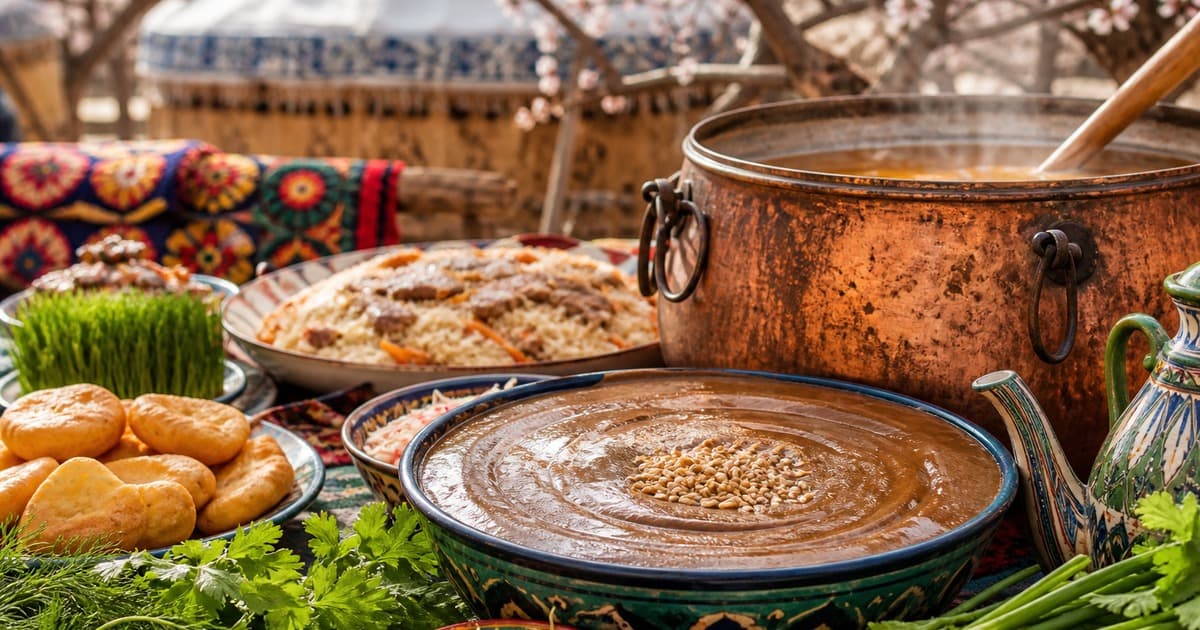
Navruz, the Central Asian spring equinox new year observed around March 21, unfolds across Uzbekistan, Tajikistan, Turkmenistan, and Kyrgyzstan with a culinary identity distinct from Iranian Nowruz. At its heart is Sumalak (called Sumanak in Tajikistan), a slow, sweet germinated-wheat preparation traditionally stirred for nearly 24 hours by women gathered around a communal cauldron, often accompanied by songs and shared stories. Alongside it, fragrant Plov — Uzbek, Tajik, Bukhara, or Samarkand styles layered with lamb, carrots, raisins, and chickpeas — is commonly cooked outdoors in massive kazans for the whole mahalla. Tables often carry Halim or Halisa, a slow-cooked wheat-and-meat porridge, golden Baursak/Boorsok puffs of fried dough especially loved in Kyrgyz and Kazakh homes, and bright bundles of fresh spring herbs and greens marking the agricultural year's renewal. Families visit elders, wear new clothes, and gather over choy and tandyr-baked non, honoring a tradition shaped by Persianate, Turkic, and pastoralist heritage.
Signature Dishes
Sumalak
Halim/Halisa
Plov
Baursak
Various fresh herbs and greens
Regional Variations
Tajikistan
Tajik Persian-language Navruz; Tajik Plov + Sumanak (germinated-wheat sweet); Persian Hafez poetry recitation; mahalla-level community gatherings.
Uzbekistan
Uzbek Turkic-Persianate Navruz; Uzbek Plov in massive kazan + 24-hour communal Sumalak stirring; Manty, Lagman, Samsa, Halim, Halisa; Maqom + Doira music.
Turkmenistan
Turkmen Nowruz national holiday; Turkmen Plov, Pishme, and Halva commonly prepared.
Kyrgyzstan
Kyrgyz Nooruz with Beshbarmak and Boorsok; communal feast traditions in Kyrgyz pastoralist framework.
Kazakhstan
Kazakh Nauryz with Nauryz-kozhe (7-ingredient grain-meat soup), Beshbarmak, Boorsok; Kazakh Turkic-pastoralist framing.
Afghan Tajik (Persian-speaking Afghanistan)
Afghan-Tajik Nawroz adjacent to Tajik observance; Tajik-style Plov and Persian-language poetry shared across the border.
Central Asian diaspora (Russia, Turkey, US, UK, Germany)
Tajik + Uzbek embassy and community-center Navruz gatherings; Plov + Sumalak preparation retained as diasporic anchors.
Observance Practices
Communal 24-hour Sumalak/Sumanak preparation from germinated wheat
Uzbekistan, Tajikistan (and Turkmen/Afghan Tajik adjacents)
Large-scale Plov cooking in kazan cauldrons for community feast
Uzbekistan, Tajikistan, Turkmenistan
Haft-sin / Navruz table setting with symbolic spring foods
Tajikistan (haft-sin); Uzbekistan (Persianate-Turkic Navruz table)
Outdoor mahalla (neighborhood) community gatherings
Uzbekistan, Tajikistan
Persian classical poetry (Hafez, Rumi) recitation
Tajikistan, Afghan Tajik communities
Uzbek Maqom singing + Doira drum performance
Uzbekistan
Nauryz-kozhe (7-ingredient soup) preparation
Kazakhstan
Beshbarmak + Boorsok communal feast
Kyrgyzstan, Kazakhstan
Family and extended-kin feasting; visits to elders
Spring cleaning and wearing of new clothes
Children's games and traditional sports (kupkari/buzkashi in some areas)
Baking of non/lepyoshka bread in tandyr clay ovens
Regions
Cuisines
Related Recipes
Haft Mewa (هفت میوه) — Afghan Seven-Fruit Nowruz Compote
signature·Afghanistan and broader Central/South Asian Nowruz traditions
Haleem (حلیم) — Afghan Slow-cooked wheat and meat, silky and rich
commonly served·Afghanistan, with parallels to Central Asian Halim/Halisa
Dampukht (دمپخت) — Afghan Slow-Steamed Basmati Rice with Cumin and Raisins
commonly served·Afghanistan and Central Asia
Afghan Sabzi (سبزی) — Sautéed Spinach with Garlic and Gentle Spices
commonly served·Afghanistan and Central Asia
Ash Plov (Aş Plov) — Azerbaijani Wedding Pilaf with Saffron Crust
regional variant·Azerbaijani / wider Turkic Navruz traditions