Cambodian Fish Amok (អាម៉ុកត្រី) — Steamed Coconut Curry Custard
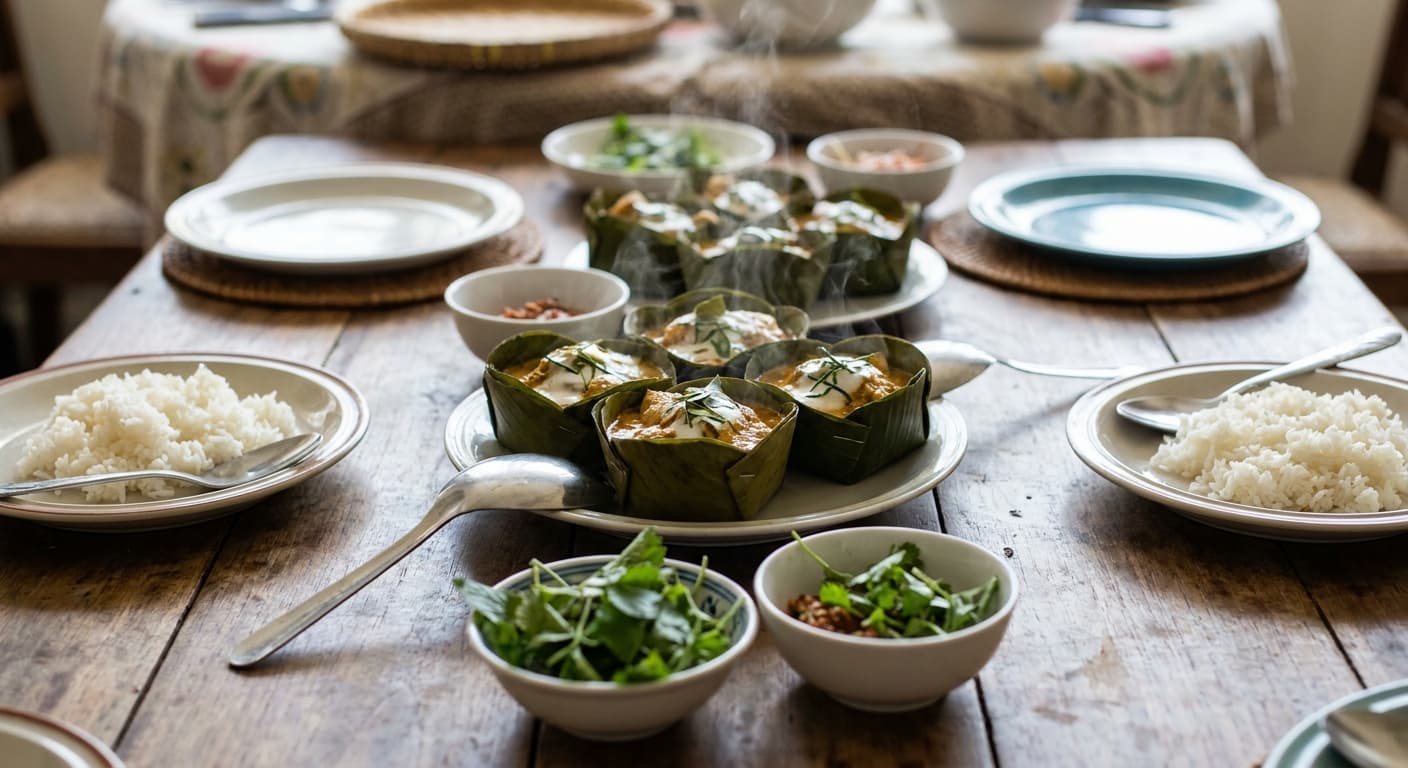
Fish amok is Cambodia’s beloved steamed fish curry-custard, scented with lemongrass kroeung, coconut, and makrut lime. Traditionally it is cooked in banana-leaf cups and served with plain rice.
Printable Recipe Card
Servings: 4 · Total: 75 min · Difficulty: medium
Ingredients (quick list)
- 600 g firm white fish fillets (snakehead, catfish, cod, or halibut; skinless and cut into 3 cm pieces)
- 4 g fine sea salt
- 3 stalk lemongrass (tender lower third only, very thinly sliced)
- 1 inch galangal (peeled and thinly sliced)
- 1 inch fresh turmeric (peeled and thinly sliced)
- 4 clove garlic
- 3 shallots (peeled and sliced)
- 1 tsp makrut lime zest
- 3 dried red chiles (seeded and soaked in hot water for 15 minutes)
- 10 g fermented shrimp paste
- 300 ml full-fat coconut milk
- 120 ml coconut cream (reserve 40 ml for topping)
+ 8 more in the full ingredients section below.
Steps (summary)
- Sprinkle the fish pieces with 4 g fine sea salt and refrigerate them while you prepare the paste. This short salting firms the…
- Make the kroeung paste by pounding the lemongrass, galangal, turmeric, garlic, shallots, makrut lime zest, soaked chiles, shrim…
- If using a blender instead of a mortar, process the kroeung with 60 ml of the measured coconut milk until smooth. Scrape down t…
- Wilt each banana-leaf square briefly over a gas flame or in a steamer for 30 seconds so it becomes flexible. Fold each square i…
- Whisk the remaining coconut milk, 80 ml coconut cream, eggs, fish sauce, and palm sugar in a mixing bowl until the sugar dissol…
- Fold the salted fish pieces into the coconut-kroeung mixture and coat every piece well. Let the fish stand for 10 minutes at ro…
+ 3 more steps in the full instructions section below.
Cultural Background
Fish amok is one of Cambodia’s emblematic dishes, built around kroeung, the aromatic paste central to Khmer cooking. Its banana-leaf presentation makes it common at family celebrations, restaurants, and festive meals.
Equipment
💡 Tips
- Pound the kroeung as finely as possible; coarse lemongrass fibers are the most common reason fish amok tastes gritty.
- Keep the steamer at a steady simmer rather than a violent boil, because harsh heat can split the coconut custard.
- Use full-fat coconut milk and coconut cream; light coconut milk will not set with the same richness or traditional texture.
⚠️ Common Mistakes
❌ Using coarse kroeung paste
✅ Fix: Slice fibrous aromatics very thinly before pounding, and continue until the paste is smooth and moist.
❌ Steaming over aggressive heat
✅ Fix: Maintain a steady simmer and keep the lid closed so the custard sets gently without curdling.
❌ Overfilling the banana-leaf cups
✅ Fix: Leave 1 cm of headspace because the custard expands slightly as it steams.
🧊 How to Store
Refrigerate cooled fish amok in covered containers for up to 2 days. Reheat gently in a steamer for 8-10 minutes or microwave at 50 percent power until hot; avoid boiling, which can split the custard.
📅 Make Ahead
Prepare the kroeung paste up to 2 days ahead and refrigerate it tightly covered. Banana-leaf cups can be folded 1 day ahead, but mix fish with custard only shortly before steaming.
🍽️ Pairs Well With
- Steamed jasmine rice
- cucumber slices
- pickled green mango
- stir-fried morning glory.
Regional Variations
- Some cooks use freshwater fish such as snakehead for a distinctly Cambodian river-fish flavor.
- In areas where noni leaves are difficult to find, spinach or young amaranth leaves are commonly used.
- Restaurant versions often enrich the top with extra coconut cream and more finely shredded makrut lime leaf.
Ingredients
- 600 gfirm white fish fillets (snakehead, catfish, cod, or halibut; skinless and cut into 3 cm pieces)
- 4 gfine sea salt
- 3 stalklemongrass (tender lower third only, very thinly sliced)
- 1 inchgalangal (peeled and thinly sliced)
- 1 inchfresh turmeric (peeled and thinly sliced)
- 4 clovegarlic
- 3shallots (peeled and sliced)
- 1 tspmakrut lime zest
- 3dried red chiles (seeded and soaked in hot water for 15 minutes)
- 10 gfermented shrimp paste
- 300 mlfull-fat coconut milk
- 120 mlcoconut cream (reserve 40 ml for topping)
- 2eggs
- 30 mlfish sauce
- 15 gpalm sugar (finely shaved or grated)
- 80 gnoni leaves (center ribs removed; use young leaves when available)
- 4banana leaves (cut into 25 cm squares and wiped clean)
- 16toothpicks
- 4 leafmakrut lime leaves (center ribs removed and finely shredded)
- 1red spur chile (thinly sliced)
🔄 Substitutions
- snakehead or catfish→ cod, halibut, or sea bass
- noni leaves→ spinach leaves
- banana leaves→ heatproof ramekins lined with parchment paper
- fermented shrimp paste→ 15 ml fish sauce
Instructions
- 1
Sprinkle the fish pieces with 4 g fine sea salt and refrigerate them while you prepare the paste. This short salting firms the fish lightly, helping it hold its shape during steaming without becoming dry.
- 2
Make the kroeung paste by pounding the lemongrass, galangal, turmeric, garlic, shallots, makrut lime zest, soaked chiles, shrimp paste, and 3 g salt in a mortar until very fine. Add the toughest ingredients first, especially lemongrass and galangal, because a smooth paste gives fish amok its proper custard-like texture.
- 3
If using a blender instead of a mortar, process the kroeung with 60 ml of the measured coconut milk until smooth. Scrape down the sides often and avoid adding extra liquid, because too much liquid can make the custard loose.
- 4
Wilt each banana-leaf square briefly over a gas flame or in a steamer for 30 seconds so it becomes flexible. Fold each square into a shallow cup by pleating four sides upward and securing the corners with 4 toothpicks per cup.
- 5
Whisk the remaining coconut milk, 80 ml coconut cream, eggs, fish sauce, and palm sugar in a mixing bowl until the sugar dissolves. Stir in the kroeung paste thoroughly so the coconut custard is evenly yellow and aromatic.
- 6
Fold the salted fish pieces into the coconut-kroeung mixture and coat every piece well. Let the fish stand for 10 minutes at room temperature, which allows the aromatics to penetrate before steaming.
- 7
Line the bottom of each banana-leaf cup with noni leaves, dividing them evenly. Spoon the fish and custard mixture into the cups, leaving 1 cm of space at the top so the custard can rise slightly without spilling.
- 8
Place the cups in a steamer over steadily simmering water, cover, and steam for 18 minutes. Spoon the reserved 40 ml coconut cream over the tops, add shredded makrut lime leaves and sliced chile, then steam for 5 more minutes until the custard is just set and the fish reaches 63°C.
- 9
Turn off the heat and let the amok rest in the covered steamer for 5 minutes before serving. This pause finishes the custard gently and prevents it from weeping when the banana-leaf cups are moved.
🪪 Recipe Passport
Cultural Background
Fish amok is one of Cambodia’s emblematic dishes, built around kroeung, the aromatic paste central to Khmer cooking. Its banana-leaf presentation makes it common at family celebrations, restaurants, and festive meals.
Regional Variations
Researched from multiple sources and validated by the Zaffaron editorial team. Every recipe is tested for accuracy, measurements, and cultural authenticity.
📚 Sources & Cultural References
- Longteine De Monteiro and Katherine Neustadt — The Elephant Walk Cookbook — (1998)
- Joannes Riviere — Cambodian Cooking — (2008)
Sources cited by the Zaffaron editorial team during recipe research. Cultural and culinary references supporting authenticity claims.
Nutrition per serving
Pairs well with
If you enjoyed this recipe, here are a few related Zaffaron recipes to try next.
Does your family make this differently?
Every family has their own version. Maybe your grandmother adds a secret ingredient, or your aunt has a completely different technique. Preserve your family's version — with their name on it, forever.
You Might Also Like
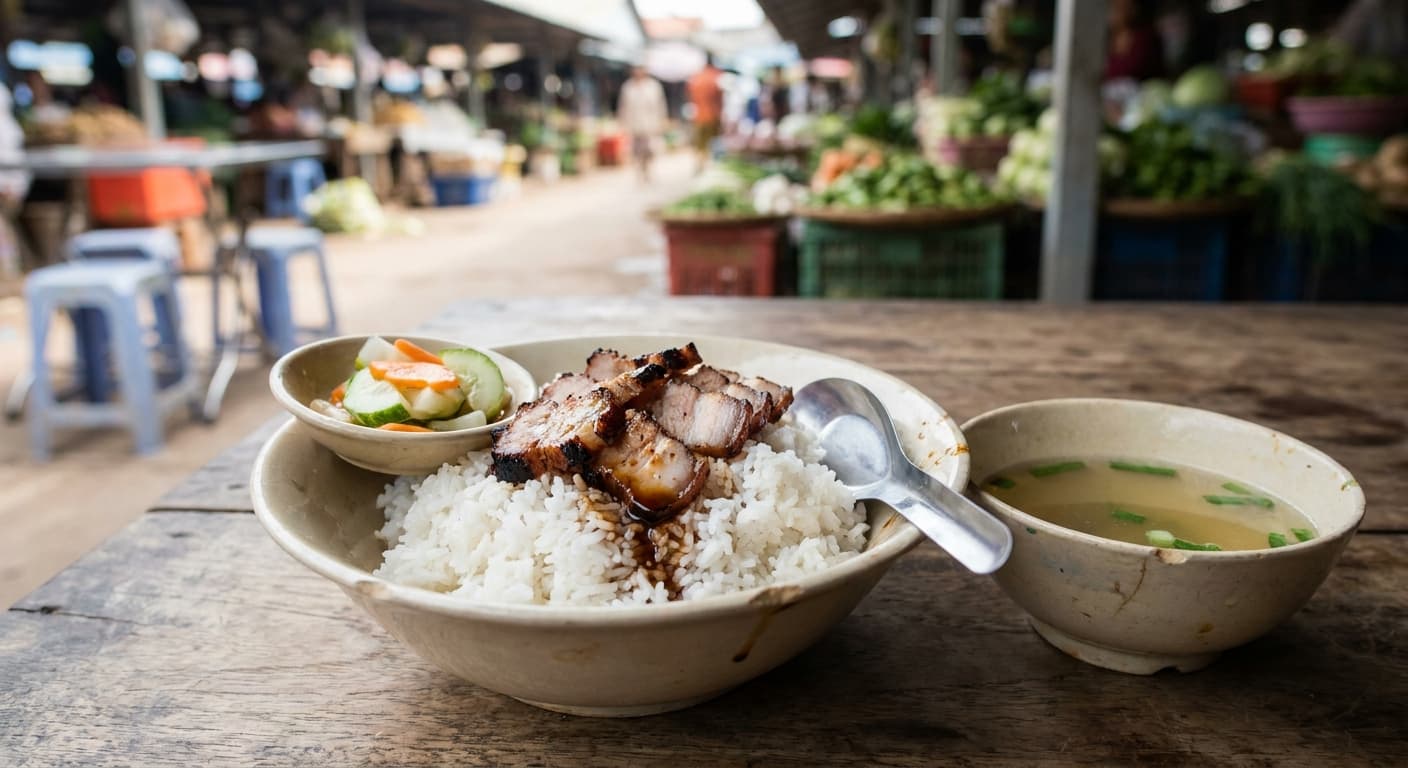
Bai Sach Chrouk (បាយសាច់ជ្រូក) — Cambodian Grilled Pork with Rice
Cambodian · Main Courses · 65 min
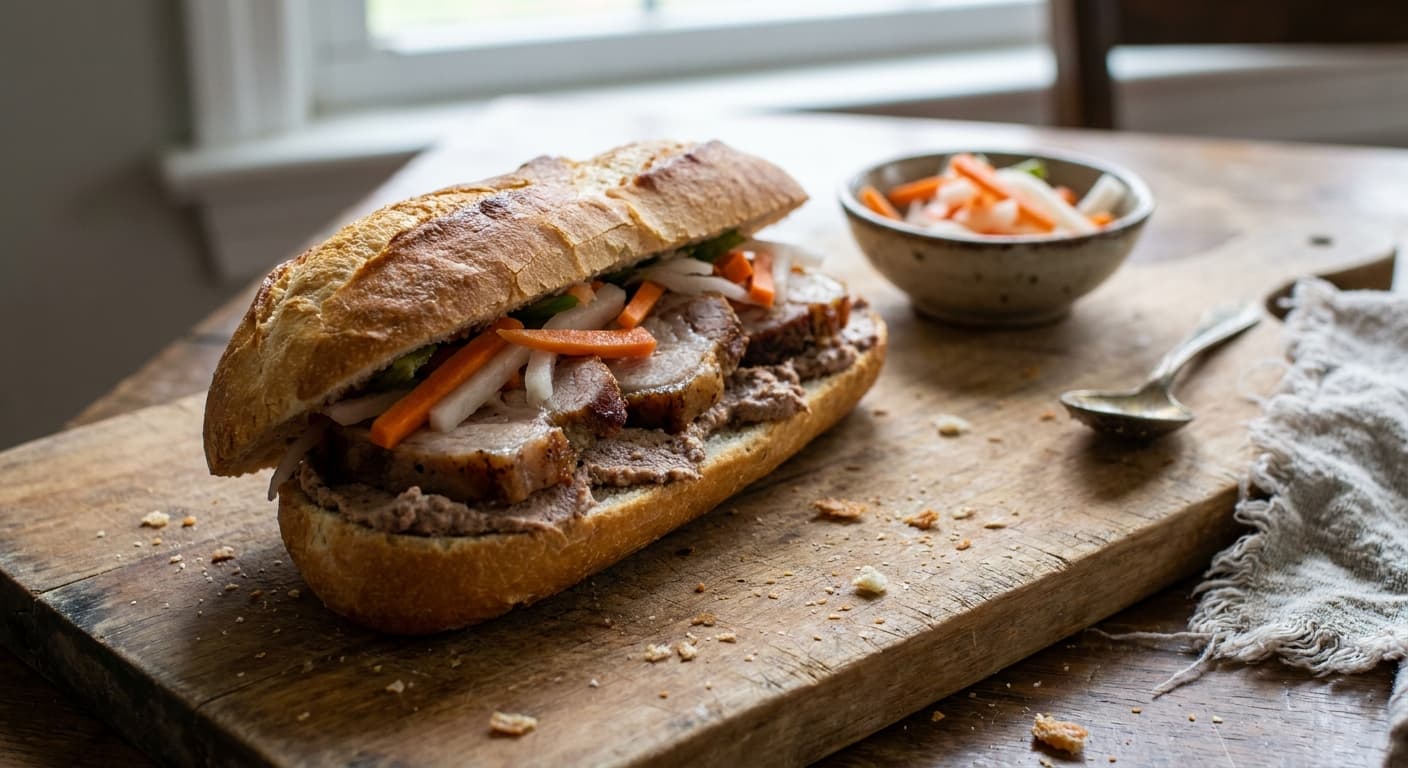
Num Pang Pate (នំប៉័ងប៉ាតេ) — Cambodian Baguette with Pate and Pickles
Cambodian · Main Courses · 60 min
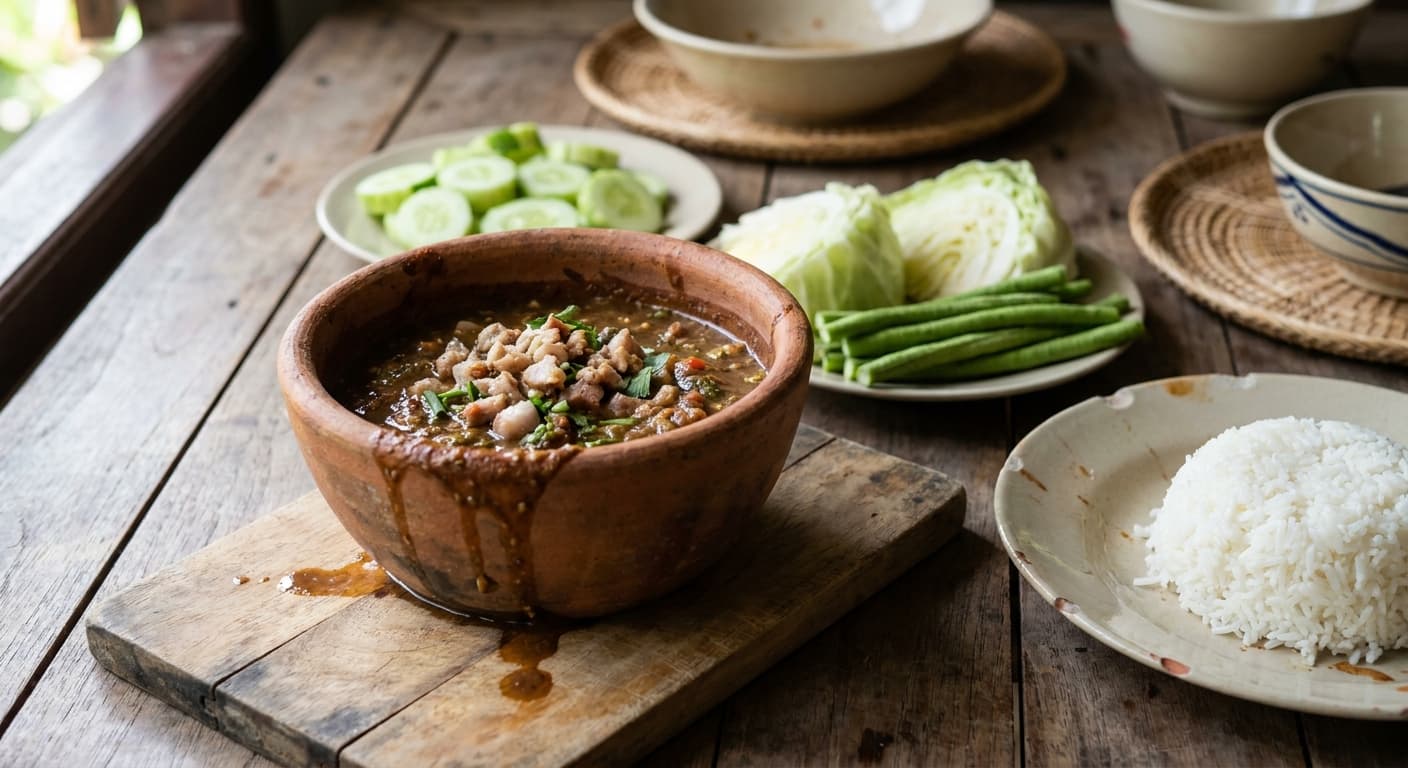
Prahok Ktis (ប្រហុកខ្ទិះ) — Cambodian Coconut Pork Dip
Cambodian · Appetizers · 55 min
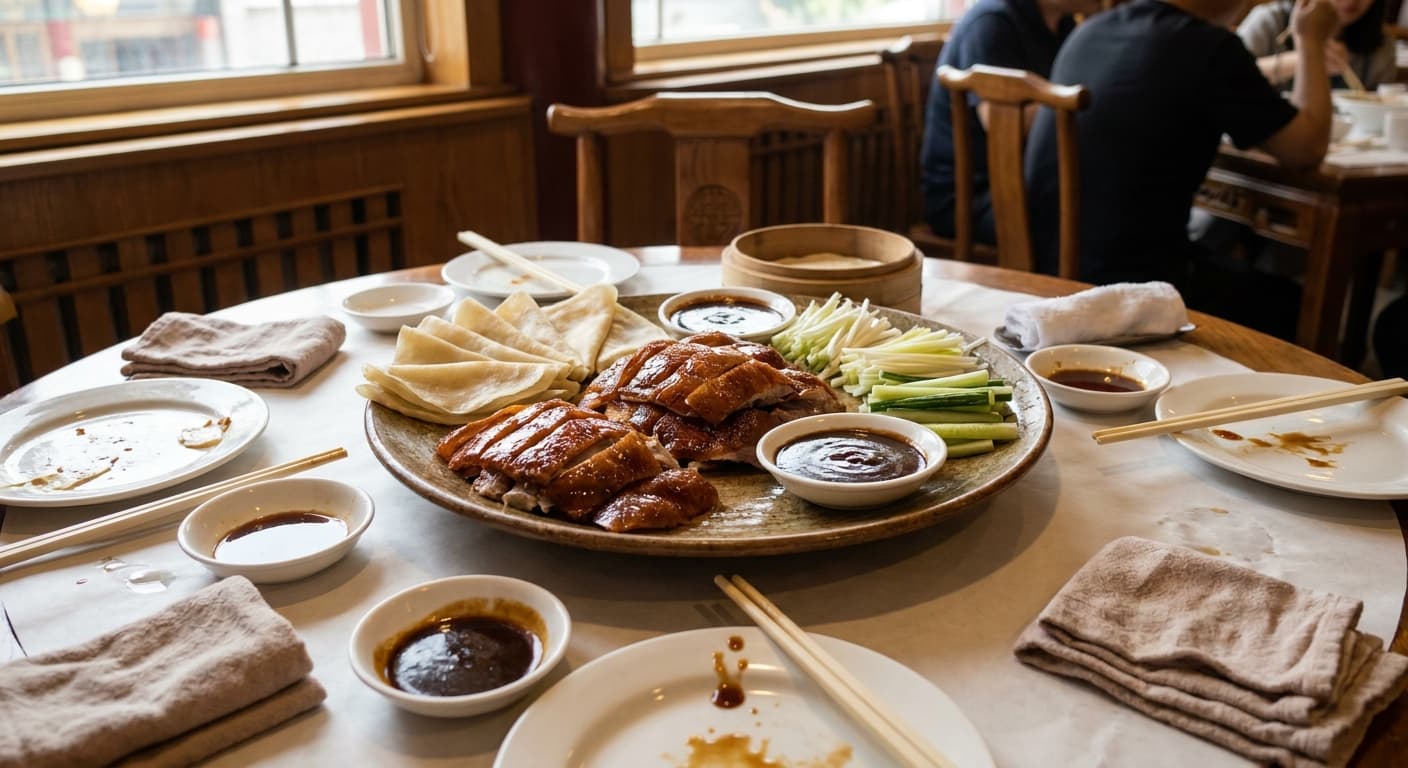
Peking Duck (北京烤鸭) — Crisp-Skinned Beijing Roast Duck
Chinese · Main Courses · 180 min
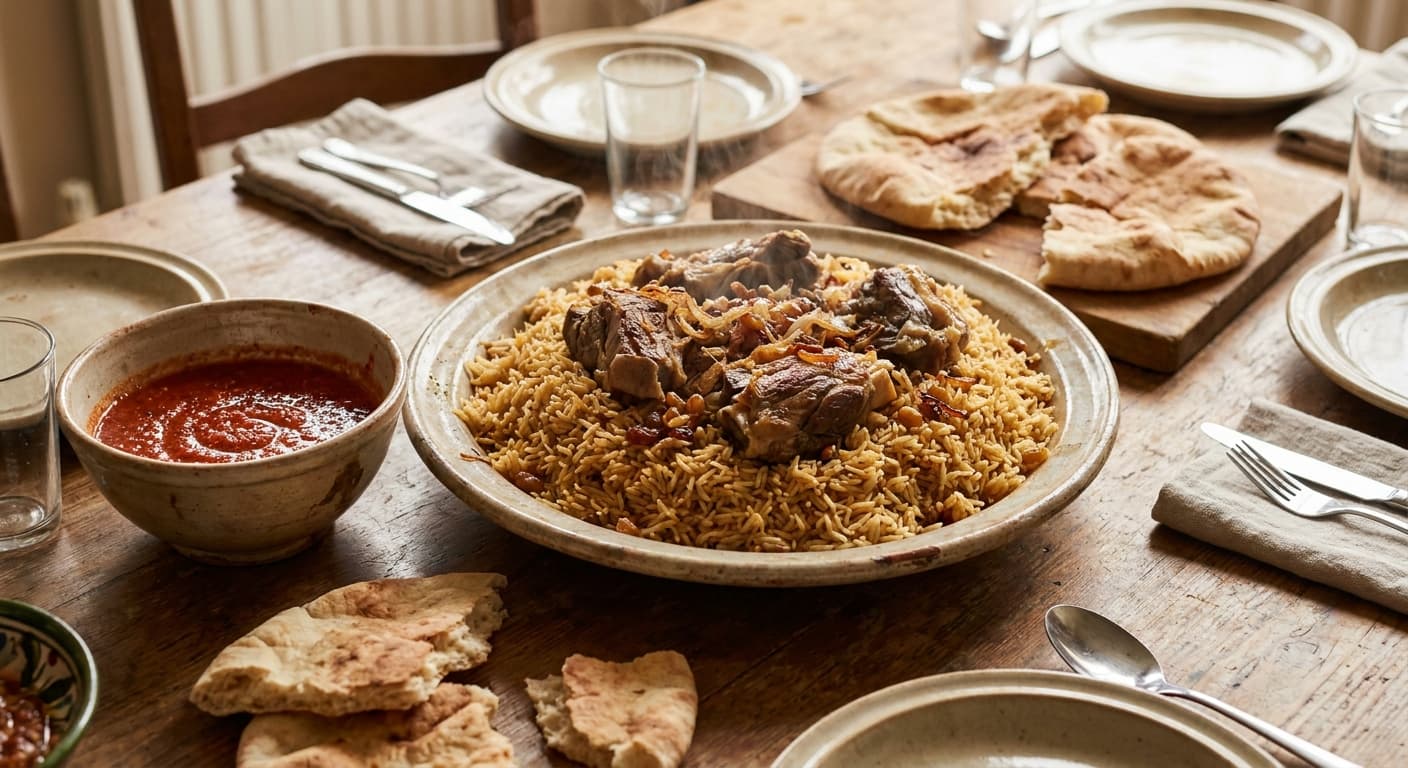
Yemeni Mandi (مندي) — Smoke-Scented Spiced Rice and Lamb
Yemeni · Main Courses · 170 min
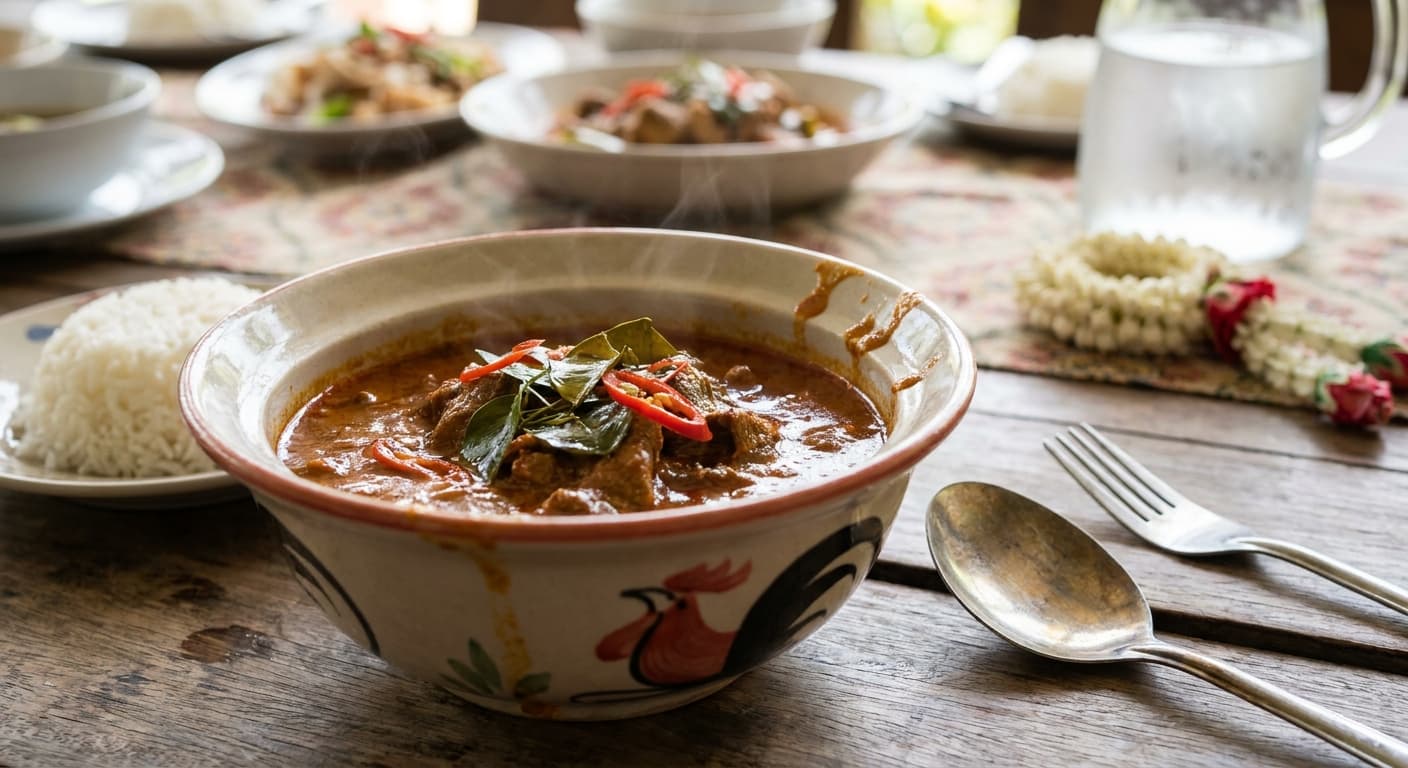
Panang Curry (แกงแพนง) — Rich Thai Coconut Beef Curry
Thai · Main Courses · 75 min
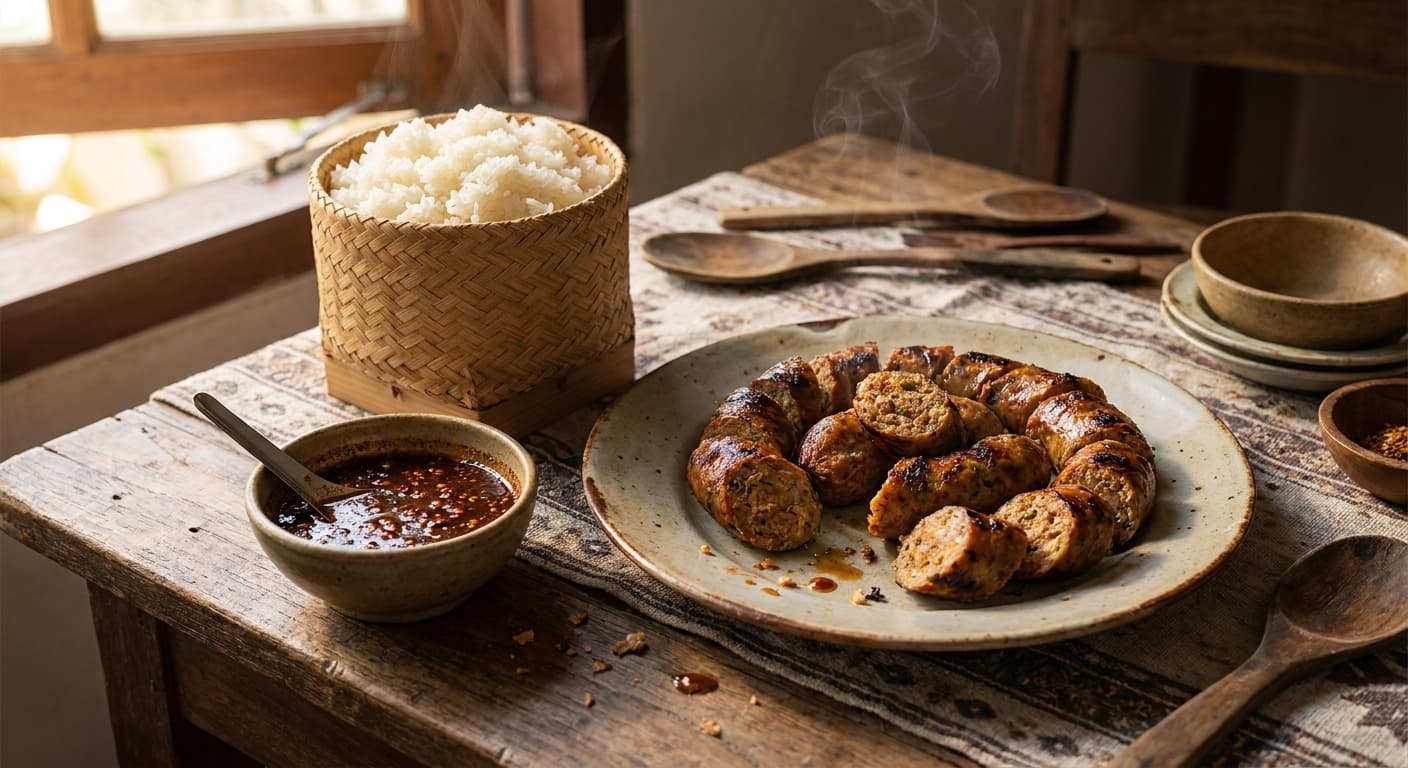
Sai Oua (ໄສ້ອົ່ວ) — Lao Herb Sausage with Lemongrass and Padaek
Laotian · Main Courses · 75 min
Samlor Machu Kroeung (សម្លម្ជូរគ្រឿង) — Cambodian Sour Kroeung Beef Soup
Cambodian · Soups · 130 min
Reviews
Cooked this recipe?
Tap the stars to rate it — that's all it takes. A few words are welcome but optional.
No ratings yet. Cooked this one? Be the first to rate it — it takes one tap.