Chips and Egg Omelet (Chipsi Mayai) — Tanzanian Street-Food Classic
Chipsi mayai is Tanzania's beloved omelet of freshly fried potato chips bound together with eggs. Common at street-food stalls, it is served with kachumbari, chili sauce, and sometimes mishkaki, the grilled meat skewers popular across the country.
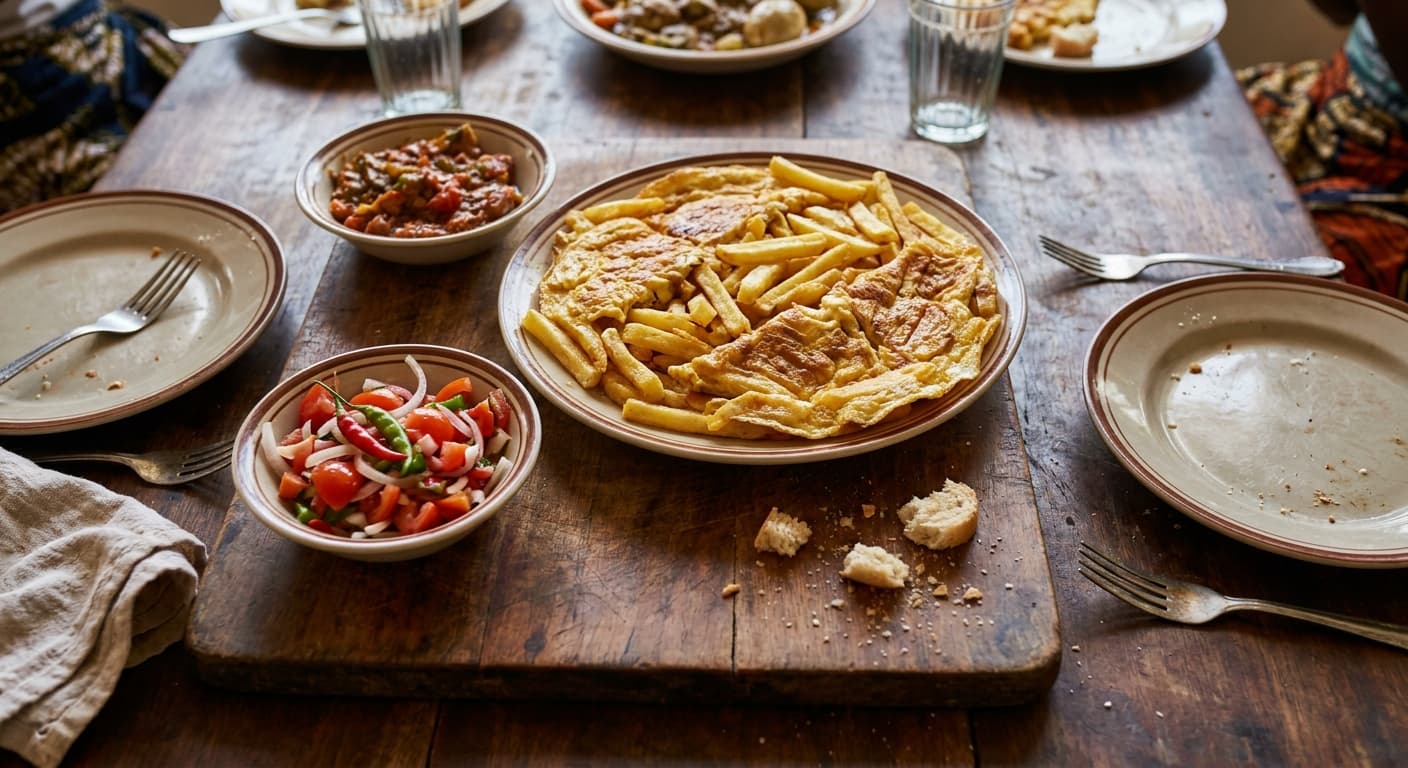
Printable Recipe Card
Servings: 2 · Total: 50 min · Difficulty: medium
Ingredients (quick list)
- 2 large potatoes (250 g each, weighed after peeling; choose floury potatoes suitable for frying.)
- 4 large eggs (Approximately 200 g without shells.)
- 750 ml sunflower oil (For deep-frying in a narrow saucepan; most remains after cooking. Nutrition estimates 40 g absorbed by the potatoes.)
- 3 g fine salt (Divide equally between the fried potatoes and beaten eggs.)
- 1 large ripe tomato (Approximately 180 g; thinly sliced.)
- 1 small red onion (Approximately 80 g after trimming; very thinly sliced.)
- 15 ml fresh lime juice
- 1 fresh green chile (Approximately 5 g; stem removed and flesh finely chopped.)
Steps (summary)
- Cut the peeled potatoes into chips approximately 10 mm thick. Rinse under cold running water, drain thoroughly, and dry complet…
- Combine the tomato, red onion, lime juice, green chile, and 1 g salt in a bowl to make the kachumbari. Toss thoroughly and refr…
- Pour the 750 ml sunflower oil into a deep, heavy saucepan approximately 16 cm across, ensuring the oil fills no more than halfw…
- Fry the potatoes in two batches for 8–11 minutes per batch, maintaining the oil between 165°C and 175°C. Stir gently to separat…
- Beat the eggs with the remaining 1.5 g omelet salt until the whites and yolks are fully combined. Divide the beaten eggs equall…
- Heat 5 ml sunflower oil in a 20 cm nonstick frying pan over medium heat, then arrange one portion of chips in an even layer. Po…
+ 2 more steps in the full instructions section below.
Cultural Background
Chipsi mayai belongs to Tanzania's lively street-food culture, pairing fried chips with eggs and often kachumbari. Hawa Hassan's In Bibi's Kitchen offers broader context on Tanzanian home cooking; it is not presented here as the source of this street-food recipe.
Equipment
💡 Tips
- Keep the chips approximately 10 mm thick so they become tender inside without disappearing into the egg.
- Use a 20 cm pan for each two-egg omelet; a substantially wider pan spreads the egg too thinly to bind the chips reliably.
- Reduce the heat before adding the eggs if the pan is smoking, since the underside can burn before the center sets.
⚠️ Common Mistakes
❌ Adding damp potatoes to hot oil causes vigorous splattering.
✅ Fix: Dry the rinsed chips completely with a clean towel before frying, and lower them into the oil carefully.
❌ Crowding the frying saucepan leaves the potatoes greasy and pale.
✅ Fix: Cook in two batches and let the oil return to 170°C before adding the second batch.
❌ Turning the omelet while the egg is still mostly liquid breaks it apart.
✅ Fix: Wait until the edges and underside are set, then use a plate to support the omelet during turning.
❌ Cooking the eggs over high heat burns the bottom while leaving the middle raw.
✅ Fix: Use medium-low heat after pouring in the eggs and check that the center reaches 71°C.
🧊 How to Store
Refrigerate omelets and kachumbari in separate covered containers within 2 hours. Keep the omelets for up to 3 days and the salad for 1 day. Reheat omelets in a covered skillet over low heat until the center reaches 74°C; the chips will soften during storage.
📅 Make Ahead
Cut the potatoes up to 12 hours ahead and refrigerate submerged in cold water, then drain and dry thoroughly. Slice the salad vegetables up to 4 hours ahead, but add lime juice and salt shortly before serving.
🍽️ Pairs Well With
- Kachumbari
- Tanzanian chili sauce
- tomato ketchup
- mishkaki for a nonvegetarian accompaniment
Regional Variations
- Street-stall versions vary more by vendor than by a fixed regional formula; the defining combination remains fried potato chips and eggs.
- Some vendors add chopped onion, tomato, or green pepper to the eggs, while others keep the omelet plain and offer kachumbari separately.
- Tomato ketchup and chili sauce are common table additions, with the choice and heat level varying by stall.
Ingredients
- 2large potatoes (250 g each, weighed after peeling; choose floury potatoes suitable for frying.)
- 4large eggs (Approximately 200 g without shells.)
- 750 mlsunflower oil (For deep-frying in a narrow saucepan; most remains after cooking. Nutrition estimates 40 g absorbed by the potatoes.)
- 3 gfine salt (Divide equally between the fried potatoes and beaten eggs.)
- 1large ripe tomato (Approximately 180 g; thinly sliced.)
- 1small red onion (Approximately 80 g after trimming; very thinly sliced.)
- 15 mlfresh lime juice
- 1fresh green chile (Approximately 5 g; stem removed and flesh finely chopped.)
🔄 Substitutions
- sunflower oil→ rapeseed oil
- fresh lime juice→ fresh lemon juice
- fresh green chile→ mild green pepper
Instructions
- 1
Cut the peeled potatoes into chips approximately 10 mm thick. Rinse under cold running water, drain thoroughly, and dry completely with a clean kitchen towel so they will not splatter when lowered into the oil.
- 2
Combine the tomato, red onion, lime juice, green chile, and 1 g salt in a bowl to make the kachumbari. Toss thoroughly and refrigerate while you prepare the omelets.
- 3
Pour the 750 ml sunflower oil into a deep, heavy saucepan approximately 16 cm across, ensuring the oil fills no more than halfway up the pan. Heat to 170°C, checking with a frying thermometer, and place a draining rack over a tray beside the stove.
- 4
Fry the potatoes in two batches for 8–11 minutes per batch, maintaining the oil between 165°C and 175°C. Stir gently to separate the chips and remove them when their centers are tender and their edges are lightly golden; drain on the rack and toss with 1.5 g salt.
- 5
Beat the eggs with the remaining 1.5 g omelet salt until the whites and yolks are fully combined. Divide the beaten eggs equally between two bowls, and divide the fried chips into two equal portions.
- 6
Heat 5 ml sunflower oil in a 20 cm nonstick frying pan over medium heat, then arrange one portion of chips in an even layer. Pour one portion of beaten egg over the chips and tilt the pan so the egg flows between them.
- 7
Cook over medium-low heat for 3–4 minutes, until the underside is golden and the edges are set. Slide the omelet onto a plate, cover it with the inverted pan, and carefully turn both together to return the omelet uncooked-side down; cook for another 1–2 minutes, until no liquid egg remains and the center reaches 71°C.
- 8
Transfer the first omelet to a serving plate and repeat with the remaining 5 ml oil, chips, and beaten eggs. Divide the kachumbari between the plates and serve immediately, keeping the salad beside rather than over the omelets to preserve their browned edges.
🪪 Recipe Passport
Cultural Background
Chipsi mayai belongs to Tanzania's lively street-food culture, pairing fried chips with eggs and often kachumbari. Hawa Hassan's In Bibi's Kitchen offers broader context on Tanzanian home cooking; it is not presented here as the source of this street-food recipe.
Regional Variations
Researched from multiple sources and validated by the Zaffaron editorial team. Every recipe is tested for accuracy, measurements, and cultural authenticity.
📚 Sources & Cultural References
- Hawa Hassan with Julia Turshen — In Bibi's Kitchen — (2020)
Sources cited by the Zaffaron editorial team during recipe research. Cultural and culinary references supporting authenticity claims.
Nutrition per serving
Pairs well with
If you enjoyed this recipe, here are a few related Zaffaron recipes to try next.
Does your family make this differently?
Every family has their own version. Maybe your grandmother adds a secret ingredient, or your aunt has a completely different technique. Preserve your family's version — with their name on it, forever.
You Might Also Like
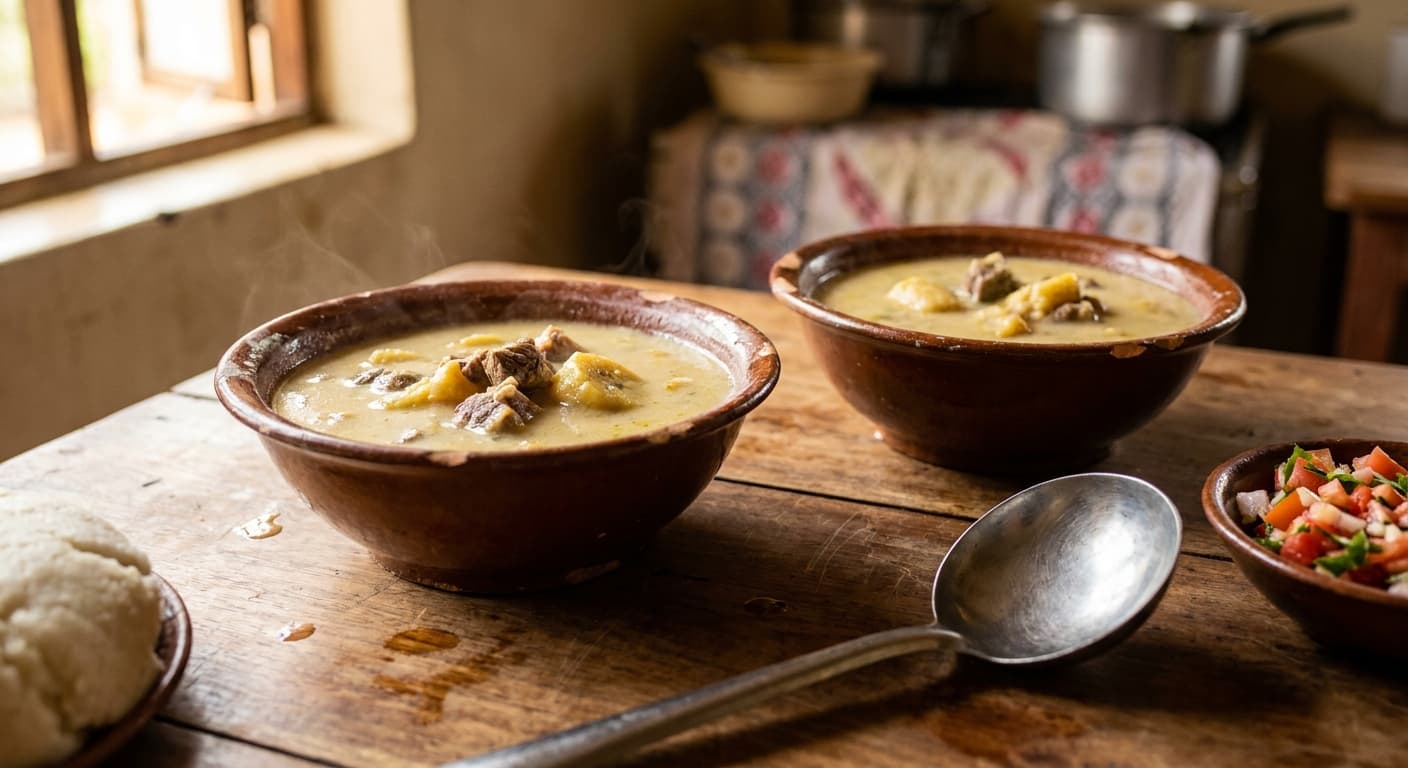
Mtori (Mtori) — Tanzanian Banana-Beef Soup
Tanzanian · Soups · 175 min
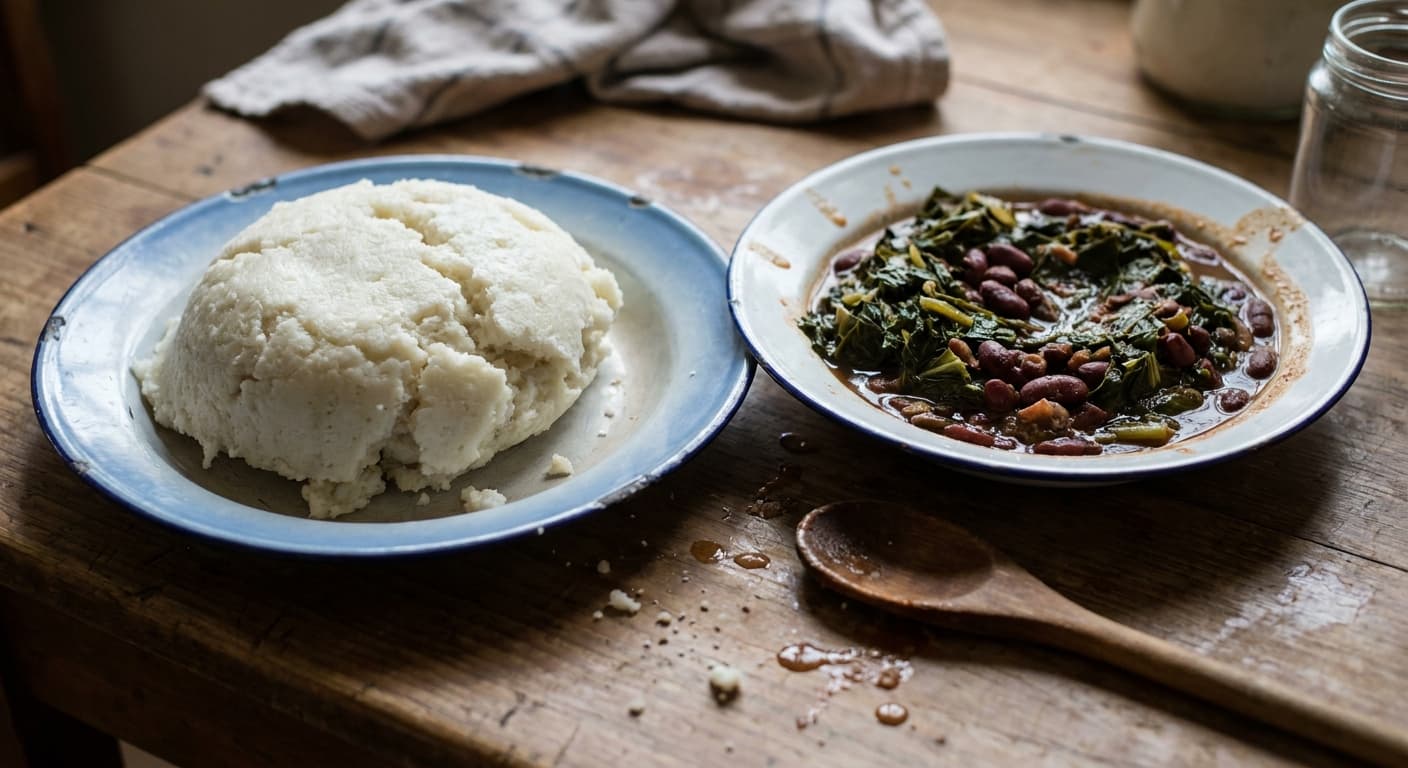
Tanzanian Ugali (Ugali) — Firm Cornmeal Porridge
Tanzanian · Side Dishes · 23 min
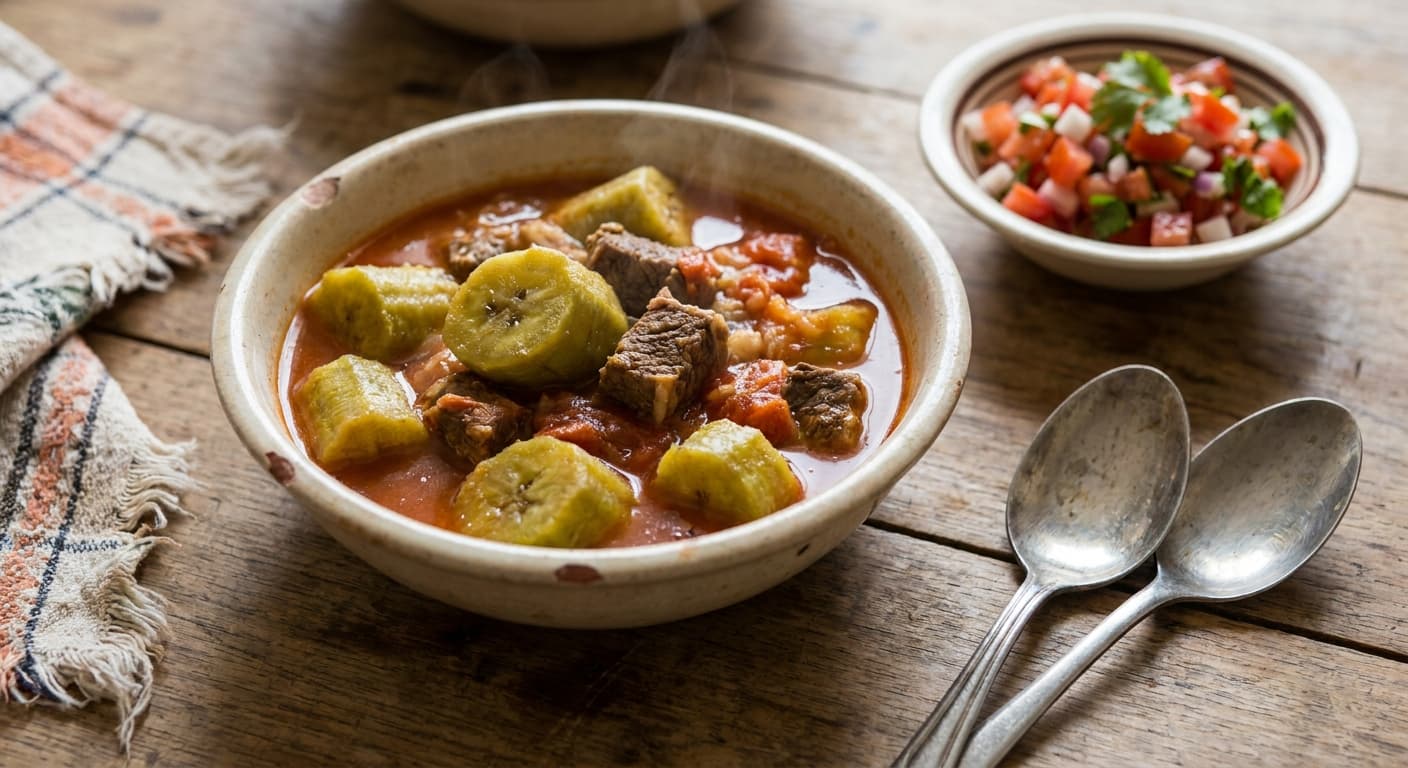
Matoke (Matoke) — Tanzanian Green Banana and Beef Stew
Tanzanian · Stews · 135 min
Beggar's Chicken (叫化鸡) — Lotus-Wrapped Clay-Baked Jiangnan Chicken
Chinese · Main Courses · 240 min
Chorrillana (Chorrillana) — Chilean Loaded Fries with Beef and Eggs
Chilean · Main Courses · 60 min
Irio (Mukimo) — Kenyan Mashed Potatoes, Peas, Corn, and Greens
Kenyan · Side Dishes · 55 min
Indian Achari Murgh (अचारी मुर्ग) — Pickle-Spiced Punjabi Chicken Curry with Whole Spices
Indian · Stews · 80 min
Bossam (보쌈) — Korean Boiled Pork Lettuce Wraps
Korean · Main Courses · 135 min
Reviews
Cooked this recipe?
Tap the stars to rate it — that's all it takes. A few words are welcome but optional.
No ratings yet. Cooked this one? Be the first to rate it — it takes one tap.