Tiramisu (Tiramisù) — Classic Coffee-Mascarpone Layered Dessert
Tiramisu is a beloved Italian spoon dessert from the Veneto and Friuli borderlands, built from espresso-soaked savoiardi and a light mascarpone-egg cream. This version follows the classic no-cream style with cocoa on top.
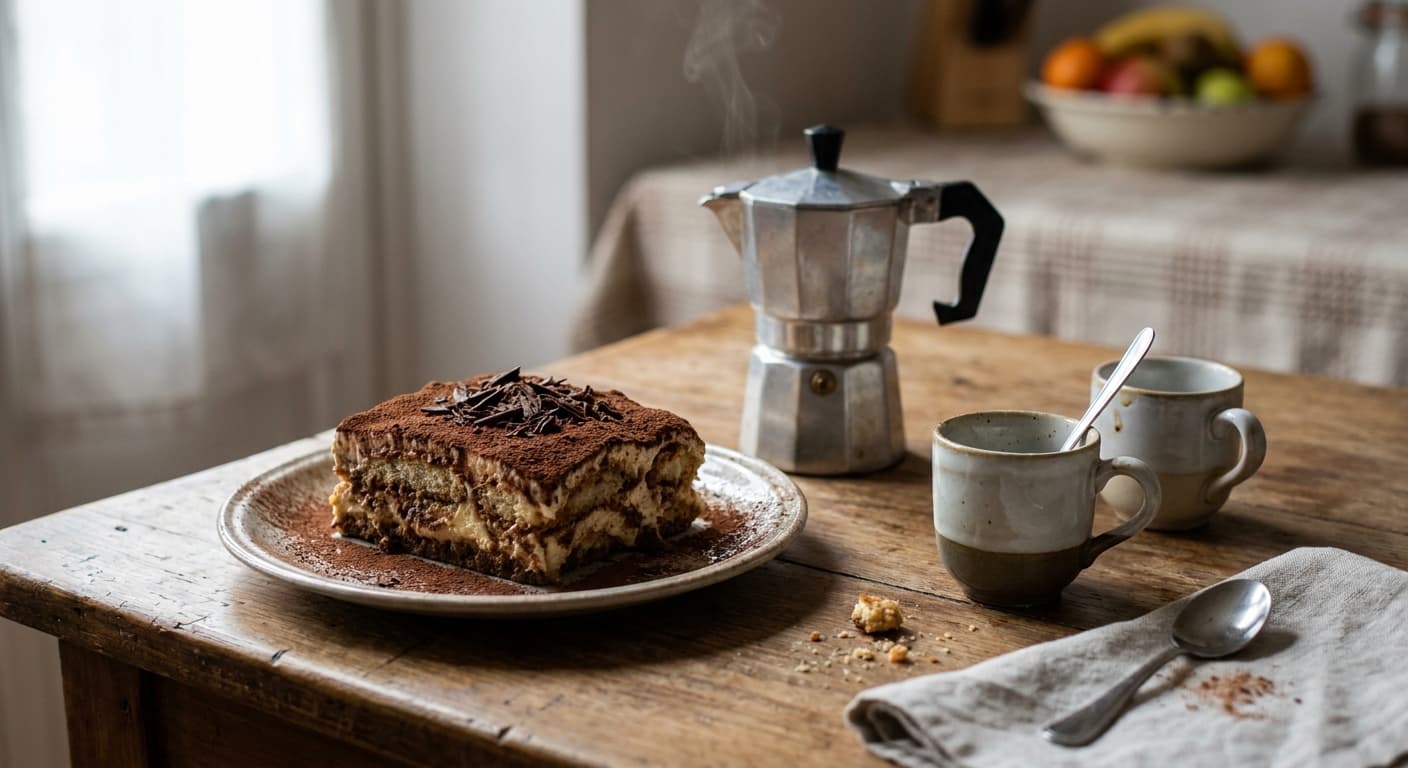
Printable Recipe Card
Servings: 8 · Total: 35 min · Difficulty: medium
Ingredients (quick list)
- 4 large pasteurized eggs (separated into yolks and whites)
- 120 g granulated sugar
- 500 g mascarpone (cold but pliable)
- 0.125 tsp fine sea salt
- 300 ml freshly brewed espresso (cooled to room temperature)
- 300 g savoiardi ladyfingers
- 15 g unsweetened cocoa powder (sifted just before serving)
Steps (summary)
- Brew the espresso and pour it into a wide shallow dish so it cools quickly to room temperature. Do not soak the savoiardi in ho…
- Place the egg yolks and 80 g of the sugar in a large mixing bowl, then whisk until the mixture is thick, pale, and falls from t…
- Add the mascarpone to the yolk mixture in 3 additions, folding or beating gently after each addition until smooth. Keep the mov…
- In a clean bowl, whisk the egg whites with the salt until foamy, then gradually add the remaining 40 g sugar. Continue whisking…
- Fold one-third of the whipped whites into the mascarpone mixture to lighten it, then fold in the remaining whites in 2 addition…
- Dip each savoiardo into the cooled espresso for about 1 second per side, then arrange the biscuits in a tight single layer in a…
+ 2 more steps in the full instructions section below.
Cultural Background
Tiramisu became one of Italy’s most recognized modern desserts in the late twentieth century, especially associated with northeastern Italy. Its name means “pick me up,” referring to the lift of coffee, cocoa, sugar, and rich cream.
Equipment
💡 Tips
- Use crisp Italian-style savoiardi rather than soft sponge fingers, because they absorb espresso without turning pasty.
- Dip the biscuits very briefly; a full soak makes tiramisu watery after chilling.
- Sift the cocoa only before serving so it stays fragrant and does not absorb too much moisture.
⚠️ Common Mistakes
❌ Soaking the savoiardi too long
✅ Fix: Dip each biscuit for only about 1 second per side so the dessert sets with distinct layers.
❌ Using warm espresso
✅ Fix: Cool the espresso fully before dipping, because heat weakens the biscuits and loosens the mascarpone cream.
❌ Overmixing mascarpone
✅ Fix: Fold or beat gently just until smooth, and stop before the cheese becomes grainy.
🧊 How to Store
Cover tiramisu tightly and refrigerate for up to 2 days. Serve cold straight from the refrigerator; do not freeze or reheat, because the mascarpone cream can split and the biscuits lose their layered texture.
📅 Make Ahead
Assemble tiramisu 12 hours before serving for the best sliceable texture. Brew the espresso up to 1 day ahead and keep it covered in the refrigerator.
🍽️ Pairs Well With
- Espresso
- moka pot coffee
- unsweetened black tea
- fresh berries.
Regional Variations
- The Treviso-style version associated with Le Beccherie is often made without alcohol and without whipped cream.
- Some Friulian and household versions add a measured splash of Marsala, rum, or coffee liqueur to the espresso.
- Modern restaurant versions may use pâte à bombe or whipped cream for extra stability, though the classic home style relies on eggs and mascarpone.
Ingredients
- 4large pasteurized eggs (separated into yolks and whites)
- 120 ggranulated sugar
- 500 gmascarpone (cold but pliable)
- 0.13 tspfine sea salt
- 300 mlfreshly brewed espresso (cooled to room temperature)
- 300 gsavoiardi ladyfingers
- 15 gunsweetened cocoa powder (sifted just before serving)
🔄 Substitutions
- pasteurized shell eggs→ pasteurized liquid egg yolks and pasteurized liquid egg whites
- savoiardi ladyfingers→ dry sponge fingers
- freshly brewed espresso→ strong moka pot coffee
Instructions
- 1
Brew the espresso and pour it into a wide shallow dish so it cools quickly to room temperature. Do not soak the savoiardi in hot coffee, because heat softens them too aggressively and can make the final dessert collapse.
- 2
Place the egg yolks and 80 g of the sugar in a large mixing bowl, then whisk until the mixture is thick, pale, and falls from the whisk in ribbons. This usually takes 4 to 5 minutes by hand or about 2 minutes with an electric mixer.
- 3
Add the mascarpone to the yolk mixture in 3 additions, folding or beating gently after each addition until smooth. Keep the movement controlled, because overworking mascarpone can make it grainy or loose.
- 4
In a clean bowl, whisk the egg whites with the salt until foamy, then gradually add the remaining 40 g sugar. Continue whisking until the whites form glossy medium-stiff peaks that hold their shape but are not dry.
- 5
Fold one-third of the whipped whites into the mascarpone mixture to lighten it, then fold in the remaining whites in 2 additions. Use a spatula and turn the bowl as you fold, stopping as soon as no large streaks remain.
- 6
Dip each savoiardo into the cooled espresso for about 1 second per side, then arrange the biscuits in a tight single layer in a 20 x 28 cm dish. The biscuits should be moistened on the outside but still structured in the center.
- 7
Spread half of the mascarpone cream evenly over the first layer of soaked savoiardi. Add a second layer of quickly dipped savoiardi, then cover with the remaining mascarpone cream and smooth the surface.
- 8
Cover the dish tightly and refrigerate for at least 6 hours, preferably 12 hours, so the layers set and the coffee perfumes the cream. Just before serving, sift the cocoa powder evenly over the top for a dry, aromatic finish.
🪪 Recipe Passport
Cultural Background
Tiramisu became one of Italy’s most recognized modern desserts in the late twentieth century, especially associated with northeastern Italy. Its name means “pick me up,” referring to the lift of coffee, cocoa, sugar, and rich cream.
Regional Variations
Researched from multiple sources and validated by the Zaffaron editorial team. Every recipe is tested for accuracy, measurements, and cultural authenticity.
📚 Sources & Cultural References
- Gillian Riley — The Oxford Companion to Italian Food — (2007)
- Accademia Italiana della Cucina — La Cucina: The Regional Cooking of Italy — (2009)
Sources cited by the Zaffaron editorial team during recipe research. Cultural and culinary references supporting authenticity claims.
Nutrition per serving
Pairs well with
If you enjoyed this recipe, here are a few related Zaffaron recipes to try next.
- Eggplant Parmesan (Melanzane alla Parmigiana) — Southern Italian Baked Eggplant
- Osso Buco (Osso Buco alla Milanese) — Milanese Braised Veal Shanks
- Risotto alla Milanese (Risotto alla Milanese) — Saffron-Rich Milanese Rice
- Spaghetti Carbonara (Spaghetti alla Carbonara) — Roman Pasta with Eggs, Pecorino, and Guanciale
Does your family make this differently?
Every family has their own version. Maybe your grandmother adds a secret ingredient, or your aunt has a completely different technique. Preserve your family's version — with their name on it, forever.
You Might Also Like
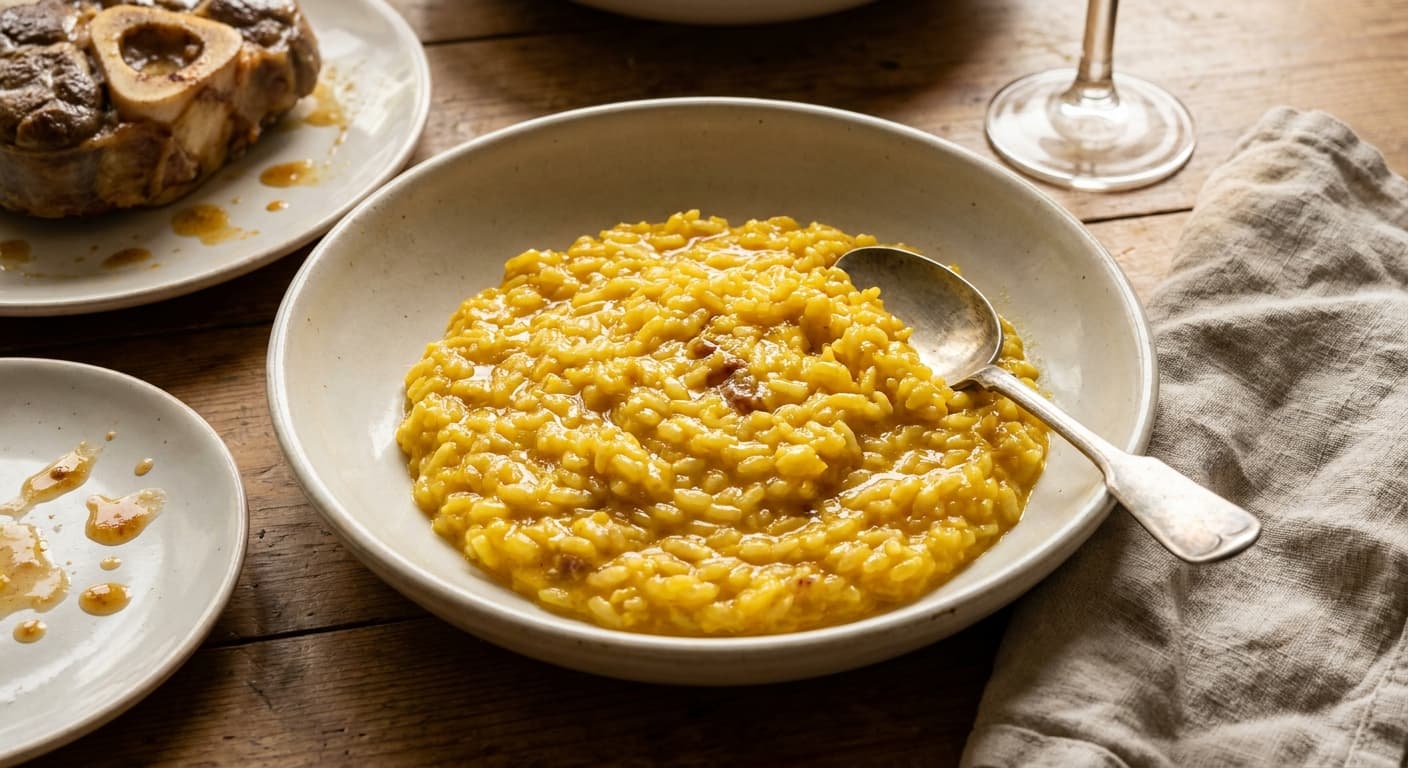
Risotto alla Milanese (Risotto alla Milanese) — Saffron-Rich Milanese Rice
Italian · Rice Dishes · 43 min
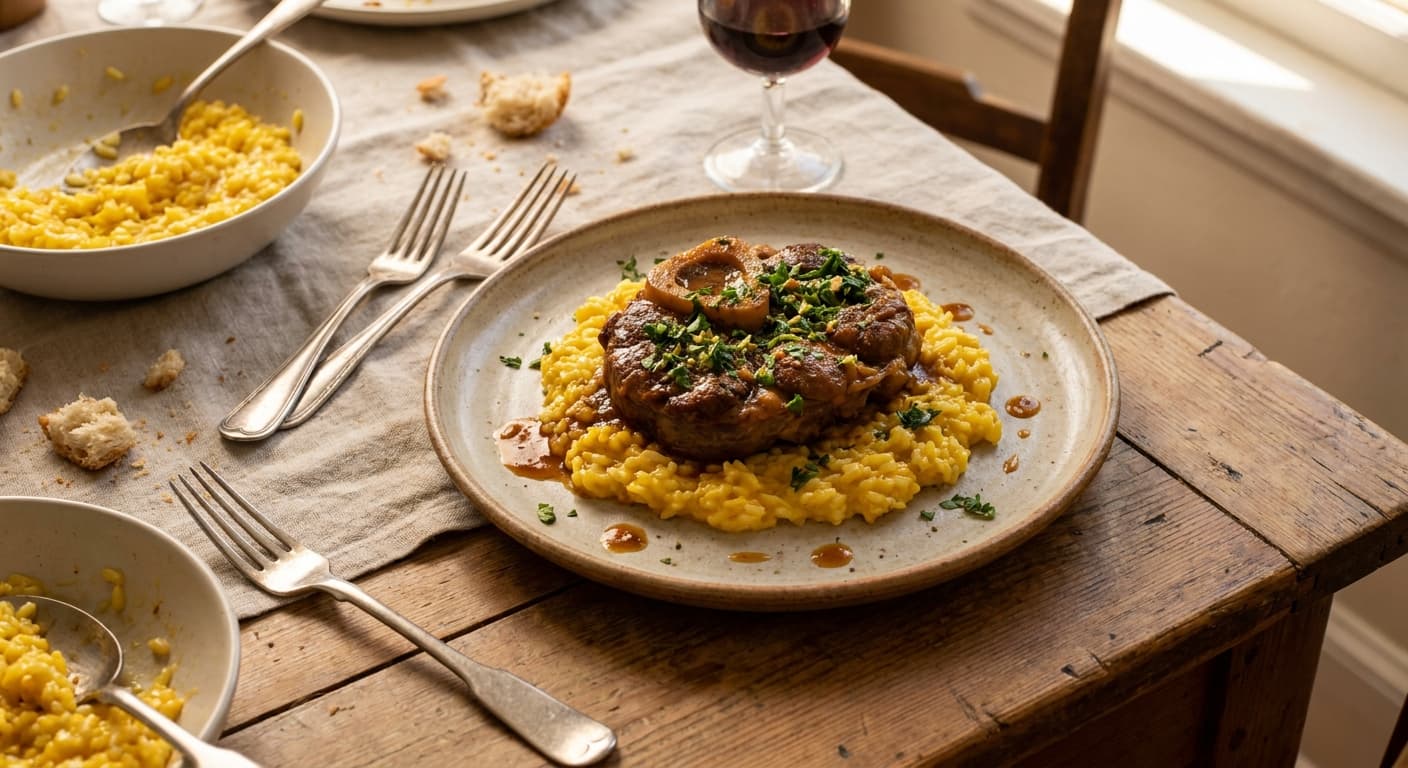
Osso Buco (Osso Buco alla Milanese) — Milanese Braised Veal Shanks
Italian · Main Courses · 145 min
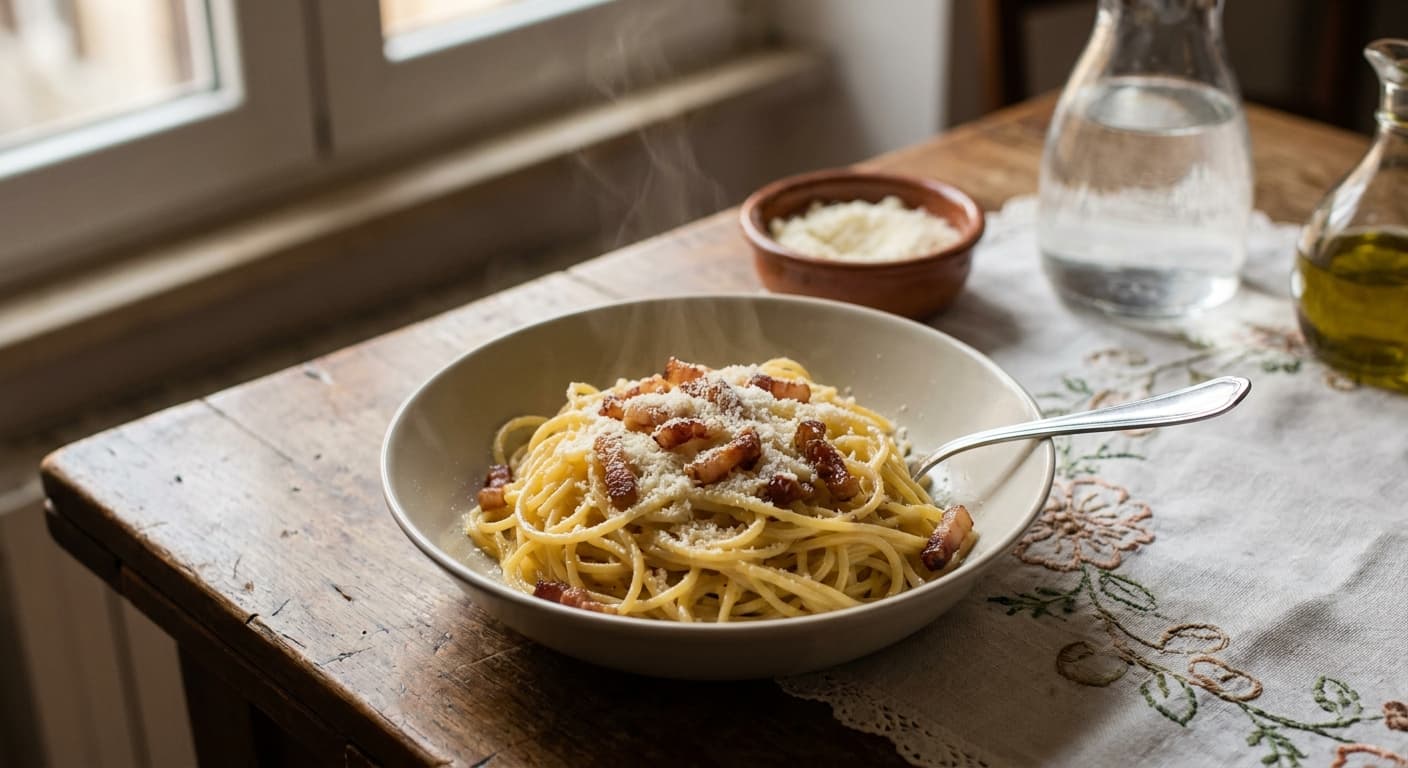
Spaghetti Carbonara (Spaghetti alla Carbonara) — Roman Pasta with Eggs, Pecorino, and Guanciale
Italian · Main Courses · 30 min
Sklandrausis (Sklandrausis) — Latvian Rye Carrot-Potato Tart
Latvian · Desserts · 100 min
Persian Kachi (کاچی) — Saffron Rosewater Pudding
Persian · Desserts · 45 min
Coq au Vin (Coq au vin) — Burgundy Chicken Braised in Red Wine
French · Stews · 160 min
Asturian Bean Stew (Fabada Asturiana) — Smoky Spanish Bean and Pork Stew
Spanish · Stews · 210 min
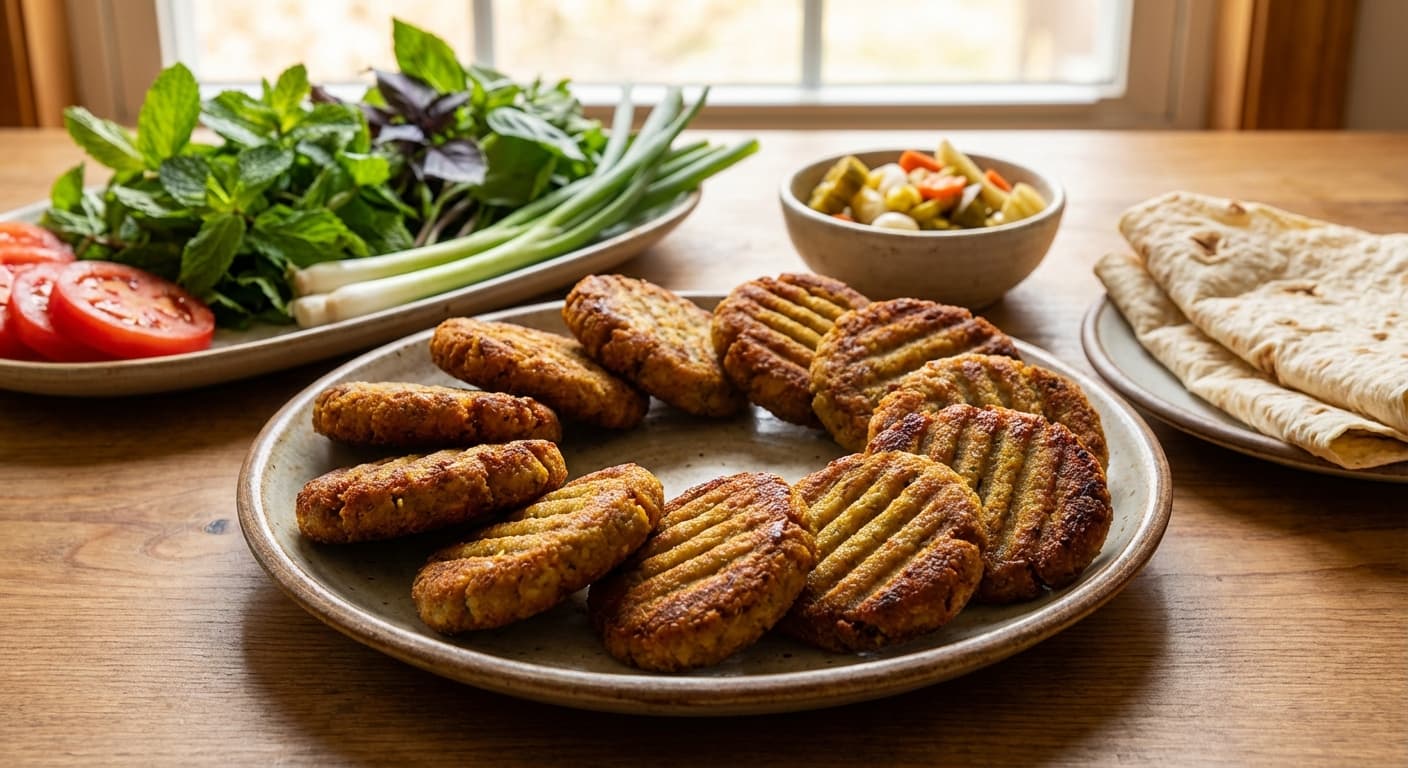
Kotlet-e Sooya (کتلت سویا) — | Persian Soy & Potato Cutlets
Persian · Main Courses · 75 min
Reviews
Cooked this recipe?
Tap the stars to rate it — that's all it takes. A few words are welcome but optional.
No ratings yet. Cooked this one? Be the first to rate it — it takes one tap.