Spaghetti Carbonara (Spaghetti alla Carbonara) — Roman Pasta with Eggs, Pecorino, and Guanciale
Spaghetti alla carbonara is a Roman classic built from pasta, guanciale, eggs, Pecorino Romano, and black pepper. Its sauce is made by gentle residual heat, never cream, giving a glossy, savory coating.
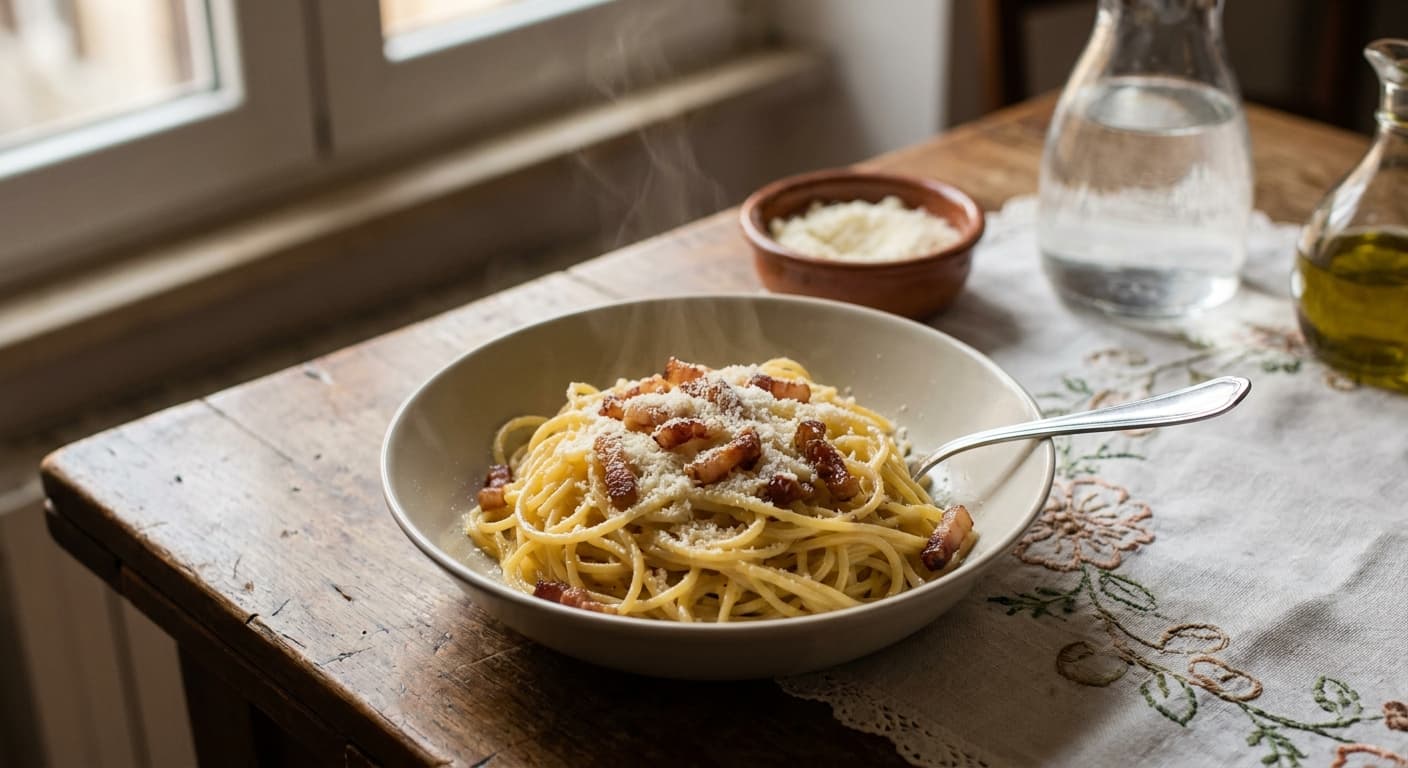
Printable Recipe Card
Servings: 4 · Total: 30 min · Difficulty: medium
Ingredients (quick list)
- 320 g spaghetti
- 3 l water
- 18 g fine sea salt
- 150 g guanciale (rind removed, cut into 6 mm batons)
- 4 large egg yolks (at room temperature)
- 1 large egg (at room temperature)
- 100 g Pecorino Romano (finely grated, plus 20 g reserved from the total for serving)
- 2 tsp black pepper (freshly and coarsely ground)
Steps (summary)
- Bring 3 l water to a rolling boil in a large pot, then stir in 18 g fine sea salt. Use this measured amount because Pecorino Ro…
- Place the guanciale batons in a cold skillet and set it over medium-low heat. Cook for 8 to 10 minutes, stirring often, until t…
- Meanwhile, whisk the 4 egg yolks, 1 whole egg, 80 g of the grated Pecorino Romano, and 2 tsp black pepper in a heatproof bowl u…
- Cook the spaghetti until it is 1 minute firmer than the package timing for al dente, usually 8 to 10 minutes depending on the b…
- Transfer the spaghetti directly into the skillet with the rendered guanciale and toss over low heat for 30 seconds. Add 120 ml…
- Remove the skillet from the heat and let it stand for 45 seconds so the surface heat drops below scrambling temperature. Pour i…
+ 1 more steps in the full instructions section below.
Cultural Background
Carbonara is closely associated with Rome and Lazio, celebrated for turning pantry staples into a luxurious pasta without cream. Its identity depends on technique, restraint, and the bold flavors of guanciale and Pecorino Romano.
Equipment
💡 Tips
- Keep the pan off direct heat when adding the eggs; residual heat is enough to thicken the sauce without scrambling it.
- Grate Pecorino Romano very finely so it melts quickly into the egg mixture and does not clump.
- Use guanciale if possible because its cured pork jowl fat gives carbonara its characteristic Roman flavor and silky texture.
⚠️ Common Mistakes
❌ Adding the egg mixture over active heat
✅ Fix: Remove the skillet from the burner and toss constantly, using reserved pasta water to control the sauce texture.
❌ Using cream to make the sauce creamy
✅ Fix: Rely on egg yolks, finely grated cheese, rendered guanciale fat, and starchy pasta water for the authentic emulsion.
❌ Cutting guanciale too thin
✅ Fix: Cut it into 6 mm batons so the outside browns while the center remains pleasantly chewy.
🧊 How to Store
Carbonara is best eaten immediately. Refrigerate leftovers in an airtight container for up to 2 days, then reheat gently in a skillet with 30 ml water per serving over low heat, stirring constantly to reduce curdling.
📅 Make Ahead
Grate the cheese, cut the guanciale, and whisk the egg mixture up to 4 hours ahead; refrigerate separately. Bring the eggs to room temperature for 30 minutes before cooking.
🍽️ Pairs Well With
- Bitter green salad
- roasted artichokes
- sauteed chicory
- Frascati wine.
Regional Variations
- Rigatoni alla carbonara is common in Roman trattorias and holds the sauce inside the tubes.
- Some Roman cooks use only yolks for an even richer sauce, often about 1 yolk per serving plus 1 extra yolk.
- Outside Rome, pancetta is often used when guanciale is unavailable, though the flavor is less distinctive.
Ingredients
- 320 gspaghetti
- 3 lwater
- 18 gfine sea salt
- 150 gguanciale (rind removed, cut into 6 mm batons)
- 4large egg yolks (at room temperature)
- 1large egg (at room temperature)
- 100 gPecorino Romano (finely grated, plus 20 g reserved from the total for serving)
- 2 tspblack pepper (freshly and coarsely ground)
🔄 Substitutions
- guanciale→ unsmoked pancetta
- Pecorino Romano→ 70 g Pecorino Romano plus 30 g Parmigiano Reggiano
- spaghetti→ rigatoni
Instructions
- 1
Bring 3 l water to a rolling boil in a large pot, then stir in 18 g fine sea salt. Use this measured amount because Pecorino Romano and guanciale are already salty, and overly salty pasta water can make the finished carbonara harsh.
- 2
Place the guanciale batons in a cold skillet and set it over medium-low heat. Cook for 8 to 10 minutes, stirring often, until the fat has rendered and the meat is golden at the edges but still slightly chewy in the center.
- 3
Meanwhile, whisk the 4 egg yolks, 1 whole egg, 80 g of the grated Pecorino Romano, and 2 tsp black pepper in a heatproof bowl until thick and uniform. The mixture should look like a dense paste, which will loosen later with starchy pasta water.
- 4
Cook the spaghetti until it is 1 minute firmer than the package timing for al dente, usually 8 to 10 minutes depending on the brand. Before draining, reserve exactly 300 ml of the starchy pasta water in a measuring cup.
- 5
Transfer the spaghetti directly into the skillet with the rendered guanciale and toss over low heat for 30 seconds. Add 120 ml reserved pasta water and toss again so the pasta is evenly coated with the rendered fat and starch.
- 6
Remove the skillet from the heat and let it stand for 45 seconds so the surface heat drops below scrambling temperature. Pour in the egg and cheese mixture while tossing constantly with tongs, adding another 60 ml reserved pasta water in 15 ml increments until the sauce turns glossy and coats every strand.
- 7
Divide the pasta among 4 warm bowls and spoon the guanciale pieces evenly over the top. Finish with the reserved 20 g Pecorino Romano and an additional measured 0.5 tsp black pepper shared across the servings.
🪪 Recipe Passport
Cultural Background
Carbonara is closely associated with Rome and Lazio, celebrated for turning pantry staples into a luxurious pasta without cream. Its identity depends on technique, restraint, and the bold flavors of guanciale and Pecorino Romano.
Regional Variations
Researched from multiple sources and validated by the Zaffaron editorial team. Every recipe is tested for accuracy, measurements, and cultural authenticity.
📚 Sources & Cultural References
- Accademia Italiana della Cucina — La Cucina: The Regional Cooking of Italy — (2009)
- Gillian Riley — The Oxford Companion to Italian Food — (2007)
Sources cited by the Zaffaron editorial team during recipe research. Cultural and culinary references supporting authenticity claims.
Nutrition per serving
Pairs well with
If you enjoyed this recipe, here are a few related Zaffaron recipes to try next.
Does your family make this differently?
Every family has their own version. Maybe your grandmother adds a secret ingredient, or your aunt has a completely different technique. Preserve your family's version — with their name on it, forever.
You Might Also Like
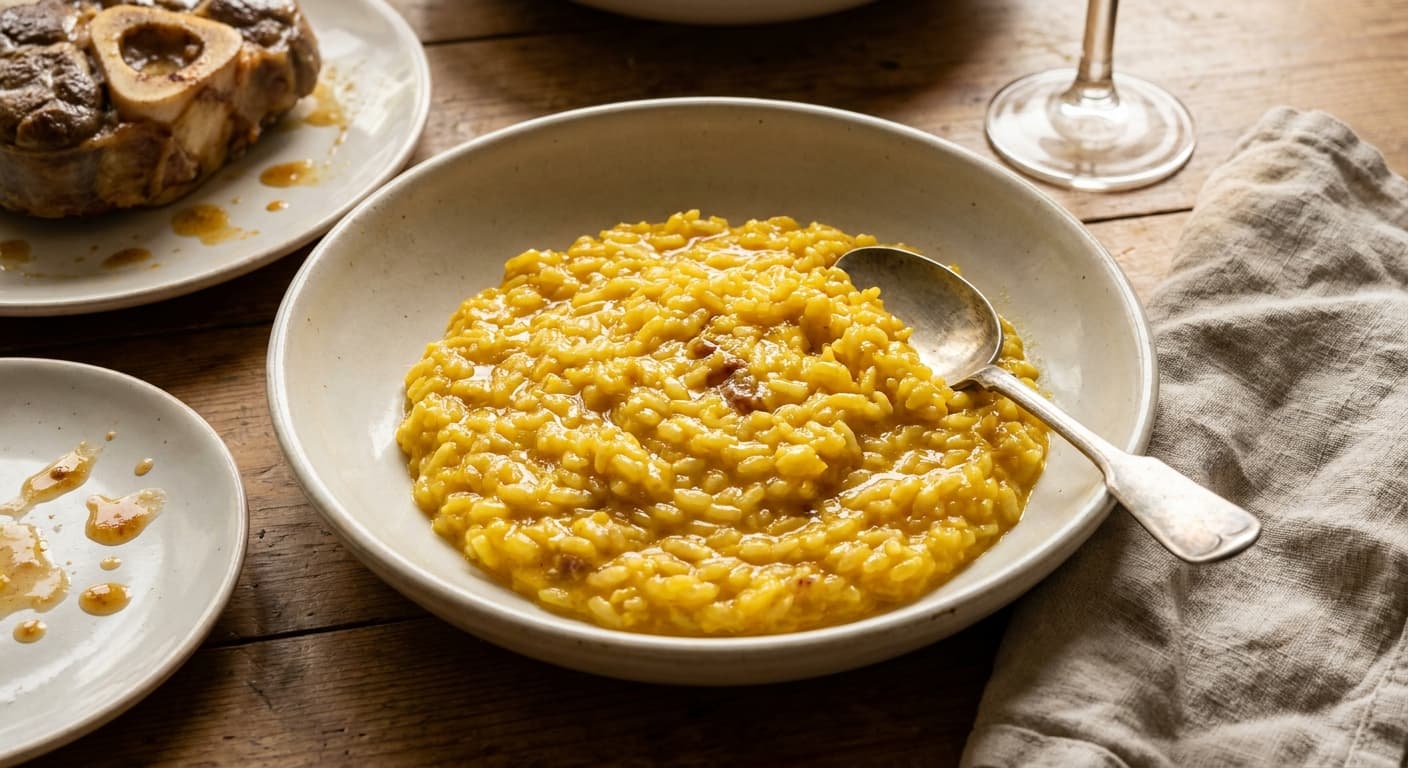
Risotto alla Milanese (Risotto alla Milanese) — Saffron-Rich Milanese Rice
Italian · Rice Dishes · 43 min
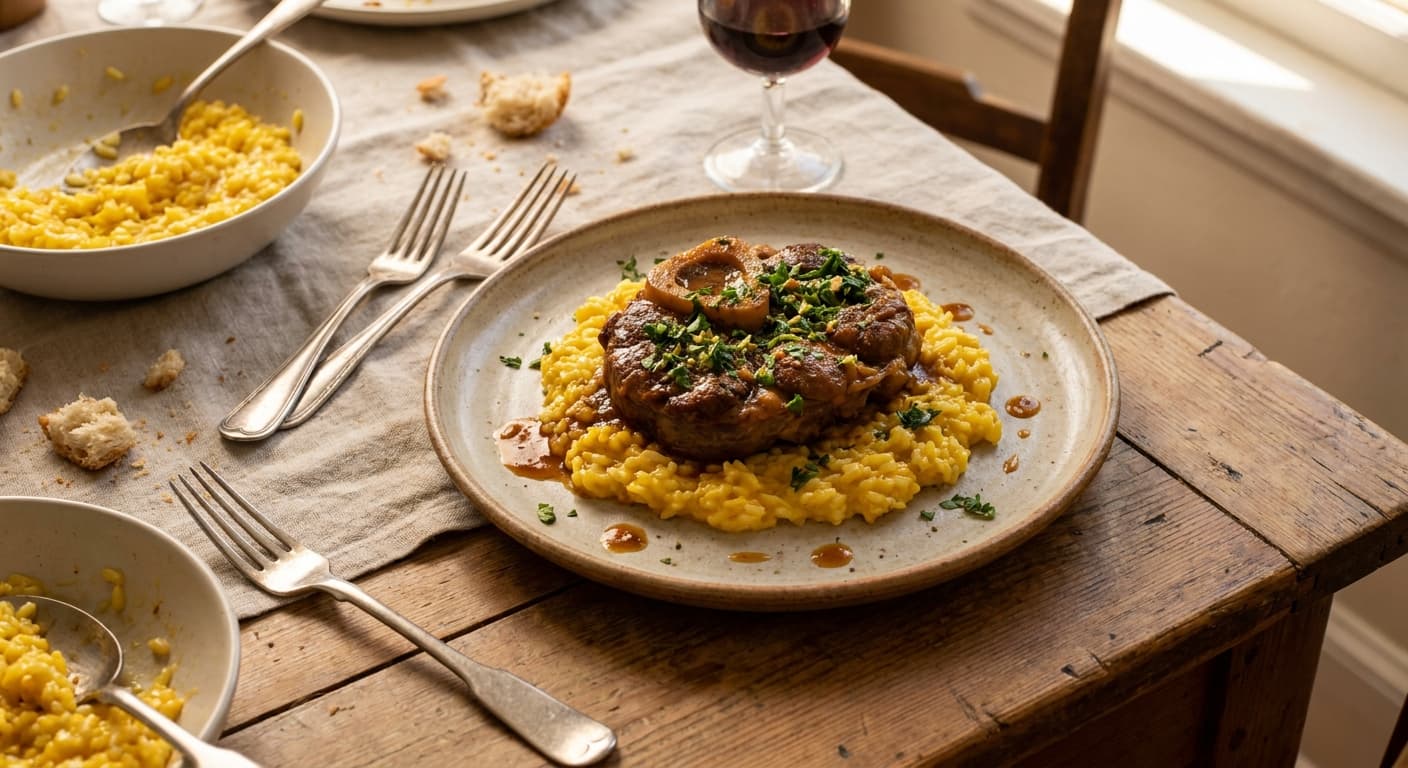
Osso Buco (Osso Buco alla Milanese) — Milanese Braised Veal Shanks
Italian · Main Courses · 145 min
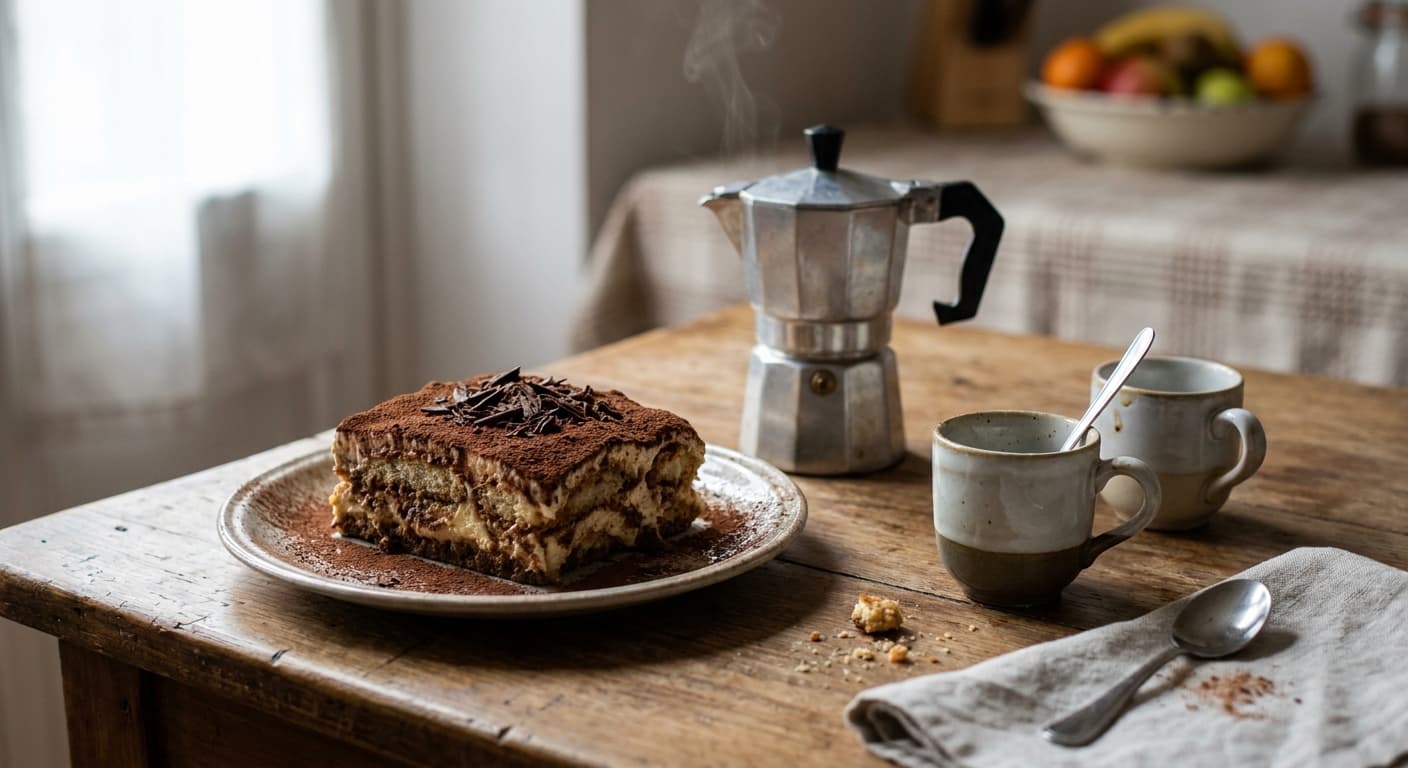
Tiramisu (Tiramisù) — Classic Coffee-Mascarpone Layered Dessert
Italian · Desserts · 35 min
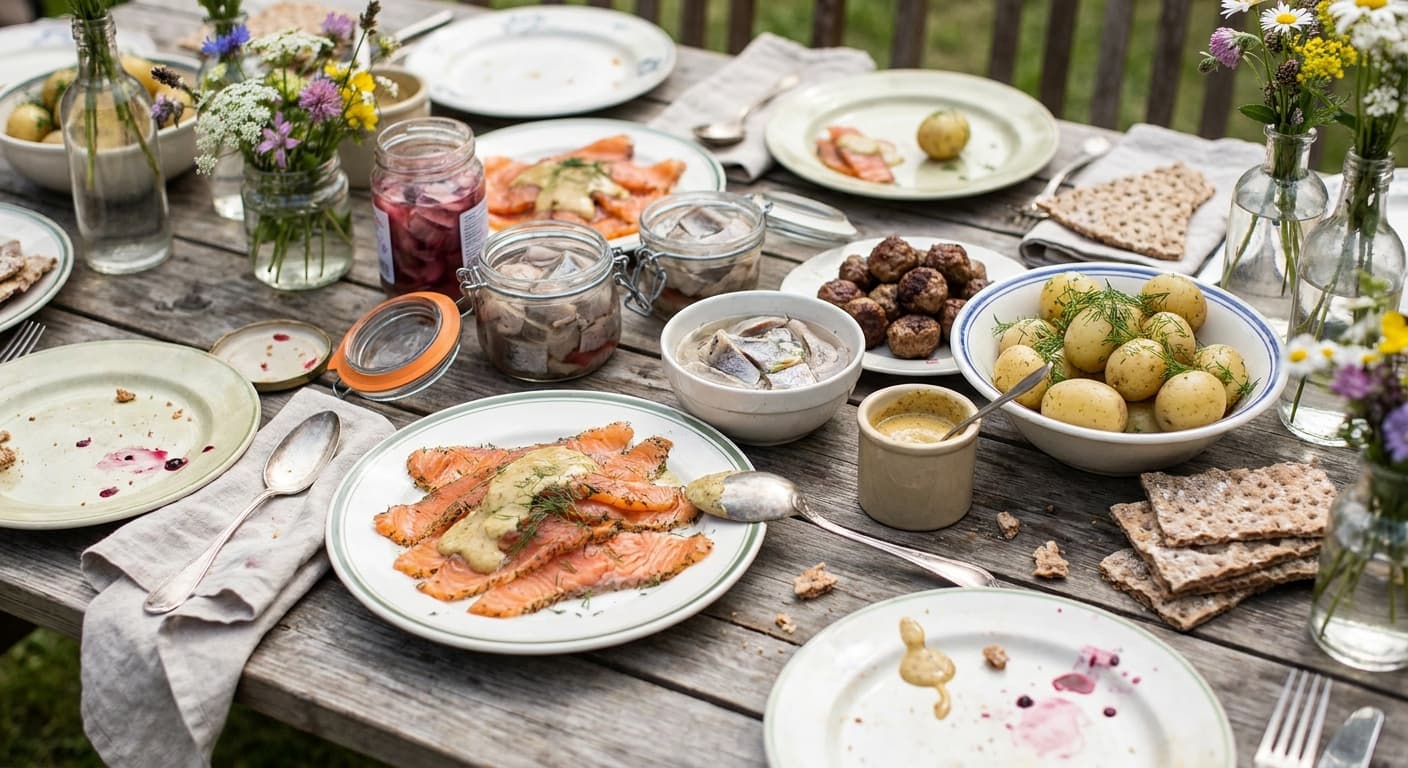
Swedish Smörgåsbord (Smörgåsbord) — Classic Buffet with Gravlax, Sill, and Köttbullar
Swedish · Main Courses · 115 min
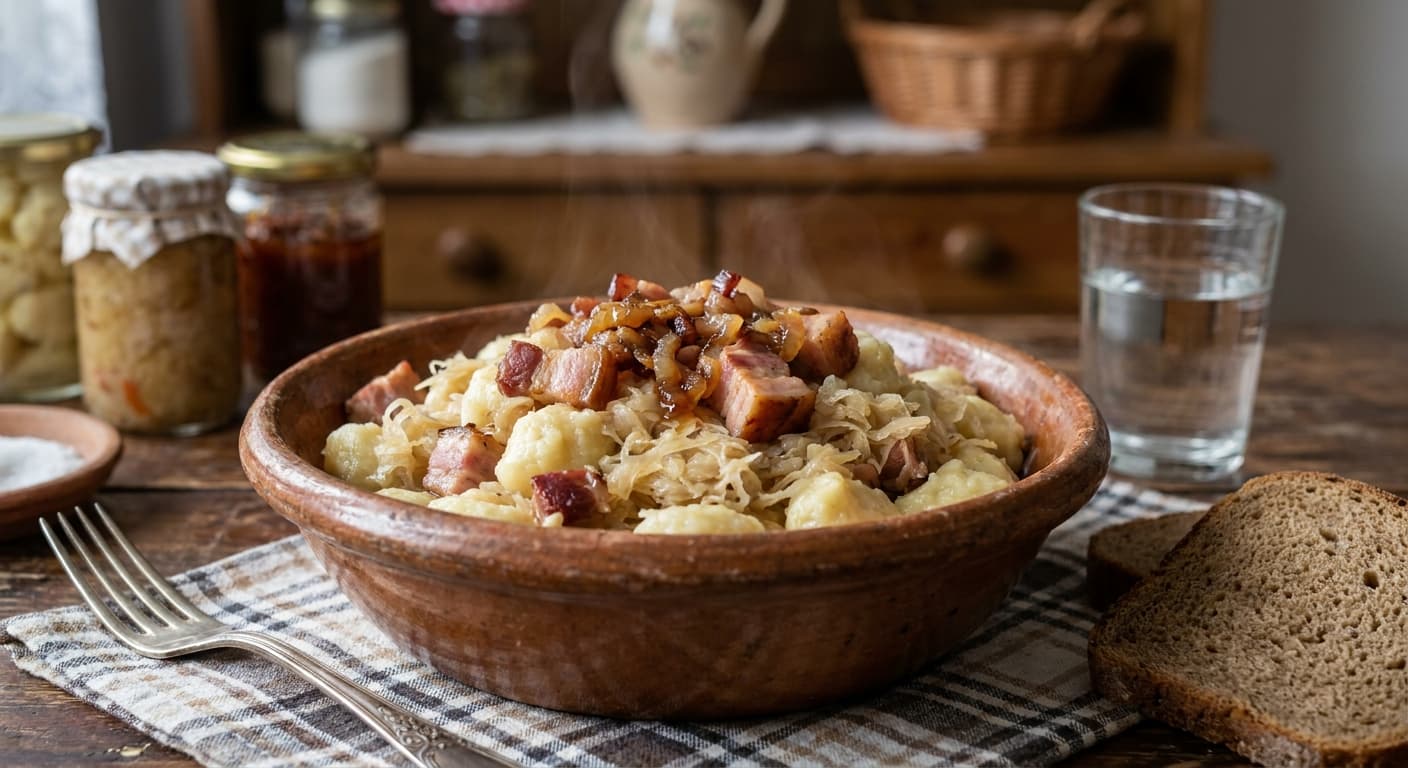
Potato Dumplings with Smoked Meat (Strapačky s údeným mäsom) — Rustic Slovak Halušky with Sauerkraut
Slovak · Main Courses · 70 min
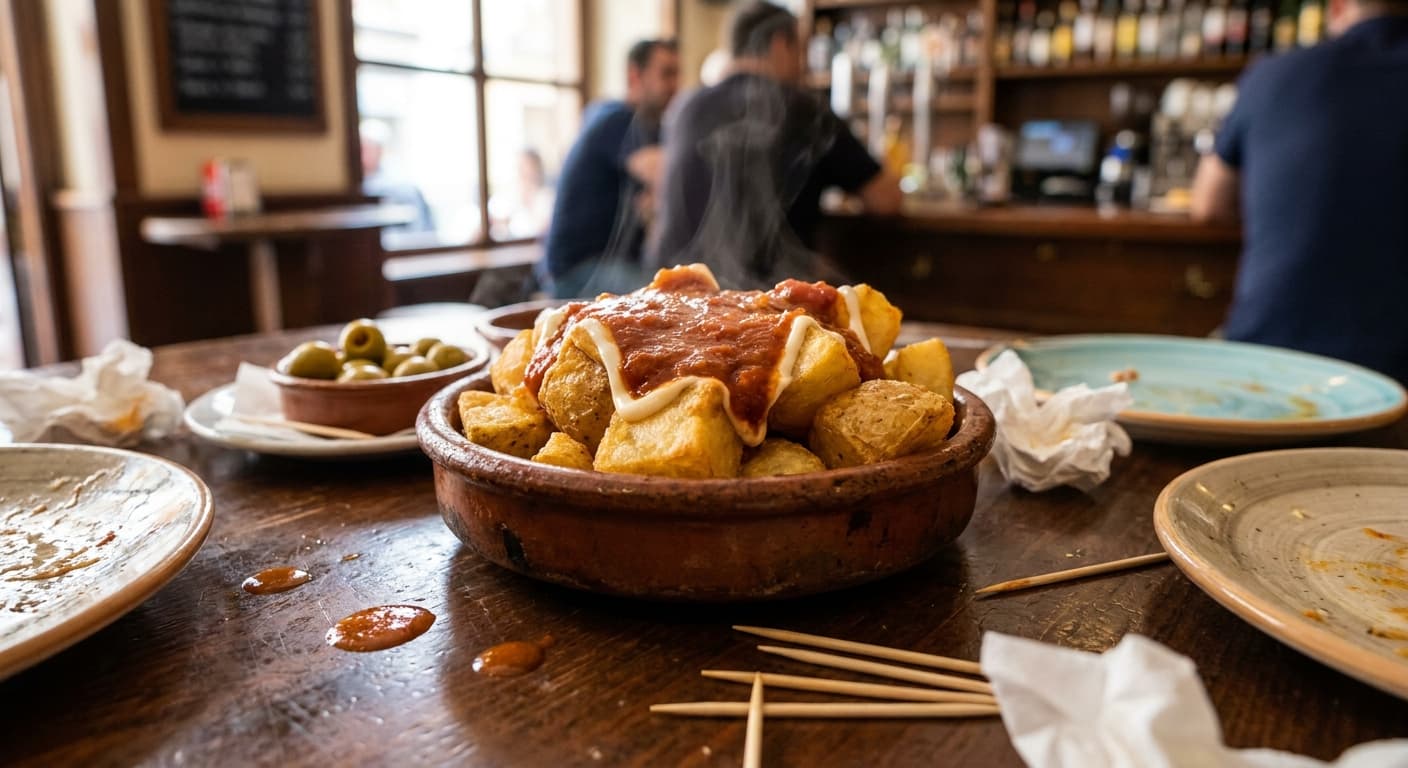
Patatas Bravas (Patatas bravas) — Crisp Spanish Tapas Potatoes with Spicy Brava Sauce
Spanish · Appetizers · 55 min
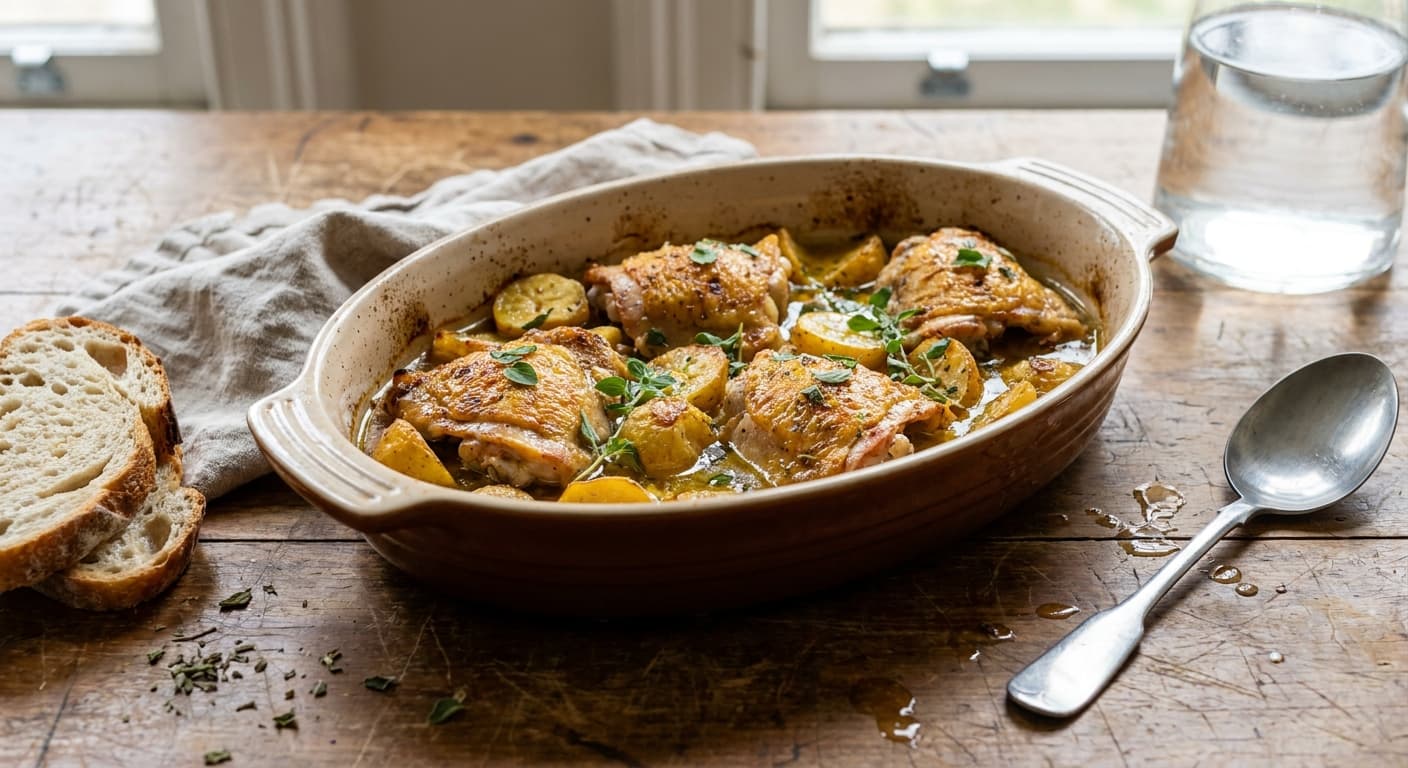
Kotopoulo Lemonato (Κοτόπουλο Λεμονάτο) — Greek Lemon Chicken with Potatoes
Greek · Main Courses · 105 min
Egyptian Karkadeh (كركديه) — Chilled Hibiscus Tea
Egyptian · Drinks · 18 min
Reviews
Cooked this recipe?
Tap the stars to rate it — that's all it takes. A few words are welcome but optional.
No ratings yet. Cooked this one? Be the first to rate it — it takes one tap.