Crispy Saffron Tahdig (ته دیگ زعفرانی)
Golden, crunchy tahdig is the prized crust at the bottom of Persian rice. This saffron version uses parboiled basmati, yogurt, and saffron for a fragrant, shatteringly crisp layer with fluffy rice above.
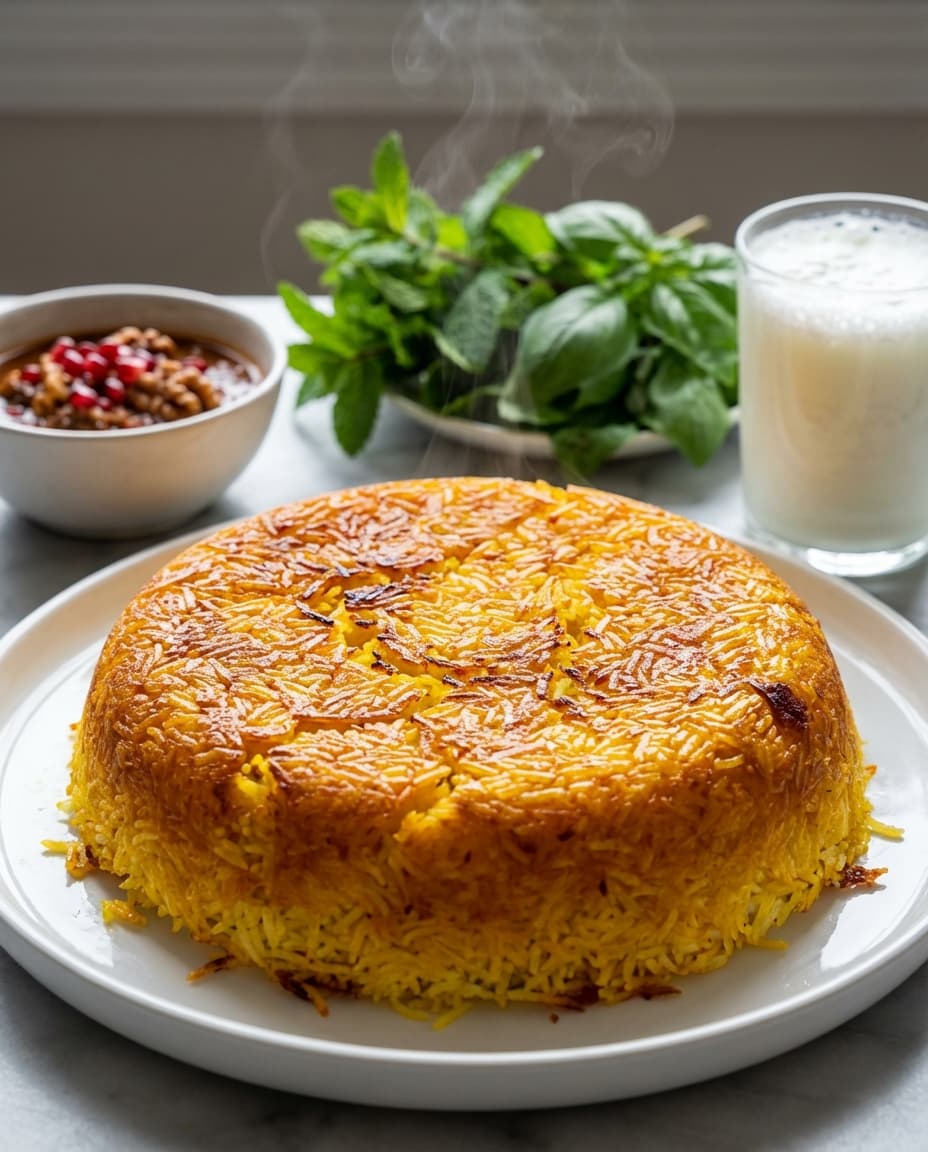
Printable Recipe Card
Servings: 6 · Total: 155 min · Difficulty: medium
Ingredients (quick list)
- 450 g Basmati rice (preferably aged; rinsed until water runs mostly clear)
- 20 g Fine sea salt (divided: for soaking water and boiling water)
- 2600 g Water (includes soaking + boiling; plus extra for rinsing)
- 0.25 g Saffron threads (about 1/2 tsp threads; finely crushed)
- 45 g Hot water (70–80°C to bloom saffron)
- 120 g Plain full-fat yogurt (unsweetened; doogh-style or Greek both work)
- 18 g Egg yolk (from 1 large egg; optional but improves color and cohesion)
- 45 g Neutral oil (such as grapeseed or sunflower)
- 25 g Unsalted butter (melted)
Steps (summary)
- Rinse the basmati rice in several changes of cool water until the water runs mostly clear. Dissolve 10 g salt in 1000 g water,…
- Bloom the saffron: crush 0.25 g saffron threads to a fine powder, then stir in 45 g hot water (70–80°C). Cover and let stand 15…
- Drain the soaked rice. Add it to the boiling salted water and boil 6–8 minutes, stirring gently once or twice to prevent sticki…
- Make the tahdig batter: in a bowl, whisk yogurt with the egg yolk (if using). Stir in 2–3 tbsp (about 40–60 g) of the bloomed s…
- Heat a 24–26 cm heavy nonstick or well-seasoned pot over medium heat for 2 minutes. Add neutral oil and melted butter, swirling…
- Pile the remaining parboiled rice on top in a loose mound without packing it down. With the handle of a wooden spoon, poke 5–6…
+ 2 more steps in the full instructions section below.
Cultural Background
Tahdig is often the most fought-over bite at Iranian family tables, saved for guests or shared in pieces as a sign of generosity. It’s commonly made for weekend lunches, dinner parties, and celebratory meals where perfectly steamed rice (chelow) is the centerpiece.
Equipment
💡 Tips
- A heavy-bottom pot and steady low heat are the keys to crisp tahdig without scorching.
- If your yogurt is very thick, thin it with 10–15 g water so it coats the rice evenly.
- For extra crunch, keep the tahdig layer thin and even; thick patches brown unevenly.
- A towel-wrapped lid prevents condensation from dripping back and softening the crust.
⚠️ Common Mistakes
❌ Boiling the rice until fully cooked
💡 Why: Fully cooked grains turn mushy during steaming and compress the bottom, preventing a crisp crust.
✅ Fix: Boil only 6–8 minutes; the grain should be firm in the center, then drain and rinse briefly to stop cooking.
❌ Heat too high throughout steaming
💡 Why: The bottom browns too fast and can burn before the top rice finishes steaming.
✅ Fix: Use medium-low for 10 minutes to set the crust, then low for 45 minutes; only boost heat for 3–5 minutes at the end if needed.
❌ Skipping the towel-wrapped lid
💡 Why: Condensation drips back, making the rice wet and softening the tahdig.
✅ Fix: Wrap the lid in a clean towel and tie or tuck it securely so steam doesn’t escape.
❌ Pushing and packing the rice mound
💡 Why: Compacted rice traps steam and makes the bottom layer dense rather than crisp.
✅ Fix: Mound the rice loosely and vent with 5–6 holes to the bottom to let steam circulate.
🧊 How to Store
Store leftover rice and tahdig separately if possible. Refrigerate airtight up to 3 days. Re-crisp tahdig in a dry nonstick skillet over medium-low 6–8 minutes, or in a 200°C oven 8–12 minutes; avoid microwaving the crust as it turns chewy.
📅 Make Ahead
Rinse and soak the rice up to 1 hour in advance (keep at room temperature). You can bloom saffron up to 24 hours ahead and refrigerate it tightly covered; bring to room temperature before using. Cooked rice keeps 3 days refrigerated, but re-crisp tahdig separately for best texture.
🍽️ Pairs Well With
- Serve with ghormeh sabzi
- fesenjan
- khoresh gheimeh
- or a simple Shirazi salad and mast-o-khiar. A spoon of torshi or pickled garlic (sir torshi) is a classic contrast.
Regional Variations
- TehranMany Tehran home cooks make a yogurt-and-saffron tahdig like this one, sometimes adding 1–2 tbsp brewed saffron to the top rice as well for a more uniformly golden presentation.
- Mazandaran (Caspian region)A popular variation is potato tahdig: thinly slice 250–300 g potatoes, toss with oil, salt, and a pinch of turmeric, then layer slices on the pot bottom before adding rice; it’s served especially with fish and herb-heavy dishes.
- Shiraz (Fars)Some Shirazi kitchens flavor the tahdig base with a pinch of ground cardamom or a few crushed rose petals alongside saffron, giving the crust a subtly perfumed aroma that pairs well with sweet-sour stews.
Ingredients
- 450 gBasmati rice (preferably aged; rinsed until water runs mostly clear)
- 20 gFine sea salt (divided: for soaking water and boiling water)
- 2600 gWater (includes soaking + boiling; plus extra for rinsing)
- 0.25 gSaffron threads (about 1/2 tsp threads; finely crushed)
- 45 gHot water (70–80°C to bloom saffron)
- 120 gPlain full-fat yogurt (unsweetened; doogh-style or Greek both work)
- 18 gEgg yolk (from 1 large egg; optional but improves color and cohesion)
- 45 gNeutral oil (such as grapeseed or sunflower)
- 25 gUnsalted butter (melted)
🔄 Substitutions
- Egg yolk→ Omit
- Plain full-fat yogurt→ 2 tbsp (30 g) plain yogurt + 1 tbsp (15 g) water + 1 tbsp (15 g) mayonnaise
- Neutral oil→ Clarified butter (ghee)
Instructions
- 1
Rinse the basmati rice in several changes of cool water until the water runs mostly clear. Dissolve 10 g salt in 1000 g water, add the rice, and soak 60 minutes at room temperature. This soaking helps grains elongate and cook evenly, which makes the fluffy rice above the tahdig lighter and less likely to compress the crust.
- 2
Bloom the saffron: crush 0.25 g saffron threads to a fine powder, then stir in 45 g hot water (70–80°C). Cover and let stand 15 minutes to fully release color and aroma. Meanwhile, bring 1600 g water to a rolling boil in a large pot, then add the remaining 10 g salt.
- 3
Drain the soaked rice. Add it to the boiling salted water and boil 6–8 minutes, stirring gently once or twice to prevent sticking. The grains should be softened on the outside but still firm in the center. Immediately drain in a colander and rinse quickly with 300–400 g cool water to stop cooking and wash off excess surface starch.
- 4
Make the tahdig batter: in a bowl, whisk yogurt with the egg yolk (if using). Stir in 2–3 tbsp (about 40–60 g) of the bloomed saffron water until vivid yellow. Fold in 220 g of the parboiled rice so it’s evenly coated; this mixture becomes the crisp, saffron-colored base that bonds into one golden sheet.
- 5
Heat a 24–26 cm heavy nonstick or well-seasoned pot over medium heat for 2 minutes. Add neutral oil and melted butter, swirling to coat the bottom and 2–3 cm up the sides. Reduce heat to medium-low. Spread the saffron-yogurt rice mixture evenly across the bottom, pressing gently to create a uniform layer about 1–1.5 cm thick.
- 6
Pile the remaining parboiled rice on top in a loose mound without packing it down. With the handle of a wooden spoon, poke 5–6 holes down to the bottom to vent steam. Wrap the lid in a clean kitchen towel and cover tightly. Steam on medium-low 10 minutes to set the crust, then reduce to low and steam 45 minutes.
- 7
For a deeper, crisper tahdig, increase heat to medium for 3–5 minutes at the end; listen for a gentle sizzle, not aggressive crackling. Turn off heat and rest, covered, 10 minutes so the crust releases more easily. If desired, drizzle 1–2 tbsp (15–30 g) of remaining saffron water over the top rice before serving.
- 8
To unmold, run a thin silicone spatula around the sides. Place a serving platter over the pot and flip confidently in one motion. If the tahdig sticks, set the pot over low heat for 1–2 minutes to loosen, then try again. Serve immediately so the crust stays crisp and the rice remains fluffy.
🪪 Recipe Passport
Cultural Background
Tahdig is often the most fought-over bite at Iranian family tables, saved for guests or shared in pieces as a sign of generosity. It’s commonly made for weekend lunches, dinner parties, and celebratory meals where perfectly steamed rice (chelow) is the centerpiece.
Regional Variations
Researched from multiple sources and validated by the Zaffaron editorial team. Every recipe is tested for accuracy, measurements, and cultural authenticity.
Nutrition per serving
Pairs well with
If you enjoyed this recipe, here are a few related Zaffaron recipes to try next.
Does your family make this differently?
Every family has their own version. Maybe your grandmother adds a secret ingredient, or your aunt has a completely different technique. Preserve your family's version — with their name on it, forever.
You Might Also Like
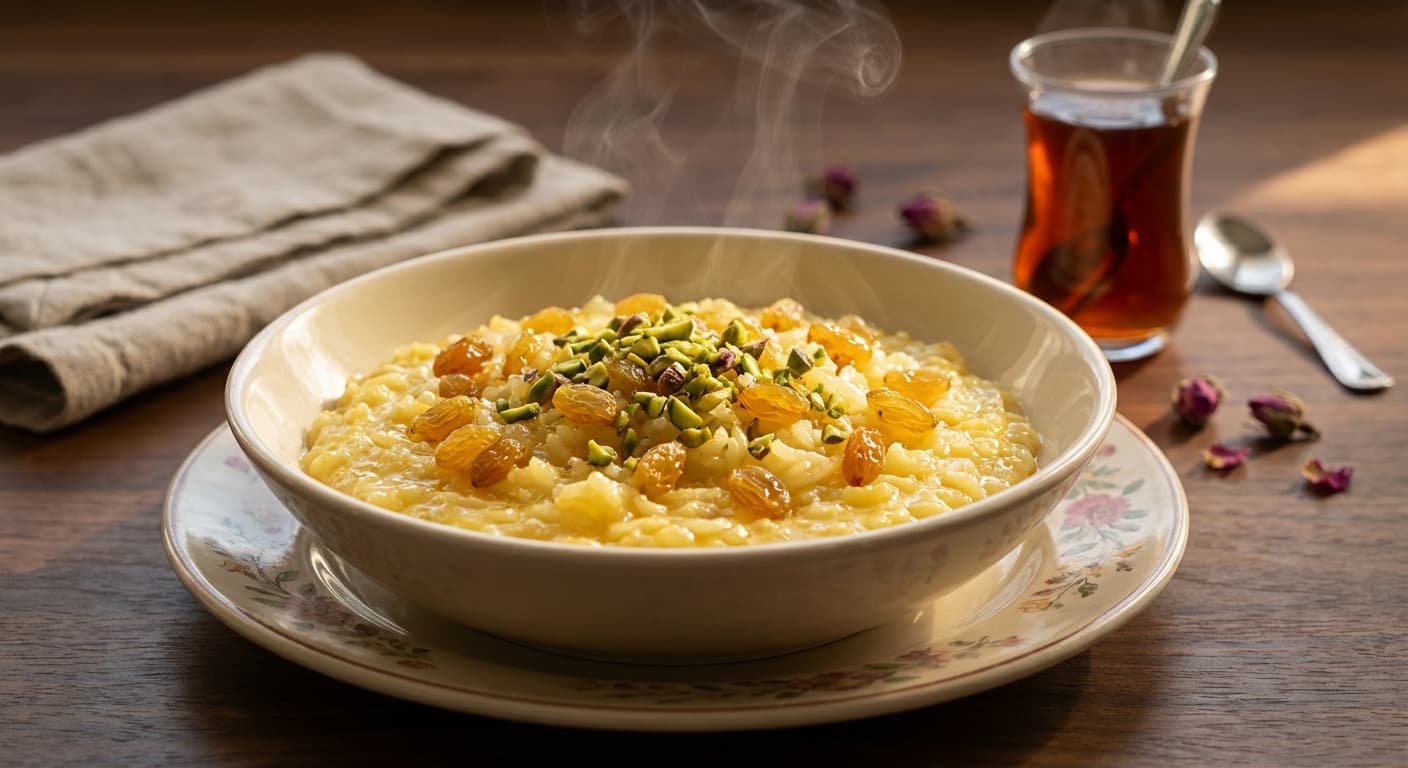
Saffron Sweet Rice (پلو شیرینی زعفرانی) — Festive Persian milk-saffron rice with nuts
Persian · Rice Dishes · 75 min
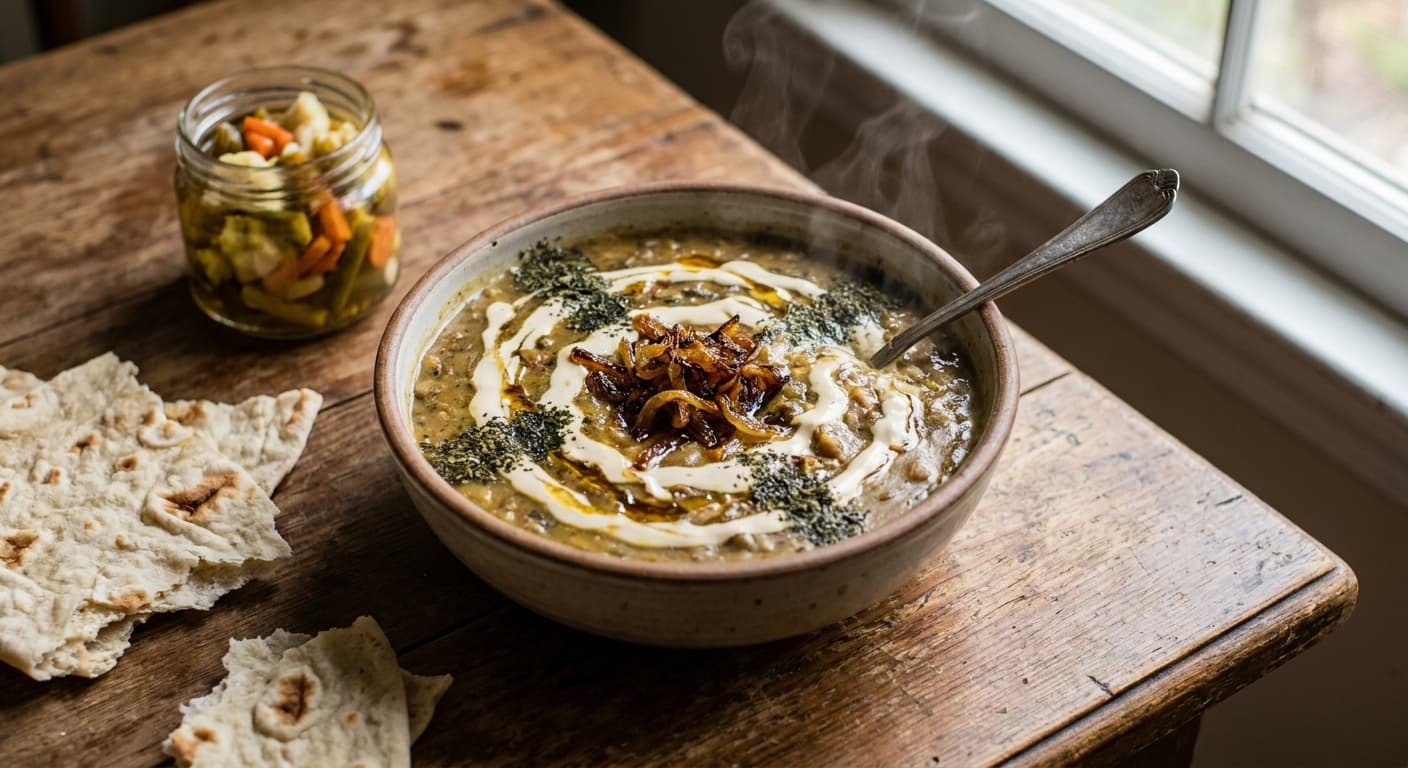
Ash-e Sak (آش ساک) — Gorgani Spinach and Lamb Ash
Persian · Soups · 175 min
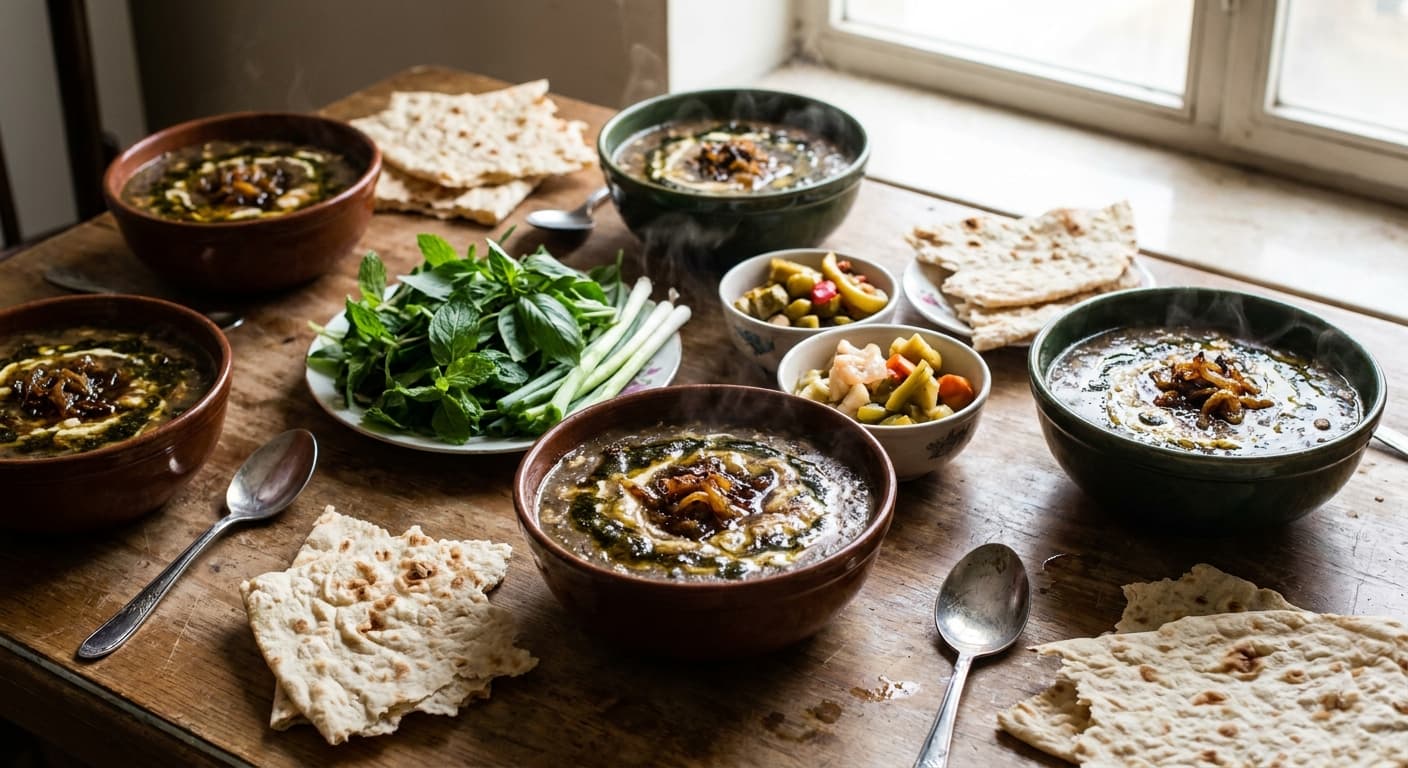
Ash-e Torsh (آش ترش) — Sour Herb and Legume Soup
Persian · Soups · 145 min
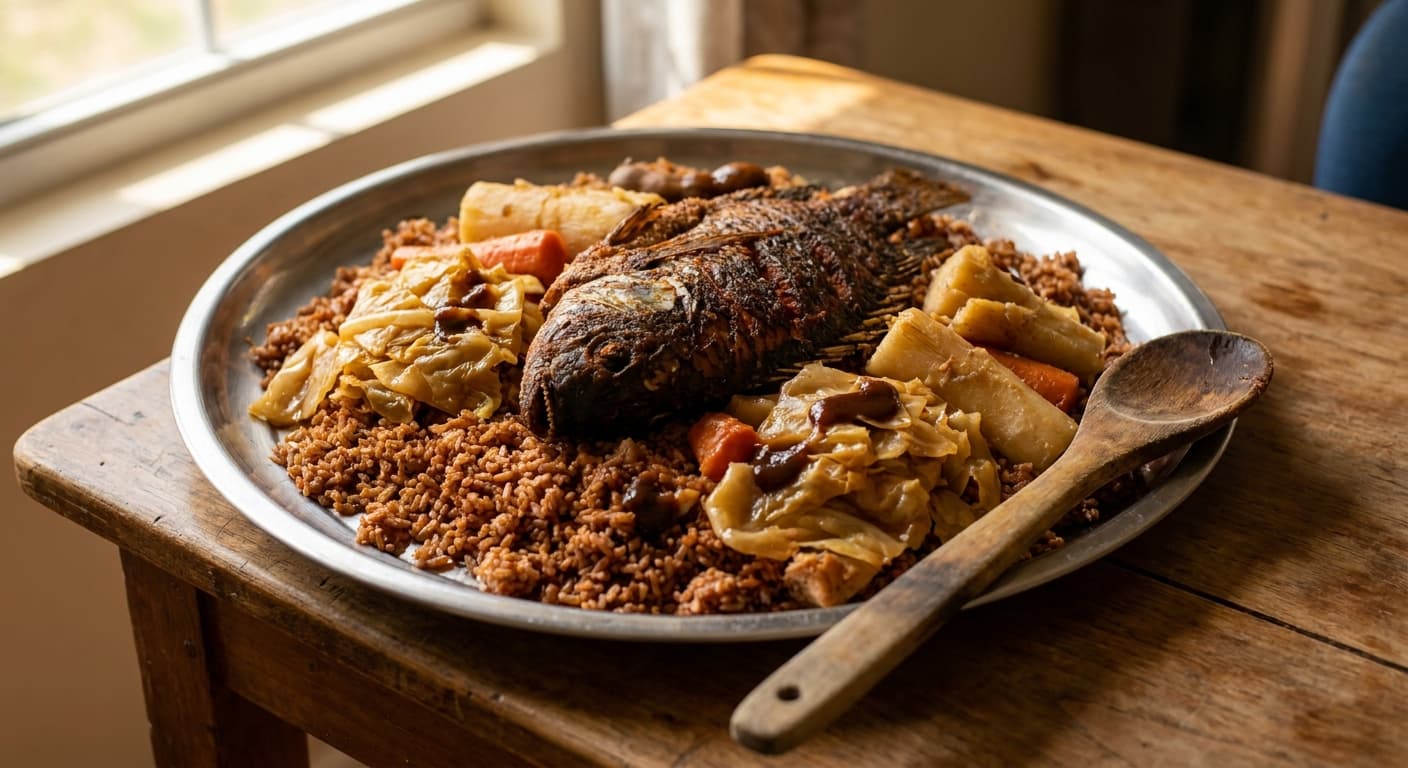
Senegalese Fish and Rice (Ceebu Jën) — Tomato-Braised National Dish
West african · Rice Dishes · 120 min
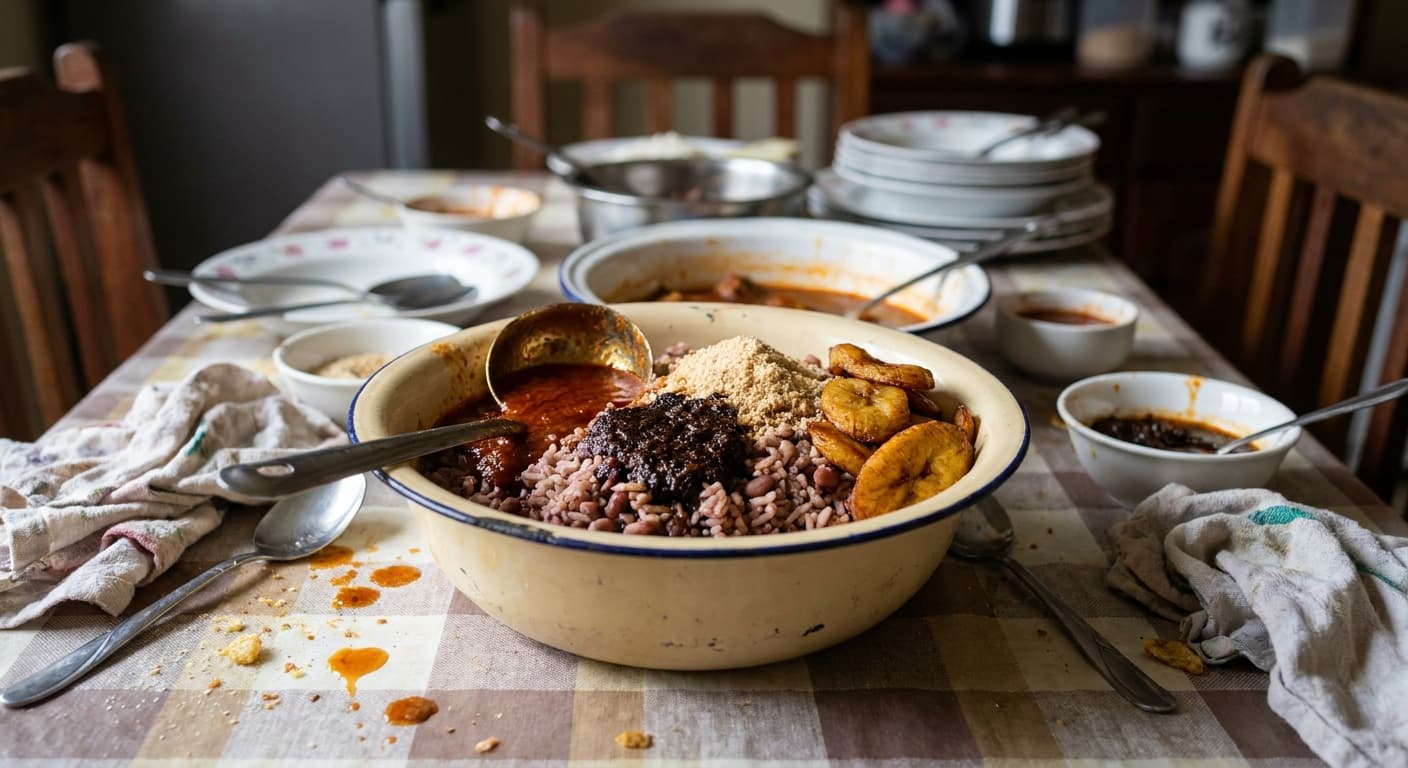
Ghanaian Waakye (Waakye) — Rice and Beans Dyed with Sorghum Leaves
West african · Rice Dishes · 85 min
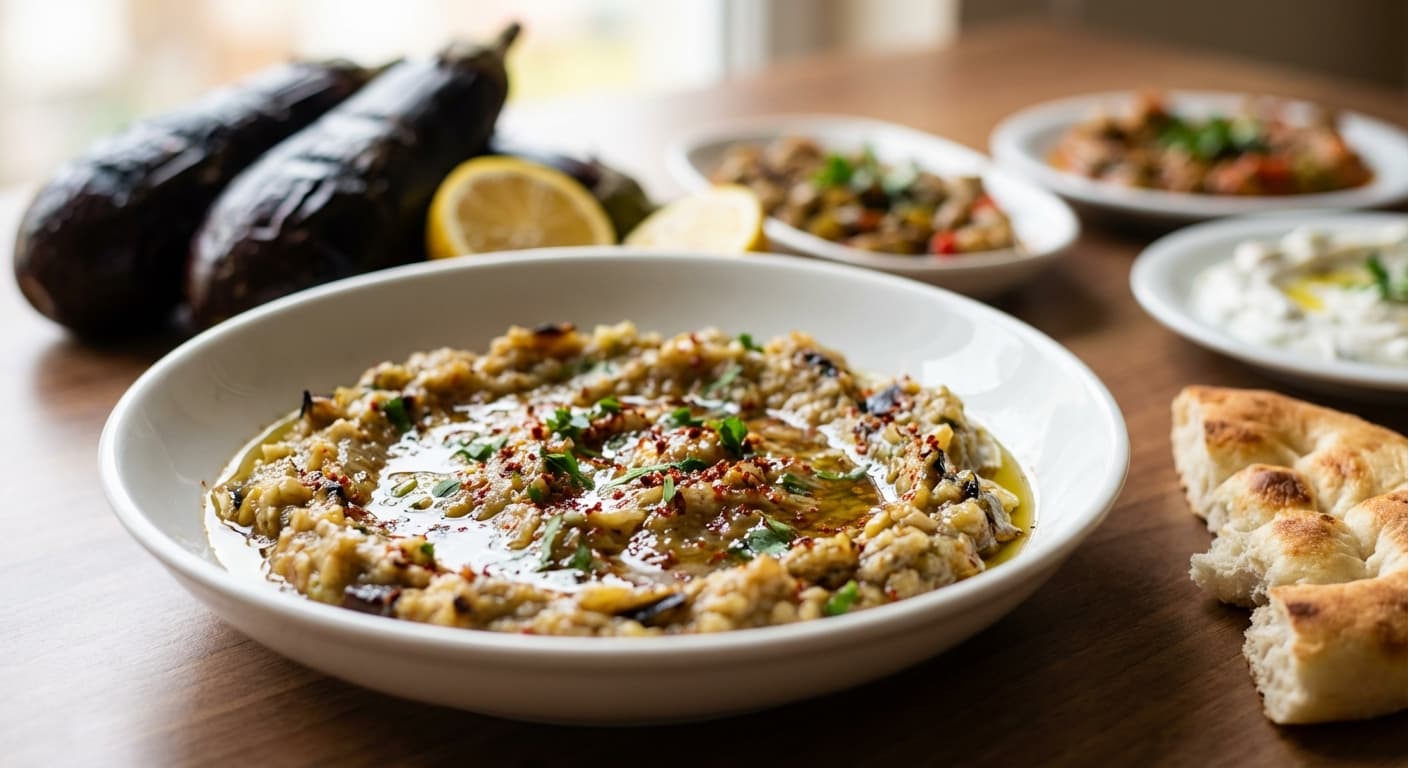
Smoky Eggplant Salad (Patlıcan Salatası) — Turkish charred eggplant with garlic and olive oil
Turkish · Salads · 40 min
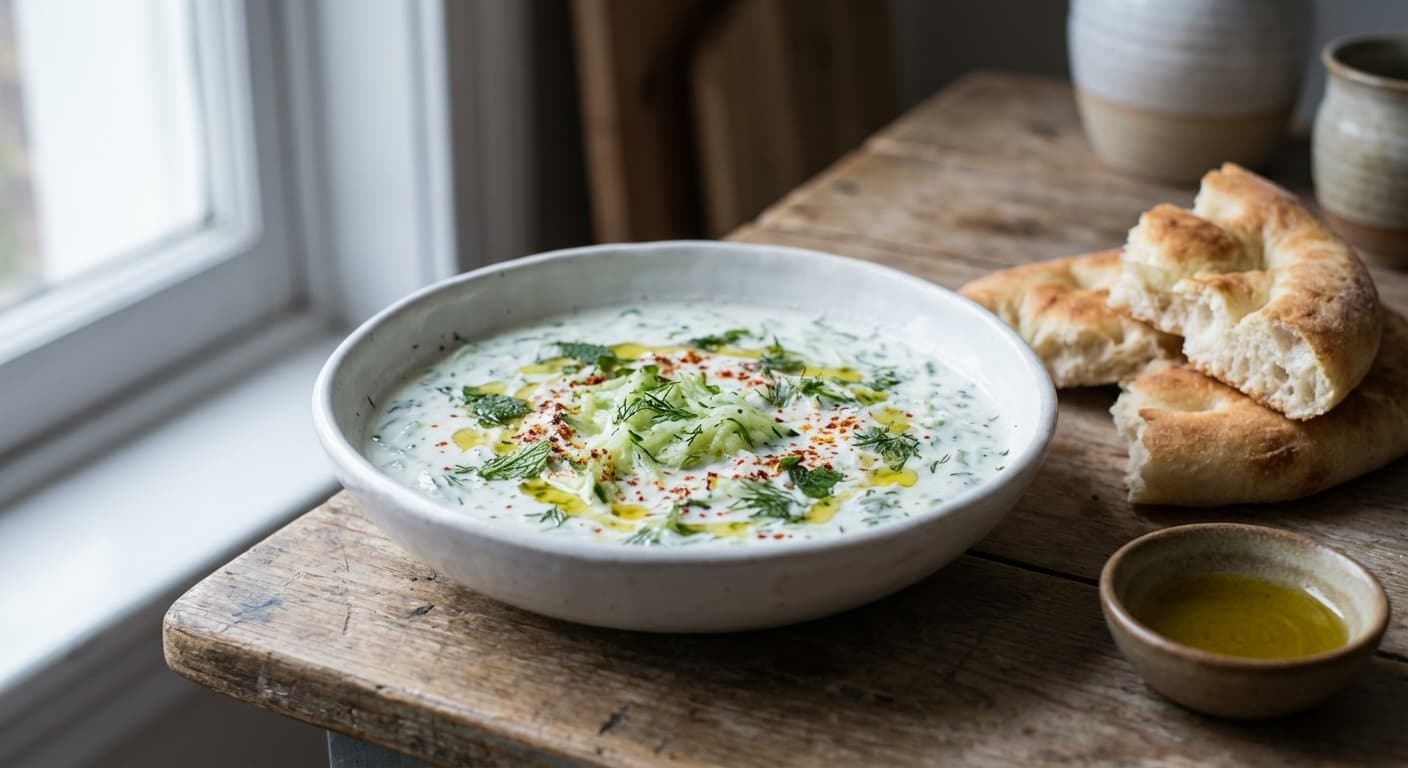
Cacık (Yoğurtlu Salatalık Mezesi) — Chilled Turkish Yogurt, Cucumber & Mint Dip
Turkish · Appetizers · 15 min
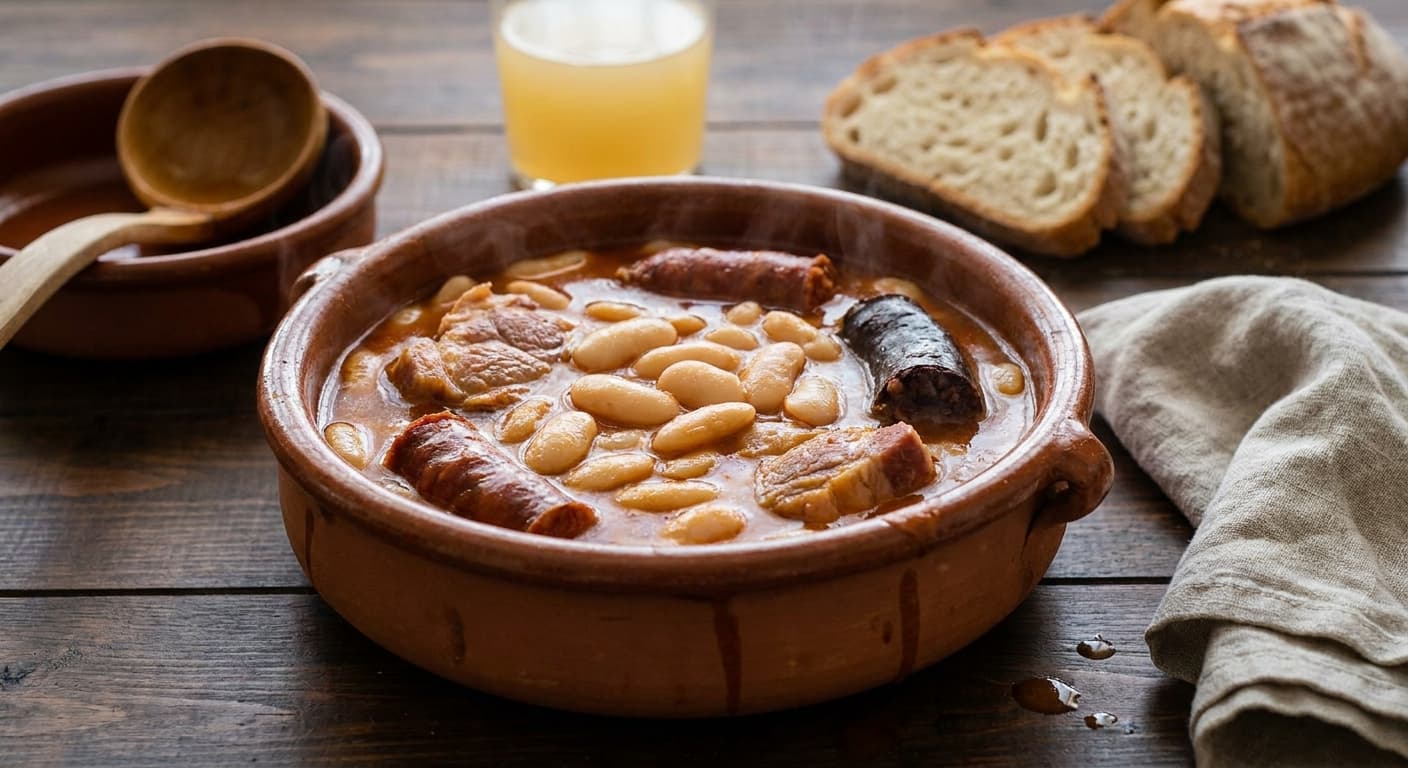
Asturian Bean Stew (Fabada Asturiana) — Smoky Spanish Bean and Pork Stew
Spanish · Stews · 210 min
Reviews
Cooked this recipe?
Tap the stars to rate it — that's all it takes. A few words are welcome but optional.
No ratings yet. Cooked this one? Be the first to rate it — it takes one tap.