Dampokhtak (دمپختک) — Persian Turmeric Rice with Yellow Split Peas
Dampokhtak is a comforting Persian one-pot rice dish colored with turmeric and scented with saffron. Tender yellow split peas, sweet onion, and fluffy basmati rice cook together, finished with butter for a rich, home-style flavor.
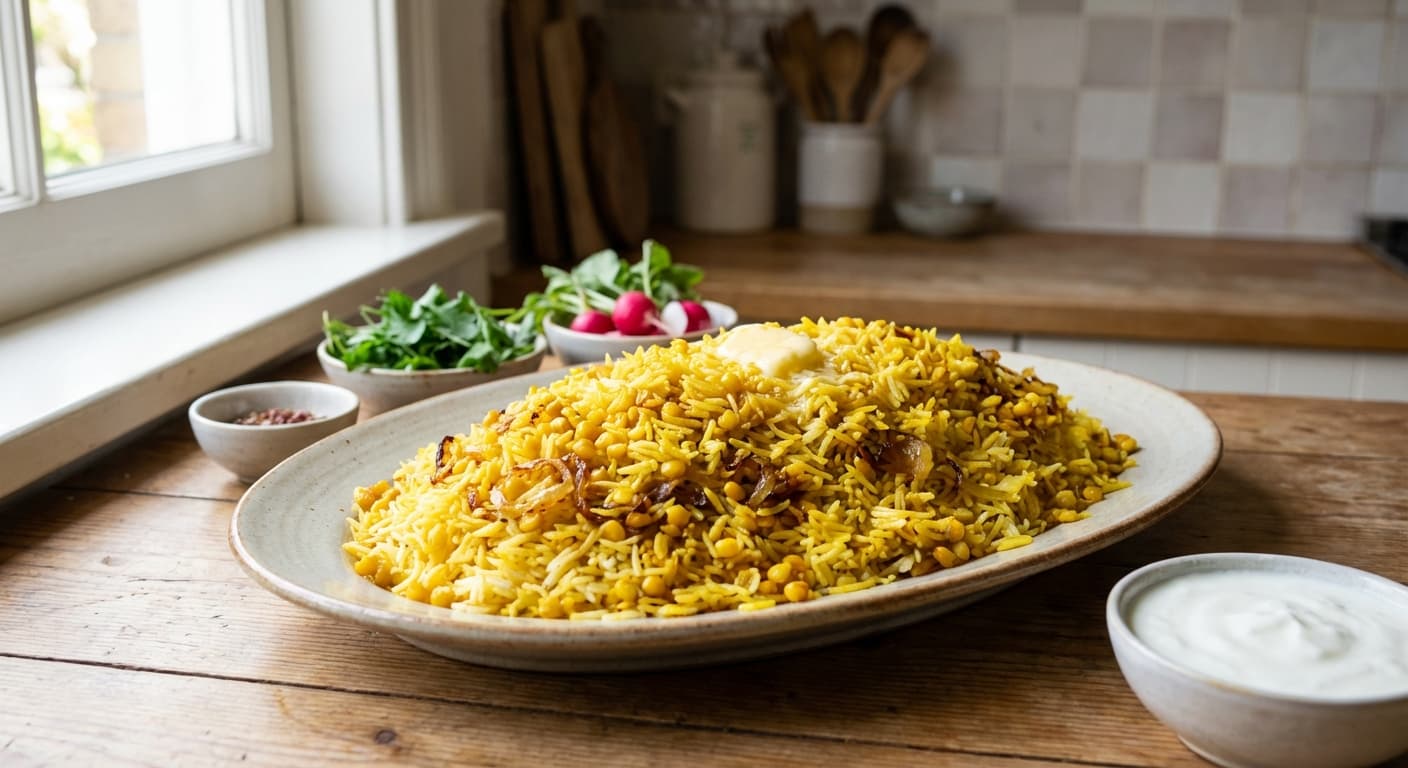
Printable Recipe Card
Servings: 4 · Total: 130 min · Difficulty: medium
Ingredients (quick list)
- 300 g Basmati rice (rinsed until water runs mostly clear, then soaked)
- 720 ml Water (for soaking and cooking (see instructions for divided use))
- 160 g Yellow split peas (rinsed well)
- 180 g Yellow onion (finely diced)
- 45 ml Vegetable oil (divided)
- 2.5 tsp Turmeric (ground)
- 2 tsp Sea salt (fine; adjust to taste)
- 0.25 tsp Saffron threads (crushed and bloomed)
- 30 ml Hot water (for blooming saffron)
- 30 g Unsalted butter (cut into small pieces)
Steps (summary)
- Rinse the basmati rice in several changes of cool water until the water looks mostly clear. Cover with 480 ml of the measured w…
- In a medium pot, add the drained split peas and cover with fresh water (not from the measured amount) by 5 cm. Bring to a boil…
- Bloom the saffron: crush the threads finely, then stir with 30 ml hot water in a small cup. Cover and steep 10 minutes. In a he…
- Add turmeric to the onions and stir constantly for 30 seconds to toast without burning. Add the drained cooked split peas and s…
- Bring to a lively simmer over medium-high heat, uncovered, 6–8 minutes. Watch closely: when most surface water is absorbed and…
- Use the handle of a wooden spoon to poke 5–6 holes down to the bottom to help steam circulate. Spoon the bloomed saffron over t…
+ 1 more steps in the full instructions section below.
Cultural Background
Dampokhtak is a home-style Persian rice dish often cooked as a practical one-pot meal, especially when a warm, filling dinner is desired. Its golden color from turmeric and the fragrance of saffron reflect common flavor pairings in Iranian everyday cooking rather than ceremonial cuisine.
Equipment
💡 Tips
- Keep split peas slightly firm before combining; overcooked peas will break down and make the rice heavy.
- Use a heavy-bottom pot and very low heat during steaming to prevent scorching while still forming a light crust.
- If your rice absorbs water quickly, add 1–2 tbsp extra hot water right before steaming; if it looks wet, simmer 1–2 minutes longer uncovered.
- For more aroma, drizzle 1 tsp melted butter mixed with 1 tsp bloomed saffron over the rice right before serving.
⚠️ Common Mistakes
❌ Skipping the rice soak
💡 Why: Unsoaked basmati cooks less evenly and is more likely to break or turn dense during steaming.
✅ Fix: Soak 30–60 minutes in cool water, then drain well before cooking; if short on time, soak 15 minutes and rinse extra thoroughly.
❌ Overcooking the split peas before mixing with rice
💡 Why: Split peas continue cooking during the steaming stage and can collapse into the rice, making it pasty.
✅ Fix: Simmer only until tender with shape; drain immediately and cool briefly so carryover heat does not over-soften them.
❌ Steaming on heat that is too high
💡 Why: High heat scorches the bottom before the rice finishes steaming, creating bitterness and uneven texture.
✅ Fix: After the simmer stage, reduce to very low heat and use a towel-wrapped lid to trap steam; if your stove runs hot, use a heat diffuser.
❌ Stirring aggressively after adding rice
💡 Why: Vigorous stirring breaks grains and split peas, leading to a sticky, compact result.
✅ Fix: Stir gently for only 20–30 seconds to distribute salt and peas, then leave the rice undisturbed until fluffing at the end.
🧊 How to Store
Cool to room temperature within 2 hours, then refrigerate in an airtight container for up to 4 days. Reheat covered with 1–2 tbsp water in a saucepan over low heat for 8–10 minutes, or microwave covered in 60–90 second bursts until hot throughout.
📅 Make Ahead
Soak the rice up to 1 hour ahead and refrigerate the drained split peas after parboiling up to 24 hours. Cook the dish fully, cool, and refrigerate; reheat gently with a splash of water to restore steam and fluffiness.
🍽️ Pairs Well With
- Plain yogurt with cucumber and dried mint
- Pickled vegetables
- Fresh herbs and radishes
- Simple tomato and cucumber salad
Regional Variations
- Tehran-style home cookingOften kept simple with onion, turmeric, and split peas, then finished with butter and saffron for aroma. Some households prefer a noticeable crust by steaming slightly longer on very low heat.
- Northern Iran (Caspian influence)Sometimes served alongside herb-heavy sides and pickles, with a slightly more pronounced onion sweetness. Cooks may use a bit more oil to encourage a crisp bottom layer.
Ingredients
- 300 gBasmati rice (rinsed until water runs mostly clear, then soaked)
- 720 mlWater (for soaking and cooking (see instructions for divided use))
- 160 gYellow split peas (rinsed well)
- 180 gYellow onion (finely diced)
- 45 mlVegetable oil (divided)
- 2.5 tspTurmeric (ground)
- 2 tspSea salt (fine; adjust to taste)
- 0.25 tspSaffron threads (crushed and bloomed)
- 30 mlHot water (for blooming saffron)
- 30 gUnsalted butter (cut into small pieces)
🔄 Substitutions
- Basmati rice→ Jasmine rice
- Yellow split peas→ Split yellow lentils
- Unsalted butter→ Olive oil
Instructions
- 1
Rinse the basmati rice in several changes of cool water until the water looks mostly clear. Cover with 480 ml of the measured water and soak 45 minutes at room temperature. Meanwhile, rinse the yellow split peas until the water runs clear; set aside to drain so they cook evenly and do not cloud the pot.
- 2
In a medium pot, add the drained split peas and cover with fresh water (not from the measured amount) by 5 cm. Bring to a boil over high heat, skim any foam, then reduce to a gentle simmer for 18–22 minutes, until the peas are tender but still hold their shape. Drain well and set aside.
- 3
Bloom the saffron: crush the threads finely, then stir with 30 ml hot water in a small cup. Cover and steep 10 minutes. In a heavy 4–5 liter nonstick or enamel pot, warm 30 ml vegetable oil over medium heat, add diced onion, and sauté 10–12 minutes until soft and lightly golden.
- 4
Add turmeric to the onions and stir constantly for 30 seconds to toast without burning. Add the drained cooked split peas and stir 1 minute to coat. Drain the soaked rice (discard soaking water), then add the rice to the pot with 240 ml of the measured water and the sea salt; stir gently for 30 seconds.
- 5
Bring to a lively simmer over medium-high heat, uncovered, 6–8 minutes. Watch closely: when most surface water is absorbed and steam holes begin to appear, taste a few grains; they should be mostly tender with a slight core. Reduce heat to low, drizzle remaining 15 ml oil around the edges.
- 6
Use the handle of a wooden spoon to poke 5–6 holes down to the bottom to help steam circulate. Spoon the bloomed saffron over the top in streaks, then dot with the butter pieces. Cover the lid with a clean kitchen towel and place it tightly on the pot; steam on very low heat for 35–40 minutes.
- 7
Turn off the heat and rest, covered, 10 minutes to set the grains and prevent clumping. Fluff gently with a fork or rice paddle, lifting from the bottom to keep peas intact. If a crust has formed, loosen it carefully and serve alongside the rice for contrast in texture.
🪪 Recipe Passport
Cultural Background
Dampokhtak is a home-style Persian rice dish often cooked as a practical one-pot meal, especially when a warm, filling dinner is desired. Its golden color from turmeric and the fragrance of saffron reflect common flavor pairings in Iranian everyday cooking rather than ceremonial cuisine.
Regional Variations
Researched from multiple sources and validated by the Zaffaron editorial team. Every recipe is tested for accuracy, measurements, and cultural authenticity.
Nutrition per serving
Pairs well with
If you enjoyed this recipe, here are a few related Zaffaron recipes to try next.
- Dolmeh Mahi ba Sos Paneer (دلمه ماهی با سس پنیر) — Spinach-Wrapped Fish with Creamy Cheese Sauce
- Du-Rang Meat Roulade (رولت گوشت دورنگ) — Persian Beef and Chicken Spiral with Zereshk
- Dolmeh Barg Mo (دلمه برگ مو) — Persian Stuffed Grape Leaves
- Dolmeh Gojeh Farangi (دلمه گوجه فرنگی) — Persian Stuffed Tomatoes
Does your family make this differently?
Every family has their own version. Maybe your grandmother adds a secret ingredient, or your aunt has a completely different technique. Preserve your family's version — with their name on it, forever.
You Might Also Like
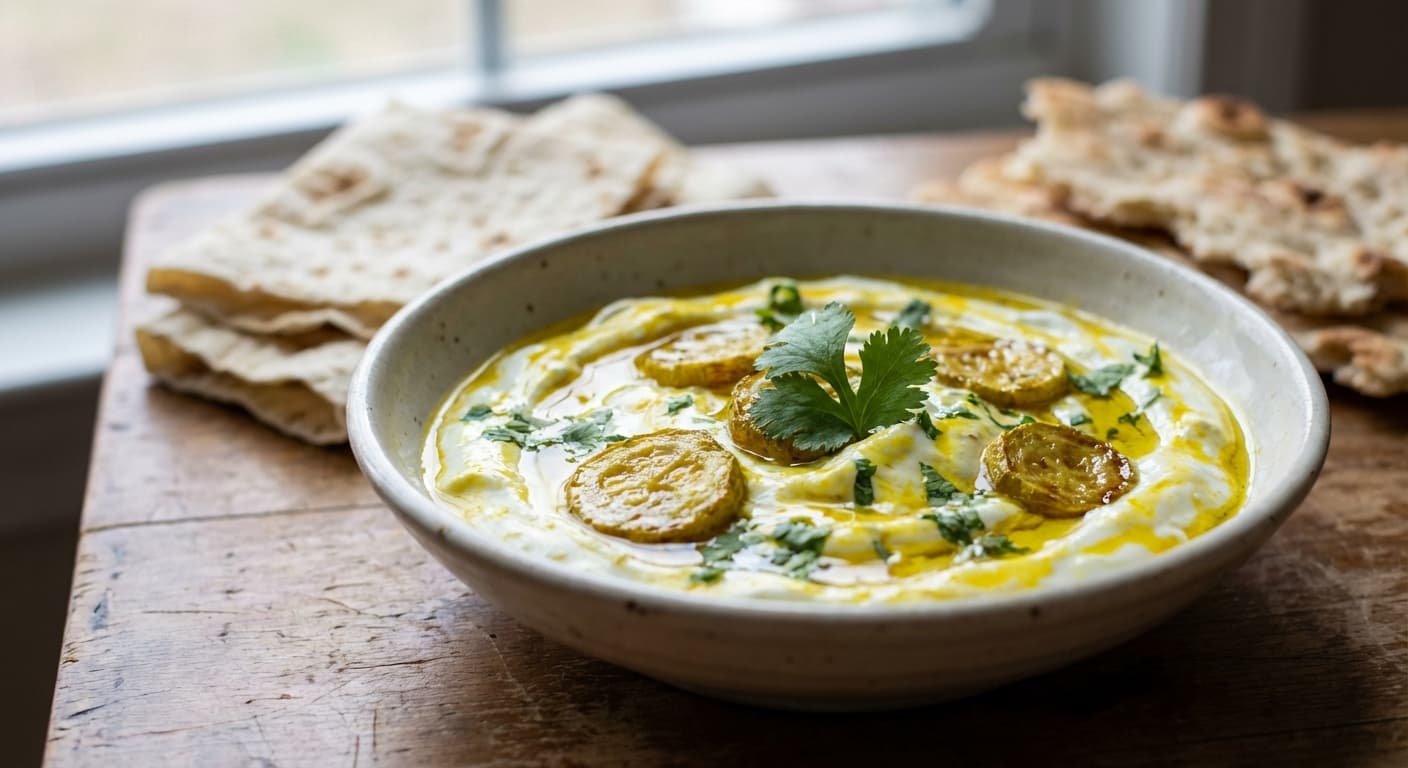
Borani Kadu (بورانی کدو) — Saffron-Infused Zucchini and Yogurt Dip
Persian · Appetizers · 40 min
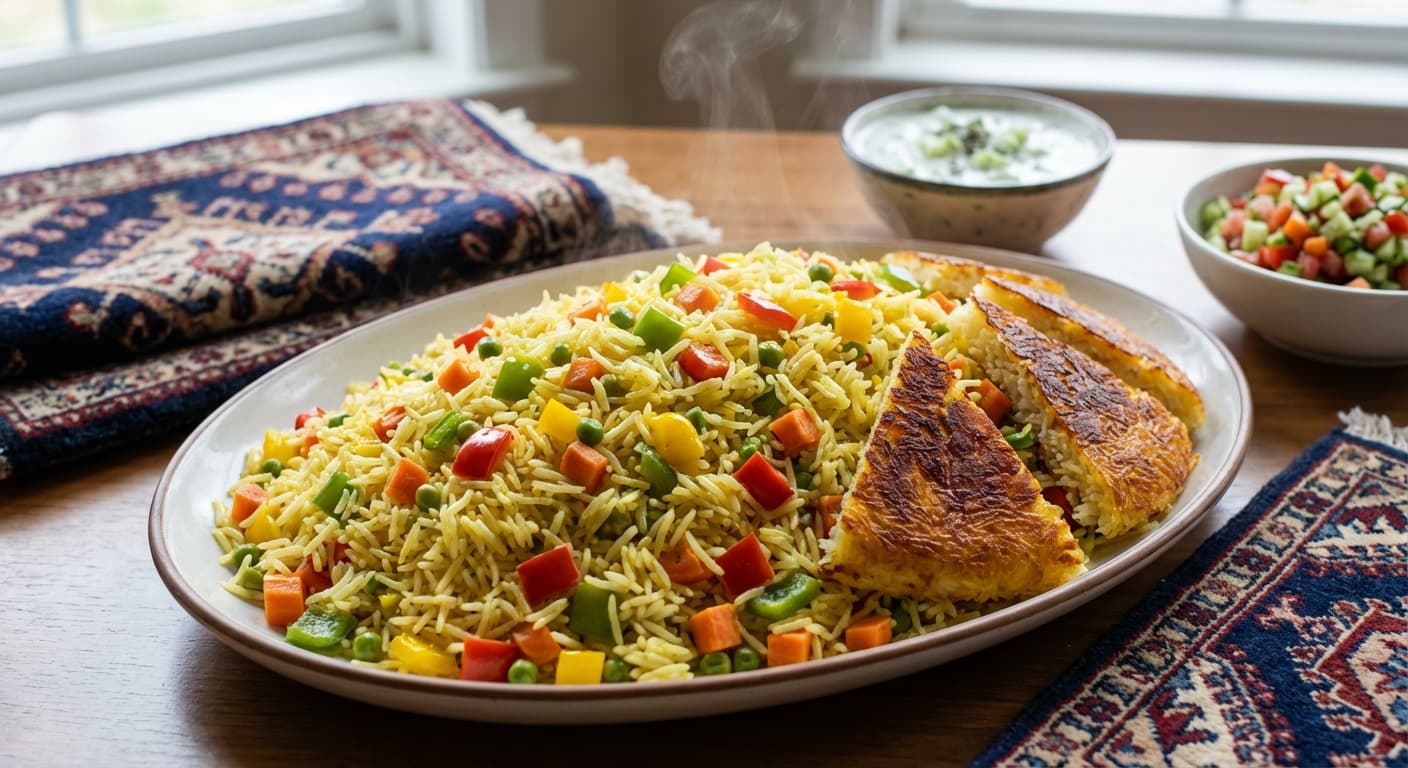
Mixed Vegetable Rice (برنج با مخلوط سبزیجات) — Persian-Style Aromatic Pilaf
Persian · Rice Dishes · 75 min
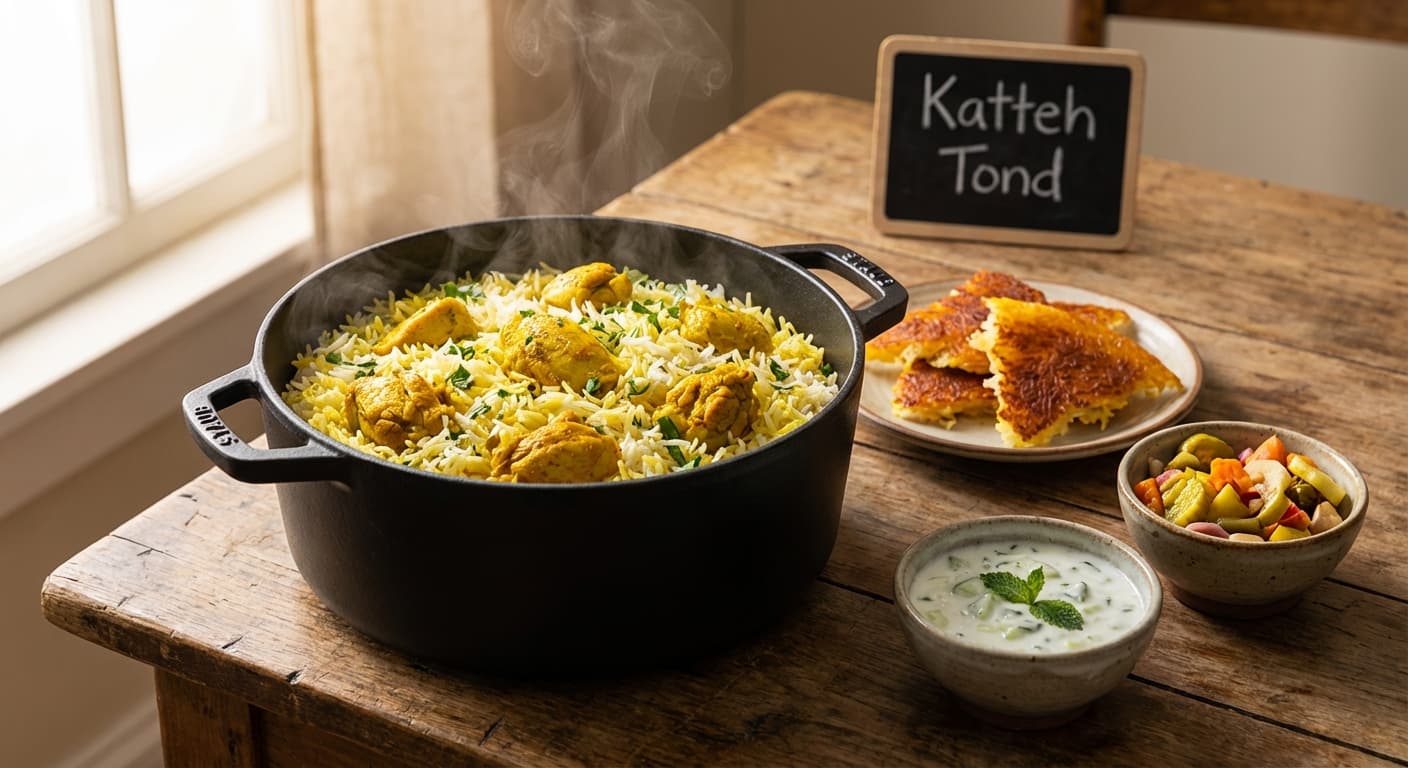
Katteh Tond (کته تند) — Spicy Caspian-Style One-Pot Chicken Rice
Persian · Rice Dishes · 85 min
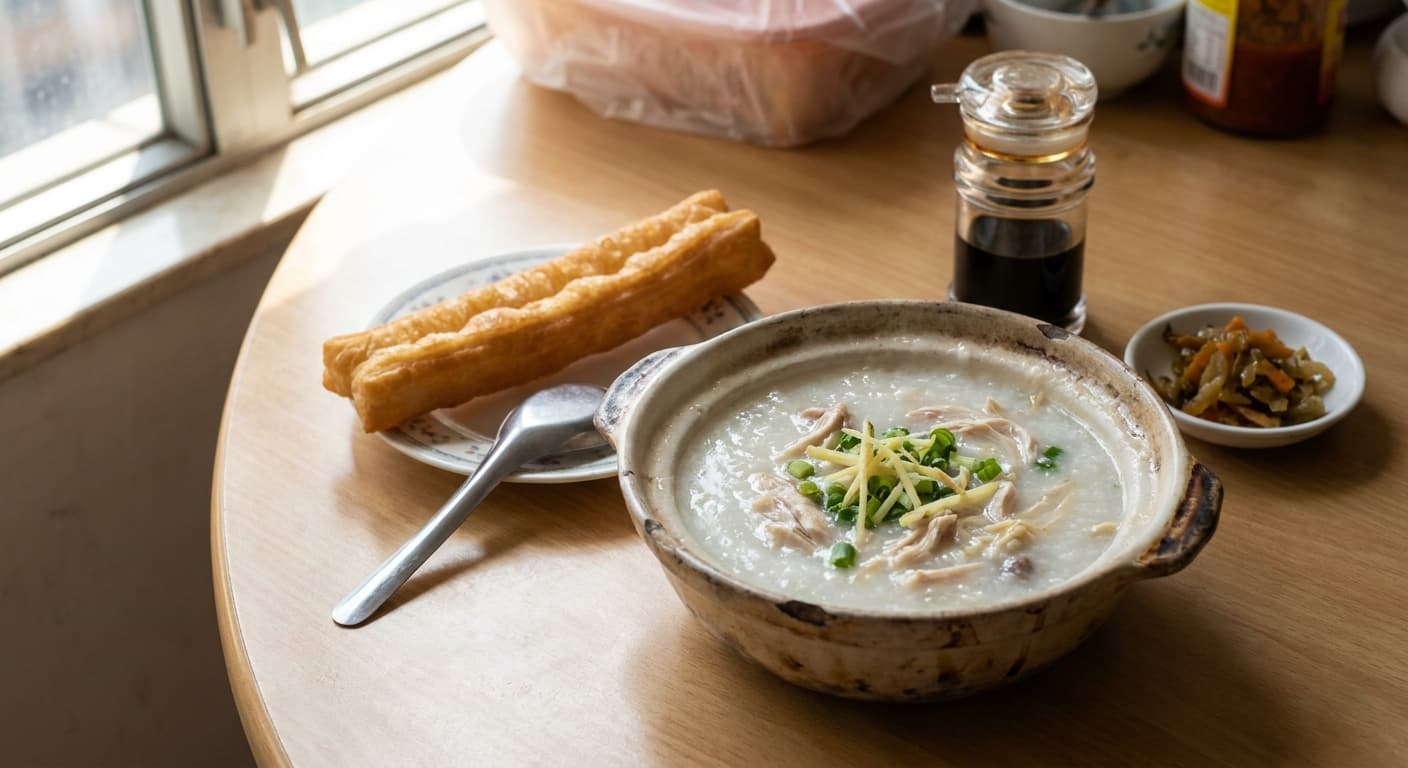
Cantonese Chicken Congee (粵式雞粥) — Silky Rice Porridge with Ginger
Chinese · Rice Dishes · 95 min
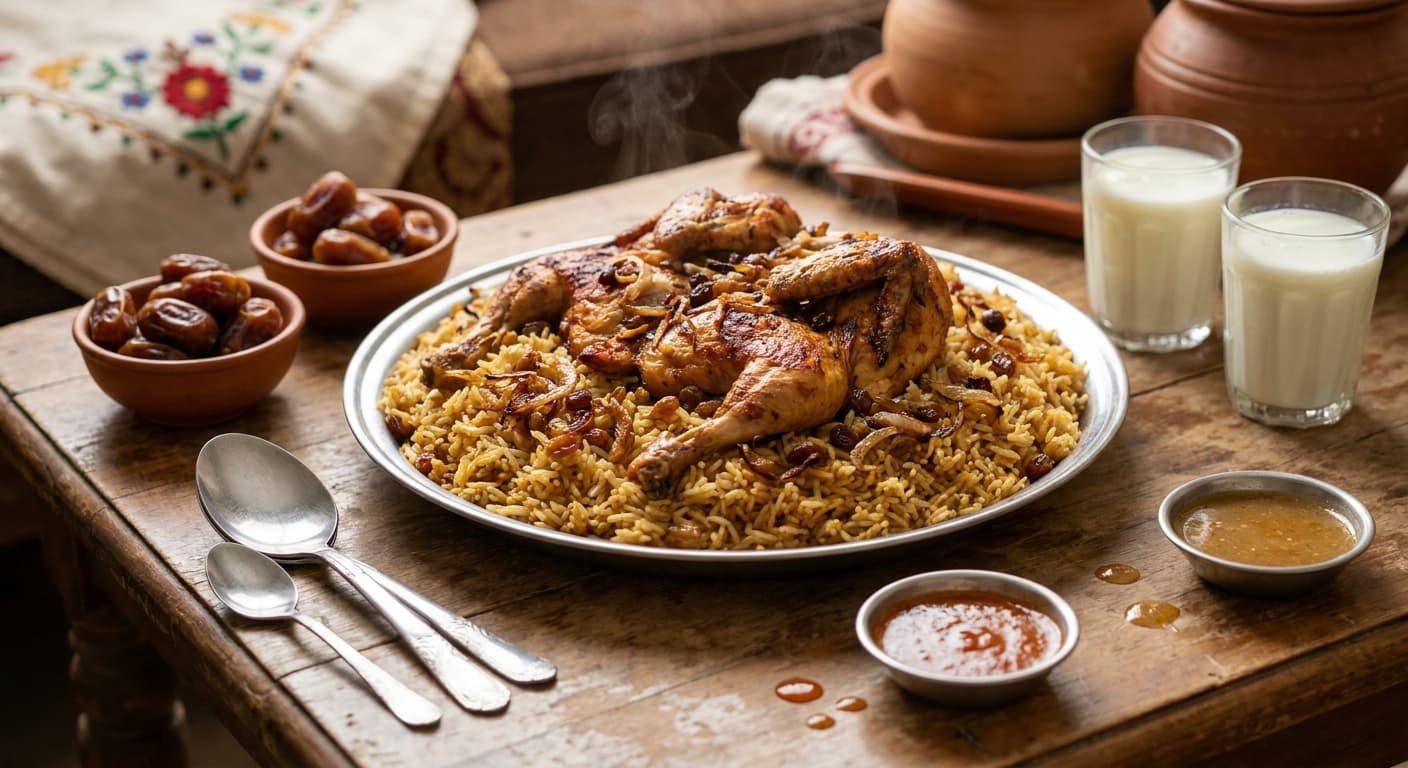
Emirati Machboos (مكبوس إماراتي) — Spiced Chicken Rice with Dried Lime
Gulf arabian · Rice Dishes · 110 min
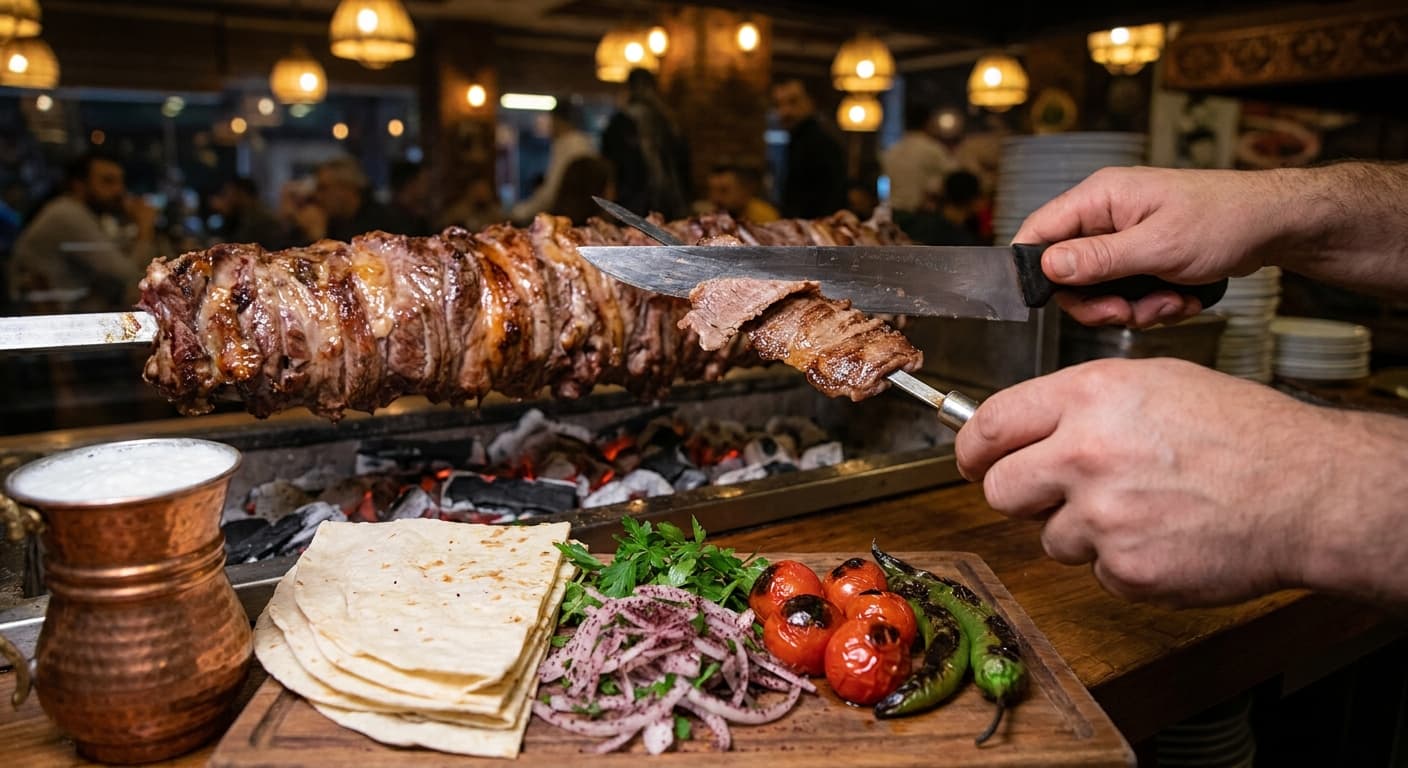
Turkish Cağ Kebab (Cağ Kebabı) — Erzurum Slow-Roasted Charcoal Lamb Skewer
Turkish · Kebabs · 160 min
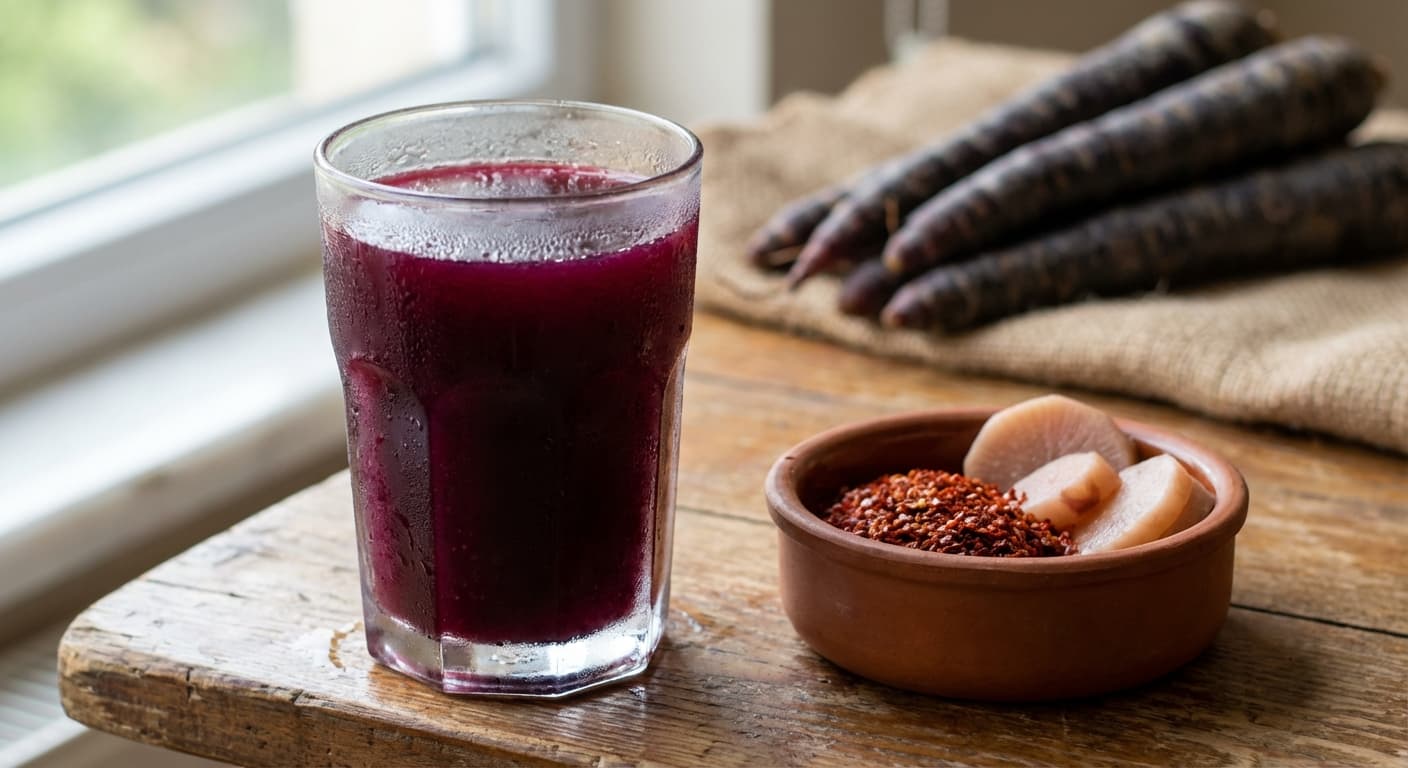
Salgam Juice (Şalgam) — Spicy, tangy fermented black-carrot drink
Turkish · Drinks · 25 min
Baghali Polo (باقالی پلو) — Persian Dill and Fava Bean Rice with Saffron
Persian · Rice Dishes · 95 min
Reviews
Cooked this recipe?
Tap the stars to rate it — that's all it takes. A few words are welcome but optional.
No ratings yet. Cooked this one? Be the first to rate it — it takes one tap.