Pan Kebab (کباب تابهای)
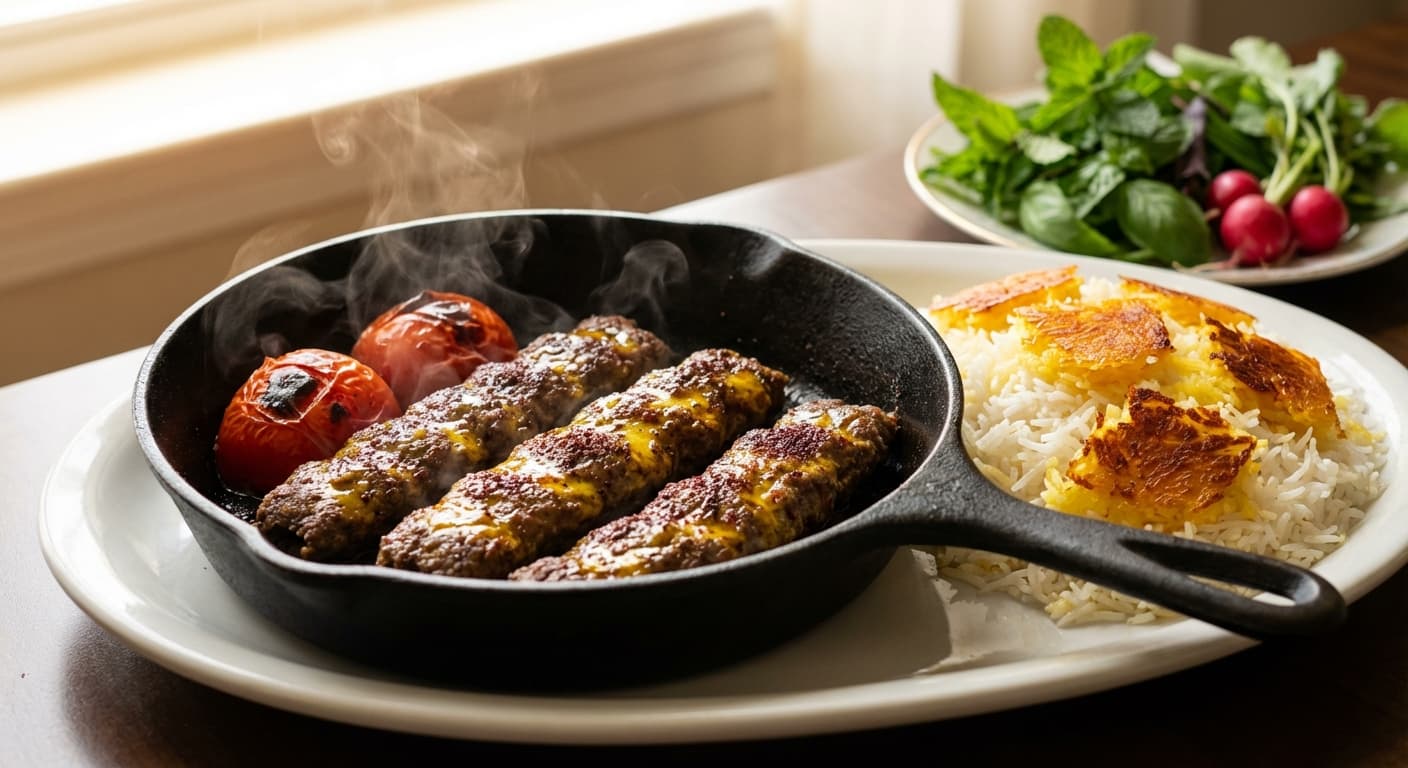
Kabab Tabei is a beloved Iranian pan-seared kebab made with juicy ground beef and lamb, grated onion, and warm spices. It delivers classic koobideh flavor without a grill, finished with saffron butter and served alongside fluffy rice and grilled tomatoes.
Printable Recipe Card
Servings: 4 · Total: 60 min · Difficulty: easy
Ingredients (quick list)
- 350 g Ground beef (85/15) (well-chilled)
- 250 g Ground lamb (well-chilled)
- 220 g Yellow onion (1 large; grated on fine side then squeezed very dry)
- 6 g Garlic (2 cloves, finely grated)
- 8 g Fine sea salt (about 1 1/2 tsp)
- 1 tsp Black pepper (freshly ground)
- 2 tsp Ground sumac
- 1 tsp Ground turmeric
- 0.5 tsp Baking soda (optional, for tenderness)
- 20 g Unsalted butter
- 1 tbsp Brewed saffron water (from 1/4 tsp ground saffron bloomed in 2 tbsp hot water)
- 400 g Tomatoes (2 medium; halved)
+ 1 more in the full ingredients section below.
Steps (summary)
- Grate the onion on the fine side of a box grater into a bowl. Transfer to a clean kitchen towel and squeeze firmly for 2–3 minu…
- In a cold mixing bowl, combine chilled ground beef (350 g) and ground lamb (250 g) with squeezed onion, grated garlic, salt, bl…
- Cover the bowl tightly and refrigerate the kebab mixture for 20 minutes to firm up. While it rests, halve the tomatoes and keep…
- Heat a large nonstick or well-seasoned cast-iron skillet (28–30 cm) over medium-high for 2 minutes. Add 1 tbsp neutral oil and…
- Using a butter knife or spatula edge, score the meat into 8 long strips (like koobideh) without separating them. Cook undisturb…
- Flip each strip carefully with a thin spatula. Reduce heat to medium and cook 5–6 minutes. Push the kebab strips to one side an…
+ 2 more steps in the full instructions section below.
Cultural Background
Kabab tabei is a home-kitchen answer to the iconic Iranian koobideh kebab, made when a manghal (charcoal grill) isn’t available. It’s a common family meal served with chelow and tomatoes, capturing the comforting flavors of kebab houses in an accessible stovetop form.
Equipment
💡 Tips
- Squeeze the grated onion until nearly dry; wet onion is the #1 reason kabab tabei falls apart and turns gray.
- Keep the meat cold and knead until sticky; protein extraction is what binds the kebab without breadcrumbs.
- For deeper browning, use cast iron and avoid moving the kebab during the first 6–7 minutes.
- If your pan is small, cook in two batches rather than making a thicker layer (thick kebab steams and cracks).
- Sumac is traditionally sprinkled at the table too—serve extra for a bright, tangy finish.
⚠️ Common Mistakes
❌ Not squeezing grated onion dry
💡 Why: Excess onion juice makes the mixture loose, causing cracking, shrinking, and steaming instead of browning.
✅ Fix: Squeeze in a towel for 2–3 minutes until the pulp is almost dry; keep only the pulp, not the juice.
❌ Skipping the kneading step
💡 Why: Without enough mixing, proteins don’t bind and the kebab crumbles when flipped.
✅ Fix: Knead 5–7 minutes until the mixture becomes sticky and cohesive; chilling 20 minutes further firms it up.
❌ Flipping too early or moving the kebab during searing
💡 Why: The crust hasn’t formed, so the kebab sticks and tears, losing juices.
✅ Fix: Sear 6–7 minutes undisturbed on medium-high; flip only when it releases easily and is deeply browned.
❌ Cooking on low heat the whole time
💡 Why: Low heat renders fat slowly and steams the meat, producing a pale, dense kebab.
✅ Fix: Start with medium-high to brown, then reduce to medium after flipping to finish cooking evenly.
🧊 How to Store
Cool leftovers within 2 hours. Refrigerate kebab and tomatoes in an airtight container up to 3 days. Reheat covered in a skillet over medium-low with 1–2 tbsp water for 6–8 minutes, or microwave at 60% power in 45-second bursts to avoid drying. Freeze cooked kebab up to 2 months; thaw overnight in the fridge before reheating.
📅 Make Ahead
Mix and knead the meat mixture up to 24 hours ahead; keep tightly covered in the refrigerator. Shape and cook just before serving for best juiciness. Saffron water can be brewed up to 3 days ahead and refrigerated in a sealed jar; warm gently before mixing with butter.
🍽️ Pairs Well With
- Serve with chelow (Persian steamed rice)
- tahdig
- grilled or pan-roasted tomatoes
- torshi
- sabzi khordan (fresh herbs)
- raw onion wedges
- and a dusting of sumac. A side of mast-o-khiar or doogh pairs beautifully.
Regional Variations
- TehranOften kept very close to koobideh seasoning—mostly onion, salt, and pepper—with minimal turmeric. It’s commonly scored into long strips and served with plenty of sumac and pan-roasted tomatoes, echoing chelow-kebab restaurant plating.
- Azerbaijan (Tabriz/Ardabil)More likely to include a stronger turmeric note and sometimes a small amount of grated garlic. Some households shape smaller oval patties rather than long strips, making them easier to flip and serving them with local bread (nan) instead of rice.
Ingredients
- 350 gGround beef (85/15) (well-chilled)
- 250 gGround lamb (well-chilled)
- 220 gYellow onion (1 large; grated on fine side then squeezed very dry)
- 6 gGarlic (2 cloves, finely grated)
- 8 gFine sea salt (about 1 1/2 tsp)
- 1 tspBlack pepper (freshly ground)
- 2 tspGround sumac
- 1 tspGround turmeric
- 0.5 tspBaking soda (optional, for tenderness)
- 20 gUnsalted butter
- 1 tbspBrewed saffron water (from 1/4 tsp ground saffron bloomed in 2 tbsp hot water)
- 400 gTomatoes (2 medium; halved)
- 1 tbspNeutral oil (e.g., grapeseed or sunflower)
🔄 Substitutions
- Ground lamb→ Use all ground beef (600 g total) or 80/20 ground beef
- Baking soda→ Omit and add 1 tbsp plain yogurt (15 g) to the meat mixture
- Unsalted butter→ Use 1 1/2 tbsp olive oil (20 g) mixed with saffron water
Instructions
- 1
Grate the onion on the fine side of a box grater into a bowl. Transfer to a clean kitchen towel and squeeze firmly for 2–3 minutes until very dry; measure 220 g squeezed onion pulp. This is crucial so the kebab holds together and browns instead of steaming.
- 2
In a cold mixing bowl, combine chilled ground beef (350 g) and ground lamb (250 g) with squeezed onion, grated garlic, salt, black pepper, sumac, turmeric, and baking soda (if using). Knead vigorously by hand for 5–7 minutes until the mixture turns sticky and cohesive, like a smooth paste.
- 3
Cover the bowl tightly and refrigerate the kebab mixture for 20 minutes to firm up. While it rests, halve the tomatoes and keep them at room temperature. Bloom saffron by stirring 1/4 tsp ground saffron into 2 tbsp hot (not boiling) water; let stand 10 minutes, then measure 1 tbsp.
- 4
Heat a large nonstick or well-seasoned cast-iron skillet (28–30 cm) over medium-high for 2 minutes. Add 1 tbsp neutral oil and swirl to coat. With wet hands, press the meat mixture evenly into the pan in a 1.5–2 cm layer, smoothing the surface and compacting to remove air pockets.
- 5
Using a butter knife or spatula edge, score the meat into 8 long strips (like koobideh) without separating them. Cook undisturbed for 6–7 minutes over medium-high until the bottom is deeply browned and releases easily. If it sticks, give it 1 more minute; forcing it will tear the kebab.
- 6
Flip each strip carefully with a thin spatula. Reduce heat to medium and cook 5–6 minutes. Push the kebab strips to one side and place tomato halves cut-side down in the empty space; cook 3–4 minutes, then turn and cook 2–3 minutes more until softened and lightly blistered.
- 7
Check doneness: the thickest part should reach 71°C/160°F and juices should run mostly clear. Tilt the pan and spoon off excess rendered fat if desired. Transfer kebabs and tomatoes to a warm platter and rest 3 minutes so the juices redistribute and the texture stays juicy.
- 8
Melt 20 g butter in a small pan over low heat for 1 minute, then stir in 1 tbsp brewed saffron water. Brush or spoon the saffron butter over the kebab strips and tomatoes. Serve immediately with steamed rice, sumac, and fresh herbs; the saffron finish adds aroma and a classic Iranian sheen.
🪪 Recipe Passport
Cultural Background
Kabab tabei is a home-kitchen answer to the iconic Iranian koobideh kebab, made when a manghal (charcoal grill) isn’t available. It’s a common family meal served with chelow and tomatoes, capturing the comforting flavors of kebab houses in an accessible stovetop form.
Regional Variations
Researched from multiple sources and validated by the Zaffaron editorial team. Every recipe is tested for accuracy, measurements, and cultural authenticity.
Nutrition per serving
Pairs well with
If you enjoyed this recipe, here are a few related Zaffaron recipes to try next.
Does your family make this differently?
Every family has their own version. Maybe your grandmother adds a secret ingredient, or your aunt has a completely different technique. Preserve your family's version — with their name on it, forever.
You Might Also Like
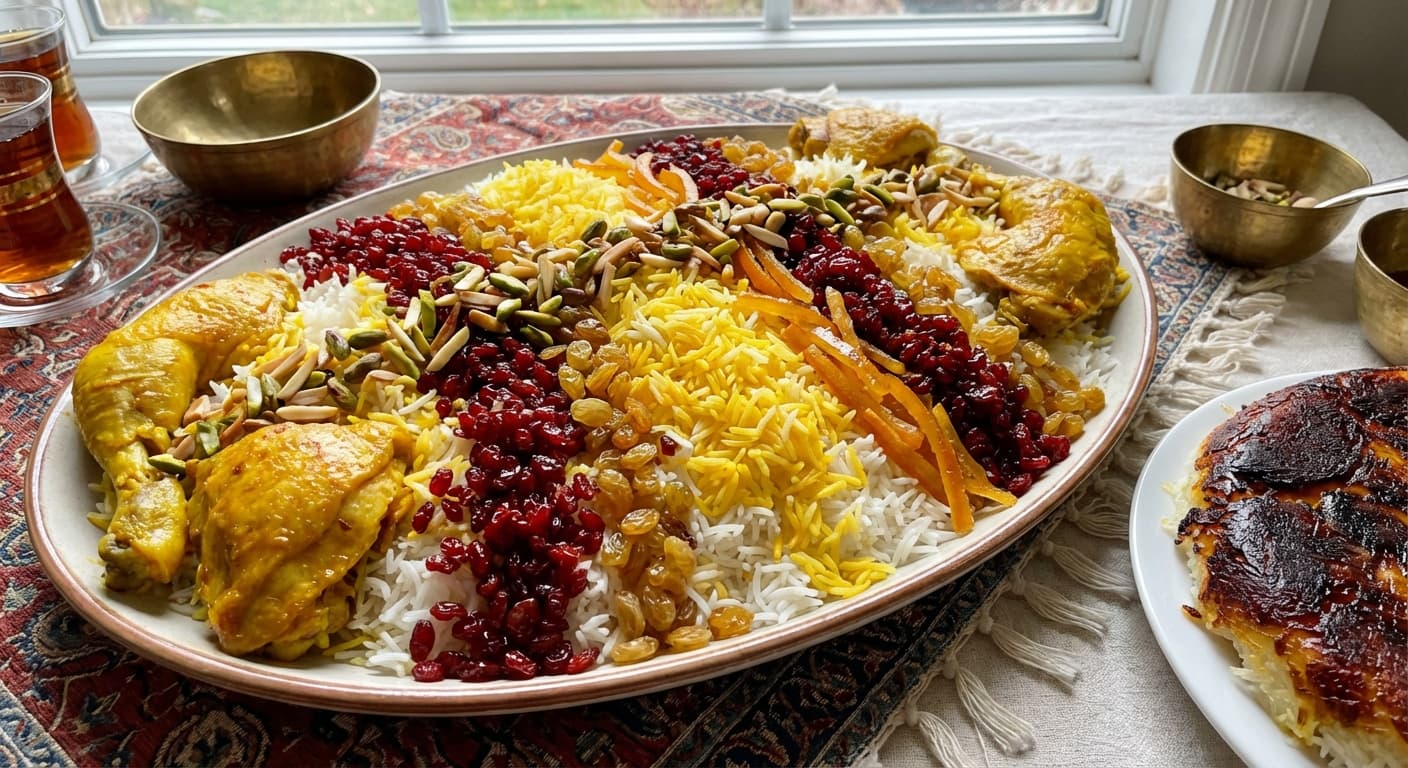
Jeweled Rice (مرصع پلو) — Festive Persian rice with saffron chicken and jeweled fruits
Persian · Rice Dishes · 135 min
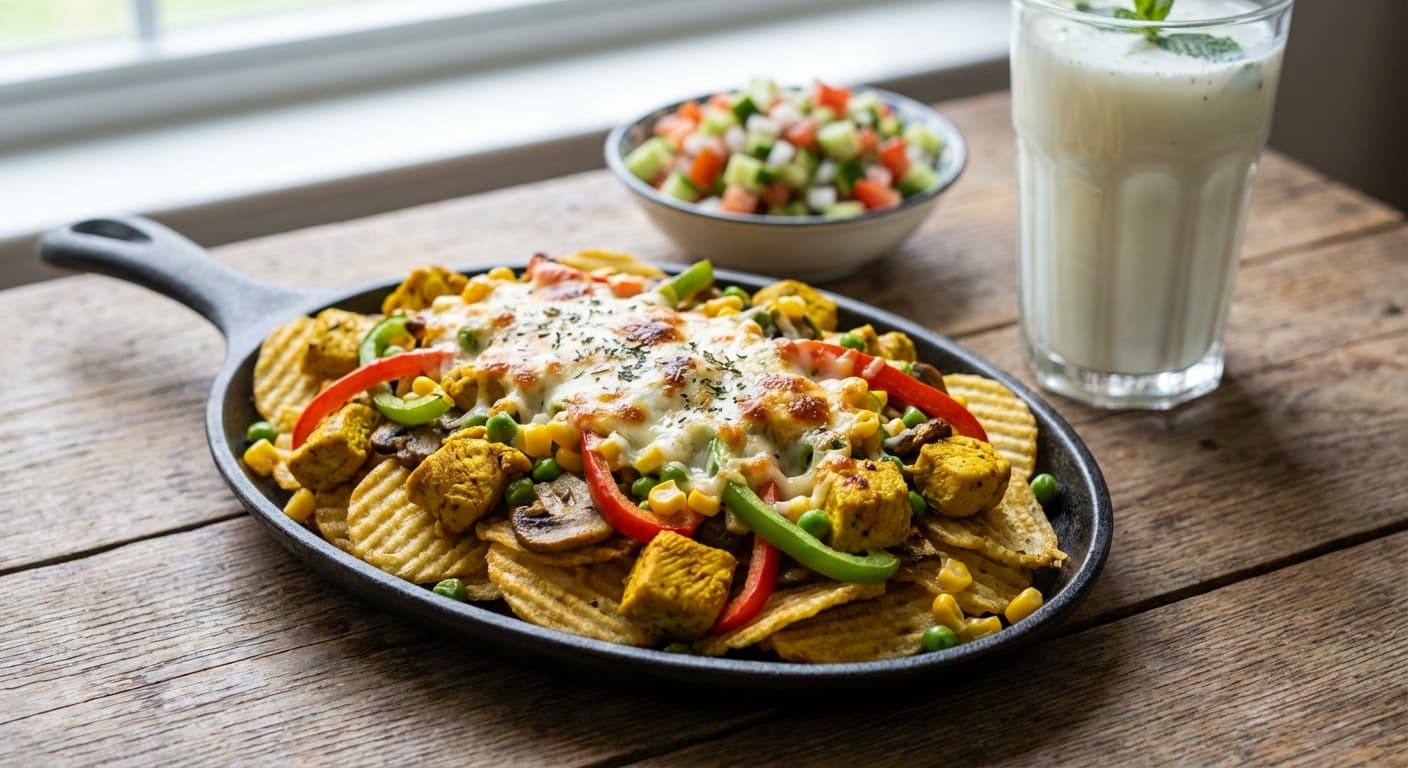
Persian-Style Pizza-Chips (خوراک چیپس و پنیر) — Street-Food Chip Bake with Chicken and Mozzarella
Persian · Main Courses · 45 min
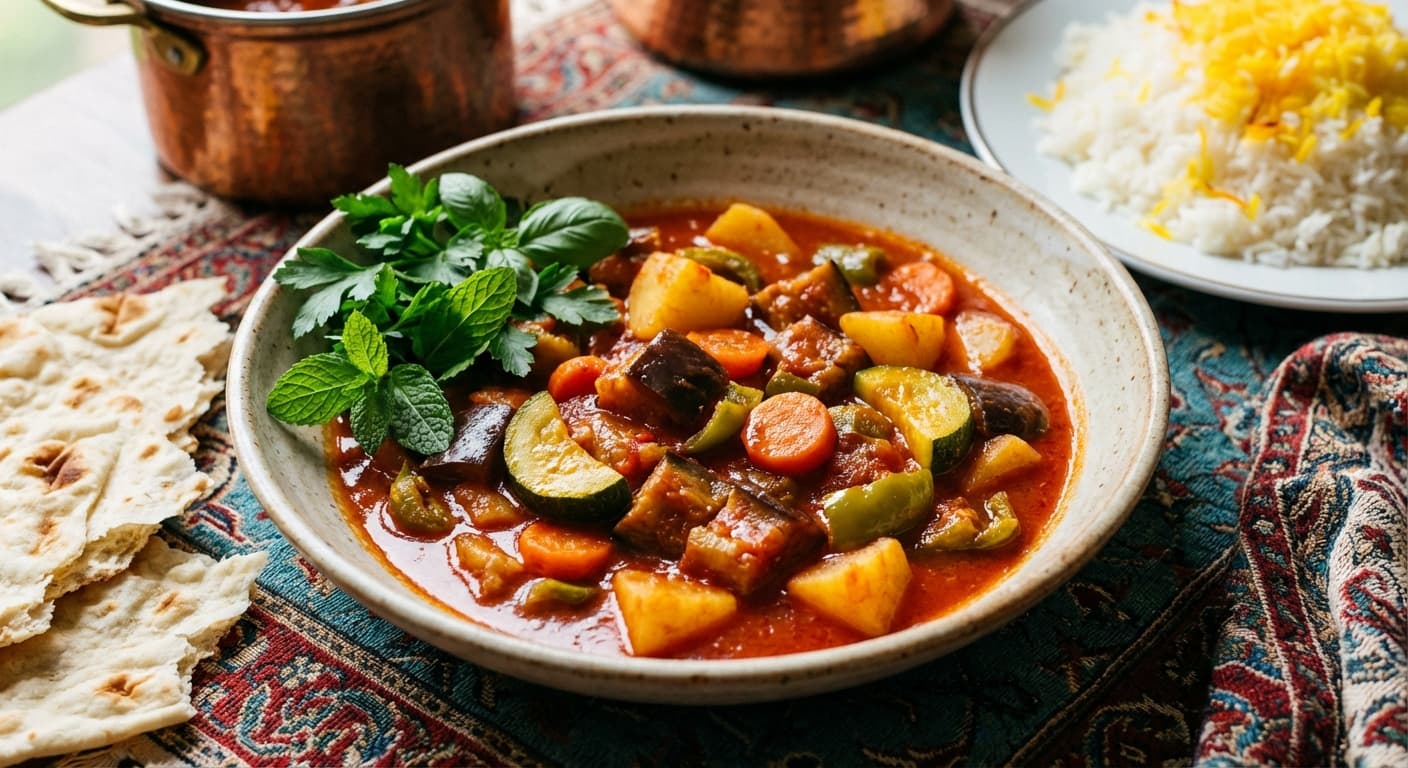
Yatimcheh (یتیمچه) — Persian Slow-Cooked Summer Vegetable Stew
Persian · Stews · 100 min
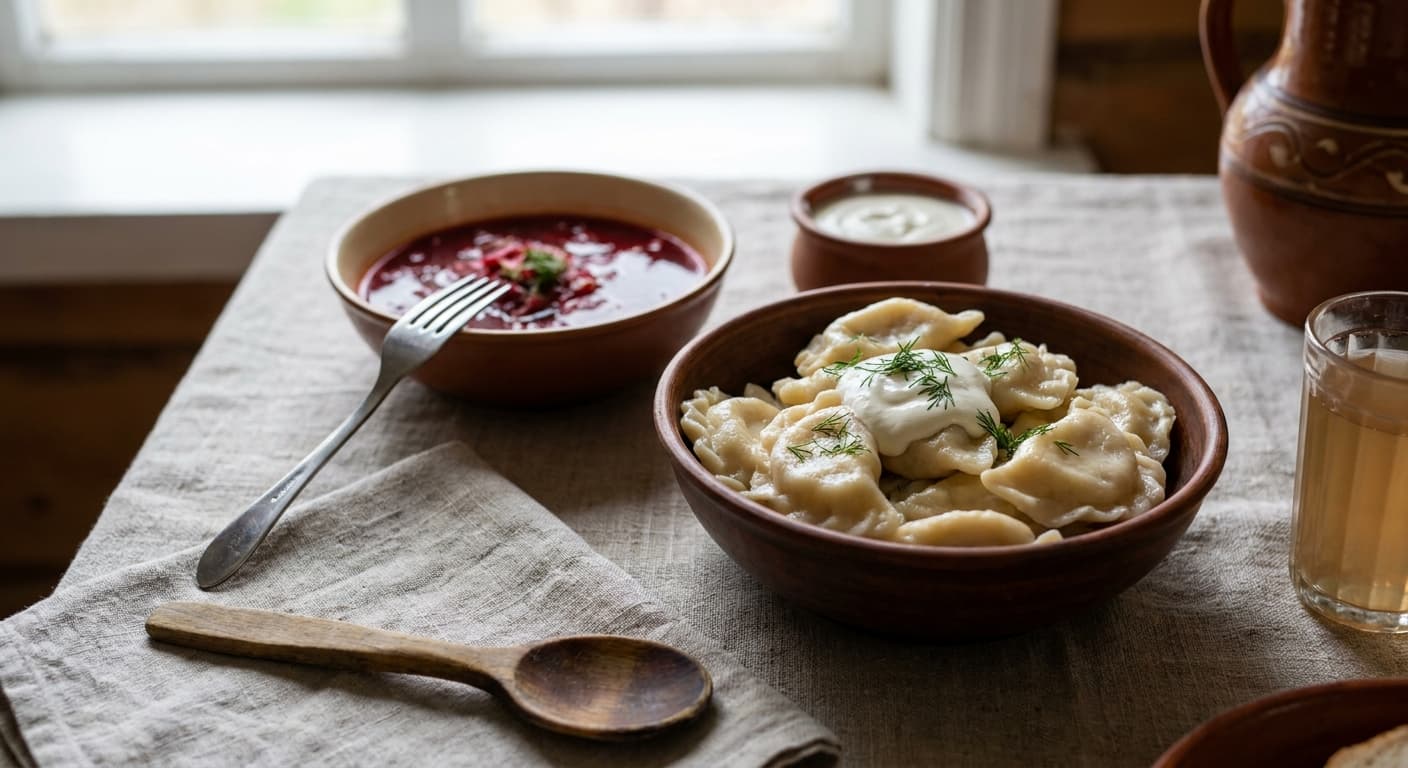
Varenyky (Вареники) — Ukrainian Potato-Cheese Dumplings
Ukrainian · Main Courses · 95 min
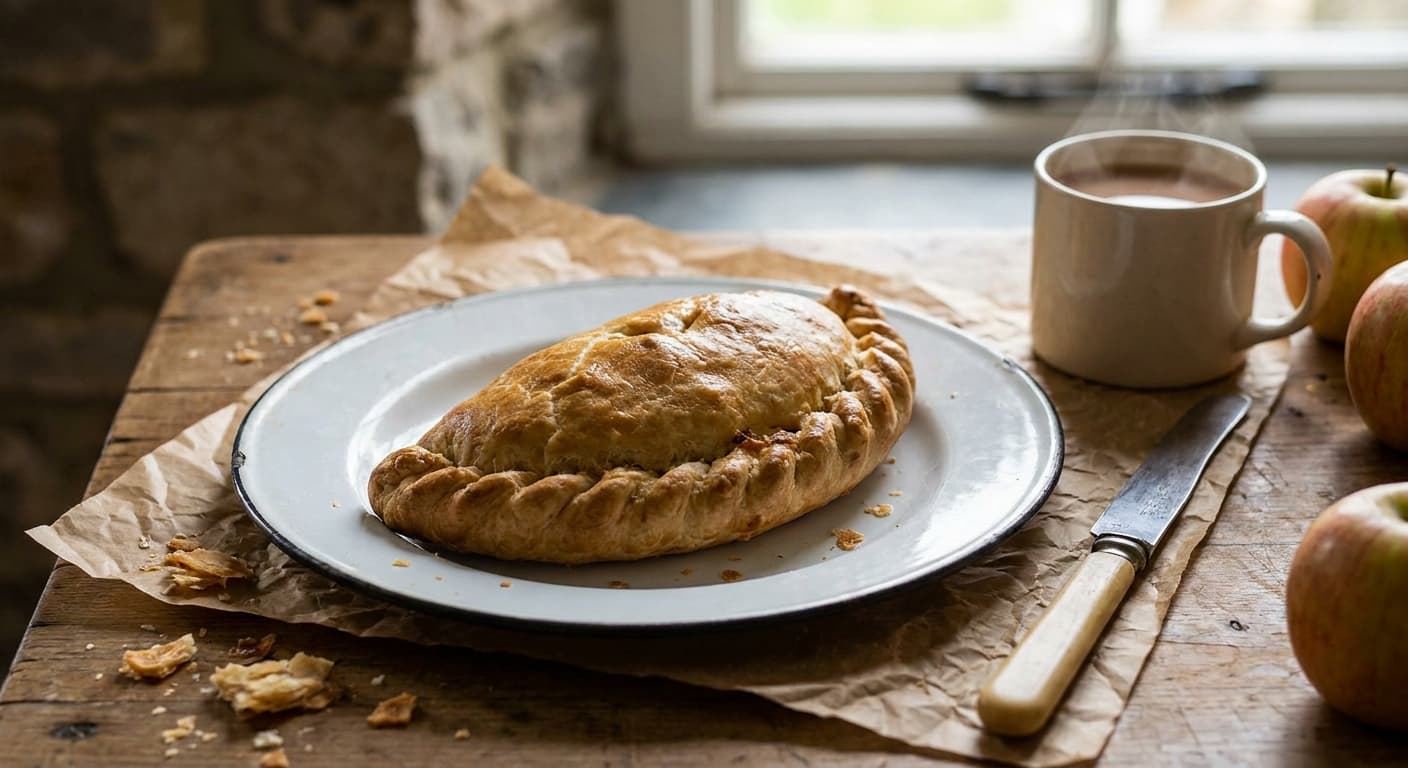
Cornish Pasty (Cornish Pasty) — Traditional Beef and Swede Hand Pie
British · Main Courses · 100 min
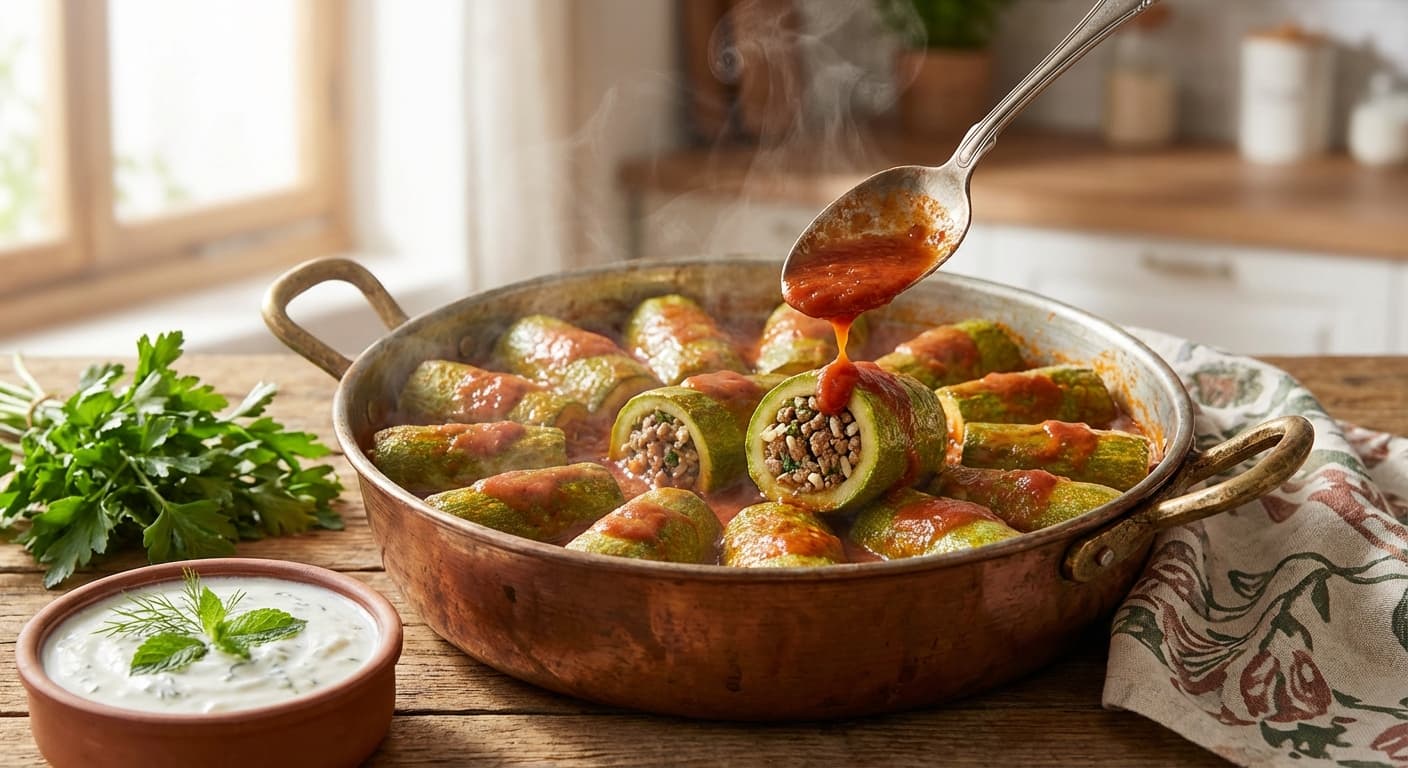
Stuffed Zucchini (Kabak Dolması) — Hollowed zucchini filled with spiced minced meat and rice
Turkish · Main Courses · 90 min
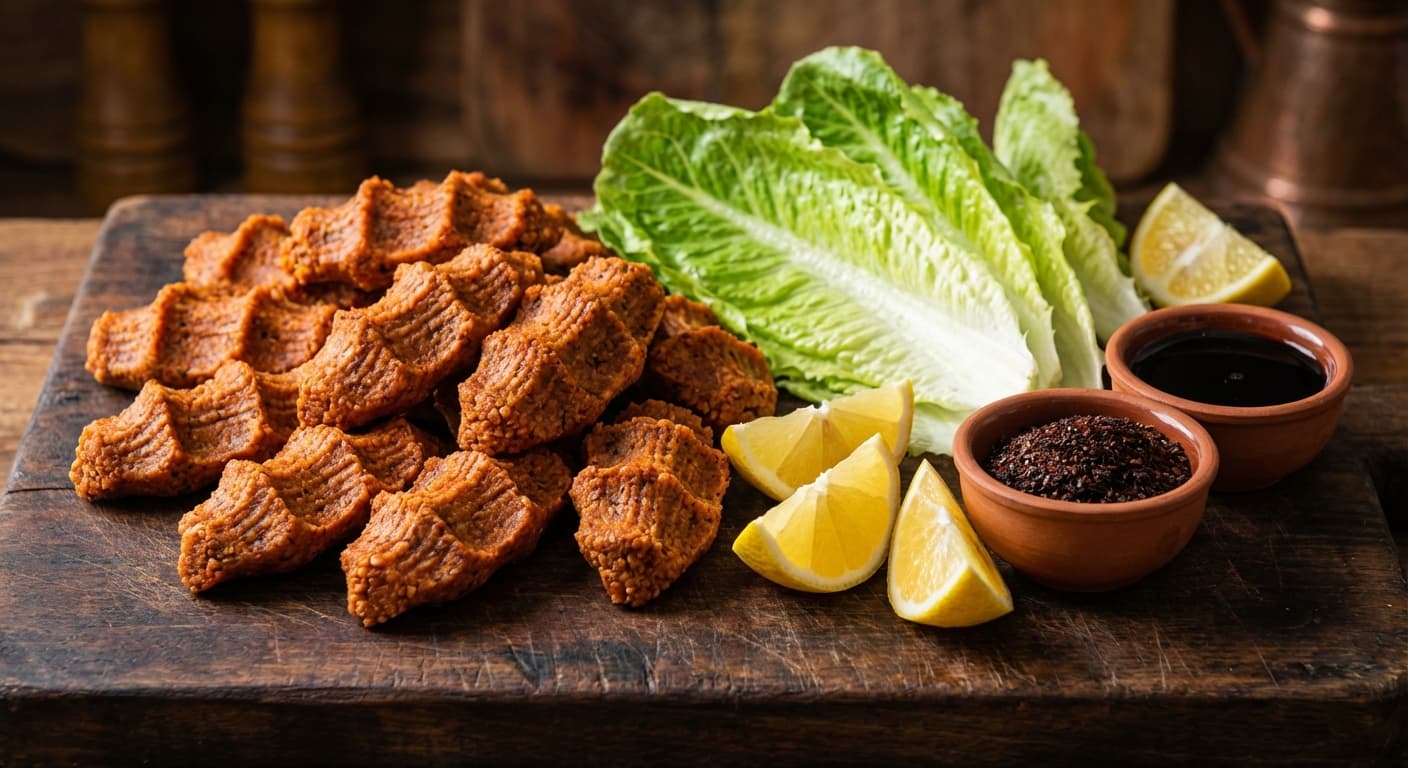
Cig Kofte (Çiğ Köfte) — Isot-kissed bulgur kneaded and served in lettuce
Turkish · Appetizers · 25 min
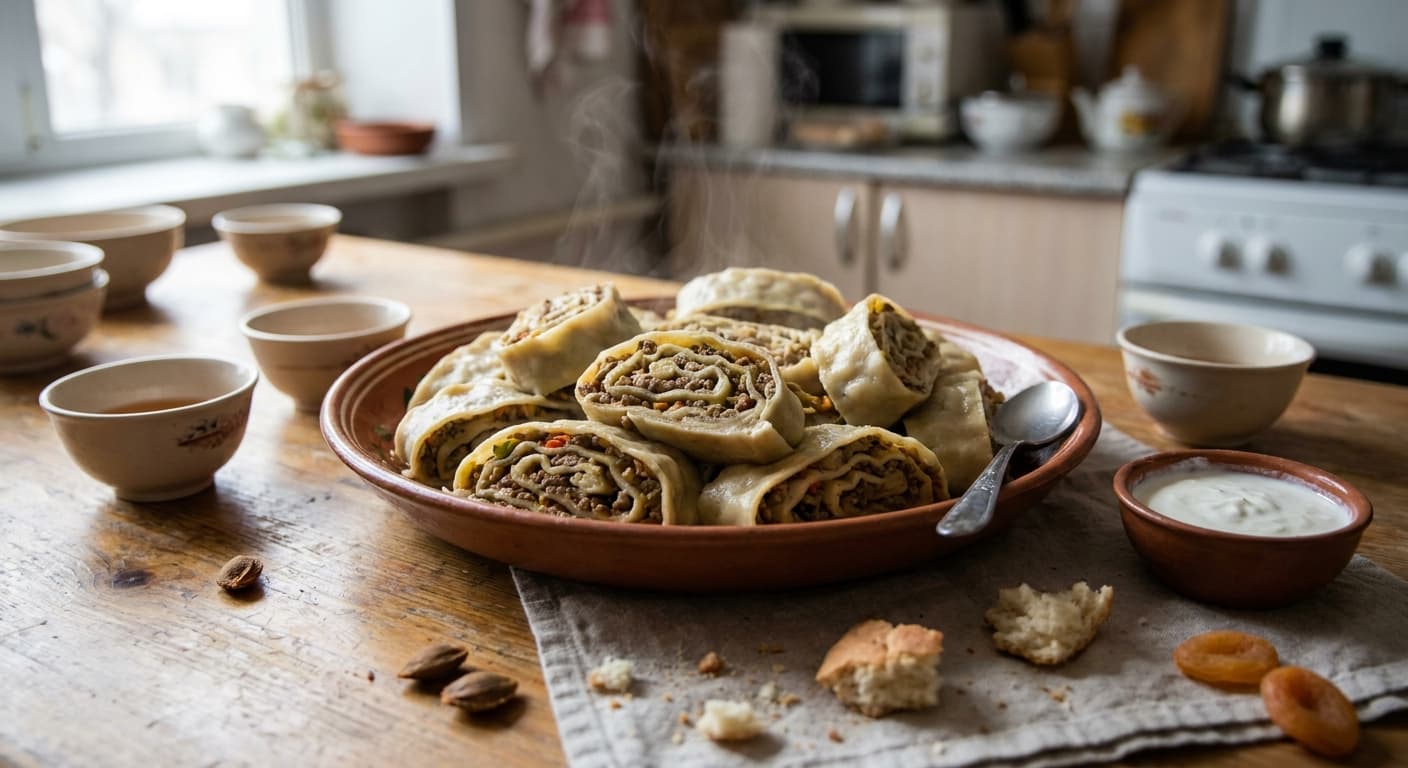
Orromo (Оромо) — Kyrgyz Steamed Rolled Dumpling with Lamb and Pumpkin
Kyrgyz · Main Courses · 105 min
Reviews
Cooked this recipe?
Tap the stars to rate it — that's all it takes. A few words are welcome but optional.
No ratings yet. Cooked this one? Be the first to rate it — it takes one tap.