Pone Yay Gyi Curry (ပုန်းရည်ကြီးဟင်း) — Burmese Pork and Fermented Bean Paste
Pone yay gyi is a dark, earthy bean paste closely associated with Bagan and central Myanmar. In this home-style pork hin, the paste enriches tender meat and onion gravy, making a deeply savory curry for a shared rice meal.
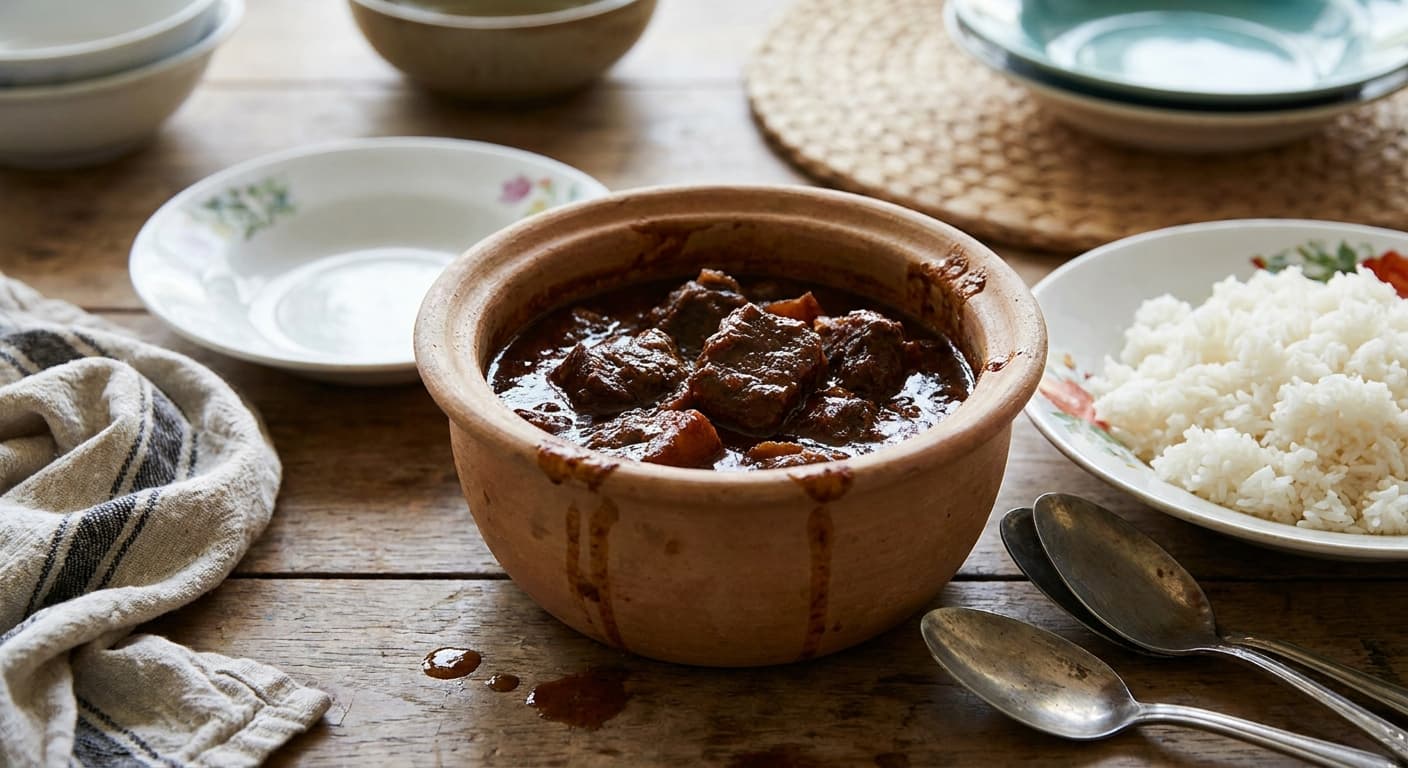
Printable Recipe Card
Servings: 4 · Total: 115 min · Difficulty: medium
Ingredients (quick list)
- 600 g boneless pork shoulder (Trim thick exterior fat and cut into 2.5 cm cubes.)
- 100 g pone yay gyi bean paste (Use plain Burmese horse-gram paste, sometimes labeled pon ye gyi; choose moist paste rather than a ready-seasoned salad.)
- 1 large onion (Approximately 180 g peeled; finely chop.)
- 5 clove garlic (Approximately 15 g peeled.)
- 1 inch fresh ginger (Use a thick section weighing approximately 15 g; peel and mince.)
- 2 tbsp neutral vegetable oil
- 0.5 tsp ground turmeric
- 1 tsp mild ground dried red chile (Use pure ground chile, not a cumin-containing chili seasoning blend.)
- 1 tbsp fish sauce (Choose a gluten-free brand; saltiness varies with the bean paste.)
- 600 ml water (Divide into 500 ml for braising and 100 ml for loosening the paste.)
Steps (summary)
- Combine the pork with the turmeric and fish sauce in a bowl. Leave it for 15 minutes while preparing the onion, garlic, and gin…
- Pound the garlic and ginger into a coarse paste using a mortar and pestle. Alternatively, mince them together very finely with…
- Heat the oil in a heavy saucepan over medium heat and add the onion. Cook for 10–12 minutes, stirring frequently, until softene…
- Add the garlic-ginger paste and cook for 2 minutes, stirring continuously. Reduce the heat to medium-low, add the ground chile,…
- Add the pork and all its marinade, then cook for 4 minutes, turning the cubes to coat them thoroughly in the onion mixture. Pou…
- Bring to a gentle simmer, cover, and cook over low heat for 50–60 minutes, stirring every 15 minutes. The pork should yield rea…
+ 2 more steps in the full instructions section below.
Cultural Background
Pone yay gyi is especially associated with Bagan and Myanmar's central dry zone, where horse gram becomes a distinctive dark paste. This curry belongs to the shared rice-table tradition explored by Naomi Duguid in Burma: Rivers of Flavor.
Equipment
💡 Tips
- Buy plain pone yay gyi from a Burmese grocer: Japanese miso and Chinese black bean sauce do not reproduce its distinctive horse-gram flavor.
- Add the bean paste only after the pork is tender, because its dense consistency makes prolonged simmering prone to scorching.
- If your paste is labeled heavily salted, reduce the fish sauce from 1 tablespoon to 2 teaspoons.
⚠️ Common Mistakes
❌ Treating pone yay gyi as interchangeable with any fermented bean sauce.
✅ Fix: Use Burmese horse-gram paste rather than miso, soybean paste, or Chinese black bean sauce.
❌ Adding the thick paste at the start of the braise.
✅ Fix: Braise the pork until tender first, then add the loosened paste for the final 12–15 minutes.
❌ Cooking the finished curry over high heat.
✅ Fix: Keep the final simmer low and scrape the pan bottom every 2 minutes so the bean paste does not scorch.
🧊 How to Store
Refrigerate in a covered container within 2 hours of cooking and use within 3 days, or freeze for up to 2 months. Thaw overnight in the refrigerator. Reheat covered until the pork reaches 74°C, adding 30 ml water per serving to loosen the thickened sauce.
📅 Make Ahead
Cook the curry up to 2 days ahead and refrigerate promptly; its flavor deepens overnight. Reheat gently with 30 ml water per serving, stirring frequently, until the pork reaches 74°C.
🍽️ Pairs Well With
- Steamed rice
- lahpet thoke
- cucumber slices
- clear vegetable soup
Regional Variations
- In central Myanmar, pone yay gyi is also prepared as a salad with sliced onion and oil rather than cooked into a meat curry.
- Household pork versions range from leaner shoulder preparations to richer pork-belly curries; there is no single universal meat-to-paste ratio.
Ingredients
- 600 gboneless pork shoulder (Trim thick exterior fat and cut into 2.5 cm cubes.)
- 100 gpone yay gyi bean paste (Use plain Burmese horse-gram paste, sometimes labeled pon ye gyi; choose moist paste rather than a ready-seasoned salad.)
- 1large onion (Approximately 180 g peeled; finely chop.)
- 5 clovegarlic (Approximately 15 g peeled.)
- 1 inchfresh ginger (Use a thick section weighing approximately 15 g; peel and mince.)
- 2 tbspneutral vegetable oil
- 0.5 tspground turmeric
- 1 tspmild ground dried red chile (Use pure ground chile, not a cumin-containing chili seasoning blend.)
- 1 tbspfish sauce (Choose a gluten-free brand; saltiness varies with the bean paste.)
- 600 mlwater (Divide into 500 ml for braising and 100 ml for loosening the paste.)
🔄 Substitutions
- boneless pork shoulder→ 600 g skinless pork belly
- fish sauce→ 3 g fine salt
Instructions
- 1
Combine the pork with the turmeric and fish sauce in a bowl. Leave it for 15 minutes while preparing the onion, garlic, and ginger.
- 2
Pound the garlic and ginger into a coarse paste using a mortar and pestle. Alternatively, mince them together very finely with a knife.
- 3
Heat the oil in a heavy saucepan over medium heat and add the onion. Cook for 10–12 minutes, stirring frequently, until softened and pale golden rather than deeply browned.
- 4
Add the garlic-ginger paste and cook for 2 minutes, stirring continuously. Reduce the heat to medium-low, add the ground chile, and stir for 20 seconds so it colors the oil without burning.
- 5
Add the pork and all its marinade, then cook for 4 minutes, turning the cubes to coat them thoroughly in the onion mixture. Pour in 500 ml water and scrape the bottom of the pan to release the softened aromatics.
- 6
Bring to a gentle simmer, cover, and cook over low heat for 50–60 minutes, stirring every 15 minutes. The pork should yield readily to a fork before the bean paste is added; keep the lid closed between checks to retain moisture.
- 7
Whisk the pone yay gyi with the remaining 100 ml water until evenly loosened. Stir it into the tender pork, then simmer uncovered over low heat for 12–15 minutes, scraping the bottom every 2 minutes to prevent the paste from catching.
- 8
Stop cooking when the sauce is thick enough to coat the pork, with small beads of oil visible around the edges. Rest off the heat for 5 minutes, then serve with steamed rice; lahpet thoke, the Burmese fermented tea-leaf salad, makes a contrasting side dish.
🪪 Recipe Passport
Cultural Background
Pone yay gyi is especially associated with Bagan and Myanmar's central dry zone, where horse gram becomes a distinctive dark paste. This curry belongs to the shared rice-table tradition explored by Naomi Duguid in Burma: Rivers of Flavor.
Regional Variations
Researched from multiple sources and validated by the Zaffaron editorial team. Every recipe is tested for accuracy, measurements, and cultural authenticity.
📚 Sources & Cultural References
- Naomi Duguid — Burma: Rivers of Flavor — (2012)
Sources cited by the Zaffaron editorial team during recipe research. Cultural and culinary references supporting authenticity claims.
Nutrition per serving
Pairs well with
If you enjoyed this recipe, here are a few related Zaffaron recipes to try next.
Does your family make this differently?
Every family has their own version. Maybe your grandmother adds a secret ingredient, or your aunt has a completely different technique. Preserve your family's version — with their name on it, forever.
You Might Also Like
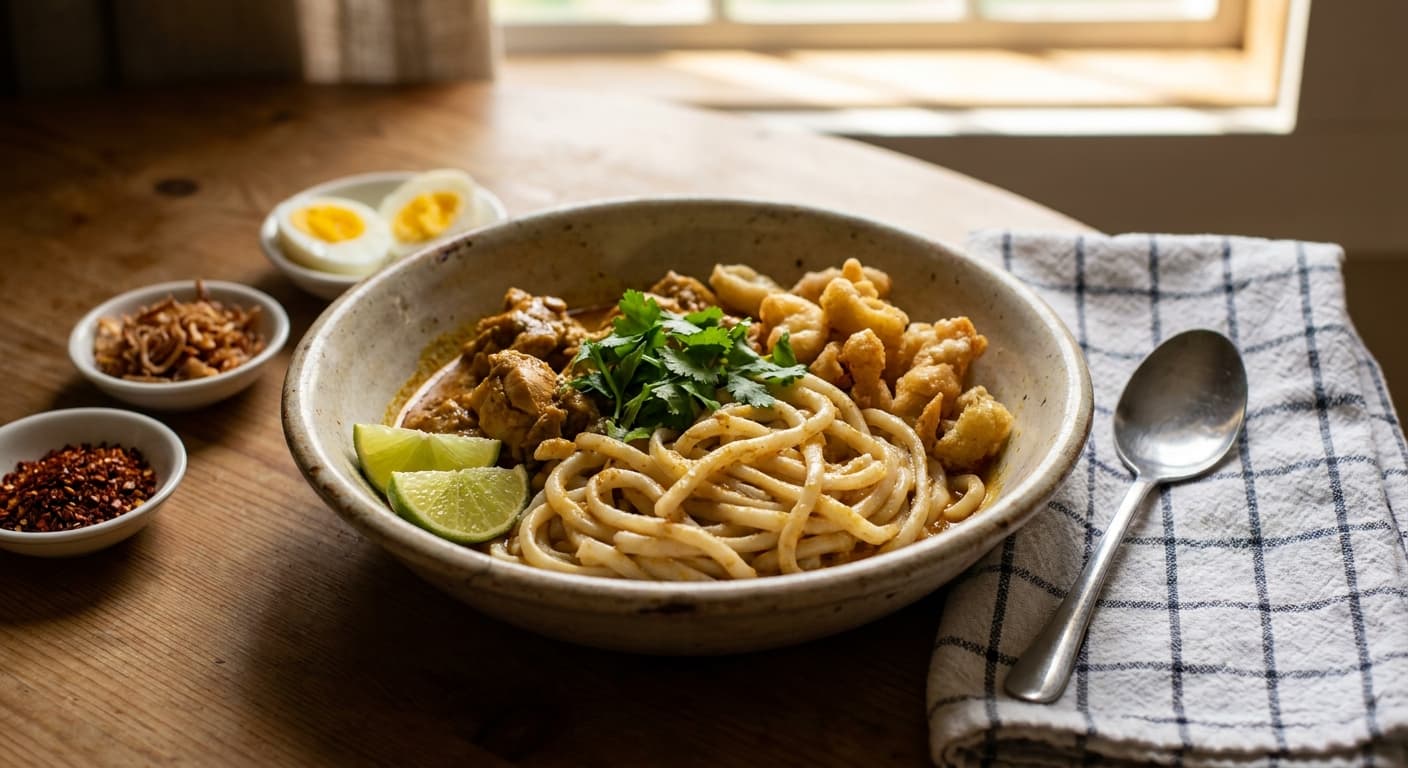
Nan Gyi Thoke (နန်းကြီးသုပ်) — Burmese Thick Rice Noodle Salad
Burmese · Salads · 80 min
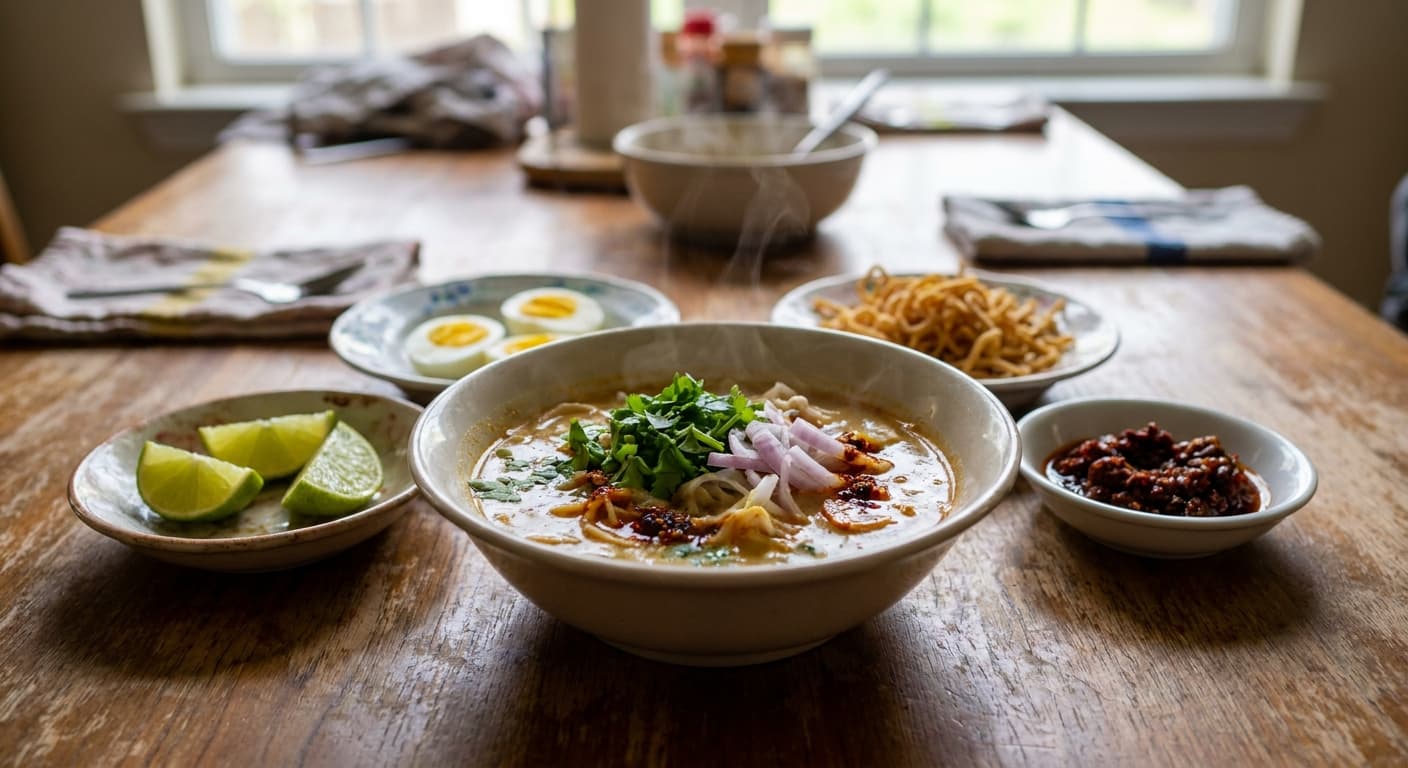
Ohn No Khao Swe (အုန်းနို့ခေါက်ဆွဲ) — Burmese Coconut Chicken Noodles
Burmese · Main Courses · 75 min
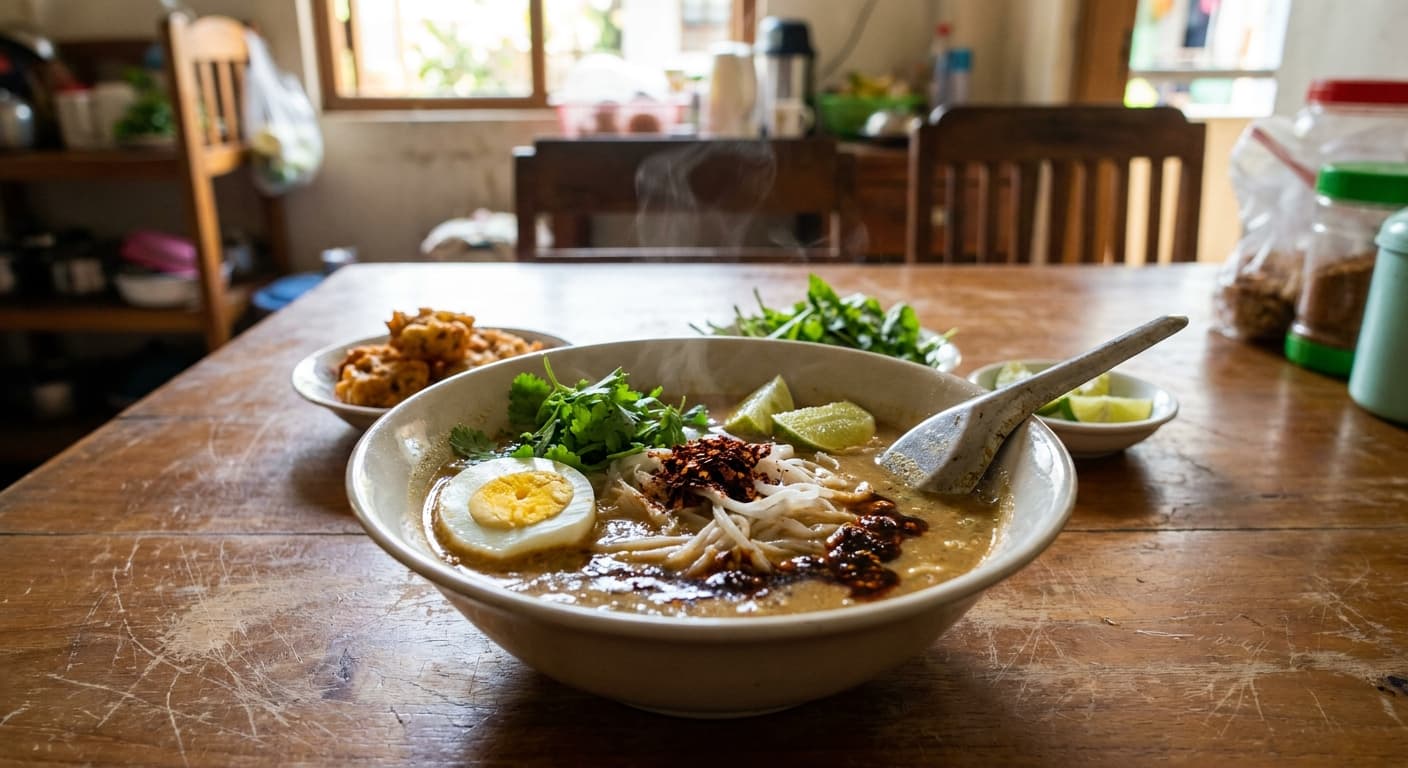
Burmese Mohinga (မုန့်ဟင်းခါး) — Fish Noodle Soup with Lemongrass
Burmese · Soups · 110 min
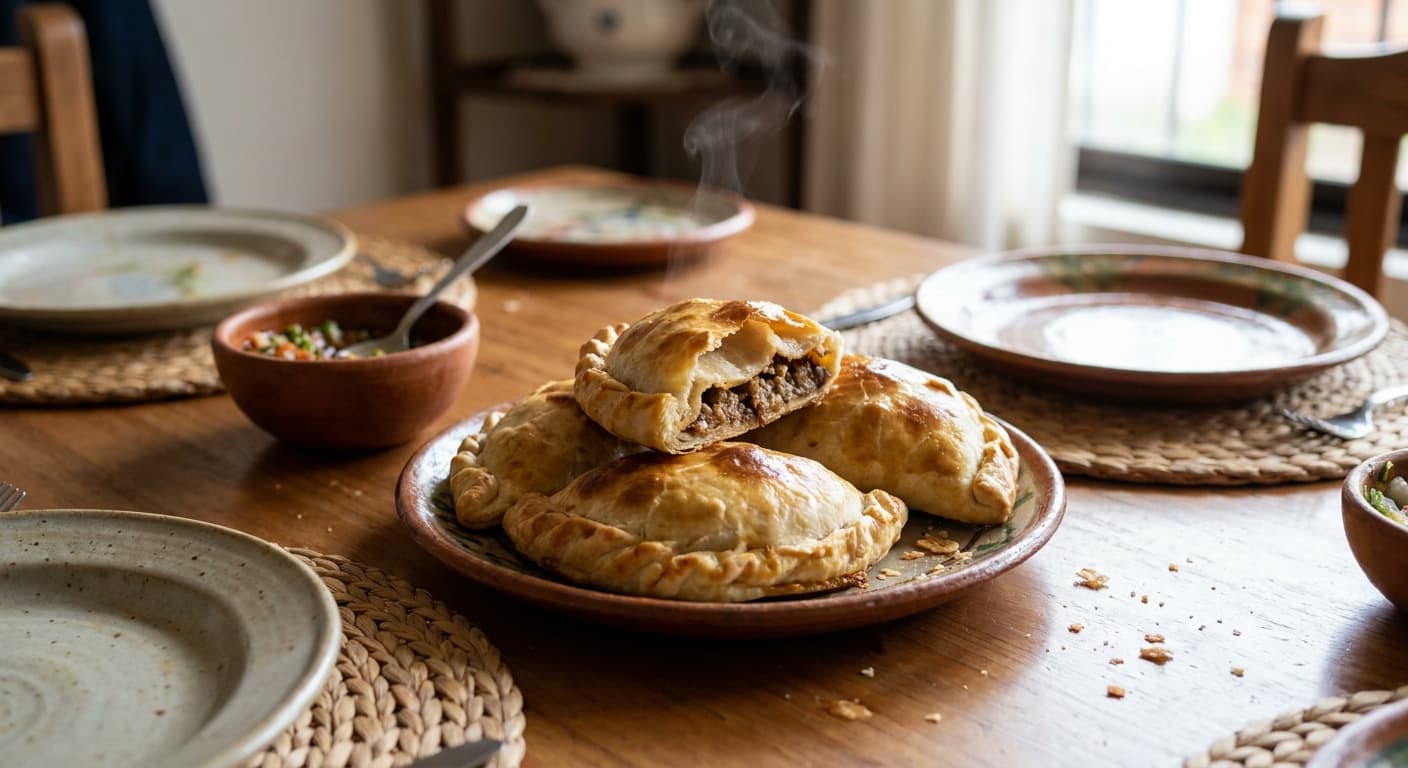
Chilean Beef Empanada (Empanada de pino) — Baked pastry filled with beef, onion, egg, olive, and raisins
Chilean · Main Courses · 125 min
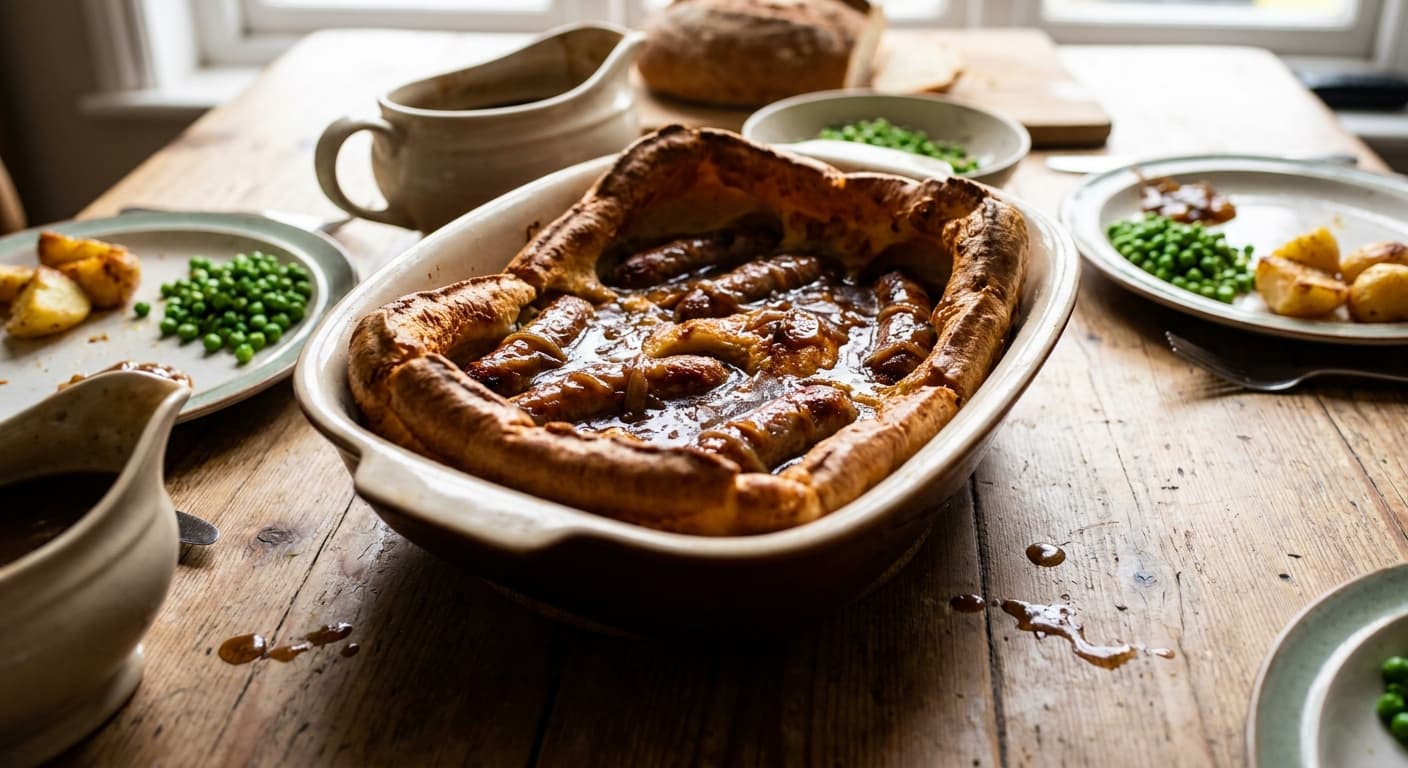
Toad in the Hole (Toad in the Hole) — Sausages Baked in Yorkshire Pudding Batter
British · Main Courses · 65 min
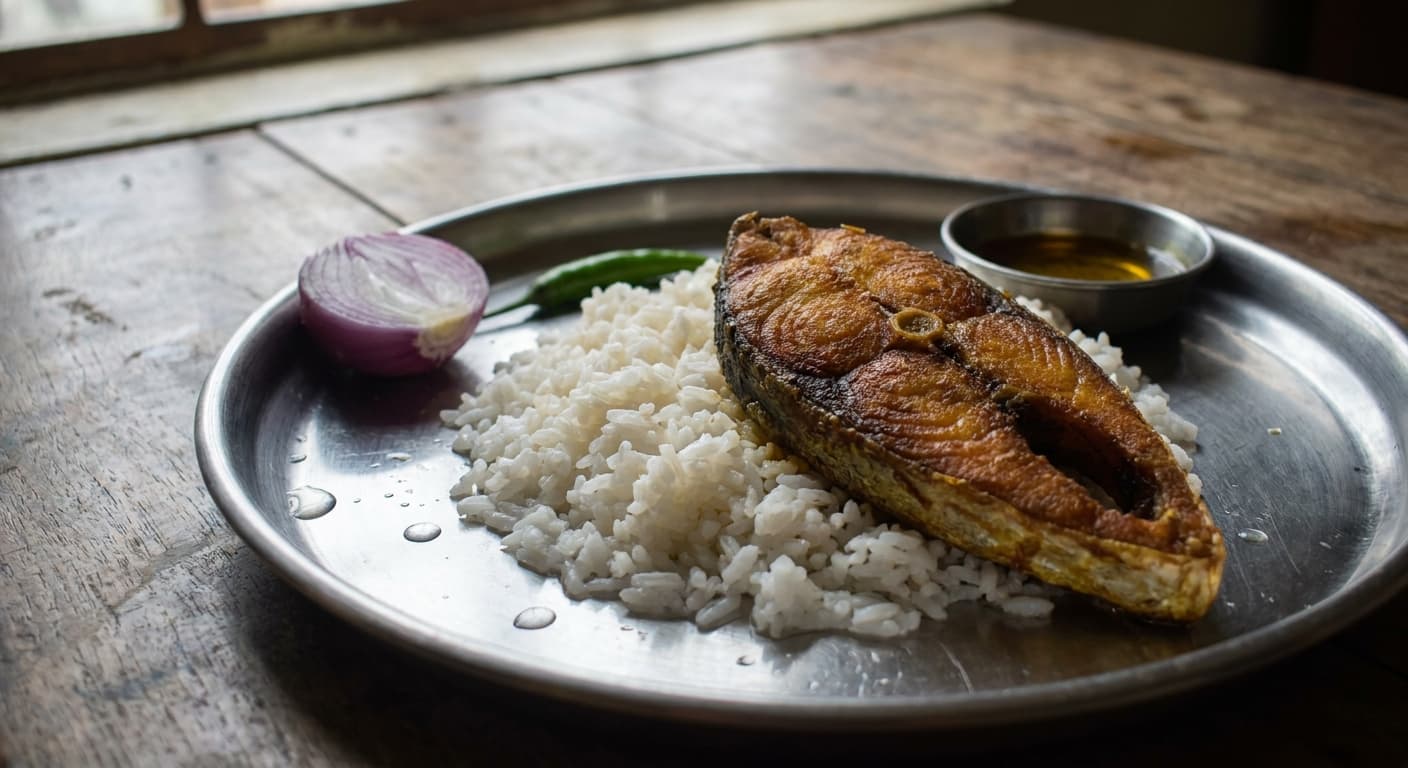
Panta Bhat (পান্তা ভাত) — Overnight Fermented Rice with Fried Ilish
Bangladeshi · Rice Dishes · 35 min
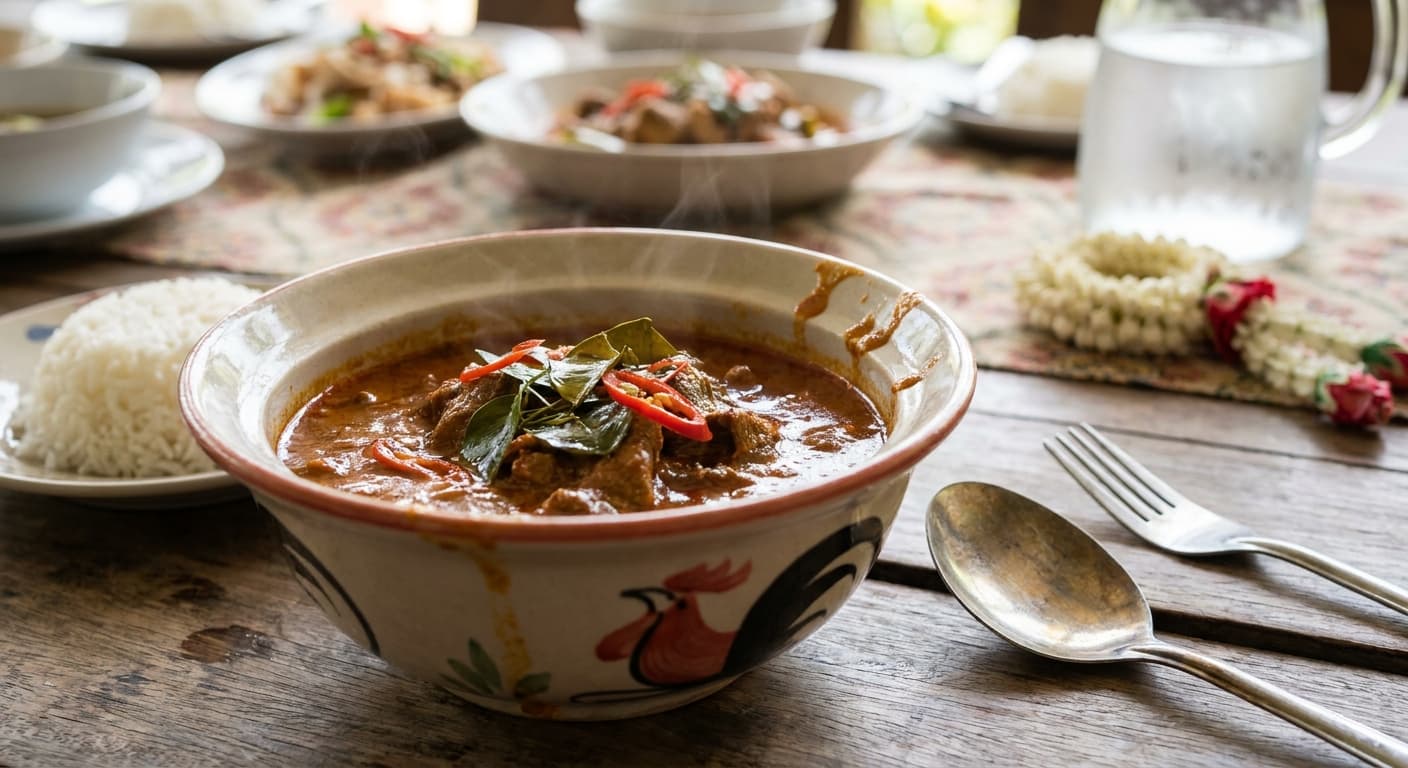
Panang Curry (แกงแพนง) — Rich Thai Coconut Beef Curry
Thai · Main Courses · 75 min
Bangladeshi Steamed Hilsa (ইলিশ ভাপা) — Mustard-Steamed River Fish
Bangladeshi · Main Courses · 45 min
Reviews
Cooked this recipe?
Tap the stars to rate it — that's all it takes. A few words are welcome but optional.
No ratings yet. Cooked this one? Be the first to rate it — it takes one tap.