Kalam Polo (کلم پلو) — Persian Cabbage Rice
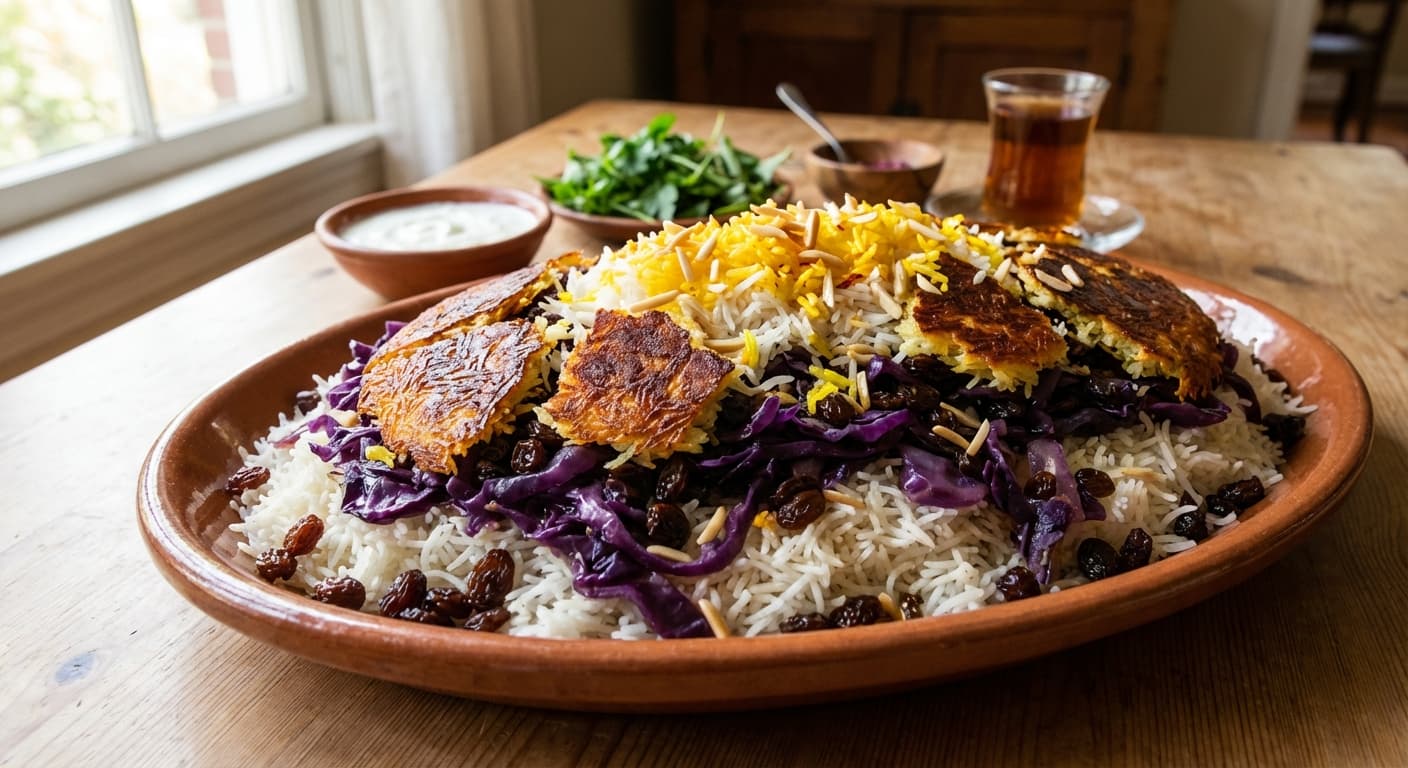
Kalam Polo is a jewel-toned Persian rice dish where fluffy basmati is layered with sautéed red cabbage and raisins, then steamed to form a crisp tahdig. Aromatic, gently sweet-tart, and comforting, it’s especially associated with Shiraz.
Printable Recipe Card
Servings: 6 · Total: 135 min · Difficulty: medium
Ingredients (quick list)
- 500 g Basmati rice (rinsed until water runs mostly clear)
- 2400 ml Water (for parboiling rice (plus extra for soaking raisins if needed))
- 18 g Salt (for salting parboil water)
- 700 g Red cabbage (cored and finely shredded (about 8–10 mm wide))
- 75 ml Olive oil (divided)
- 120 g Raisins (dark or golden; rinsed)
- 2 g Black pepper (freshly ground)
- 3 g Turmeric (optional but traditional for color and warmth)
- 1.5 g Ground cinnamon (optional, complements raisins)
- 30 ml Brewed saffron water (optional; made from 0.2 g saffron steeped in 30 ml hot water)
- 120 g Plain yogurt (optional; for yogurt tahdig)
- 1 pc Egg yolk (optional; for sturdier yogurt tahdig)
Steps (summary)
- Rinse the basmati rice in several changes of cool water until the water is mostly clear. Cover with fresh water and let it soak…
- Bring 2400 ml water to a rolling boil in a large pot. Add 18 g salt, then add the soaked, drained rice. Boil 6–8 minutes, stirr…
- Heat 45 ml olive oil in a wide skillet over medium-high heat. Add shredded red cabbage and sauté 8 minutes, tossing often, unti…
- Push cabbage to the edges of the skillet and add the remaining 30 ml olive oil to the center. Add raisins and sauté 2–3 minutes…
- For a yogurt tahdig (optional), mix yogurt, egg yolk, and 30 ml olive oil in a bowl until smooth. Add 150 g of the drained parb…
- Layer the remaining rice and cabbage mixture in the pot: add a third of the rice, then half the cabbage-raisin mixture, repeati…
+ 2 more steps in the full instructions section below.
Cultural Background
Kalam Polo is commonly associated with Shiraz and is often prepared for family meals and gatherings, especially when cabbage is abundant. Like many Persian rice dishes, it highlights the technique of steaming rice to achieve distinct grains and a crisp tahdig, while balancing savory and sweet elements.
Equipment
💡 Tips
- Shred cabbage evenly (8–10 mm) so it cooks at the same rate and distributes well through the rice.
- Do not overboil during parboil; a firm center is essential so the rice finishes cooking by steaming without turning sticky.
- If you skip yogurt tahdig, simply heat 2–3 tbsp oil in the pot and add a thin layer of rice for a classic crisp bottom.
- For brighter color, avoid adding acidic ingredients while sautéing cabbage; keep heat moderate and stir often to prevent browning.
⚠️ Common Mistakes
❌ Overcooking the rice during parboil
💡 Why: Fully cooked grains will break down during steaming, turning the final dish sticky and compact.
✅ Fix: Boil only until the outside is tender and the center is firm (6–8 minutes), then drain immediately.
❌ Cabbage turning brown and bitter
💡 Why: High heat and insufficient stirring can scorch the sugars in cabbage, dulling the color and flavor.
✅ Fix: Sauté over medium-high briefly, then reduce to medium; stir often and add oil as needed to prevent sticking.
❌ Soggy or pale tahdig
💡 Why: Too much moisture and low initial heat prevent proper crust formation.
✅ Fix: Use a heavy pot, start on medium heat for 8 minutes to build steam, keep the lid wrapped, and avoid adding extra water during steaming.
❌ Raisins burning in the pan
💡 Why: Raisins scorch quickly when fried directly over high heat.
✅ Fix: Add raisins after cabbage softens, sauté only 2–3 minutes over medium heat, and stir constantly.
🧊 How to Store
Cool leftovers within 2 hours, then refrigerate airtight up to 4 days. Reheat covered with 1–2 tbsp water in a pot on low 10–15 minutes or microwave covered 2–4 minutes. Tahdig re-crisps best in a lightly oiled skillet over medium heat.
📅 Make Ahead
Sauté the cabbage-raisin mixture up to 2 days ahead and refrigerate airtight. On cooking day, parboil rice and assemble immediately, then steam. Leftover Kalam Polo reheats well; crisp tahdig can be refreshed in a lightly oiled skillet.
🍽️ Pairs Well With
- Plain yogurt with cucumber and dried mint
- Shirazi salad (cucumber
- tomato
- onion with lemon)
- Pickled vegetables
- Grilled chicken or lamb kebabs
Regional Variations
- Shiraz (Fars Province)Often includes small meatballs seasoned with warm spices and sometimes dried herbs; the rice is layered with cabbage and steamed for a pronounced tahdig.
- Tehran and other urban home kitchensCommonly made as a vegetarian version with raisins and optional saffron; some cooks add more cinnamon for a sweeter aroma and serve with yogurt on the side.
Ingredients
- 500 gBasmati rice (rinsed until water runs mostly clear)
- 2400 mlWater (for parboiling rice (plus extra for soaking raisins if needed))
- 18 gSalt (for salting parboil water)
- 700 gRed cabbage (cored and finely shredded (about 8–10 mm wide))
- 75 mlOlive oil (divided)
- 120 gRaisins (dark or golden; rinsed)
- 2 gBlack pepper (freshly ground)
- 3 gTurmeric (optional but traditional for color and warmth)
- 1.5 gGround cinnamon (optional, complements raisins)
- 30 mlBrewed saffron water (optional; made from 0.2 g saffron steeped in 30 ml hot water)
- 120 gPlain yogurt (optional; for yogurt tahdig)
- 1 pcEgg yolk (optional; for sturdier yogurt tahdig)
🔄 Substitutions
- Basmati rice→ Jasmine rice
- Raisins→ Dried barberries
- Olive oil→ Neutral vegetable oil or ghee
Instructions
- 1
Rinse the basmati rice in several changes of cool water until the water is mostly clear. Cover with fresh water and let it soak 30 minutes at room temperature to help the grains elongate. Meanwhile, shred the red cabbage finely and rinse the raisins; if very dry, soak raisins in warm water 10 minutes, then drain well.
- 2
Bring 2400 ml water to a rolling boil in a large pot. Add 18 g salt, then add the soaked, drained rice. Boil 6–8 minutes, stirring gently once or twice, until the grains are tender on the outside but still firm in the center. Drain immediately in a colander and rinse briefly with cool water to stop cooking.
- 3
Heat 45 ml olive oil in a wide skillet over medium-high heat. Add shredded red cabbage and sauté 8 minutes, tossing often, until it softens and turns glossy. Season with 4 g salt, 2 g black pepper, turmeric, and cinnamon (if using). Reduce heat to medium and cook 10–12 minutes more until tender but not mushy.
- 4
Push cabbage to the edges of the skillet and add the remaining 30 ml olive oil to the center. Add raisins and sauté 2–3 minutes until plump and fragrant, then toss through the cabbage. Taste and adjust seasoning; the mixture should be savory with a gentle sweetness. Remove from heat and let cool 5 minutes for easier layering.
- 5
For a yogurt tahdig (optional), mix yogurt, egg yolk, and 30 ml olive oil in a bowl until smooth. Add 150 g of the drained parboiled rice and stir to coat. Set a heavy-bottomed nonstick pot over medium heat, add the yogurt-rice mixture, and press into an even layer about 1–1.5 cm thick.
- 6
Layer the remaining rice and cabbage mixture in the pot: add a third of the rice, then half the cabbage-raisin mixture, repeating and finishing with rice on top. Drizzle saffron water (if using) over the surface. Use the handle of a spoon to poke 5–6 holes down to the bottom to vent steam.
- 7
Wrap the pot lid in a clean kitchen towel and cover tightly to catch condensation. Cook over medium heat for 8 minutes to build steam, then reduce to low and steam 40–45 minutes. The rice should smell toasted and the sides should look dry. Rest off heat 10 minutes before unmolding.
- 8
To serve, loosen the edges with a thin spatula. Place a platter over the pot and invert confidently to release the rice with tahdig. If it sticks, return to low heat 2–3 minutes to loosen. Alternatively, spoon rice onto a platter and break the tahdig into pieces to serve alongside.
🪪 Recipe Passport
Cultural Background
Kalam Polo is commonly associated with Shiraz and is often prepared for family meals and gatherings, especially when cabbage is abundant. Like many Persian rice dishes, it highlights the technique of steaming rice to achieve distinct grains and a crisp tahdig, while balancing savory and sweet elements.
Regional Variations
Researched from multiple sources and validated by the Zaffaron editorial team. Every recipe is tested for accuracy, measurements, and cultural authenticity.
Nutrition per serving
Pairs well with
If you enjoyed this recipe, here are a few related Zaffaron recipes to try next.
Does your family make this differently?
Every family has their own version. Maybe your grandmother adds a secret ingredient, or your aunt has a completely different technique. Preserve your family's version — with their name on it, forever.
You Might Also Like
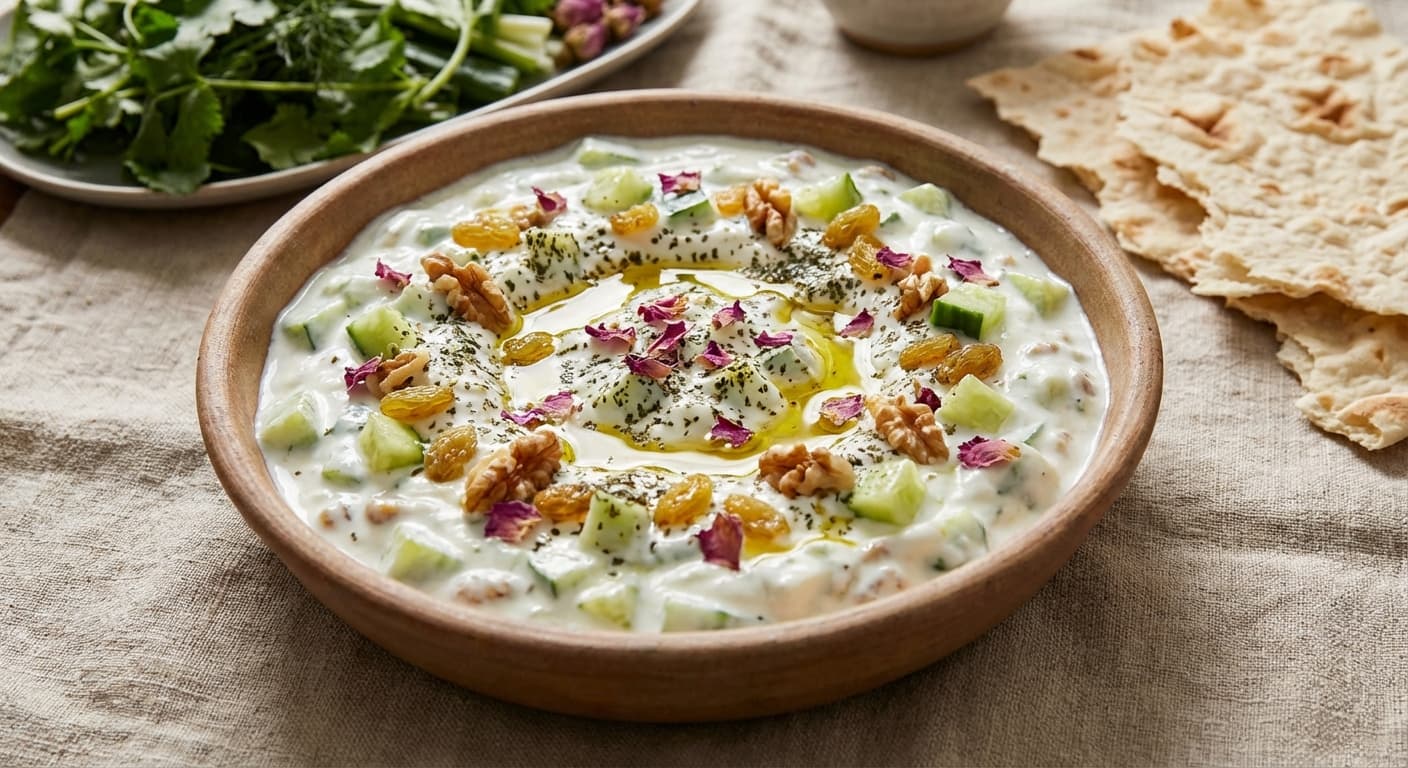
Mast-o-Khiar (ماست و خیار) — Persian Cucumber and Herb Yogurt Dip
Persian · Side Dishes · 25 min
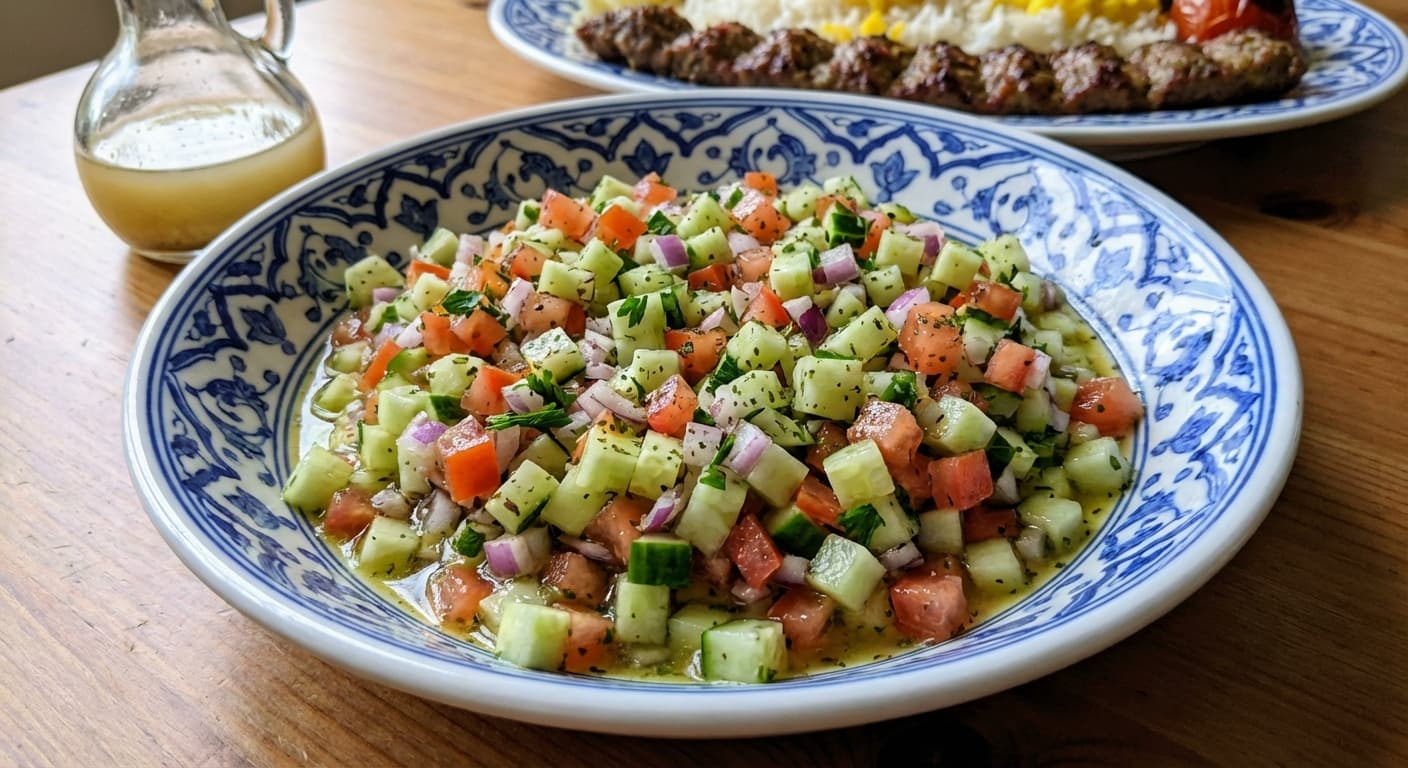
Shirazi Salad (سالاد شیرازی) — Brunoised cucumber-tomato herb salad with ab-ghooreh
Persian · Salads · 20 min
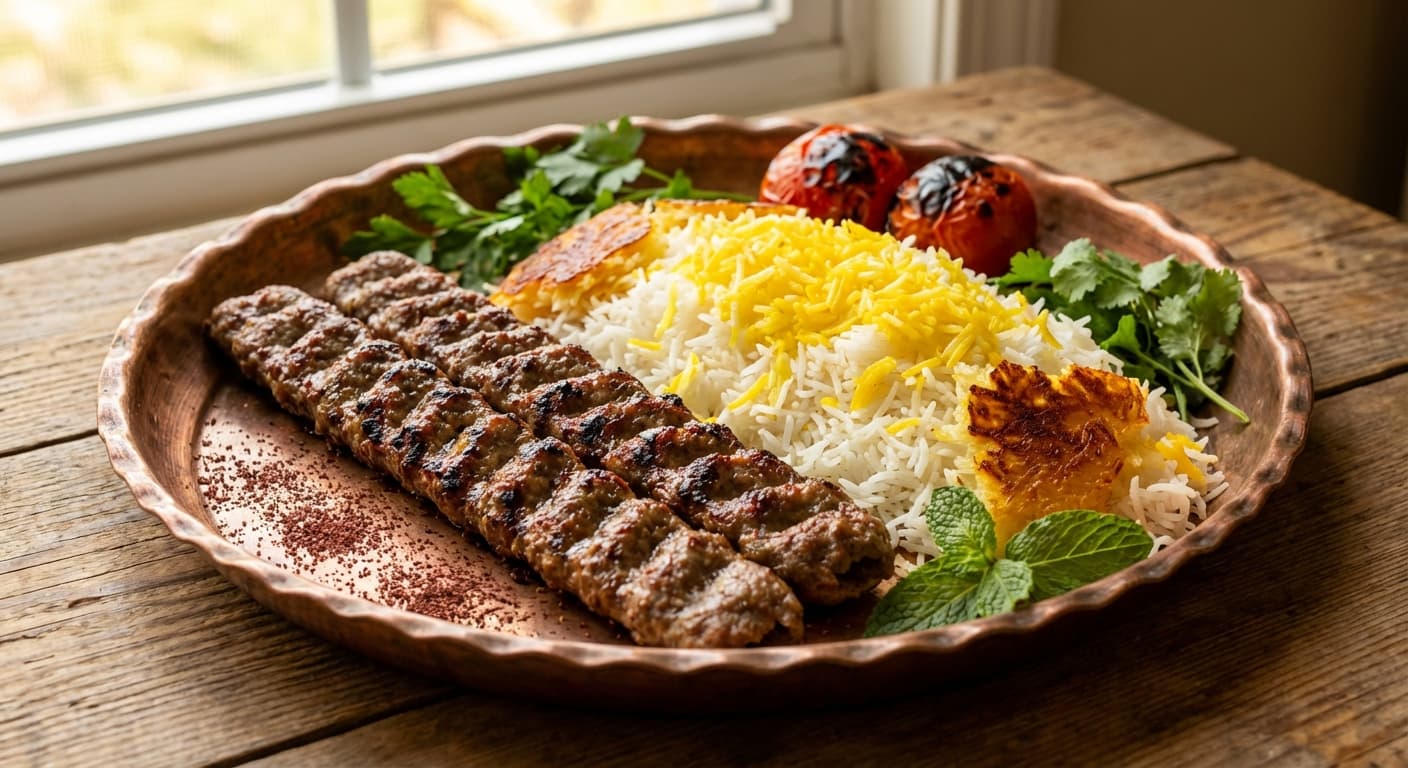
Chelo Kebab Koobideh (چلو کباب کوبیده) — Persian Minced Meat Skewers with Saffron Rice
Persian · Kebabs · 75 min
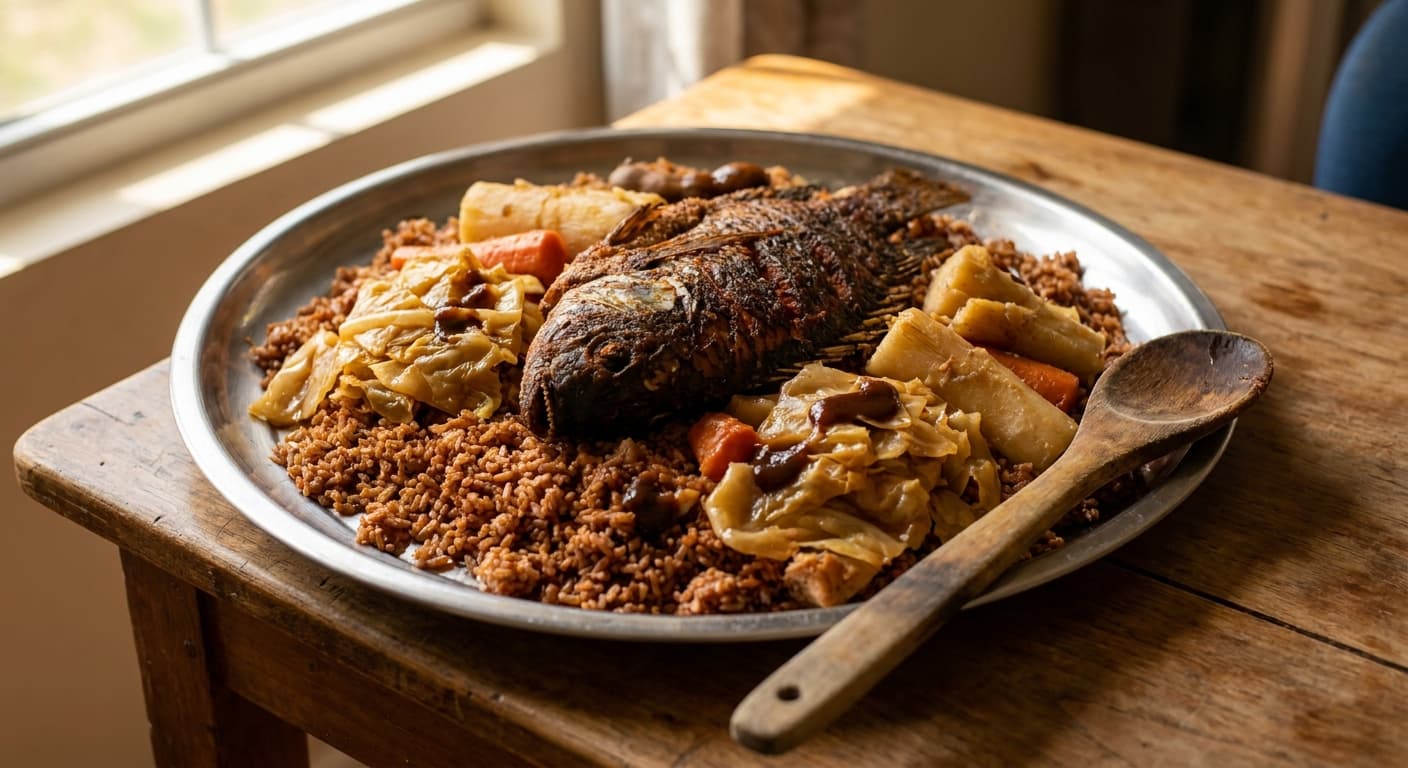
Senegalese Fish and Rice (Ceebu Jën) — Tomato-Braised National Dish
West african · Rice Dishes · 120 min
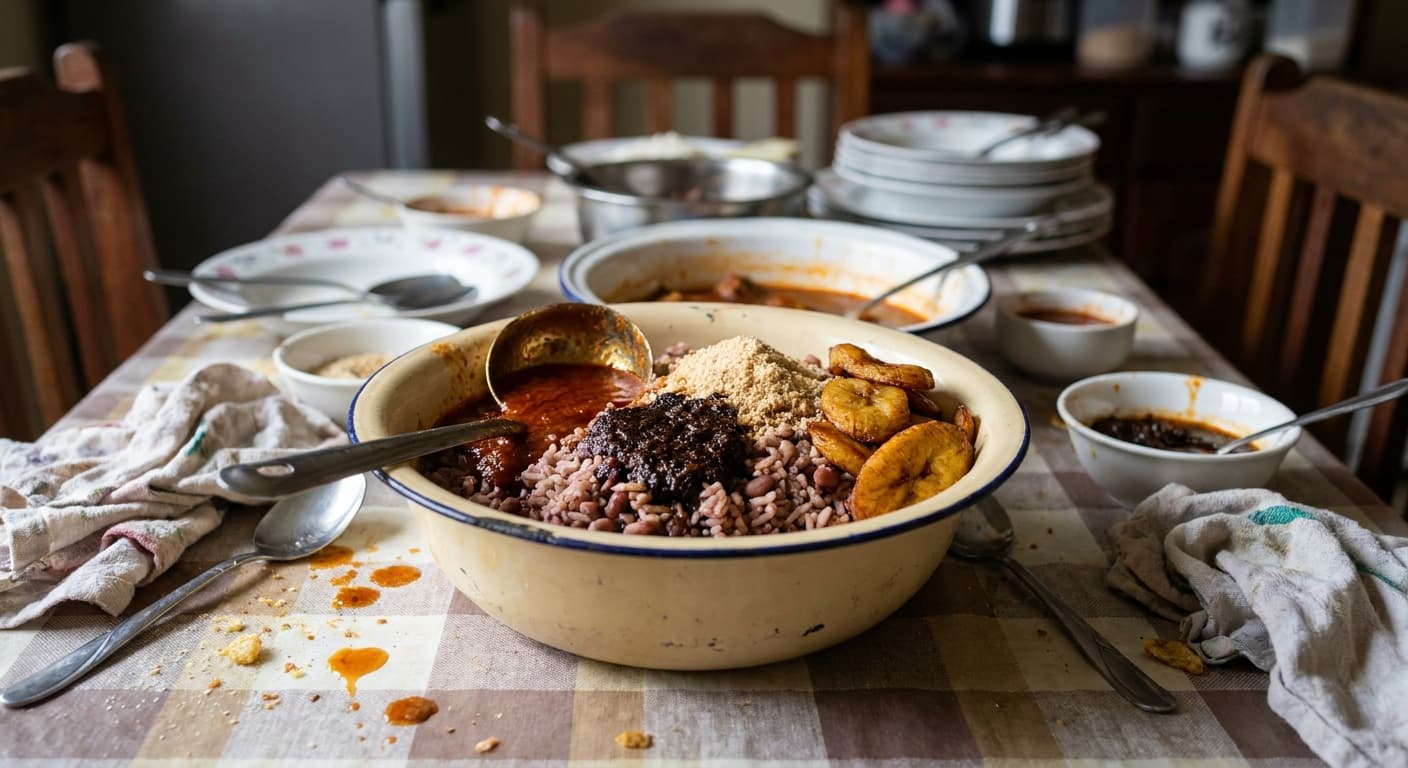
Ghanaian Waakye (Waakye) — Rice and Beans Dyed with Sorghum Leaves
West african · Rice Dishes · 85 min
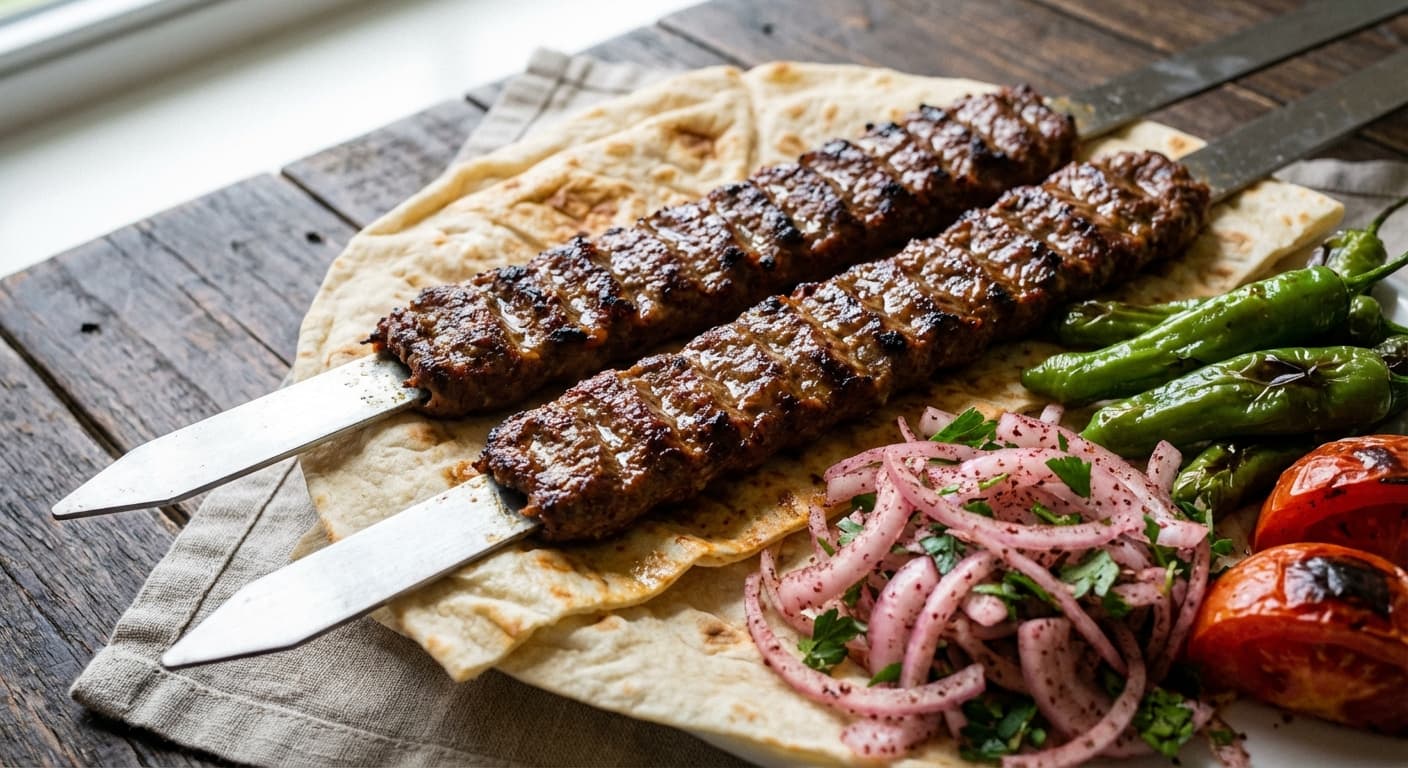
Urfa Kebab (اورفا کباب) — Mild Turkish minced skewer with sumac onions
Turkish · Kebabs · 37 min
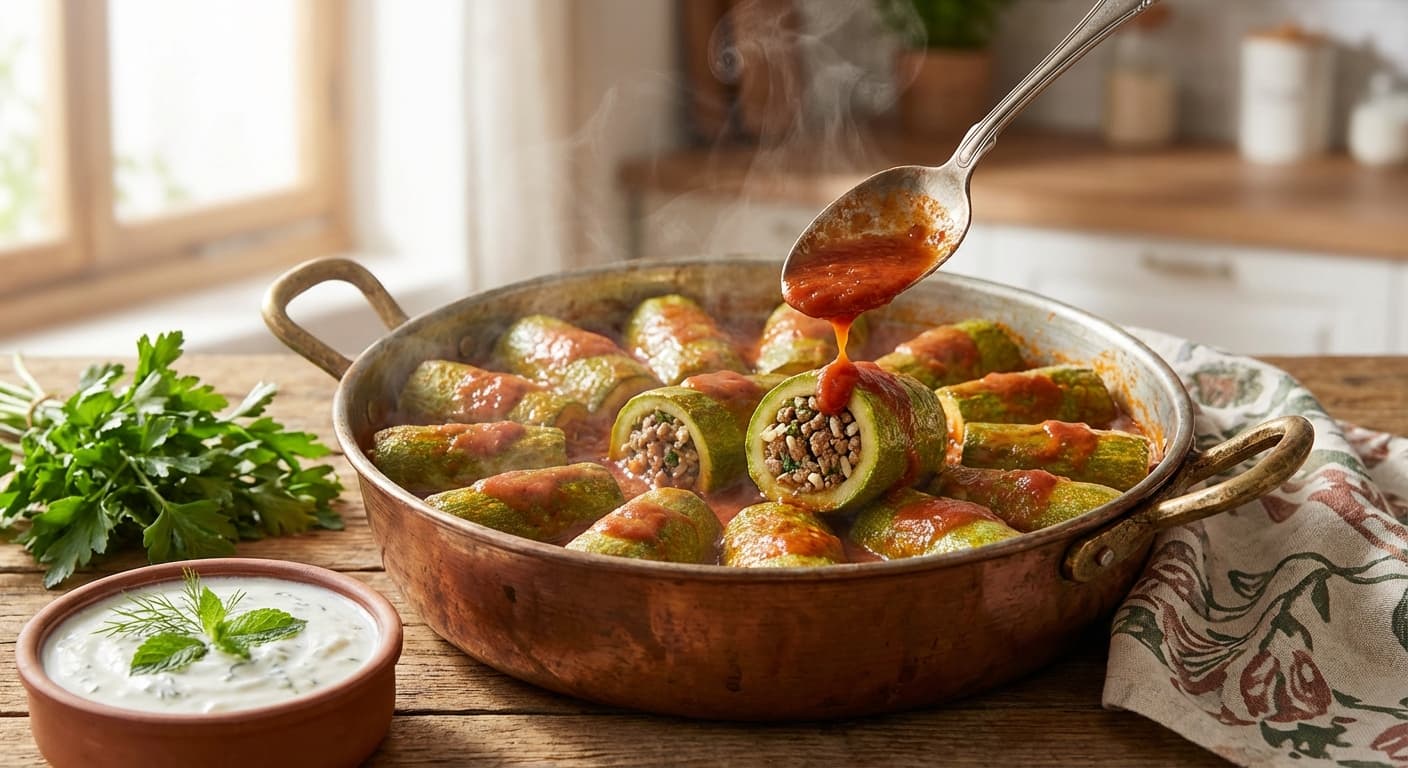
Stuffed Zucchini (Kabak Dolması) — Hollowed zucchini filled with spiced minced meat and rice
Turkish · Main Courses · 90 min
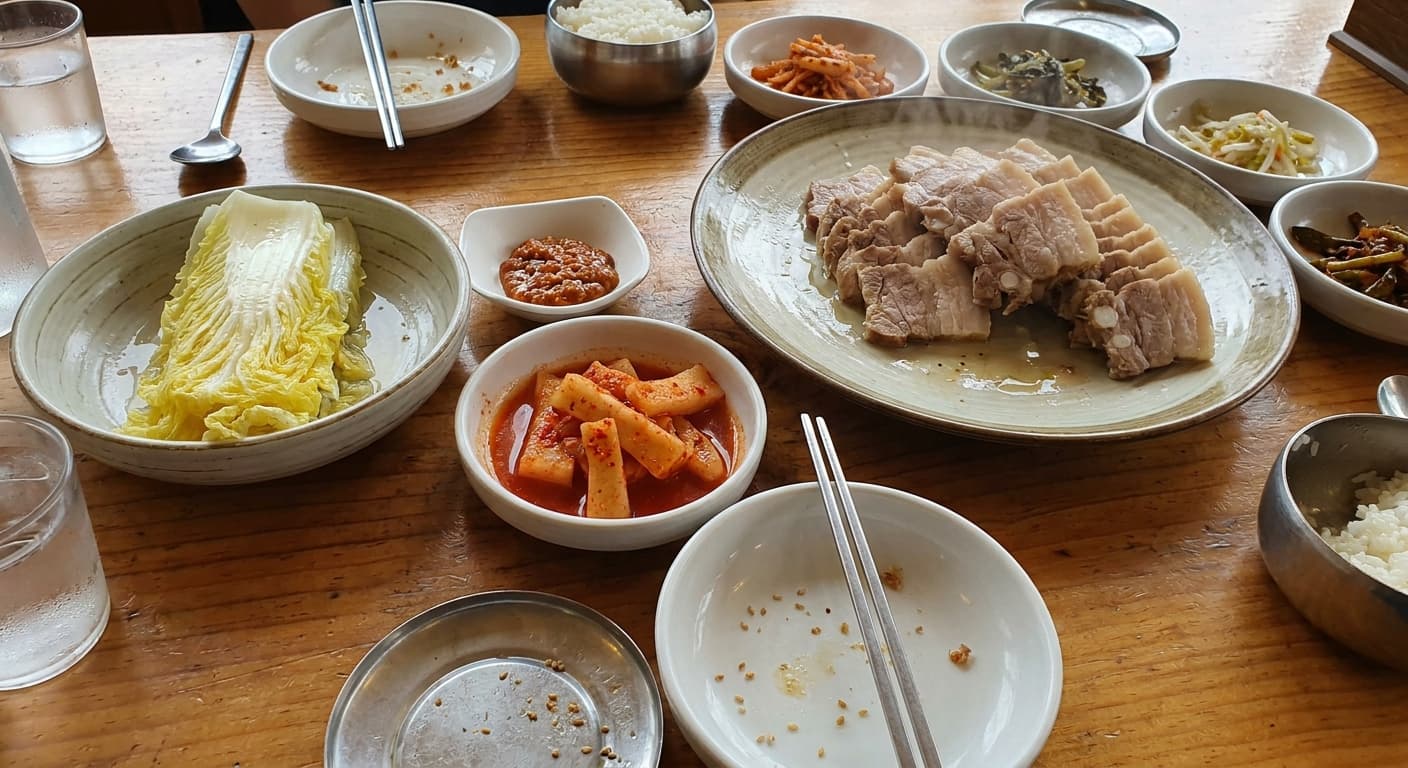
Bossam (보쌈) — Korean Boiled Pork Lettuce Wraps
Korean · Main Courses · 135 min
Reviews
Cooked this recipe?
Tap the stars to rate it — that's all it takes. A few words are welcome but optional.
No ratings yet. Cooked this one? Be the first to rate it — it takes one tap.