Kalleh Pacheh Polo (کله پاچه پلو) — Persian Sheep’s Head and Trotters Rice
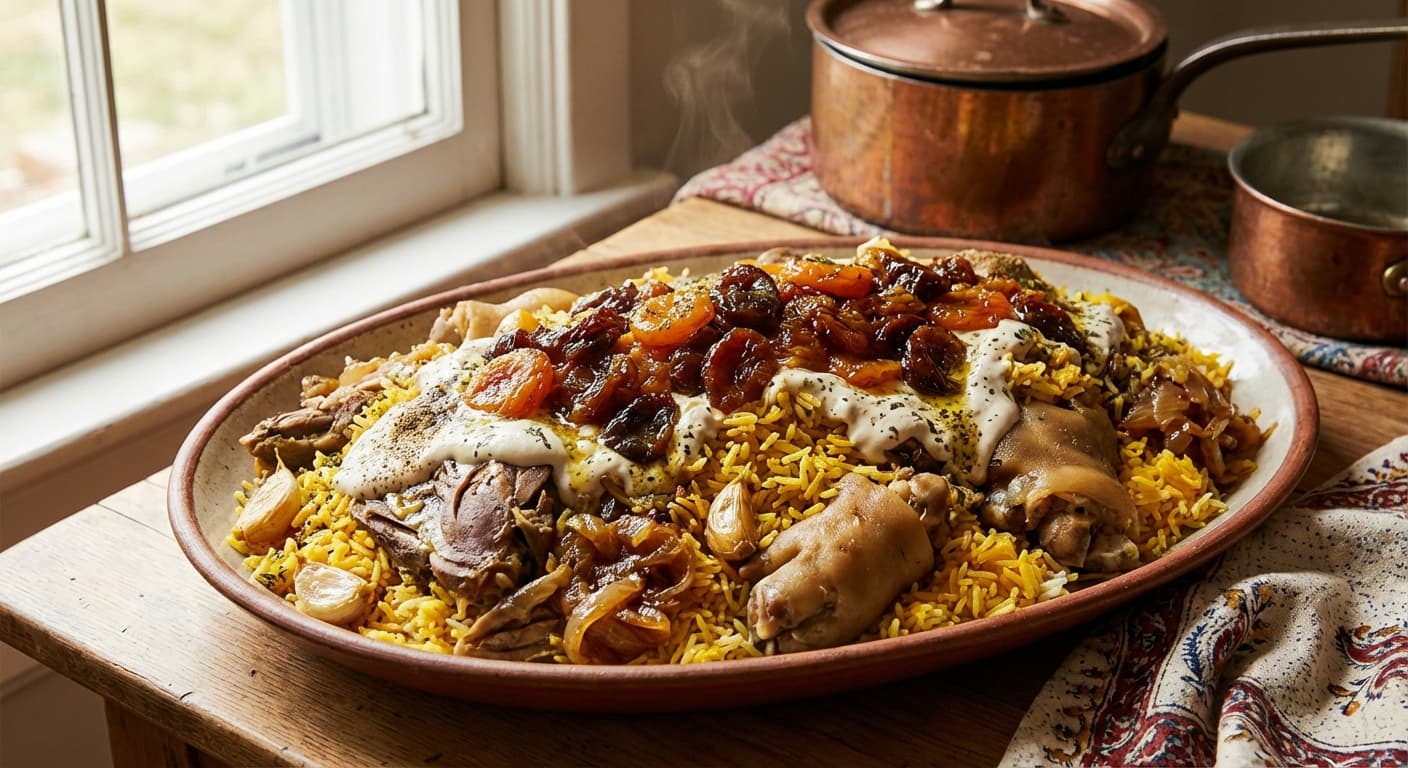
A celebratory Persian rice dish pairing slow-cooked sheep’s head and trotters with fragrant steamed rice, tangy kashk, and a sweet-tart layer of dried plums and apricots, finished with garlic butter and golpar.
Printable Recipe Card
Servings: 6 · Total: 510 min · Difficulty: hard
Ingredients (quick list)
- 1 head Sheep head, split and cleaned (about 1.8–2.2 kg; ask butcher to split lengthwise and remove eyes; singed and well-scrubbed)
- 8 Sheep trotters (feet), cleaned (about 1.2–1.6 kg total; split lengthwise if possible)
- 300 g Onion (2 medium, halved)
- 24 g Garlic (8 cloves, lightly crushed)
- 2 tsp Turmeric
- 1 tsp Whole black peppercorns
- 2 leaf Bay leaves
- 2 tsp Ground angelica (golpar) (to season meat and kashk at the end)
- 5 tsp Fine sea salt (divided; add most near the end of simmering)
- 600 g Long-grain basmati rice (rinsed until water runs mostly clear)
- 3600 ml Water (plus more as needed for boiling rice)
- 120 g Plain yogurt (for soaking the head and trotters to reduce odor)
+ 12 more in the full ingredients section below.
Steps (summary)
- Soak to reduce odor: In a large tub, combine 2,000 ml cold water, yogurt, and vinegar. Submerge the split sheep head and trotte…
- Start the broth: Place the head and trotters in a very large stockpot (10–12 L). Add 3,600 ml water, onion halves, crushed garl…
- Slow-cook until gelatinous: Partially cover and simmer on low for 4 to 4.5 hours, turning pieces once or twice for even cooking…
- Debone and strain: Transfer head and trotters to a tray. When cool enough to handle (15–20 minutes), remove edible meat and sof…
- Prepare fruit layer: Rinse dried plums and apricot slices. In a small saucepan, combine fruit with 300 ml of the strained broth…
- Soak the rice: Rinse basmati rice until the water is mostly clear. Soak in plenty of cool water with 1 tsp salt for 45 minutes,…
+ 6 more steps in the full instructions section below.
Cultural Background
Sheep head and trotters dishes are part of long-standing Iranian food traditions, often associated with early-morning eateries and cold-season comfort cooking. Serving them with rice and kashk reflects a celebratory approach that balances richness with tang and fragrance for gatherings.
Equipment
💡 Tips
- Ask the butcher to split the head and trotters; it shortens cooking and improves broth extraction.
- Salt late in the simmer (last hour) to help the meat stay tender and the broth stay clear.
- If the broth is too fatty, chill it 30 minutes and lift off some solidified fat; keep a little for flavor.
- For cleaner aroma, skim diligently during the first 20 minutes and keep the simmer gentle, never a hard boil.
- Toast sesame seeds in a dry skillet 2–3 minutes until fragrant for a nuttier finish.
⚠️ Common Mistakes
❌ Boiling the broth hard for hours
💡 Why: A hard boil emulsifies fat and makes broth cloudy, while also toughening delicate tissues.
✅ Fix: Keep a gentle simmer with small bubbles; adjust heat frequently and skim early foam.
❌ Salting the broth heavily at the beginning
💡 Why: Early salting can firm proteins and slow tenderizing, especially in collagen-rich cuts.
✅ Fix: Add most salt in the last hour, then correct seasoning after deboning.
❌ Overcooking rice during parboil
💡 Why: If grains are fully cooked before steaming, they break and turn sticky in the final polo.
✅ Fix: Boil only until elongated with a firm center (6–8 minutes), then steam on low for 45 minutes.
❌ Browning garlic for the kashk sauce
💡 Why: Burnt garlic turns bitter and dominates the tangy dairy flavor.
✅ Fix: Cook garlic on medium-low for 60–90 seconds just until fragrant, then add kashk and simmer briefly.
🧊 How to Store
Cool rice and meat within 2 hours. Refrigerate in airtight containers up to 3 days. Reheat gently with a splash of broth or water, covered, until piping hot. Freeze meat and broth up to 2 months; rice texture is best fresh but can be frozen 1 month.
📅 Make Ahead
Cook the head and trotters and strain the broth up to 2 days ahead; refrigerate separately. On serving day, rewarm broth, parboil and steam the rice, and make the kashk sauce fresh for best aroma and texture.
🍽️ Pairs Well With
- Fresh herbs (mint
- basil
- scallions)
- Radishes and spring onions
- Pickled vegetables
- Lemon wedges
- Strong black tea
Regional Variations
- Tehran and Central IranOften served very early in the day with a clear, peppery broth on the side; golpar and lemon are common seasonings to cut richness.
- Northwest IranMay include extra garlic and a stronger spice finish, sometimes with more dried fruit or a slightly sweeter balance alongside the rich meat.
Ingredients
- 1 headSheep head, split and cleaned (about 1.8–2.2 kg; ask butcher to split lengthwise and remove eyes; singed and well-scrubbed)
- 8Sheep trotters (feet), cleaned (about 1.2–1.6 kg total; split lengthwise if possible)
- 300 gOnion (2 medium, halved)
- 24 gGarlic (8 cloves, lightly crushed)
- 2 tspTurmeric
- 1 tspWhole black peppercorns
- 2 leafBay leaves
- 2 tspGround angelica (golpar) (to season meat and kashk at the end)
- 5 tspFine sea salt (divided; add most near the end of simmering)
- 600 gLong-grain basmati rice (rinsed until water runs mostly clear)
- 3600 mlWater (plus more as needed for boiling rice)
- 120 gPlain yogurt (for soaking the head and trotters to reduce odor)
- 30 mlWhite vinegar (for soaking the head and trotters to reduce odor)
- 2000 mlCold water (for soaking the head and trotters)
- 180 gDried plums (pitted if needed)
- 120 gDried apricot slices (cut into 2–3 cm strips)
- 0.25 tspSaffron threads (ground and bloomed in hot water)
- 45 mlHot water (for blooming saffron)
- 90 gButter (divided)
- 45 mlNeutral oil (such as grapeseed or sunflower)
- 1 tspGround cumin (optional but traditional with rich meats)
- 300 gPersian whey (kashk) (thick liquid kashk; see substitutions if unavailable)
- 2 tspDried mint
- 2 tspSusumber (use toasted sesame seeds; sprinkle at serving)
🔄 Substitutions
- Persian whey (kashk)→ Greek yogurt + 1 tbsp lemon juice per 240 g yogurt
- Sheep head and trotters→ Beef feet (trotters) + lamb shanks (bone-in)
- Ground angelica (golpar)→ Ground black pepper + a small pinch of ground cumin
Instructions
- 1
Soak to reduce odor: In a large tub, combine 2,000 ml cold water, yogurt, and vinegar. Submerge the split sheep head and trotters, turning to wet all surfaces. Refrigerate 60 minutes, then drain and rinse thoroughly under cold running water for 3–5 minutes, scrubbing crevices with a clean brush.
- 2
Start the broth: Place the head and trotters in a very large stockpot (10–12 L). Add 3,600 ml water, onion halves, crushed garlic (8 cloves), turmeric, peppercorns, and bay leaves. Bring to a boil over high heat, then immediately reduce to a gentle simmer (small bubbles), uncovered, for 20 minutes while skimming foam.
- 3
Slow-cook until gelatinous: Partially cover and simmer on low for 4 to 4.5 hours, turning pieces once or twice for even cooking. Add 4 tsp of the salt during the last 60 minutes so the meat stays tender. The trotters should release gelatin and the meat should pull away easily.
- 4
Debone and strain: Transfer head and trotters to a tray. When cool enough to handle (15–20 minutes), remove edible meat and soft tissues, discarding bones and any hard cartilage. Strain the broth through a fine sieve; you need 900 ml for the rice and fruit layer—boil to reduce if needed.
- 5
Prepare fruit layer: Rinse dried plums and apricot slices. In a small saucepan, combine fruit with 300 ml of the strained broth. Simmer gently for 12–15 minutes until plums are plump and apricots soften but hold shape. Turn off heat; cover to keep warm and glossy.
- 6
Soak the rice: Rinse basmati rice until the water is mostly clear. Soak in plenty of cool water with 1 tsp salt for 45 minutes, then drain well. Meanwhile, bloom saffron by grinding threads and mixing with 45 ml hot water; cover and steep 10 minutes for full color.
- 7
Parboil the rice: Bring a large pot of water to a rolling boil (at least 4 L). Add drained rice and boil 6–8 minutes, stirring twice, until grains are elongated but still firm in the center. Drain in a colander and rinse quickly with 250 ml warm water to stop cooking.
- 8
Build the pot for steaming: In a heavy nonstick pot, heat neutral oil with 30 g butter over medium heat for 60 seconds. Add 2–3 tbsp parboiled rice to coat, then spread the remaining rice in a mound. Using a spoon handle, poke 5–6 steam holes down to the bottom.
- 9
Layer meat and fruit: Mix the picked meat with 1 tsp golpar, 1 tsp ground cumin (optional), and 1 tsp salt if needed. Gently fold half the meat into the rice, then spoon the warm fruit (with its syrup) over the center. Add remaining meat on top, keeping layers mostly central to avoid scorching.
- 10
Steam the polo: Drizzle 600 ml strained hot broth around the edges (not directly on the mound) and drizzle the saffron water over the top. Cover lid with a clean towel and seal tightly. Steam on medium-high for 10 minutes to build steam, then low for 45 minutes.
- 11
Make garlic-mint kashk: In a small pan, melt 60 g butter over medium-low. Add minced garlic (6 cloves) and cook 60–90 seconds until fragrant, not browned. Stir in dried mint for 20 seconds. Add kashk and 120 ml water; simmer 3–4 minutes, stirring, until silky.
- 12
Finish and serve: Rest the rice off heat for 10 minutes. Fluff gently, lifting from the sides to keep grains intact and distribute fruit and meat. Transfer to a platter. Spoon warm kashk sauce over portions, then sprinkle with susumber (toasted sesame) and a final dusting of golpar.
🪪 Recipe Passport
Cultural Background
Sheep head and trotters dishes are part of long-standing Iranian food traditions, often associated with early-morning eateries and cold-season comfort cooking. Serving them with rice and kashk reflects a celebratory approach that balances richness with tang and fragrance for gatherings.
Regional Variations
Researched from multiple sources and validated by the Zaffaron editorial team. Every recipe is tested for accuracy, measurements, and cultural authenticity.
Nutrition per serving
Pairs well with
If you enjoyed this recipe, here are a few related Zaffaron recipes to try next.
Does your family make this differently?
Every family has their own version. Maybe your grandmother adds a secret ingredient, or your aunt has a completely different technique. Preserve your family's version — with their name on it, forever.
You Might Also Like
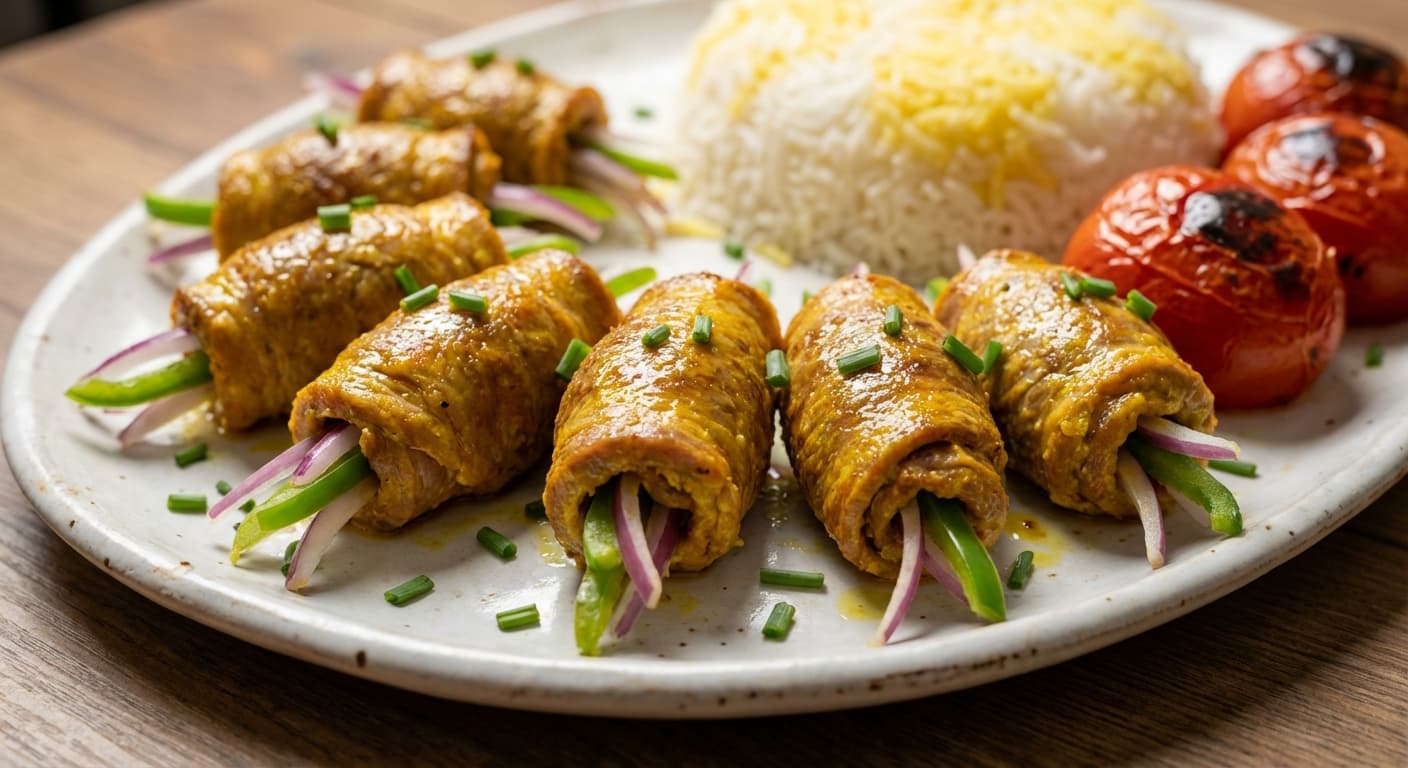
Bulgar Kabab (کباب بلغار) — Persian Rolled Saffron Fillets
Persian · Kebabs · 37 min
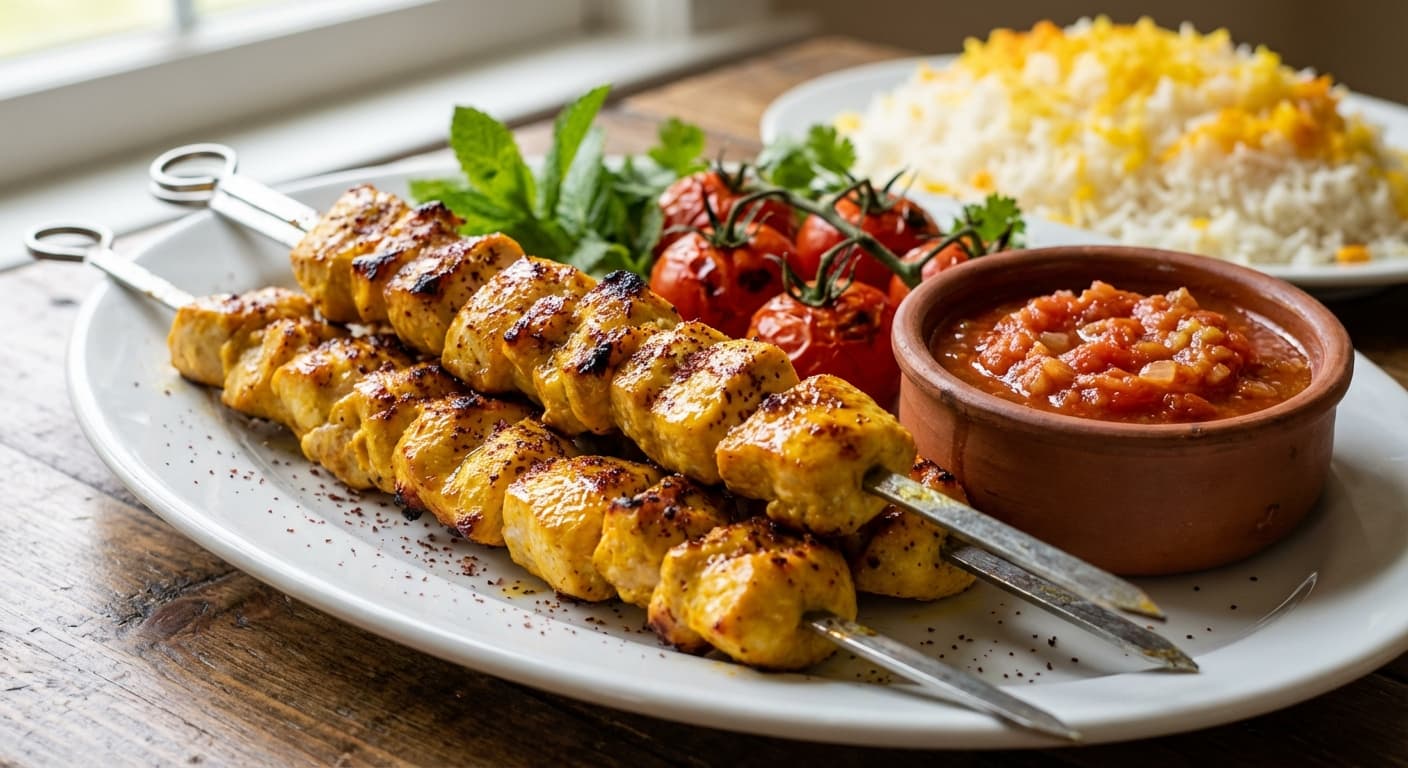
Jujeh Kabab (جوجه کباب) — Saffron-Turmeric Chicken with Rustic Tomato Sauce
Persian · Kebabs · 45 min
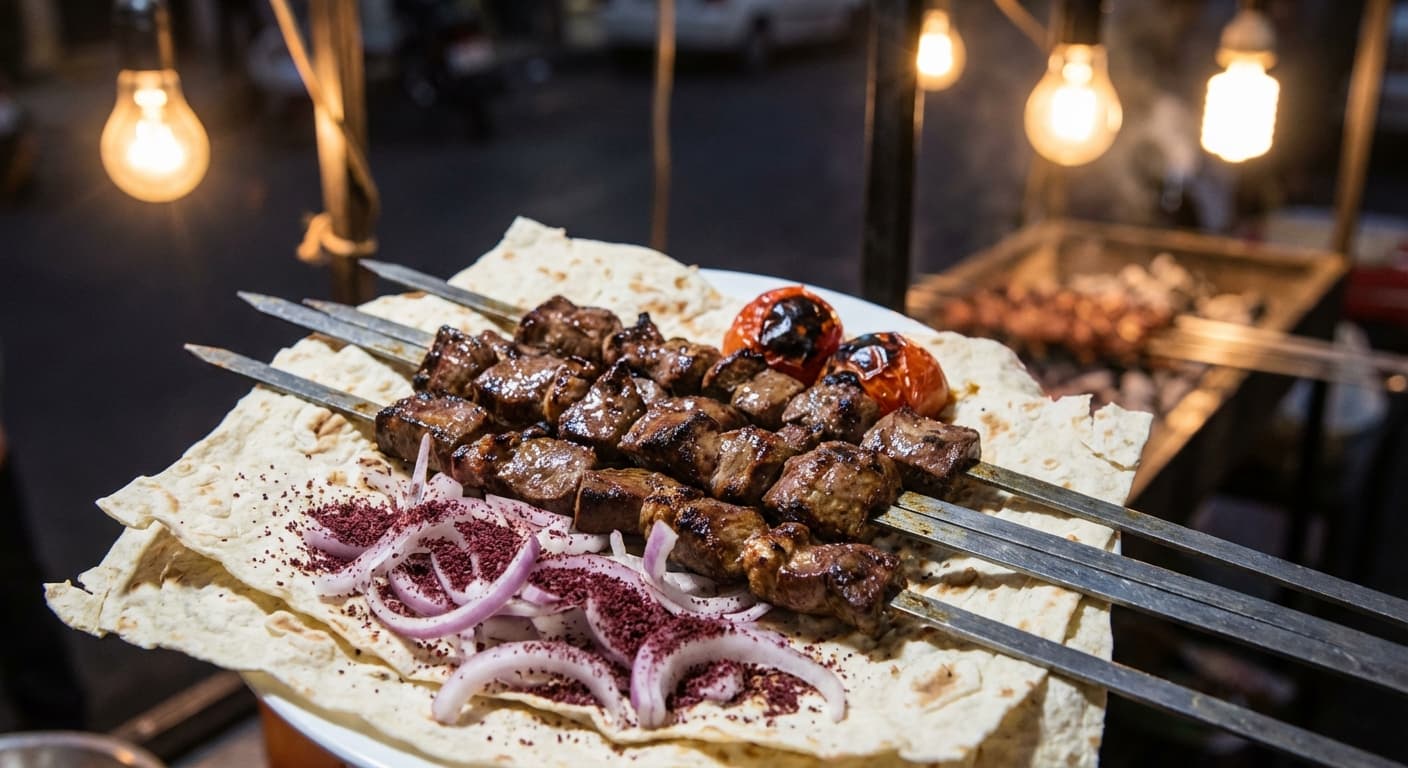
Jigar Kabab (جگر کباب) — Classic Persian Lamb Liver Skewers
Persian · Kebabs · 33 min
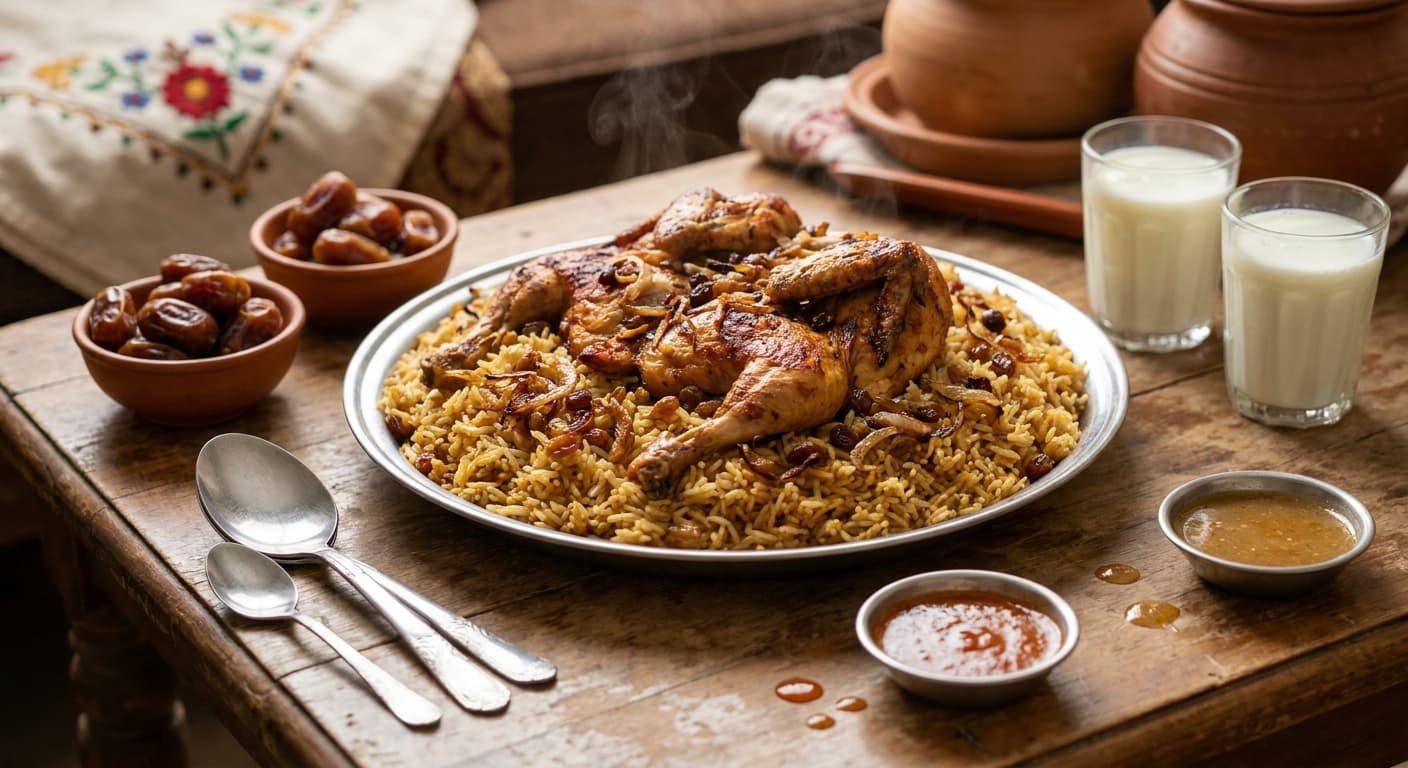
Emirati Machboos (مكبوس إماراتي) — Spiced Chicken Rice with Dried Lime
Gulf arabian · Rice Dishes · 110 min
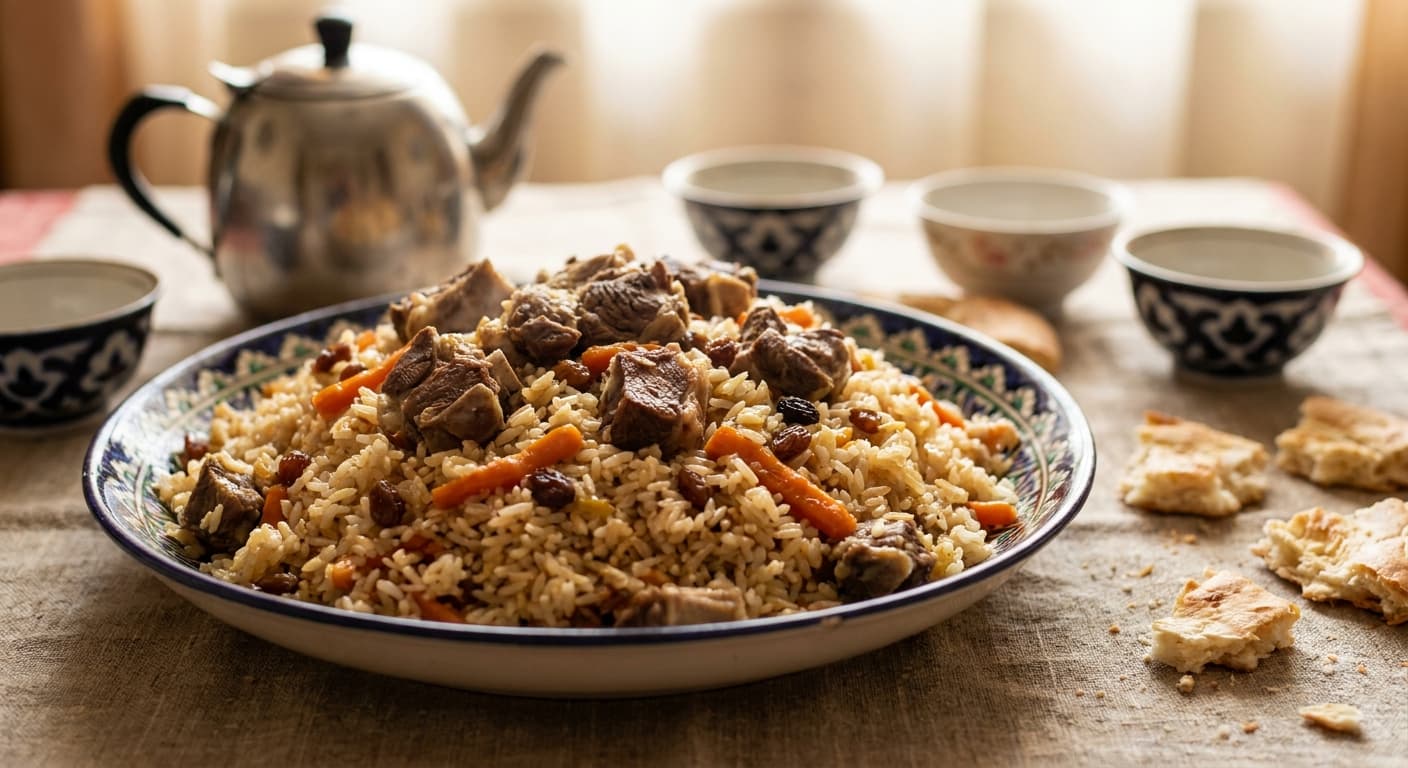
Uzbek Plov (Oʻzbek palovi) — Lamb, Rice, Carrots, and Cumin Pilaf
Uzbek · Rice Dishes · 130 min
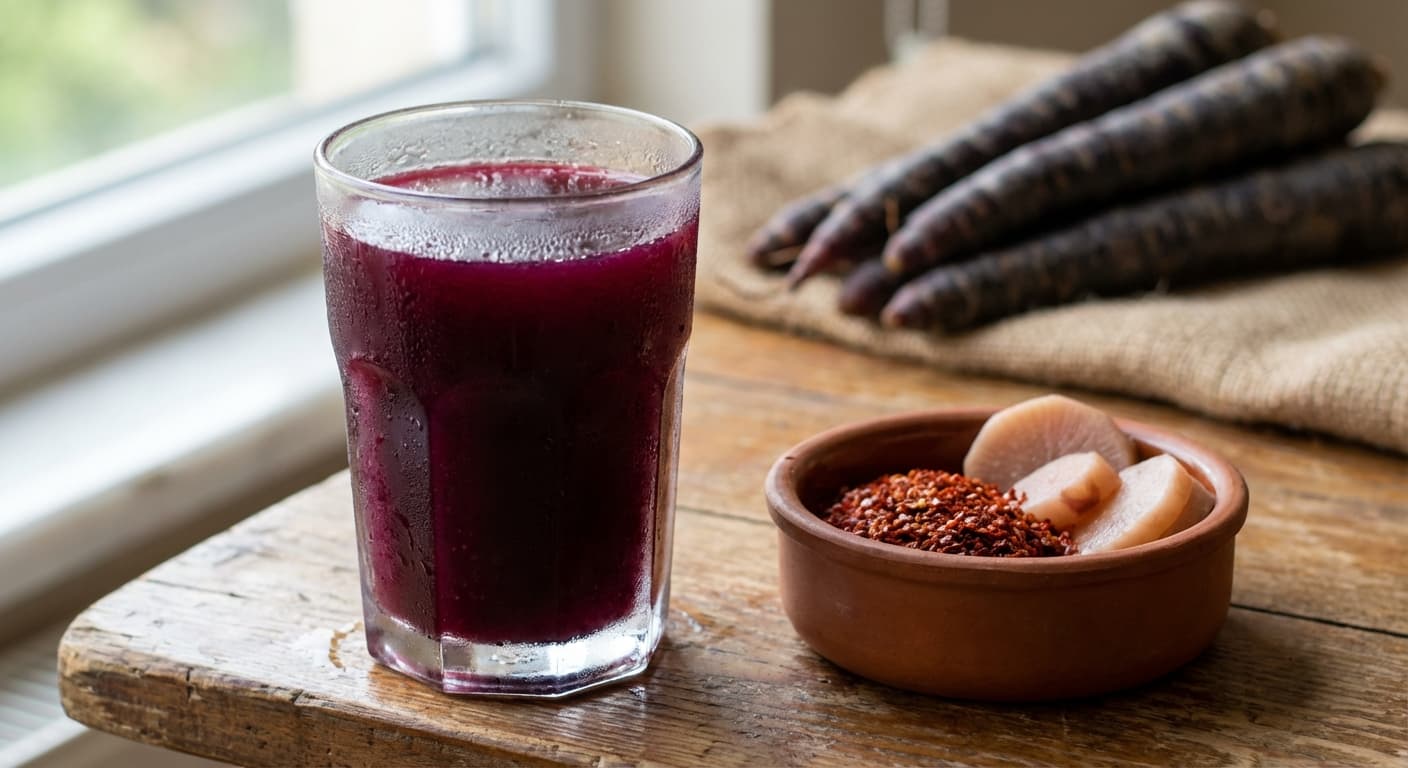
Salgam Juice (Şalgam) — Spicy, tangy fermented black-carrot drink
Turkish · Drinks · 25 min
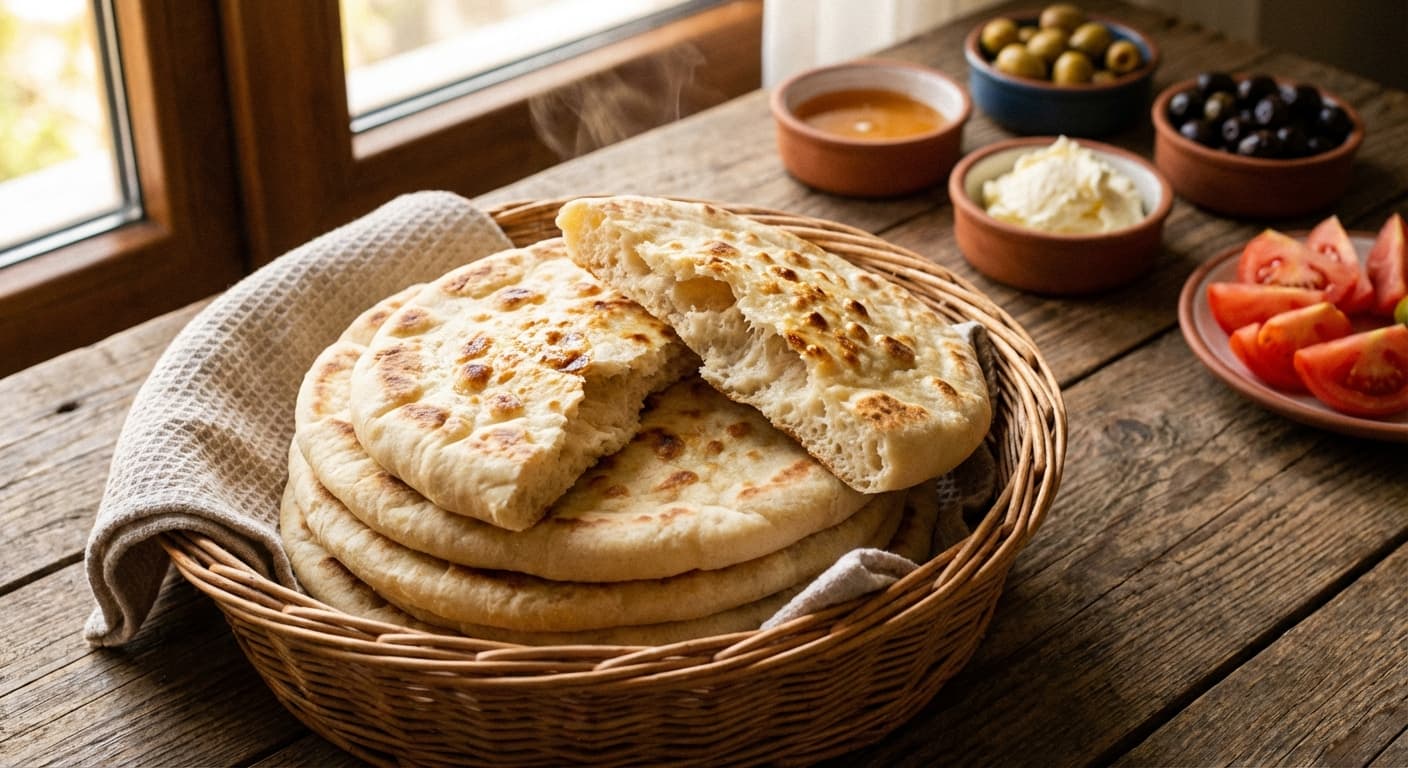
Bazlama (بازلاما) — Puffy Turkish Village Flatbread Cooked on a Saj
Turkish · Breads · 38 min
Ash-e Jaafari (آش جعفری) — Persian Parsley Meatball Soup
Persian · Soups · 100 min
Reviews
Cooked this recipe?
Tap the stars to rate it — that's all it takes. A few words are welcome but optional.
No ratings yet. Cooked this one? Be the first to rate it — it takes one tap.