Kerala Fish Curry (മീൻ കറി) — Coconut and Tamarind Fish Curry from Kerala
Kerala fish curry is a coastal South Indian classic where firm fish simmers in a tangy tamarind broth with coconut, curry leaves, and warming spices. Traditionally cooked in an earthen pot, it tastes even better the next day as the flavors deepen.
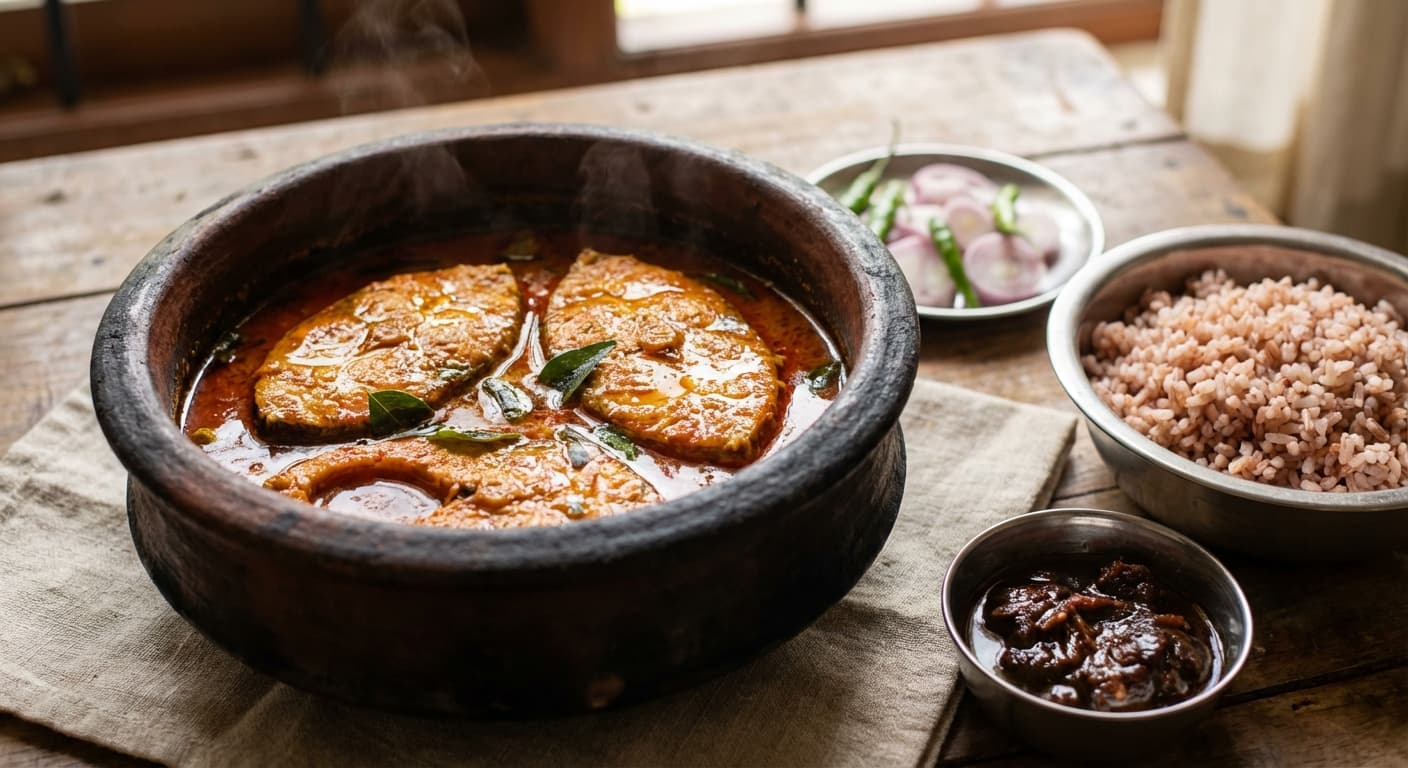
Printable Recipe Card
Servings: 4 · Total: 50 min · Difficulty: medium
Ingredients (quick list)
- 600 g Seer fish (king mackerel) steaks (Cut into 4–6 cm pieces)
- 8 g Fine sea salt (For lightly salting the fish)
- 2 tsp Kashmiri chili powder (For color and mild heat)
- 0.5 tsp Ground turmeric
- 2 tbsp Coconut oil
- 1 tsp Mustard seeds
- 0.5 tsp Fenugreek seeds (Use sparingly; it can turn bitter)
- 180 g Shallots (Thinly sliced)
- 12 g Ginger (Finely chopped)
- 12 g Garlic (Finely chopped)
- 2 Green chilies (Slit lengthwise)
- 2 bunch Curry leaves (About 30 leaves total, divided)
+ 7 more in the full ingredients section below.
Steps (summary)
- Pat the fish dry, then rub it with 8 g salt, 2 tsp Kashmiri chili powder, and 0.5 tsp turmeric. Let it sit for 10 minutes while…
- In a bowl, whisk the tamarind pulp with 350 ml water until fully dissolved and smooth. Set it aside so the souring liquid is re…
- Heat 2 tbsp coconut oil in a wide pot (earthenware if you have it) over medium heat. Add mustard seeds and let them pop, then a…
- Add the sliced shallots, ginger, garlic, green chilies, and half the curry leaves. Cook for 6–8 minutes, stirring often, until…
- Lower the heat and add coriander powder, 2 tsp Kashmiri chili powder, and 0.5 tsp turmeric. Stir constantly for 30–45 seconds t…
- Pour in the tamarind water and bring it to a gentle boil. Simmer for 6–8 minutes so the raw tamarind sharpness mellows and the…
+ 2 more steps in the full instructions section below.
Cultural Background
Fish curry is central to Kerala’s coastal home cooking, shaped by abundant seafood, coconut groves, and souring agents like tamarind and kokum. Often cooked in earthen pots, it’s a staple with rice and is prized for its next-day flavor.
Equipment
💡 Tips
- Keep the simmer gentle and avoid vigorous stirring; shaking the pot prevents the fish from breaking while still moving the sauce.
- Do not boil after adding coconut milk; keep it below a simmer (around 85–90°C) to prevent splitting.
- For deeper flavor, rest the curry for 2–4 hours (or overnight) before serving; Kerala fish curry is famously better the next day.
⚠️ Common Mistakes
❌ Boiling the curry after adding coconut milk, causing it to split.
✅ Fix: Add coconut milk at low heat and warm gently; keep it below a simmer and turn off once steaming.
❌ Overcooking or stirring the fish until it breaks apart.
✅ Fix: Keep the simmer gentle and move the pot by shaking; cook only until the fish is just opaque and flakes.
❌ Using too much fenugreek, making the curry bitter.
✅ Fix: Stick to 0.5 tsp and toast briefly; if bitterness appears, add 5–10 ml extra coconut milk and 2–3 g jaggery.
🧊 How to Store
Cool to room temperature within 1 hour, then refrigerate in an airtight container for up to 2 days. Reheat gently over low heat until steaming (do not boil, especially with coconut milk) and add 30–60 ml water if the gravy thickens.
📅 Make Ahead
Slice shallots and chop aromatics up to 24 hours ahead and refrigerate. Mix tamarind water and keep chilled for 2 days. The finished curry can be made 1 day ahead; reheat gently for best flavor.
🍽️ Pairs Well With
- Kerala matta rice
- steamed basmati rice
- appam
- idiyappam
- dosa
- cabbage thoran
- pappadam.
Regional Variations
- Kottayam-style: uses kokum (kudampuli) for sourness and often skips tomato for a darker, sharper curry.
- Thenga aracha meen curry: includes freshly ground coconut paste for a thicker, more rustic gravy.
- Varutharacha version: spices and coconut are roasted and ground, giving a smoky, deeper flavor and darker color.
Ingredients
- 600 gSeer fish (king mackerel) steaks (Cut into 4–6 cm pieces)
- 8 gFine sea salt (For lightly salting the fish)
- 2 tspKashmiri chili powder (For color and mild heat)
- 0.5 tspGround turmeric
- 2 tbspCoconut oil
- 1 tspMustard seeds
- 0.5 tspFenugreek seeds (Use sparingly; it can turn bitter)
- 180 gShallots (Thinly sliced)
- 12 gGinger (Finely chopped)
- 12 gGarlic (Finely chopped)
- 2Green chilies (Slit lengthwise)
- 2 bunchCurry leaves (About 30 leaves total, divided)
- 2 tspCoriander powder
- 150 gTomato (Chopped)
- 20 gTamarind pulp (thick concentrate) (Or 30 g soaked tamarind, strained)
- 350 mlWater
- 400 mlCoconut milk (full-fat) (Well shaken or whisked)
- 0.5 tspBlack pepper (Freshly ground)
- 6 gJaggery (Balances tamarind; optional but traditional)
🔄 Substitutions
- Seer fish (king mackerel) steaks→ Pomfret, salmon, or cod
- Tamarind pulp (thick concentrate)→ Kokum (garcinia) 6 pieces
- Coconut oil→ Neutral oil (sunflower or canola)
Instructions
- 1
Pat the fish dry, then rub it with 8 g salt, 2 tsp Kashmiri chili powder, and 0.5 tsp turmeric. Let it sit for 10 minutes while you slice the shallots and prepare the tamarind water.
- 2
In a bowl, whisk the tamarind pulp with 350 ml water until fully dissolved and smooth. Set it aside so the souring liquid is ready to pour in quickly once the spices are cooked.
- 3
Heat 2 tbsp coconut oil in a wide pot (earthenware if you have it) over medium heat. Add mustard seeds and let them pop, then add fenugreek seeds and stir for 15–20 seconds until fragrant but not dark.
- 4
Add the sliced shallots, ginger, garlic, green chilies, and half the curry leaves. Cook for 6–8 minutes, stirring often, until the shallots soften and turn lightly golden at the edges.
- 5
Lower the heat and add coriander powder, 2 tsp Kashmiri chili powder, and 0.5 tsp turmeric. Stir constantly for 30–45 seconds to bloom the spices without scorching, then add the chopped tomato and cook for 3–4 minutes until it breaks down.
- 6
Pour in the tamarind water and bring it to a gentle boil. Simmer for 6–8 minutes so the raw tamarind sharpness mellows and the broth takes on a deep reddish hue.
- 7
Slide the fish pieces into the simmering gravy in a single layer, then reduce the heat to low. Cook for 8–10 minutes, gently shaking the pot once or twice instead of stirring, until the fish turns opaque and flakes easily.
- 8
Add the coconut milk, black pepper, jaggery, remaining curry leaves, and the final 4 g salt. Warm the curry for 2–3 minutes without boiling, then turn off the heat and rest for 10 minutes so the fish stays intact and the flavors round out.
🪪 Recipe Passport
Cultural Background
Fish curry is central to Kerala’s coastal home cooking, shaped by abundant seafood, coconut groves, and souring agents like tamarind and kokum. Often cooked in earthen pots, it’s a staple with rice and is prized for its next-day flavor.
Regional Variations
Researched from multiple sources and validated by the Zaffaron editorial team. Every recipe is tested for accuracy, measurements, and cultural authenticity.
Nutrition per serving
Pairs well with
If you enjoyed this recipe, here are a few related Zaffaron recipes to try next.
Does your family make this differently?
Every family has their own version. Maybe your grandmother adds a secret ingredient, or your aunt has a completely different technique. Preserve your family's version — with their name on it, forever.
You Might Also Like
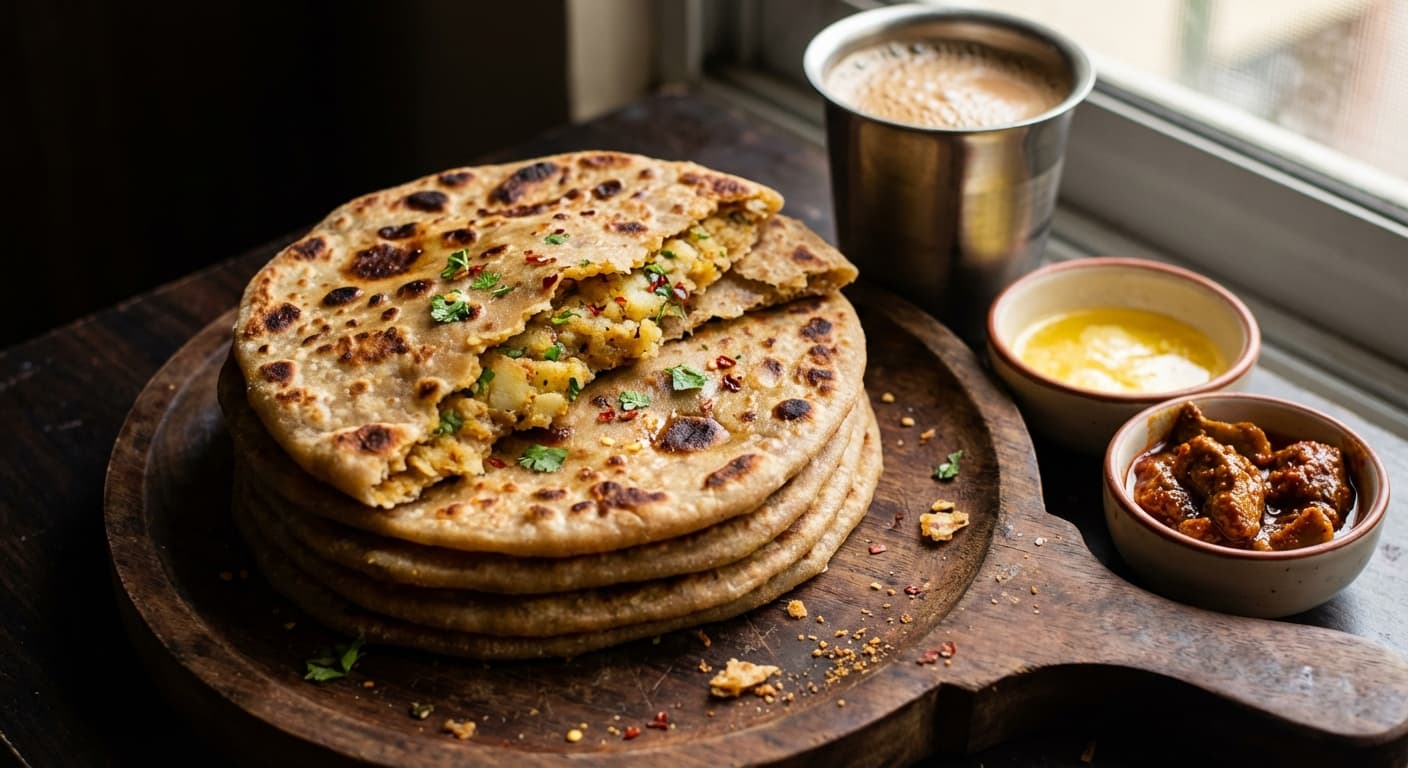
Aloo Paratha (आलू पराठा) — Indian Potato-Stuffed Breakfast Flatbread
Indian · Breads · 60 min
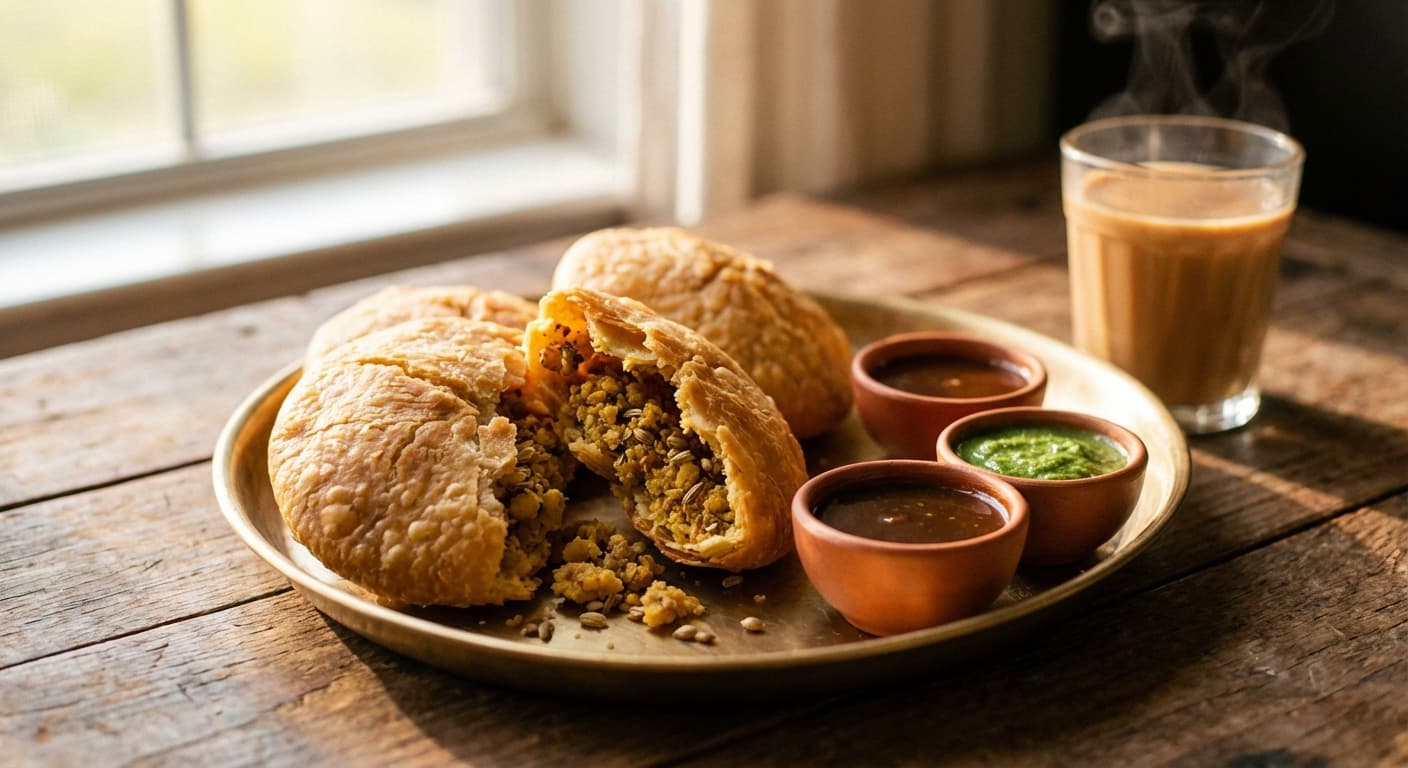
Kachori (कचौरी) — Flaky fried pastry stuffed with spiced moong dal
Indian · Appetizers · 70 min
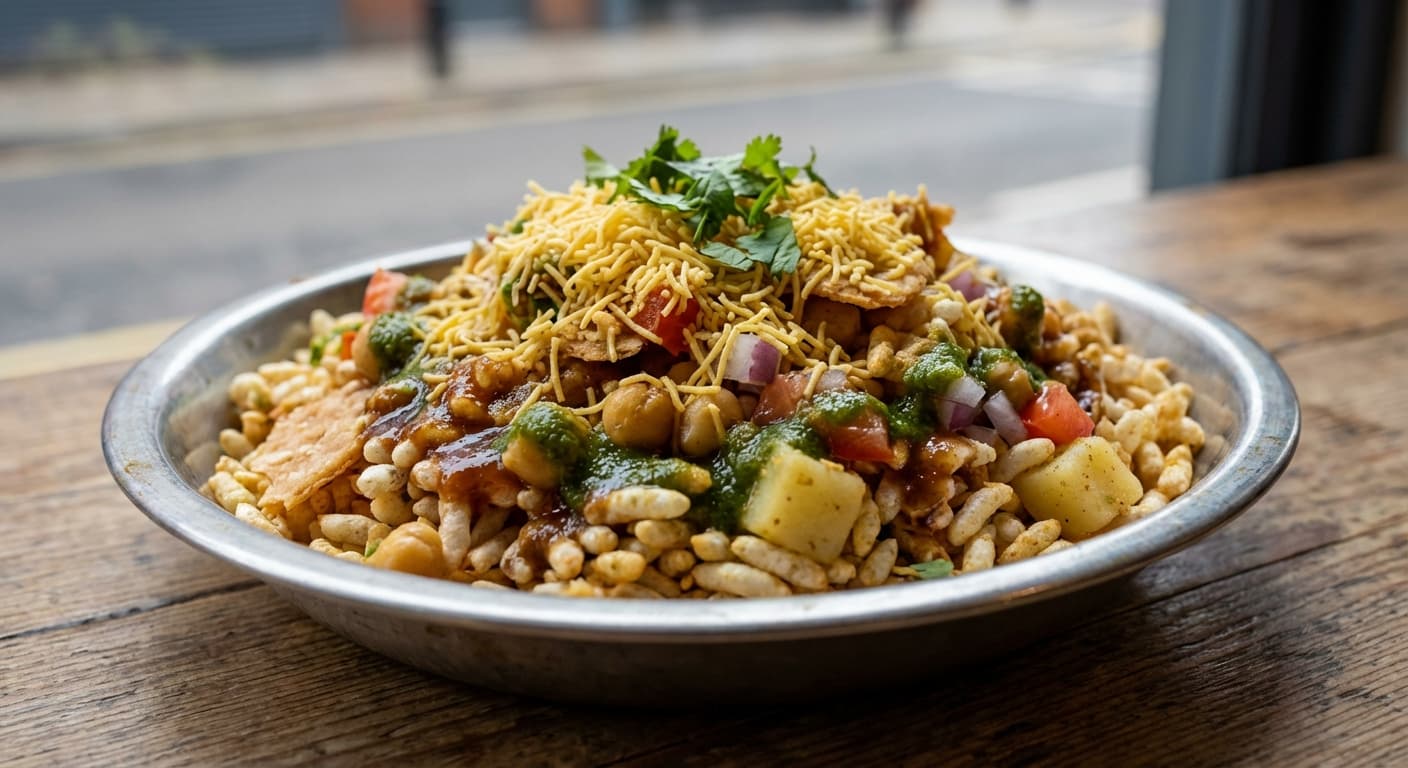
Bhel Puri (भेल पूरी) — Indian Puffed Rice Chaat with Tangy Chutneys
Indian · Appetizers · 30 min
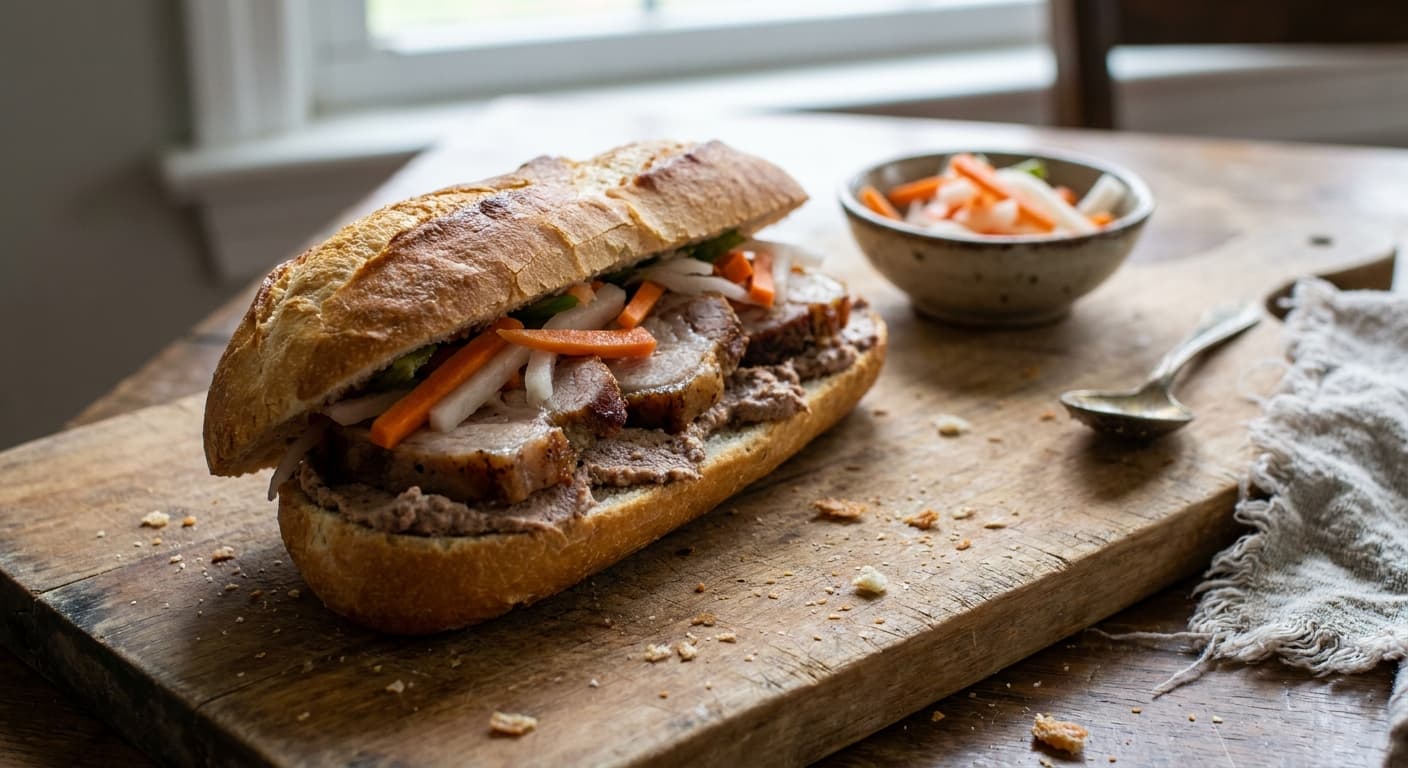
Num Pang Pate (នំប៉័ងប៉ាតេ) — Cambodian Baguette with Pate and Pickles
Cambodian · Main Courses · 60 min
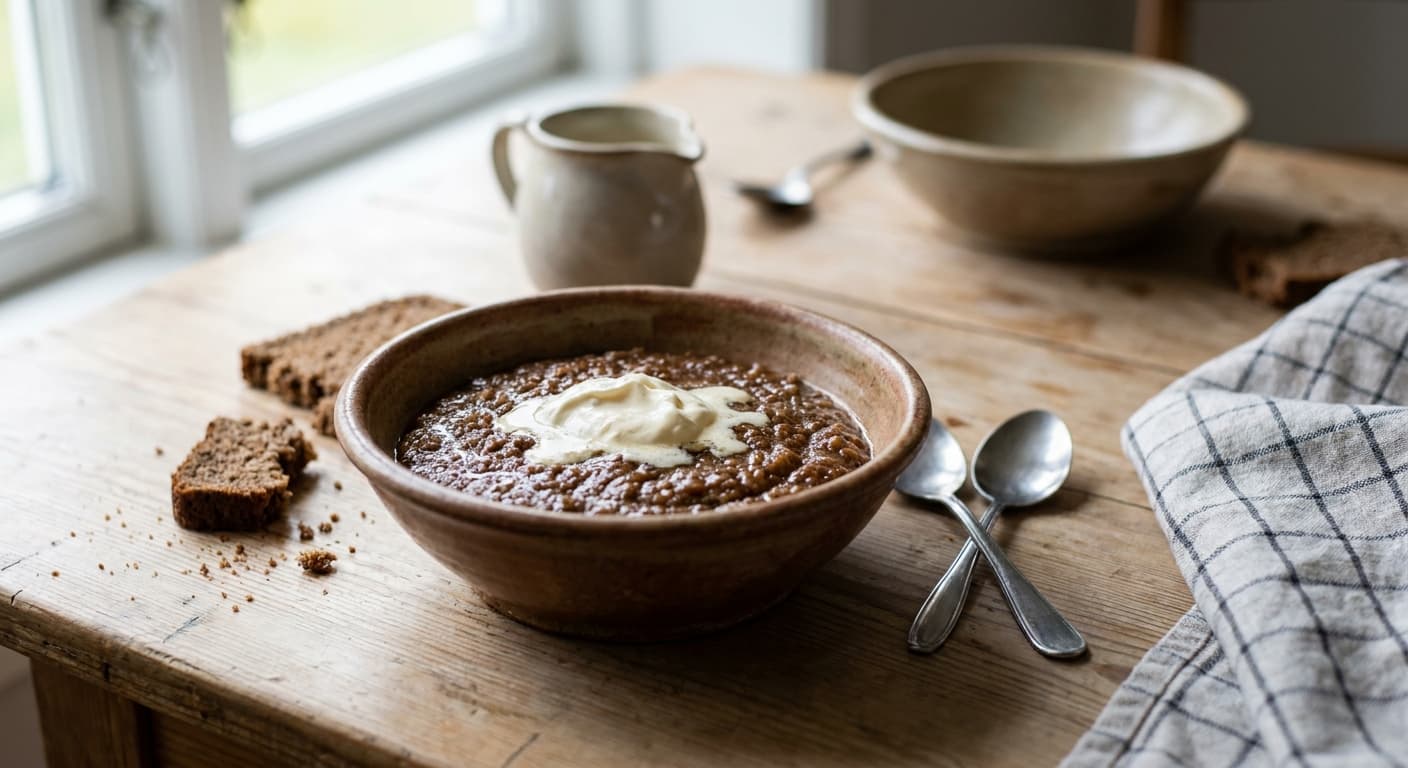
Rye Bread and Beer Porridge (Øllebrød) — Traditional Danish Breakfast
Danish · Main Courses · 65 min
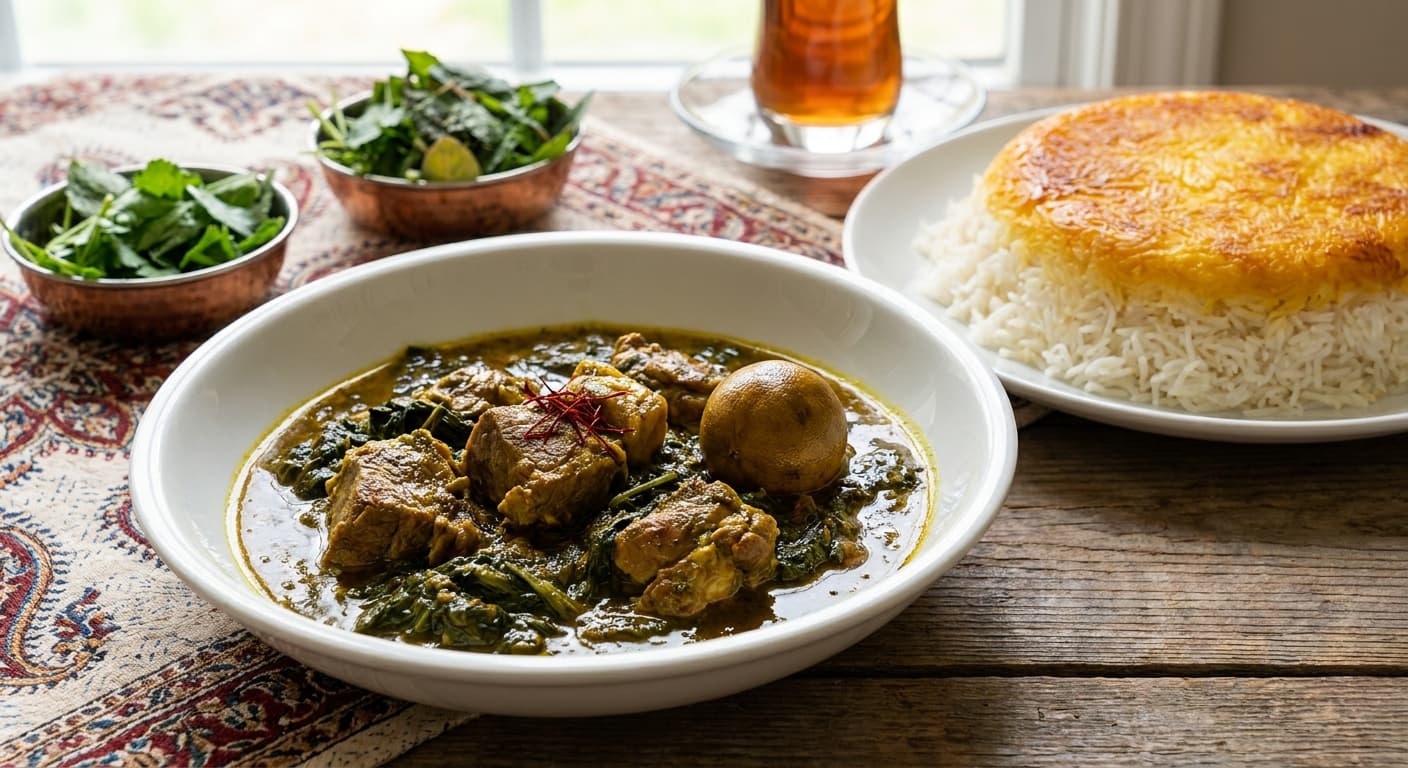
Persian Khoresht Saak (خورش ساک) — Saffron-Cardamom Lamb Stew with Saak Greens
Persian · Stews · 145 min

Sheermal (شیرمال) — Afghan Saffron Milk Bread with a Gentle Sweetness
Afghan · Breads · 43 min
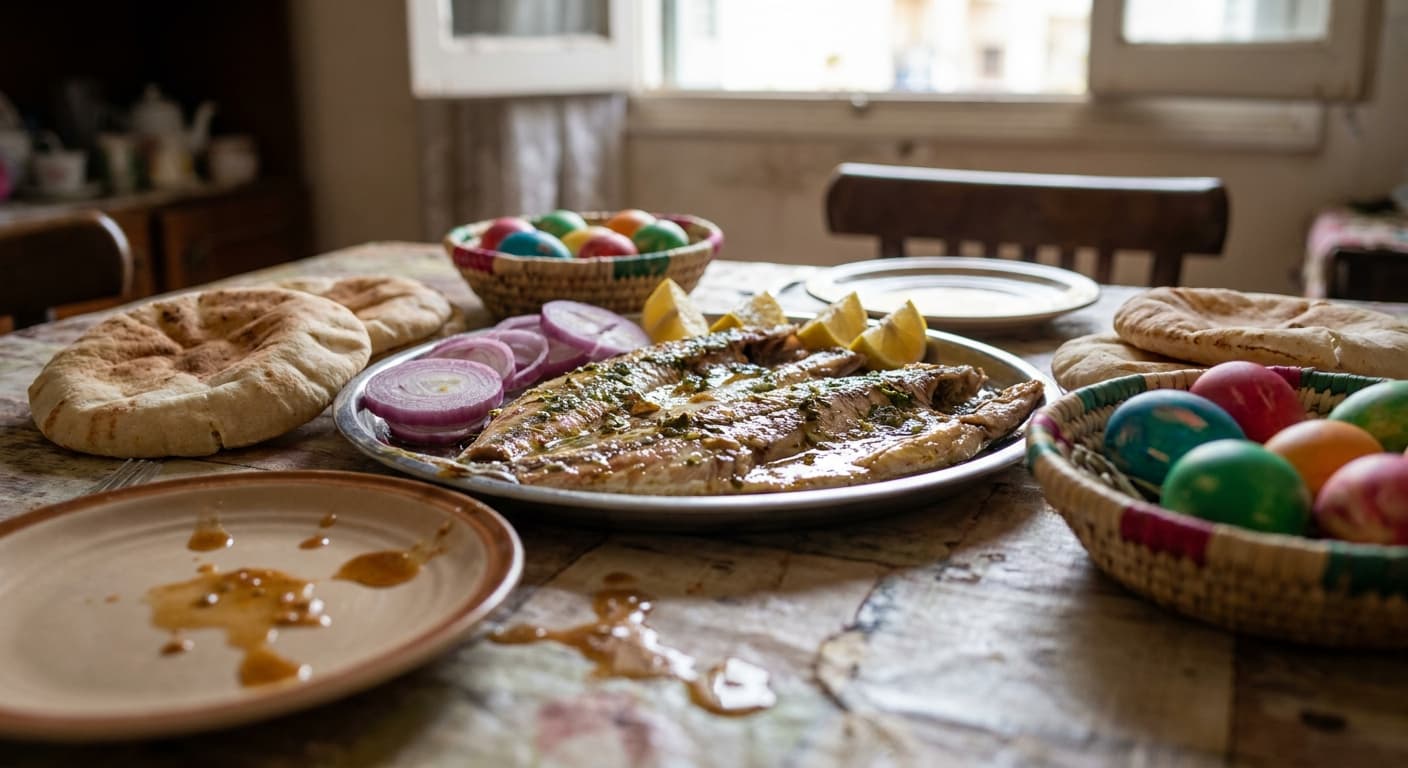
Feseekh (فسيخ) — Egyptian Salt-Cured Mullet for Sham el-Nessim
Egyptian · Main Courses · 30 min
Reviews
Cooked this recipe?
Tap the stars to rate it — that's all it takes. A few words are welcome but optional.
No ratings yet. Cooked this one? Be the first to rate it — it takes one tap.