Keshkek (Keşkek) — Creamy Ceremonial Wheat and Lamb Stew
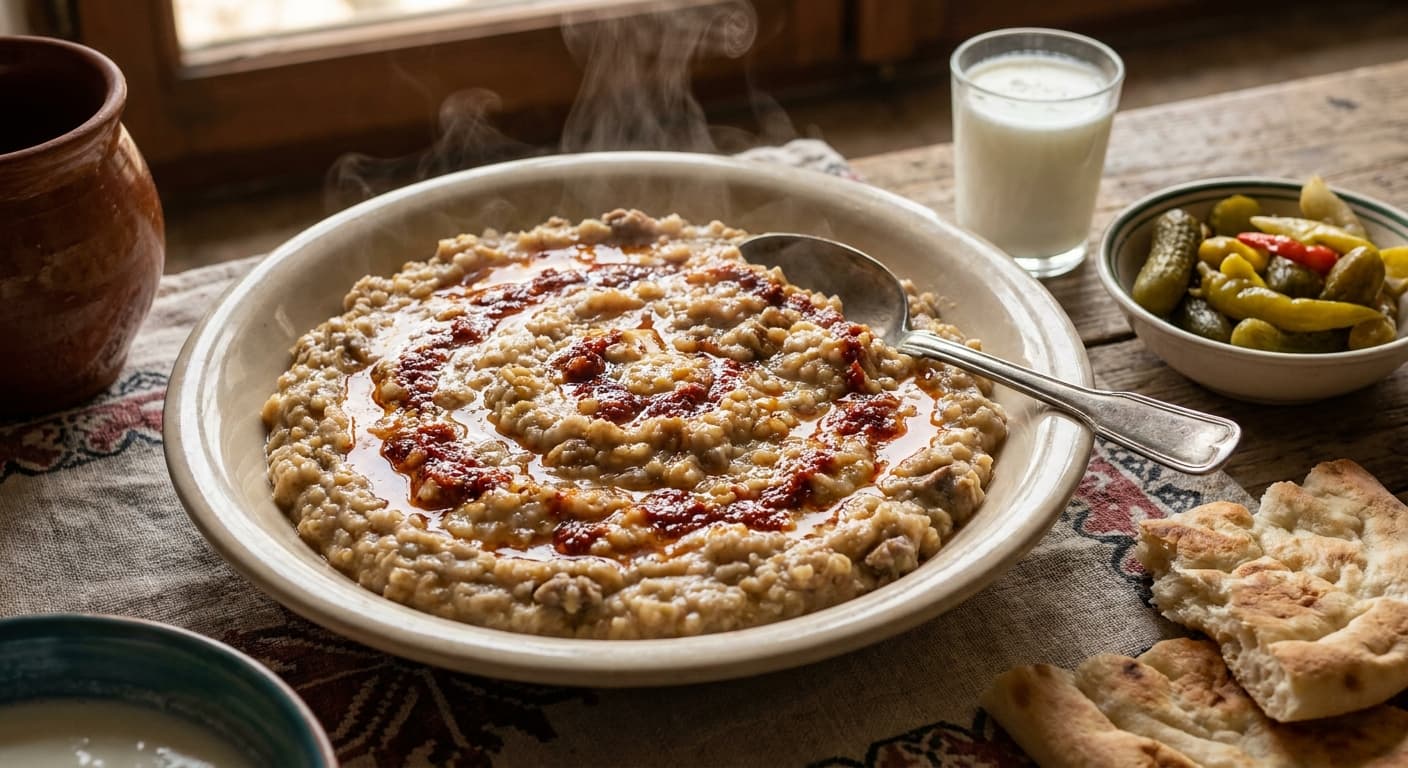
Keshkek is a Turkish ceremonial dish of hulled wheat and meat cooked until creamy, then beaten into a thick, porridge-like stew. It is especially associated with village weddings, feast days, and communal cooking.
Printable Recipe Card
Servings: 6 · Total: 240 min · Difficulty: medium
Ingredients (quick list)
- 500 g hulled wheat (also sold as wheat berries; soak overnight)
- 2 l cold water for soaking
- 900 g lamb shoulder (bone-in pieces give the best body and flavor)
- 1 yellow onion
- 2.2 l cold water for cooking
- 12 g fine sea salt
- 1 tsp ground black pepper
- 90 g unsalted butter
- 15 ml olive oil
- 2 tsp Turkish red pepper flakes (pul biber or Aleppo-style pepper)
- 1 tsp sweet paprika
Steps (summary)
- Rinse the hulled wheat under cold running water until the water runs mostly clear. Put it in a large bowl with 2 l cold water a…
- Drain the soaked wheat well and place it in a heavy pot with the lamb shoulder, whole peeled onion, and 2.2 l cold water. Bring…
- Reduce the heat to low, cover the pot partly, and simmer for about 2 hours until the lamb is very tender and the wheat begins t…
- Lift the lamb pieces and onion out of the pot with tongs. Discard the onion, remove the bones and any tough cartilage from the…
- Return the shredded lamb to the wheat and add the salt and black pepper. Continue cooking uncovered over low heat for 35 to 45…
- Beat the keshkek vigorously in the pot with a sturdy wooden spoon for 8 to 10 minutes. This traditional beating breaks down the…
+ 2 more steps in the full instructions section below.
Cultural Background
Keshkek is a symbol of collective labor in Turkish food culture, traditionally cooked in large cauldrons for weddings, circumcision feasts, holidays, and village celebrations. Its preparation often marks hospitality and shared abundance.
Equipment
💡 Tips
- Use hulled wheat rather than fine bulgur; bulgur cooks too quickly and will not give the same ceremonial texture.
- Keep the heat low after the first boil because wheat catches easily on the bottom of the pot once it starts to thicken.
- The final beating is not optional for authentic texture; it turns separate grains and meat into the creamy, cohesive body of keshkek.
⚠️ Common Mistakes
❌ Using fine bulgur instead of hulled wheat.
✅ Fix: Choose whole hulled wheat or wheat berries so the grains can simmer for hours and release starch slowly.
❌ Boiling hard after the wheat thickens.
✅ Fix: Keep the pot at a low simmer and stir frequently to prevent scorching.
❌ Serving the stew without beating it.
✅ Fix: Beat vigorously with a wooden spoon until the meat and wheat become creamy and cohesive.
🧊 How to Store
Cool leftovers quickly and refrigerate in an airtight container for up to 3 days. Reheat gently in a saucepan with 60 to 120 ml hot water per portion, stirring until creamy again; the wheat thickens considerably when chilled.
📅 Make Ahead
Soak the wheat 1 day ahead and cook the lamb until tender up to 24 hours in advance. Rewarm the meat and wheat together, then beat and finish with fresh peppered butter just before serving.
🍽️ Pairs Well With
- Ayran
- shepherd's salad
- pickled peppers
- rustic bread
- sliced radishes.
Regional Variations
- In western Anatolia, keshkek is often prepared for weddings in very large copper cauldrons and beaten with long wooden paddles.
- Some Central Anatolian versions use chicken instead of lamb for a lighter household dish.
- In certain villages, chickpeas are added to the wheat, though the simplest ceremonial versions rely on wheat, meat, salt, and butter.
Ingredients
- 500 ghulled wheat (also sold as wheat berries; soak overnight)
- 2 lcold water for soaking
- 900 glamb shoulder (bone-in pieces give the best body and flavor)
- 1yellow onion
- 2.2 lcold water for cooking
- 12 gfine sea salt
- 1 tspground black pepper
- 90 gunsalted butter
- 15 mlolive oil
- 2 tspTurkish red pepper flakes (pul biber or Aleppo-style pepper)
- 1 tspsweet paprika
🔄 Substitutions
- lamb shoulder→ bone-in chicken thighs
- Turkish red pepper flakes→ Aleppo pepper
- hulled wheat→ whole wheat berries
Instructions
- 1
Rinse the hulled wheat under cold running water until the water runs mostly clear. Put it in a large bowl with 2 l cold water and soak for 8 to 12 hours so the grains soften and cook evenly.
- 2
Drain the soaked wheat well and place it in a heavy pot with the lamb shoulder, whole peeled onion, and 2.2 l cold water. Bring slowly to a boil over medium heat, skimming off any gray foam that rises to the surface.
- 3
Reduce the heat to low, cover the pot partly, and simmer for about 2 hours until the lamb is very tender and the wheat begins to split. Stir every 20 minutes and add 150 ml hot water only if the mixture threatens to stick before the meat is tender.
- 4
Lift the lamb pieces and onion out of the pot with tongs. Discard the onion, remove the bones and any tough cartilage from the lamb, then shred the meat finely with two forks.
- 5
Return the shredded lamb to the wheat and add the salt and black pepper. Continue cooking uncovered over low heat for 35 to 45 minutes, stirring often, until the wheat is very soft and the mixture is thick like a loose porridge.
- 6
Beat the keshkek vigorously in the pot with a sturdy wooden spoon for 8 to 10 minutes. This traditional beating breaks down the wheat, disperses the meat fibers, and creates the creamy, elastic texture that defines the dish.
- 7
Melt the butter with the olive oil in a small pan over medium-low heat. Add the Turkish red pepper flakes and sweet paprika, then cook for 30 to 45 seconds until fragrant and brick red without letting the spices burn.
- 8
Spoon the hot keshkek into a shallow serving dish and make small hollows on the surface with the back of a spoon. Pour the peppered butter over the top and serve immediately while the stew is steaming and soft.
🪪 Recipe Passport
Cultural Background
Keshkek is a symbol of collective labor in Turkish food culture, traditionally cooked in large cauldrons for weddings, circumcision feasts, holidays, and village celebrations. Its preparation often marks hospitality and shared abundance.
Regional Variations
Researched from multiple sources and validated by the Zaffaron editorial team. Every recipe is tested for accuracy, measurements, and cultural authenticity.
📚 Sources & Cultural References
- UNESCO — Ceremonial Keşkek Tradition — (2011)
- Musa Dagdeviren — The Turkish Cookbook — (2019)
Sources cited by the Zaffaron editorial team during recipe research. Cultural and culinary references supporting authenticity claims.
Nutrition per serving
Pairs well with
If you enjoyed this recipe, here are a few related Zaffaron recipes to try next.
- Smoky Eggplant Salad (Patlıcan Salatası) — Turkish charred eggplant with garlic and olive oil
- Tripe Soup (İşkembe Çorbası) — Turkish offal soup served with garlicky vinegar
- Kuzu Tandır (Kuzu Tandır) — Turkish Slow-Roasted Lamb Shank
- Pistachio Kebab (فستقلی کباب) — Gaziantep-style ground lamb kebab with pistachios
Does your family make this differently?
Every family has their own version. Maybe your grandmother adds a secret ingredient, or your aunt has a completely different technique. Preserve your family's version — with their name on it, forever.
You Might Also Like
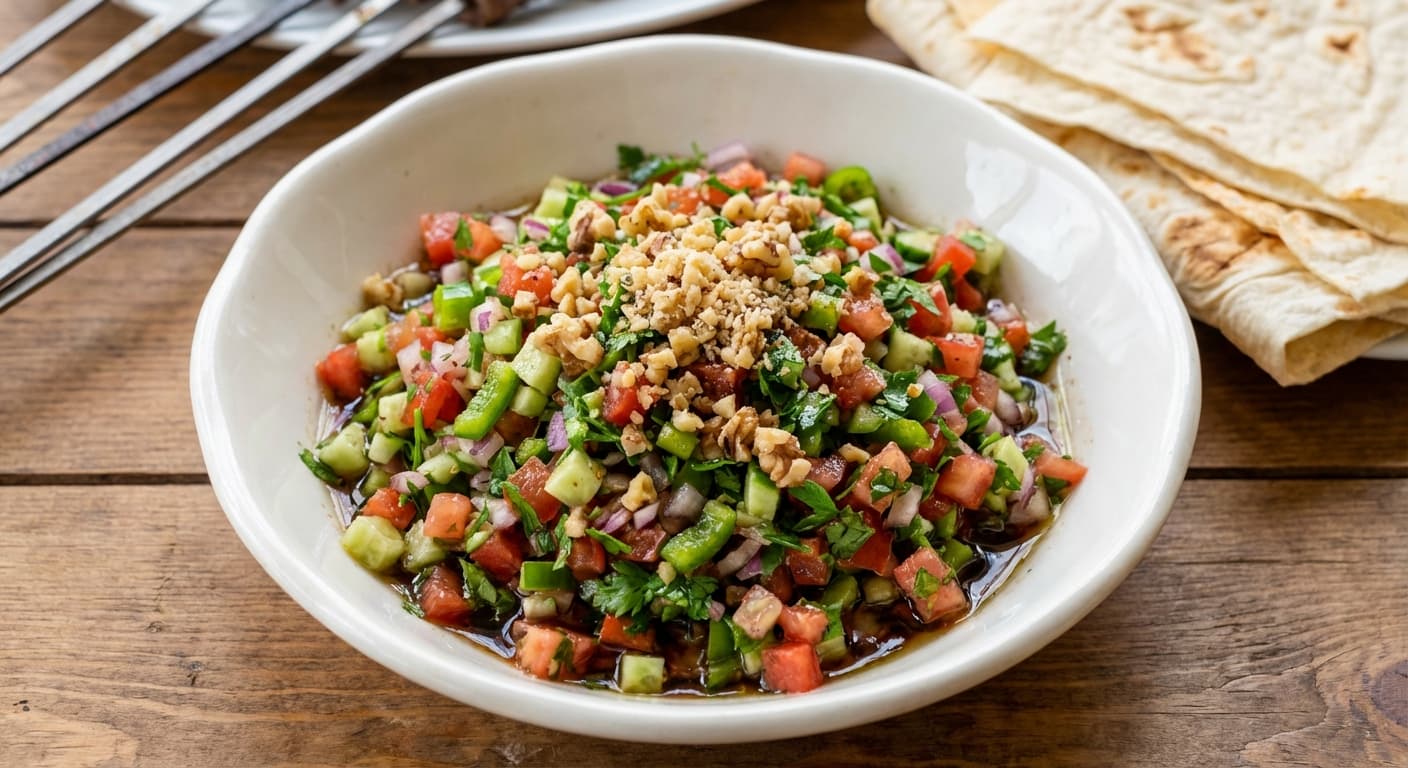
Gavurdağı Salad (Gavurdağı Salatası) — Finely Chopped Walnut & Pomegranate Salad
Turkish · Salads · 20 min
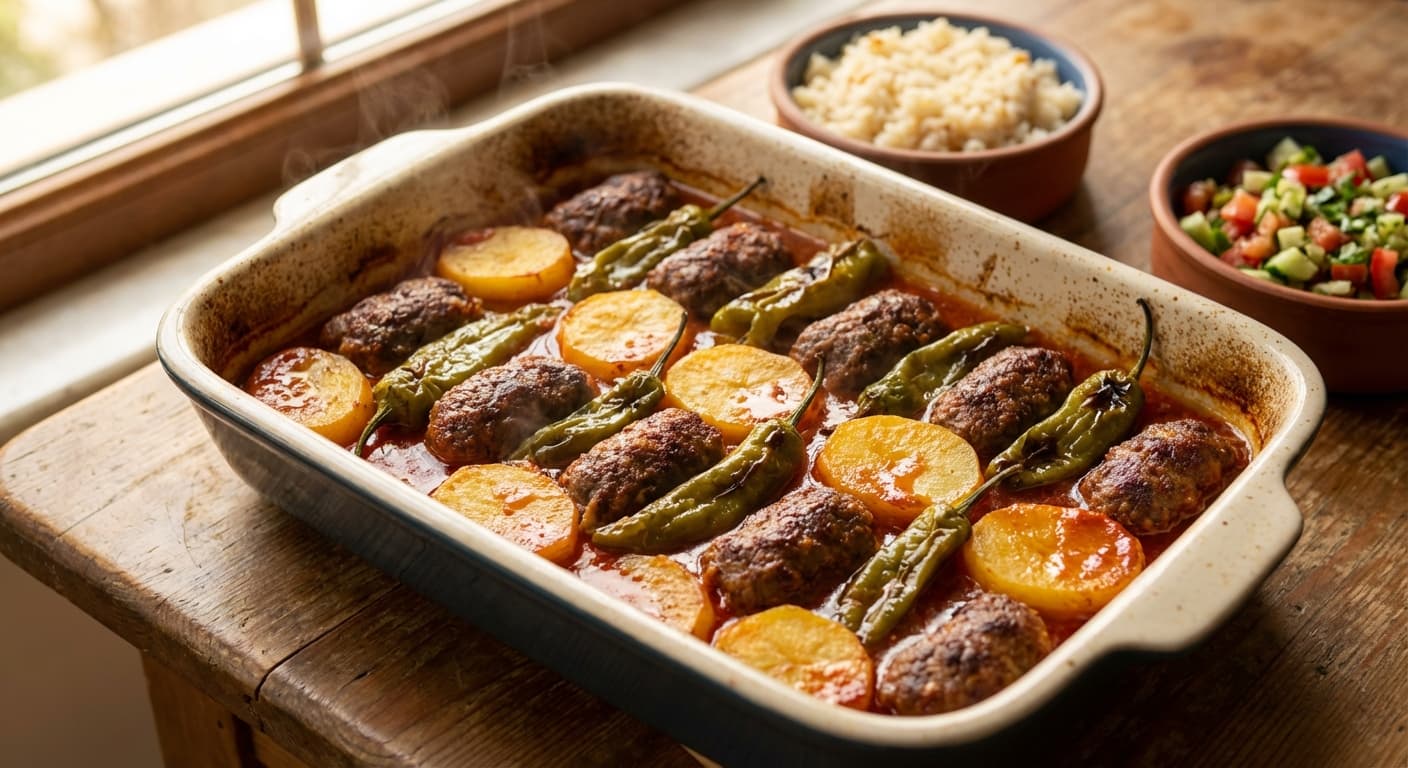
Izmir Kofte (İzmir Köfte) — Oven-Baked Meatballs with Tomato Sauce and Potatoes
Turkish · Main Courses · 70 min
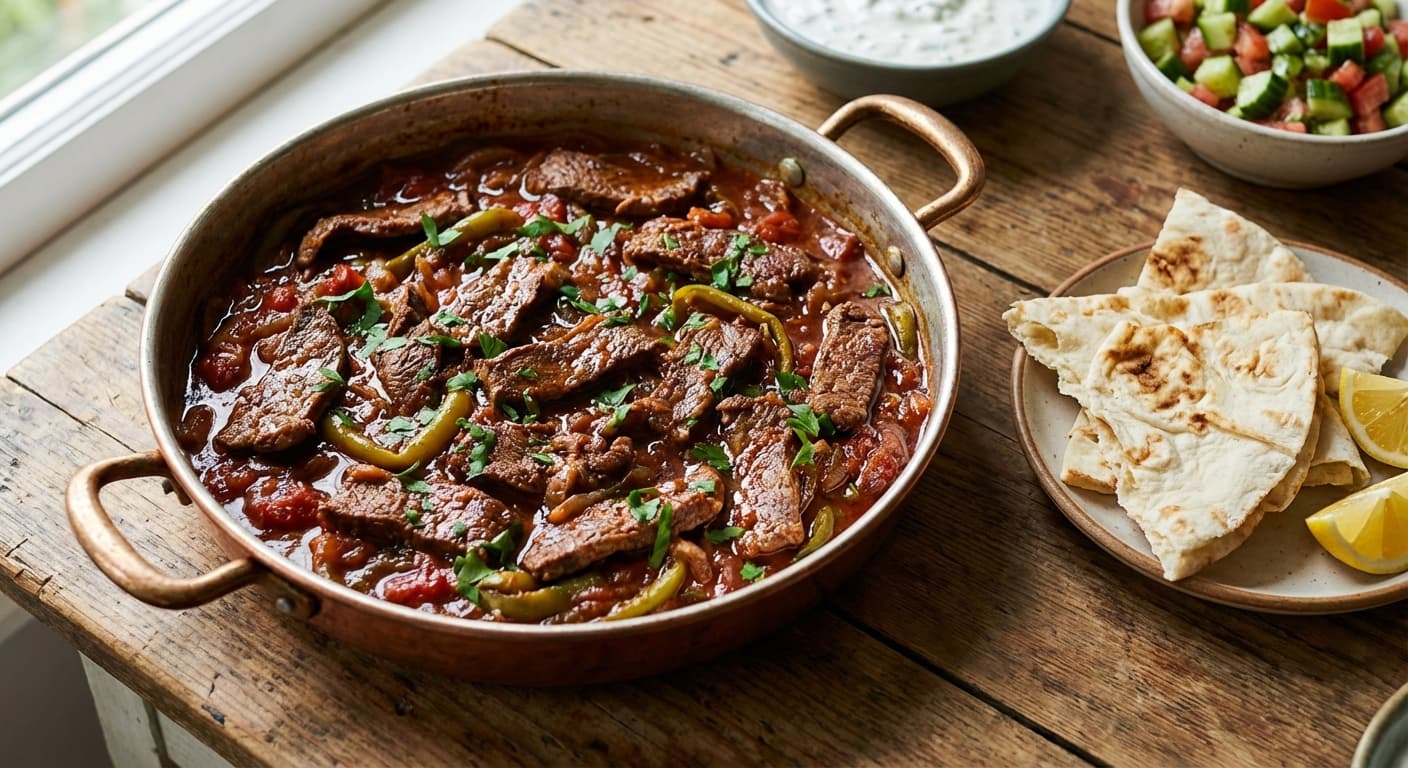
Sac Kavurma (Saç Kavurma) — Thin-Sliced Turkish Meat Sautéed with Onions
Turkish · Main Courses · 38 min
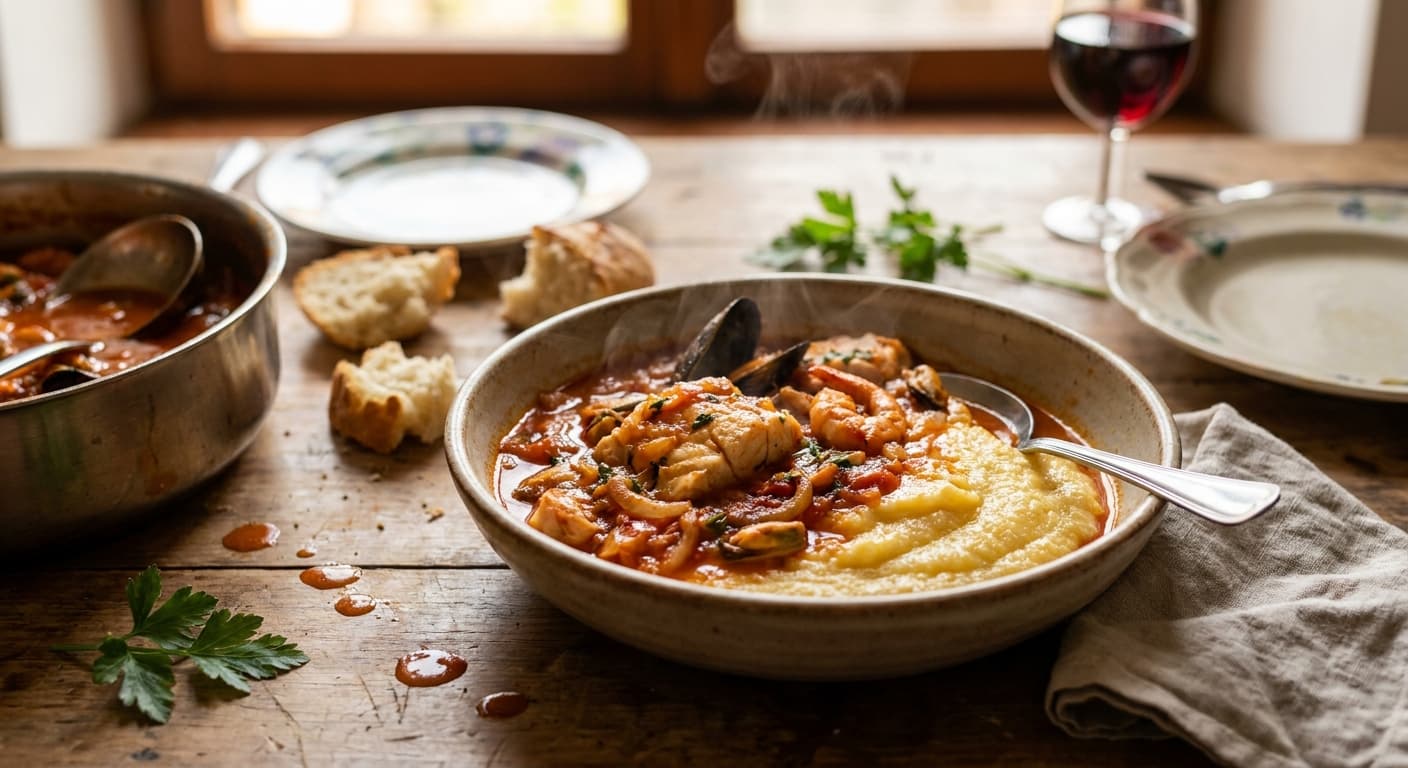
Brodet (Brodet) — Croatian Adriatic Fish Stew with Tomato and White Wine
Croatian · Stews · 70 min
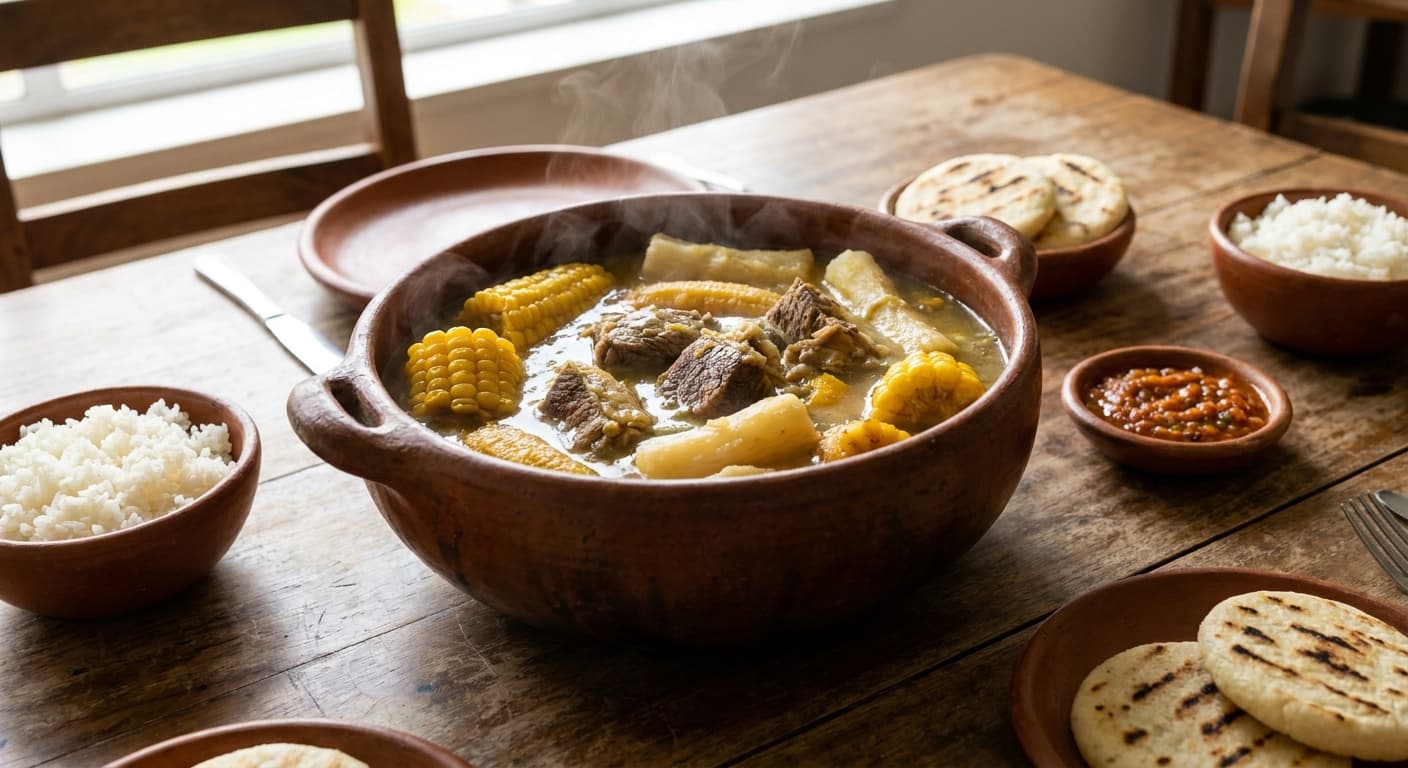
Colombian Sancocho (Sancocho Colombiano) — Hearty Three-Meat Root Vegetable Stew
Colombian · Stews · 170 min
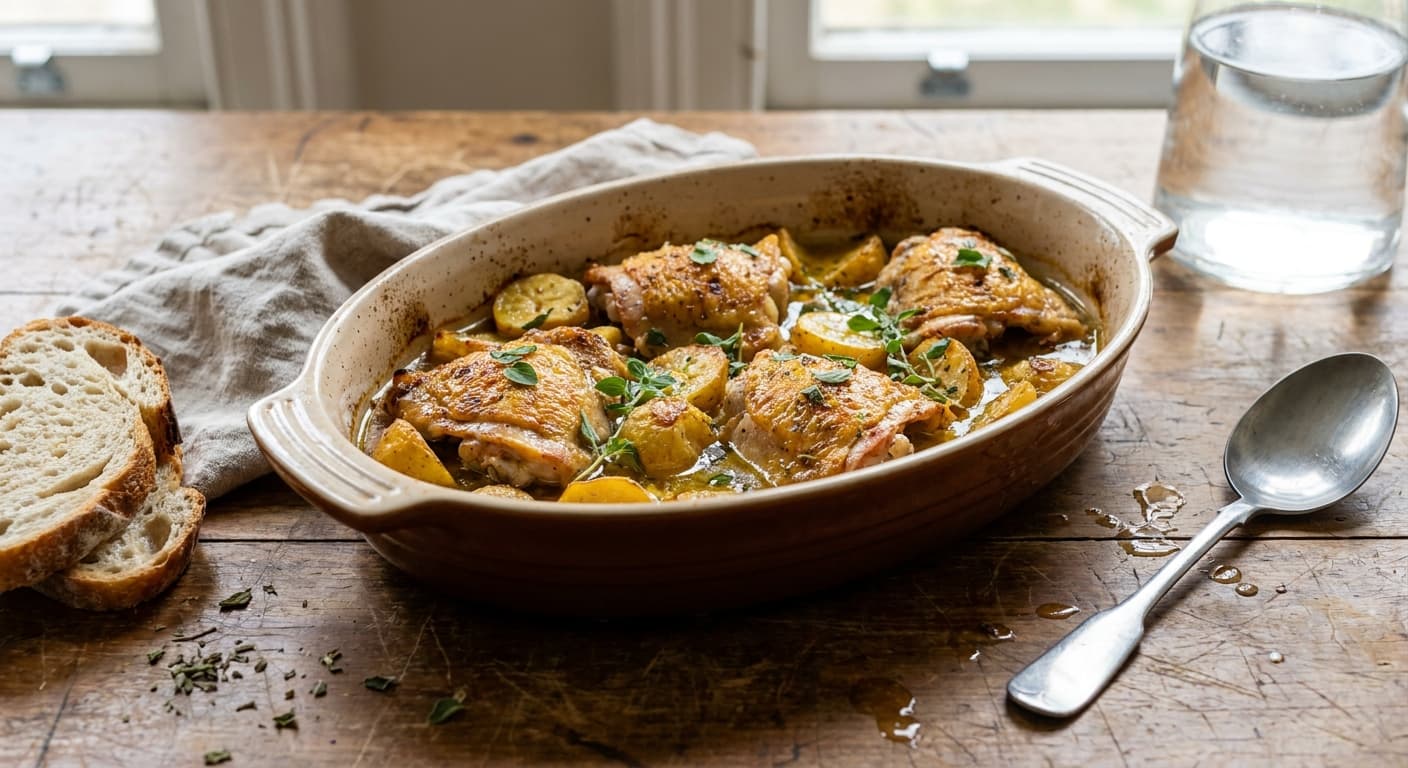
Kotopoulo Lemonato (Κοτόπουλο Λεμονάτο) — Greek Lemon Chicken with Potatoes
Greek · Main Courses · 105 min
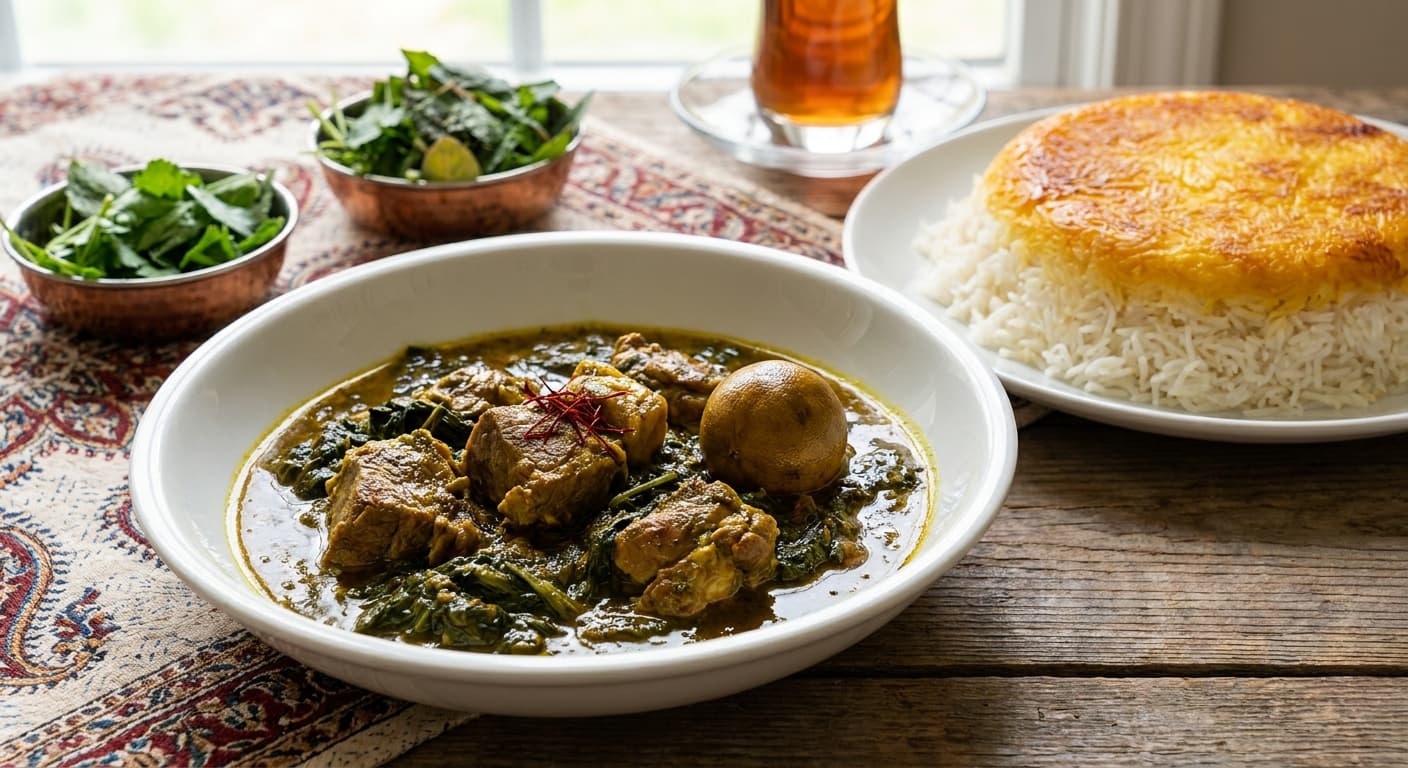
Persian Khoresht Saak (خورش ساک) — Saffron-Cardamom Lamb Stew with Saak Greens
Persian · Stews · 145 min
Indonesian Grilled Chicken (Ayam Bakar) — Sweet Soy-Spiced Charred Chicken
Indonesian · Main Courses · 85 min
Reviews
Cooked this recipe?
Tap the stars to rate it — that's all it takes. A few words are welcome but optional.
No ratings yet. Cooked this one? Be the first to rate it — it takes one tap.