Khorak-e Bademjan va Kadu (خوراک بادمجان و کدو) — Persian Baked Eggplant and Zucchini Medley
A rustic Persian vegetable bake layered with eggplant, zucchini, potatoes, tomatoes, and peas, finished with melted cheese. Tender, savory, and perfect with flatbread or rice for a wholesome meatless meal.
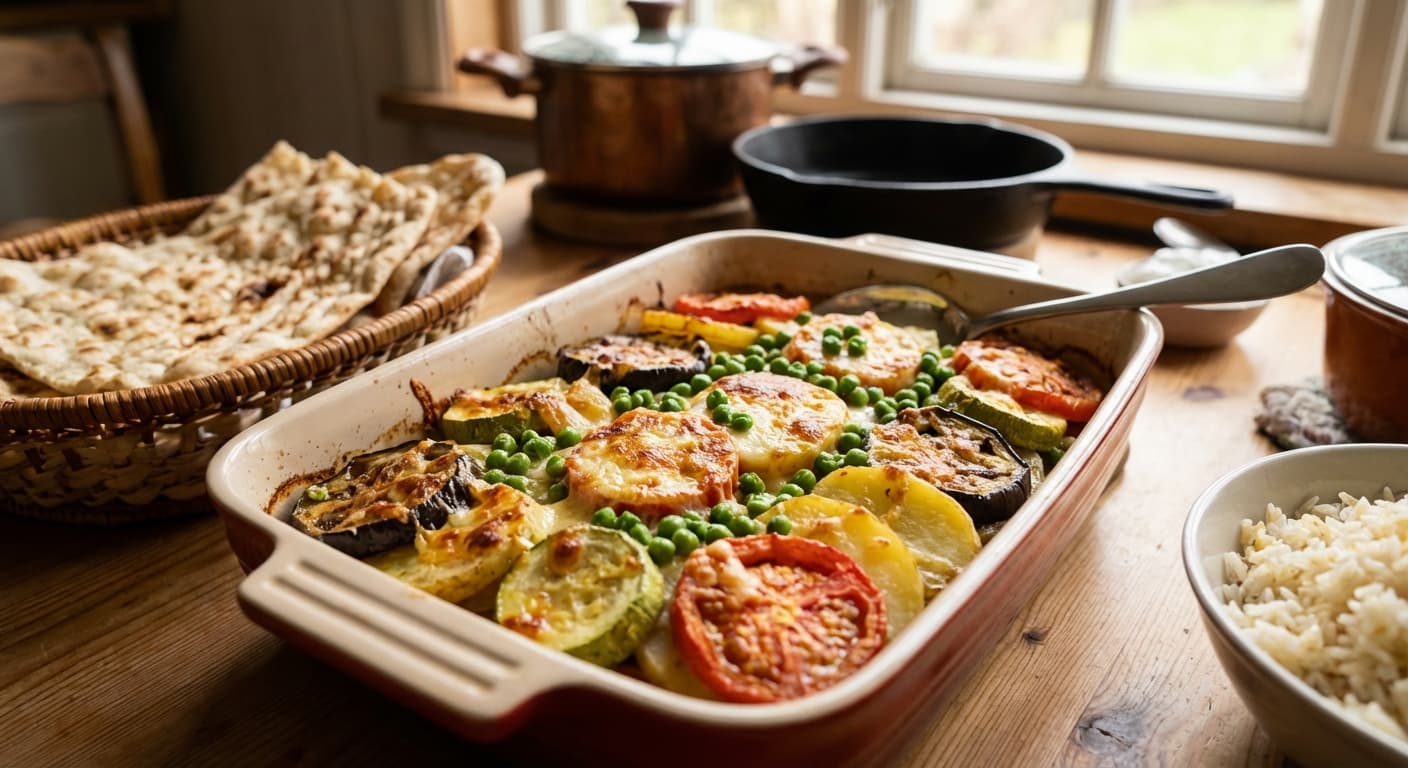
Printable Recipe Card
Servings: 6 · Total: 105 min · Difficulty: medium
Ingredients (quick list)
- 600 g Small eggplants (about 4 small; sliced into 8 mm rounds)
- 10 g Sea salt (divided; includes salting eggplant)
- 450 g Medium zucchinis (about 3 medium; sliced into 8 mm rounds)
- 450 g Medium potatoes (about 2 medium; peeled and sliced into 4–5 mm rounds)
- 450 g Medium tomatoes (about 3 medium; sliced into 6–8 mm rounds)
- 200 g Cooked peas (drained well; fresh or thawed frozen)
- 60 ml Extra virgin olive oil (4 tbsp, plus extra for greasing the dish)
- 2 g Black pepper (about 1 tsp, freshly ground)
- 120 g Grated cheese (mozzarella or a mild melting cheese; grated)
Steps (summary)
- Slice the eggplants into 8 mm rounds. Lay them in a colander over a bowl and sprinkle with 6 g sea salt, turning once to coat.…
- Heat the oven to 220°C / 425°F (200°C fan). Lightly oil a 23×33 cm (9×13 in) baking dish. Rinse the eggplant slices under cool…
- Arrange eggplant slices on a large sheet pan. Brush or drizzle with 30 ml olive oil. Roast 15 minutes, flip, then roast 10 minu…
- While the eggplant roasts, toss potato slices with 15 ml olive oil, 2 g sea salt, and half the black pepper. Spread on a second…
- Reduce oven to 200°C / 400°F (180°C fan). Build the bake: layer half the potatoes in the dish, then half the zucchini, half the…
- Drizzle the remaining 15 ml olive oil over the top. Cover tightly with foil and bake 25 minutes at 200°C / 400°F to meld flavor…
+ 1 more steps in the full instructions section below.
Cultural Background
Vegetable-based khorak dishes are commonly served in Iranian home cooking as practical, nourishing meals that can be eaten with bread or rice. Baked versions like this reflect seasonal produce availability and are often prepared for family lunches or shared tables where several dishes are served together.
Equipment
💡 Tips
- Choose small, firm eggplants with glossy skin; they roast sweeter and absorb less oil than large, seedy ones.
- Pat the rinsed eggplant very dry; surface moisture is the main cause of a watery bake.
- For cleaner layers, keep potato slices thinner than eggplant slices so they cook through without overcooking the zucchini.
- Drain peas well and add them between layers (not only on top) so they stay plump and don’t dry out under the cheese.
⚠️ Common Mistakes
❌ Skipping the eggplant salting and drying step
💡 Why: Eggplant releases water during baking, which can make the casserole soggy and dilute flavor.
✅ Fix: Salt 20 minutes, rinse, and pat very dry; then pre-roast to evaporate moisture before layering.
❌ Cutting all vegetables the same thickness
💡 Why: Potatoes cook slower than zucchini and tomatoes, leading to undercooked potatoes or overcooked squash.
✅ Fix: Slice potatoes thinner (4–5 mm) and pre-roast them until just tender before assembling.
❌ Adding cheese too early
💡 Why: Cheese can over-brown while the vegetables are still steaming under foil, creating a tough top.
✅ Fix: Bake covered first, then add cheese for the final 12–15 minutes uncovered to melt and lightly brown.
❌ Using peas that are wet
💡 Why: Extra water pools at the bottom and prevents proper roasting, especially around the potatoes.
✅ Fix: Drain thoroughly and pat dry if needed; scatter between layers rather than dumping in one spot.
🧊 How to Store
Cool to room temperature within 2 hours. Refrigerate covered for up to 4 days. Reheat at 180°C / 350°F for 15–20 minutes, or microwave in portions until hot. Freezing is possible (up to 2 months) but the zucchini and tomatoes will soften more after thawing.
📅 Make Ahead
Roast the eggplant and potatoes up to 24 hours ahead, cool, and refrigerate in airtight containers. Assemble the casserole (without cheese) up to 12 hours ahead and refrigerate covered; bake covered 5–10 minutes longer, then add cheese to finish.
🍽️ Pairs Well With
- Steamed basmati rice
- Warm flatbread (lavash-style or pita)
- Plain yogurt or a cucumber-yogurt side
- Fresh herbs and a simple salad
Regional Variations
- Tehran-style home cookingOften assembled as a neat layered bake for easy slicing and served with bread, pickles, and fresh herbs as part of a casual family spread.
- Northern Iran (Caspian influence)Vegetable dishes may lean toward juicier bakes with more tomatoes, reflecting a preference for saucier textures that pair well with rice.
Ingredients
- 600 gSmall eggplants (about 4 small; sliced into 8 mm rounds)
- 10 gSea salt (divided; includes salting eggplant)
- 450 gMedium zucchinis (about 3 medium; sliced into 8 mm rounds)
- 450 gMedium potatoes (about 2 medium; peeled and sliced into 4–5 mm rounds)
- 450 gMedium tomatoes (about 3 medium; sliced into 6–8 mm rounds)
- 200 gCooked peas (drained well; fresh or thawed frozen)
- 60 mlExtra virgin olive oil (4 tbsp, plus extra for greasing the dish)
- 2 gBlack pepper (about 1 tsp, freshly ground)
- 120 gGrated cheese (mozzarella or a mild melting cheese; grated)
🔄 Substitutions
- Grated cheese→ Lactose-free mozzarella or a mild lactose-free melting cheese
- Cooked peas→ Cooked chickpeas (drained)
- Extra virgin olive oil→ Avocado oil or refined olive oil
Instructions
- 1
Slice the eggplants into 8 mm rounds. Lay them in a colander over a bowl and sprinkle with 6 g sea salt, turning once to coat. Let stand 20 minutes to draw out bitterness and excess moisture. Meanwhile, slice zucchini, potatoes, and tomatoes as directed so they bake evenly.
- 2
Heat the oven to 220°C / 425°F (200°C fan). Lightly oil a 23×33 cm (9×13 in) baking dish. Rinse the eggplant slices under cool water, then pat very dry with towels. Dry surfaces are key for roasting rather than steaming, which keeps the bake vibrant and not watery.
- 3
Arrange eggplant slices on a large sheet pan. Brush or drizzle with 30 ml olive oil. Roast 15 minutes, flip, then roast 10 minutes more until softened and lightly browned. This pre-roast concentrates flavor and prevents the eggplant from collapsing into mush during the final bake.
- 4
While the eggplant roasts, toss potato slices with 15 ml olive oil, 2 g sea salt, and half the black pepper. Spread on a second sheet pan in a single layer. Roast at 220°C / 425°F for 20 minutes, turning once halfway, until the edges begin to color and the centers are just tender.
- 5
Reduce oven to 200°C / 400°F (180°C fan). Build the bake: layer half the potatoes in the dish, then half the zucchini, half the roasted eggplant, and half the tomatoes. Scatter half the cooked peas. Sprinkle with 2 g sea salt and the remaining black pepper. Repeat the layers once more.
- 6
Drizzle the remaining 15 ml olive oil over the top. Cover tightly with foil and bake 25 minutes at 200°C / 400°F to meld flavors and finish cooking the zucchini and tomatoes. Remove foil, sprinkle evenly with grated cheese, and bake uncovered 12–15 minutes until bubbling and lightly golden.
- 7
Rest the dish 10 minutes before serving so the layers set and slice cleanly. Taste a corner and adjust with up to 0–2 g additional sea salt if needed. Serve warm as a main with bread or rice, or at room temperature as part of a mixed spread.
🪪 Recipe Passport
Cultural Background
Vegetable-based khorak dishes are commonly served in Iranian home cooking as practical, nourishing meals that can be eaten with bread or rice. Baked versions like this reflect seasonal produce availability and are often prepared for family lunches or shared tables where several dishes are served together.
Regional Variations
Researched from multiple sources and validated by the Zaffaron editorial team. Every recipe is tested for accuracy, measurements, and cultural authenticity.
Nutrition per serving
Pairs well with
If you enjoyed this recipe, here are a few related Zaffaron recipes to try next.
- Khorak-e Chips o Panir (خوراک چیپس و پنیر) — Persian-Style Pizza-Chips Bake
- Khorak-e Morgh o Gharch (خوراک مرغ و قارچ) — Persian Creamy Chicken and Mushroom Stew
- Khorak-e Goosht-o Kalam (خوراک گوشت و کلم) — Persian Lemon-Infused Beef & Broccoli
- Khorak-e Loobia Chashm Bolboli (خوراک لوبیا چشم بلبلی) — Persian Black-Eyed Pea & Sausage Medley
Does your family make this differently?
Every family has their own version. Maybe your grandmother adds a secret ingredient, or your aunt has a completely different technique. Preserve your family's version — with their name on it, forever.
You Might Also Like
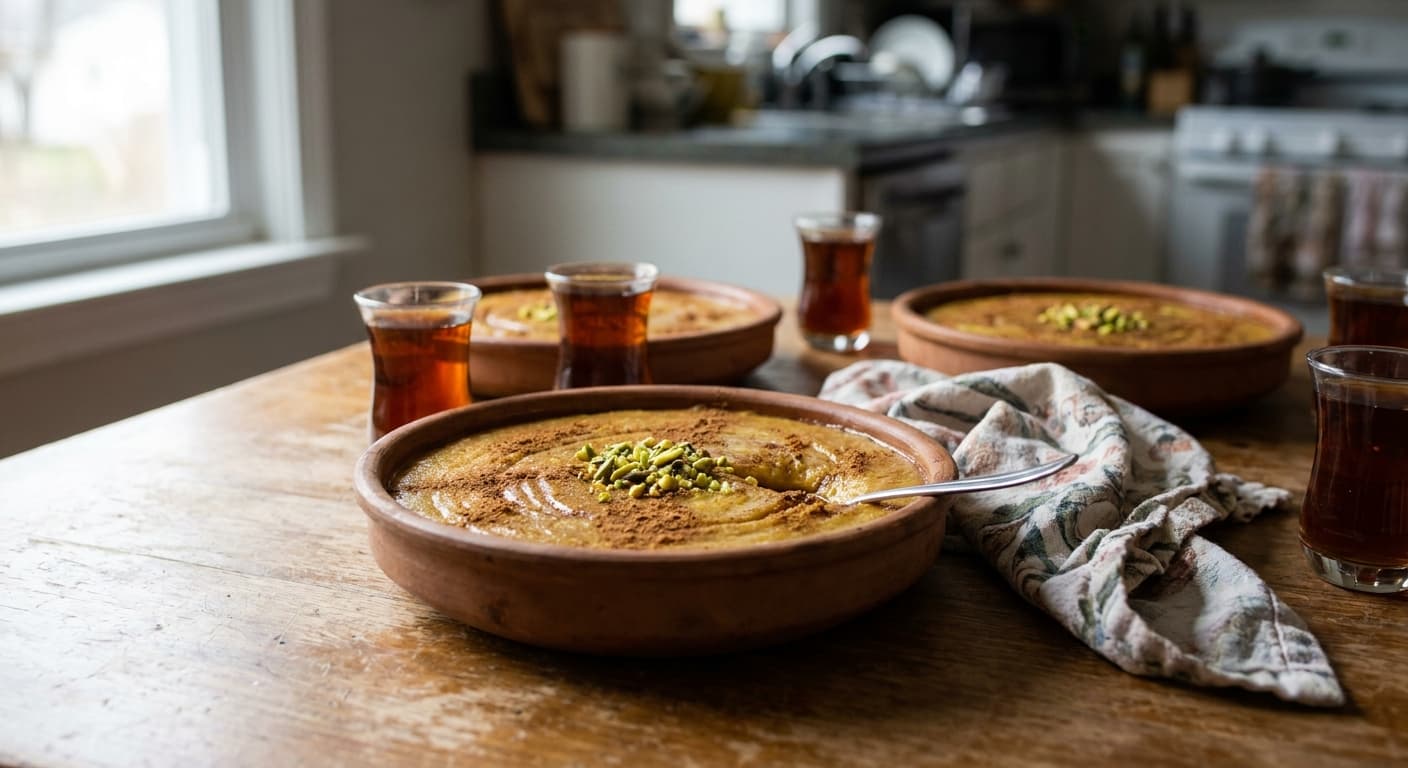
Persian Kachi (کاچی) — Saffron Rosewater Pudding
Persian · Desserts · 45 min
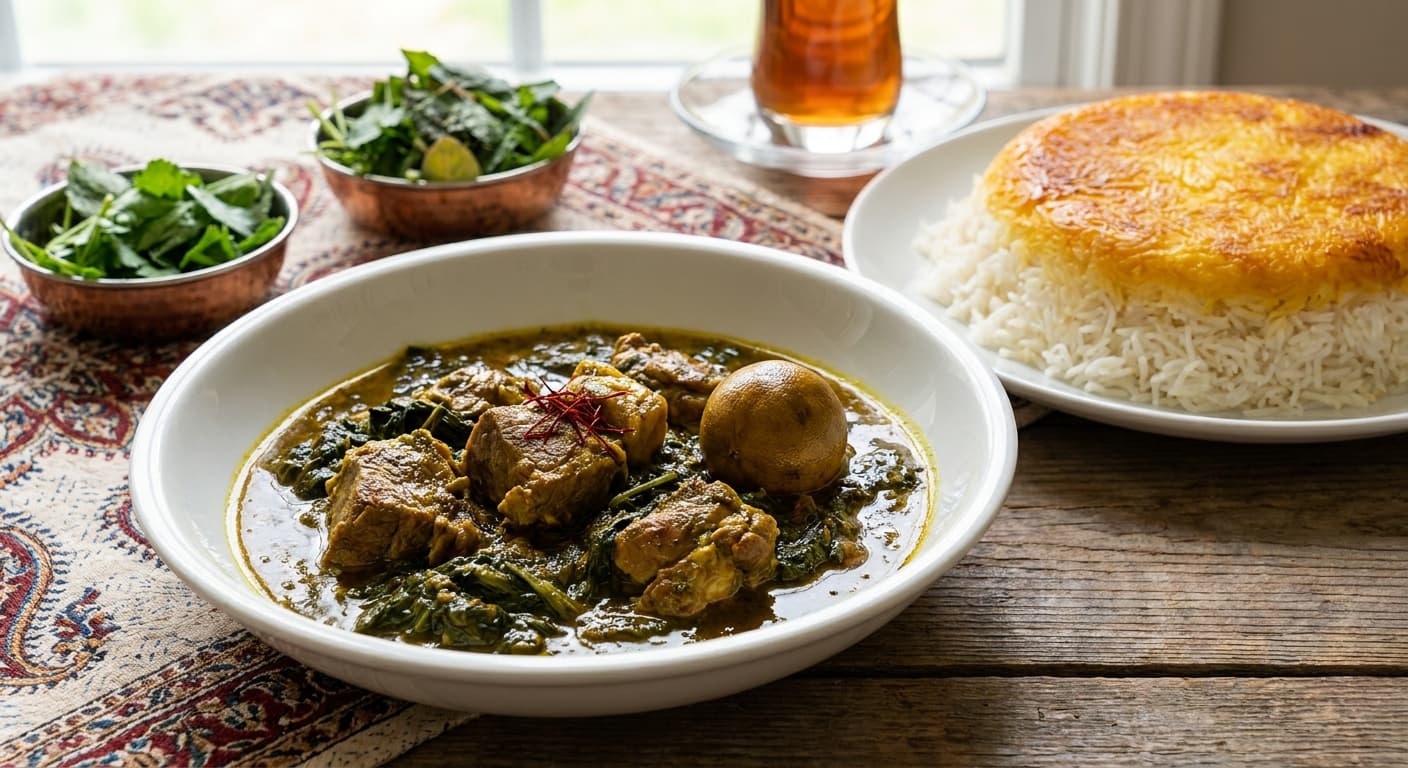
Persian Khoresht Saak (خورش ساک) — Saffron-Cardamom Lamb Stew with Saak Greens
Persian · Stews · 145 min
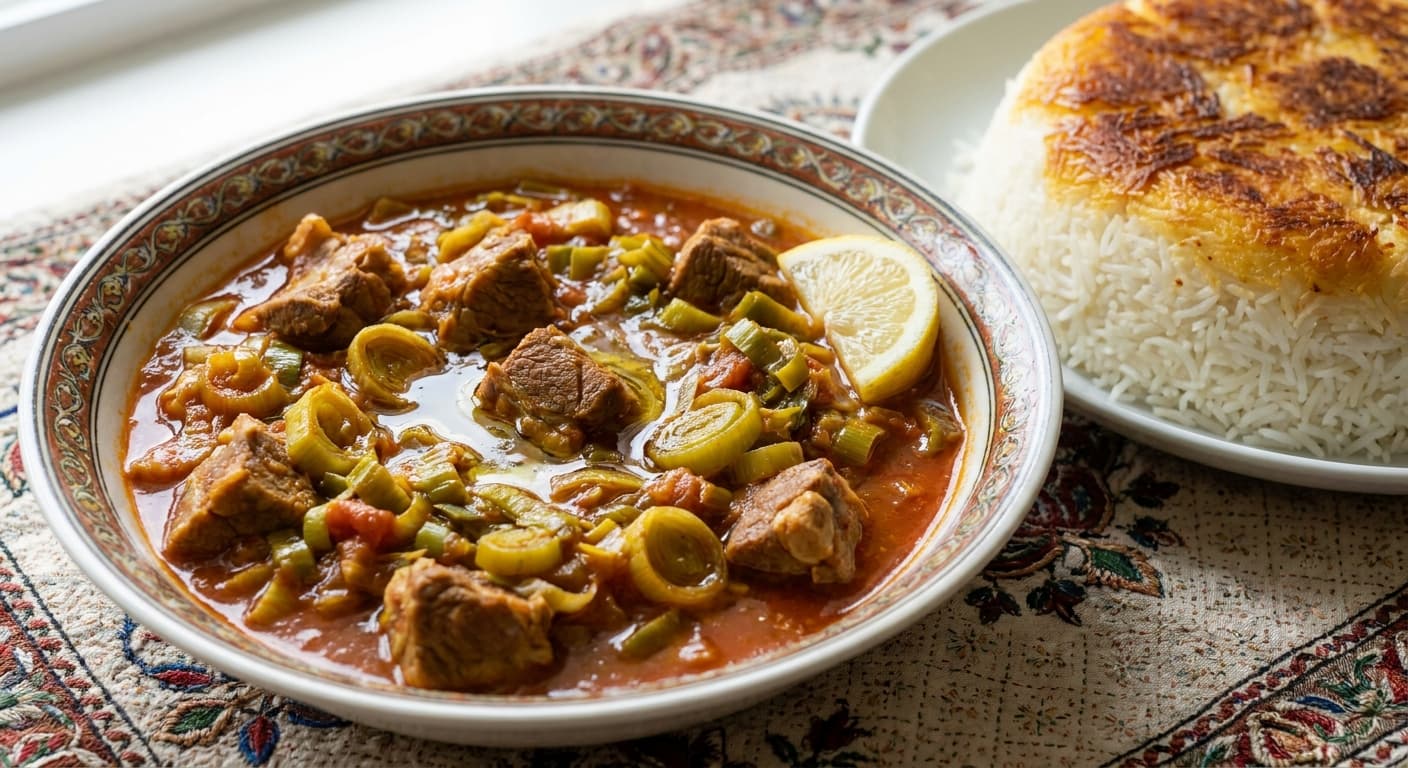
Khoresh Tareh Farangi (خورش تره فرنگی) — Persian Leek and Lamb Stew
Persian · Stews · 130 min
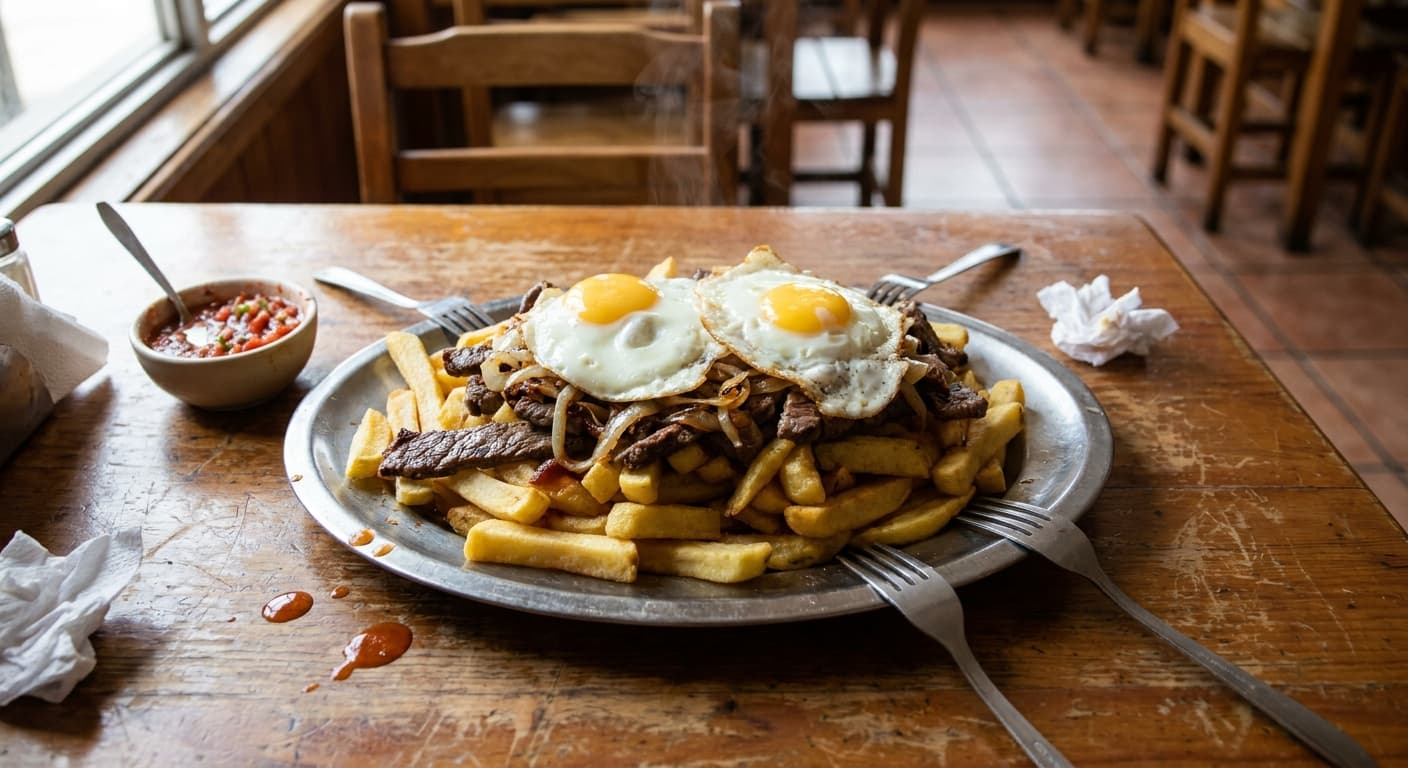
Chorrillana (Chorrillana) — Chilean Loaded Fries with Beef and Eggs
Chilean · Main Courses · 60 min
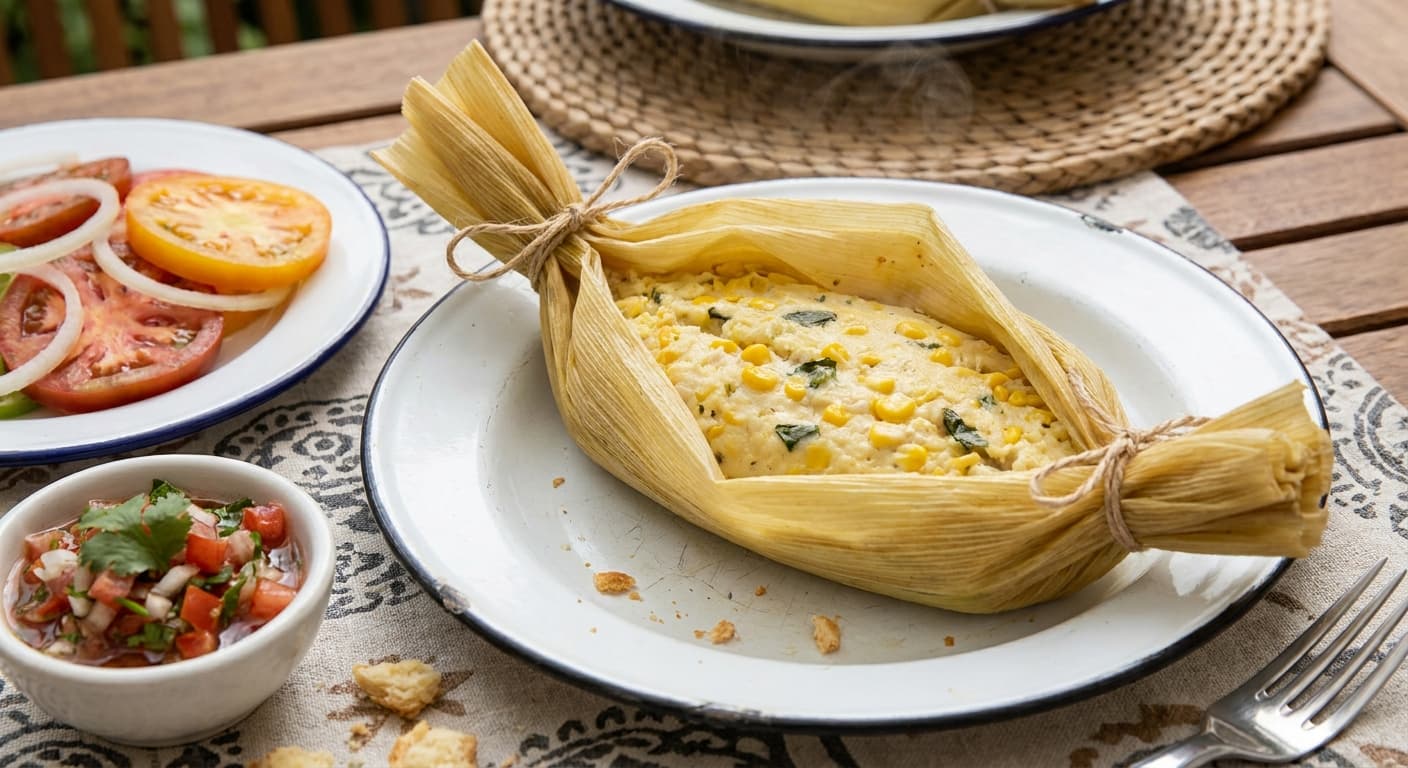
Chilean Humitas (Humitas) — Fresh Corn Parcels with Basil
Chilean · Main Courses · 90 min
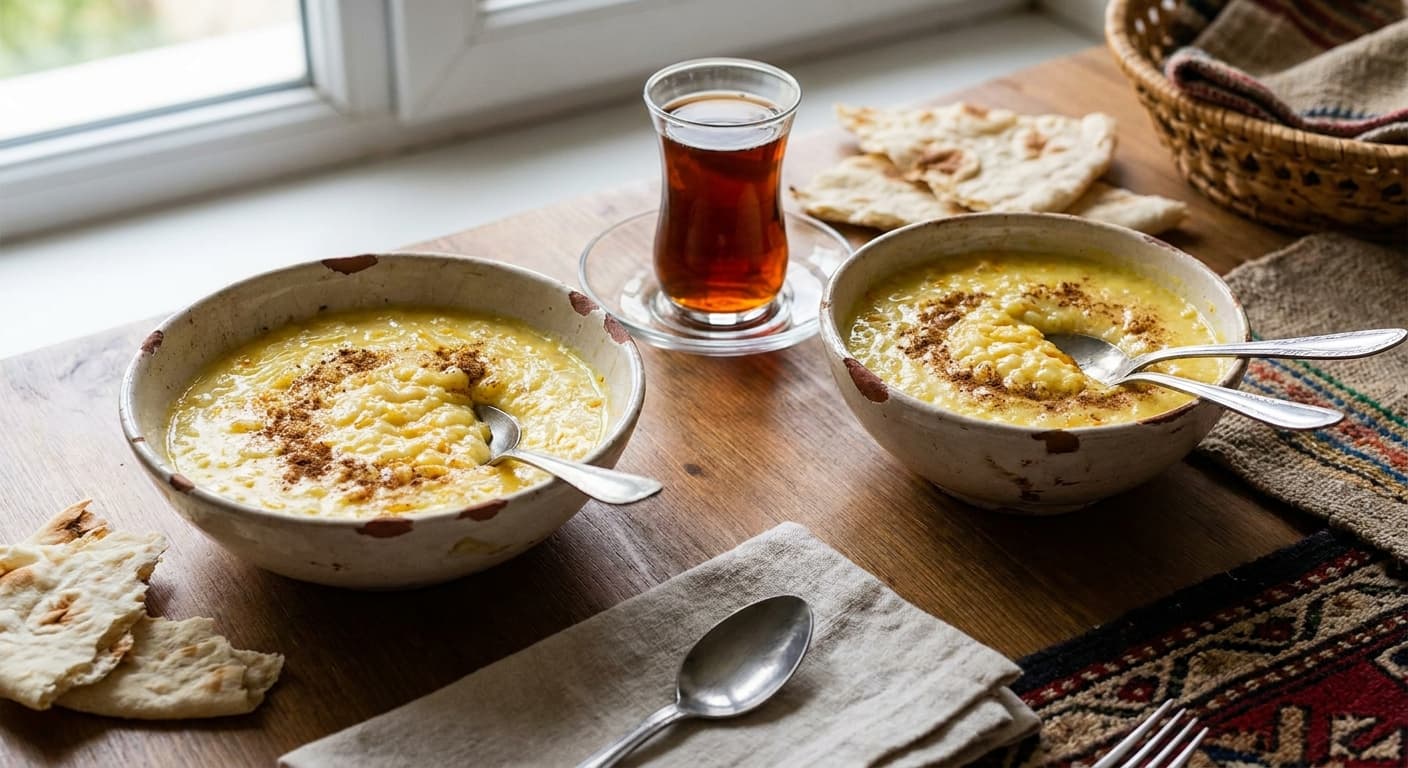
Azerbaijani Milk-Rice Porridge (Südlü Sıyıq) — Creamy Breakfast Rice with Saffron
Azerbaijani · Rice Dishes · 50 min
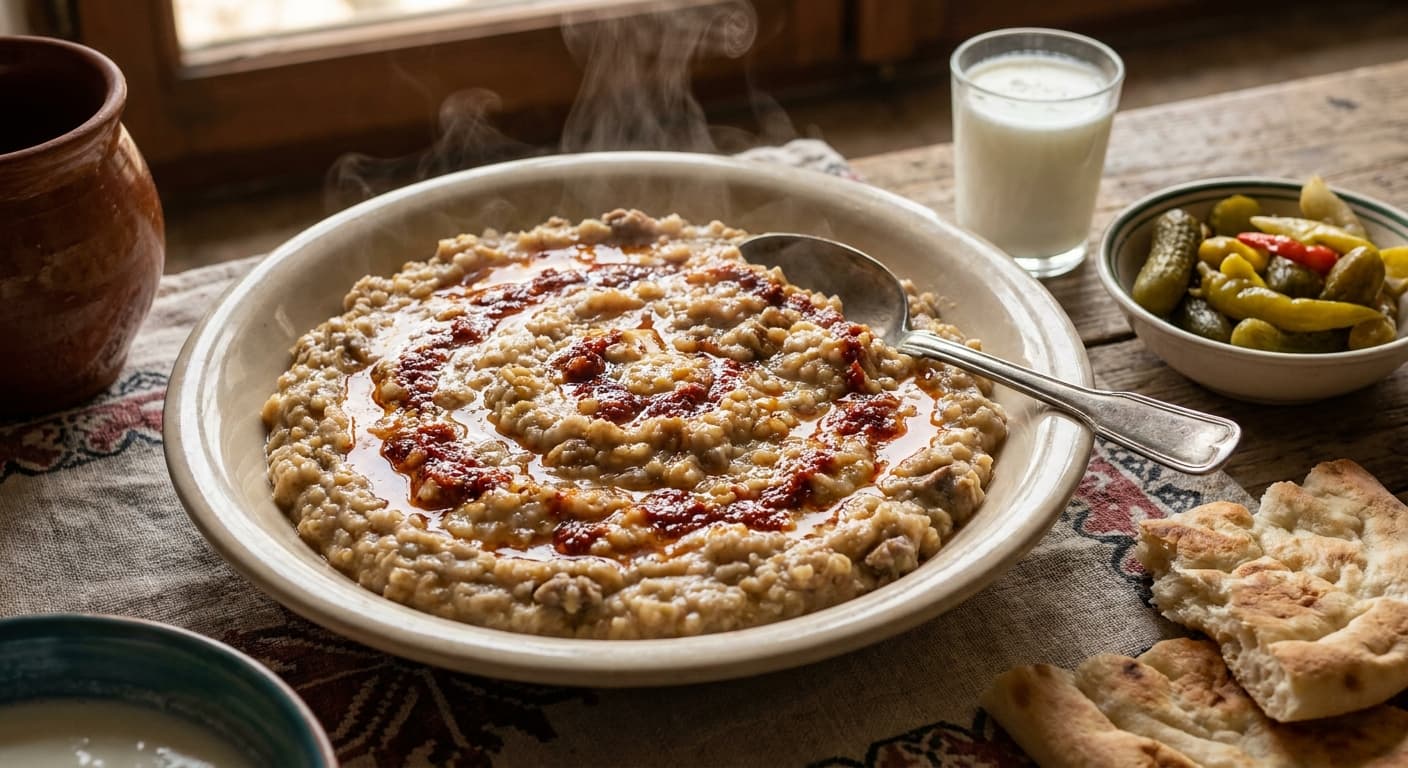
Keshkek (Keşkek) — Creamy Ceremonial Wheat and Lamb Stew
Turkish · Stews · 240 min
Buckwheat Žganci (Ajdovi žganci) — Slovenian Buckwheat Crumbs with Cracklings
Slovenian · Side Dishes · 45 min
Reviews
Cooked this recipe?
Tap the stars to rate it — that's all it takes. A few words are welcome but optional.
No ratings yet. Cooked this one? Be the first to rate it — it takes one tap.