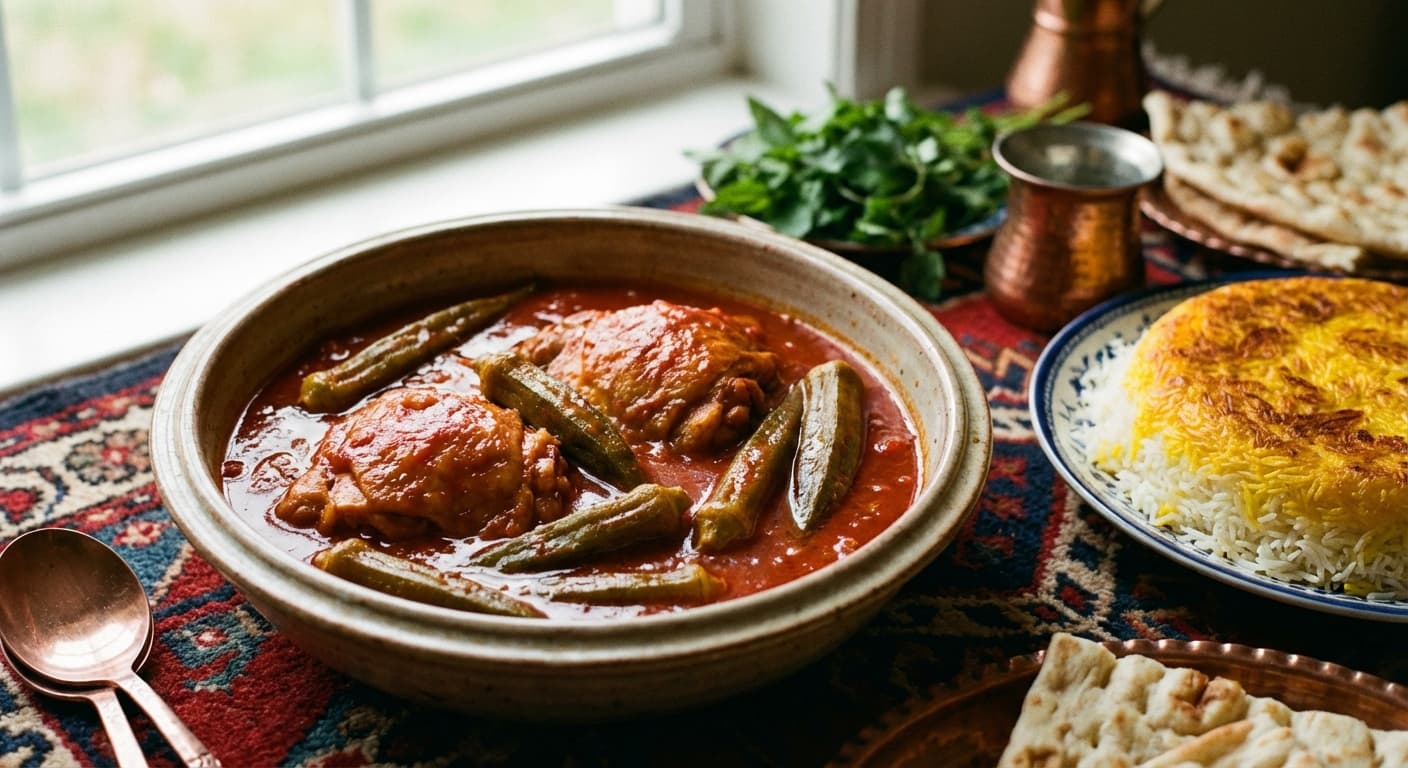
Khoresh-e Bamieh ba Morgh (خورش بامیه با مرغ) — Persian Chicken and Okra Stew
A Southern Iranian-style chicken and okra stew simmered in a tangy tomato broth with advieh and lemon. Searing the okra keeps it silky, not slimy, for a bright, comforting meal over saffron rice.
Printable Recipe Card
Servings: 4 · Total: 100 min · Difficulty: medium
Ingredients (quick list)
- 250 g Yellow onion (finely diced)
- 30 ml Vegetable oil (plus 15 ml for searing okra)
- 800 g Chicken thighs, bone-in and skinless (about 4 pieces)
- 7 g Sea salt (divided, plus more to taste)
- 2 g Black pepper (freshly ground, divided)
- 2 tsp Advieh (Persian mixed spices) (store-bought or homemade blend)
- 60 g Tomato paste (about 4 tbsp)
- 900 ml Water (hot, to speed simmering)
- 10 g Chicken bouillon (powder or crumbled cube)
- 450 g Okra (fresh preferred; trim caps without cutting into pods)
- 45 ml Lemon juice (about 3 tbsp, freshly squeezed)
Steps (summary)
- Pat the chicken dry. Season all sides with 3 g sea salt and 1 g black pepper. In a heavy pot over medium-high heat, warm 15 ml…
- Reduce heat to medium. Add the remaining 15 ml oil, then the diced onion. Sauté 10–12 minutes, stirring often, until deeply gol…
- Pour in 900 ml hot water and whisk to dissolve the tomato paste. Stir in chicken bouillon, then return the chicken and any juic…
- While the chicken simmers, prepare the okra. Rinse and dry thoroughly. Trim the stem ends carefully without cutting into the po…
- Add the seared okra to the stew. Keep the heat low and simmer uncovered 20–25 minutes, until okra is tender but not mushy and t…
- Turn off the heat. Stir in lemon juice, then taste and adjust with the remaining 4 g sea salt and 1 g black pepper as needed. R…
Cultural Background
Okra stews are widely cooked across the Middle East and North Africa, and in Iran they are especially associated with warmer southern regions where okra is common. In Iranian home cooking, this dish is valued for its balance of tomato richness and citrus brightness and is often served with rice for family meals.
Equipment
💡 Tips
- Dry okra well before searing; surface moisture encourages sliminess.
- Do not cut okra into rounds for this stew—whole pods stay firmer and release less mucilage.
- Cooking tomato paste until it darkens removes raw acidity and deepens color.
- Add lemon juice at the end; prolonged boiling can dull its brightness and slightly toughen okra.
- For a richer stew, chill overnight and reheat gently—the flavor concentrates and the sauce thickens.
⚠️ Common Mistakes
❌ Stirring the okra frequently during simmering
💡 Why: Agitation breaks the pods and releases more mucilage, making the stew slimy and cloudy.
✅ Fix: Stir gently only a few times, and use a low simmer; keep okra whole.
❌ Adding lemon juice early and boiling hard
💡 Why: Strong acidity plus vigorous boiling can dull lemon flavor and can make okra soften unevenly.
✅ Fix: Simmer gently and add lemon juice at the end, after turning off the heat.
❌ Not cooking the tomato paste before adding water
💡 Why: Raw tomato paste can taste metallic and overly sharp, and the stew may look pale.
✅ Fix: Fry the paste 2–3 minutes until it darkens slightly and smells sweet before adding liquid.
❌ Trimming okra caps too deeply
💡 Why: Cutting into the pod opens the interior and increases mucilage release, leading to sliminess.
✅ Fix: Trim only the stem end; keep the pod intact.
🧊 How to Store
Cool completely, then refrigerate in an airtight container for up to 4 days. Reheat covered over low heat with 30–60 ml water if needed. Freeze up to 2 months; thaw overnight in the fridge and reheat gently to avoid breaking the okra.
📅 Make Ahead
Cook the stew up to 2 days ahead and refrigerate; reheat gently over low heat. For best texture, you can sear and add the okra during reheating (within the last 20 minutes) so it stays firmer.
🍽️ Pairs Well With
- Saffron-steamed basmati rice
- Shirazi salad (cucumber-tomato-onion salad)
- Plain yogurt or cucumber yogurt
- Fresh herbs and radishes
Regional Variations
- Southern Iran (coastal areas)Often more tangy, with a brighter finish from extra citrus; some cooks keep the sauce slightly thinner to spoon generously over rice.
- Central and Northern IranMay be cooked with less lemon and a deeper onion-tomato base; some households add a small amount of brewed saffron to the broth for aroma.
Ingredients
- 250 gYellow onion (finely diced)
- 30 mlVegetable oil (plus 15 ml for searing okra)
- 800 gChicken thighs, bone-in and skinless (about 4 pieces)
- 7 gSea salt (divided, plus more to taste)
- 2 gBlack pepper (freshly ground, divided)
- 2 tspAdvieh (Persian mixed spices) (store-bought or homemade blend)
- 60 gTomato paste (about 4 tbsp)
- 900 mlWater (hot, to speed simmering)
- 10 gChicken bouillon (powder or crumbled cube)
- 450 gOkra (fresh preferred; trim caps without cutting into pods)
- 45 mlLemon juice (about 3 tbsp, freshly squeezed)
🔄 Substitutions
- Chicken thighs, bone-in→ Chicken drumsticks or bone-in breast
- Fresh okra→ Frozen whole okra
- Advieh (Persian mixed spices)→ Ground turmeric (1 tsp) + ground cinnamon (1/4 tsp) + ground cumin (1/2 tsp)
Instructions
- 1
Pat the chicken dry. Season all sides with 3 g sea salt and 1 g black pepper. In a heavy pot over medium-high heat, warm 15 ml of the oil. Sear chicken 4–5 minutes per side until golden; do not cook through. Transfer to a plate to keep the pot hot for the onion base.
- 2
Reduce heat to medium. Add the remaining 15 ml oil, then the diced onion. Sauté 10–12 minutes, stirring often, until deeply golden (not burnt). Add advieh and stir 30 seconds to bloom the spices. Add tomato paste and cook 2–3 minutes, stirring constantly, until it darkens slightly and smells sweet.
- 3
Pour in 900 ml hot water and whisk to dissolve the tomato paste. Stir in chicken bouillon, then return the chicken and any juices to the pot. Bring to a gentle boil over medium-high heat, then reduce to low, cover, and simmer 35 minutes, turning chicken once halfway for even cooking.
- 4
While the chicken simmers, prepare the okra. Rinse and dry thoroughly. Trim the stem ends carefully without cutting into the pods. In a skillet over medium-high heat, warm 15 ml oil (from the measured oil). Sear okra 6–8 minutes, tossing gently, until lightly blistered. This step reduces sliminess and helps okra hold its shape.
- 5
Add the seared okra to the stew. Keep the heat low and simmer uncovered 20–25 minutes, until okra is tender but not mushy and the sauce thickens slightly. Stir only 2–3 times total, gently, to avoid breaking the pods. If the stew reduces too much, add 60–120 ml hot water.
- 6
Turn off the heat. Stir in lemon juice, then taste and adjust with the remaining 4 g sea salt and 1 g black pepper as needed. Rest the stew, covered, 10 minutes so flavors settle and the sauce becomes silkier. Serve hot over saffron-steamed rice, spooning extra tomato-lemon broth on top.
🪪 Recipe Passport
Cultural Background
Okra stews are widely cooked across the Middle East and North Africa, and in Iran they are especially associated with warmer southern regions where okra is common. In Iranian home cooking, this dish is valued for its balance of tomato richness and citrus brightness and is often served with rice for family meals.
Regional Variations
Researched from multiple sources and validated by the Zaffaron editorial team. Every recipe is tested for accuracy, measurements, and cultural authenticity.
Nutrition per serving
Pairs well with
If you enjoyed this recipe, here are a few related Zaffaron recipes to try next.
Does your family make this differently?
Every family has their own version. Maybe your grandmother adds a secret ingredient, or your aunt has a completely different technique. Preserve your family's version — with their name on it, forever.
You Might Also Like
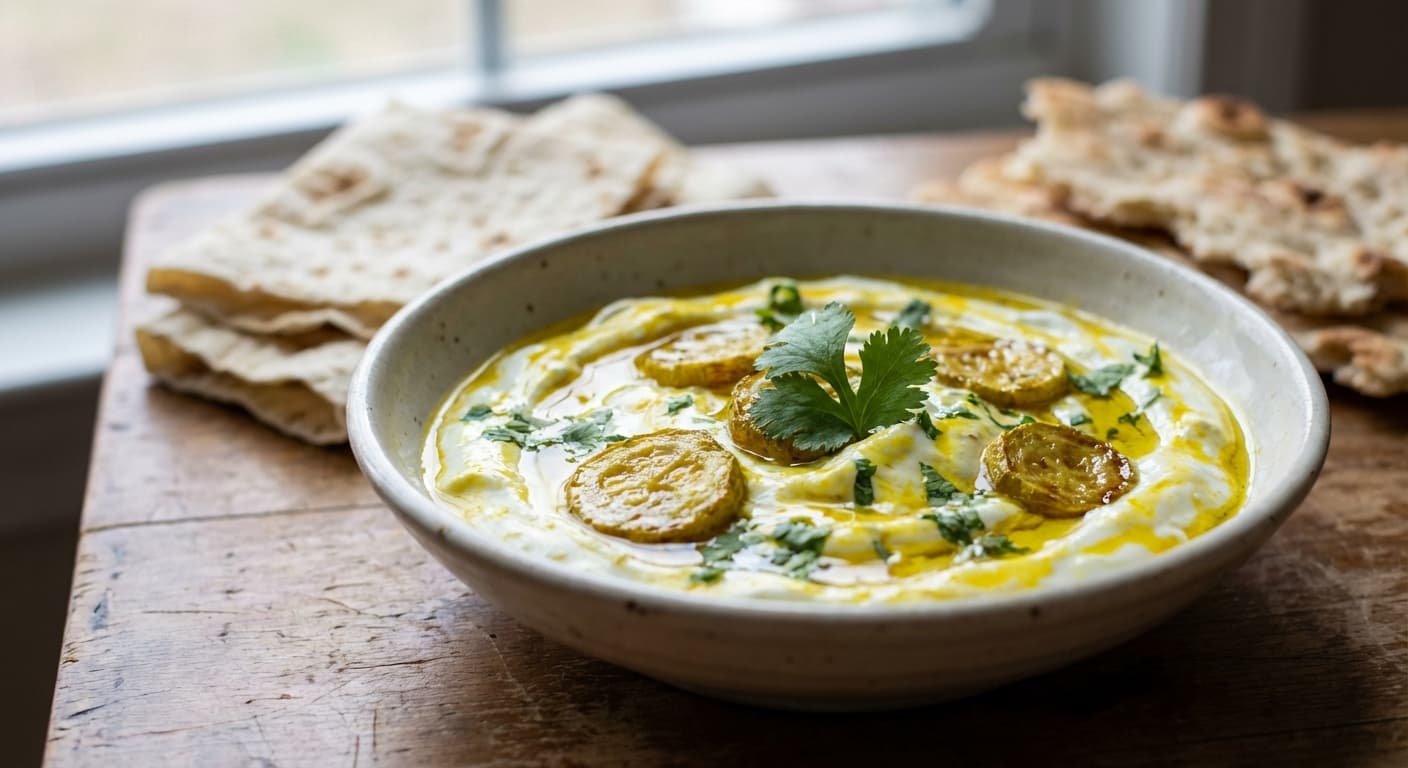
Borani Kadu (بورانی کدو) — Saffron-Infused Zucchini and Yogurt Dip
Persian · Appetizers · 40 min
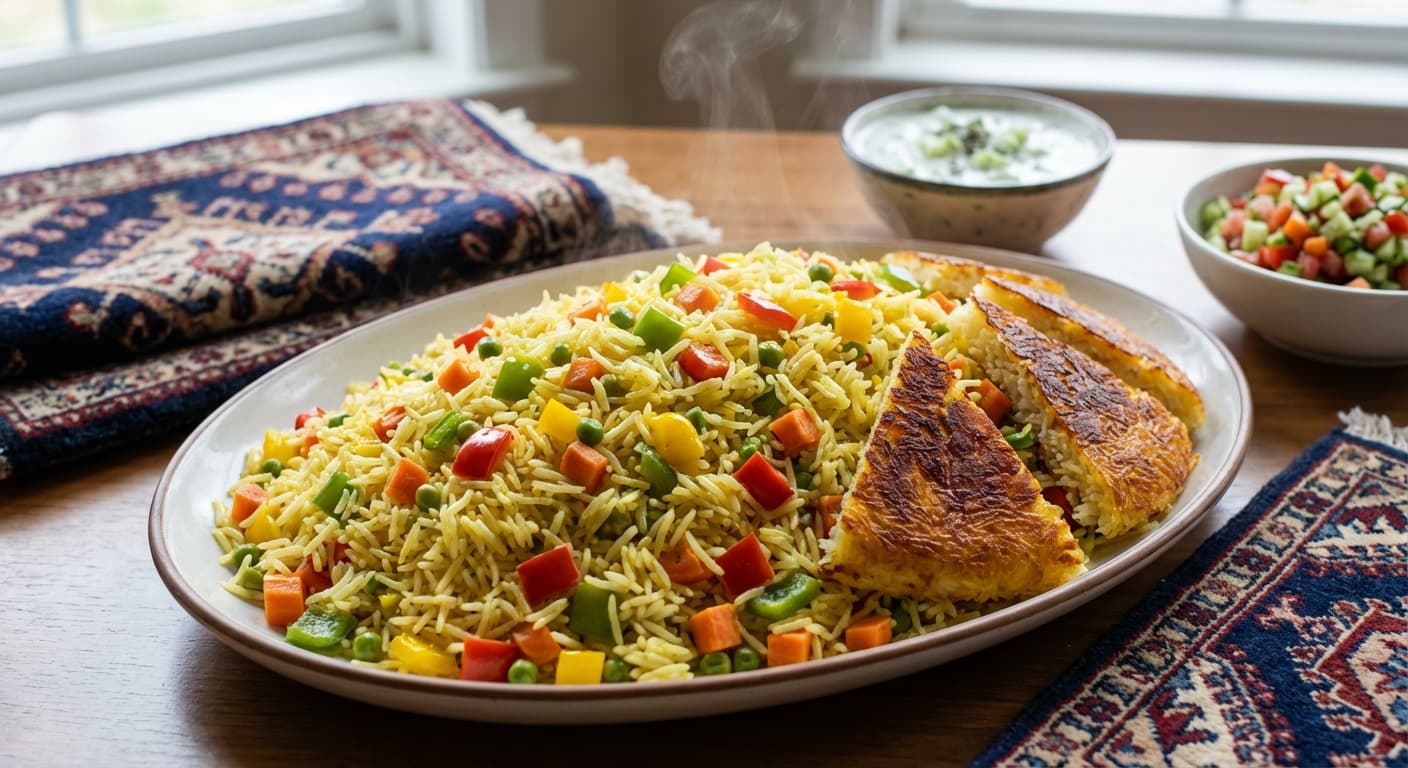
Mixed Vegetable Rice (برنج با مخلوط سبزیجات) — Persian-Style Aromatic Pilaf
Persian · Rice Dishes · 75 min
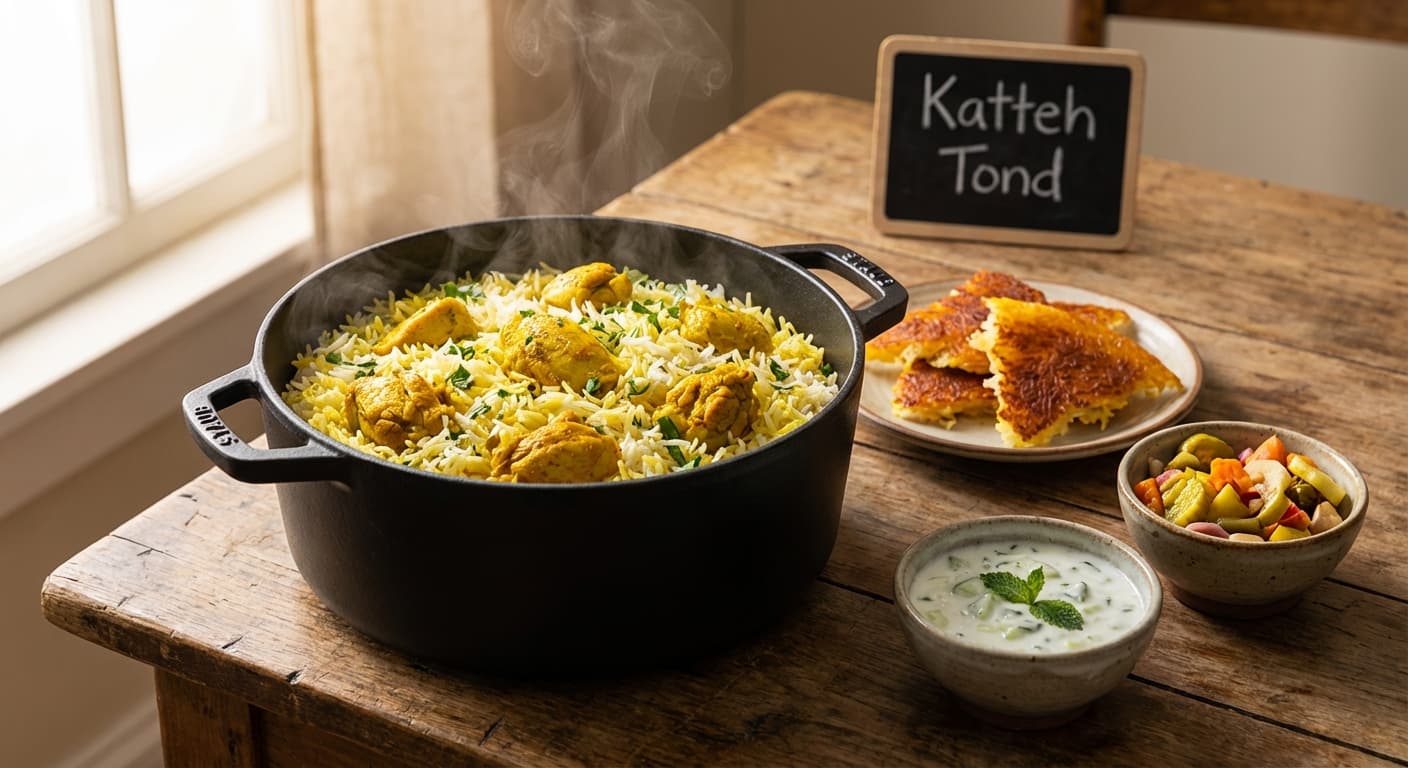
Katteh Tond (کته تند) — Spicy Caspian-Style One-Pot Chicken Rice
Persian · Rice Dishes · 85 min
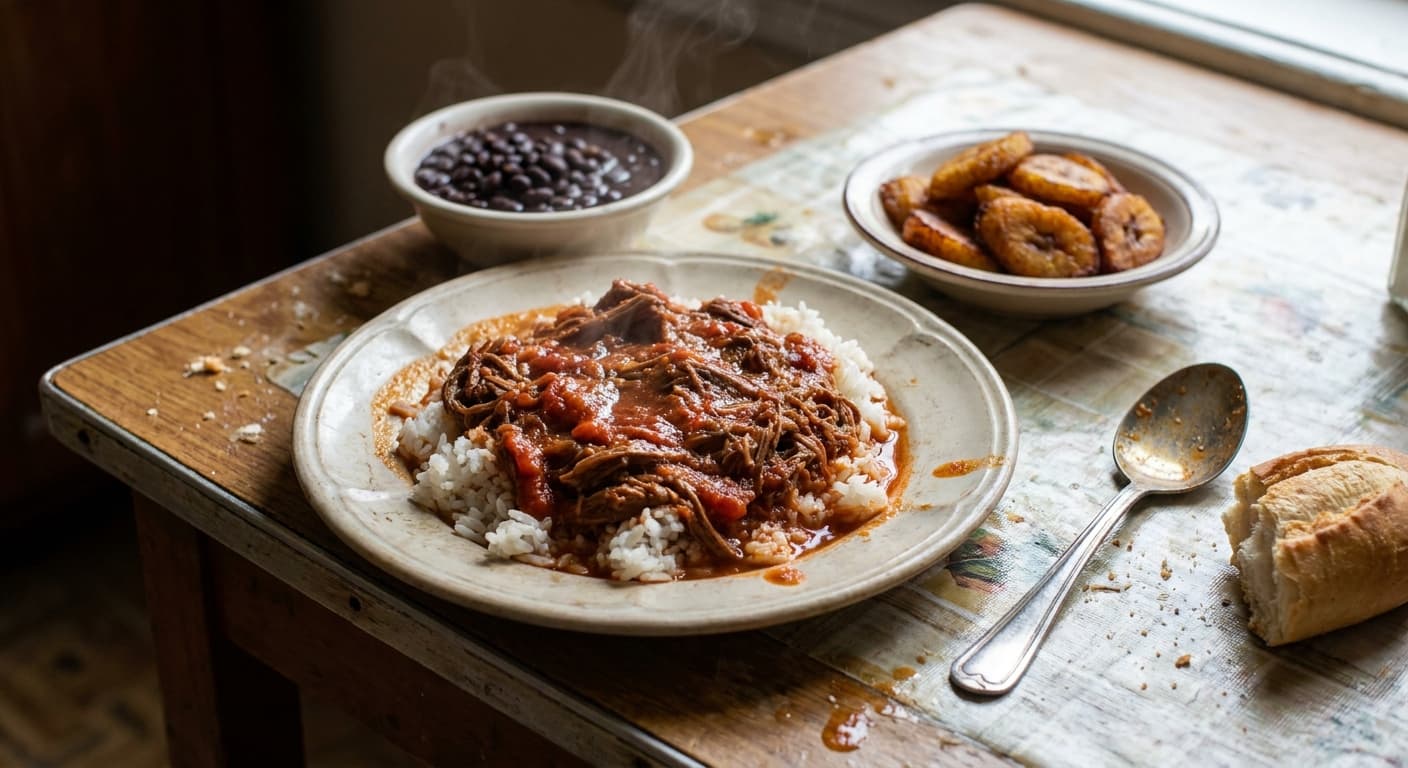
Cuban Ropa Vieja (Ropa Vieja) — Shredded Beef in Tomato-Pepper Sauce
Cuban · Stews · 190 min
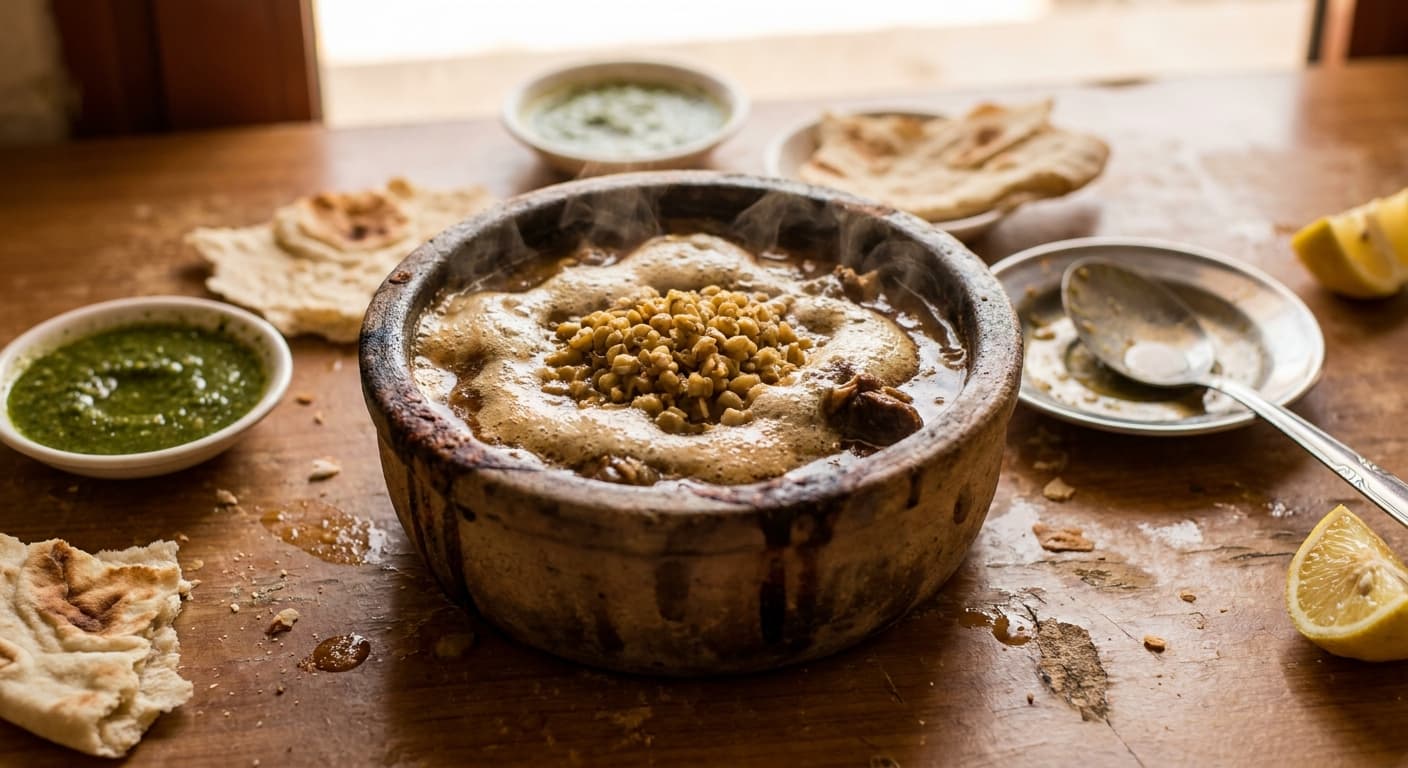
Yemeni Saltah (سلتة) — Bubbling Fenugreek Lamb Stew
Yemeni · Stews · 130 min
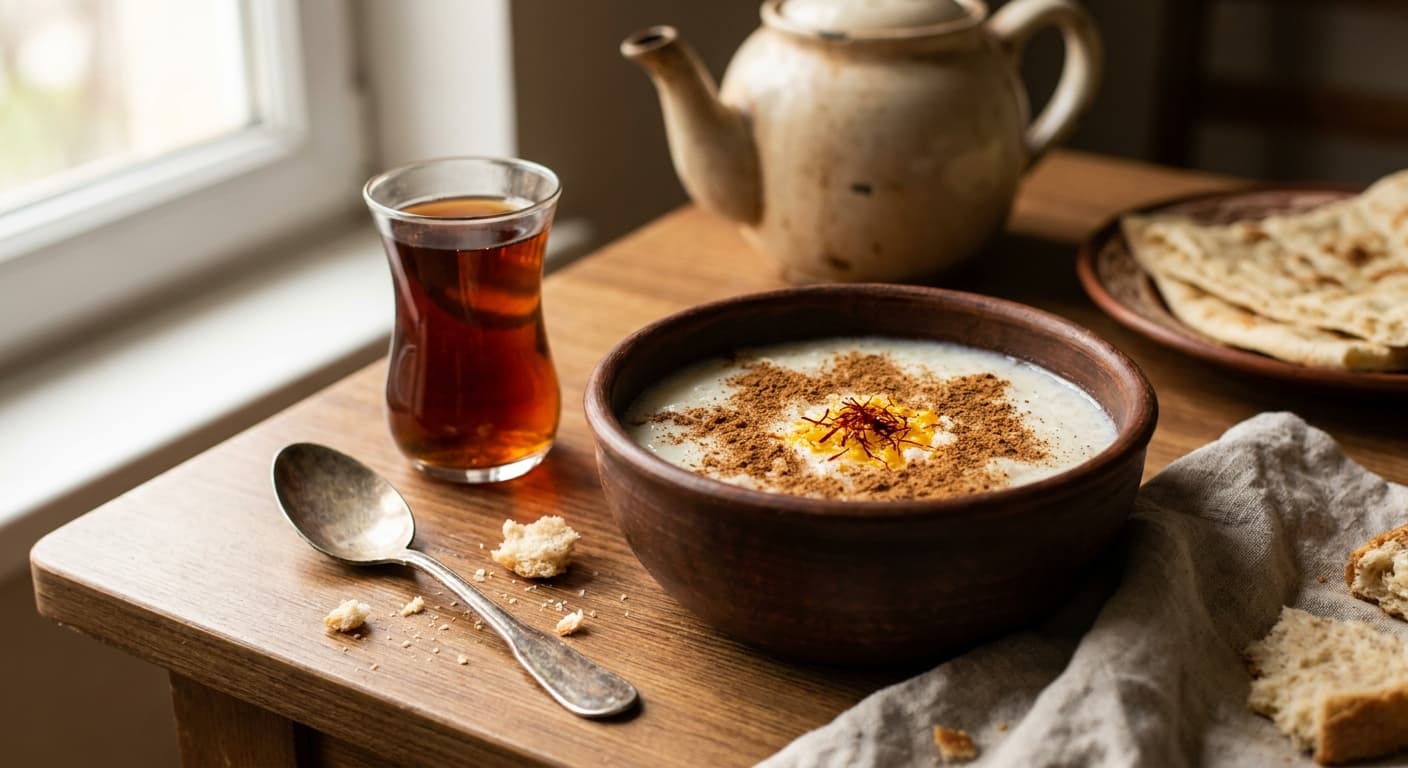
Azerbaijani Milk Rice Porridge (Südlü Sıyıq) — Creamy Breakfast Bowl
Azerbaijani · Rice Dishes · 40 min
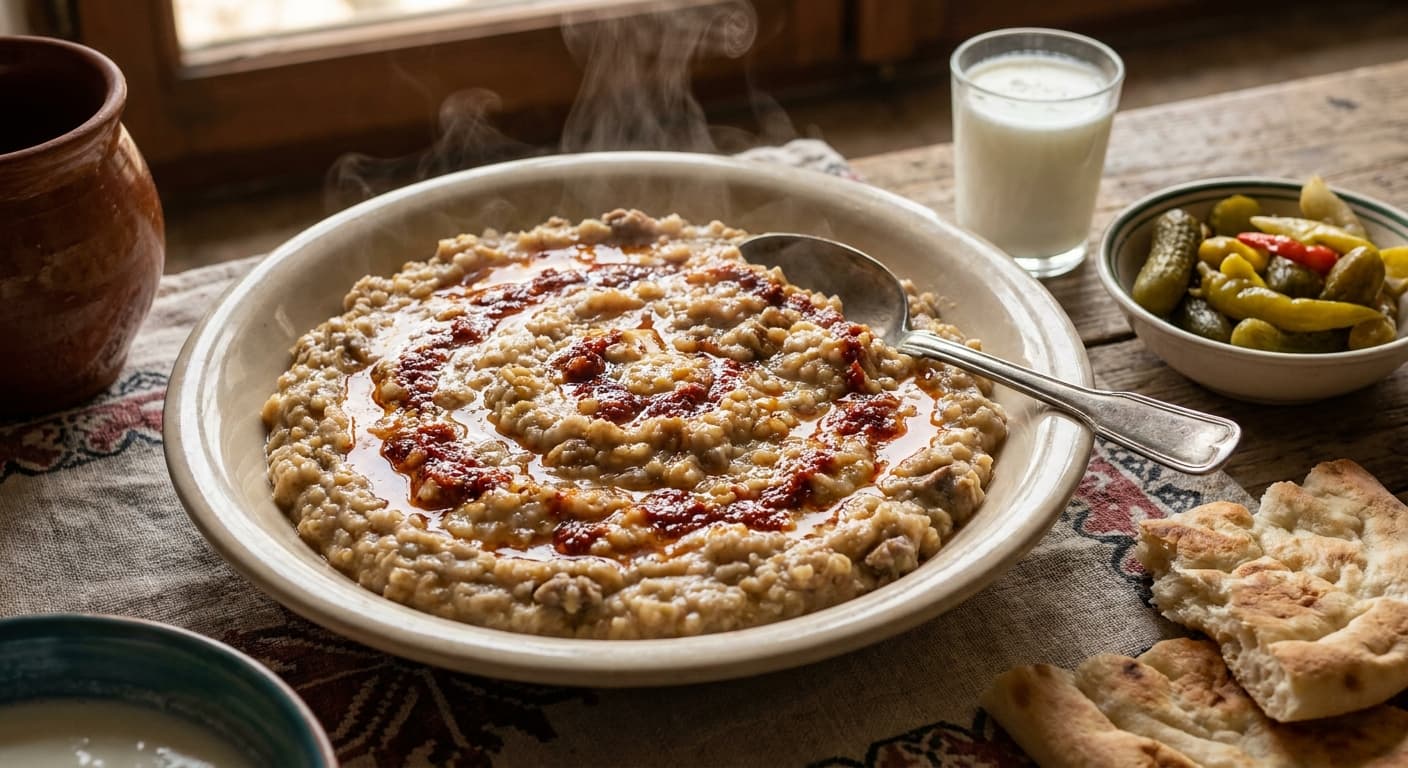
Keshkek (Keşkek) — Creamy Ceremonial Wheat and Lamb Stew
Turkish · Stews · 240 min
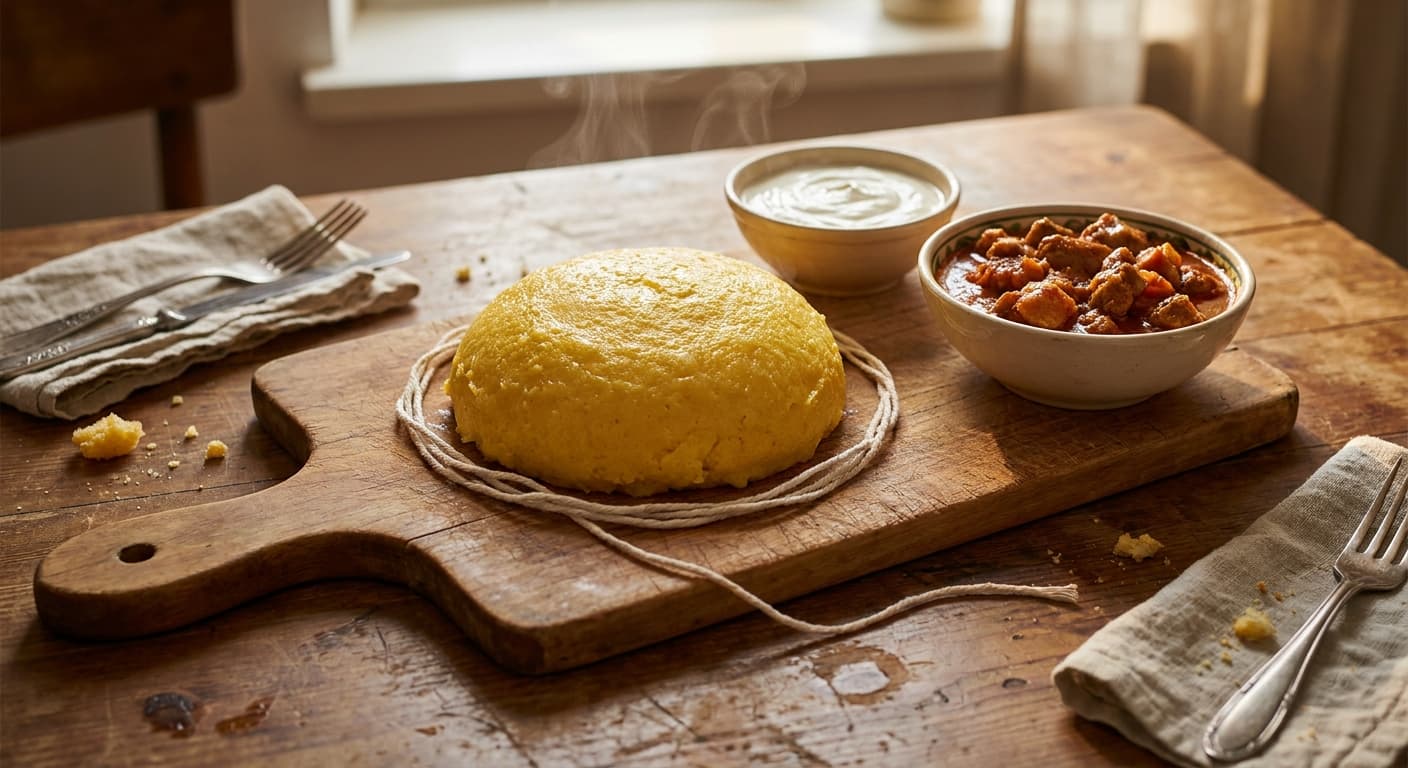
Romanian Polenta (Mămăligă) — Firm Cornmeal Porridge
Romanian · Side Dishes · 30 min
Reviews
Cooked this recipe?
Tap the stars to rate it — that's all it takes. A few words are welcome but optional.
No ratings yet. Cooked this one? Be the first to rate it — it takes one tap.