Slovenian Jota (Jota) — Sauerkraut, Bean, and Smoked Pork Stew
Jota is a hearty Slovenian stew from the Karst, Primorska, and Istrian borderlands, built from fermented cabbage or turnip, beans, potatoes, and smoked pork. It is especially loved in cold weather, when its sour, smoky broth feels restorative.
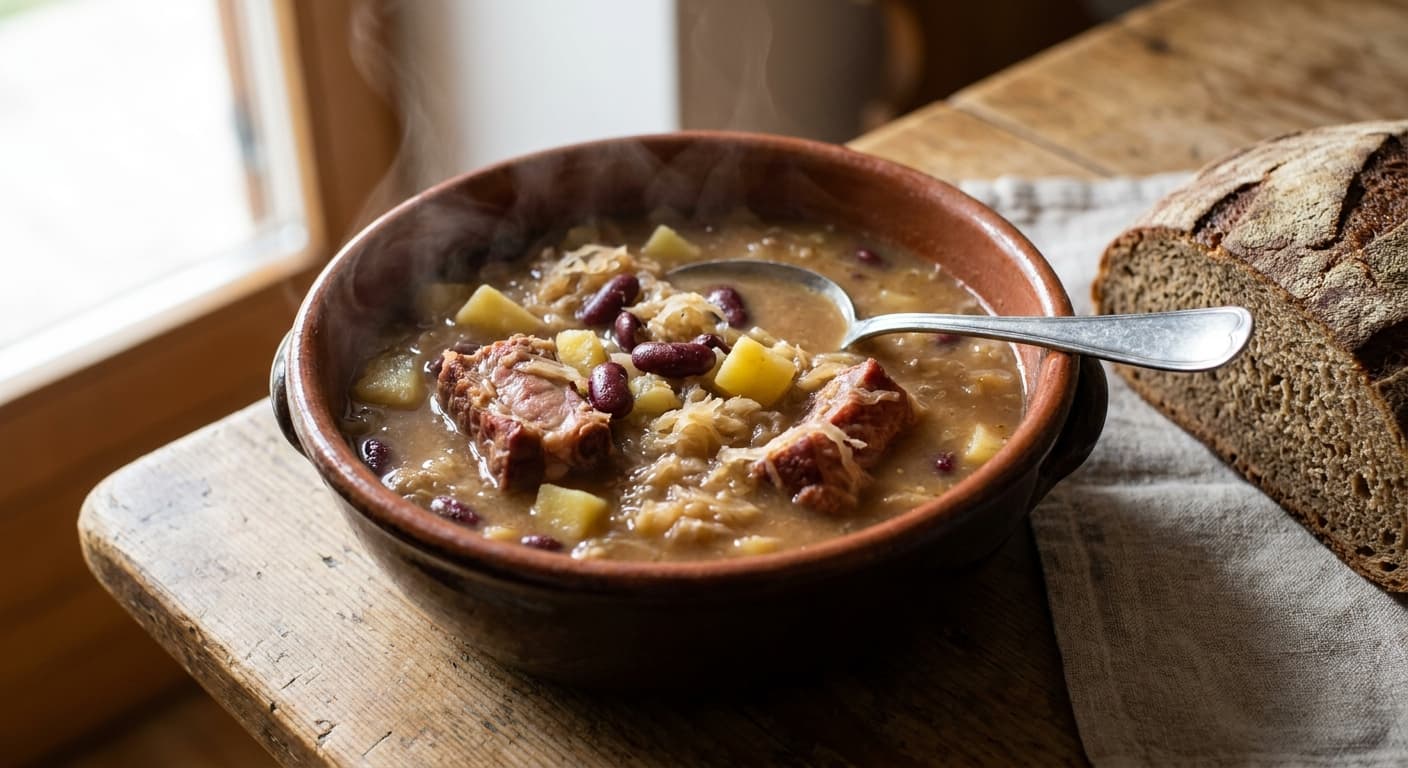
Printable Recipe Card
Servings: 6 · Total: 150 min · Difficulty: medium
Ingredients (quick list)
- 250 g dried borlotti beans
- 1.5 l cold water (for soaking the beans)
- 2 leaf bay leaves
- 450 g smoked pork ribs
- 300 g Carniolan sausage (or another lightly smoked Slovenian-style pork sausage)
- 600 g sauerkraut (fermented cabbage, drained but not rinsed unless extremely salty)
- 60 ml sauerkraut brine
- 500 g waxy potatoes (peeled and cut into 2 cm cubes)
- 1 yellow onion
- 4 clove garlic
- 25 g pork lard
- 20 g all-purpose flour
+ 3 more in the full ingredients section below.
Steps (summary)
- Put the dried beans in a large bowl with 1.5 l cold water and soak them for 8 to 12 hours. Drain the beans, rinse them well, an…
- Transfer the soaked beans to a saucepan with 1.5 l fresh cold water and the bay leaves. Bring to a boil, then reduce to a gentl…
- While the beans cook, place the sauerkraut, smoked pork ribs, black peppercorns, caraway seeds, and 1.2 l cold water in a heavy…
- Add the cubed potatoes and whole Carniolan sausage to the sauerkraut pot. Simmer for 25 to 30 minutes, until the potatoes are t…
- Melt the lard in a small skillet over medium heat and add the finely chopped onion. Cook for 8 minutes until pale golden, then…
- Remove the sausage and ribs from the stew pot and set them on a board. Stir the roux into the sauerkraut mixture in small spoon…
+ 3 more steps in the full instructions section below.
Cultural Background
Jota reflects Slovenia’s crossroads cooking, especially the Karst and Primorska regions, where preserved cabbage, beans, potatoes, and smoked pork made a sustaining winter meal. It remains a beloved home-cooked dish rather than restaurant showpiece.
Equipment
💡 Tips
- Use naturally fermented sauerkraut rather than vinegar-pickled cabbage; the flavor should be tangy, lactic, and rounded.
- Do not salt the beans at the beginning if your smoked pork is very salty; the final 4 g salt gives better control.
- For a thicker jota, mash more beans and potatoes rather than adding extra flour.
⚠️ Common Mistakes
❌ Using vinegar-pickled cabbage instead of fermented sauerkraut
✅ Fix: Choose naturally fermented sauerkraut with live, lactic acidity and add measured brine only at the end.
❌ Boiling the stew hard after adding potatoes
✅ Fix: Keep the pot at a gentle simmer so the potatoes soften without breaking down into gluey starch.
❌ Adding the roux in one large clump
✅ Fix: Stir the roux into the hot stew in small spoonfuls and mix well after each addition.
🧊 How to Store
Cool leftovers quickly and refrigerate in an airtight container for up to 4 days. Reheat gently in a covered pot with 60 ml water per 2 servings, stirring often so the beans and potatoes do not stick.
📅 Make Ahead
Soak and cook the beans 1 day ahead, keeping them refrigerated in their cooking liquid. Fully cooked jota also improves overnight as the sour, smoky, and starchy elements meld.
🍽️ Pairs Well With
- Rye bread
- buckwheat žganci
- pickled turnips
- a glass of Teran.
Regional Variations
- In the Karst, jota is often strongly sour and smoky, with sauerkraut and cured pork at the center.
- In parts of Slovenia, sour turnip replaces sauerkraut for a softer, sweeter fermented flavor.
- Istrian-influenced versions may be lighter, with less meat and a greater emphasis on beans and potatoes.
Ingredients
- 250 gdried borlotti beans
- 1.5 lcold water (for soaking the beans)
- 2 leafbay leaves
- 450 gsmoked pork ribs
- 300 gCarniolan sausage (or another lightly smoked Slovenian-style pork sausage)
- 600 gsauerkraut (fermented cabbage, drained but not rinsed unless extremely salty)
- 60 mlsauerkraut brine
- 500 gwaxy potatoes (peeled and cut into 2 cm cubes)
- 1yellow onion
- 4 clovegarlic
- 25 gpork lard
- 20 gall-purpose flour
- 1 tspcaraway seeds
- 1 tspblack peppercorns
- 4 gfine sea salt
🔄 Substitutions
- smoked pork ribs→ smoked ham hock
- pork lard→ sunflower oil
- sauerkraut→ sour turnip
Instructions
- 1
Put the dried beans in a large bowl with 1.5 l cold water and soak them for 8 to 12 hours. Drain the beans, rinse them well, and discard the soaking water so the finished stew tastes clean rather than muddy.
- 2
Transfer the soaked beans to a saucepan with 1.5 l fresh cold water and the bay leaves. Bring to a boil, then reduce to a gentle simmer and cook for 55 to 70 minutes, until the beans are tender but still intact.
- 3
While the beans cook, place the sauerkraut, smoked pork ribs, black peppercorns, caraway seeds, and 1.2 l cold water in a heavy stew pot. Bring to a simmer, cover partly, and cook for 45 minutes so the pork seasons the cabbage and the sauerkraut softens.
- 4
Add the cubed potatoes and whole Carniolan sausage to the sauerkraut pot. Simmer for 25 to 30 minutes, until the potatoes are tender and the sausage is fully heated through.
- 5
Melt the lard in a small skillet over medium heat and add the finely chopped onion. Cook for 8 minutes until pale golden, then stir in the minced garlic and flour and cook for 2 minutes to make a light, fragrant roux.
- 6
Remove the sausage and ribs from the stew pot and set them on a board. Stir the roux into the sauerkraut mixture in small spoonfuls, mixing thoroughly after each addition so it thickens the broth without forming lumps.
- 7
Add the cooked beans with 500 ml of their cooking liquid to the stew. Mash about 150 g of the potatoes and beans against the side of the pot, then stir them back in to give jota its traditional thick, rustic body.
- 8
Cut the sausage into thick slices and remove the edible meat from the smoked ribs, discarding bones and excess cartilage. Return the meat to the pot, add 60 ml sauerkraut brine and 4 g salt, then simmer uncovered for 10 minutes.
- 9
Turn off the heat and let the jota rest for 15 minutes before serving. This short rest lets the sour cabbage, beans, potatoes, and smoke settle into one balanced flavor, which is why jota is often even better the next day.
🪪 Recipe Passport
Cultural Background
Jota reflects Slovenia’s crossroads cooking, especially the Karst and Primorska regions, where preserved cabbage, beans, potatoes, and smoked pork made a sustaining winter meal. It remains a beloved home-cooked dish rather than restaurant showpiece.
Regional Variations
Researched from multiple sources and validated by the Zaffaron editorial team. Every recipe is tested for accuracy, measurements, and cultural authenticity.
📚 Sources & Cultural References
- Janez Bogataj — The Food and Cooking of Slovenia — (2008)
- Slovenian Tourist Board — Taste Slovenia
Sources cited by the Zaffaron editorial team during recipe research. Cultural and culinary references supporting authenticity claims.
Nutrition per serving
Pairs well with
If you enjoyed this recipe, here are a few related Zaffaron recipes to try next.
Does your family make this differently?
Every family has their own version. Maybe your grandmother adds a secret ingredient, or your aunt has a completely different technique. Preserve your family's version — with their name on it, forever.
You Might Also Like
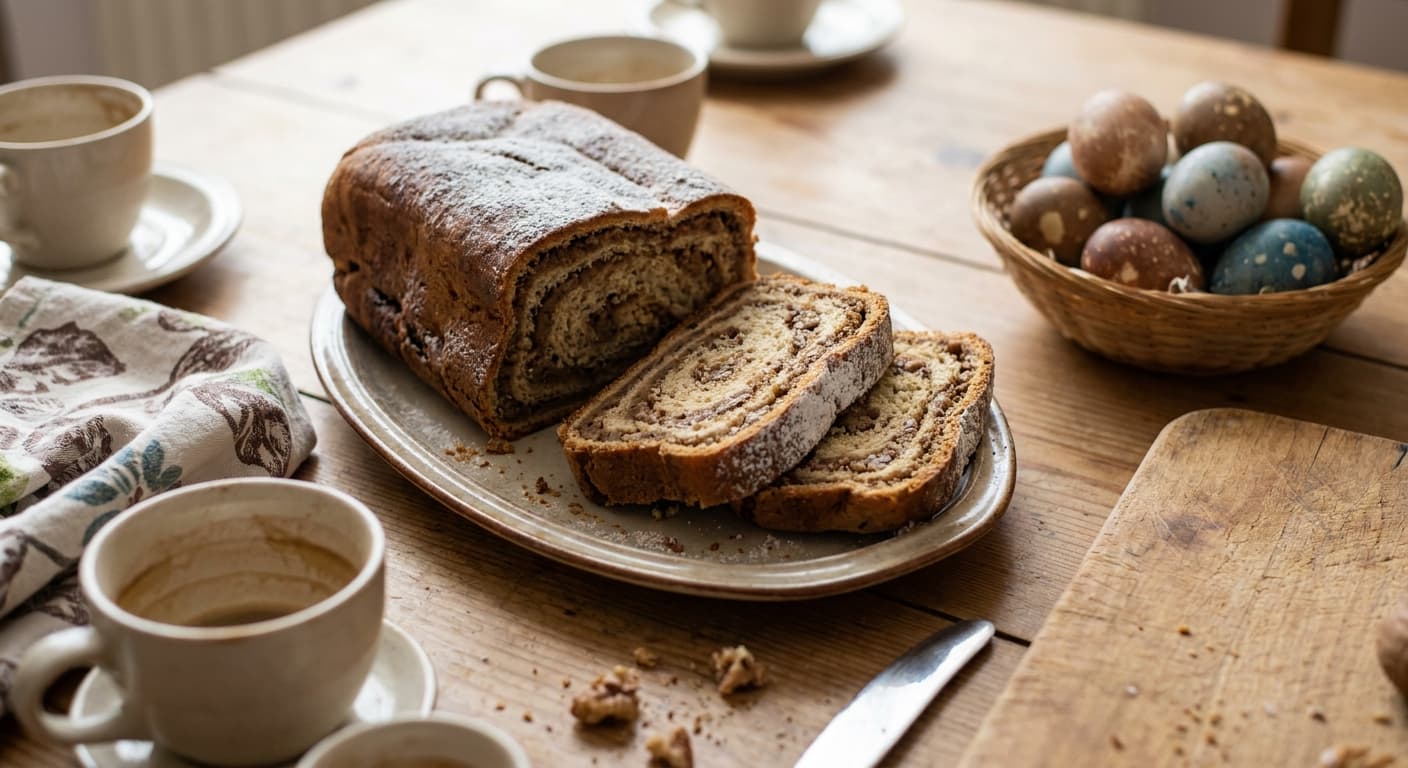
Potica (Potica) — Slovenian Walnut Holiday Roll
Slovenian · Desserts · 100 min
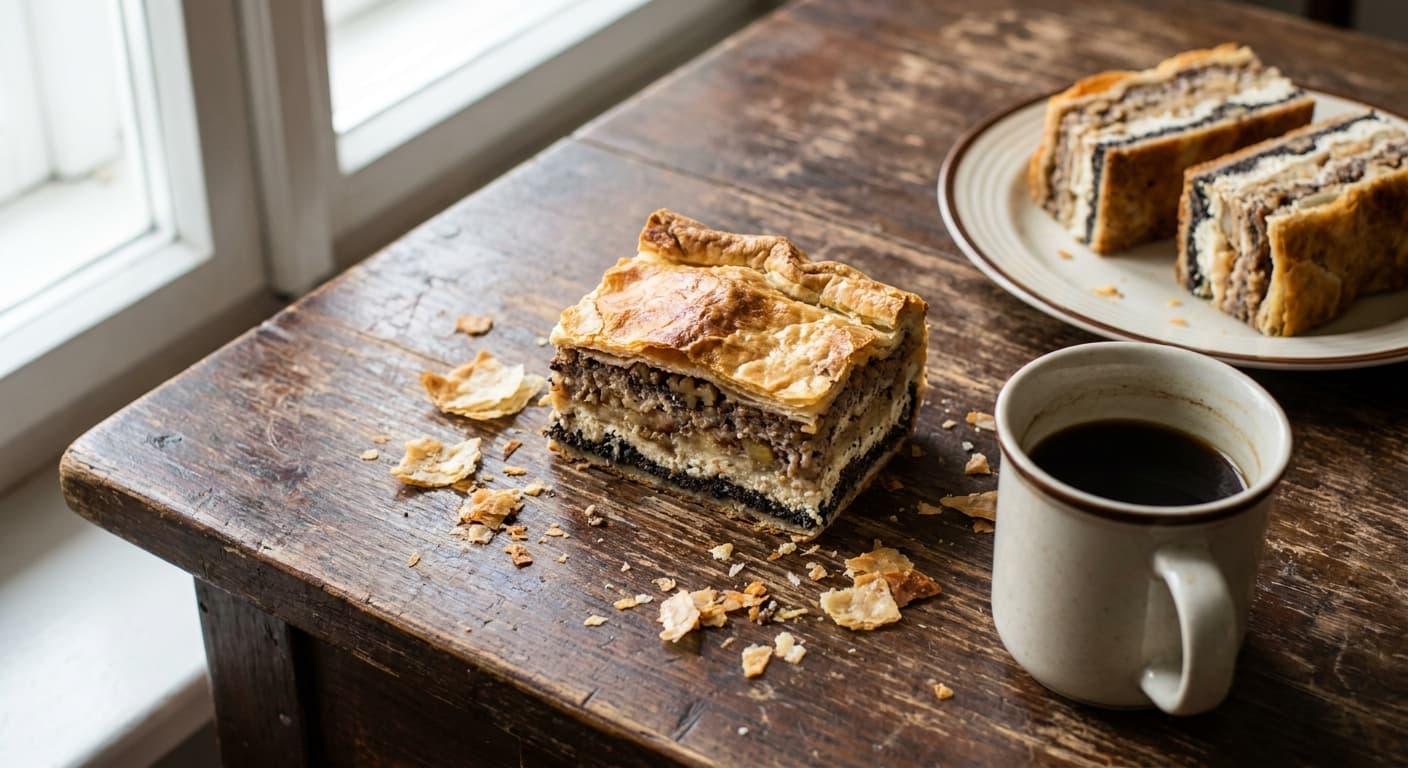
Prekmurje Layer Cake (Prekmurska gibanica) — Slovenian Festival Layer Pastry
Slovenian · Desserts · 185 min
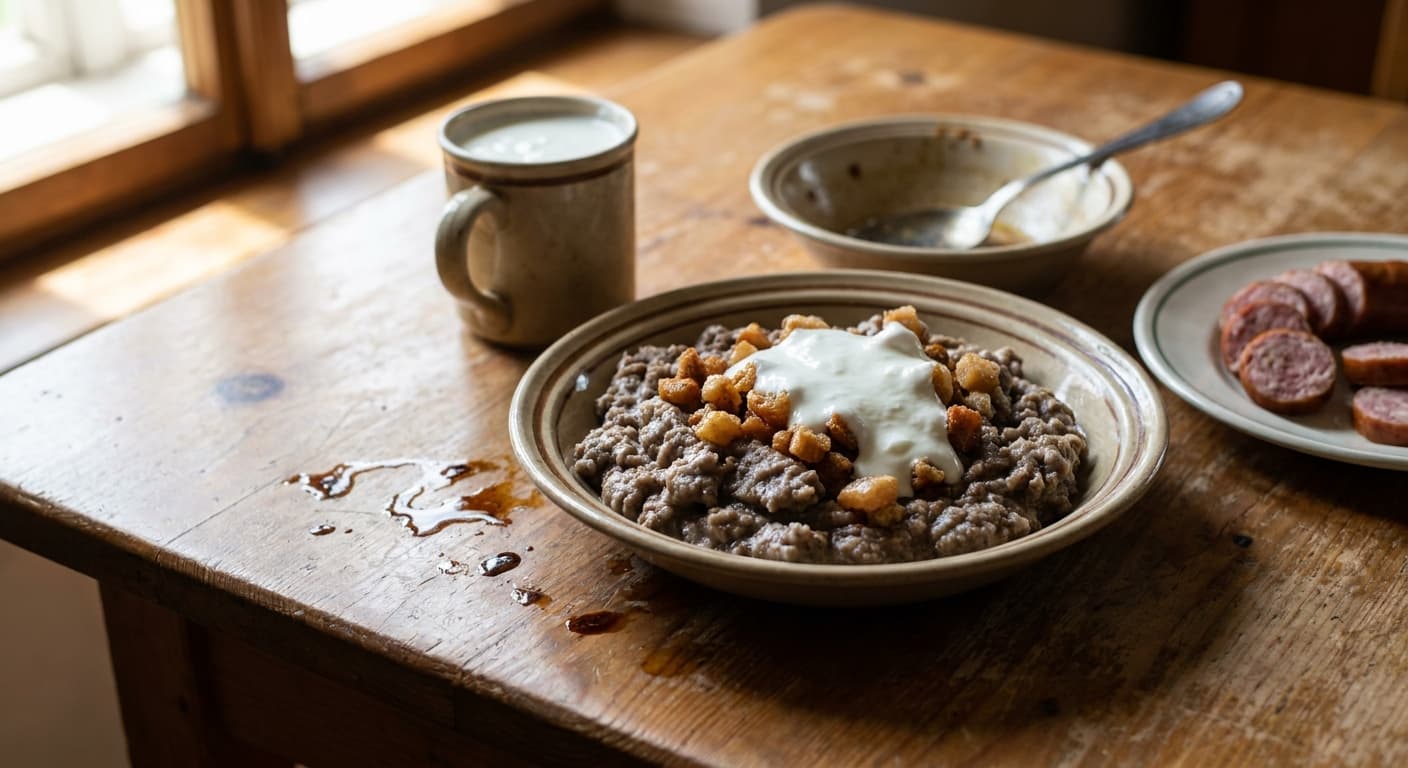
Buckwheat Žganci (Ajdovi žganci) — Slovenian Buckwheat Crumbs with Cracklings
Slovenian · Side Dishes · 45 min
Or Lam (ເອາະຫຼາມ) — Luang Prabang Herb Stew
Laotian · Stews · 155 min
Ecuadorian Peanut Tripe Stew (Guatita) — Creamy Potato and Peanut Stew
Ecuadorian · Stews · 180 min
Croatian Peka (Peka) — Dalmatian Ember-Baked Lamb and Potatoes
Croatian · Main Courses · 150 min

Chimney Cake (Kürtőskalács) — Hungarian Spiral Pastry with Cinnamon Sugar
Hungarian · Desserts · 59 min
Chilean Curanto (Curanto) — Chiloé Seafood and Meat Feast
Chilean · Main Courses · 110 min
Reviews
Cooked this recipe?
Tap the stars to rate it — that's all it takes. A few words are welcome but optional.
No ratings yet. Cooked this one? Be the first to rate it — it takes one tap.