Khoresh Goosht ba Sabzijat (خورش گوشت با سبزیجات) — Persian Meat and Vegetable Stew
A comforting Persian-style meat and vegetable stew with tender beef or lamb, root vegetables, and a tomato-thyme broth. Slow simmering builds deep flavor, balanced with a touch of sugar and butter.
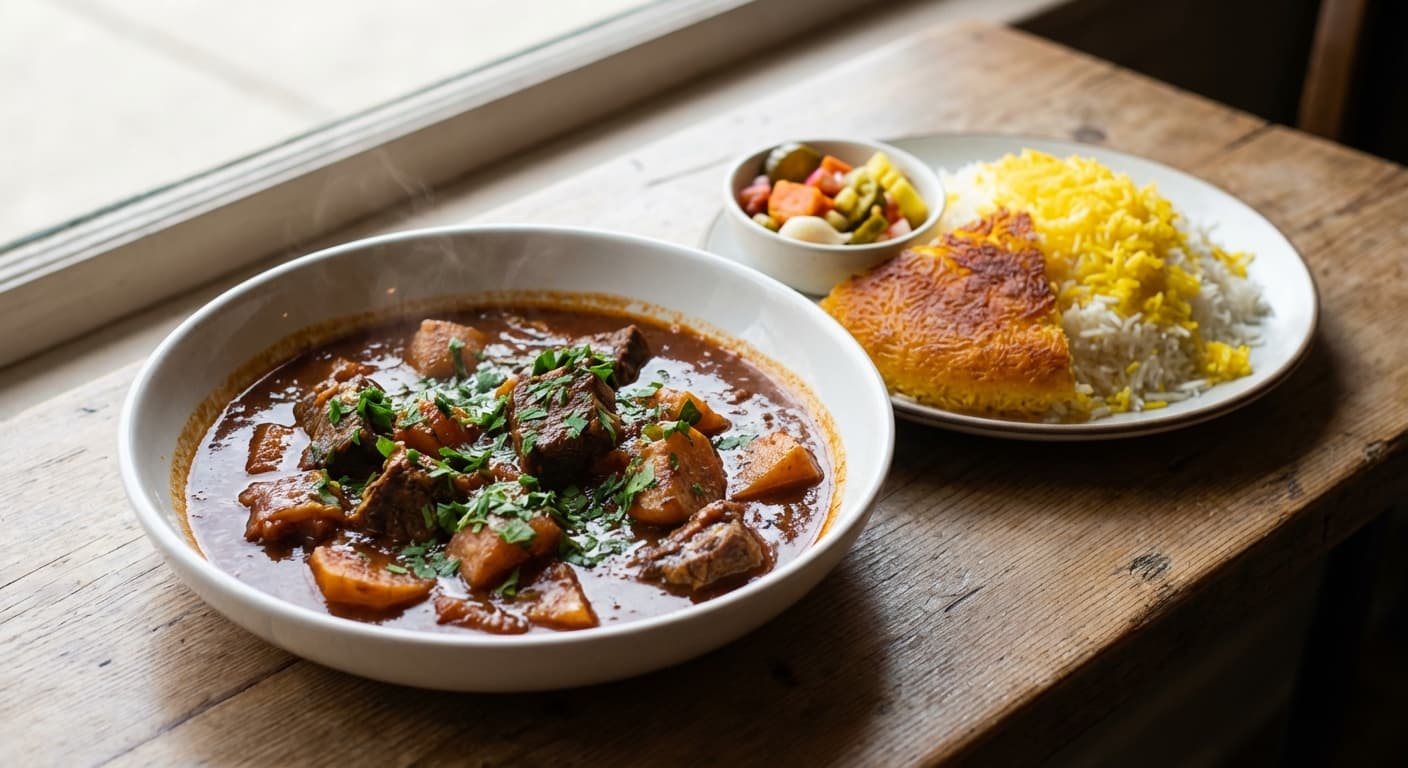
Printable Recipe Card
Servings: 6 · Total: 160 min · Difficulty: medium
Ingredients (quick list)
- 900 g Boneless lamb shoulder or beef chuck, cut into 4 cm cubes (Trim excess surface fat; keep some marbling for tenderness)
- 10 g Fine sea salt (About 1 3/4 tsp; plus more to taste at the end)
- 2 g Ground black pepper (About 1 tsp)
- 30 ml Olive oil (About 2 tbsp)
- 30 g Unsalted butter (Added near the end for richness and aroma)
- 250 g Yellow onion, finely diced (About 1 large onion)
- 12 g Garlic, minced (About 4 cloves)
- 45 g Tomato paste (About 3 tbsp; fry to remove raw taste)
- 2 tsp Dried thyme (Preferably rubbed thyme)
- 2 leaf Bay leaves (Remove before serving)
- 8 g Granulated sugar (About 2 tsp; balances tomato acidity)
- 1000 ml Beef broth or vegetable broth, low-sodium (Hot, if possible, to maintain simmer)
+ 6 more in the full ingredients section below.
Steps (summary)
- Pat the meat very dry with paper towels. Season evenly with the salt and black pepper. Heat a heavy pot or Dutch oven over medi…
- Reduce heat to medium. Add the diced onion to the same pot and cook 8–10 minutes, stirring often, until golden and softened. Ad…
- Return the meat and any juices to the pot. Add dried thyme, bay leaves, and granulated sugar, stirring for 30 seconds to coat.…
- Cover with the lid slightly ajar and simmer for 75 minutes, stirring every 20 minutes to prevent sticking. Keep the heat low so…
- Add carrots, parsnips, and celery. Stir, return to a gentle simmer, and cook 25 minutes, partially covered, until the vegetable…
- Turn off the heat. Remove bay leaves. Stir in the unsalted butter until melted, then add chopped parsley and lemon juice. Rest…
Cultural Background
Meat-and-vegetable stews are a central part of Persian home cooking, often prepared as a slow-simmered dish served with rice for shared family meals. Variations reflect seasonal produce and household preferences, with careful browning and gentle simmering used to build depth and balance.
Equipment
💡 Tips
- For deeper flavor, brown the meat well; the dark fond on the pot is essential to a rich broth.
- Use low-sodium broth so you can control salt while the stew reduces.
- Cut vegetables into similar sizes so they cook evenly and keep their shape during simmering.
- If the stew tastes too acidic from tomato paste, add 1–2 tsp more sugar; if too sweet, add 1–2 tsp more lemon juice.
- A gentle simmer (not a hard boil) keeps meat tender and prevents vegetables from breaking down.
⚠️ Common Mistakes
❌ Boiling the stew hard for most of the cooking time
💡 Why: High heat tightens meat fibers and can break vegetables into mush, making the broth greasy and cloudy
✅ Fix: Keep a gentle simmer with small bubbles; adjust heat and leave the lid slightly ajar to control reduction
❌ Skipping the step of frying the tomato paste
💡 Why: Uncooked tomato paste can taste metallic or raw and won’t develop sweetness
✅ Fix: Cook the paste 2–3 minutes in the onion-garlic base until it darkens slightly and smells sweet
❌ Adding all vegetables at the beginning
💡 Why: Long simmering overcooks vegetables, dulling flavor and causing them to disintegrate
✅ Fix: Add firmer vegetables first (carrot/parsnip/celery), then potatoes later so everything finishes together
❌ Not drying the meat before browning
💡 Why: Wet meat steams instead of browning, reducing depth of flavor
✅ Fix: Pat meat thoroughly dry and brown in batches without overcrowding the pot
🧊 How to Store
Cool to room temperature within 2 hours, then refrigerate in an airtight container for up to 4 days. Reheat gently on the stovetop over low heat until steaming hot (74°C), adding a splash of water if thickened. Freeze up to 3 months; thaw overnight in the refrigerator before reheating.
📅 Make Ahead
Cook the stew up to 2 days ahead; refrigerate overnight to let flavors deepen. Reheat gently over low heat for 15–25 minutes, adding 60–120 ml water if needed. Stir in parsley and lemon juice at the end for the freshest flavor.
🍽️ Pairs Well With
- Steamed basmati rice
- Flatbread
- Fresh herb platter (mint
- basil
- radishes)
- Pickled vegetables
Regional Variations
- Tehran-style home kitchensOften made with beef chuck and a slightly thicker tomato base, served with fluffy rice and a simple salad.
- Northwestern IranMay include more root vegetables and a brighter finish from extra lemon juice, reflecting local preferences for tangier stews.
- Southern IranSometimes enriched with additional garlic and a touch more sweetness to balance tomato, depending on household taste.
Ingredients
- 900 gBoneless lamb shoulder or beef chuck, cut into 4 cm cubes (Trim excess surface fat; keep some marbling for tenderness)
- 10 gFine sea salt (About 1 3/4 tsp; plus more to taste at the end)
- 2 gGround black pepper (About 1 tsp)
- 30 mlOlive oil (About 2 tbsp)
- 30 gUnsalted butter (Added near the end for richness and aroma)
- 250 gYellow onion, finely diced (About 1 large onion)
- 12 gGarlic, minced (About 4 cloves)
- 45 gTomato paste (About 3 tbsp; fry to remove raw taste)
- 2 tspDried thyme (Preferably rubbed thyme)
- 2 leafBay leaves (Remove before serving)
- 8 gGranulated sugar (About 2 tsp; balances tomato acidity)
- 1000 mlBeef broth or vegetable broth, low-sodium (Hot, if possible, to maintain simmer)
- 300 gCarrots, cut into 2.5 cm chunks (About 3 medium carrots)
- 450 gPotatoes, peeled and cut into 3 cm chunks (Waxy potatoes hold shape best)
- 200 gParsnips, cut into 2.5 cm chunks (Adds earthy sweetness)
- 180 gCelery stalks, cut into 2 cm pieces (About 3 stalks)
- 25 gFresh parsley, finely chopped (About 1 cup loosely packed; stirred in at the end)
- 15 mlFresh lemon juice (About 1 tbsp; adjust to taste)
🔄 Substitutions
- Lamb shoulder or beef chuck→ Bone-in lamb shanks (1.2 kg)
- Parsnips→ Turnips or sweet potatoes (same weight)
- Unsalted butter→ Ghee or additional olive oil (same amount)
Instructions
- 1
Pat the meat very dry with paper towels. Season evenly with the salt and black pepper. Heat a heavy pot or Dutch oven over medium-high heat for 2 minutes, then add olive oil. Brown the meat in 2 batches for 4–5 minutes per batch, turning to color multiple sides; transfer browned meat to a plate.
- 2
Reduce heat to medium. Add the diced onion to the same pot and cook 8–10 minutes, stirring often, until golden and softened. Add minced garlic and cook 45–60 seconds until fragrant. Stir in tomato paste and cook 2–3 minutes, pressing and stirring, until it darkens slightly and smells sweet, not raw.
- 3
Return the meat and any juices to the pot. Add dried thyme, bay leaves, and granulated sugar, stirring for 30 seconds to coat. Pour in the hot broth, scraping the bottom to release browned bits. Bring to a gentle boil over medium-high heat, then reduce to low to maintain a steady simmer.
- 4
Cover with the lid slightly ajar and simmer for 75 minutes, stirring every 20 minutes to prevent sticking. Keep the heat low so the surface only gently bubbles. If the liquid drops below the meat level, add 120–240 ml hot water to maintain a stew-like consistency.
- 5
Add carrots, parsnips, and celery. Stir, return to a gentle simmer, and cook 25 minutes, partially covered, until the vegetables begin to soften. Add the potatoes and cook 20–25 minutes more, or until the meat is fork-tender and the potatoes are just cooked through but not falling apart.
- 6
Turn off the heat. Remove bay leaves. Stir in the unsalted butter until melted, then add chopped parsley and lemon juice. Rest the stew, covered, for 10 minutes so flavors settle and the broth thickens slightly. Taste and adjust seasoning with additional salt or lemon juice before serving hot.
🪪 Recipe Passport
Cultural Background
Meat-and-vegetable stews are a central part of Persian home cooking, often prepared as a slow-simmered dish served with rice for shared family meals. Variations reflect seasonal produce and household preferences, with careful browning and gentle simmering used to build depth and balance.
Regional Variations
Researched from multiple sources and validated by the Zaffaron editorial team. Every recipe is tested for accuracy, measurements, and cultural authenticity.
Nutrition per serving
Pairs well with
If you enjoyed this recipe, here are a few related Zaffaron recipes to try next.
Does your family make this differently?
Every family has their own version. Maybe your grandmother adds a secret ingredient, or your aunt has a completely different technique. Preserve your family's version — with their name on it, forever.
You Might Also Like
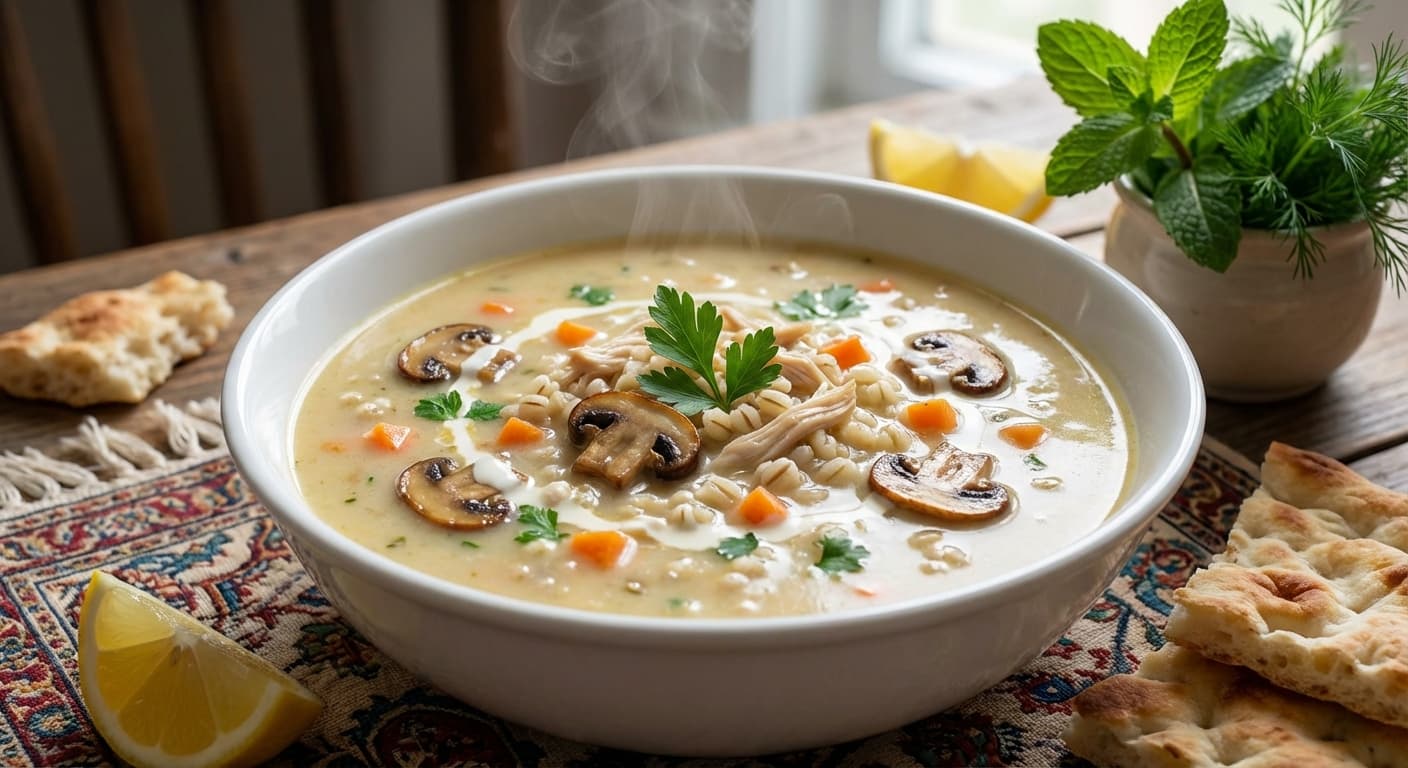
Soup-e Jo (سوپ جو) — Persian Creamy Barley Soup
Persian · Soups · 90 min
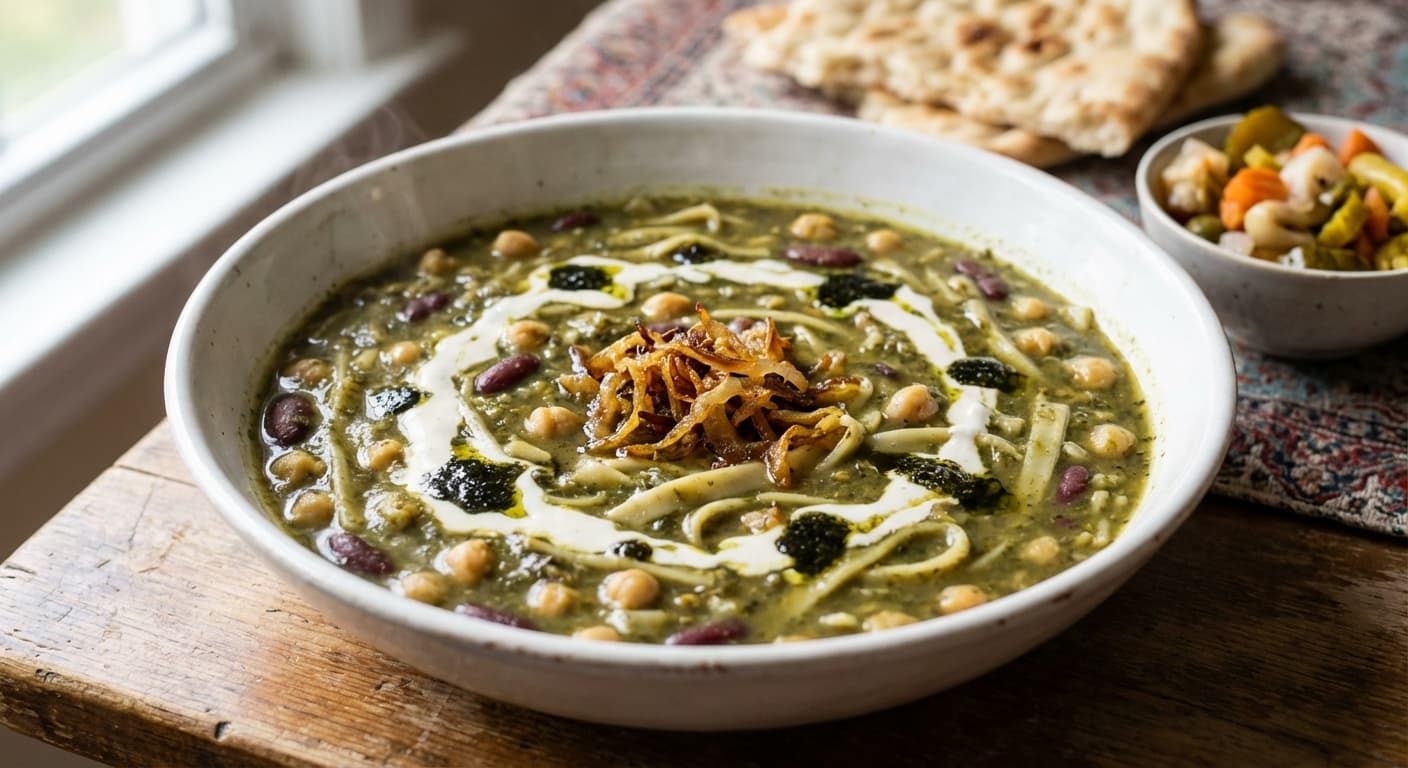
Ash Reshteh (آش رشته) — Persian Herb, Bean, and Noodle Soup
Persian · Soups · 145 min
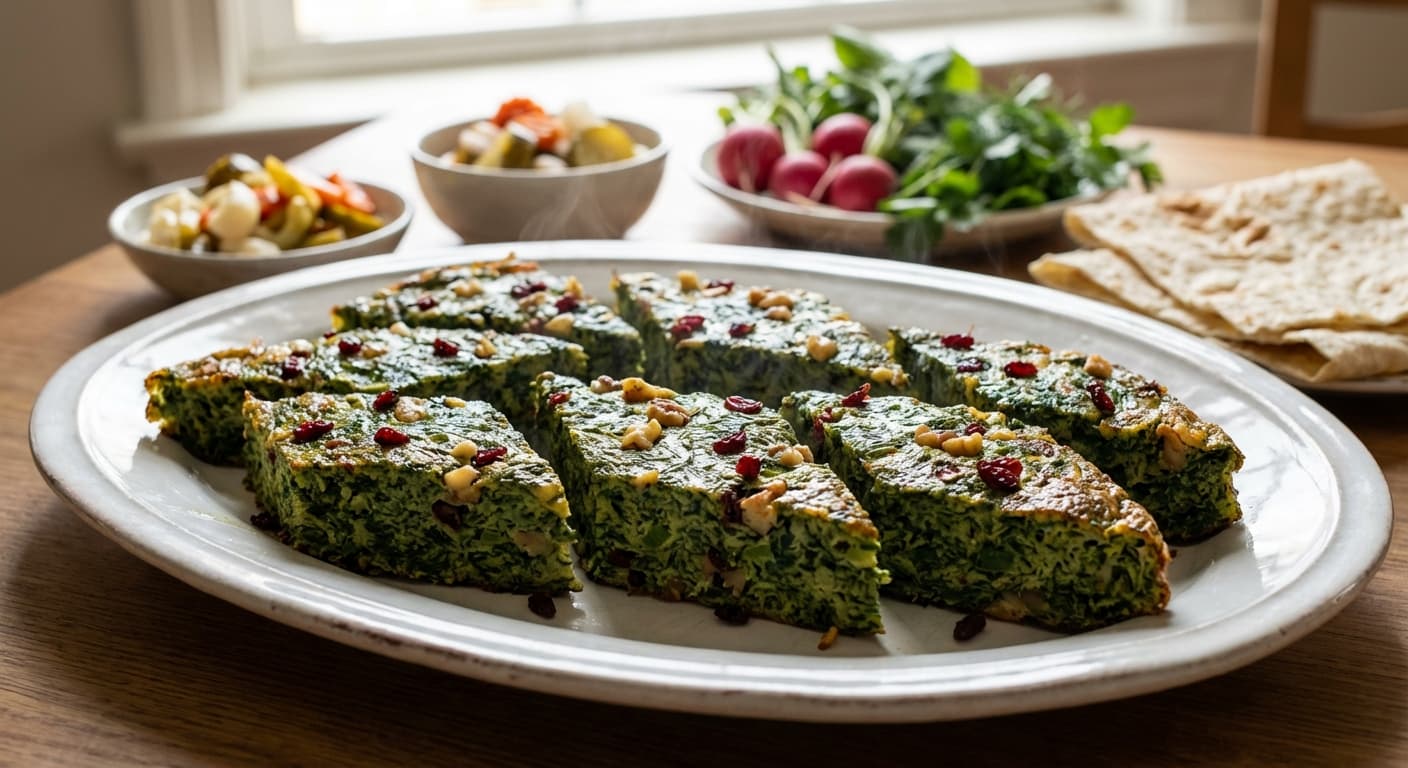
Kuku Sabzi (کوکو سبزی) — Emerald Persian Herb Frittata
Persian · Main Courses · 38 min
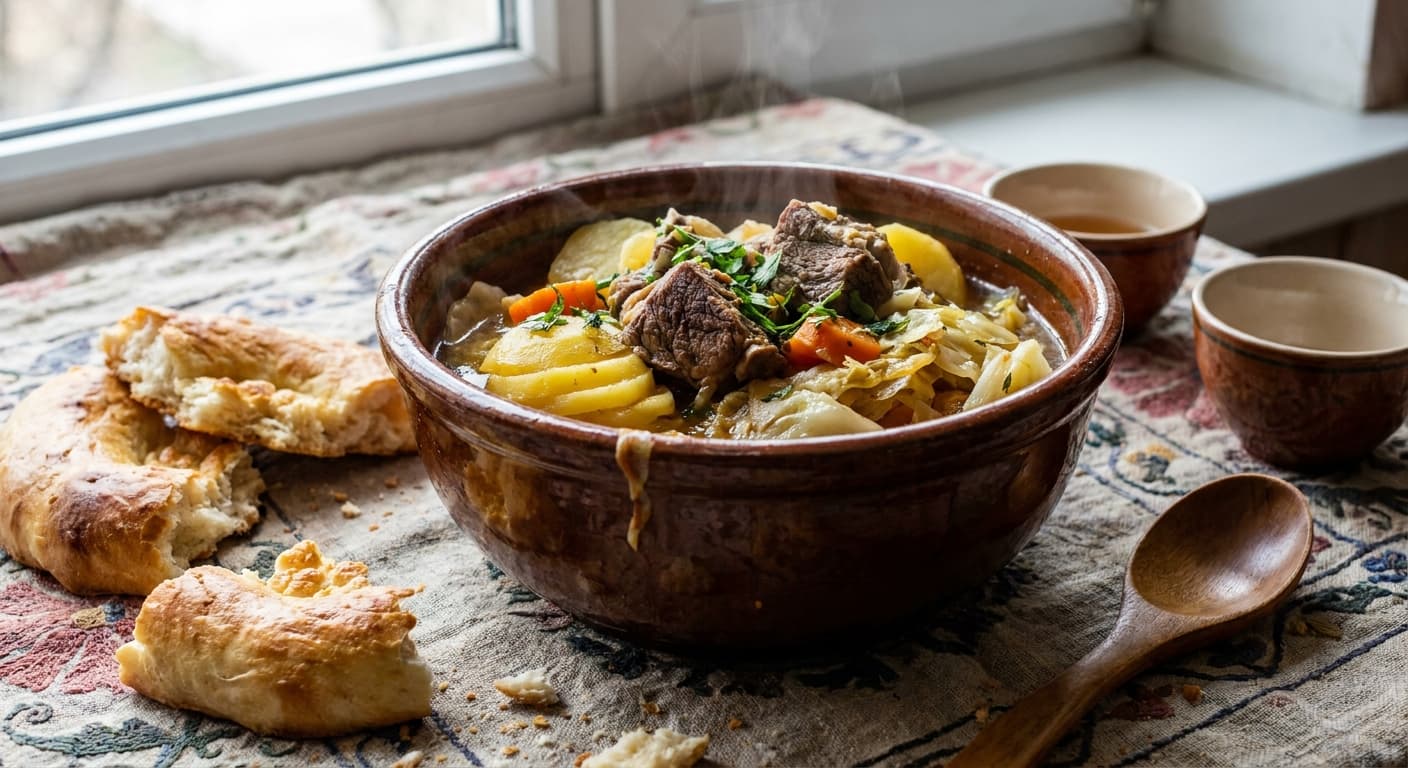
Uzbek Dimlama (Dimlama) — Layered Lamb and Vegetable Stew
Uzbek · Stews · 125 min
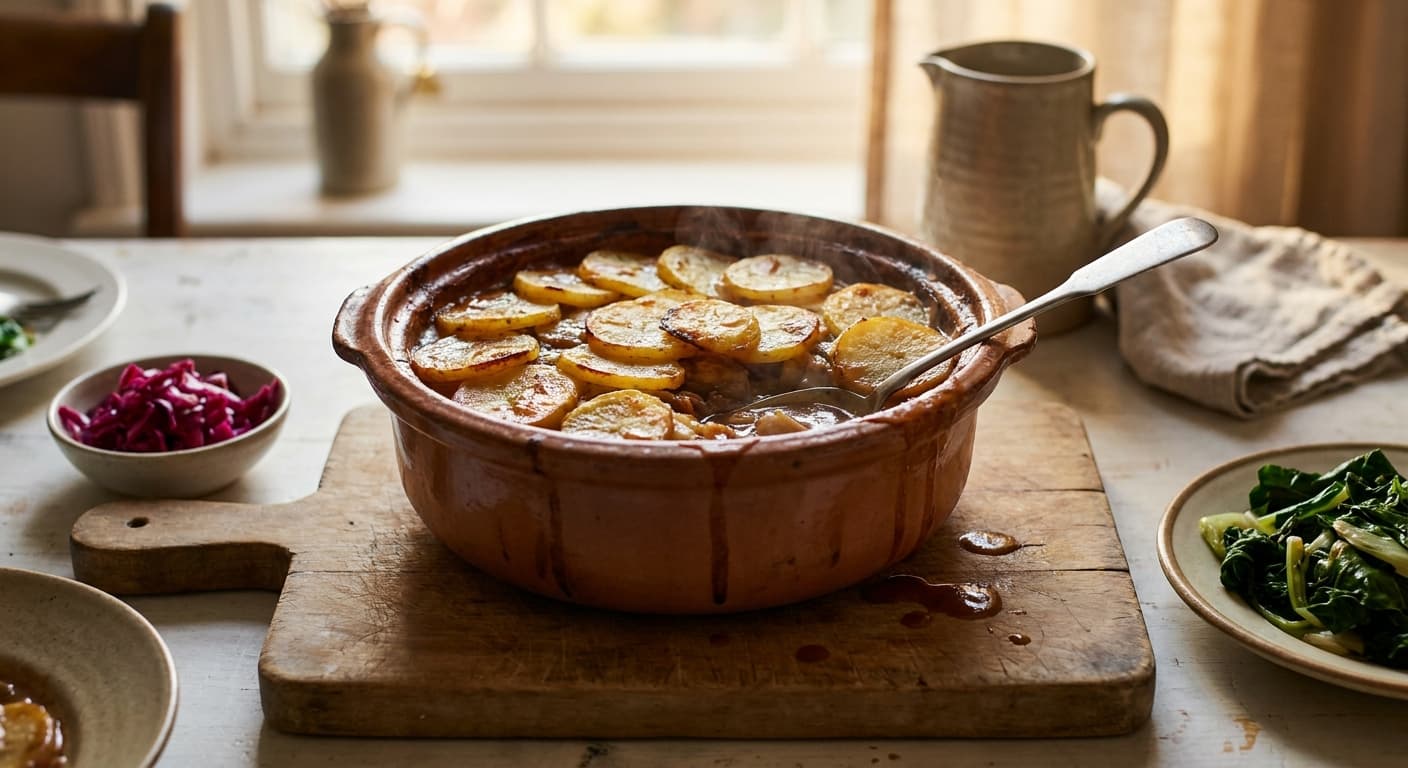
Lancashire Hotpot (Lancashire Hotpot) — Lamb and Potato Oven Stew
British · Stews · 180 min
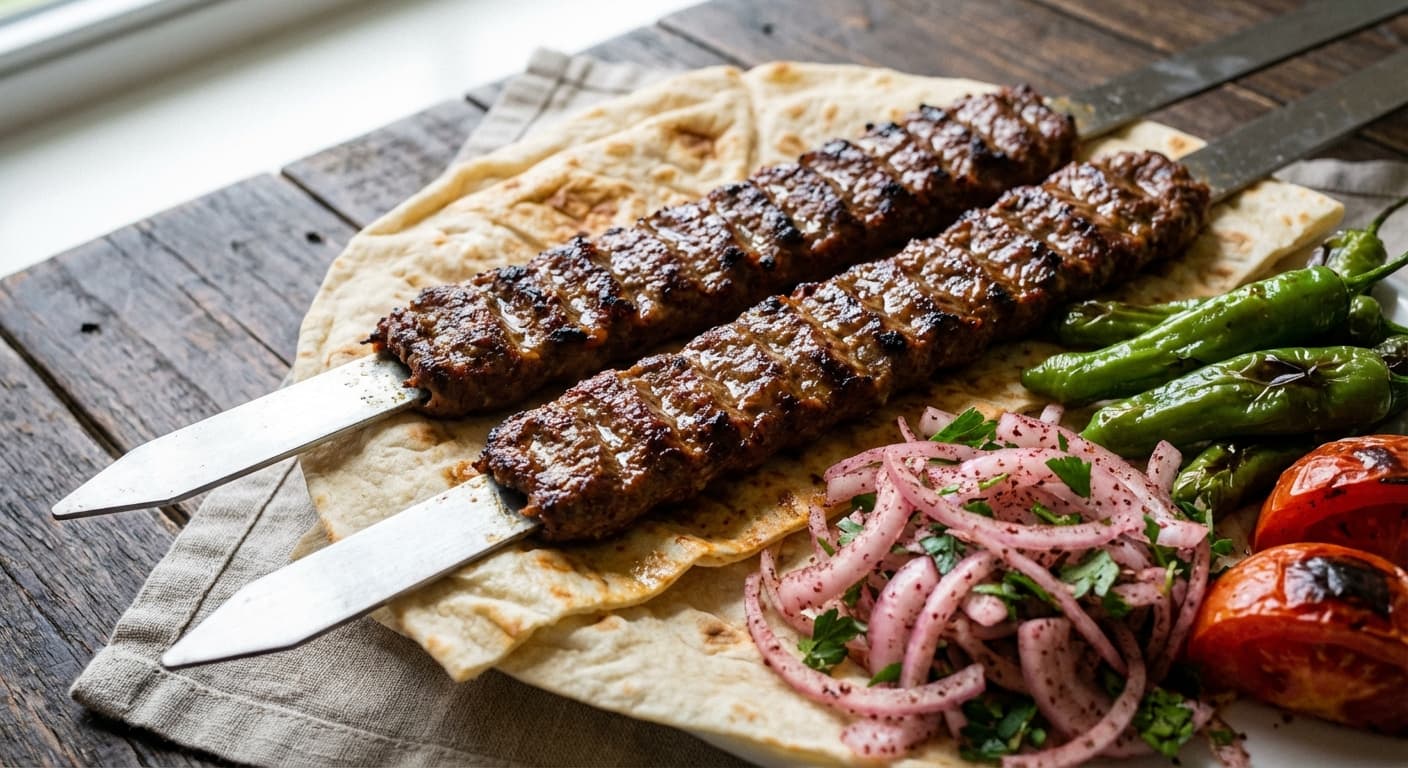
Urfa Kebab (اورفا کباب) — Mild Turkish minced skewer with sumac onions
Turkish · Kebabs · 37 min
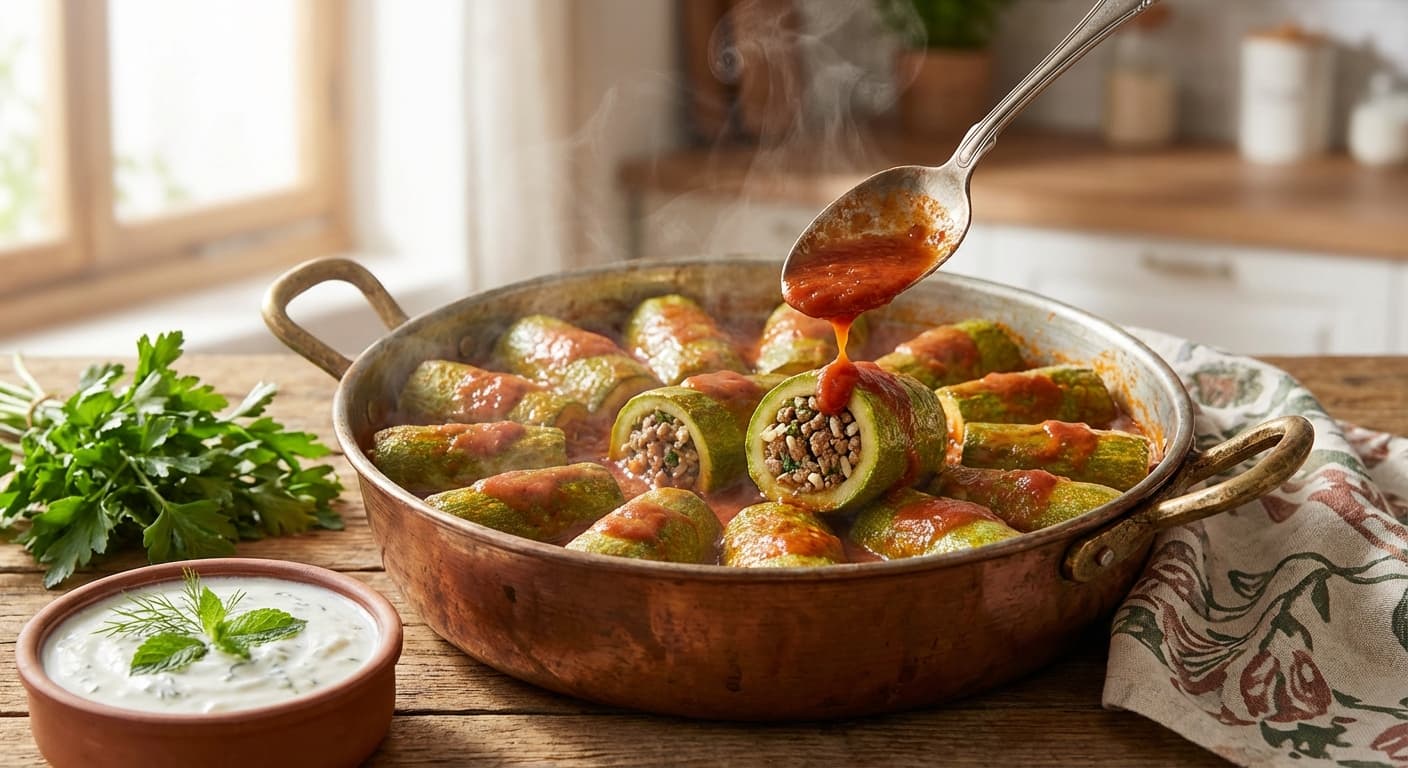
Stuffed Zucchini (Kabak Dolması) — Hollowed zucchini filled with spiced minced meat and rice
Turkish · Main Courses · 90 min
Buckwheat Žganci (Ajdovi žganci) — Slovenian Buckwheat Crumbs with Cracklings
Slovenian · Side Dishes · 45 min
Reviews
Cooked this recipe?
Tap the stars to rate it — that's all it takes. A few words are welcome but optional.
No ratings yet. Cooked this one? Be the first to rate it — it takes one tap.