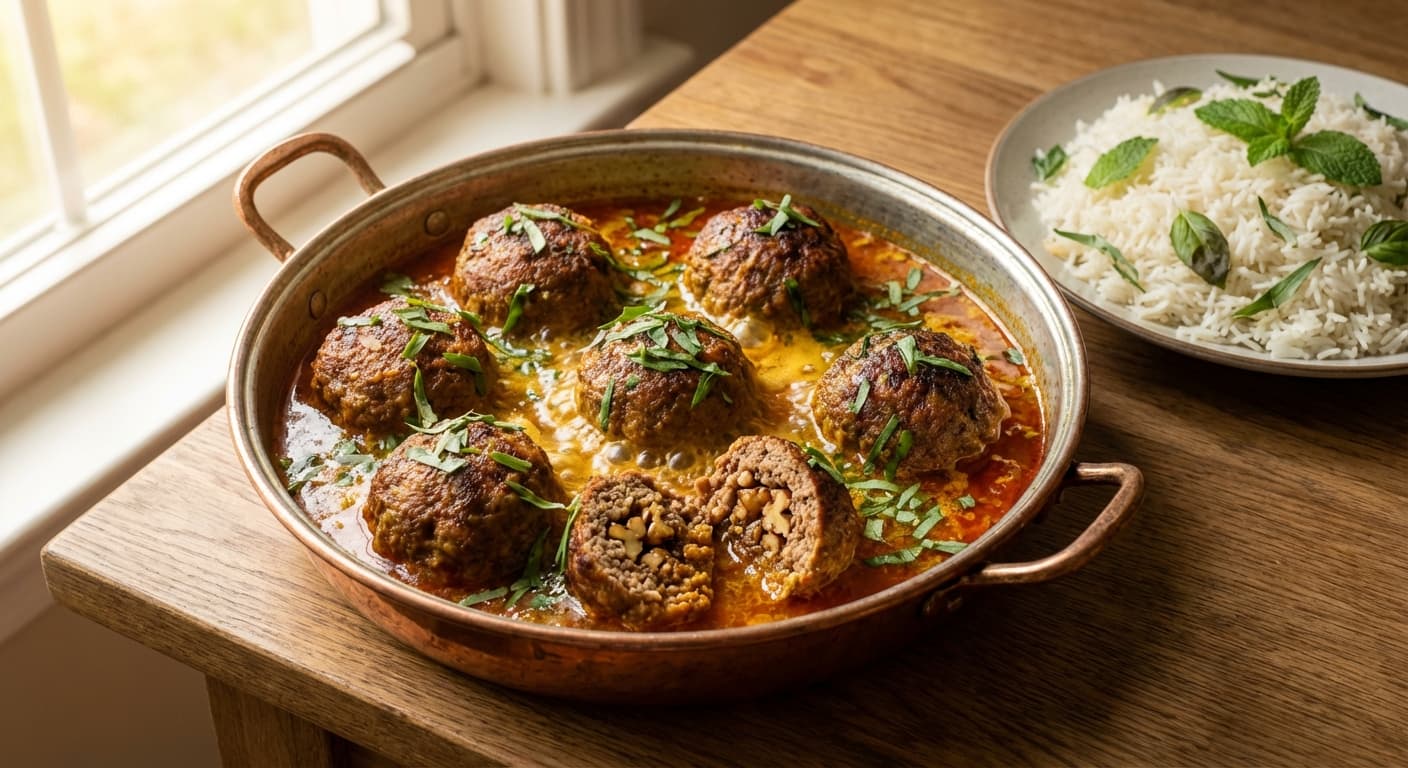
Kofta Tarkhan (کوفته ترخون) — Persian Tarragon-Stuffed Meatballs in Saffron Tomato Broth
A refined specialty from Iranian Azerbaijan, Kofta Tarkhan pairs tender meatballs with the anise-like perfume of fresh tarragon. Each kofta is hand-formed around a walnut-onion filling, then simmered in a saffron-tomato broth.
Printable Recipe Card
Servings: 6 · Total: 90 min · Difficulty: hard
Ingredients (quick list)
- 700 g Ground lamb (or ground beef, 15% fat) (Lamb is more traditional in many Azerbaijani-style kofta)
- 220 g Cooked basmati rice (Fully cooled; about 1 1/4 cups cooked)
- 2 Large egg (Helps bind and prevent cracking)
- 35 g Fresh tarragon leaves, finely chopped (About 1 packed cup leaves)
- 180 g Yellow onion, grated (Squeeze lightly to remove excess liquid)
- 10 g Fine salt (About 1 3/4 tsp)
- 1 tsp Black pepper, ground
- 1 tsp Turmeric, ground
- 30 ml Vegetable oil (About 2 tbsp)
- 80 g Crispy fried onions (piaz dagh) (Homemade or store-bought)
- 70 g Walnuts, chopped (Chop to pea-size so the center stays cohesive)
- 60 g Tomato paste (About 4 tbsp)
+ 3 more in the full ingredients section below.
Steps (summary)
- Prepare the saffron by grinding the threads and steeping them in 30 ml hot water for 10 minutes. Keep it covered so the aroma s…
- Make the filling by mixing the crispy fried onions and chopped walnuts in a small bowl until evenly combined. Press the mixture…
- In a large bowl, combine the ground meat, cooled cooked rice, eggs, chopped tarragon, grated onion, salt, pepper, and turmeric.…
- Divide the kofta mixture into 6 equal portions (about 190–200 g each) and keep your hands lightly wet to reduce sticking. Flatt…
- Shape each kofta into a smooth, compact ball and gently compress it to remove air pockets. Place the formed kofta on a tray, th…
- Build the broth in a wide pot by heating the vegetable oil over medium heat. Add the tomato paste and fry it for 2–3 minutes, s…
+ 4 more steps in the full instructions section below.
Cultural Background
Kofta in Iranian Azerbaijan is a celebratory craft, shaped by hand and simmered slowly so each piece stays intact. Kofta Tarkhan highlights tarragon, a prized herb in the region, pairing its perfume with saffron and tomato for an elegant, festive stew.
Equipment
💡 Tips
- Knead the kofta mixture for 4–5 minutes until it becomes tacky; under-kneading is the most common reason kofta crumble in the pot.
- Keep the broth at a gentle simmer (small bubbles only) and avoid stirring with a spoon; instead, shake the pot to move the kofta safely.
- Chill the shaped kofta for 15 minutes before cooking to help the exterior seal and reduce cracking.
⚠️ Common Mistakes
❌ Boiling the broth hard after adding the kofta, causing cracks and breakage.
✅ Fix: Keep the liquid at a gentle simmer and move kofta by shaking the pot, not stirring.
❌ Wet, loose mixture from watery onion or warm rice.
✅ Fix: Squeeze grated onion lightly and use fully cooled rice; knead until sticky and cohesive.
❌ Filling leaking into the broth.
✅ Fix: Compress the filling into a clump and seal the meat layer completely with no seams or air pockets.
🧊 How to Store
Cool leftovers within 2 hours, then refrigerate in broth in a sealed container for up to 3 days. Reheat covered over low heat with 60 ml water added, keeping the simmer gentle so the kofta do not crack; avoid microwaving at high power.
📅 Make Ahead
Form and stuff the kofta up to 24 hours ahead and refrigerate on a tray, covered, so they firm up. You can also fry the tomato paste base and refrigerate it separately, then reheat with water before simmering the kofta.
🍽️ Pairs Well With
- Steamed basmati rice
- sabzi khordan herbs
- torshi
- lavash
- pickled garlic.
Regional Variations
- Some households in Tabriz add a small amount of dried barberry (10 g) to the filling for a tart pop against the rich meat.
- In Ardabil-style versions, the broth may be slightly thicker with extra tomato paste (an additional 15 g) and a touch more turmeric for deeper color.
- A few cooks include a small boiled egg half inside each kofta for a more ceremonial, banquet-style presentation.
Ingredients
- 700 gGround lamb (or ground beef, 15% fat) (Lamb is more traditional in many Azerbaijani-style kofta)
- 220 gCooked basmati rice (Fully cooled; about 1 1/4 cups cooked)
- 2Large egg (Helps bind and prevent cracking)
- 35 gFresh tarragon leaves, finely chopped (About 1 packed cup leaves)
- 180 gYellow onion, grated (Squeeze lightly to remove excess liquid)
- 10 gFine salt (About 1 3/4 tsp)
- 1 tspBlack pepper, ground
- 1 tspTurmeric, ground
- 30 mlVegetable oil (About 2 tbsp)
- 80 gCrispy fried onions (piaz dagh) (Homemade or store-bought)
- 70 gWalnuts, chopped (Chop to pea-size so the center stays cohesive)
- 60 gTomato paste (About 4 tbsp)
- 900 mlWater (Add 100 ml more if you prefer extra broth)
- 30 mlBloomed saffron (saffron threads steeped in hot water) (Made from 0.2 g saffron + 30 ml hot water)
- 10 gFresh tarragon leaves (Torn or roughly chopped)
🔄 Substitutions
- Ground lamb→ Ground beef (15% fat)
- Fresh tarragon→ Fresh dill (25 g) plus fresh mint (10 g)
- Walnuts→ Pistachios
Instructions
- 1
Prepare the saffron by grinding the threads and steeping them in 30 ml hot water for 10 minutes. Keep it covered so the aroma stays trapped, then set it aside until the broth is ready.
- 2
Make the filling by mixing the crispy fried onions and chopped walnuts in a small bowl until evenly combined. Press the mixture firmly with a spoon so it clumps slightly; this helps it stay centered inside the kofta.
- 3
In a large bowl, combine the ground meat, cooled cooked rice, eggs, chopped tarragon, grated onion, salt, pepper, and turmeric. Knead vigorously for 4–5 minutes until the mixture becomes sticky and cohesive; this protein development is what prevents the meatballs from falling apart.
- 4
Divide the kofta mixture into 6 equal portions (about 190–200 g each) and keep your hands lightly wet to reduce sticking. Flatten one portion in your palm, place about 1 heaped tablespoon of the walnut-onion filling in the center, then wrap and seal the meat around it completely with no cracks.
- 5
Shape each kofta into a smooth, compact ball and gently compress it to remove air pockets. Place the formed kofta on a tray, then refrigerate for 15 minutes so the surface firms up before simmering.
- 6
Build the broth in a wide pot by heating the vegetable oil over medium heat. Add the tomato paste and fry it for 2–3 minutes, stirring constantly, until it darkens slightly and smells sweet rather than raw.
- 7
Pour in the water and whisk well to dissolve the tomato paste completely, then add the broth salt. Bring the liquid to a gentle boil, then reduce to a steady simmer; the surface should barely bubble, because a hard boil can crack the kofta.
- 8
Lower the chilled kofta into the simmering broth one by one, leaving space between them so they do not bump and break. Cover the pot partially and simmer for 40 minutes, gently shaking the pot occasionally instead of stirring directly.
- 9
Add the bloomed saffron to the pot and simmer for 10 more minutes so the broth turns golden and aromatic. Spoon broth over the tops of the kofta a few times; this helps them cook evenly without flipping.
- 10
Turn off the heat and rest the pot, covered, for 10 minutes so the kofta set and the filling stays juicy. Finish with the remaining fresh tarragon, then serve each kofta with a ladle of saffron-tomato broth.
🪪 Recipe Passport
Cultural Background
Kofta in Iranian Azerbaijan is a celebratory craft, shaped by hand and simmered slowly so each piece stays intact. Kofta Tarkhan highlights tarragon, a prized herb in the region, pairing its perfume with saffron and tomato for an elegant, festive stew.
Regional Variations
Researched from multiple sources and validated by the Zaffaron editorial team. Every recipe is tested for accuracy, measurements, and cultural authenticity.
Nutrition per serving
Pairs well with
If you enjoyed this recipe, here are a few related Zaffaron recipes to try next.
Does your family make this differently?
Every family has their own version. Maybe your grandmother adds a secret ingredient, or your aunt has a completely different technique. Preserve your family's version — with their name on it, forever.
You Might Also Like
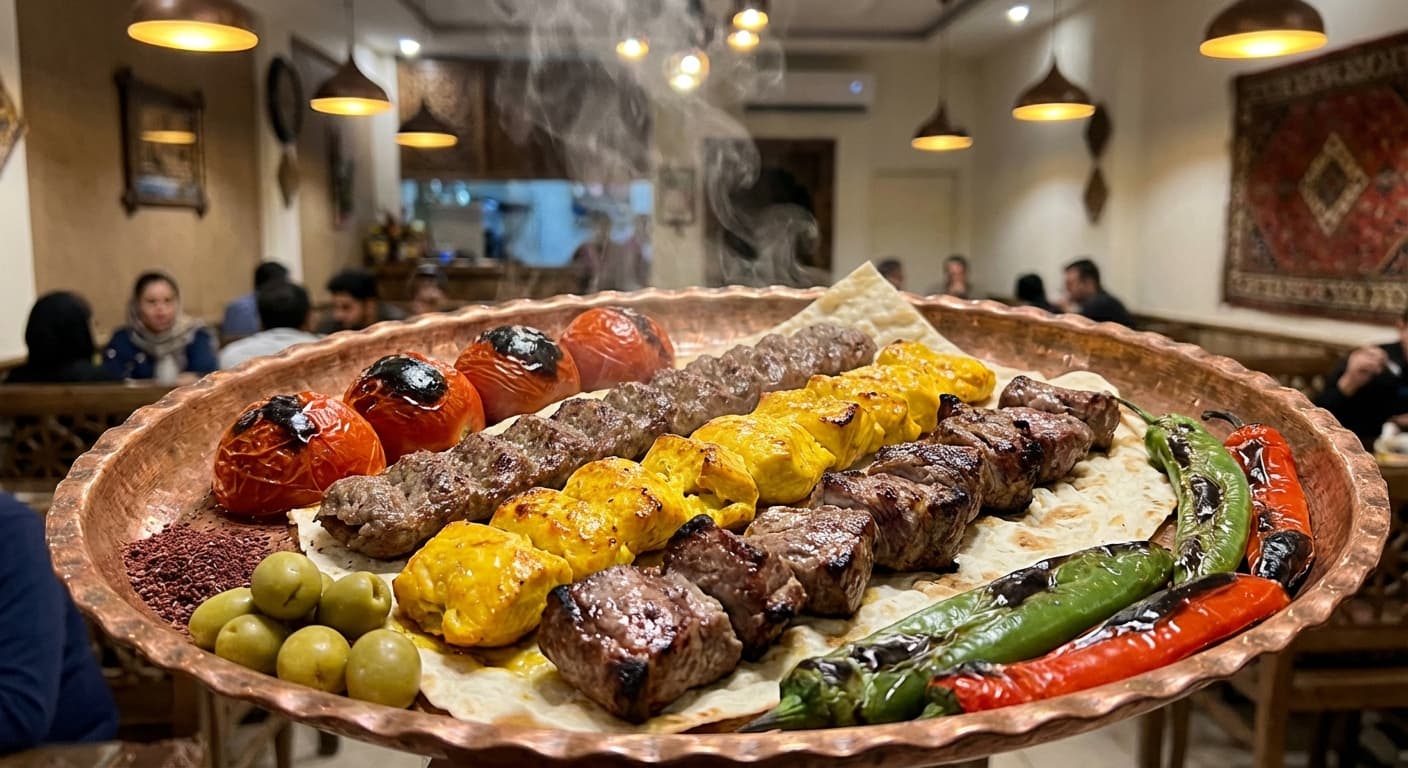
Kabab Vijeh (کباب ویژه) — Royal Persian Mixed Grill Platter
Persian · Kebabs · 70 min
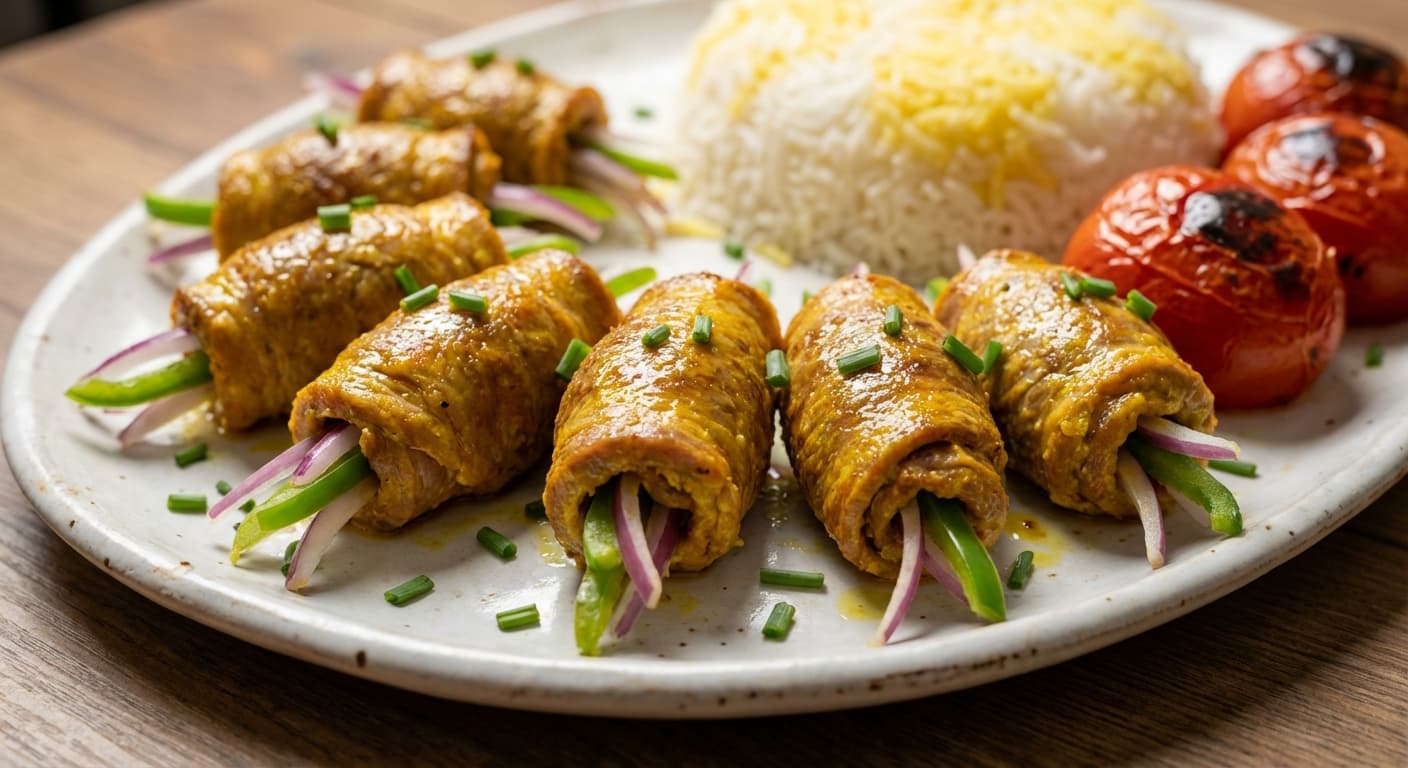
Bulgar Kabab (کباب بلغار) — Persian Rolled Saffron Fillets
Persian · Kebabs · 37 min
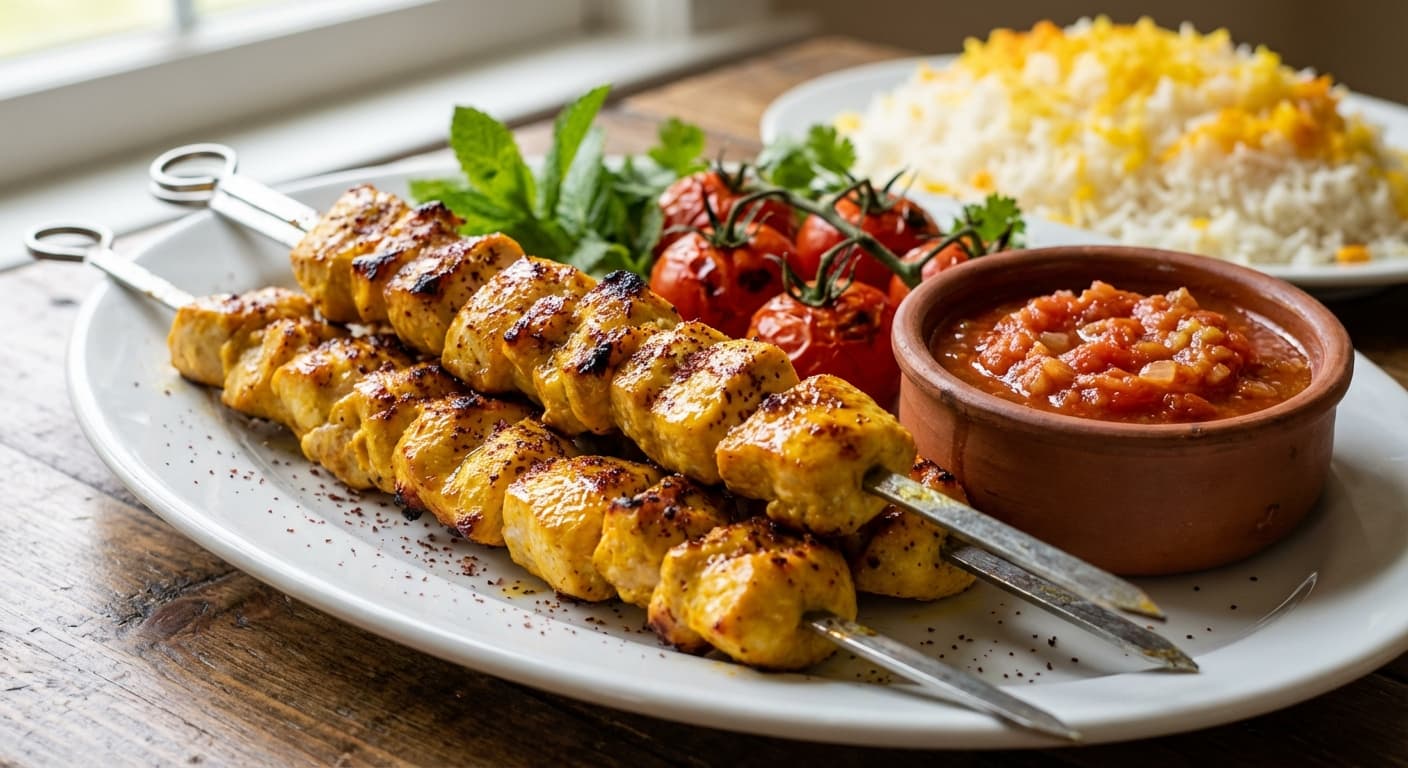
Jujeh Kabab (جوجه کباب) — Saffron-Turmeric Chicken with Rustic Tomato Sauce
Persian · Kebabs · 45 min
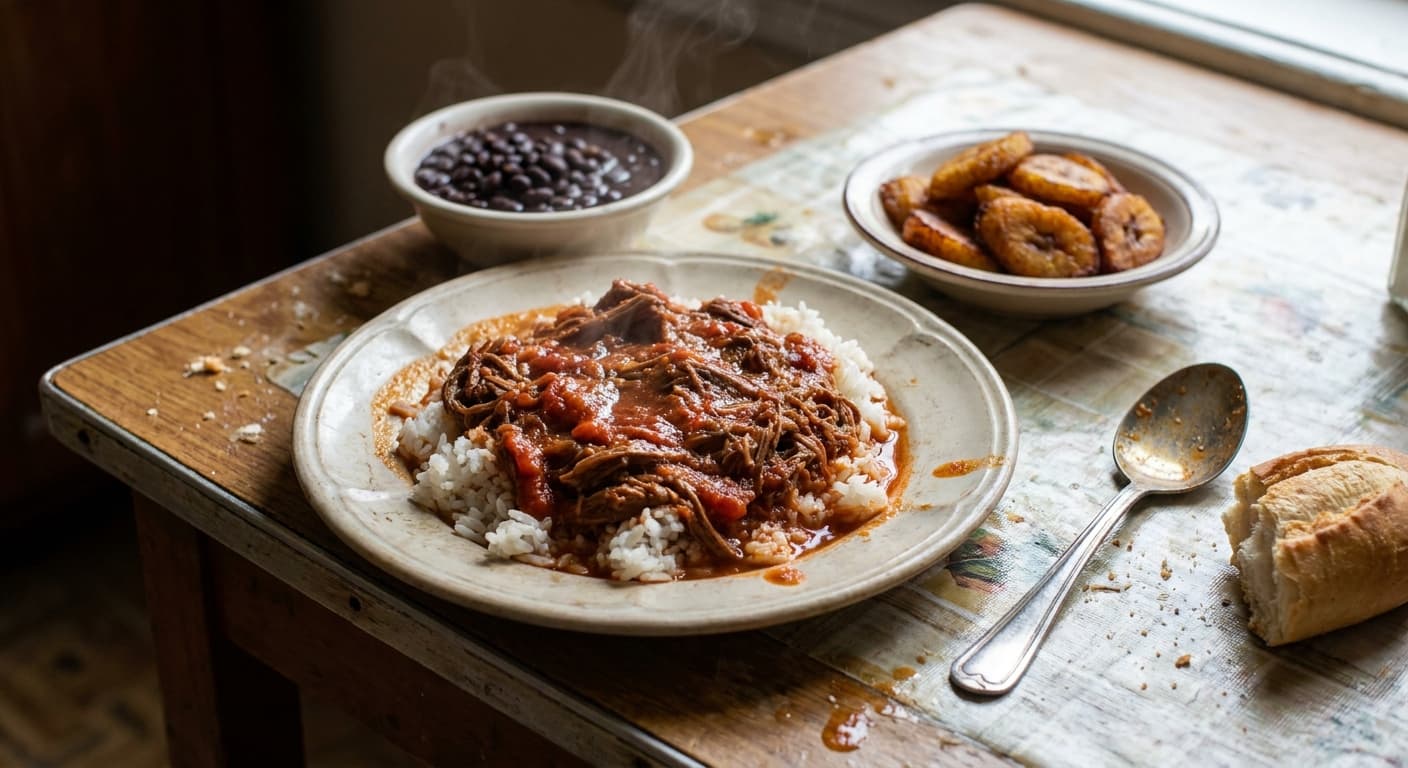
Cuban Ropa Vieja (Ropa Vieja) — Shredded Beef in Tomato-Pepper Sauce
Cuban · Stews · 190 min
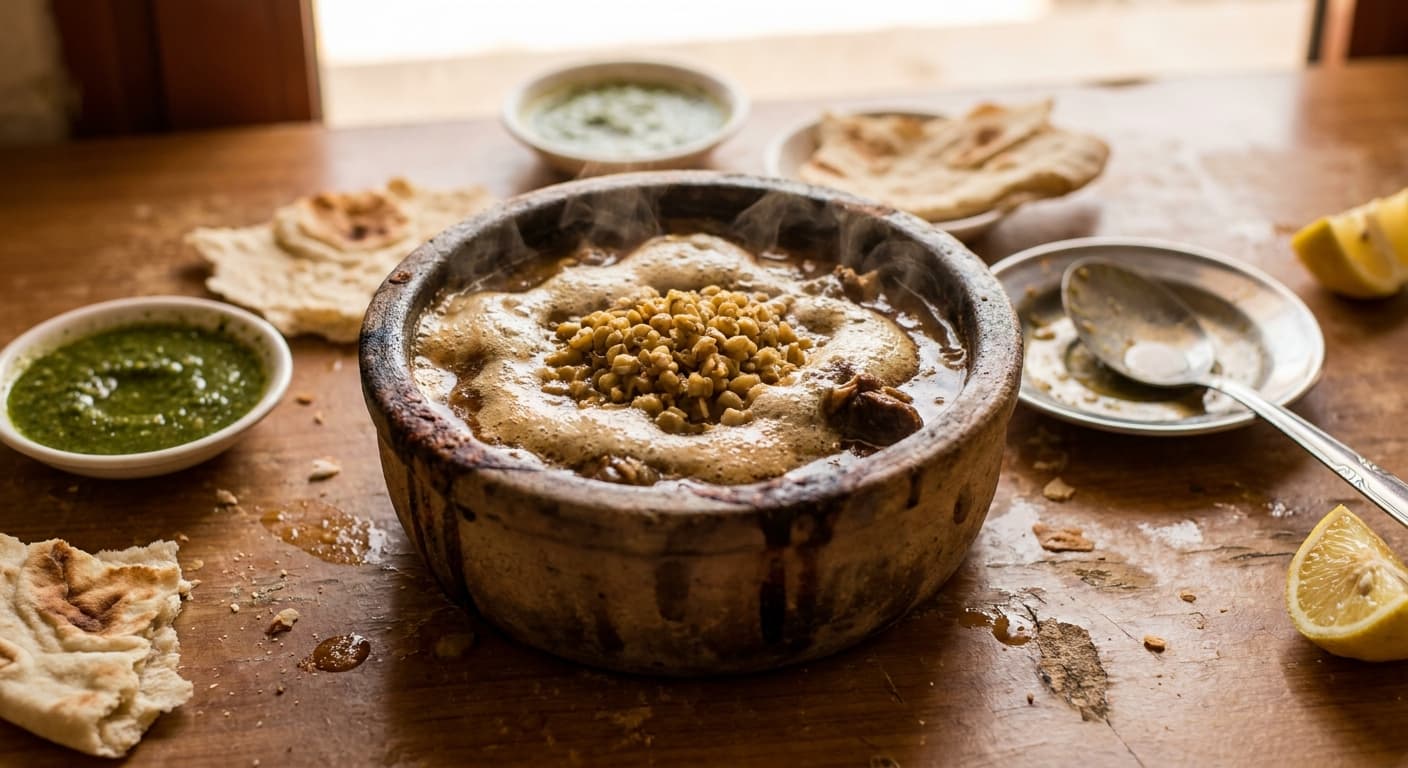
Yemeni Saltah (سلتة) — Bubbling Fenugreek Lamb Stew
Yemeni · Stews · 130 min
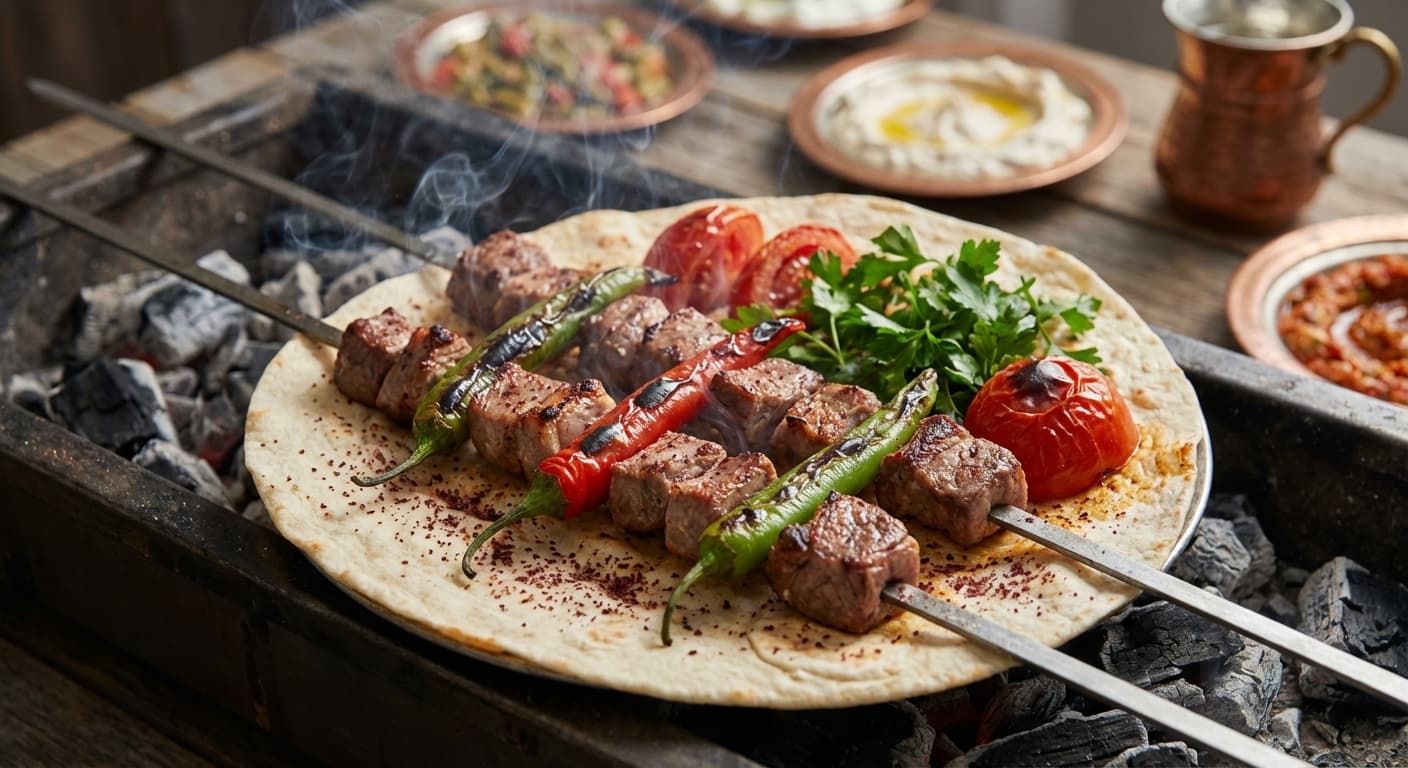
Turkish Shish Kebab (Şiş Kebap) — Charcoal-Grilled Marinated Lamb Skewers
Turkish · Kebabs · 37 min
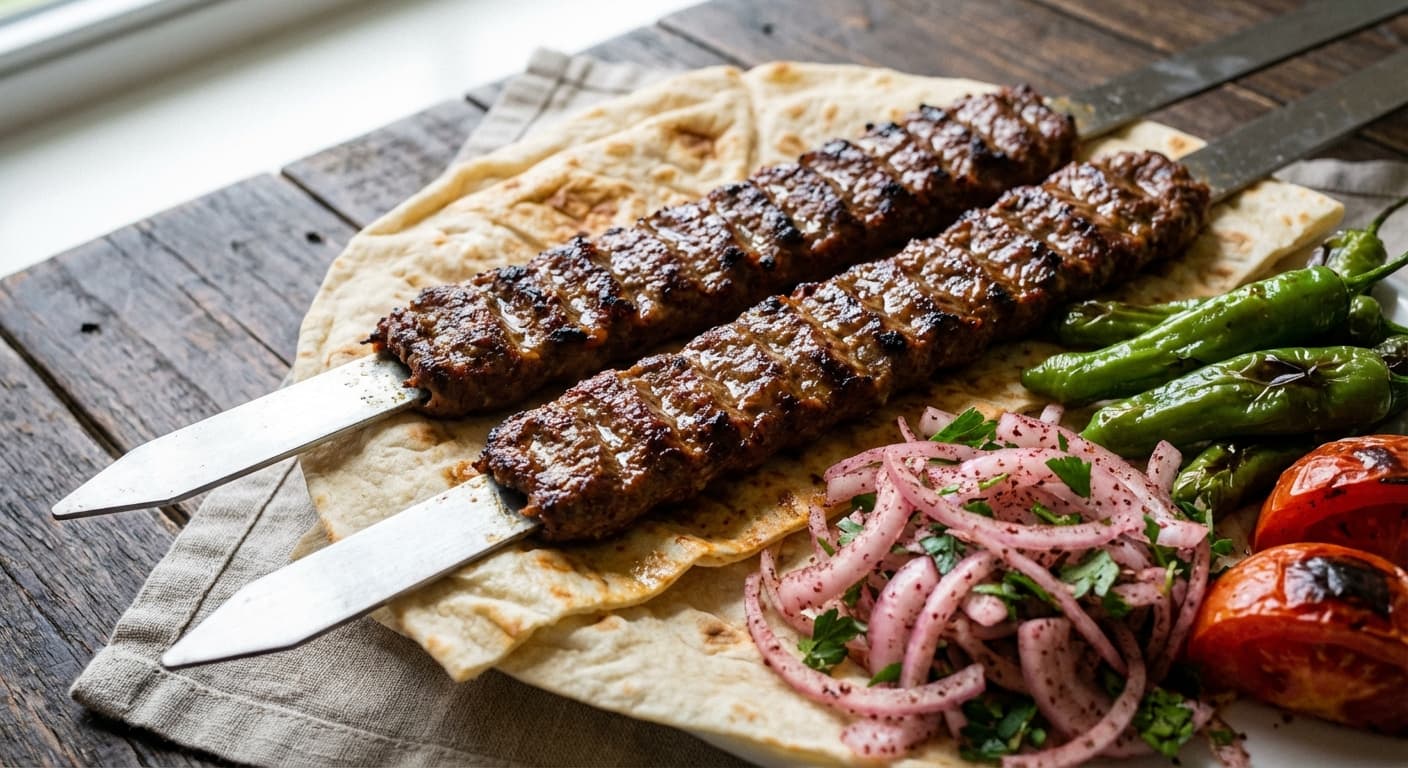
Urfa Kebab (اورفا کباب) — Mild Turkish minced skewer with sumac onions
Turkish · Kebabs · 37 min
Callaloo (Callaloo) — Trinidadian Coconut Greens with Crab
Trinidadian · Side Dishes · 75 min
Reviews
Cooked this recipe?
Tap the stars to rate it — that's all it takes. A few words are welcome but optional.
No ratings yet. Cooked this one? Be the first to rate it — it takes one tap.