Kuku Bademjan (کوکو بادمجان) — Persian Grilled Eggplant Frittata
Kuku Bademjan is a smoky Persian eggplant frittata made with fire-roasted eggplant, sautéed onion, eggs, and turmeric. It’s velvety and tender inside with a crisp edge—ideal as a light lunch, appetizer, or picnic dish.
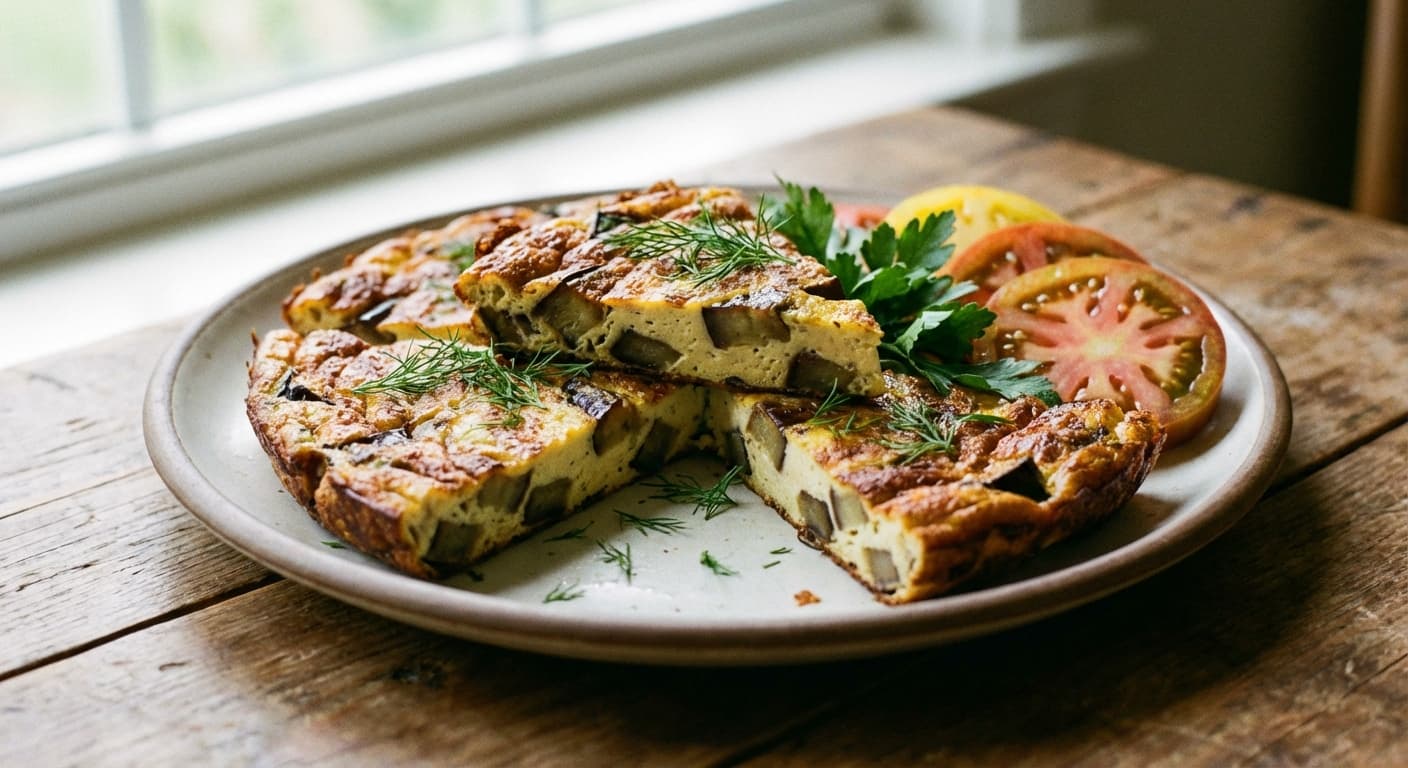
Printable Recipe Card
Servings: 6 · Total: 70 min · Difficulty: medium
Ingredients (quick list)
- 900 g Globe eggplants (about 2 large; for roasting until skin is charred)
- 200 g Yellow onion (finely diced)
- 60 ml Vegetable oil (divided (2 tbsp for onion, 2 tbsp for frying kuku))
- 7 g Fine salt (1 1/4 tsp, divided)
- 2 g Ground turmeric (1 tsp)
- 1 g Ground black pepper (1/2 tsp)
- 6 Large eggs (room temperature for best emulsification)
Steps (summary)
- Fire-roast the eggplants for deep smokiness. Set 2 large eggplants directly over a gas flame on medium-high, turning every 2–3…
- Steam, peel, and drain to avoid a watery kuku. Transfer roasted eggplants to a bowl and cover tightly for 10 minutes to steam.…
- Build flavor by browning the onion. Heat 30 ml (2 tbsp) vegetable oil in a 25 cm/10 in nonstick skillet over medium heat. Add d…
- Mix the batter without overworking. In a bowl, whisk 6 eggs for 20–30 seconds until uniform. Add mashed eggplant, sautéed onion…
- Fry gently for a custardy center and crisp edges. Wipe out the skillet, then heat remaining 30 ml (2 tbsp) oil over medium-low.…
- Flip safely and finish cooking through. Slide the kuku onto a plate, place the skillet upside down over it, and invert to retur…
Cultural Background
Kuku is a broad family of Persian egg-based dishes commonly served as a light meal, appetizer, or picnic food. Kuku Bademjan highlights the long-standing use of roasted eggplant in Iranian home cooking, where charring over fire is valued for its smoky depth and soft, creamy texture.
Equipment
💡 Tips
- For maximum smokiness, roast directly over a gas flame; for electric stoves, use the broiler and let the eggplants get deeply blistered before peeling.
- Draining the eggplant is key—excess moisture makes the kuku fragile and prevents browning.
- Keep the heat medium-low while frying so the eggs set gently without burning the bottom.
- If the mixture looks loose, rest it 10 minutes; eggplant continues to absorb liquid and thickens the batter.
- A nonstick skillet makes flipping easier; if using stainless steel, preheat well and ensure enough oil to prevent sticking.
⚠️ Common Mistakes
❌ Not roasting the eggplants until fully collapsed and deeply blistered
💡 Why: Undercooked eggplant stays spongy and bland, and it won’t mash into a velvety base.
✅ Fix: Keep roasting until the skin is evenly charred and the eggplant feels very soft when pressed; extend time by 3–5 minutes if needed.
❌ Skipping the draining step after peeling
💡 Why: Excess water makes the mixture loose, causes sticking, and prevents browning.
✅ Fix: Drain in a sieve for 10 minutes and press gently; if still wet, drain 5 minutes longer before mixing with eggs.
❌ Cooking over too high heat
💡 Why: The outside browns before the center sets, leading to a burnt crust and undercooked eggs.
✅ Fix: Use medium-low heat and cover for the first side; if browning too fast, lower heat and add 1–2 tbsp water to the pan, then cover briefly.
❌ Flipping too early
💡 Why: A soft center can tear, making the kuku break apart.
✅ Fix: Wait until edges are set and the top looks mostly firm; loosen edges with a spatula before inverting.
🧊 How to Store
Cool completely, then refrigerate in an airtight container for up to 4 days. Reheat in a covered skillet over low heat for 5–7 minutes or in a 160°C/325°F oven for 10–12 minutes. Freeze tightly wrapped slices up to 2 months; thaw overnight in the refrigerator before reheating.
📅 Make Ahead
Roast, peel, and drain the eggplants up to 2 days ahead and refrigerate in an airtight container. You can also sauté the onion 1 day ahead. Mix with eggs just before frying for the best rise; cooked kuku keeps well and tastes great at room temperature.
🍽️ Pairs Well With
- Flatbread or lavash-style bread
- Plain yogurt or a yogurt-cucumber side
- Fresh herbs and sliced tomatoes
- Pickles and olives
- A simple salad with lemon and olive oil
Regional Variations
- Northern Iran (Caspian-influenced home cooking)Often cooked a bit thicker and served with abundant fresh herbs and acidic sides (such as pickles) to balance the richness of egg and eggplant.
- Urban Tehran-style home kitchensCommonly made as a flatter, pan-sized round for easy slicing, sometimes cooked with a slightly higher onion ratio for sweetness and a more pronounced golden color from turmeric.
Ingredients
- 900 gGlobe eggplants (about 2 large; for roasting until skin is charred)
- 200 gYellow onion (finely diced)
- 60 mlVegetable oil (divided (2 tbsp for onion, 2 tbsp for frying kuku))
- 7 gFine salt (1 1/4 tsp, divided)
- 2 gGround turmeric (1 tsp)
- 1 gGround black pepper (1/2 tsp)
- 6Large eggs (room temperature for best emulsification)
🔄 Substitutions
- Globe eggplants→ Italian eggplants
- Vegetable oil→ Light olive oil
- Yellow onion→ Shallots
Instructions
- 1
Fire-roast the eggplants for deep smokiness. Set 2 large eggplants directly over a gas flame on medium-high, turning every 2–3 minutes with tongs until the skins are evenly blistered and the flesh collapses, 12–18 minutes total. If using an oven, broil at 260°C/500°F, turning once, 25–35 minutes.
- 2
Steam, peel, and drain to avoid a watery kuku. Transfer roasted eggplants to a bowl and cover tightly for 10 minutes to steam. Peel off the charred skin, trim the stem, then place the flesh in a sieve over a bowl. Press gently and drain 10 minutes, then chop finely or mash to a coarse purée.
- 3
Build flavor by browning the onion. Heat 30 ml (2 tbsp) vegetable oil in a 25 cm/10 in nonstick skillet over medium heat. Add diced onion and cook, stirring often, until soft and lightly golden, 8–10 minutes. Stir in turmeric for 30 seconds to bloom, then remove from heat to cool 5 minutes.
- 4
Mix the batter without overworking. In a bowl, whisk 6 eggs for 20–30 seconds until uniform. Add mashed eggplant, sautéed onion, salt, and black pepper. Fold with a spatula until evenly combined; the mixture should be thick and spoonable, not runny. Rest 5 minutes so the eggplant absorbs seasoning.
- 5
Fry gently for a custardy center and crisp edges. Wipe out the skillet, then heat remaining 30 ml (2 tbsp) oil over medium-low. Pour in the mixture and spread evenly. Cover with a lid and cook until the edges set and the center is mostly firm, 10–12 minutes, rotating the pan once for even heat.
- 6
Flip safely and finish cooking through. Slide the kuku onto a plate, place the skillet upside down over it, and invert to return the kuku to the pan. Cook uncovered over medium-low until the second side is golden and the center reaches 71°C/160°F, 6–8 minutes. Rest 10 minutes, then slice into wedges.
🪪 Recipe Passport
Cultural Background
Kuku is a broad family of Persian egg-based dishes commonly served as a light meal, appetizer, or picnic food. Kuku Bademjan highlights the long-standing use of roasted eggplant in Iranian home cooking, where charring over fire is valued for its smoky depth and soft, creamy texture.
Regional Variations
Researched from multiple sources and validated by the Zaffaron editorial team. Every recipe is tested for accuracy, measurements, and cultural authenticity.
Nutrition per serving
Pairs well with
If you enjoyed this recipe, here are a few related Zaffaron recipes to try next.
Does your family make this differently?
Every family has their own version. Maybe your grandmother adds a secret ingredient, or your aunt has a completely different technique. Preserve your family's version — with their name on it, forever.
You Might Also Like
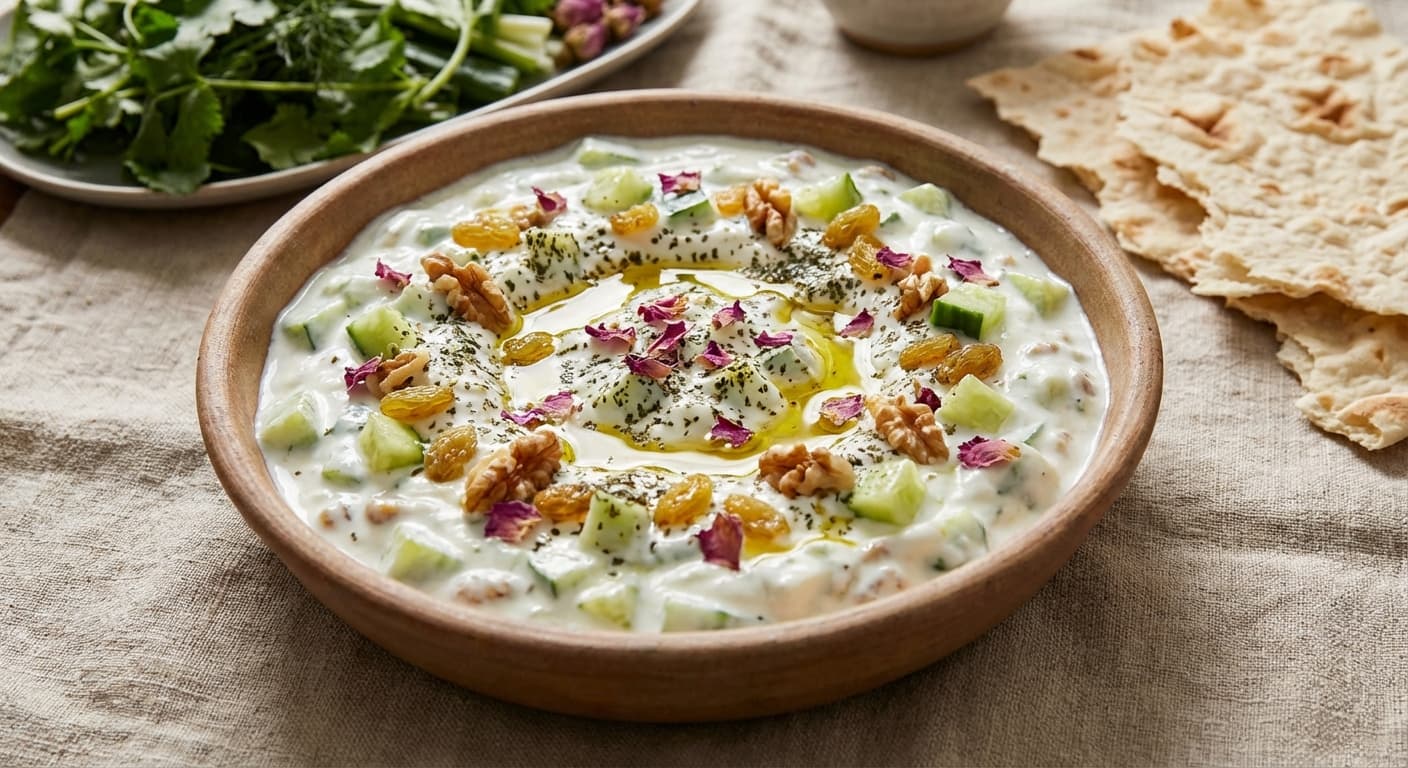
Mast-o-Khiar (ماست و خیار) — Persian Cucumber and Herb Yogurt Dip
Persian · Side Dishes · 25 min
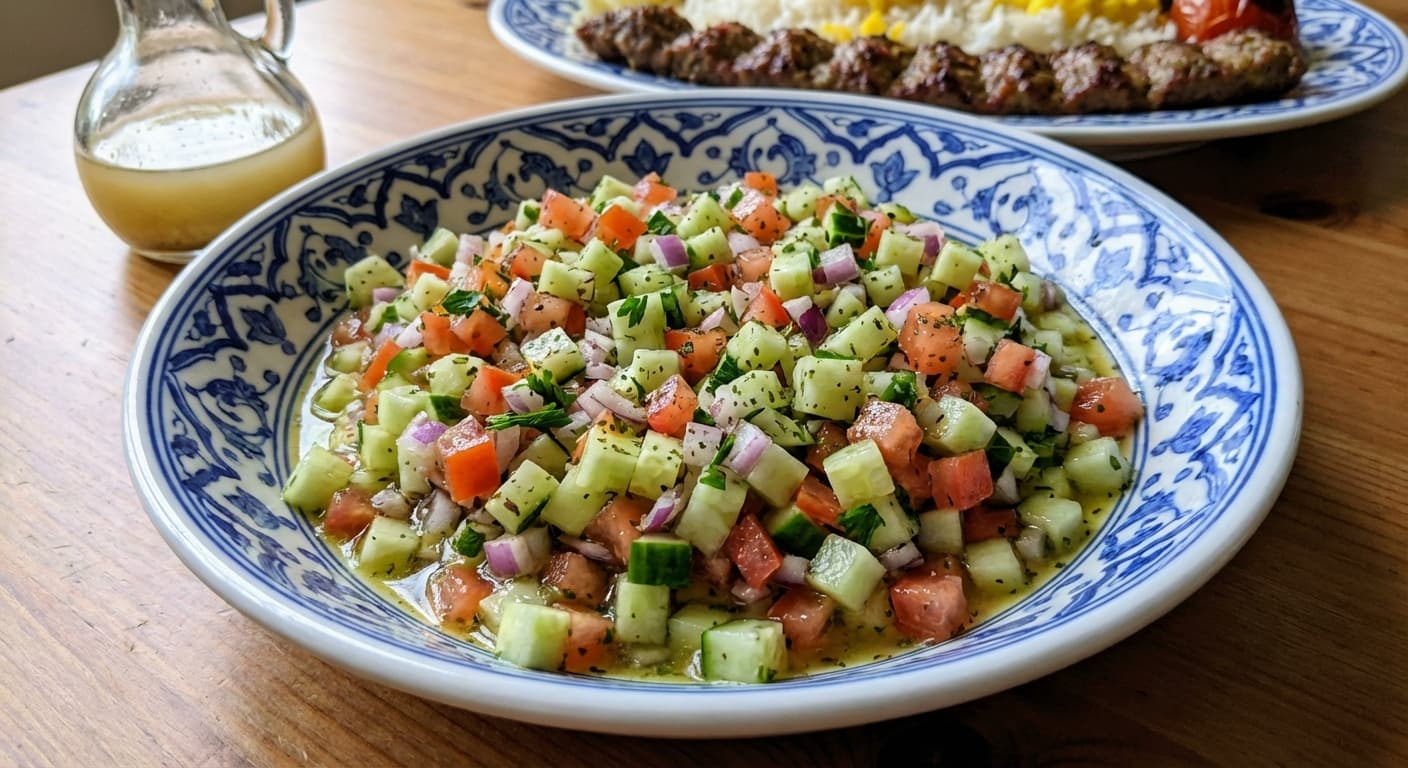
Shirazi Salad (سالاد شیرازی) — Brunoised cucumber-tomato herb salad with ab-ghooreh
Persian · Salads · 20 min
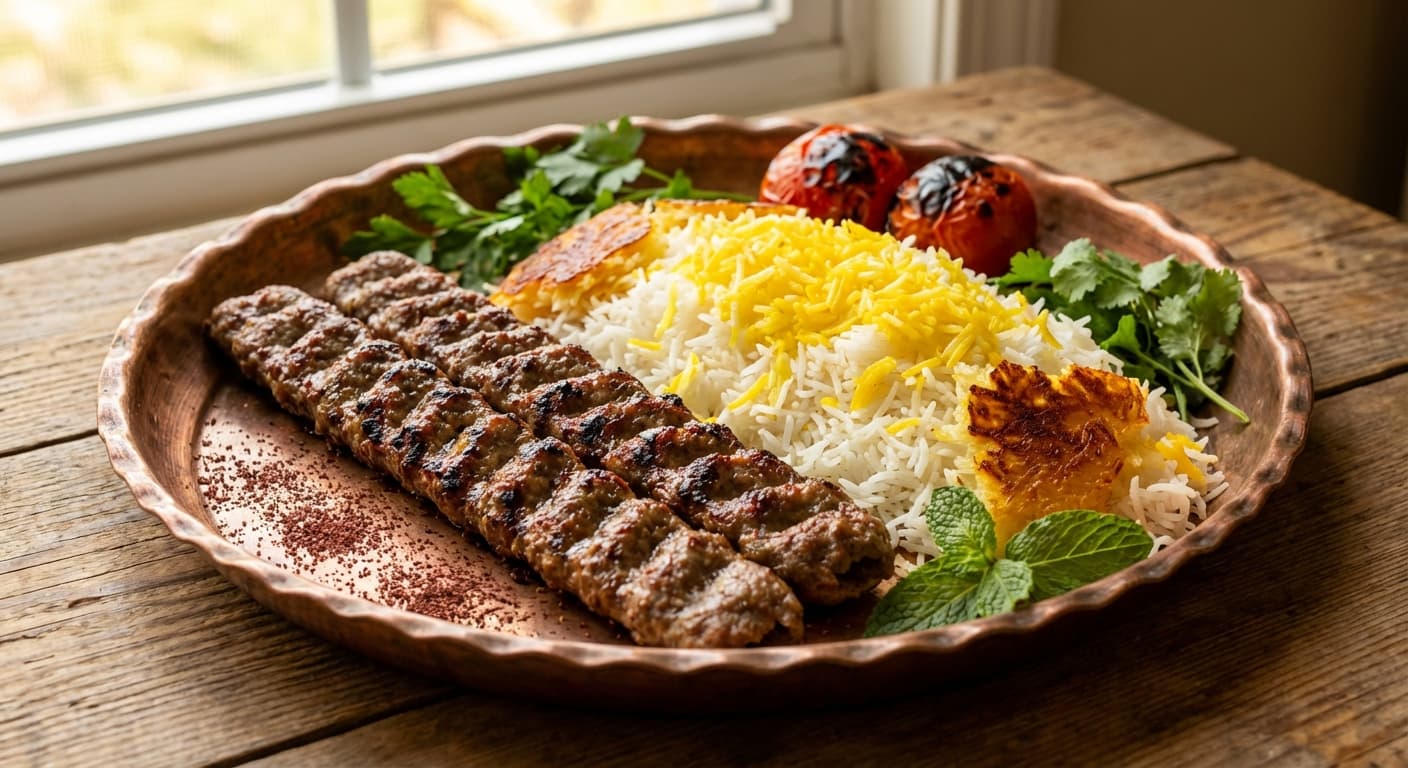
Chelo Kebab Koobideh (چلو کباب کوبیده) — Persian Minced Meat Skewers with Saffron Rice
Persian · Kebabs · 75 min
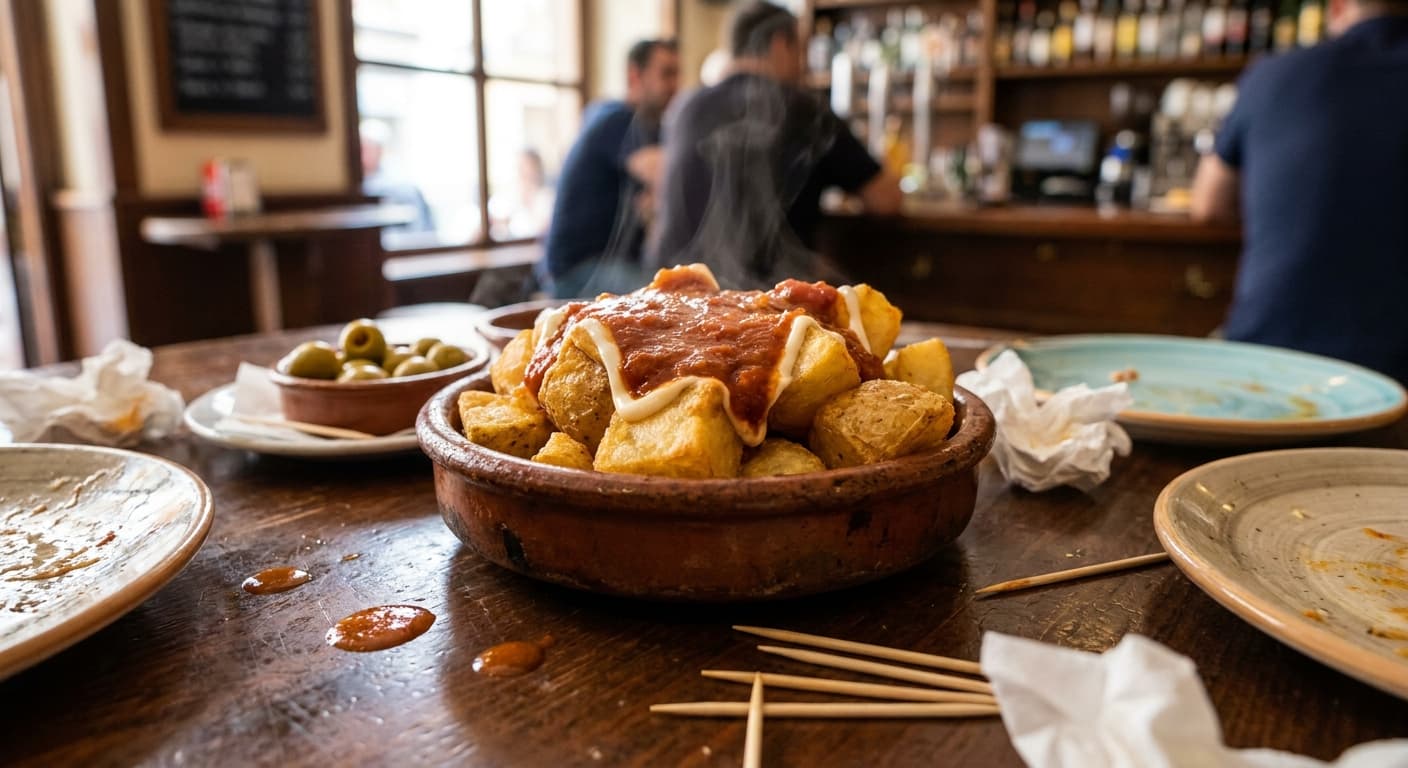
Patatas Bravas (Patatas bravas) — Crisp Spanish Tapas Potatoes with Spicy Brava Sauce
Spanish · Appetizers · 55 min

Besso (በሶ) — Ethiopian Roasted Barley Bites
Ethiopian · Appetizers · 20 min
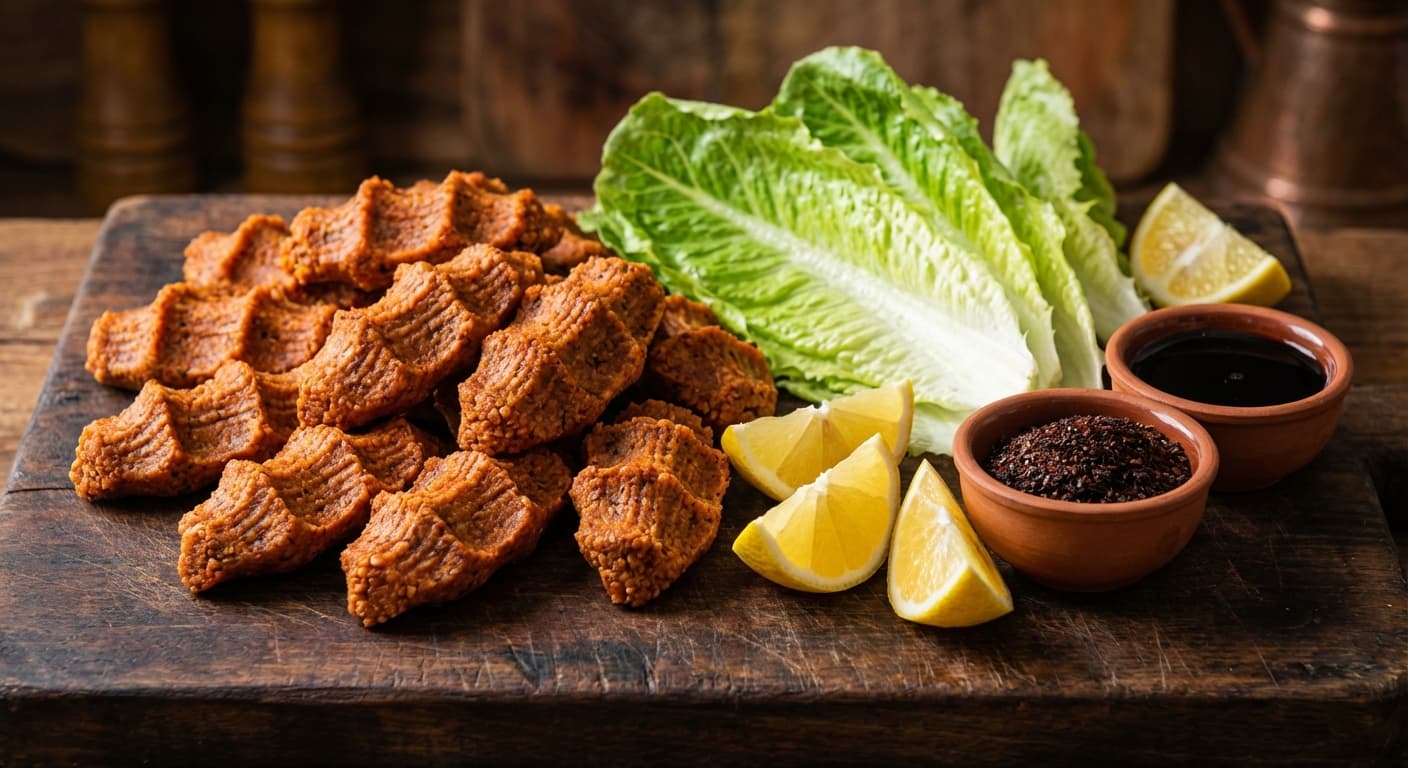
Cig Kofte (Çiğ Köfte) — Isot-kissed bulgur kneaded and served in lettuce
Turkish · Appetizers · 25 min
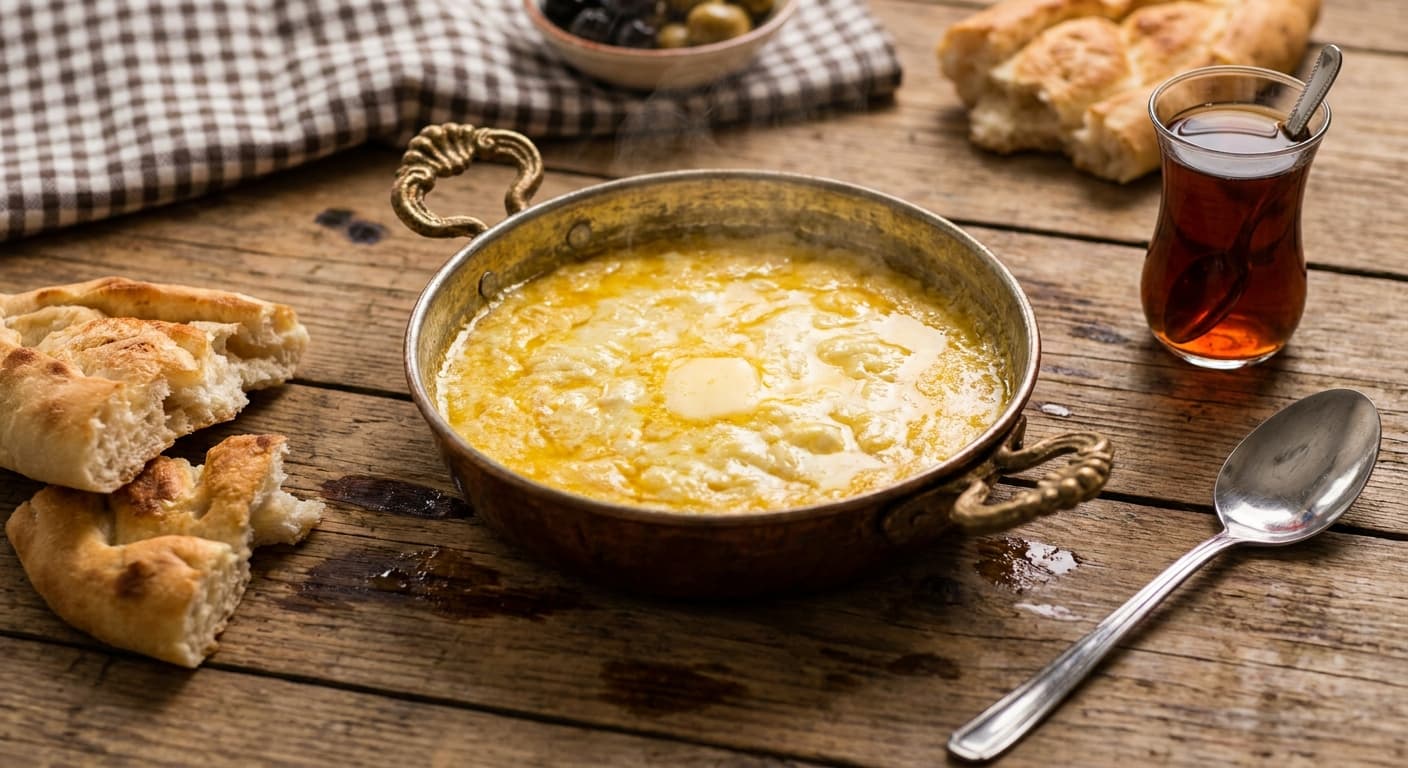
Mıhlama (Mıhlama) — Black Sea Cornmeal and Cheese Skillet
Turkish · Main Courses · 25 min
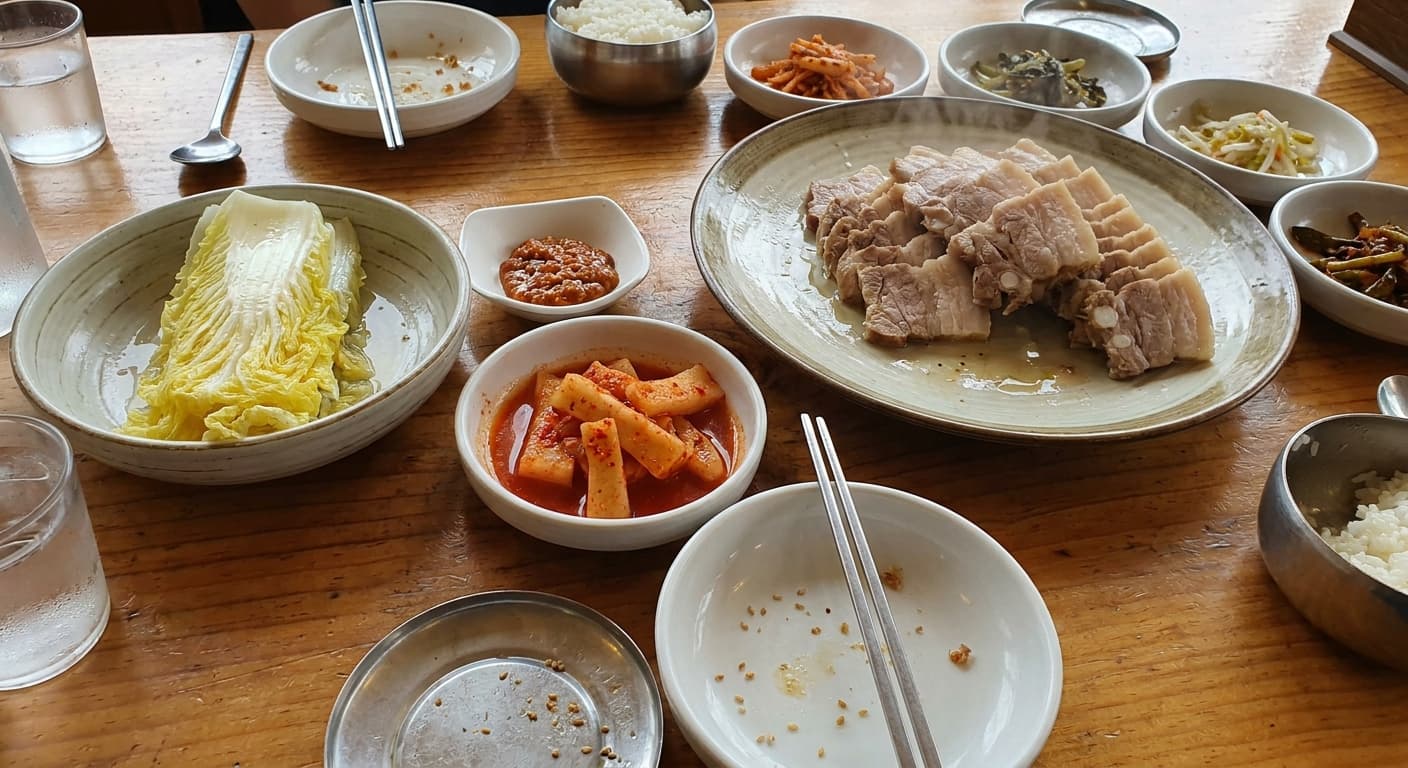
Bossam (보쌈) — Korean Boiled Pork Lettuce Wraps
Korean · Main Courses · 135 min
Reviews
Cooked this recipe?
Tap the stars to rate it — that's all it takes. A few words are welcome but optional.
No ratings yet. Cooked this one? Be the first to rate it — it takes one tap.