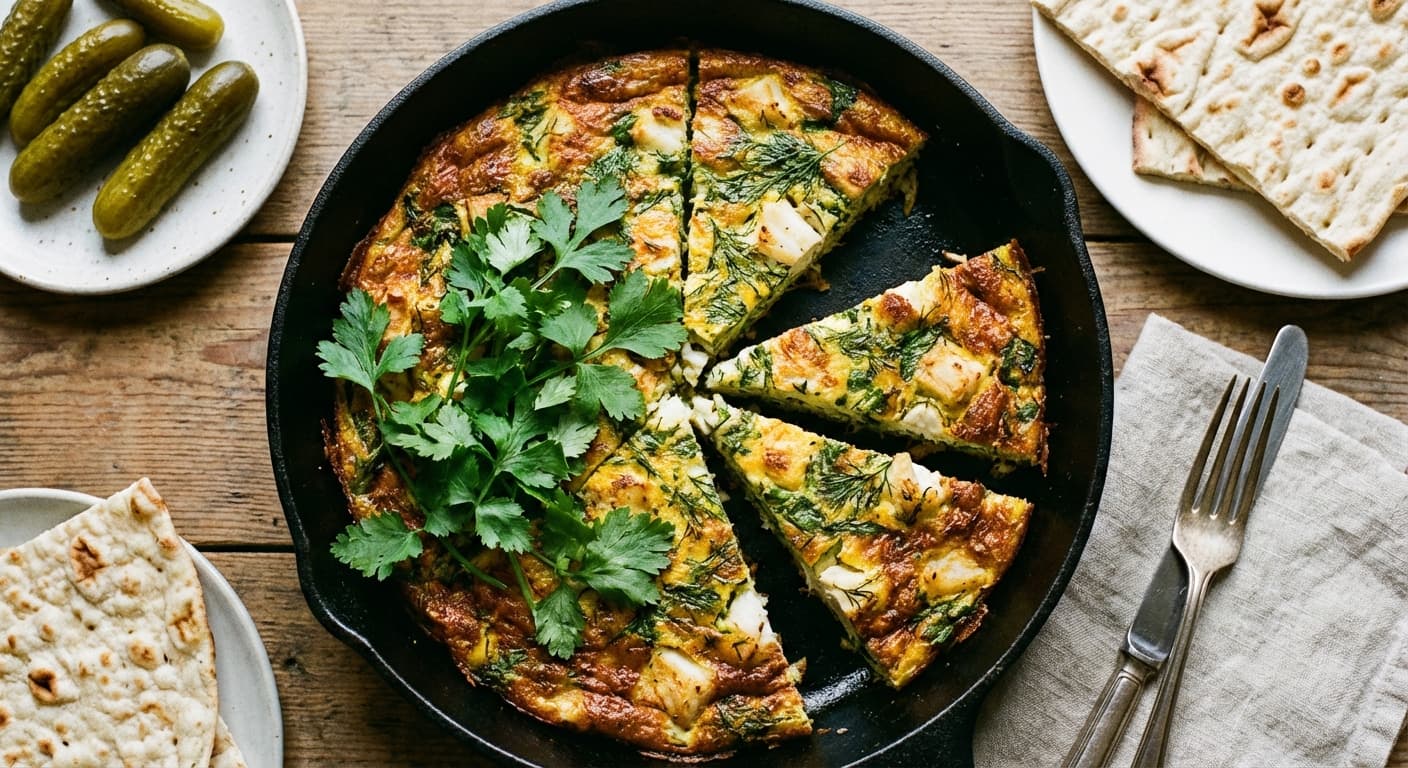
Kuku-ye Mahi (کوکو ماهی) — Persian Fish Frittata
A fluffy Northern Iranian-style fish frittata folded with fresh herbs, onion, and warm turmeric. Crisped in a skillet until golden, it’s fragrant, tender inside, and ideal with rice, bread, and pickles.
Printable Recipe Card
Servings: 4 · Total: 55 min · Difficulty: medium
Ingredients (quick list)
- 400 g White fish fillets (cod, haddock, or pollock), skinless and boneless (cut into 3 cm pieces)
- 6 g Salt (divided)
- 1 tsp Ground black pepper (divided)
- 1 tsp Ground turmeric
- 6 large Eggs (about 300 g without shells)
- 150 g Yellow onion (finely grated, then squeezed to remove excess juice)
- 40 g Fresh parsley (finely chopped (about 1 packed cup))
- 30 g Fresh cilantro (finely chopped (about 3/4 packed cup))
- 1 tsp Baking powder (for a lighter, fluffier texture)
- 60 ml Vegetable oil (for frying; use more as needed for the pan)
Steps (summary)
- Prepare the fish: pat the fillets very dry with paper towels, then cut into 3 cm pieces. In a bowl, toss fish with 3 g salt, 1/…
- Mix the kuku batter: in a large bowl whisk the eggs for 45–60 seconds until slightly foamy. Add the grated-and-squeezed onion,…
- Combine gently: add the seasoned fish pieces to the egg-and-herb mixture. Fold with a spatula for about 20–30 seconds, just unt…
- Pan-fry the first side: heat a 24–26 cm nonstick or well-seasoned skillet over medium heat for 2 minutes. Add 45 ml oil and hea…
- Flip and finish: run a spatula around the edges. Slide the kuku onto a plate, then invert back into the skillet with the uncook…
Cultural Background
Fish-based kuku is commonly associated with Iran’s northern coastal cooking, where fresh herbs and seafood are used together in everyday meals and gatherings. It is often served as a shared dish, sliced into wedges, and paired with rice, bread, and pickles during family meals and festive tables.
Equipment
💡 Tips
- Dry fish well before seasoning; excess moisture makes the kuku steam and turn soft instead of crisp.
- Squeezing grated onion is important—too much onion juice can prevent the center from setting cleanly.
- Keep the heat at medium; high heat browns the outside before the eggs cook through.
- For extra-crispy edges, uncover for the last 2 minutes of cooking on each side.
- If your skillet is small, cook as two smaller kuku to make flipping easier and ensure even cooking.
⚠️ Common Mistakes
❌ Skipping the step of squeezing grated onion
💡 Why: Onion juice adds excess water, which can make the kuku weep and stay undercooked in the center.
✅ Fix: Grate the onion, then press firmly in a strainer or towel until mostly dry before adding to eggs.
❌ Cooking on high heat to brown faster
💡 Why: The outside can burn while the eggs inside remain loose, especially with thicker kuku.
✅ Fix: Use steady medium heat and keep the pan covered for most of cooking to set the center gently.
❌ Overmixing after adding fish
💡 Why: Aggressive stirring breaks fish into paste-like flakes and can make the texture dense.
✅ Fix: Fold fish in briefly and gently; aim for small chunks distributed throughout the batter.
❌ Flipping too early
💡 Why: If the first side is not set, the kuku can crack and spill, leading to uneven cooking.
✅ Fix: Wait until edges are firm and the bottom is deep golden; loosen edges first, then flip using a plate.
🧊 How to Store
Cool completely, then refrigerate in an airtight container for up to 3 days. Reheat in a lightly oiled skillet over medium-low heat for 3–5 minutes per side, or in a 180°C oven for 8–10 minutes until hot. Freezing is possible up to 2 months, but the herb color may dull slightly.
📅 Make Ahead
Chop herbs and grate/squeeze onion up to 12 hours ahead and refrigerate separately in airtight containers. Mix the egg batter up to 1 hour ahead and keep chilled; fold in fish just before cooking for best texture. Cooked kuku can be made 1 day ahead and reheated in a skillet to restore crispness.
🍽️ Pairs Well With
- Steamed basmati rice
- Flatbread or lavash-style bread
- Pickled vegetables
- Plain yogurt or a yogurt-cucumber side
- Fresh herbs and sliced tomatoes
Regional Variations
- Gilan (Caspian coastal style)Often heavier on fresh herbs and onion, with a slightly thicker kuku cooked covered to keep the interior moist, then uncovered briefly to crisp the crust.
- Mazandaran (Caspian coastal style)Commonly made with mild white fish and a pronounced turmeric aroma; some cooks keep fish in larger chunks for a more distinct seafood texture.
Ingredients
- 400 gWhite fish fillets (cod, haddock, or pollock), skinless and boneless (cut into 3 cm pieces)
- 6 gSalt (divided)
- 1 tspGround black pepper (divided)
- 1 tspGround turmeric
- 6 largeEggs (about 300 g without shells)
- 150 gYellow onion (finely grated, then squeezed to remove excess juice)
- 40 gFresh parsley (finely chopped (about 1 packed cup))
- 30 gFresh cilantro (finely chopped (about 3/4 packed cup))
- 1 tspBaking powder (for a lighter, fluffier texture)
- 60 mlVegetable oil (for frying; use more as needed for the pan)
🔄 Substitutions
- White fish fillets (cod, haddock, or pollock)→ Canned tuna in water, drained well (300 g)
- Fresh parsley and fresh cilantro→ Frozen mixed herbs (70 g), thawed and squeezed very dry
- Vegetable oil→ Light olive oil or sunflower oil
Instructions
- 1
Prepare the fish: pat the fillets very dry with paper towels, then cut into 3 cm pieces. In a bowl, toss fish with 3 g salt, 1/2 tsp black pepper, and turmeric until evenly coated. Let stand 10 minutes at room temperature to season while you prep the herbs and onion.
- 2
Mix the kuku batter: in a large bowl whisk the eggs for 45–60 seconds until slightly foamy. Add the grated-and-squeezed onion, parsley, cilantro, baking powder, remaining 3 g salt, and remaining 1/2 tsp black pepper. Whisk 20 seconds more until the herbs are evenly suspended and the mixture looks uniform.
- 3
Combine gently: add the seasoned fish pieces to the egg-and-herb mixture. Fold with a spatula for about 20–30 seconds, just until coated. Avoid aggressive stirring so the fish stays in small chunks rather than shredding completely; this keeps the interior tender and gives distinct bites of fish.
- 4
Pan-fry the first side: heat a 24–26 cm nonstick or well-seasoned skillet over medium heat for 2 minutes. Add 45 ml oil and heat 30 seconds until shimmering. Pour in the mixture and spread evenly to about 2 cm thick. Cover and cook 8–10 minutes, until edges set and the bottom is deep golden.
- 5
Flip and finish: run a spatula around the edges. Slide the kuku onto a plate, then invert back into the skillet with the uncooked side down, adding the remaining 15 ml oil if the pan looks dry. Cover and cook 6–8 minutes more, until fully set and golden. Rest 5 minutes before slicing into wedges.
🪪 Recipe Passport
Cultural Background
Fish-based kuku is commonly associated with Iran’s northern coastal cooking, where fresh herbs and seafood are used together in everyday meals and gatherings. It is often served as a shared dish, sliced into wedges, and paired with rice, bread, and pickles during family meals and festive tables.
Regional Variations
Researched from multiple sources and validated by the Zaffaron editorial team. Every recipe is tested for accuracy, measurements, and cultural authenticity.
Nutrition per serving
Pairs well with
If you enjoyed this recipe, here are a few related Zaffaron recipes to try next.
Does your family make this differently?
Every family has their own version. Maybe your grandmother adds a secret ingredient, or your aunt has a completely different technique. Preserve your family's version — with their name on it, forever.
You Might Also Like
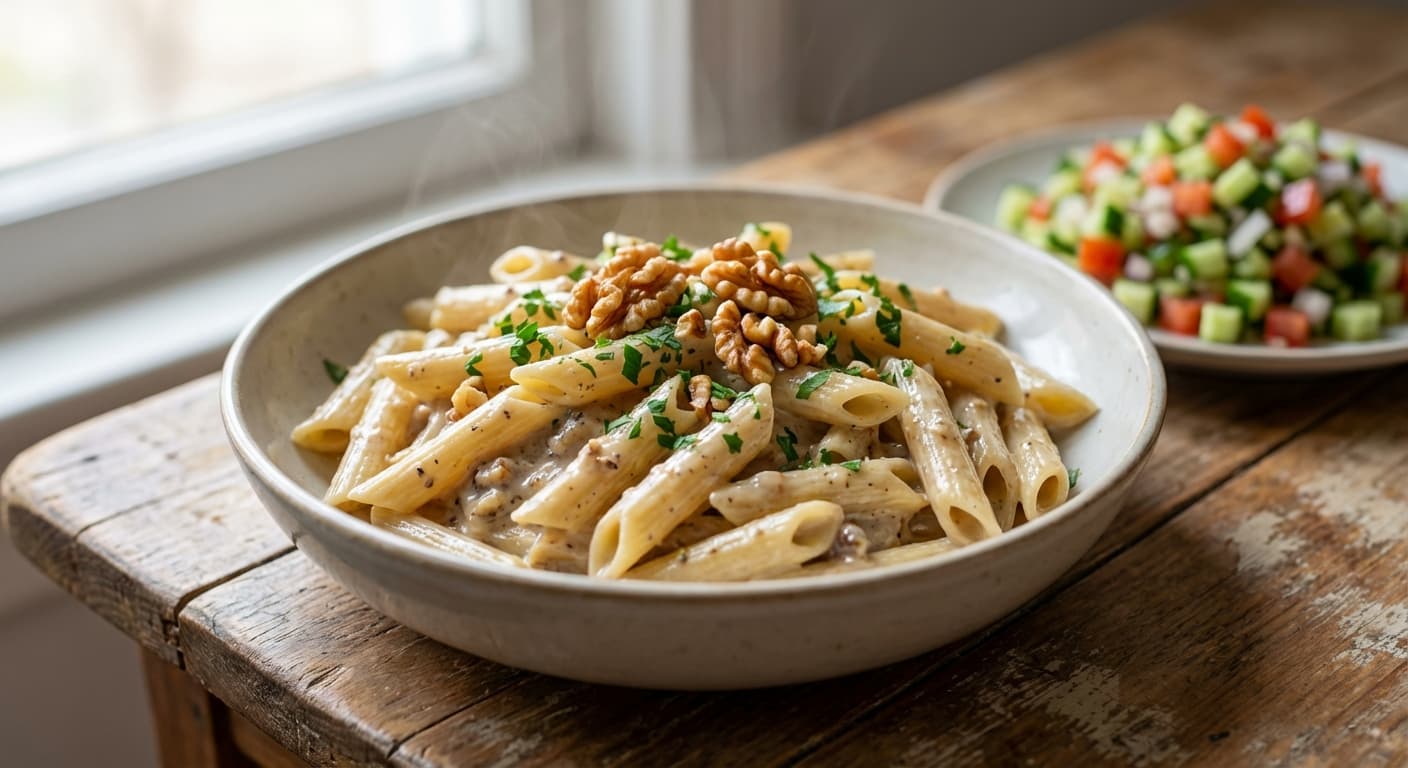
Pasta with Walnut Sauce (پاستا با سس گردو) — Creamy Persian Walnut-Yogurt Pasta
Persian · Main Courses · 35 min
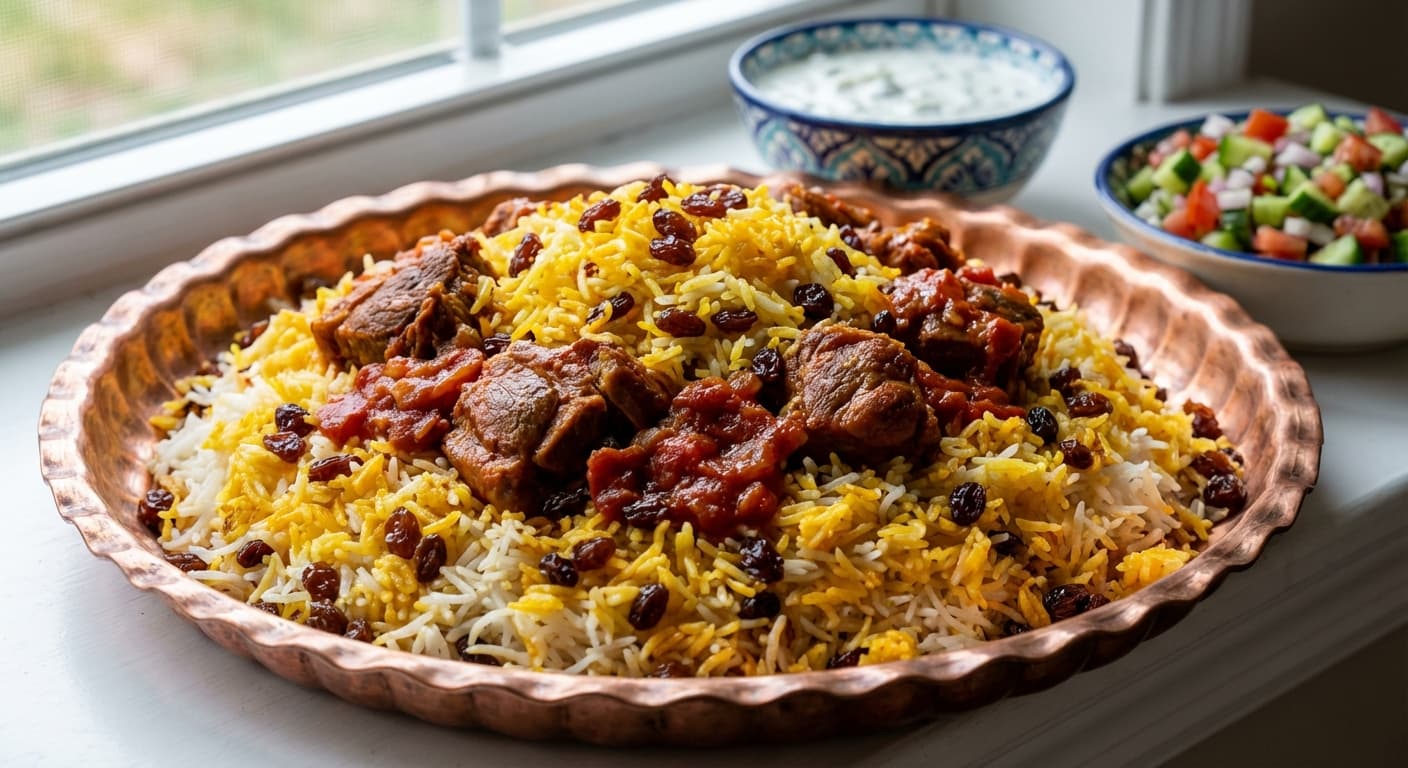
Kashmish Polow (کشمش پلو) — Persian Raisin Rice with Slow-Cooked Lamb
Persian · Rice Dishes · 155 min
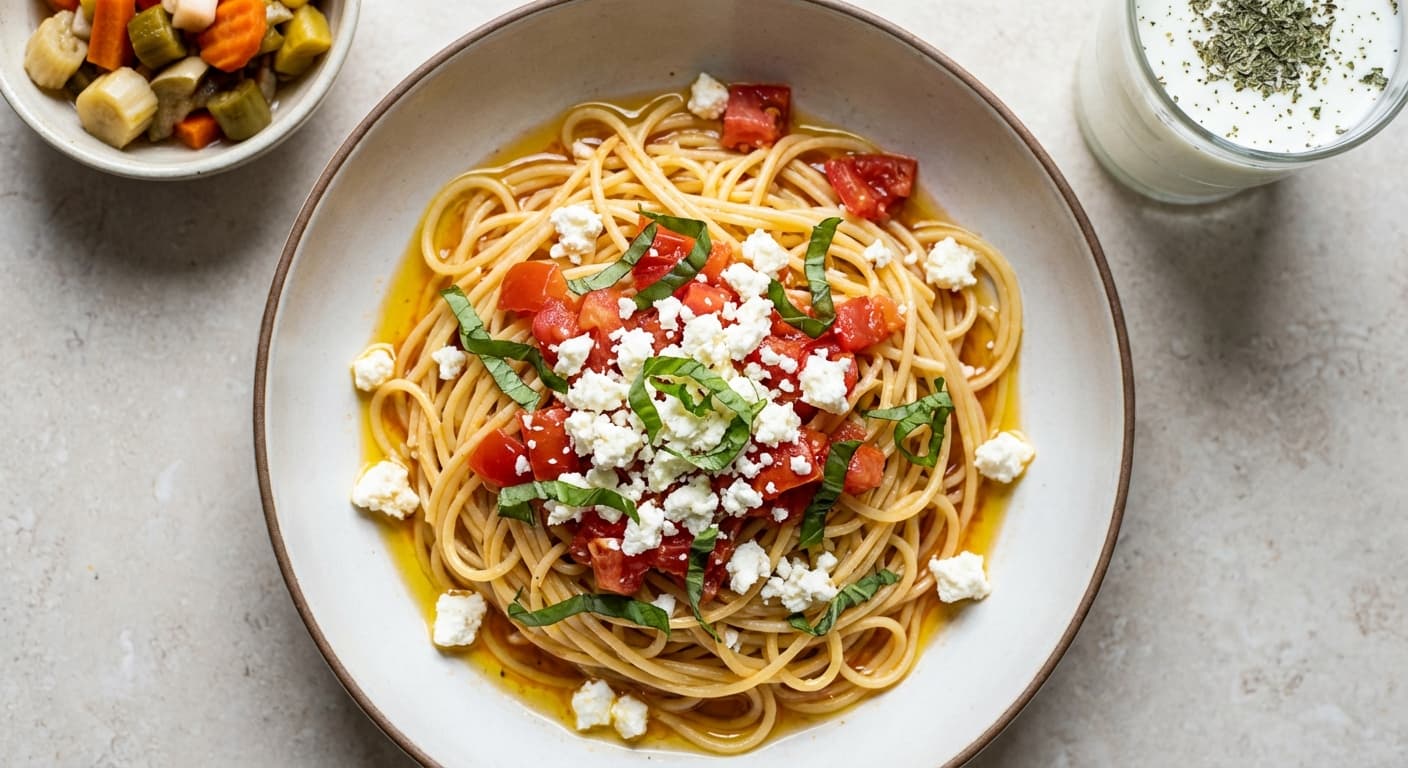
Pastay Paniri (پاستای پنیری) — Persian-Style Cheesy Pasta with Fresh Tomatoes
Persian · Main Courses · 27 min
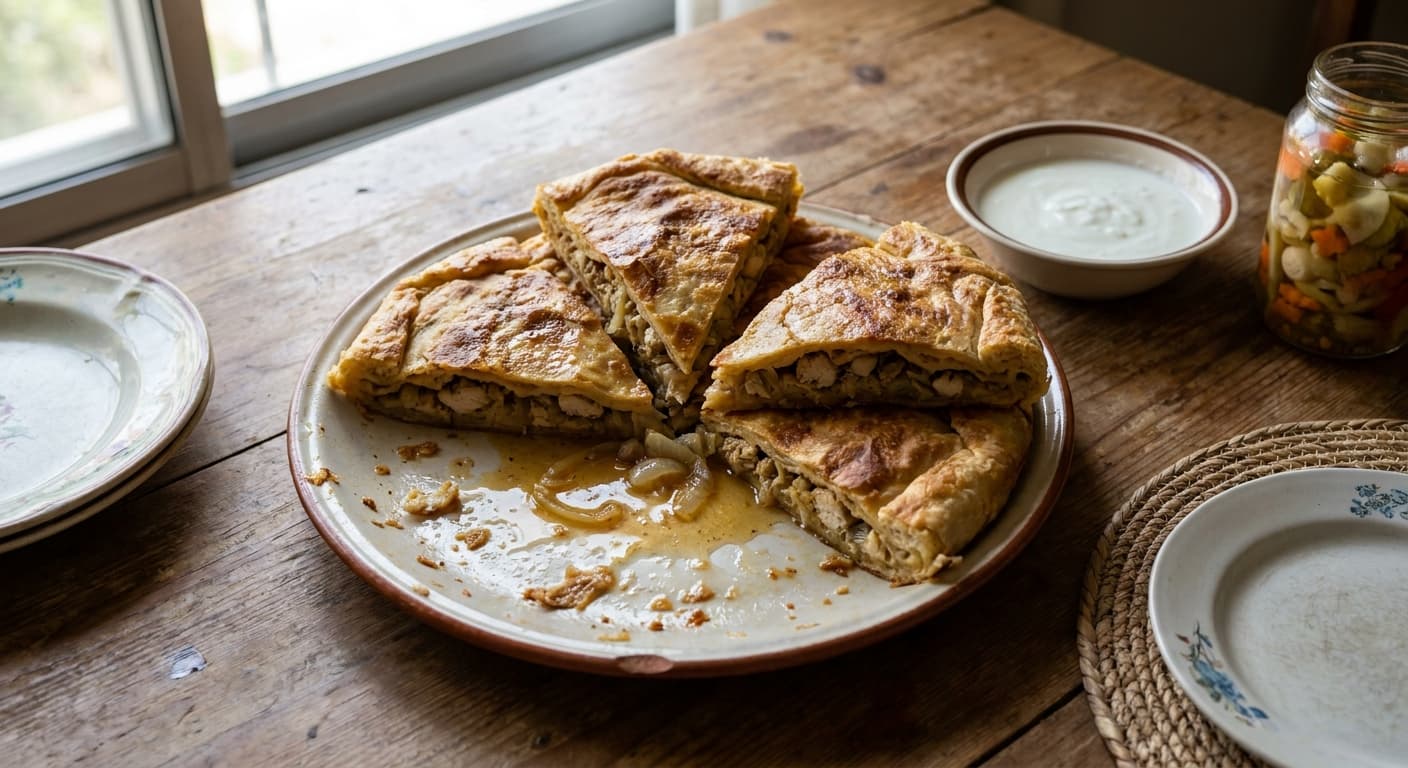
Makmoura (مكمورة) — Jordanian Layered Chicken Bread Pie
Jordanian · Main Courses · 185 min
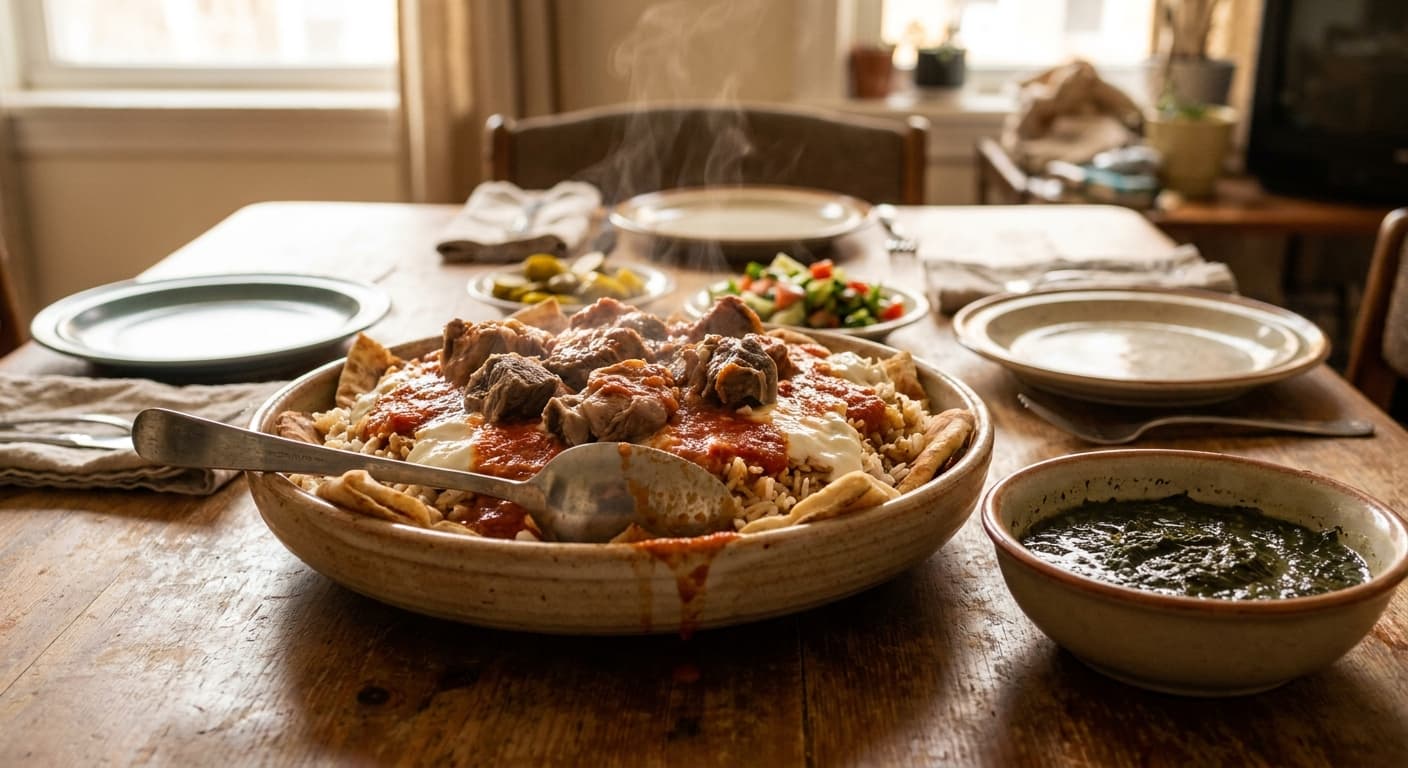
Egyptian Fatta (فتة) — Layered Meat, Rice, and Crisp Bread
Egyptian · Main Courses · 145 min
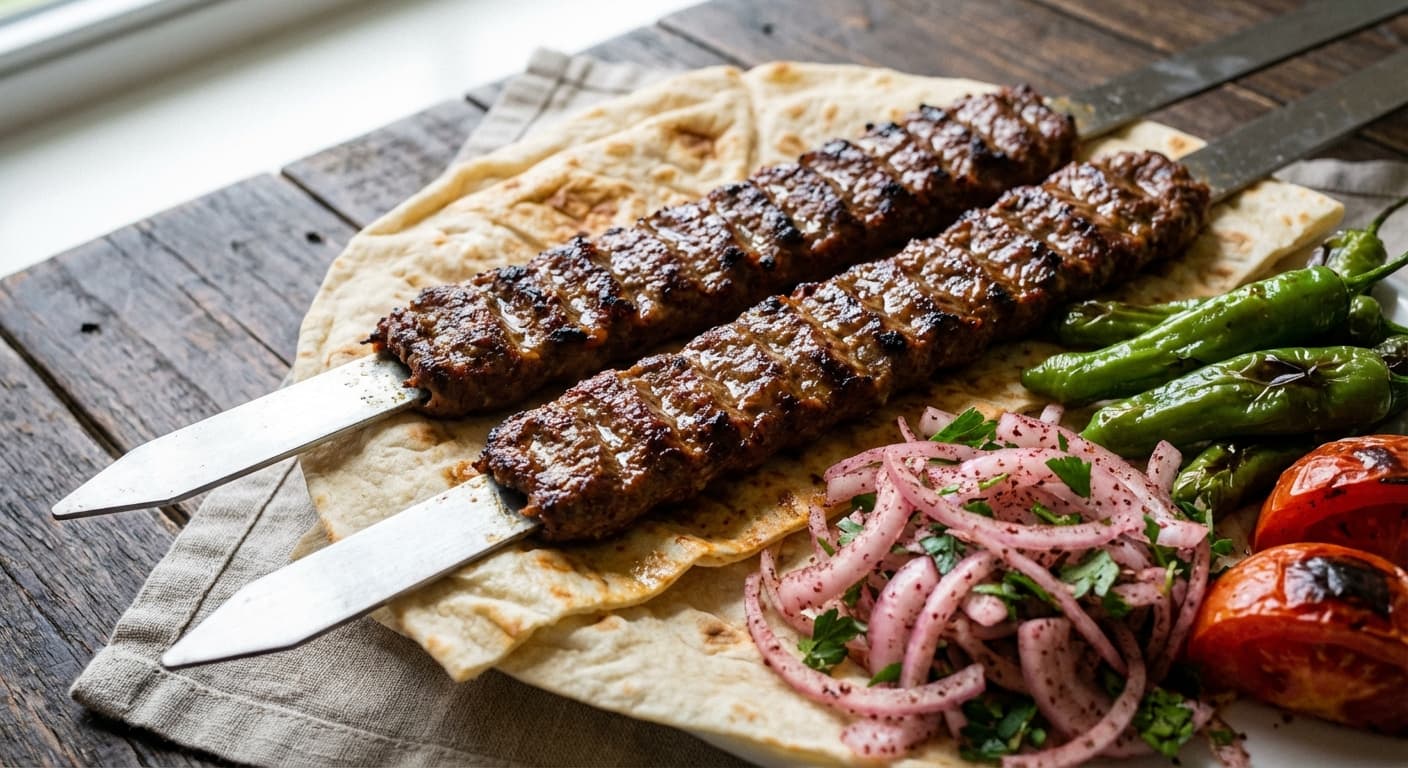
Urfa Kebab (اورفا کباب) — Mild Turkish minced skewer with sumac onions
Turkish · Kebabs · 37 min
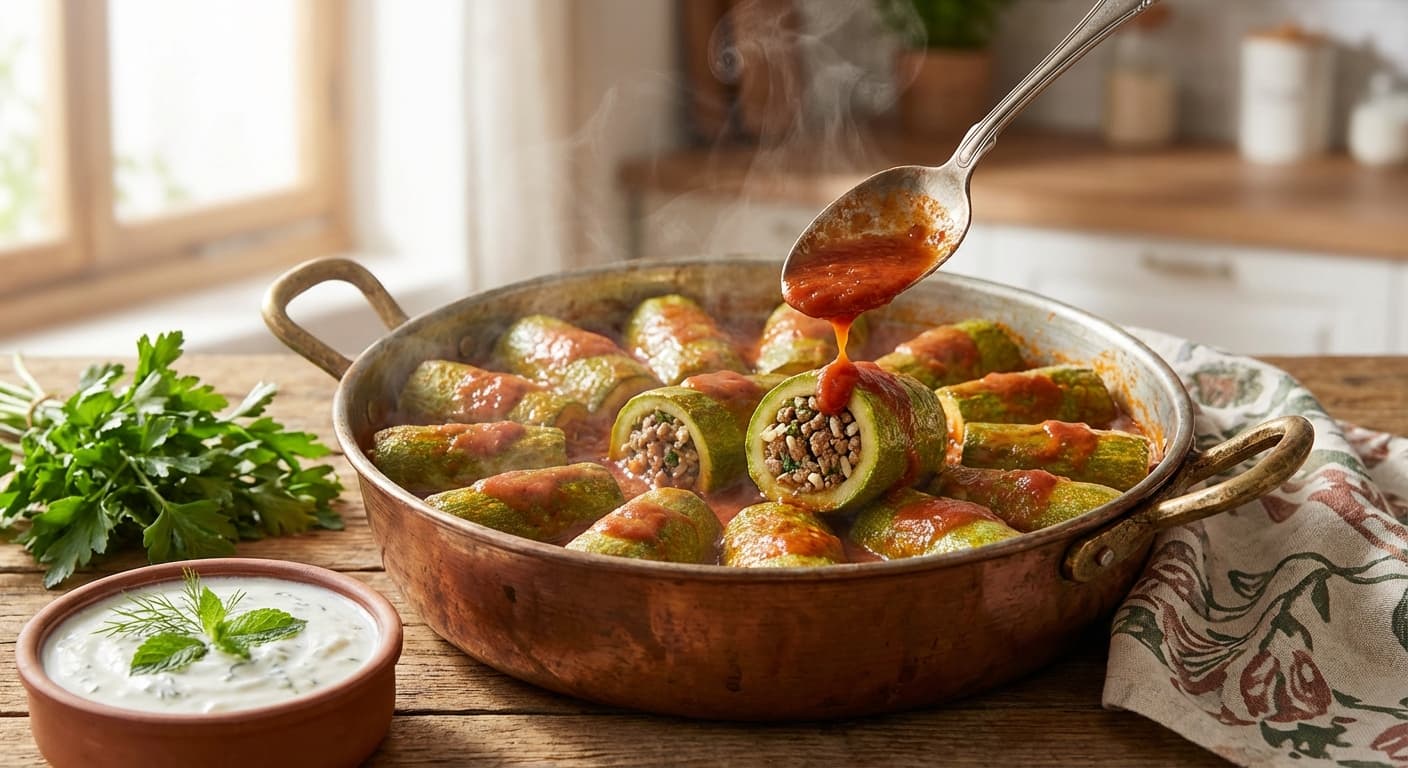
Stuffed Zucchini (Kabak Dolması) — Hollowed zucchini filled with spiced minced meat and rice
Turkish · Main Courses · 90 min
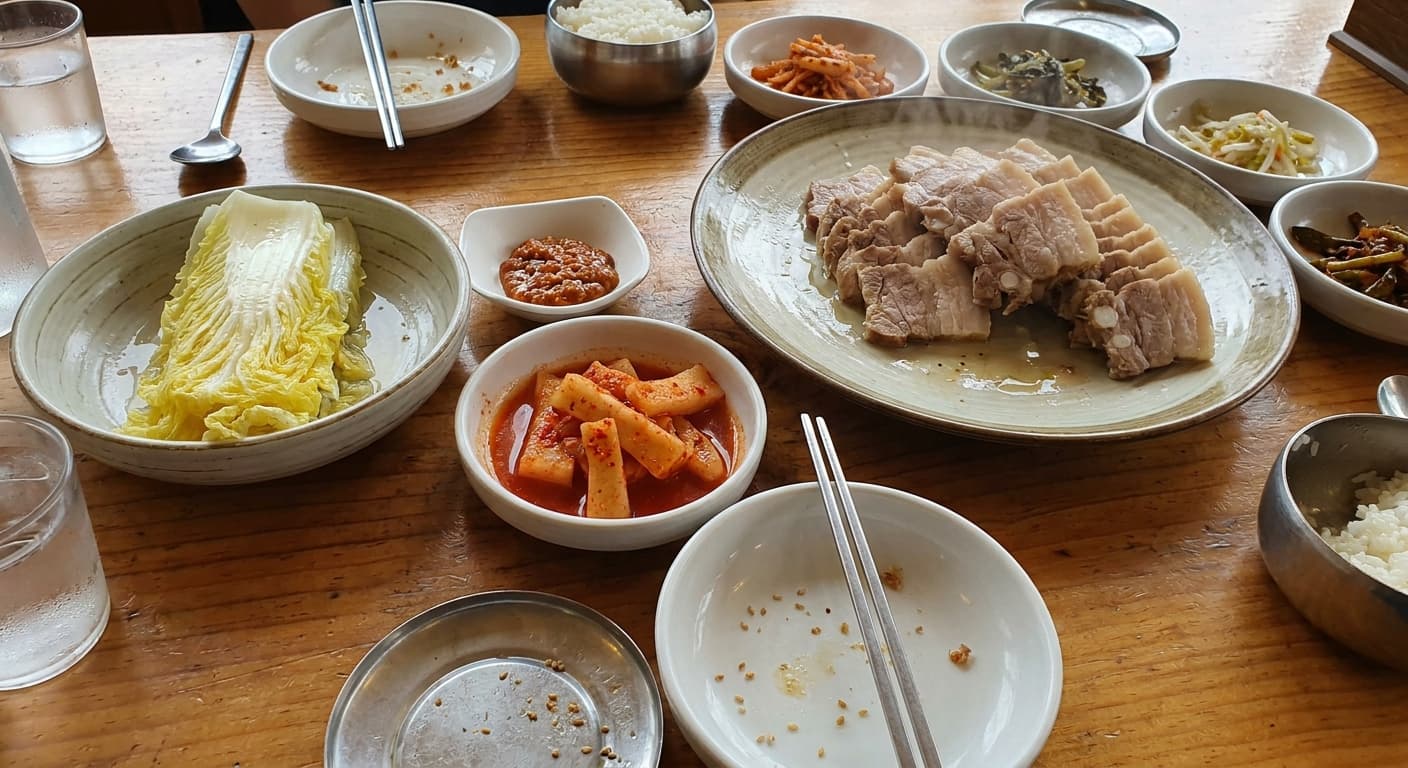
Bossam (보쌈) — Korean Boiled Pork Lettuce Wraps
Korean · Main Courses · 135 min
Reviews
Cooked this recipe?
Tap the stars to rate it — that's all it takes. A few words are welcome but optional.
No ratings yet. Cooked this one? Be the first to rate it — it takes one tap.