Musakhan (مسخن) — Sumac Chicken on Shrak Bread
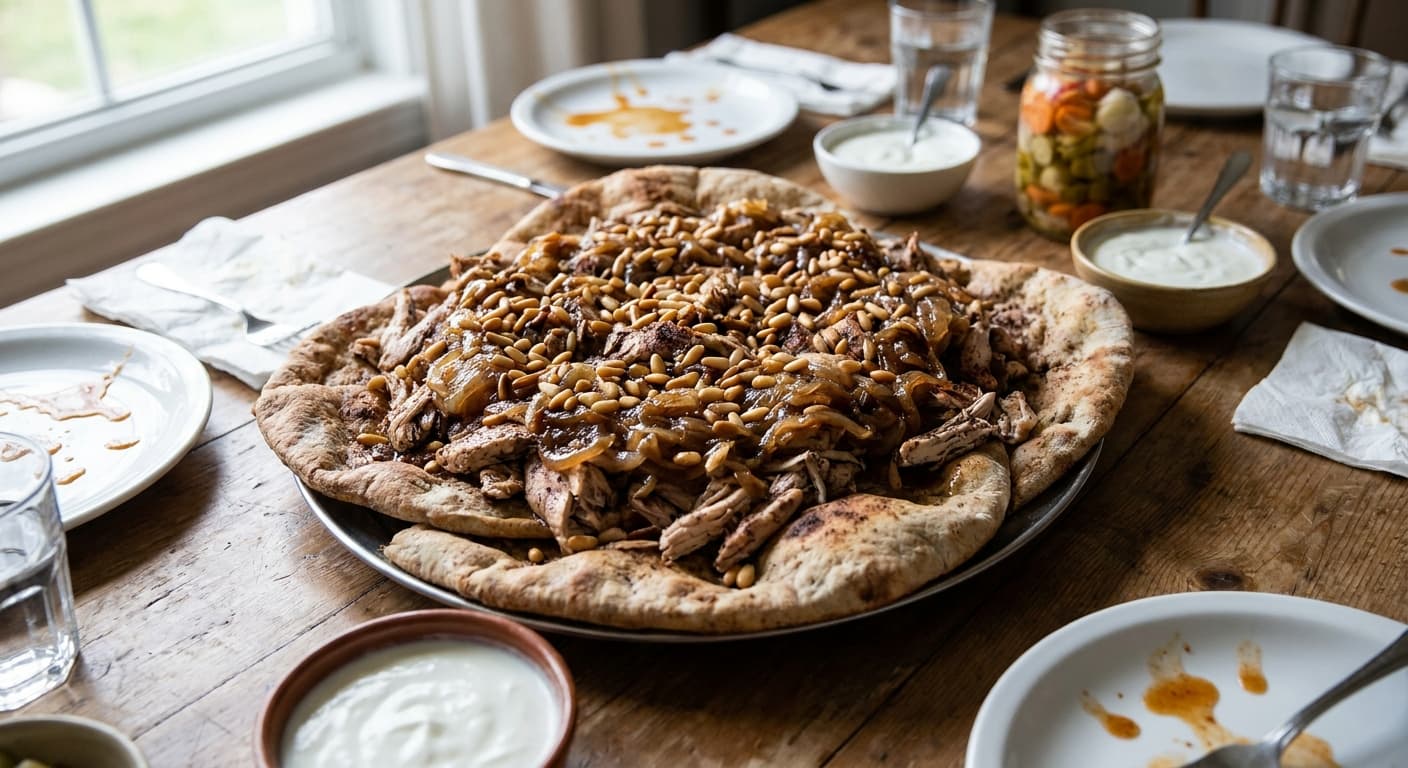
Musakhan is a beloved Jordanian-Palestinian platter of sumac chicken, olive-oil onions, and pine nuts over shrak, the thin markook bread common in Jordan. Like mansaf, it is served communally for generous family meals.
Printable Recipe Card
Servings: 6 · Total: 95 min · Difficulty: medium
Ingredients (quick list)
- 1500 g bone-in skin-on chicken pieces
- 16 g fine sea salt
- 2 tsp freshly ground black pepper
- 2 tsp ground allspice
- 0.5 tsp ground cinnamon
- 0.5 tsp ground cardamom
- 40 g ground sumac
- 180 ml extra-virgin olive oil
- 1000 g yellow onions (thinly sliced)
- 300 ml unsalted chicken stock
- 2 leaf bay leaves
- 1 stick cinnamon
+ 5 more in the full ingredients section below.
Steps (summary)
- Heat the oven to 220 C. Pat the chicken dry, then rub it with 8 g salt, the black pepper, allspice, ground cinnamon, ground car…
- Arrange the chicken skin-side up in a roasting pan and pour the chicken stock around, not over, the pieces. Add the bay leaves,…
- Remove the foil and continue roasting for 18 minutes, or until the thickest chicken piece reaches 74 C and the skin is lightly…
- While the chicken roasts, heat 130 ml olive oil in a wide heavy pan over medium-low heat. Add the onions and the remaining 8 g…
- Stir the remaining 30 g sumac and the lemon juice into the onions, then add 120 ml of the reserved chicken pan juices. Cook for…
- Heat the remaining 20 ml olive oil in a small skillet over medium heat and add the pine nuts. Toast for 2 to 3 minutes, stirrin…
+ 2 more steps in the full instructions section below.
Cultural Background
Reem Kassis frames musakhan as an olive-harvest dish rooted in Palestinian village ovens; in Jordan it is embraced at family gatherings on shrak or markook, showing the intertwined foodways of the two banks of the Jordan.
Equipment
💡 Tips
- Cook the onions slowly over medium-low heat; browning them hard will make the musakhan taste sharp instead of sweet and mellow.
- Use fresh, fragrant sumac with a deep red-purple color, because old sumac loses the tart brightness that defines the dish.
- If the shrak is very thin, double only the center area under the chicken so it absorbs juices without tearing.
⚠️ Common Mistakes
❌ Using too little olive oil
✅ Fix: Keep the measured 180 ml olive oil, because musakhan depends on oil-softened onions soaking into the bread.
❌ Letting the onions brown heavily
✅ Fix: Cook them over medium-low heat and stir every 5 minutes so they soften and sweeten without turning bitter.
❌ Adding the bread too early
✅ Fix: Assemble only for the final 10-minute bake so the shrak absorbs juices but does not collapse completely.
🧊 How to Store
Store chicken, onions, and bread together in an airtight container for up to 3 days in the refrigerator. Reheat on a tray at 180 C for 12 minutes, adding 30 ml stock if the bread seems dry.
📅 Make Ahead
Roast the chicken and cook the sumac onions up to 1 day ahead. Refrigerate them separately, then warm both gently before assembling with fresh shrak for the final bake.
🍽️ Pairs Well With
- Plain yogurt
- cucumber-tomato salad
- pickled turnips
- fresh mint
- extra sumac
- hot tea.
Regional Variations
- Palestinian versions often use taboon bread baked in a clay oven, giving the base a smoky, blistered flavor.
- Jordanian home cooks commonly prepare musakhan on shrak or markook because the breads are widely available and easy to layer for a large tray.
- Rolled musakhan wraps the same sumac-onion chicken mixture inside small flatbreads for parties and buffet service.
Ingredients
- 1500 gbone-in skin-on chicken pieces
- 16 gfine sea salt
- 2 tspfreshly ground black pepper
- 2 tspground allspice
- 0.5 tspground cinnamon
- 0.5 tspground cardamom
- 40 gground sumac
- 180 mlextra-virgin olive oil
- 1000 gyellow onions (thinly sliced)
- 300 mlunsalted chicken stock
- 2 leafbay leaves
- 1 stickcinnamon
- 5 podgreen cardamom (lightly crushed)
- 50 gpine nuts
- 4shrak bread rounds (large 35 cm rounds; also called markook)
- 30 mlfresh lemon juice
- 6 sprigflat-leaf parsley (leaves chopped)
🔄 Substitutions
- shrak bread rounds→ large lavash bread
- pine nuts→ slivered almonds
- bone-in skin-on chicken pieces→ bone-in chicken thighs
Instructions
- 1
Heat the oven to 220 C. Pat the chicken dry, then rub it with 8 g salt, the black pepper, allspice, ground cinnamon, ground cardamom, 10 g sumac, and 30 ml olive oil until every piece is evenly coated.
- 2
Arrange the chicken skin-side up in a roasting pan and pour the chicken stock around, not over, the pieces. Add the bay leaves, cinnamon stick, and cardamom pods, cover tightly with foil, and roast for 35 minutes.
- 3
Remove the foil and continue roasting for 18 minutes, or until the thickest chicken piece reaches 74 C and the skin is lightly browned. Transfer the chicken to a plate and strain the pan juices, reserving 180 ml of the aromatic liquid for the bread and onions.
- 4
While the chicken roasts, heat 130 ml olive oil in a wide heavy pan over medium-low heat. Add the onions and the remaining 8 g salt, then cook for 30 minutes, stirring every 5 minutes, until the onions are soft, glossy, and sweet but not deeply browned.
- 5
Stir the remaining 30 g sumac and the lemon juice into the onions, then add 120 ml of the reserved chicken pan juices. Cook for 4 minutes more so the sumac blooms in the olive oil and the onions become a spoonable, brick-red mixture.
- 6
Heat the remaining 20 ml olive oil in a small skillet over medium heat and add the pine nuts. Toast for 2 to 3 minutes, stirring constantly, until golden, then immediately transfer them to a plate so they do not darken further.
- 7
Lower the oven to 200 C and place the shrak or markook bread rounds on a large baking sheet, overlapping them slightly if needed. Spoon 60 ml reserved pan juices over the bread, spread on most of the sumac onions, and set the roasted chicken pieces on top.
- 8
Bake the assembled musakhan for 10 minutes, just long enough for the bread edges to crisp while the center stays soaked with onion oil and chicken juices. Scatter the toasted pine nuts and parsley over the top, then serve immediately from the tray in the Jordanian family-table style.
🪪 Recipe Passport
Cultural Background
Reem Kassis frames musakhan as an olive-harvest dish rooted in Palestinian village ovens; in Jordan it is embraced at family gatherings on shrak or markook, showing the intertwined foodways of the two banks of the Jordan.
Regional Variations
Researched from multiple sources and validated by the Zaffaron editorial team. Every recipe is tested for accuracy, measurements, and cultural authenticity.
📚 Sources & Cultural References
- Reem Kassis — The Palestinian Table — (2017)
- Anissa Helou — Feast: Food of the Islamic World — (2018)
Sources cited by the Zaffaron editorial team during recipe research. Cultural and culinary references supporting authenticity claims.
Nutrition per serving
Pairs well with
If you enjoyed this recipe, here are a few related Zaffaron recipes to try next.
Does your family make this differently?
Every family has their own version. Maybe your grandmother adds a secret ingredient, or your aunt has a completely different technique. Preserve your family's version — with their name on it, forever.
You Might Also Like
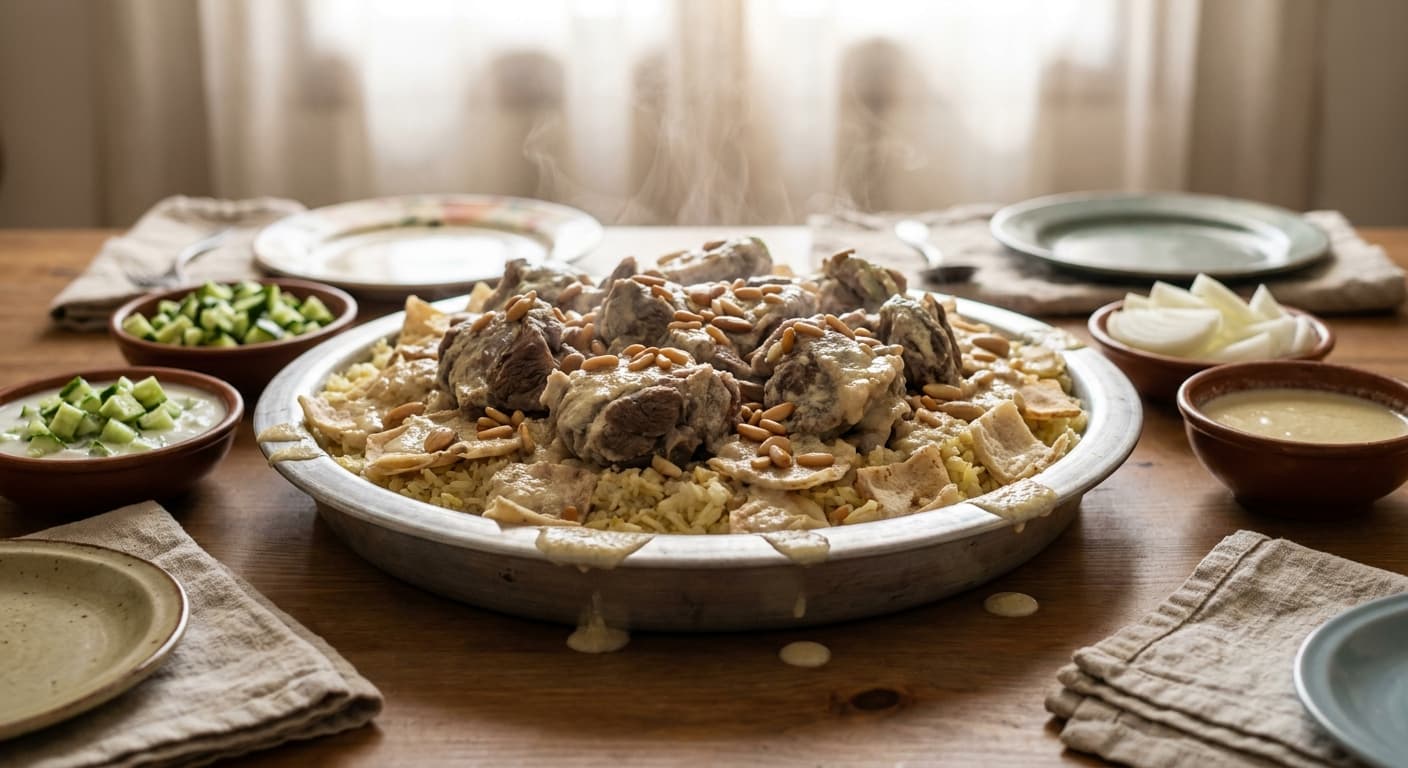
Jordanian Mansaf (المنسف الأردني) — Lamb, Jameed Yogurt, Rice, and Shrak Bread
Jordanian · Main Courses · 180 min
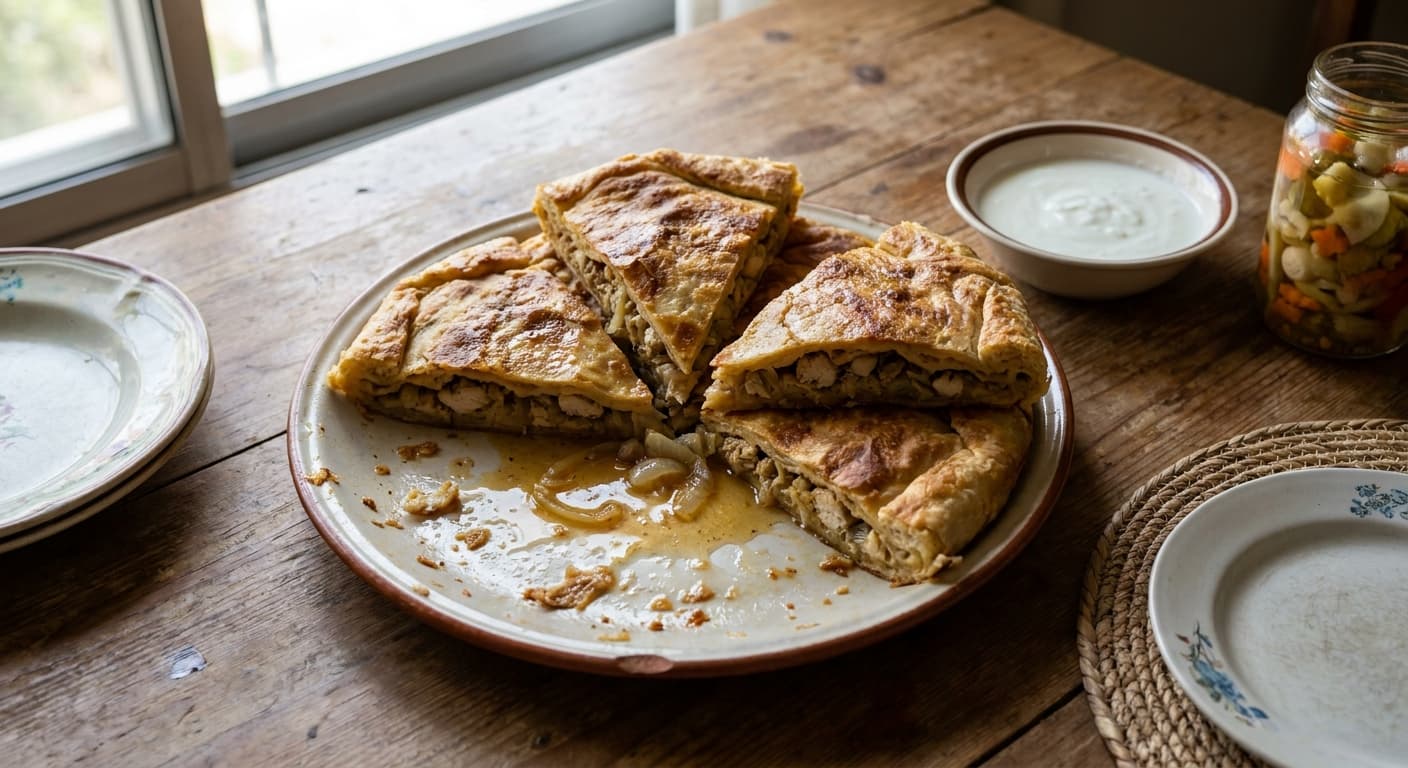
Makmoura (مكمورة) — Jordanian Layered Chicken Bread Pie
Jordanian · Main Courses · 185 min
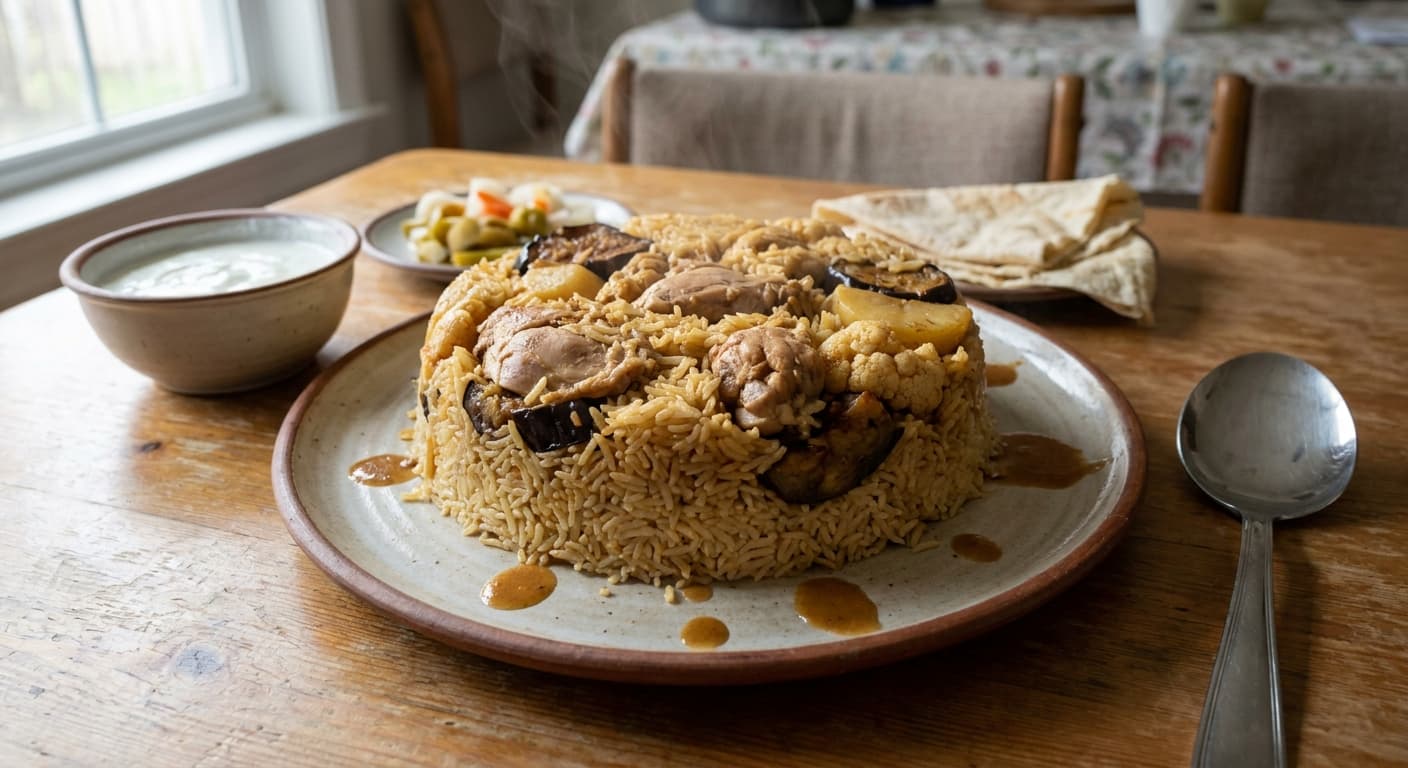
Maqluba (مقلوبة) — Jordanian Upside-Down Rice with Chicken
Jordanian · Rice Dishes · 110 min
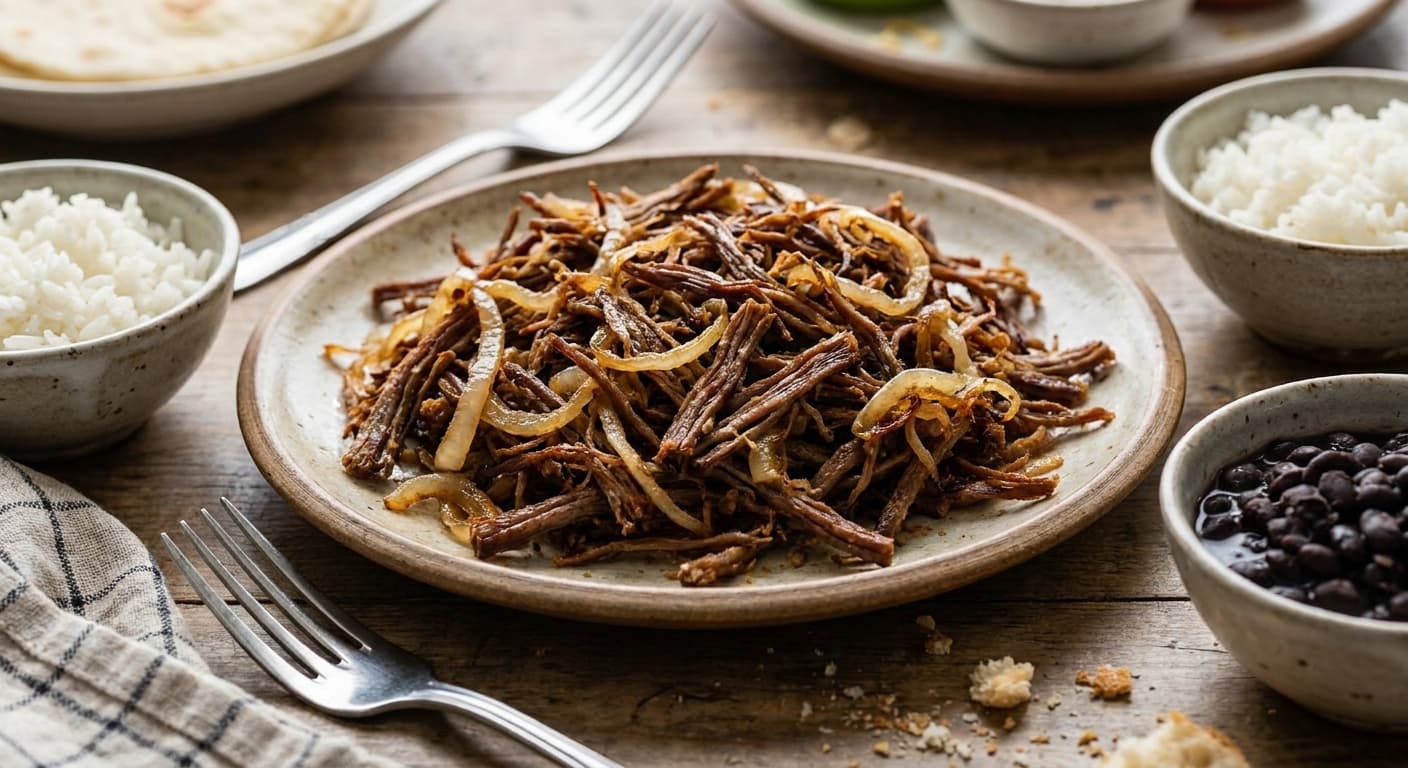
Cuban Crispy Shredded Beef (Vaca Frita) — Garlic and Citrus
Cuban · Main Courses · 140 min
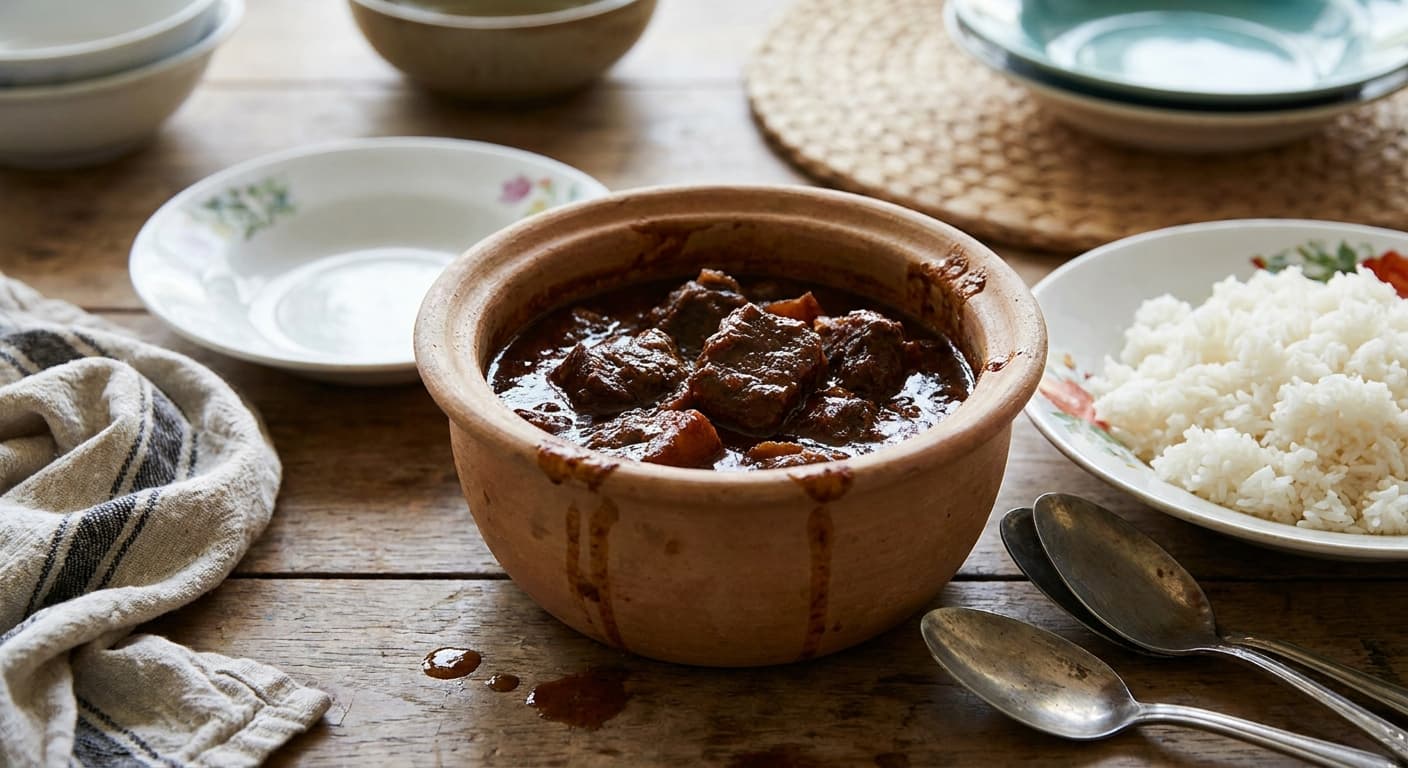
Pone Yay Gyi Curry (ပုန်းရည်ကြီးဟင်း) — Burmese Pork and Fermented Bean Paste
Burmese · Main Courses · 115 min
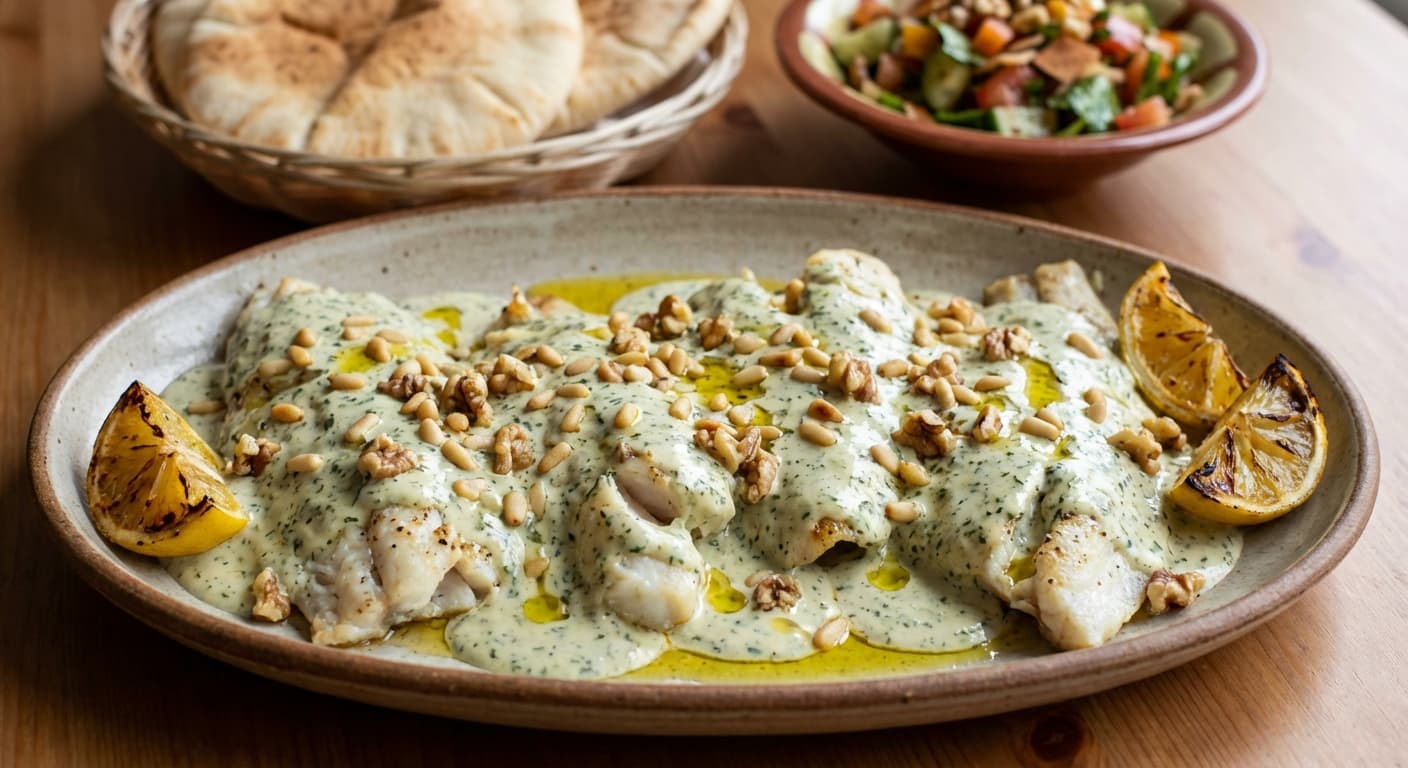
Samak Harra (سمك حرّ) — Lebanese Fish in Spicy Tahini-Cilantro Sauce
Lebanese · Main Courses · 45 min
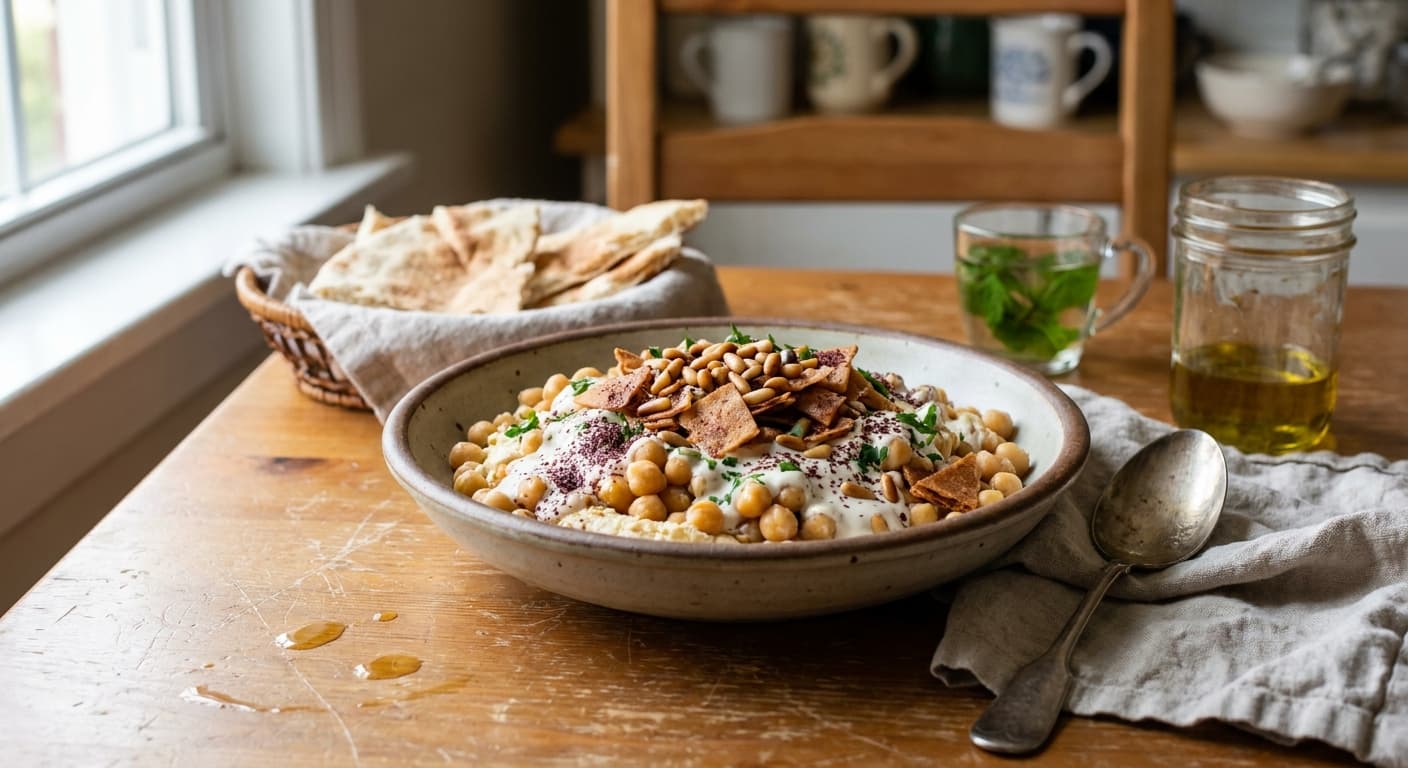
Fattet Hummus (فتة حمص) — Chickpeas with Yogurt and Crisp Bread
Lebanese · Main Courses · 30 min
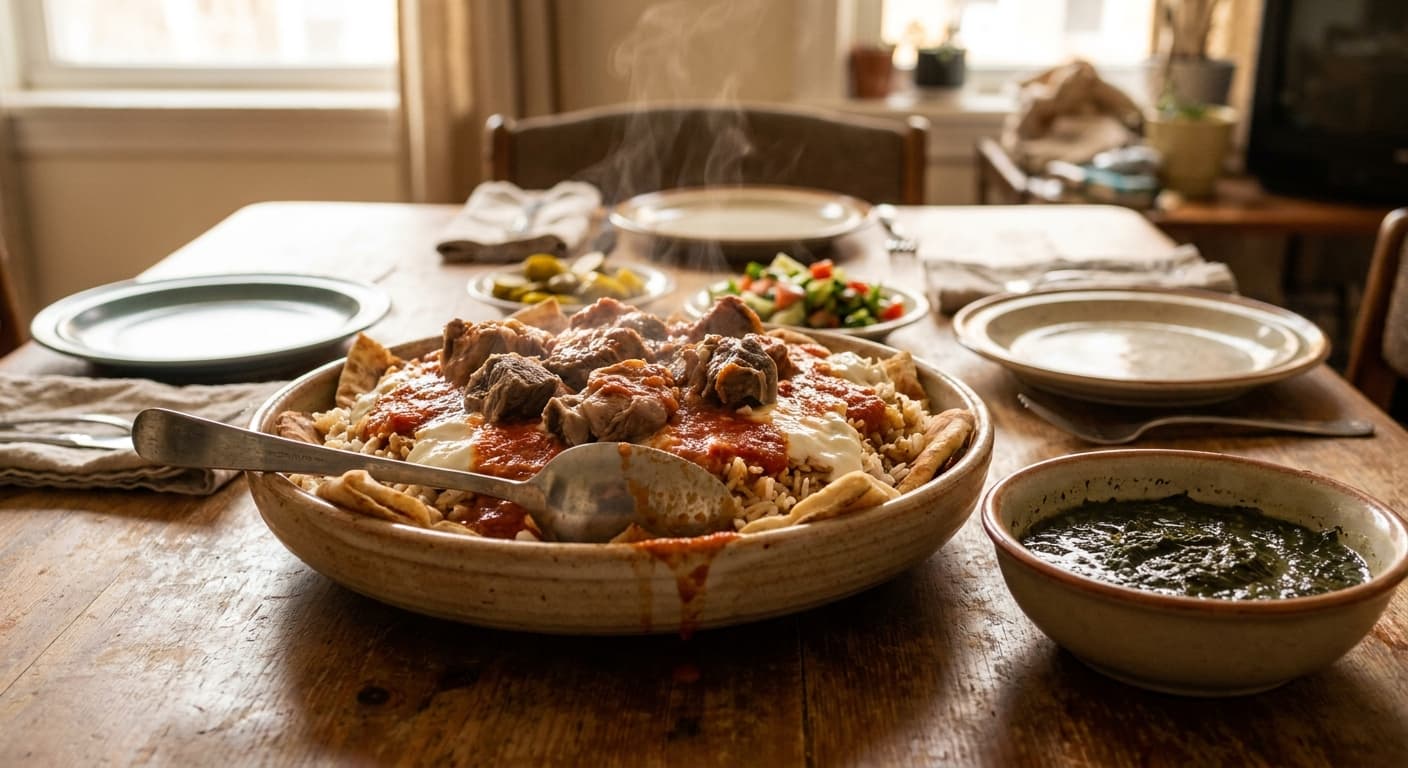
Egyptian Fatta (فتة) — Layered Meat, Rice, and Crisp Bread
Egyptian · Main Courses · 145 min
Reviews
Cooked this recipe?
Tap the stars to rate it — that's all it takes. A few words are welcome but optional.
No ratings yet. Cooked this one? Be the first to rate it — it takes one tap.