Polo Nokhod Farangi (پلو نخود فرنگی) – Persian Green Pea Rice
A springtime Persian layered rice (polo) scented with cardamom and cinnamon, studded with sweet green peas and carrots, and finished with a crisp tahdig. Comforting, aromatic, and perfect for family gatherings.
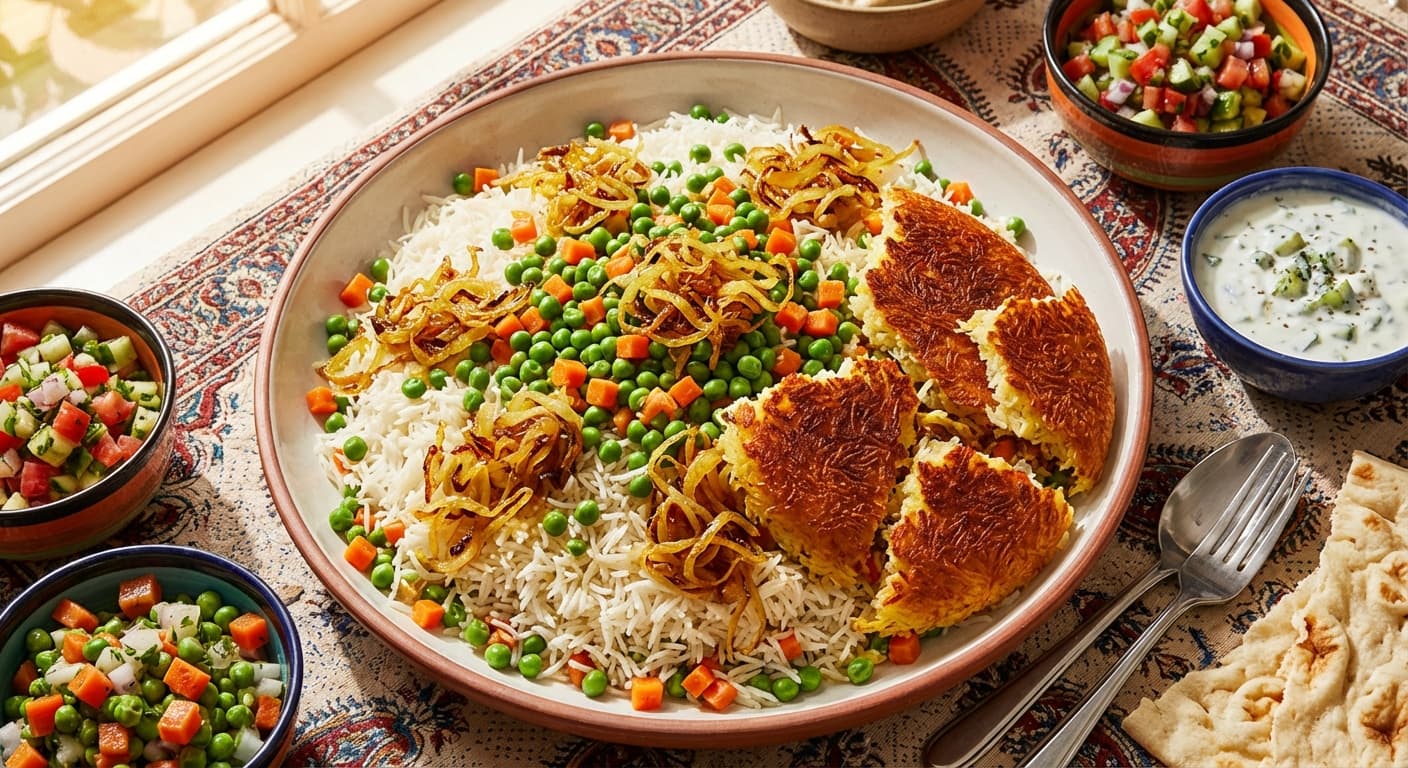
Printable Recipe Card
Servings: 6 · Total: 115 min · Difficulty: medium
Ingredients (quick list)
- 500 g Basmati rice (rinsed until water runs mostly clear)
- 2000 ml Water (for soaking and parboiling (plus more as needed))
- 22 g Fine sea salt (15 g for soaking/parboiling + 7 g for the pea mixture)
- 250 g Yellow onions (thinly sliced)
- 12 g Garlic (minced (about 3 cloves))
- 75 ml Vegetable oil (divided)
- 2 tsp Ground turmeric
- 1 tsp Ground black pepper
- 0.5 tsp Ground cardamom
- 0.5 tsp Ground cinnamon
- 200 g Carrots (cut into 5 mm dice)
- 300 g Green peas (frozen, thawed; or fresh shelled peas)
+ 3 more in the full ingredients section below.
Steps (summary)
- Rinse the basmati rice in several changes of cool water until the water is mostly clear. Soak the rice in 1500 ml water mixed w…
- While the rice soaks, make the pea mixture. Heat 45 ml vegetable oil in a wide skillet over medium heat (about 175°C surface he…
- Stir in turmeric, black pepper, cardamom, and cinnamon and toast the spices for 30 seconds. Add diced carrots and 60 ml water,…
- Bring a large pot of water (about 3000 ml) to a rolling boil. Drain the soaked rice and add it to the boiling water. Boil 6–8 m…
- For a yogurt tahdig, mix 120 g plain yogurt with 2 tbsp (30 ml) vegetable oil and 2 tbsp (30 ml) brewed saffron water (optional…
- Set a heavy-bottomed nonstick pot (24–26 cm) over medium heat for 2 minutes. Add the yogurt-rice mixture and press into an even…
+ 2 more steps in the full instructions section below.
Cultural Background
Polo Nokhod Farangi is a spring-forward Persian polo that highlights the season’s sweet peas and the Iranian love of aromatic, layered rice. It is often served at family gatherings where tahdig is shared first, a prized tradition that turns a simple meal into a celebratory table.
Equipment
💡 Tips
- Use a wide skillet for the pea mixture so onions caramelize rather than steam.
- If using fresh peas, blanch them 2 minutes in boiling water and shock in ice water before adding to the carrots for a brighter color.
- For extra aroma without overpowering the peas, keep cardamom at 0.5 tsp and toast it briefly with the other spices.
- If your pot runs hot, shorten the initial high-heat tahdig phase to 6–7 minutes to prevent burning.
⚠️ Common Mistakes
❌ Overboiling the rice during parboil
💡 Why: Fully cooked grains will break and turn sticky during steaming, losing the distinct Persian polo texture.
✅ Fix: Boil only until the outside is soft and the center is still firm (6–8 minutes), then drain immediately and rinse briefly.
❌ Cooking peas too long in the skillet
💡 Why: Peas become dull, wrinkled, and lose sweetness; the dish tastes flat and looks less vibrant.
✅ Fix: Add peas at the end and cook 3–4 minutes uncovered; if using fresh peas, blanch first and add for only 1–2 minutes.
❌ Skipping the towel-wrapped lid
💡 Why: Condensation drips back onto the rice, making the top layer wet and compressing grains.
✅ Fix: Wrap the lid with a clean towel and tie it up so it doesn’t touch the flame; keep the pot tightly covered throughout steaming.
❌ Too much heat during the long steam
💡 Why: The bottom burns before the interior finishes steaming, creating bitter tahdig and dry rice.
✅ Fix: After 8–10 minutes on medium to set the crust, reduce to low heat for 35–45 minutes and keep the lid sealed.
🧊 How to Store
Cool leftovers within 2 hours. Refrigerate in an airtight container for up to 4 days. Reheat covered with 1–2 tbsp water in a pot over low heat for 12–15 minutes, or microwave in a covered bowl. Tahdig is best fresh; re-crisp in a dry skillet over medium heat for 3–5 minutes.
📅 Make Ahead
You can cook the onion-carrot-pea mixture up to 2 days ahead and refrigerate. On cooking day, parboil the rice and assemble/steam as written for best texture. Cooked polo keeps well, but tahdig is crispiest when made fresh.
🍽️ Pairs Well With
- Shirazi salad (cucumber
- tomato
- onion
- lime)
- Mast-o-khiar (yogurt with cucumber and dried mint)
- Pickles (torshi) and fresh herbs (sabzi khordan)
- Roasted chicken or grilled fish for a complete meal
Regional Variations
- TehranOften made with a yogurt-saffron tahdig and a slightly stronger warm-spice profile, sometimes adding a touch more cinnamon for a comforting aroma.
- Shiraz (Fars)Commonly served with bright sides like Shirazi salad and torshi; cooks may keep spices lighter to let the sweetness of peas and carrots stand out.
- Mazandaran (Caspian)May include more vegetables and herbs alongside the peas, and is frequently paired with fish, reflecting the region’s coastal food culture.
Ingredients
- 500 gBasmati rice (rinsed until water runs mostly clear)
- 2000 mlWater (for soaking and parboiling (plus more as needed))
- 22 gFine sea salt (15 g for soaking/parboiling + 7 g for the pea mixture)
- 250 gYellow onions (thinly sliced)
- 12 gGarlic (minced (about 3 cloves))
- 75 mlVegetable oil (divided)
- 2 tspGround turmeric
- 1 tspGround black pepper
- 0.5 tspGround cardamom
- 0.5 tspGround cinnamon
- 200 gCarrots (cut into 5 mm dice)
- 300 gGreen peas (frozen, thawed; or fresh shelled peas)
- 30 gUnsalted butter (optional, for richer aroma and tahdig)
- 120 gPlain yogurt (for yogurt tahdig (optional but highly recommended))
- 30 mlBrewed saffron water (optional; 0.25 tsp saffron bloomed in 30 ml hot water)
🔄 Substitutions
- Green peas (300 g)→ Edamame (shelled) 250 g
- Plain yogurt tahdig base→ Potato tahdig: 250 g potatoes, thinly sliced + 2 tbsp oil
- Vegetable oil→ Ghee (clarified butter) equal amount
Instructions
- 1
Rinse the basmati rice in several changes of cool water until the water is mostly clear. Soak the rice in 1500 ml water mixed with 15 g fine sea salt for 45 minutes at room temperature. This step lengthens grains and helps the rice cook evenly without breaking during parboiling.
- 2
While the rice soaks, make the pea mixture. Heat 45 ml vegetable oil in a wide skillet over medium heat (about 175°C surface heat). Add sliced onions and cook 10–12 minutes, stirring often, until golden and soft. Add minced garlic and cook 60 seconds until fragrant, avoiding browning.
- 3
Stir in turmeric, black pepper, cardamom, and cinnamon and toast the spices for 30 seconds. Add diced carrots and 60 ml water, cover, and simmer 8–10 minutes until carrots are just tender. Add green peas and the remaining 7 g salt; cook uncovered 3–4 minutes to keep peas bright.
- 4
Bring a large pot of water (about 3000 ml) to a rolling boil. Drain the soaked rice and add it to the boiling water. Boil 6–8 minutes, stirring gently once or twice, until the grains are softened on the outside but still firm in the center. Drain immediately and rinse briefly with cool water.
- 5
For a yogurt tahdig, mix 120 g plain yogurt with 2 tbsp (30 ml) vegetable oil and 2 tbsp (30 ml) brewed saffron water (optional) in a bowl. Add 150 g of the drained parboiled rice and stir to coat. This creates a flavorful, crisp base that releases cleanly when inverted.
- 6
Set a heavy-bottomed nonstick pot (24–26 cm) over medium heat for 2 minutes. Add the yogurt-rice mixture and press into an even layer. Then layer the remaining rice and pea mixture in 3–4 alternating layers, finishing with rice on top. Dot with 30 g butter (optional) and drizzle 1 tbsp oil.
- 7
Wrap the lid with a clean kitchen towel and cover the pot tightly to catch steam. Cook on medium heat for 8–10 minutes until you hear a gentle sizzle and smell toasted rice. Reduce heat to low and steam 35–45 minutes. Avoid lifting the lid; steady steam makes long, fluffy grains.
- 8
Turn off heat and rest the pot, covered, for 10 minutes to set the tahdig. Fluff the top rice gently with a spatula, lifting rather than stirring. To serve with tahdig, place a platter over the pot and invert confidently. Break the crisp crust into pieces and serve alongside the rice.
🪪 Recipe Passport
Cultural Background
Polo Nokhod Farangi is a spring-forward Persian polo that highlights the season’s sweet peas and the Iranian love of aromatic, layered rice. It is often served at family gatherings where tahdig is shared first, a prized tradition that turns a simple meal into a celebratory table.
Regional Variations
Researched from multiple sources and validated by the Zaffaron editorial team. Every recipe is tested for accuracy, measurements, and cultural authenticity.
Nutrition per serving
Pairs well with
If you enjoyed this recipe, here are a few related Zaffaron recipes to try next.
Does your family make this differently?
Every family has their own version. Maybe your grandmother adds a secret ingredient, or your aunt has a completely different technique. Preserve your family's version — with their name on it, forever.
You Might Also Like
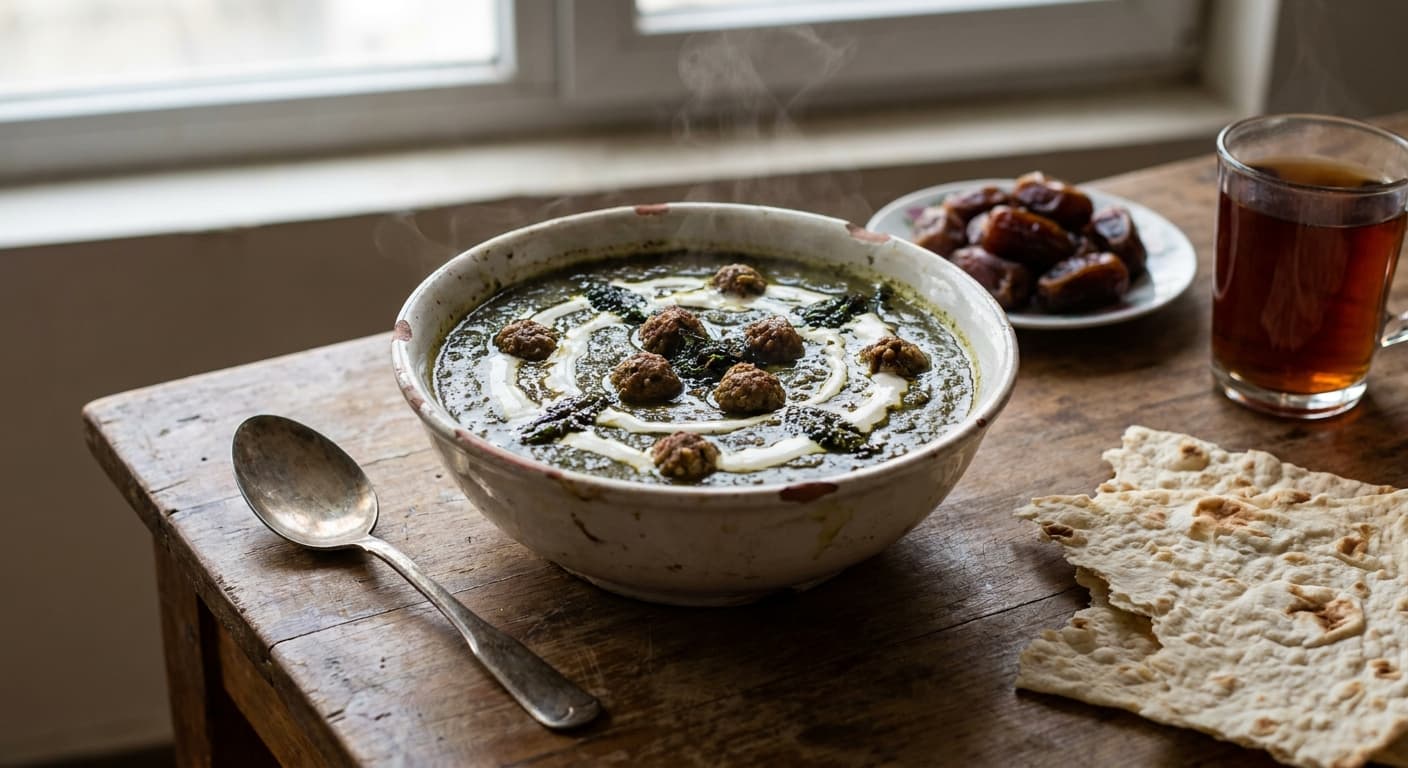
Ash-e Sak (آش ساک) — Golestani Spinach, Legume, and Meatball Soup
Persian · Soups · 175 min
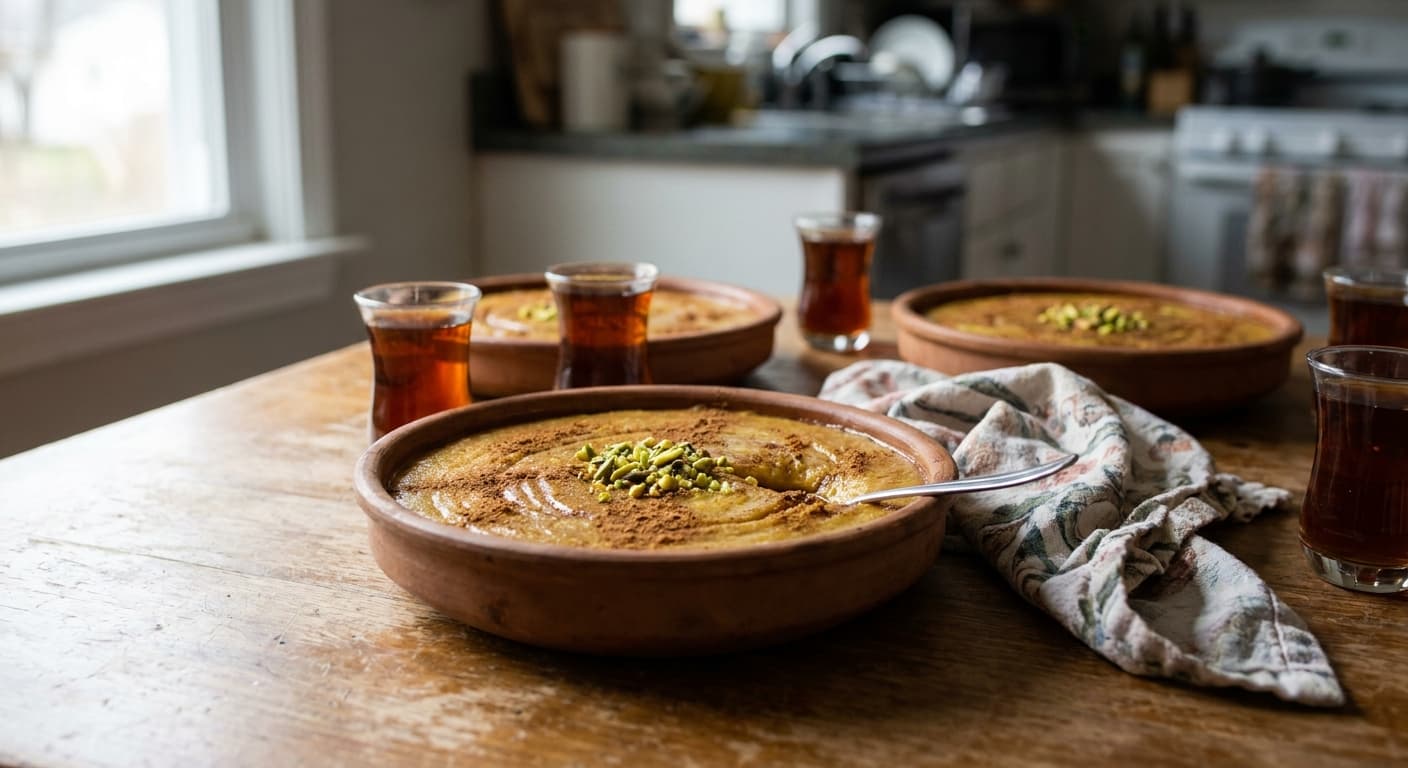
Persian Kachi (کاچی) — Saffron Rosewater Pudding
Persian · Desserts · 45 min
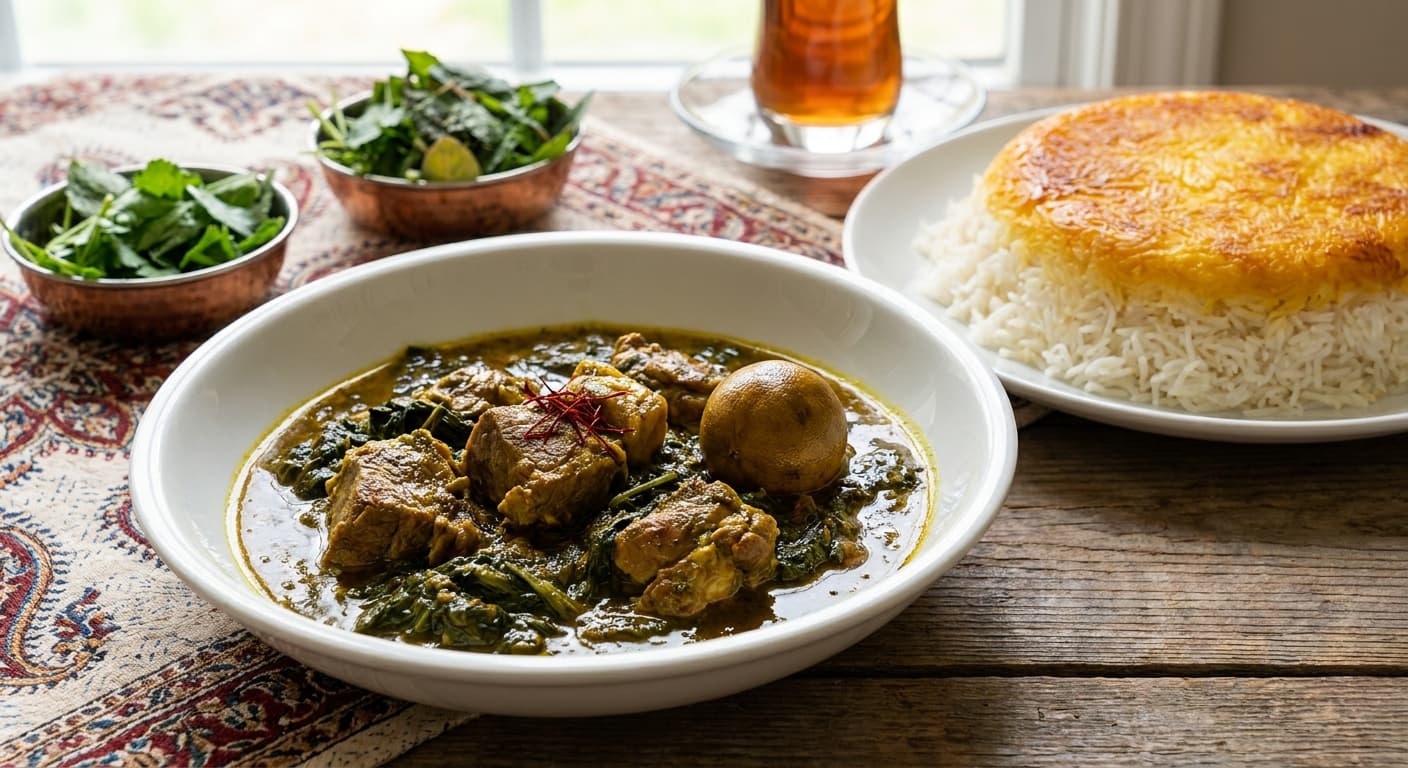
Persian Khoresht Saak (خورش ساک) — Saffron-Cardamom Lamb Stew with Saak Greens
Persian · Stews · 145 min
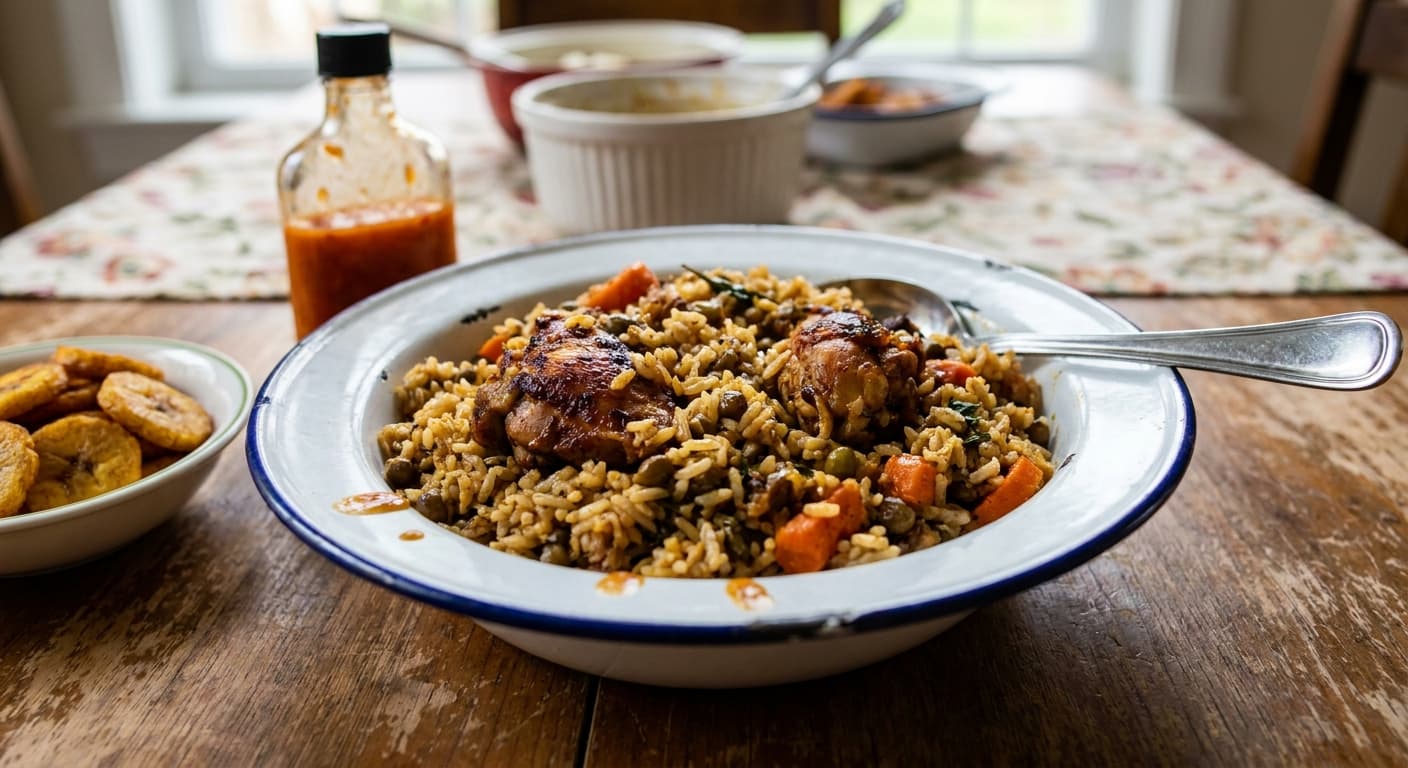
Trinidadian Pelau (Pelau) — Caramel-Browned Chicken, Rice, and Pigeon Peas
Trinidadian · Rice Dishes · 85 min
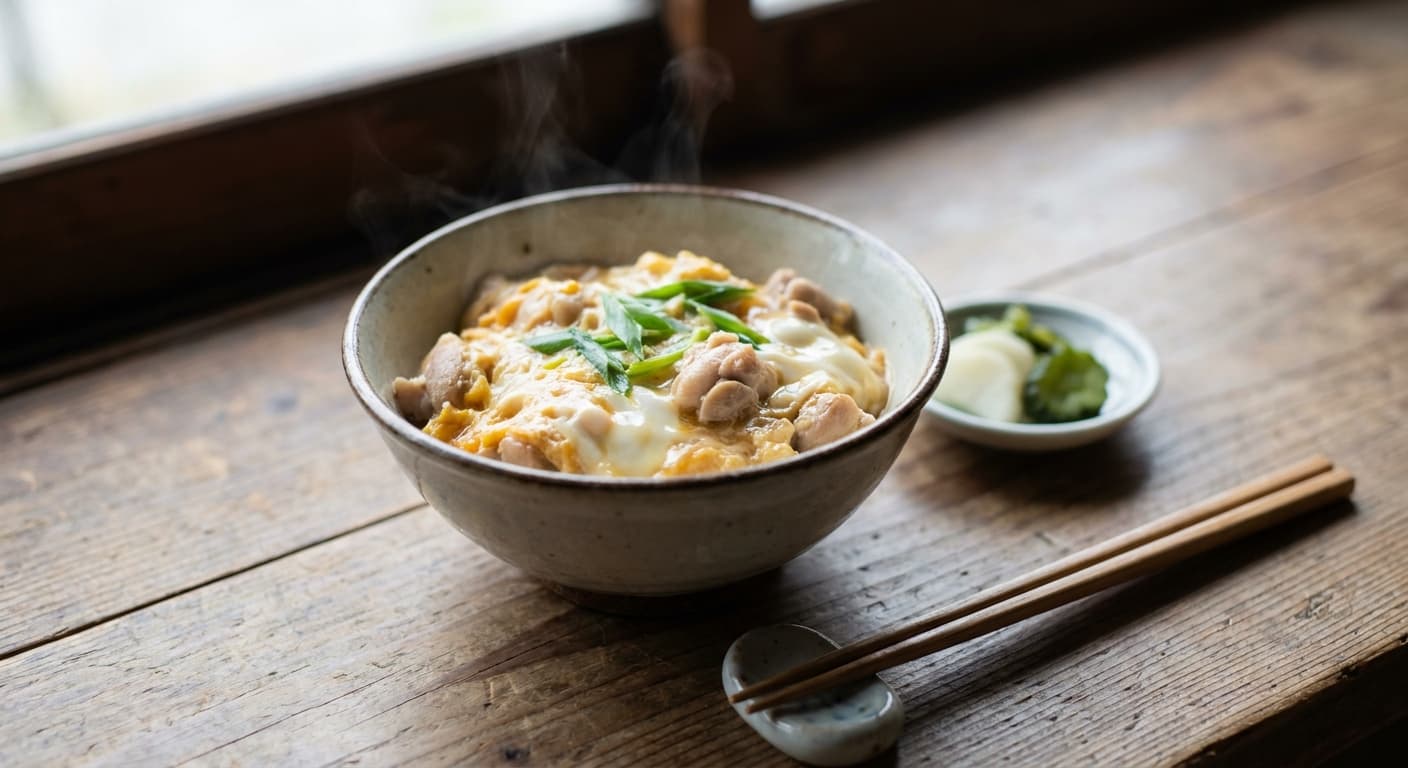
Japanese Oyakodon (親子丼) — Chicken and Egg Rice Bowl
Japanese · Rice Dishes · 29 min
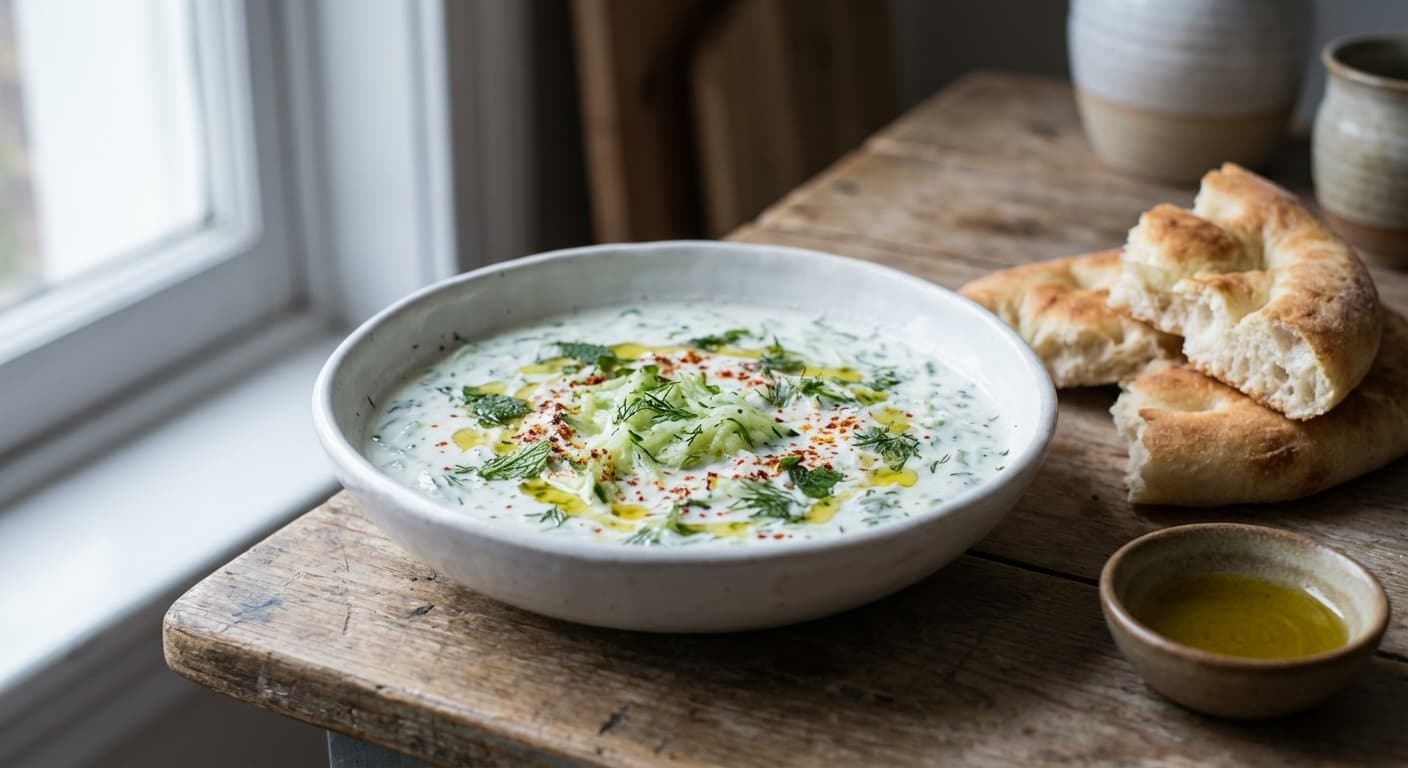
Cacık (Yoğurtlu Salatalık Mezesi) — Chilled Turkish Yogurt, Cucumber & Mint Dip
Turkish · Appetizers · 15 min
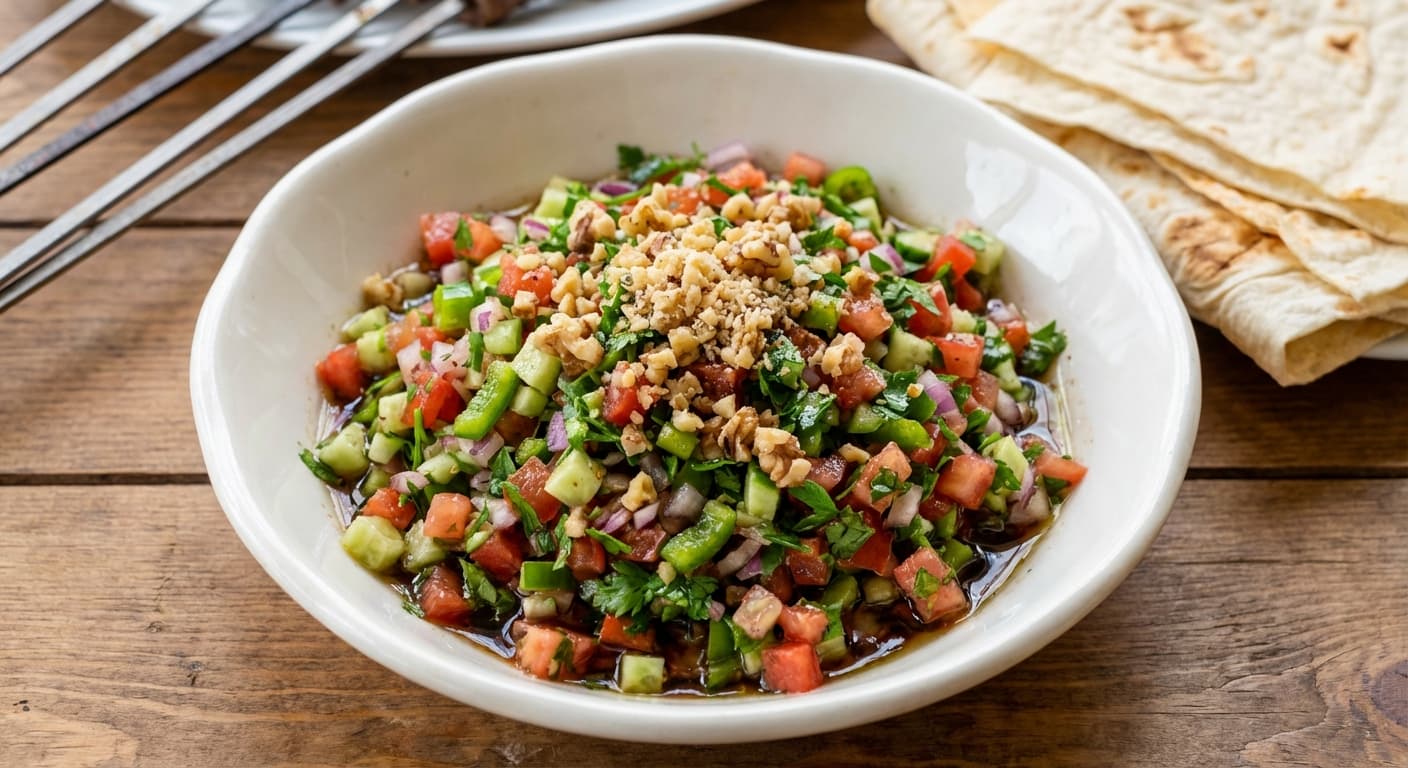
Gavurdağı Salad (Gavurdağı Salatası) — Finely Chopped Walnut & Pomegranate Salad
Turkish · Salads · 20 min
Feseekh (فسيخ) — Egyptian Salt-Cured Mullet for Sham el-Nessim
Egyptian · Main Courses · 30 min
Reviews
Cooked this recipe?
Tap the stars to rate it — that's all it takes. A few words are welcome but optional.
No ratings yet. Cooked this one? Be the first to rate it — it takes one tap.