Polow-ye Zaafarani Kari (پلو زعفرانی کاری با مرغ و تهدیگ سیبزمینی)
An elegant layered rice dish made with basmati rice, tender, juicy chicken, mushrooms, and peas; the aroma of bloomed saffron blends with the warmth of curry, and the golden, crispy potato tahdig turns it into a true Iranian feast.
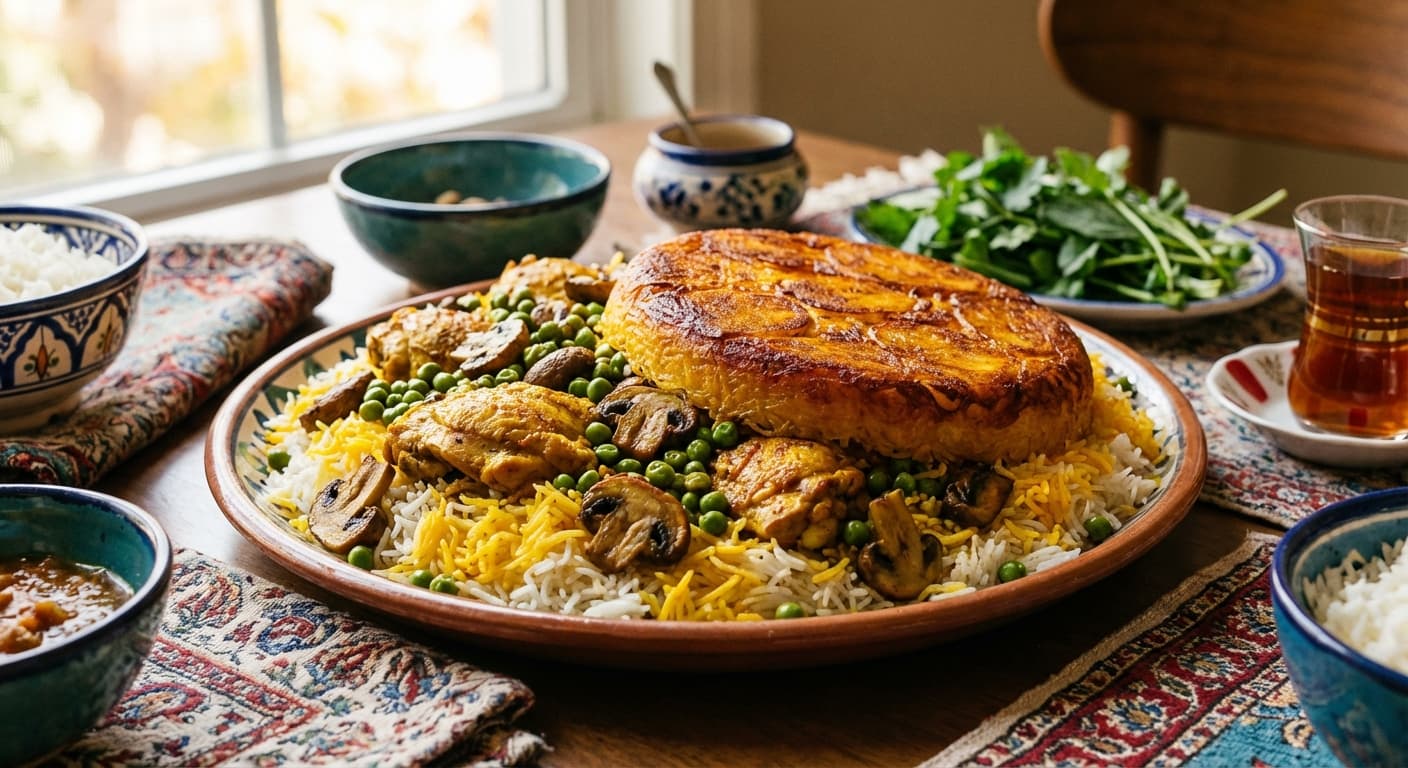
Printable Recipe Card
Servings: 6 · Total: 150 min · Difficulty: medium
Ingredients (quick list)
- 600 g Basmati rice (washed until water runs mostly clear, then soaked)
- 2400 g Water (for soaking and parboiling rice (use as needed; keep a kettle ready))
- 30 g Fine sea salt (10 g for soaking + 20 g for parboiling water)
- 0.5 tsp Saffron threads (finely ground in a mortar)
- 60 ml Hot water (just off the boil, for blooming saffron)
- 700 g Chicken thighs, boneless skinless (cut into 4–5 cm pieces)
- 220 g Yellow onion (finely diced)
- 12 g Garlic (minced (about 3 cloves))
- 45 ml Neutral oil (divided: 30 ml for sauté + 15 ml for tahdig)
- 40 g Unsalted butter (divided: 20 g for filling + 20 g for rice steaming)
- 2 tbsp Curry powder (Persian-style mild curry blend preferred)
- 1 tsp Ground turmeric (for deeper color and warmth)
+ 7 more in the full ingredients section below.
Steps (summary)
- Bloom the saffron: grind 0.5 tsp saffron threads to a fine powder, then pour 60 ml hot water (just off boiling) over it in a sm…
- Soak the rice for fluffier grains: cover the washed rice with about 1.5 liters cool water and dissolve 10 g fine sea salt into…
- Cook the curry chicken base: heat 30 ml neutral oil and 20 g butter in a wide skillet over medium heat. Add diced onion and sau…
- Brown and braise: increase heat to medium-high and cook chicken 6–8 minutes, stirring, until edges color. Pour in 240 ml chicke…
- Finish the filling: stir in drained peas and cook 2 minutes just to heat through, keeping peas bright green. Taste and adjust s…
- Parboil the rice: bring a large pot of water to a rolling boil (at least 3 liters). Add 20 g fine sea salt. Drain soaked rice a…
+ 4 more steps in the full instructions section below.
Cultural Background
Layered rice dishes in Iranian cooking are a symbol of hospitality and generosity, and tahdig is the most beloved part of the table—showcasing the cook’s skill. In this version, the celebratory fragrance of saffron is paired with warm curry spices, a fusion inspired by Iranian tastes and the region’s long history of spice trade and exchange.
Equipment
💡 Tips
- For a deeper saffron aroma, warm the bloomed saffron cup by setting it near the steaming pot (not boiling) during the final 10 minutes.
- Keep the filling relatively dry; excess sauce can make the rice clump and soften the tahdig.
- If you prefer extra-golden rice, mix 4 tbsp cooked rice with 1 tbsp saffron solution and place it on top before steaming.
⚠️ Common Mistakes
❌ Overboiling the rice during parboil
💡 Why: If the grains fully cook in boiling water, they break and turn sticky during steaming, collapsing the layers.
✅ Fix: Boil only until the outside is soft but the center is firm (6–8 minutes). Taste a grain; it should have a slight bite.
❌ Adding a watery chicken mixture into the layers
💡 Why: Excess liquid migrates downward, softening the potato tahdig and making the rice clump.
✅ Fix: Simmer the filling uncovered 2–4 minutes until glossy and lightly thick; there should be no pooling liquid.
❌ Steaming on high heat for too long
💡 Why: High heat can burn the tahdig before the rice finishes steaming and can dry out the chicken.
✅ Fix: Use medium-low for 10 minutes to build steam, then low for 45 minutes. Listen for a gentle sizzle, not aggressive frying.
❌ Flipping the pot immediately after cooking
💡 Why: Tahdig can stick if it hasn’t rested; steam keeps starch tacky.
✅ Fix: Rest covered 10 minutes off heat, then flip. If still stuck, warm on low 3–5 minutes to release.
🧊 How to Store
Cool leftovers within 2 hours. Refrigerate in an airtight container up to 3 days. Reheat covered with 2 tbsp water in a pot on low 12–15 minutes or in a microwave at 60% power, stirring once. Tahdig re-crisps best in a lightly oiled skillet over medium heat 4–6 minutes.
📅 Make Ahead
You can bloom saffron up to 24 hours ahead and refrigerate it in a sealed jar. The chicken-mushroom-pea curry can be cooked 1 day ahead; cool, refrigerate, and rewarm gently before layering. Parboil rice and assemble the same day for best grain separation and crisp tahdig.
🍽️ Pairs Well With
- Mast-o Khiar (yogurt with cucumber and mint)
- Shirazi salad (cucumber
- tomato
- onion
- lime)
- Torshi (Persian pickles)
- Doogh (yogurt drink) or black tea after the meal
Regional Variations
- Tehran (Majlesi style)Often richer with more butter and a stronger saffron finish; the top layer may be tinted saffron-yellow for a dramatic serving platter.
- Shiraz (Herb-forward twist)Adds 15 g chopped fresh dill and 10 g chopped parsley to the filling, giving a greener aroma that pairs beautifully with peas and mushrooms.
- Northern Iran (Mazandaran/Gilan-inspired)Uses more mushrooms and sometimes a touch of sourness—add 1 tbsp fresh lime juice to the filling at the end for a brighter, coastal feel.
Ingredients
- 600 gBasmati rice (washed until water runs mostly clear, then soaked)
- 2400 gWater (for soaking and parboiling rice (use as needed; keep a kettle ready))
- 30 gFine sea salt (10 g for soaking + 20 g for parboiling water)
- 0.5 tspSaffron threads (finely ground in a mortar)
- 60 mlHot water (just off the boil, for blooming saffron)
- 700 gChicken thighs, boneless skinless (cut into 4–5 cm pieces)
- 220 gYellow onion (finely diced)
- 12 gGarlic (minced (about 3 cloves))
- 45 mlNeutral oil (divided: 30 ml for sauté + 15 ml for tahdig)
- 40 gUnsalted butter (divided: 20 g for filling + 20 g for rice steaming)
- 2 tbspCurry powder (Persian-style mild curry blend preferred)
- 1 tspGround turmeric (for deeper color and warmth)
- 1 tspBlack pepper (freshly ground)
- 8 gKosher salt (for the chicken mixture (adjust to taste))
- 240 mlChicken stock (or water; for gentle braise)
- 300 gMushrooms (cremini or white button, sliced 5 mm)
- 200 gFrozen green peas (thawed under cool water and drained well)
- 450 gPotatoes (peeled and sliced into 3 mm rounds for tahdig)
- 2 tbspGround saffron (from the bloomed solution) (use 2 tbsp of the saffron water to perfume the tahdig)
🔄 Substitutions
- Chicken thighs, boneless skinless→ Chicken breast, 650 g, cut into 3 cm pieces
- Mushrooms (cremini/button), 300 g→ Oyster mushrooms, 300 g, torn into strips
- Potato tahdig→ Lavash bread tahdig, 1 large round (about 60 g)
Instructions
- 1
Bloom the saffron: grind 0.5 tsp saffron threads to a fine powder, then pour 60 ml hot water (just off boiling) over it in a small cup. Cover and steep 20 minutes to develop a deep ruby-gold color. Meanwhile, wash the basmati rice 5–6 times until the water is mostly clear.
- 2
Soak the rice for fluffier grains: cover the washed rice with about 1.5 liters cool water and dissolve 10 g fine sea salt into it. Soak 45 minutes at room temperature. This step improves elongation and helps the rice steam evenly later, especially important for a layered polo.
- 3
Cook the curry chicken base: heat 30 ml neutral oil and 20 g butter in a wide skillet over medium heat. Add diced onion and sauté 8 minutes until translucent and lightly golden. Stir in garlic for 30 seconds, then add chicken, 2 tbsp curry powder, turmeric, black pepper, and 8 g salt.
- 4
Brown and braise: increase heat to medium-high and cook chicken 6–8 minutes, stirring, until edges color. Pour in 240 ml chicken stock, scrape the pan, then cover and simmer on low 12 minutes. Uncover, add sliced mushrooms, and cook 6 minutes until they release moisture and concentrate in flavor.
- 5
Finish the filling: stir in drained peas and cook 2 minutes just to heat through, keeping peas bright green. Taste and adjust salt if needed. The mixture should be moist but not soupy; if liquid remains, simmer uncovered 2–4 minutes until it lightly coats the chicken. Set aside, covered, to keep warm.
- 6
Parboil the rice: bring a large pot of water to a rolling boil (at least 3 liters). Add 20 g fine sea salt. Drain soaked rice and add to boiling water; boil 6–8 minutes until grains are softened on the outside but still firm in the center. Drain in a colander and rinse briefly with 250 ml cool water.
- 7
Prepare potato tahdig: in a 24–26 cm nonstick pot, heat 15 ml neutral oil over medium heat. Arrange potato slices in a tight, overlapping single layer. Mix 2 tbsp of the saffron solution with 2 tbsp water and drizzle evenly over potatoes. Cook 3 minutes until you hear a gentle sizzle.
- 8
Layer the polo: reduce heat to low. Add 1/3 of the parboiled rice over the potatoes, then spoon on half the chicken-mushroom-pea mixture. Repeat with another 1/3 rice and the remaining filling, finishing with the last 1/3 rice. Dot the top with the remaining 20 g butter in small pieces.
- 9
Steam to perfection: use the handle of a wooden spoon to poke 5–6 holes down to the bottom for steam channels. Wrap the lid with a clean kitchen towel and cover tightly. Steam 10 minutes on medium-low to build heat, then 45 minutes on low. Drizzle remaining saffron solution over the top in the last 10 minutes.
- 10
Unmold and serve: turn off heat and let the pot rest, covered, 10 minutes so the tahdig releases cleanly. Fluff the rice gently from the top, keeping layers intact. To unmold, place a platter over the pot and flip confidently. If needed, return to low heat 3–5 minutes to crisp further.
🪪 Recipe Passport
Cultural Background
Layered rice dishes in Iranian cooking are a symbol of hospitality and generosity, and tahdig is the most beloved part of the table—showcasing the cook’s skill. In this version, the celebratory fragrance of saffron is paired with warm curry spices, a fusion inspired by Iranian tastes and the region’s long history of spice trade and exchange.
Regional Variations
Researched from multiple sources and validated by the Zaffaron editorial team. Every recipe is tested for accuracy, measurements, and cultural authenticity.
Nutrition per serving
Pairs well with
If you enjoyed this recipe, here are a few related Zaffaron recipes to try next.
Does your family make this differently?
Every family has their own version. Maybe your grandmother adds a secret ingredient, or your aunt has a completely different technique. Preserve your family's version — with their name on it, forever.
You Might Also Like
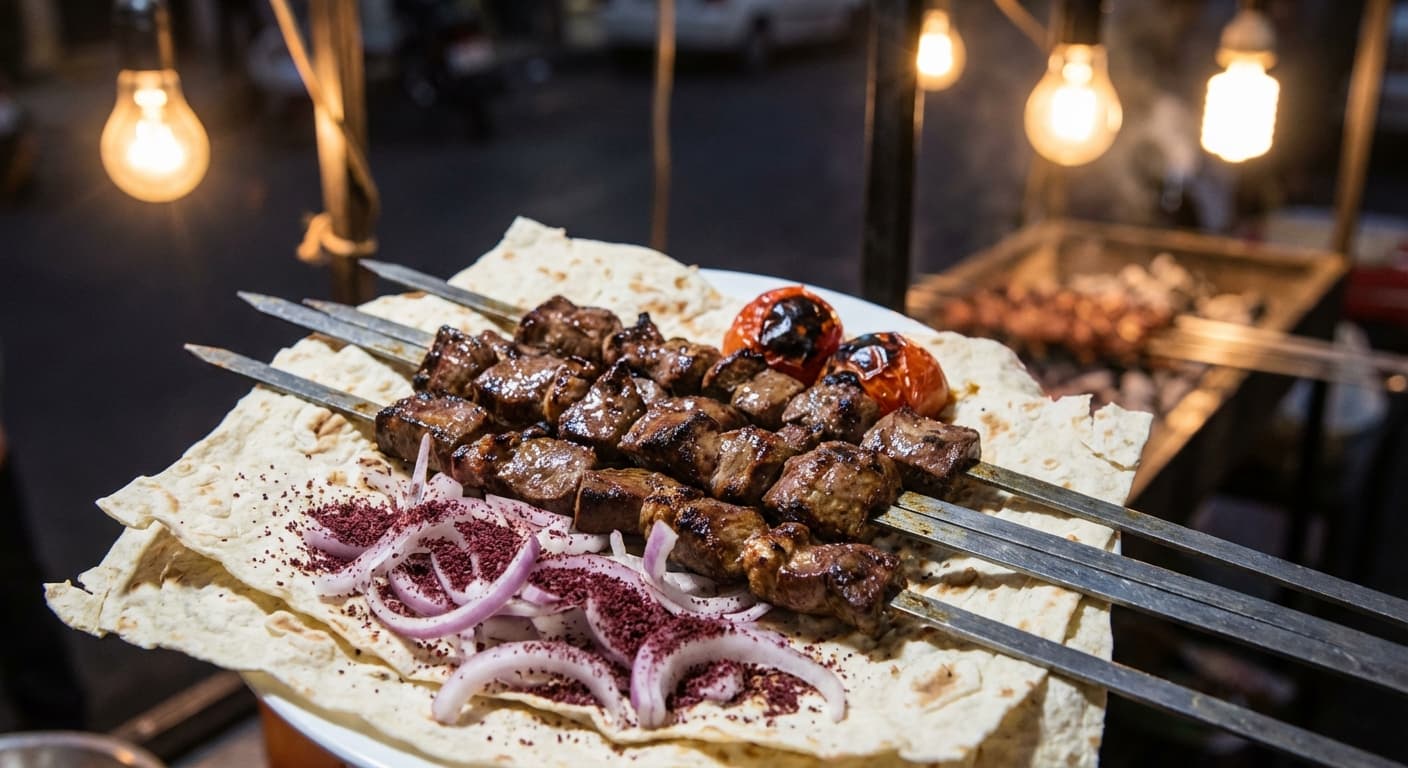
Jigar Kabab (جگر کباب) — Classic Persian Lamb Liver Skewers
Persian · Kebabs · 33 min
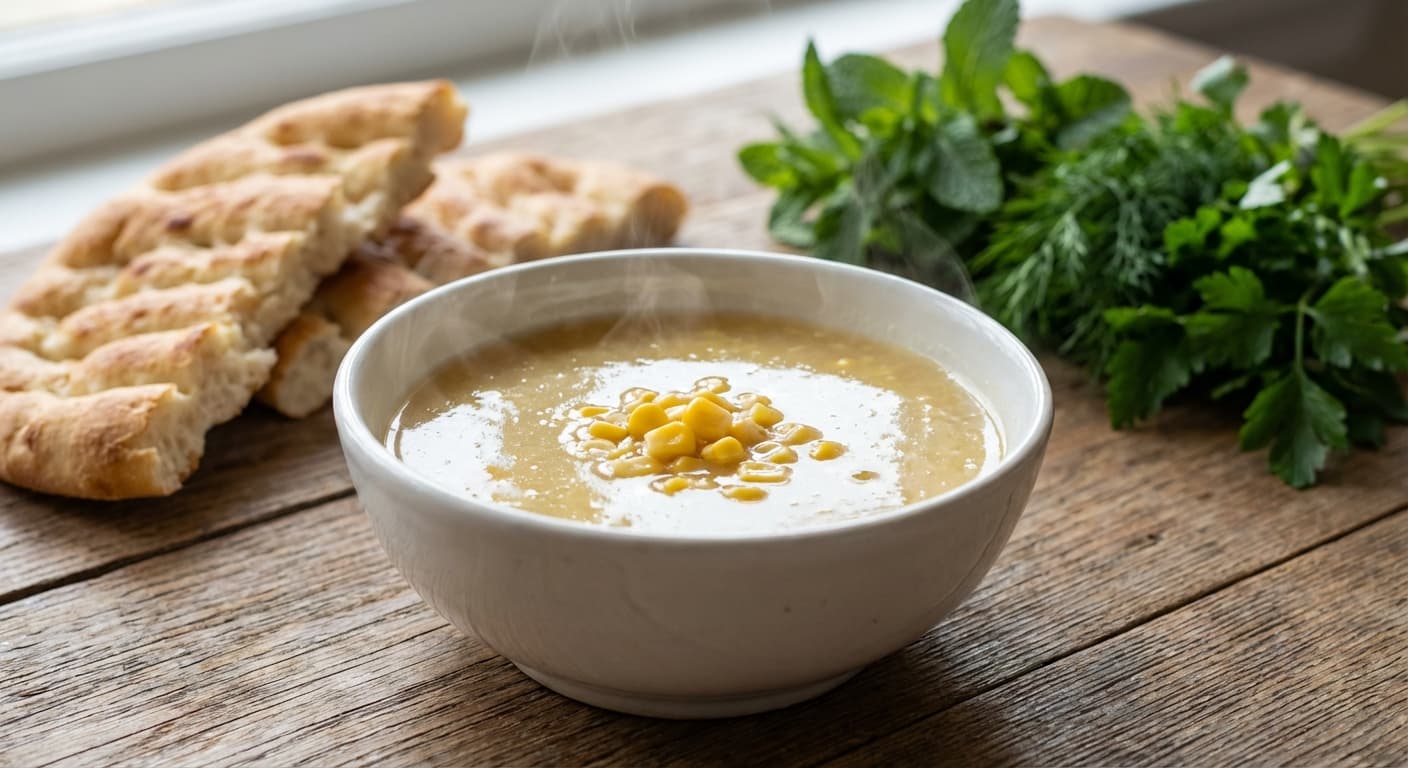
Persian Sweet Corn Soup (سوپ ذرت) — Silky Golden Comfort Soup
Persian · Soups · 50 min
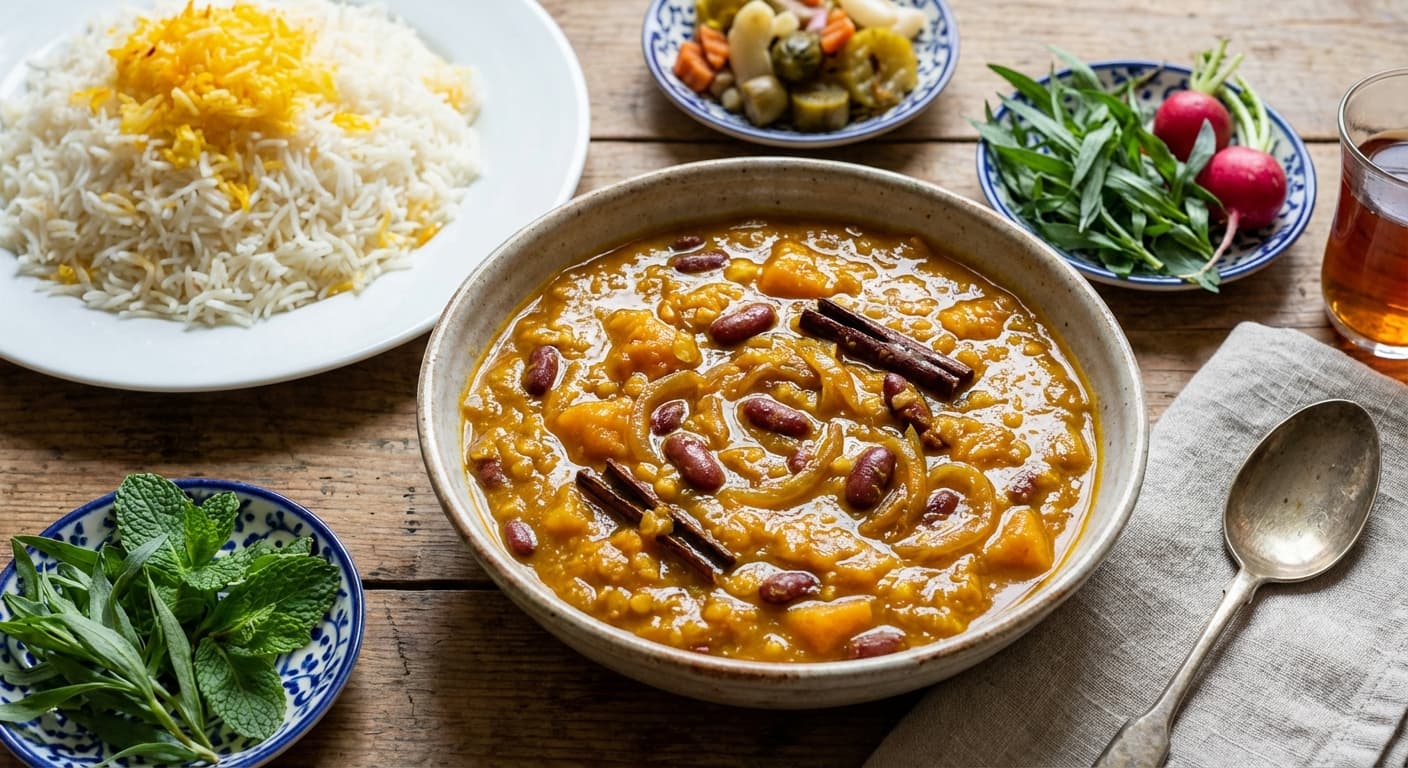
Gheimeh Kadoo Halvai (قیمه کدو حلوایی) — Sweet Pumpkin & Legume Stew
Persian · Stews · 110 min
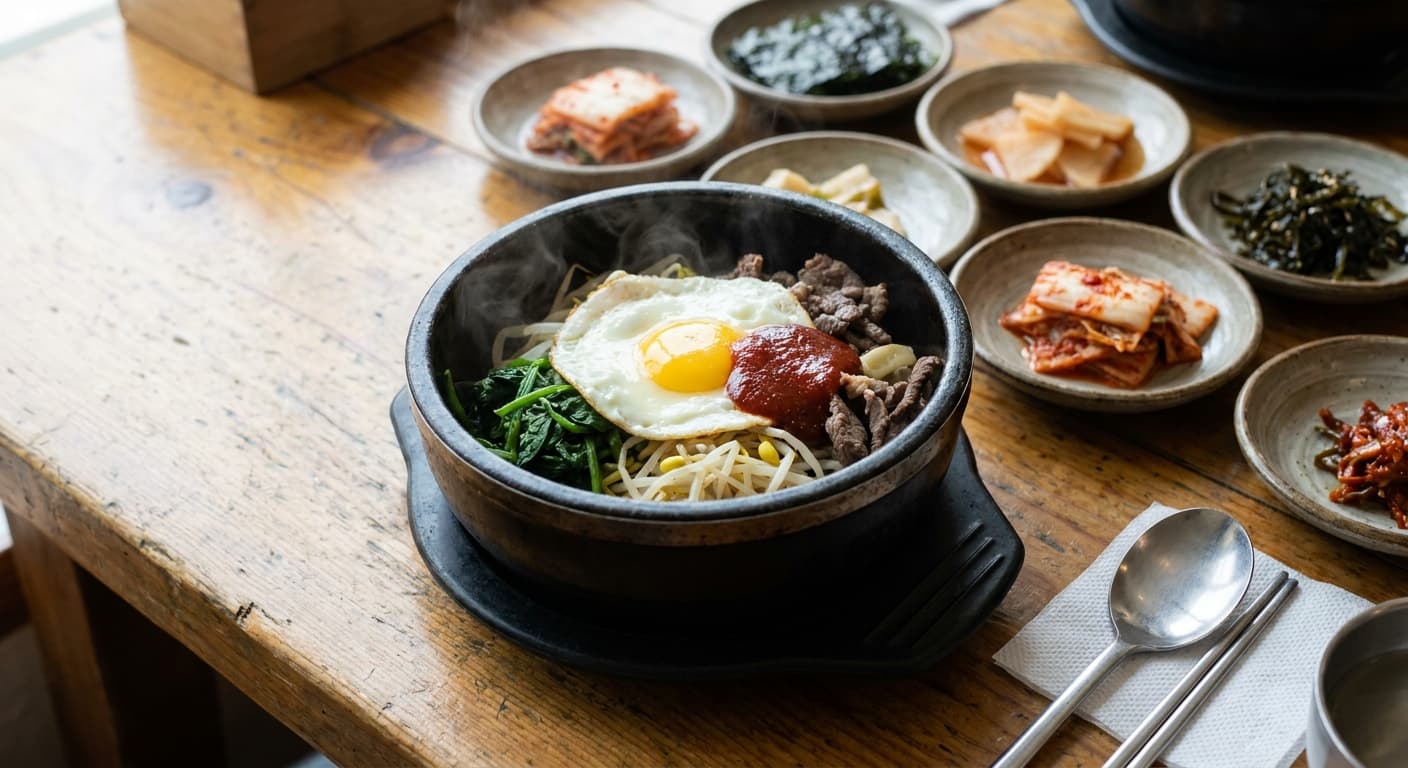
Bibimbap (비빔밥) — Korean Mixed Rice Bowl
Korean · Rice Dishes · 80 min
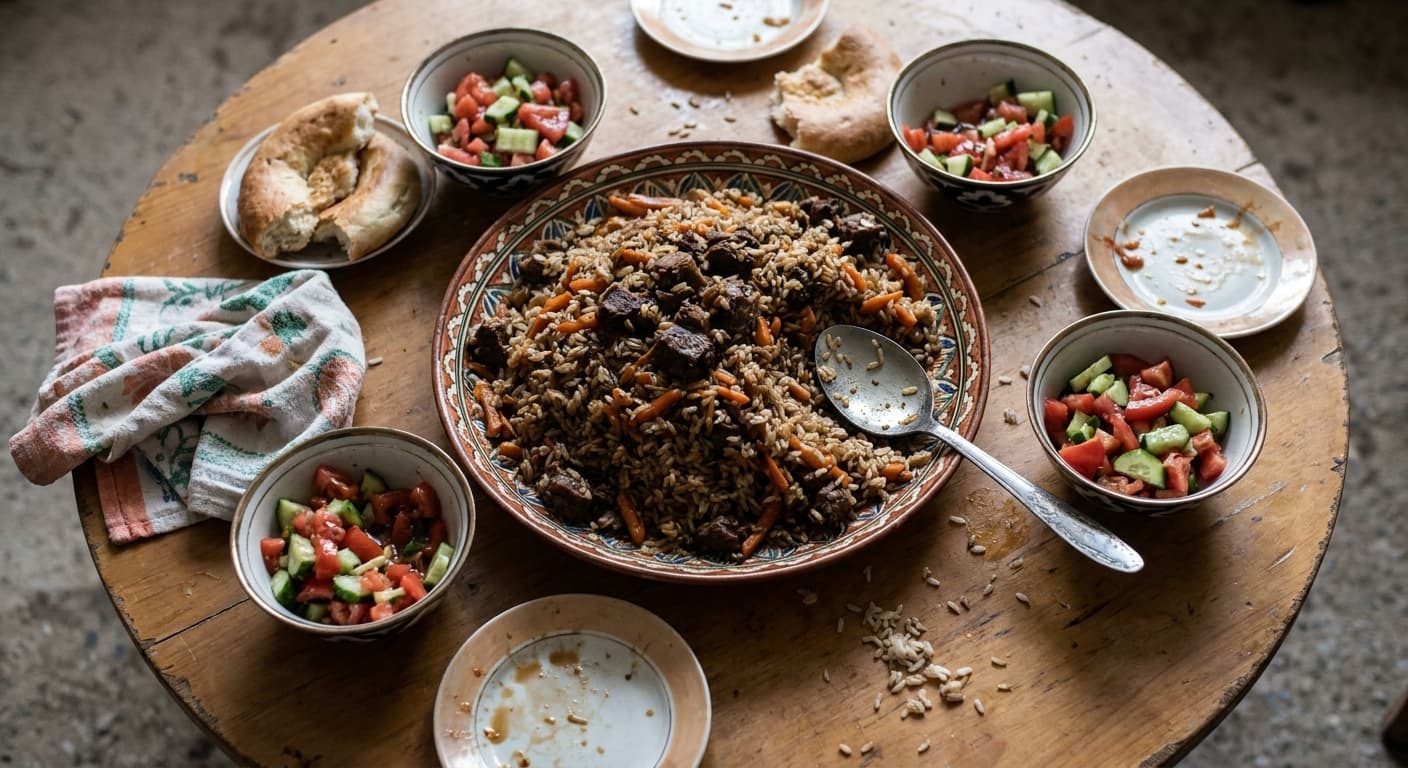
Oshi Siyoh (Оши сиёҳ) — Bukhara-Style Dark Pilaf
Tajik · Rice Dishes · 125 min
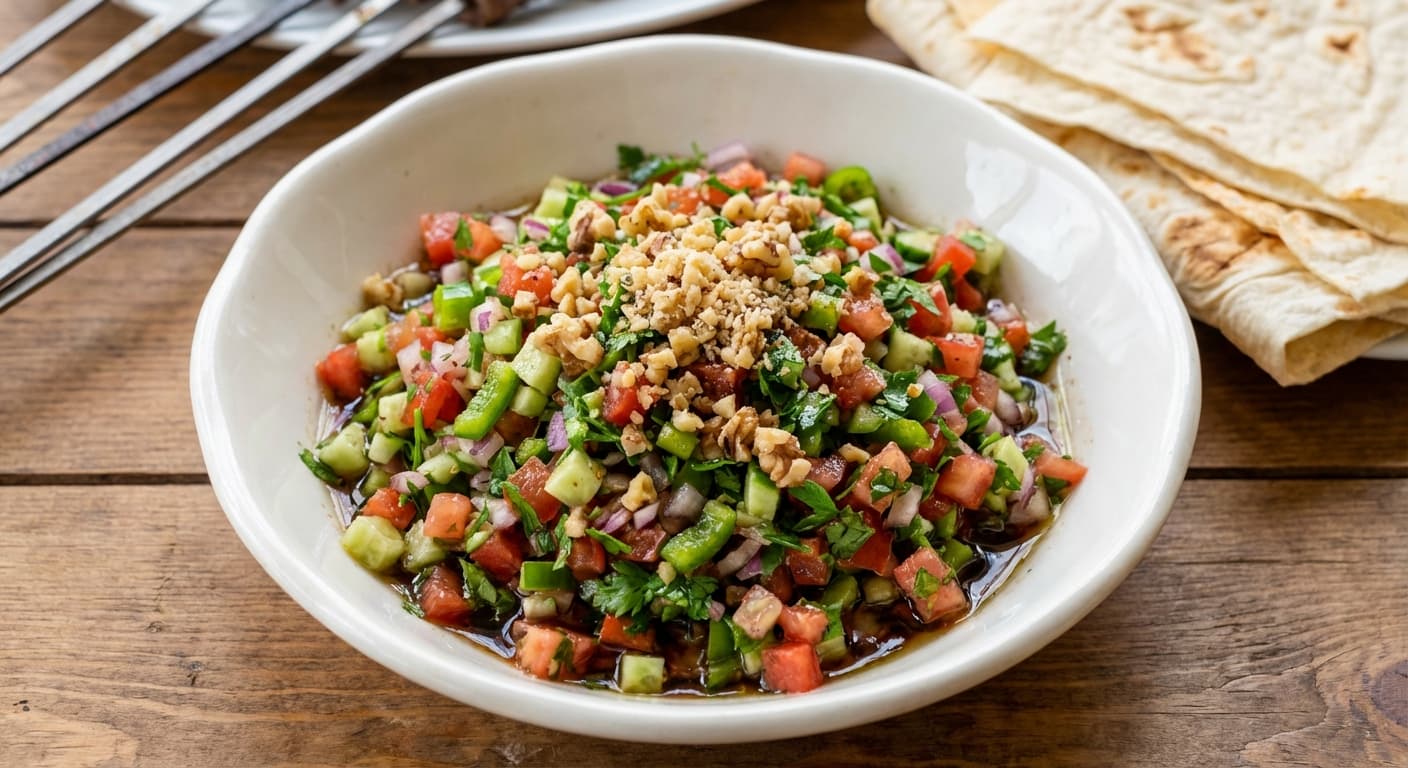
Gavurdağı Salad (Gavurdağı Salatası) — Finely Chopped Walnut & Pomegranate Salad
Turkish · Salads · 20 min
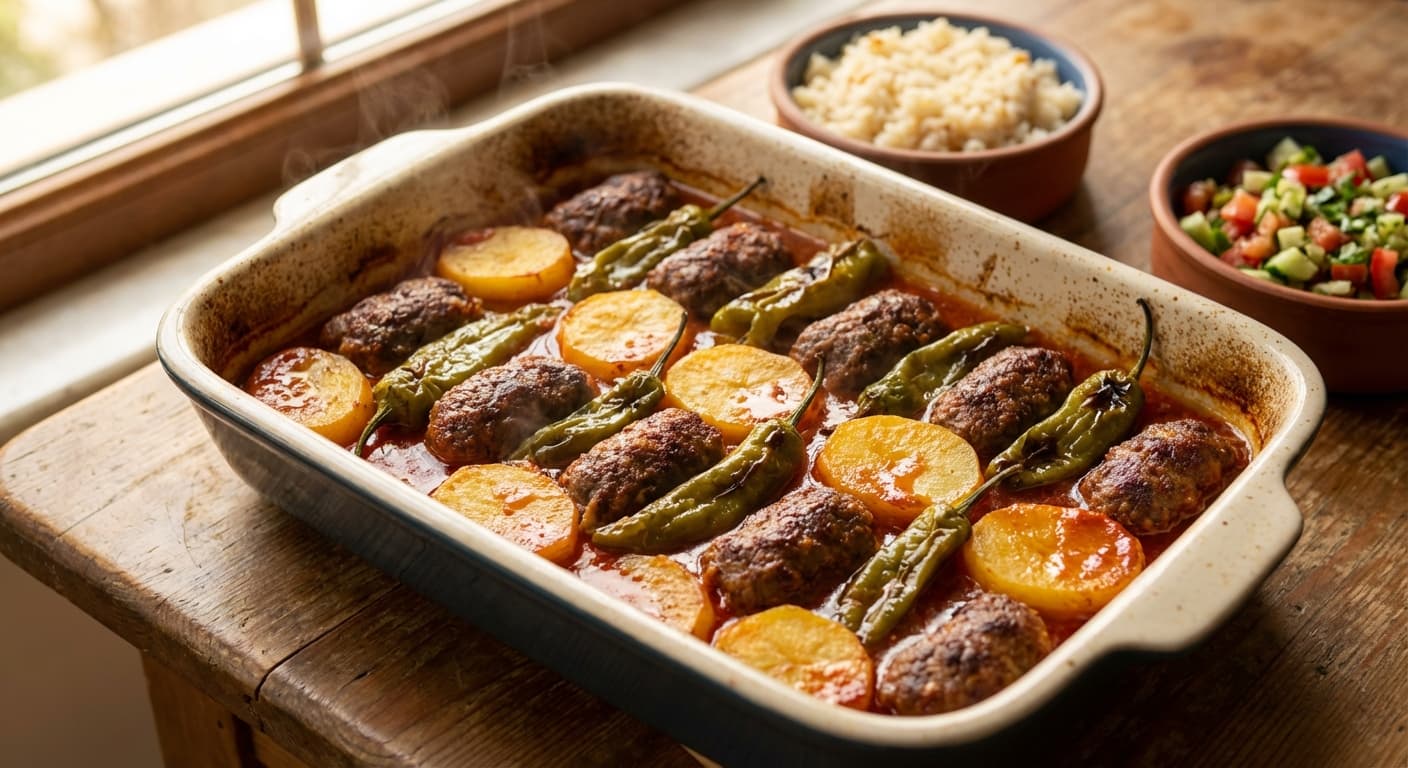
Izmir Kofte (İzmir Köfte) — Oven-Baked Meatballs with Tomato Sauce and Potatoes
Turkish · Main Courses · 70 min
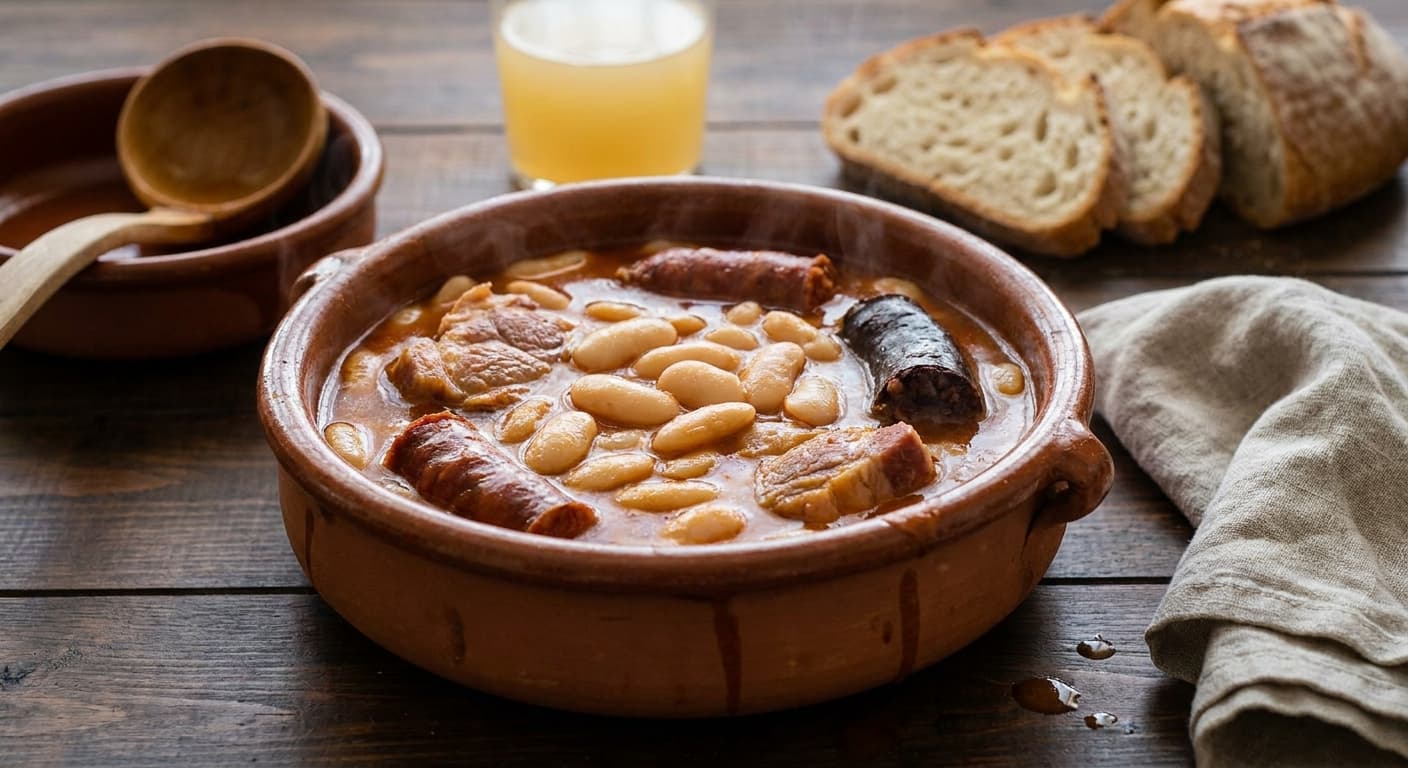
Asturian Bean Stew (Fabada Asturiana) — Smoky Spanish Bean and Pork Stew
Spanish · Stews · 210 min
Reviews
Cooked this recipe?
Tap the stars to rate it — that's all it takes. A few words are welcome but optional.
No ratings yet. Cooked this one? Be the first to rate it — it takes one tap.