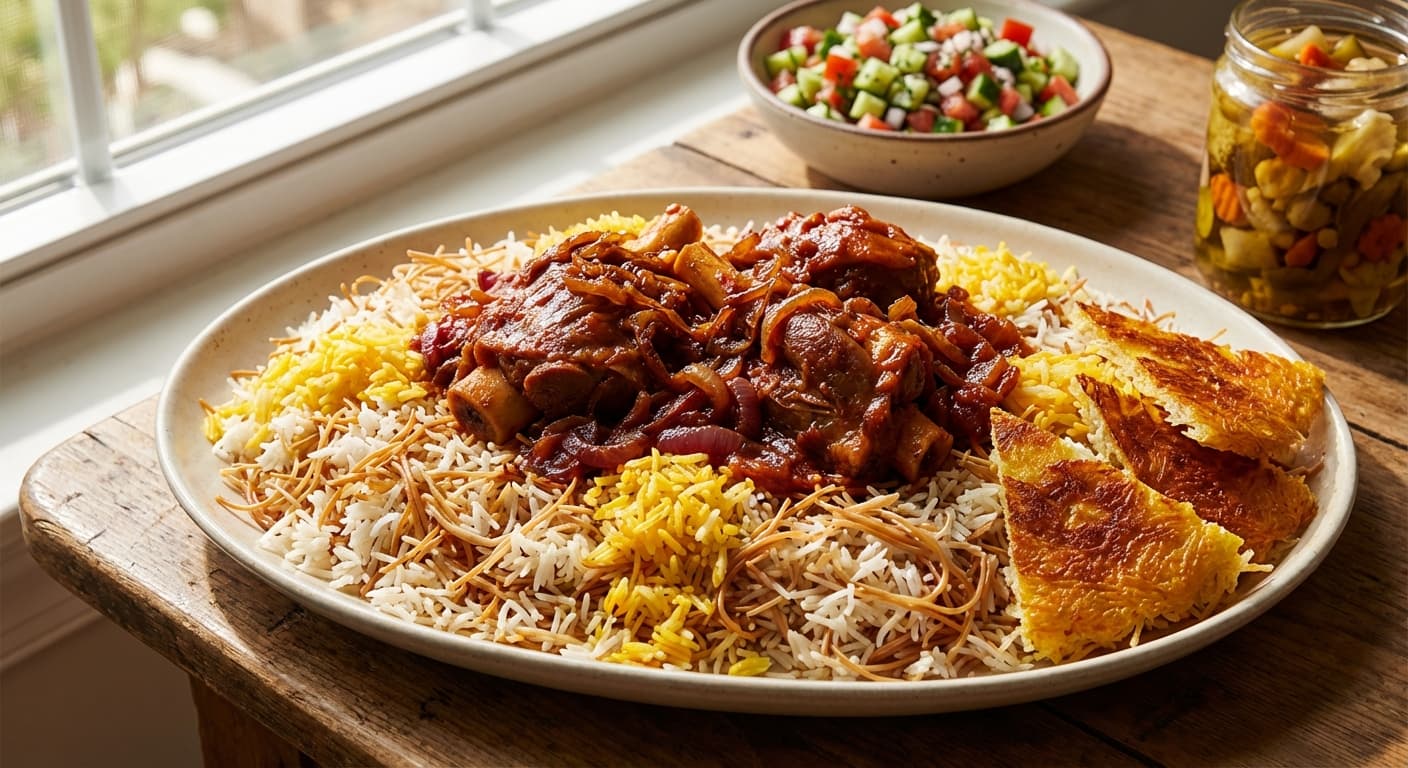
Reshteh Polo ba Gosht (رشته پلو با گوشت) — Persian Noodle Rice with Braised Meat
Reshteh Polo is a festive Persian rice dish layered with toasted noodles and topped with tender braised meat. Often served for Nowruz, it symbolizes “unraveling life’s threads” and welcoming clarity in the new year.
Printable Recipe Card
Servings: 6 · Total: 150 min · Difficulty: medium
Ingredients (quick list)
- 500 g Basmati rice, rinsed
- 150 g Rice noodles (reshteh), broken into 5 cm pieces
- 18 g Fine salt (For boiling water; about 1.5% salinity)
- 3000 ml Water (For parboiling rice and noodles)
- 0.25 tsp Saffron threads (Finely crushed)
- 60 ml Hot water (To bloom saffron)
- 60 ml Neutral oil (For pot and layering)
- 1 tsp Ground black pepper
- 1 tsp Ground cinnamon
- 2 tsp Ground turmeric
- 300 g Yellow onions, thinly sliced
- 900 g Beef chuck or lamb shoulder, cut into 4 cm cubes (Trim excess surface fat)
+ 1 more in the full ingredients section below.
Steps (summary)
- Bloom the saffron by stirring the crushed saffron threads into 60 ml hot water. Let it steep for 10–15 minutes so the color and…
- Start the braised meat: heat 30 ml oil in a heavy pot over medium heat, then add the sliced onions. Cook for 12–15 minutes, sti…
- Add the meat cubes to the onions and raise the heat to medium-high. Sear for 6–8 minutes, turning to brown multiple sides, whic…
- Stir in turmeric, black pepper, and cinnamon and cook for 30–45 seconds to toast the spices. Add the tomato paste and cook for…
- Add 700 ml water and 5 g of the salt, scraping the bottom to dissolve any browned bits into the liquid. Bring to a gentle boil,…
- While the meat braises, rinse the basmati rice under cool water until the water runs mostly clear. Soak it in fresh water for 2…
+ 8 more steps in the full instructions section below.
Cultural Background
A beloved Nowruz dish, Reshteh Polo is served to mark new beginnings and the hope of “unraveling” life’s knots in the year ahead. The noodles symbolize life’s threads, while saffron and rice signal celebration and hospitality at the Persian table.
Equipment
💡 Tips
- Break the noodles into 5 cm pieces so they distribute evenly and do not clump; longer strands tend to mat and steam unevenly.
- Keep the rice slightly underdone at the boil (al dente) because the final 40 minutes of steaming finishes the grains without turning them soft.
- For a deeper tahdig, increase the initial medium-heat steaming phase from 10 to 12 minutes, then keep the remaining steam on low to avoid scorching.
⚠️ Common Mistakes
❌ Boiling the rice and noodles until fully soft
✅ Fix: Drain when the rice is al dente and the noodles are flexible; steaming finishes cooking and keeps the final texture fluffy.
❌ Skipping the tomato paste toasting step
✅ Fix: Cook the paste in oil for 2 minutes until darker; it removes raw acidity and gives the braise a deeper color.
❌ Steaming on high heat the entire time
✅ Fix: Use medium heat only to build initial steam, then switch to low to prevent burning and keep grains separate.
🧊 How to Store
Cool rice and meat separately within 60 minutes, then refrigerate in airtight containers for up to 3 days. Reheat rice covered with 15 ml water per serving in a pan on low for 8–10 minutes; rewarm meat gently with its sauce to keep it tender.
📅 Make Ahead
Braise the meat up to 2 days ahead and refrigerate it in its sauce; the flavor improves overnight. Rinse and soak the rice earlier the same day, but boil and steam it close to serving for the best noodle texture and tahdig.
🍽️ Pairs Well With
- Shirazi salad
- torshi
- mast-o-khiar
- fresh herbs (sabzi khordan)
- pickled garlic (seer torshi).
Regional Variations
- Tehran-style: served with dates and raisins sautéed in a little oil and cinnamon, spooned over the rice for a sweet-savory contrast.
- Khorasan-style: a touch more saffron and cinnamon is used, and the meat is often lamb for a richer aroma.
- Home-style shortcut: the meat is replaced with shredded chicken braised with onions and tomato paste for a lighter, faster topping.
Ingredients
- 500 gBasmati rice, rinsed
- 150 gRice noodles (reshteh), broken into 5 cm pieces
- 18 gFine salt (For boiling water; about 1.5% salinity)
- 3000 mlWater (For parboiling rice and noodles)
- 0.25 tspSaffron threads (Finely crushed)
- 60 mlHot water (To bloom saffron)
- 60 mlNeutral oil (For pot and layering)
- 1 tspGround black pepper
- 1 tspGround cinnamon
- 2 tspGround turmeric
- 300 gYellow onions, thinly sliced
- 900 gBeef chuck or lamb shoulder, cut into 4 cm cubes (Trim excess surface fat)
- 45 gTomato paste (About 3 tbsp)
🔄 Substitutions
- Beef chuck or lamb shoulder→ Boneless beef short ribs
- Rice noodles (reshteh)→ Thin vermicelli (broken) + 5 g extra salt in the boil
- Neutral oil→ Ghee
Instructions
- 1
Bloom the saffron by stirring the crushed saffron threads into 60 ml hot water. Let it steep for 10–15 minutes so the color and aroma fully develop, then set it aside for the rice finishing.
- 2
Start the braised meat: heat 30 ml oil in a heavy pot over medium heat, then add the sliced onions. Cook for 12–15 minutes, stirring often, until deeply golden and sweet, because this is the base flavor for the stew-like topping.
- 3
Add the meat cubes to the onions and raise the heat to medium-high. Sear for 6–8 minutes, turning to brown multiple sides, which builds a richer braising sauce and prevents the meat from tasting flat.
- 4
Stir in turmeric, black pepper, and cinnamon and cook for 30–45 seconds to toast the spices. Add the tomato paste and cook for 2 minutes, stirring constantly, until it darkens slightly and loses its raw taste.
- 5
Add 700 ml water and 5 g of the salt, scraping the bottom to dissolve any browned bits into the liquid. Bring to a gentle boil, then reduce to a low simmer, cover, and cook 75–90 minutes until the meat is tender and the sauce is lightly thickened.
- 6
While the meat braises, rinse the basmati rice under cool water until the water runs mostly clear. Soak it in fresh water for 20 minutes to help the grains elongate and cook evenly, then drain well.
- 7
Bring 3000 ml water to a rolling boil in a large pot and dissolve 18 g salt into it. Add the drained rice and boil for 5 minutes, stirring gently once or twice to prevent sticking, because basmati needs room to move for fluffy results.
- 8
Add the broken rice noodles to the same pot and continue boiling for 3–4 minutes. The rice should be al dente with a firm center, and the noodles should be flexible but not mushy, then immediately drain in a colander.
- 9
Rinse the drained rice-and-noodle mixture quickly with 250 ml cool water to stop cooking and reduce surface starch. Let it drain for 5 minutes so the steaming phase in the pot does not turn soggy.
- 10
Set up the pot for steaming: heat 60 ml oil in a nonstick or well-seasoned pot over medium heat for 1 minute. Add a thin layer of the rice-and-noodle mixture to cover the bottom, then mound the rest on top in a gentle pyramid to encourage even steam circulation.
- 11
Use the handle of a spoon to poke 5–6 steam holes down to the bottom of the pot. Wrap the lid in a clean towel, cover tightly, and steam on medium heat for 10 minutes until you see strong steam, then reduce to low and steam 35 minutes to set the tahdig and fully cook the grains.
- 12
Finish the rice with saffron: drizzle 45 ml of the bloomed saffron over the top of the rice and steam 5 more minutes on low. This keeps the saffron aroma bright and creates golden streaks without overmixing and breaking the grains.
- 13
Taste and finish the braised meat: uncover and simmer 5 minutes if you want a thicker sauce, then stir in the remaining 5 g salt. The meat should be spoon-tender and glossy with a tomato-onion gravy that can lightly coat the rice.
- 14
Serve by gently fluffing the rice and noodles with a spatula, keeping some saffron-tinted portions visible. Plate the rice, top with the braised meat and a few spoonfuls of sauce, and finish with extra saffron liquid if desired for a celebratory Nowruz presentation.
🪪 Recipe Passport
Cultural Background
A beloved Nowruz dish, Reshteh Polo is served to mark new beginnings and the hope of “unraveling” life’s knots in the year ahead. The noodles symbolize life’s threads, while saffron and rice signal celebration and hospitality at the Persian table.
Regional Variations
Researched from multiple sources and validated by the Zaffaron editorial team. Every recipe is tested for accuracy, measurements, and cultural authenticity.
Nutrition per serving
Pairs well with
If you enjoyed this recipe, here are a few related Zaffaron recipes to try next.
- Sabzi Khordan (سبزی خوردن) — Persian Herb Mezze with Feta and Eggs
- Saffron Chicken Toastie (توستی مرغ زعفرانی) — Persian-Inspired Mozzarella Sandwich
- Reshteh Polo (رشته پلو) — Persian Noodle Rice with Black-Eyed Peas
- Rosemary Slow-Braised Beef Kabab (کباب گوشت گاو) — Persian-Inspired Rosemary Roast in Aromatic Broth
Does your family make this differently?
Every family has their own version. Maybe your grandmother adds a secret ingredient, or your aunt has a completely different technique. Preserve your family's version — with their name on it, forever.
You Might Also Like
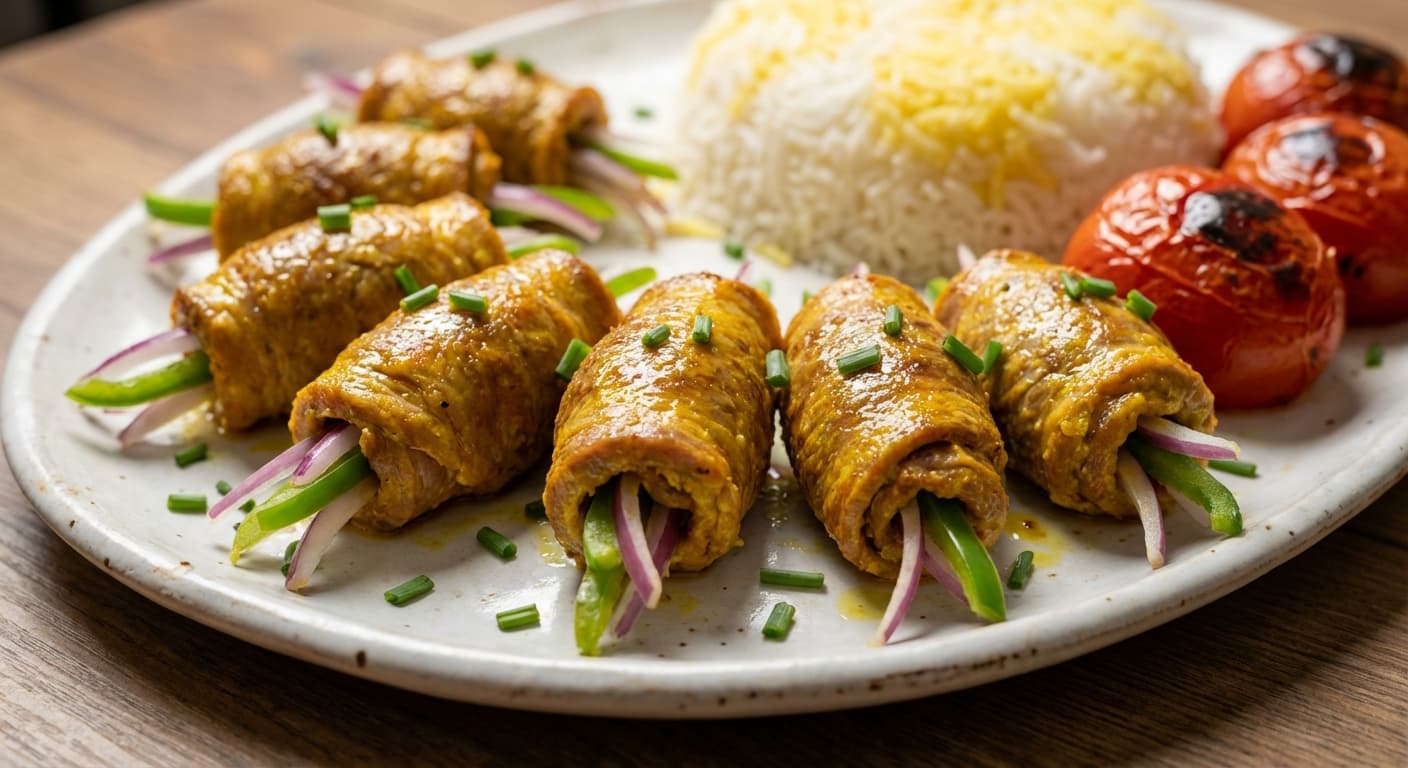
Bulgar Kabab (کباب بلغار) — Persian Rolled Saffron Fillets
Persian · Kebabs · 37 min
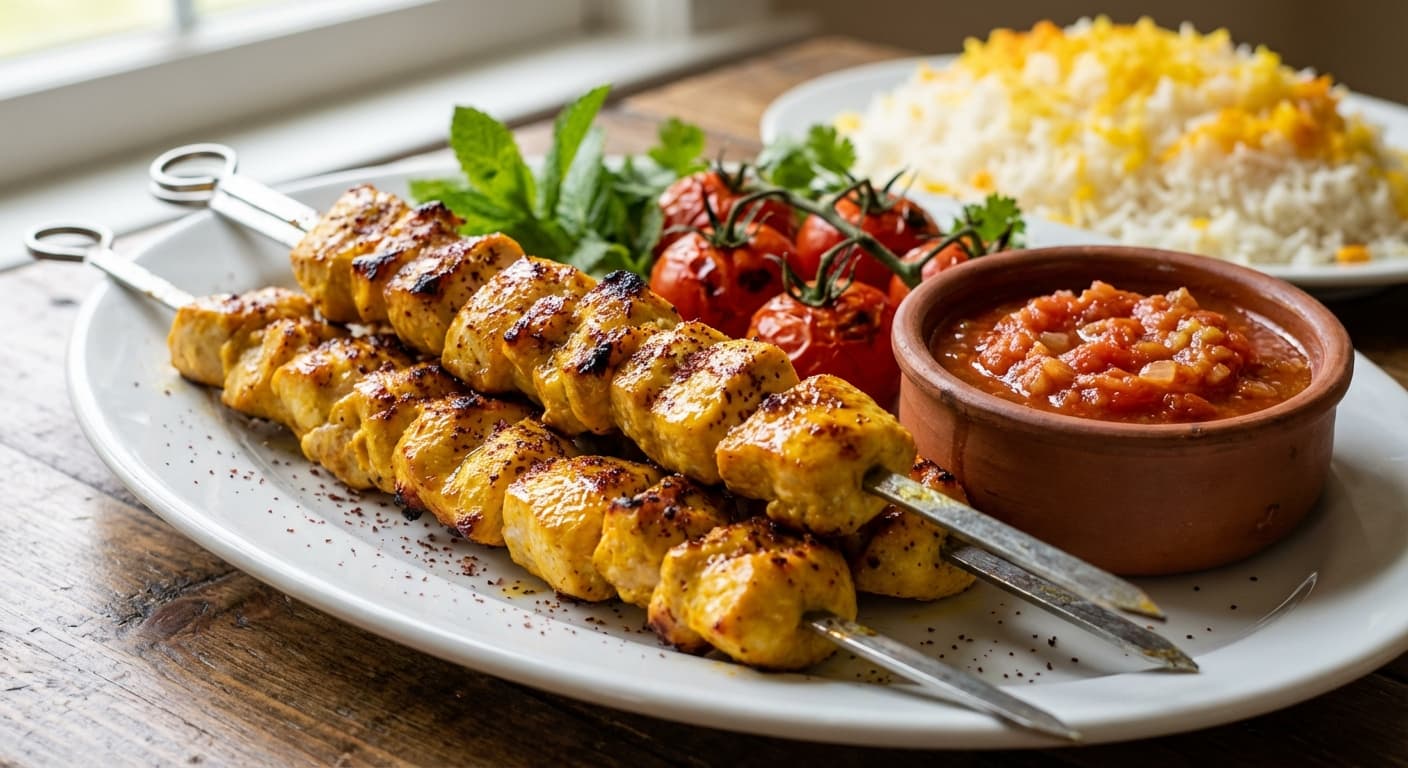
Jujeh Kabab (جوجه کباب) — Saffron-Turmeric Chicken with Rustic Tomato Sauce
Persian · Kebabs · 45 min
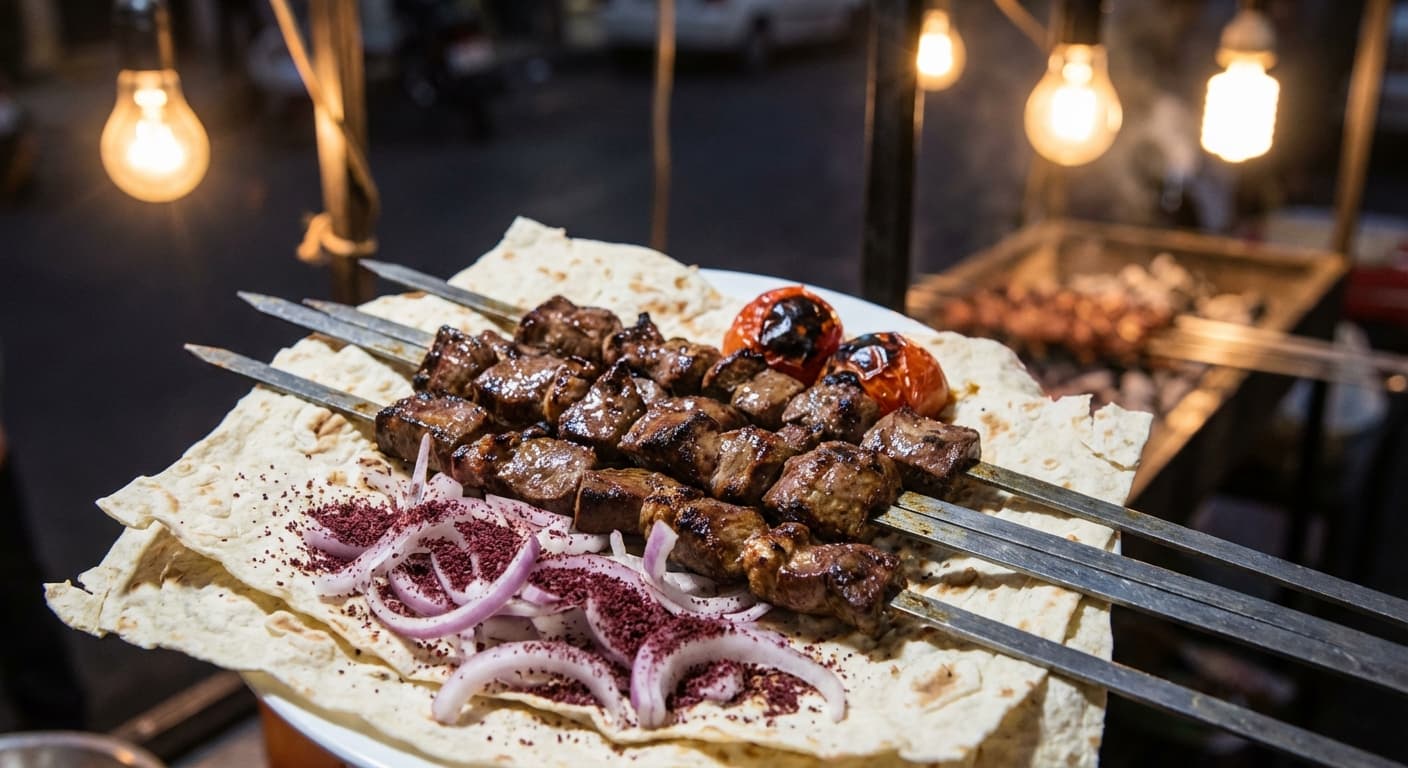
Jigar Kabab (جگر کباب) — Classic Persian Lamb Liver Skewers
Persian · Kebabs · 33 min
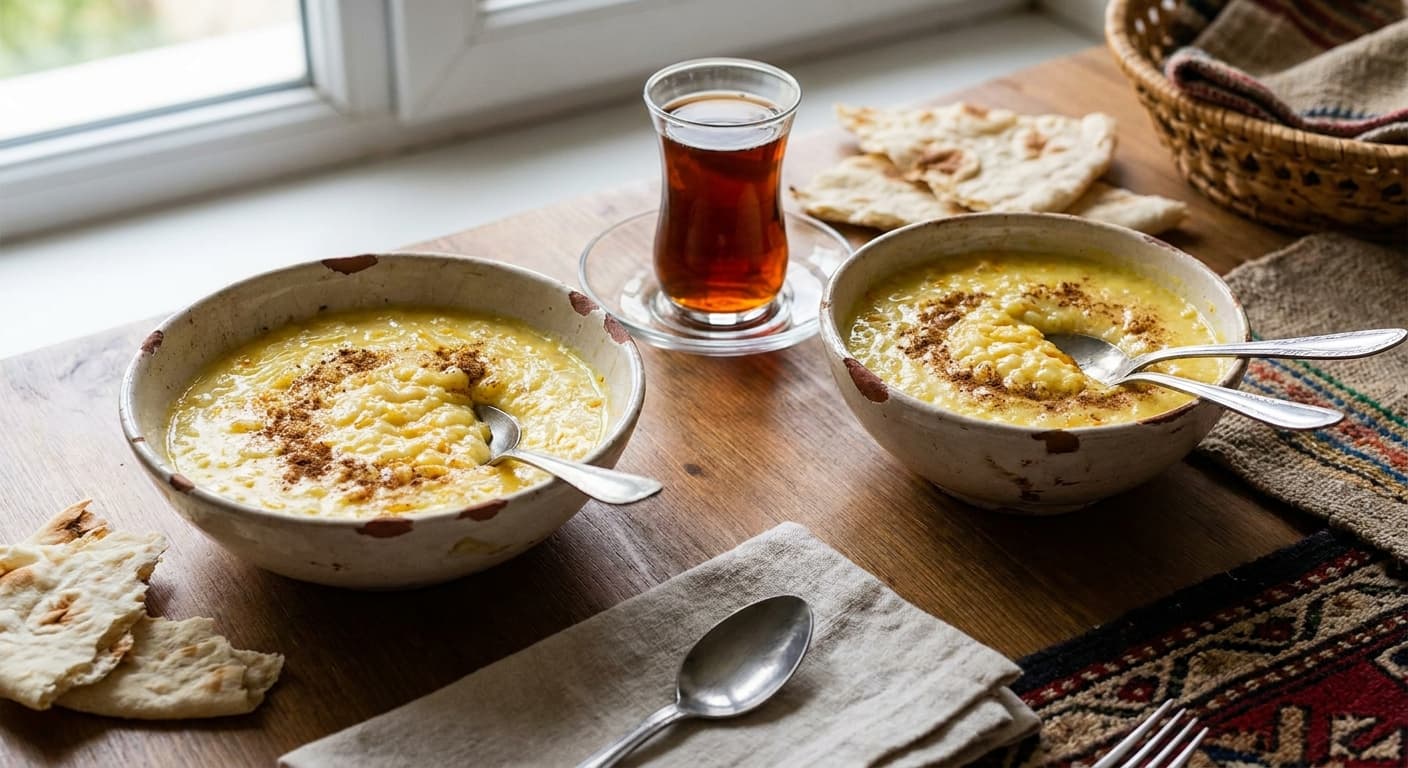
Azerbaijani Milk-Rice Porridge (Südlü Sıyıq) — Creamy Breakfast Rice with Saffron
Azerbaijani · Rice Dishes · 50 min
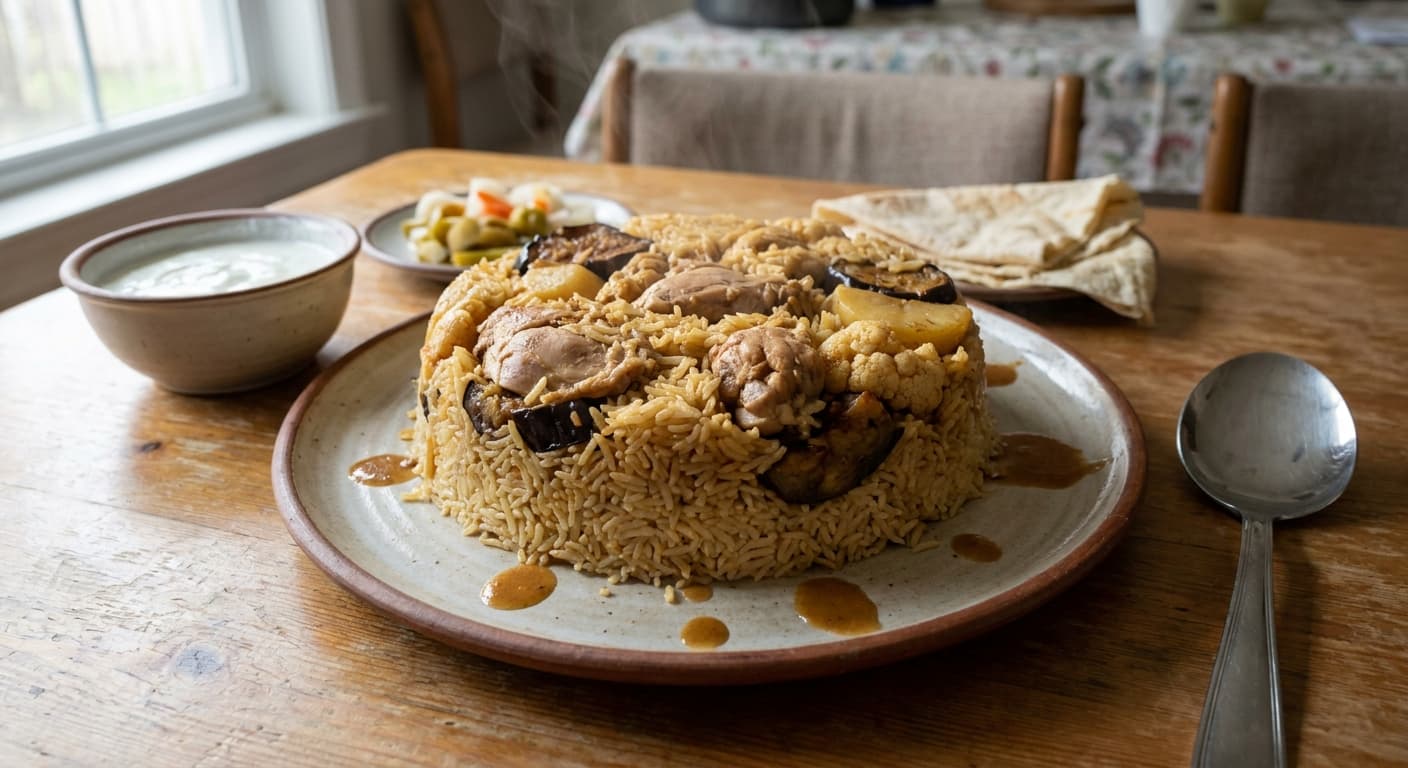
Maqluba (مقلوبة) — Jordanian Upside-Down Rice with Chicken
Jordanian · Rice Dishes · 110 min
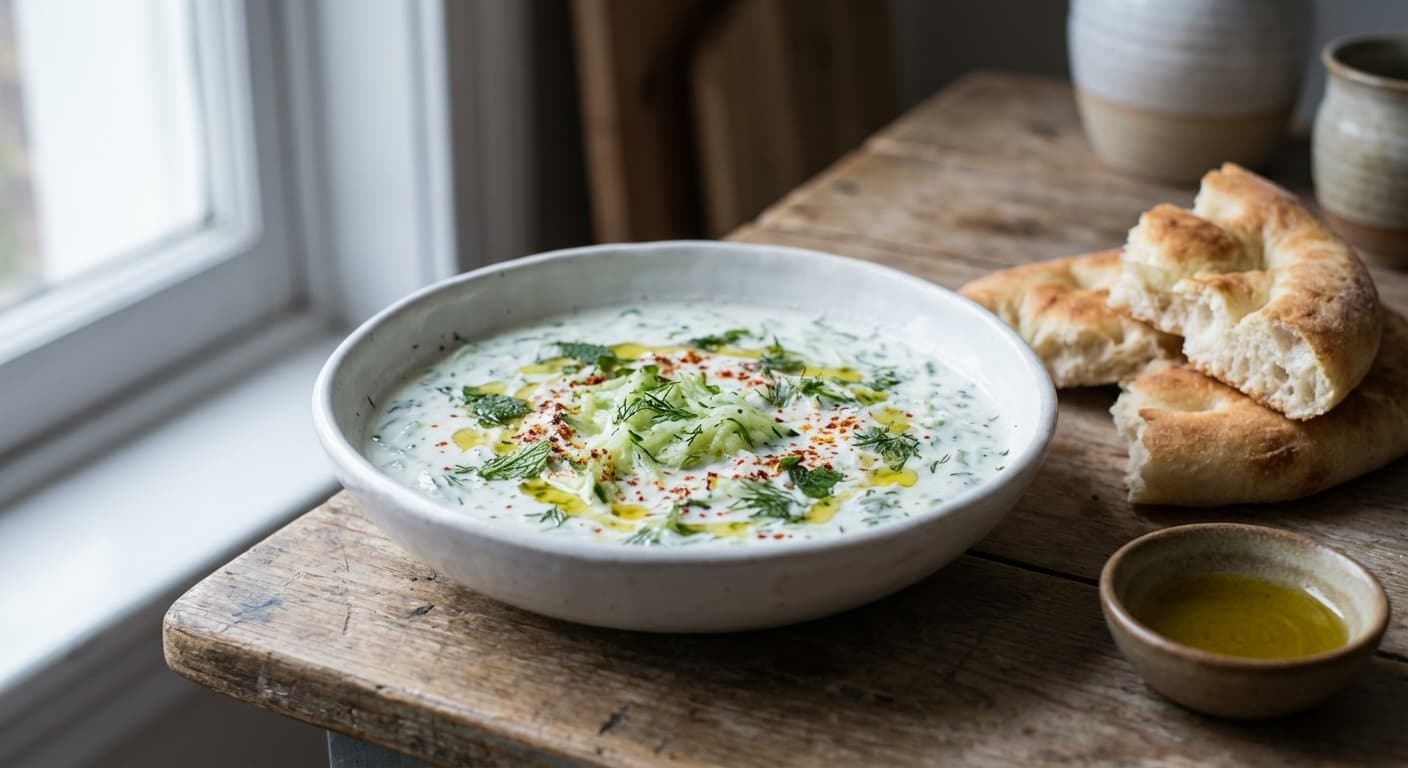
Cacık (Yoğurtlu Salatalık Mezesi) — Chilled Turkish Yogurt, Cucumber & Mint Dip
Turkish · Appetizers · 15 min
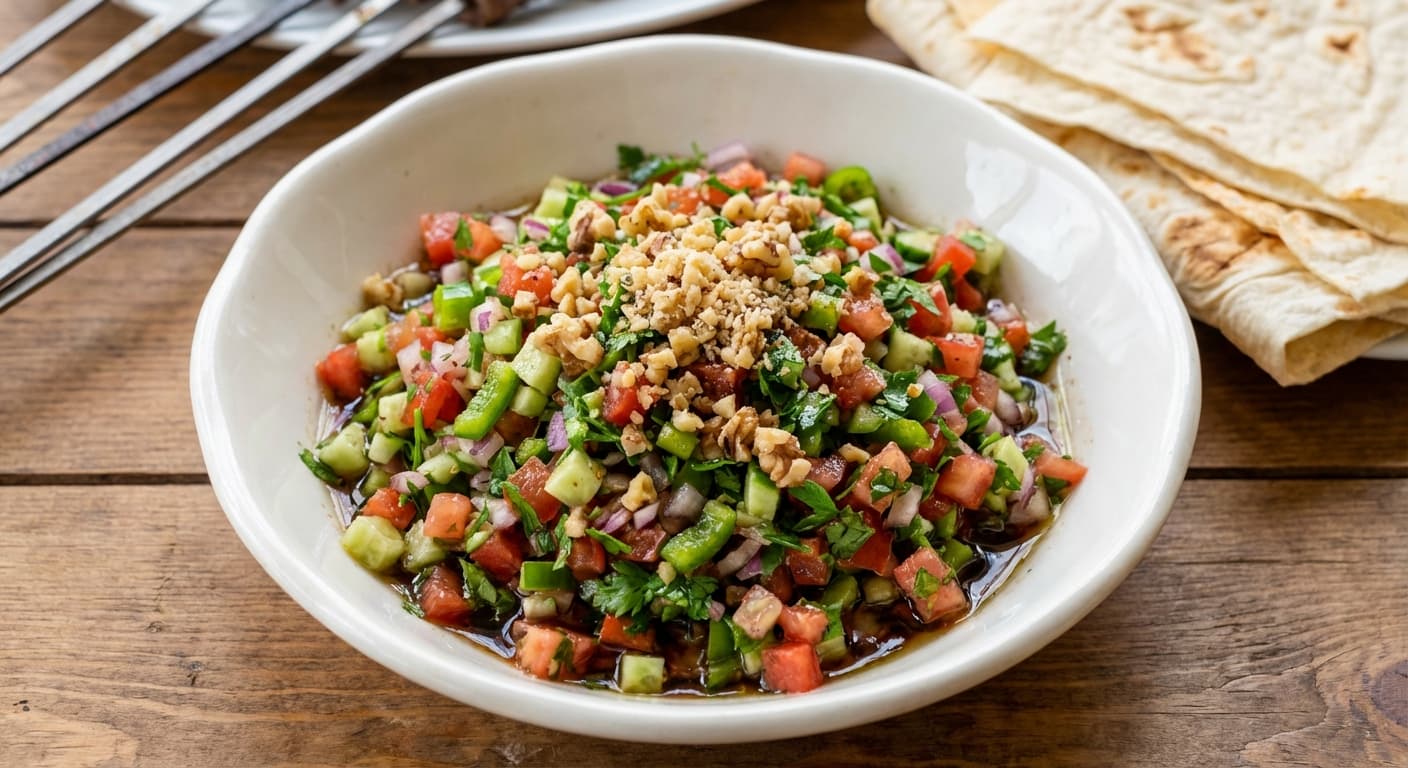
Gavurdağı Salad (Gavurdağı Salatası) — Finely Chopped Walnut & Pomegranate Salad
Turkish · Salads · 20 min
Chelo (چلو) — Persian Fluffy Steamed Rice
Persian · Rice Dishes · 125 min
Reviews
Cooked this recipe?
Tap the stars to rate it — that's all it takes. A few words are welcome but optional.
No ratings yet. Cooked this one? Be the first to rate it — it takes one tap.