Chelow-e Sadeh (چلو ساده) — Golden Persian Steamed Rice with Saffron Yogurt Tahdig
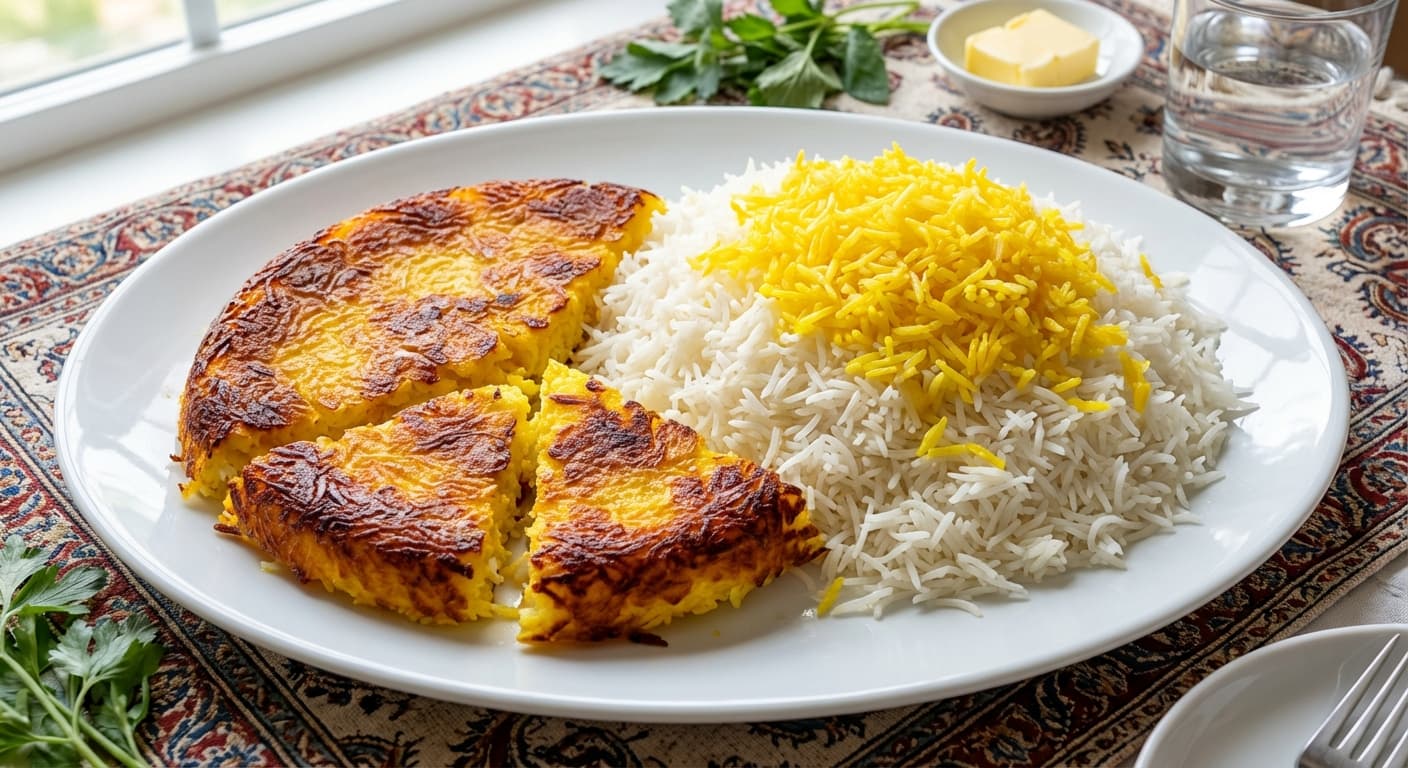
Chelow-e Sadeh is Iran’s classic steamed basmati rice: rinsed, soaked, parboiled, then gently steamed for airy grains. A saffron-yogurt tahdig forms a crisp, golden crust—an iconic centerpiece of Persian hospitality.
Printable Recipe Card
Servings: 6 · Total: 145 min · Difficulty: medium
Ingredients (quick list)
- 500 g Basmati rice (aged basmati preferred for longer grains)
- 22 g Sea salt (for soaking and parboiling water; final saltiness can be adjusted by rinsing)
- 2500 ml Water (divided: for soaking and parboiling; more as needed to cover rice)
- 0.3 g Saffron threads (about 1/2 teaspoon threads, finely crushed)
- 45 ml Boiling water (3 tablespoons, to bloom saffron)
- 120 g Plain yogurt (full-fat, unsweetened)
- 2 large Egg yolks (for color and binding the tahdig)
- 60 ml Vegetable oil (4 tablespoons, divided; neutral oil such as sunflower or canola)
Steps (summary)
- Rinse the basmati rice in a bowl with cool water, swirling gently, then drain; repeat 6–8 times until the water runs almost cle…
- Bloom the saffron: crush the saffron threads to a fine powder, then mix with 45 ml boiling water in a small cup. Cover and stee…
- Bring a large pot of water to a rolling boil (use the remaining 1000 ml water plus more if needed). Add the remaining 10 g sea…
- Drain the parboiled rice in a fine colander and rinse quickly with 250 ml cool water to stop cooking and wash off excess surfac…
- Make the tahdig base: in a bowl, whisk yogurt, egg yolks, 30 ml (2 tablespoons) vegetable oil, and 15 ml (1 tablespoon) bloomed…
- Heat a 24–26 cm nonstick pot over medium heat for 2 minutes. Add the remaining 30 ml (2 tablespoons) vegetable oil and swirl to…
+ 3 more steps in the full instructions section below.
Cultural Background
Chelow-e Sadeh is the foundational rice of Iranian home cooking and hospitality, served alongside stews and kebabs at family tables and celebrations. Tahdig is the prized crust—often negotiated, shared, and saved for honored guests—symbolizing care, skill, and generosity.
Equipment
💡 Tips
- Use aged basmati and a full 60-minute soak for longer, fluffier grains.
- Parboil timing is key: taste a grain at 6 minutes; it should be soft outside with a firm core.
- A towel-wrapped lid prevents water droplets from falling back and making the rice gummy.
- For deeper tahdig color, keep the final steam on low (not ultra-low) so the bottom gently fries without burning.
- If your pot runs hot, place a heat diffuser under it during the low-heat steaming phase.
⚠️ Common Mistakes
❌ Skipping thorough rinsing and soaking
💡 Why: Excess surface starch and uneven hydration lead to sticky, broken grains and clumping during steaming.
✅ Fix: Rinse 6–8 times until nearly clear and soak 60 minutes in salted water for even, elongated grains.
❌ Overboiling during parboil
💡 Why: If the rice fully cooks in the boil, it turns mushy during steaming and the tahdig can detach or soften.
✅ Fix: Boil 6–8 minutes and test: outside tender, center firm; drain immediately and rinse briefly to stop cooking.
❌ Condensation dripping back into the pot
💡 Why: Water droplets make the top layer wet and can soften the tahdig, preventing crisp browning.
✅ Fix: Wrap the lid with a clean towel and keep the pot covered tightly throughout steaming.
❌ Heat too high during the long steam
💡 Why: The tahdig can burn before the rice finishes steaming, creating bitter flavors and a dark crust.
✅ Fix: After 8 minutes of strong steam, reduce to low for 35–40 minutes; use a diffuser if your stove runs hot.
🧊 How to Store
Cool rice to room temperature within 1 hour, then refrigerate in an airtight container for up to 3 days. Store tahdig separately if possible to preserve crispness. Reheat rice covered with 1–2 tablespoons water in a pot over low heat for 10–12 minutes; re-crisp tahdig in a dry skillet over medium heat for 3–5 minutes.
📅 Make Ahead
Rinse and soak the rice up to 2 hours ahead at room temperature. Bloom saffron up to 24 hours ahead and refrigerate tightly covered. For best tahdig, cook and serve the same day; reheated rice is fine, but tahdig is crispiest fresh.
🍽️ Pairs Well With
- Ghormeh Sabzi (herb stew)
- Fesenjan (pomegranate-walnut stew)
- Joojeh Kabab (saffron chicken kebab)
- Salad Shirazi and torshi (Persian pickles)
Regional Variations
- TehranOften served as classic chelow with a saffron-tinted top and a yogurt-and-saffron tahdig; the rice is kept very white and fluffy, with saffron used as an accent.
- Shiraz (Fars)Home cooks may make a thicker, more substantial tahdig by increasing the yogurt mixture and pressing it firmly, producing a sturdier crust that can be cut into clean wedges.
- GilanRice culture is central; some households prefer a thinner, extra-crisp tahdig with less yogurt mixture and slightly higher heat at the start for a pronounced crackle.
Ingredients
- 500 gBasmati rice (aged basmati preferred for longer grains)
- 22 gSea salt (for soaking and parboiling water; final saltiness can be adjusted by rinsing)
- 2500 mlWater (divided: for soaking and parboiling; more as needed to cover rice)
- 0.3 gSaffron threads (about 1/2 teaspoon threads, finely crushed)
- 45 mlBoiling water (3 tablespoons, to bloom saffron)
- 120 gPlain yogurt (full-fat, unsweetened)
- 2 largeEgg yolks (for color and binding the tahdig)
- 60 mlVegetable oil (4 tablespoons, divided; neutral oil such as sunflower or canola)
🔄 Substitutions
- Vegetable oil→ Ghee (clarified butter)
- Plain yogurt (full-fat)→ Greek yogurt (full-fat) thinned with 15 ml water
- Egg yolks→ 1 whole egg
Instructions
- 1
Rinse the basmati rice in a bowl with cool water, swirling gently, then drain; repeat 6–8 times until the water runs almost clear. Add 1500 ml water and 12 g sea salt, stir, and soak for 60 minutes at room temperature to help the grains lengthen and cook evenly.
- 2
Bloom the saffron: crush the saffron threads to a fine powder, then mix with 45 ml boiling water in a small cup. Cover and steep 10–15 minutes until deeply colored. This concentrated saffron water will perfume both the tahdig and the finished rice.
- 3
Bring a large pot of water to a rolling boil (use the remaining 1000 ml water plus more if needed). Add the remaining 10 g sea salt. Drain the soaked rice and add it to the boiling water; stir once to prevent sticking. Boil 6–8 minutes, until the grains are tender on the outside but still firm in the center.
- 4
Drain the parboiled rice in a fine colander and rinse quickly with 250 ml cool water to stop cooking and wash off excess surface starch. Let it drain for 3–4 minutes, shaking the colander gently so water doesn’t pool, which can soften the tahdig.
- 5
Make the tahdig base: in a bowl, whisk yogurt, egg yolks, 30 ml (2 tablespoons) vegetable oil, and 15 ml (1 tablespoon) bloomed saffron water until smooth and uniformly golden. Fold in 120 g of the drained rice so every grain is coated; this mixture becomes the crisp, cohesive crust.
- 6
Heat a 24–26 cm nonstick pot over medium heat for 2 minutes. Add the remaining 30 ml (2 tablespoons) vegetable oil and swirl to coat the bottom. Spread the saffron-yogurt rice mixture evenly across the base, pressing lightly to eliminate gaps for an even, unbroken tahdig.
- 7
Mound the remaining rice on top in a pyramid shape, leaving space from the sides for steam circulation. Using the handle of a wooden spoon, poke 5–6 holes down to the bottom to vent steam. Drizzle 30 ml water and the remaining saffron water (about 30 ml) over the rice for aroma and color.
- 8
Cover the lid with a clean kitchen towel and secure it (to catch condensation), then place it on the pot. Steam on medium-high for 8 minutes until you see strong steam. Reduce heat to low and continue steaming 35–40 minutes, rotating the pot once halfway for even browning of the tahdig.
- 9
To release the tahdig, turn off heat and rest the pot, covered, for 5 minutes. Spoon the fluffy rice into a serving dish, keeping the crust intact. Loosen edges with a thin spatula, then invert the pot onto a plate or lift the tahdig out in wedges; serve immediately while crisp.
🪪 Recipe Passport
Cultural Background
Chelow-e Sadeh is the foundational rice of Iranian home cooking and hospitality, served alongside stews and kebabs at family tables and celebrations. Tahdig is the prized crust—often negotiated, shared, and saved for honored guests—symbolizing care, skill, and generosity.
Regional Variations
Researched from multiple sources and validated by the Zaffaron editorial team. Every recipe is tested for accuracy, measurements, and cultural authenticity.
Nutrition per serving
Pairs well with
If you enjoyed this recipe, here are a few related Zaffaron recipes to try next.
- Consomeh Gharch (کنسومه قارچ) — Persian Creamy Mushroom and Chicken Soup
- Dami Adas va Havij (دمی عدس و هویج) — Persian Lentil & Carrot Rice
- Dampokhtak (دمپختک) — Persian Turmeric Rice with Yellow Split Peas
- Chicken & Almond Salad (سالاد مرغ و بادام) — Creamy Persian hors d’oeuvre with lemon and toasted nuts
Does your family make this differently?
Every family has their own version. Maybe your grandmother adds a secret ingredient, or your aunt has a completely different technique. Preserve your family's version — with their name on it, forever.
You Might Also Like
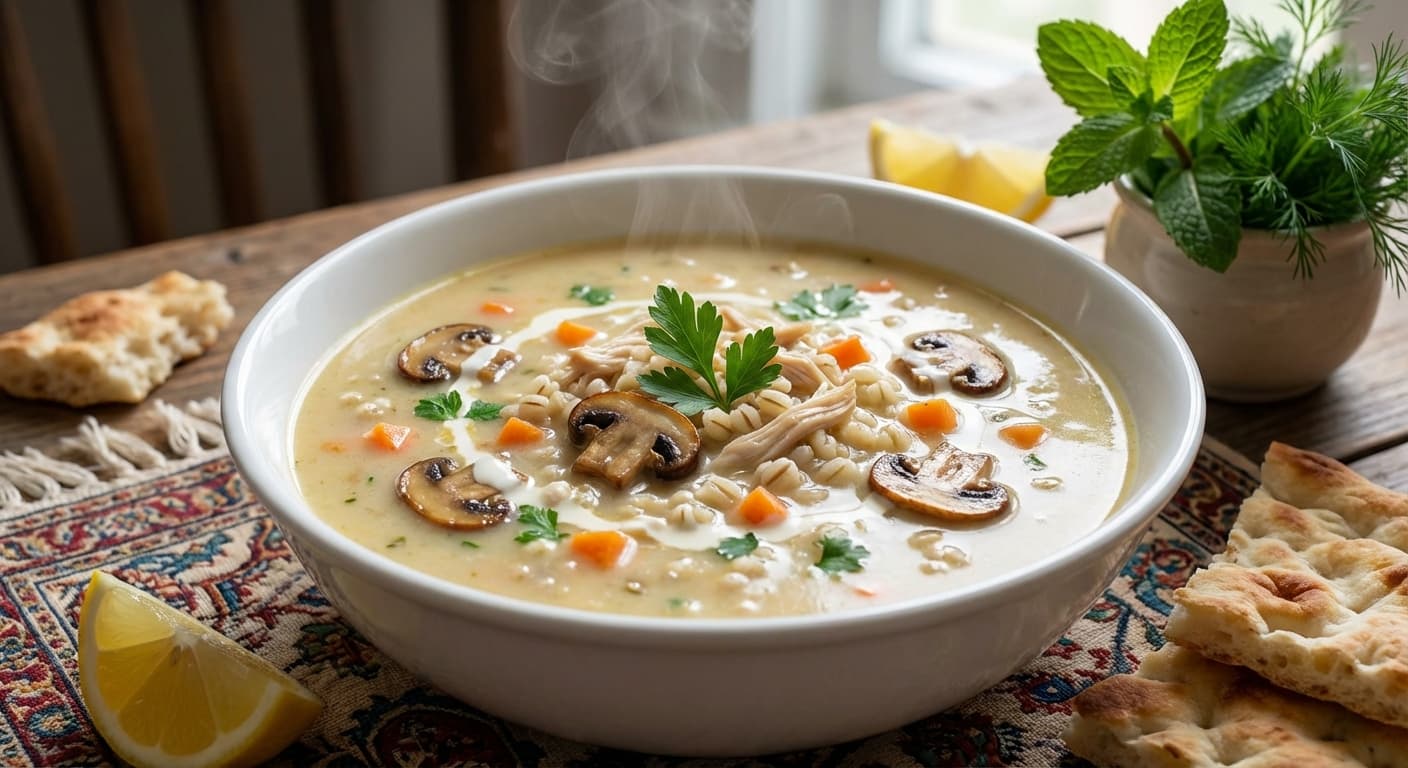
Soup-e Jo (سوپ جو) — Persian Creamy Barley Soup
Persian · Soups · 90 min
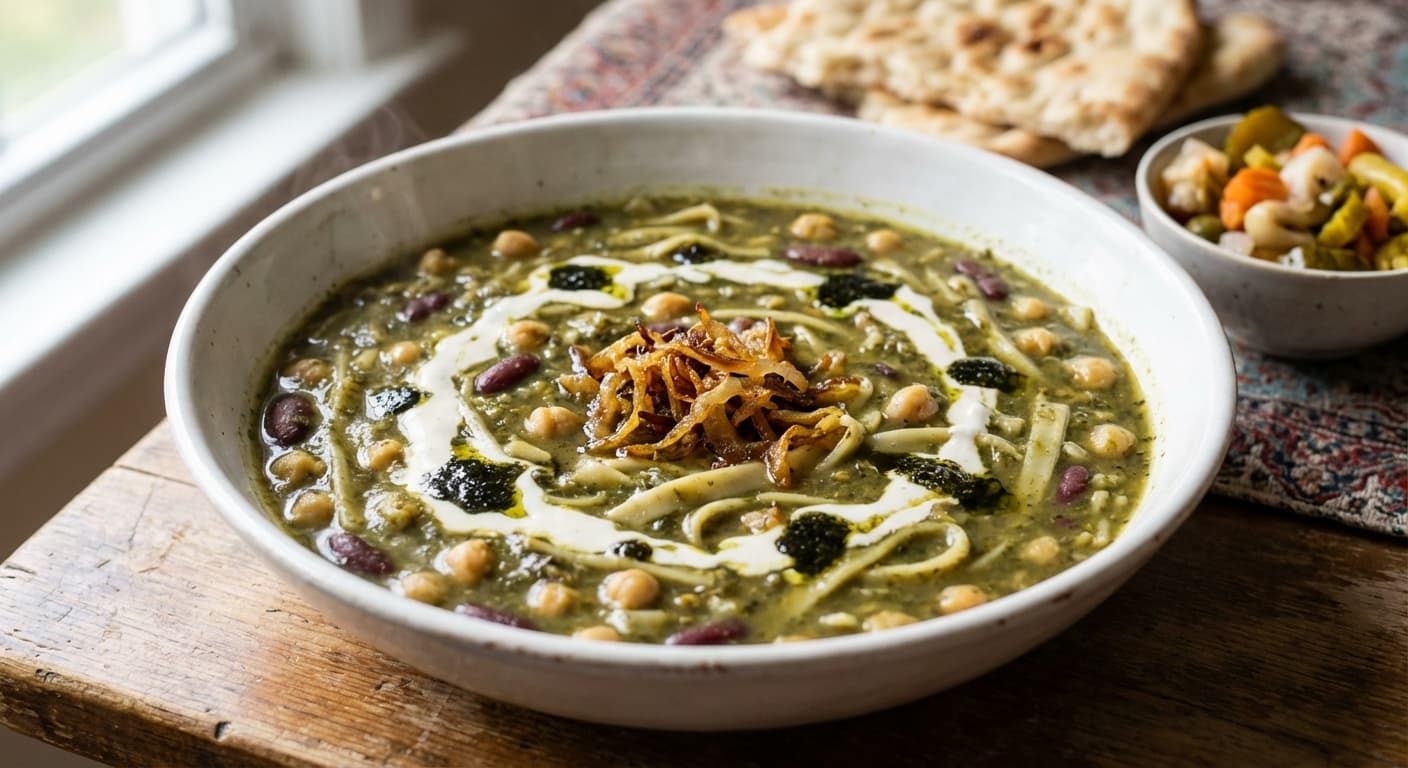
Ash Reshteh (آش رشته) — Persian Herb, Bean, and Noodle Soup
Persian · Soups · 145 min
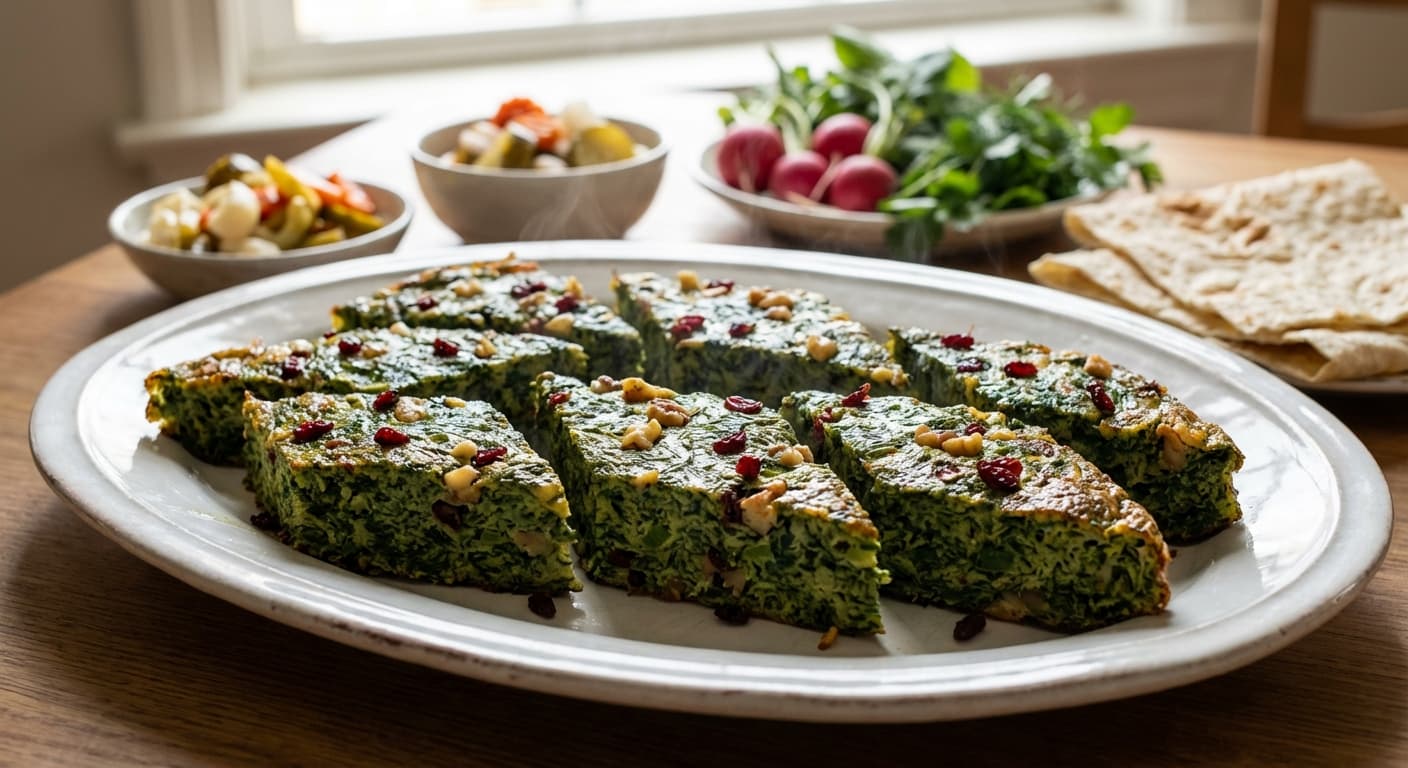
Kuku Sabzi (کوکو سبزی) — Emerald Persian Herb Frittata
Persian · Main Courses · 38 min
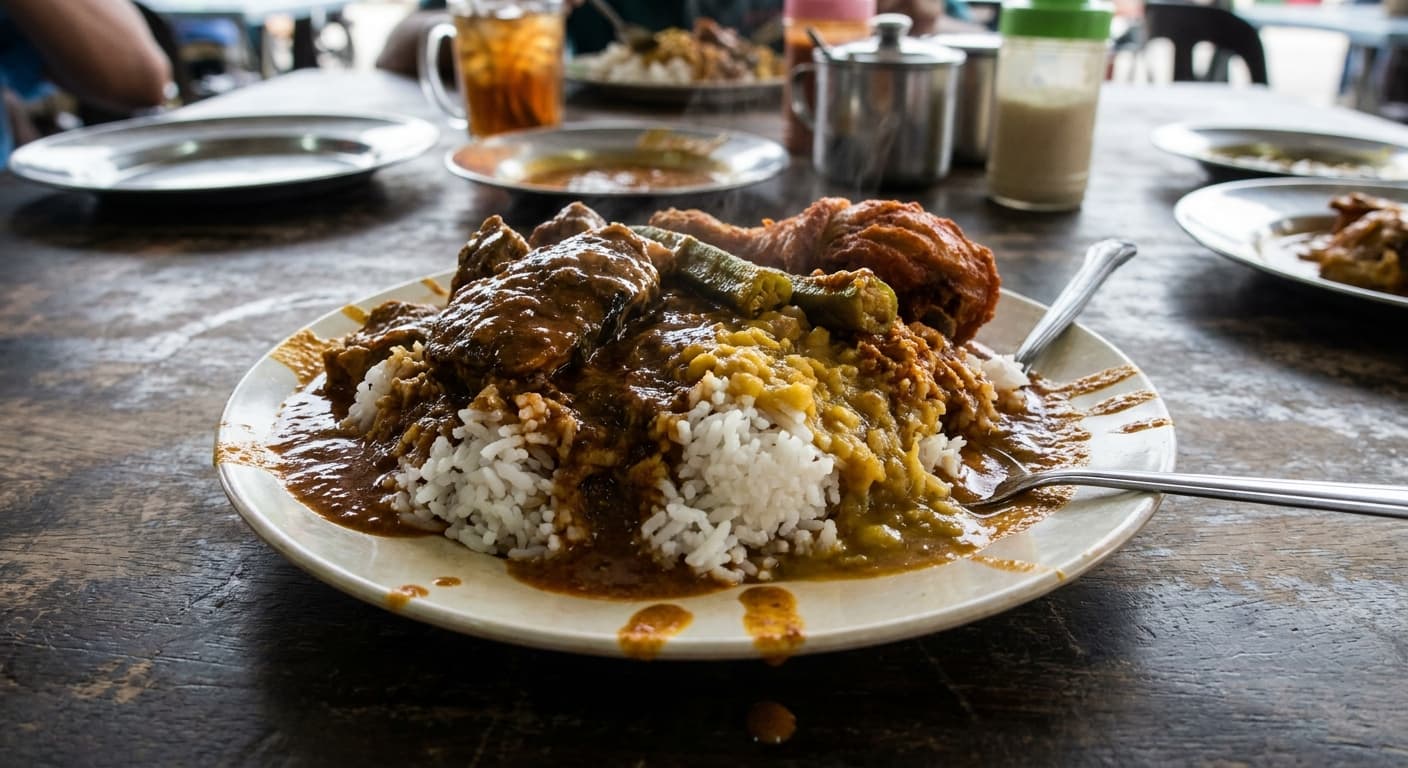
Nasi Kandar (Nasi Kandar) — Penang Mamak Curry Rice Plate
Malaysian · Rice Dishes · 110 min
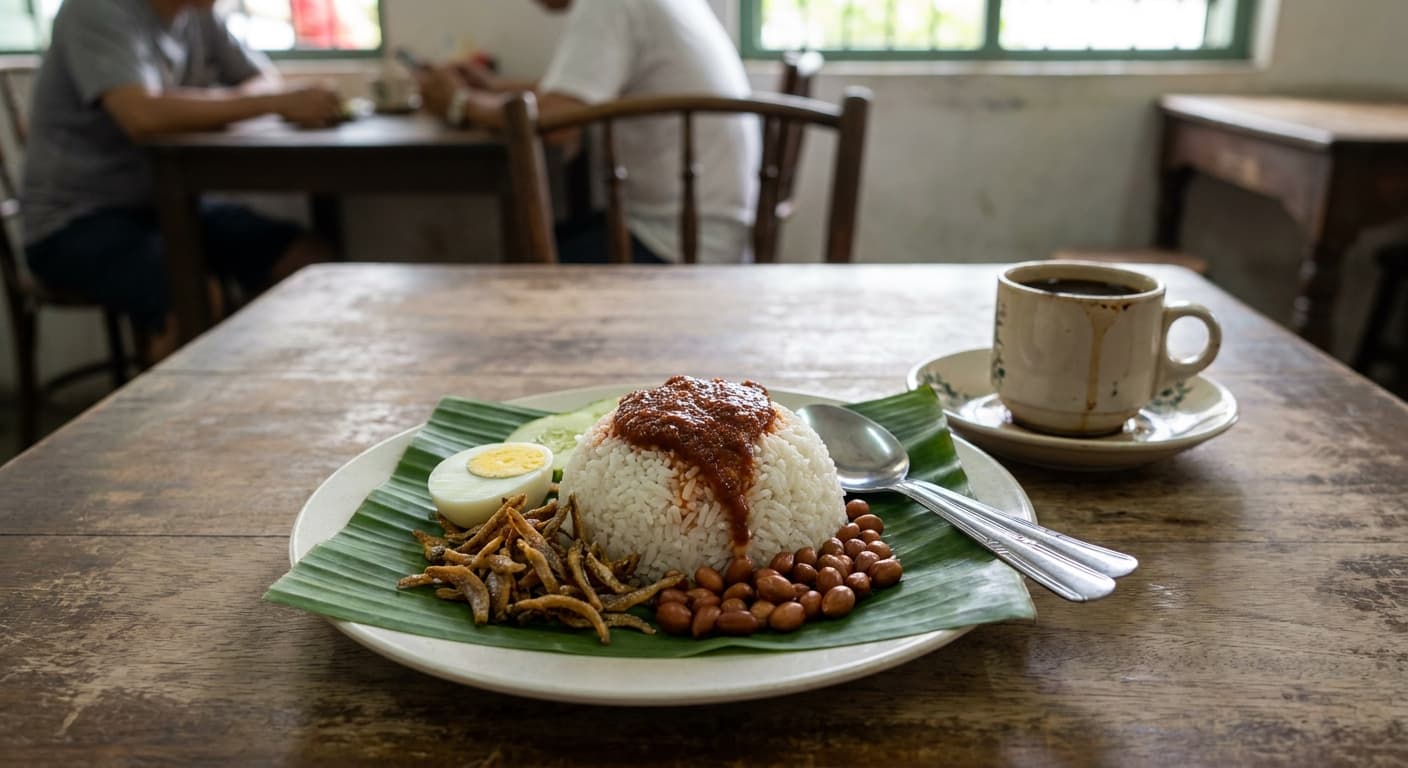
Nasi Lemak (Nasi Lemak) — Coconut Rice with Sambal and Classic Garnishes
Malaysian · Rice Dishes · 90 min
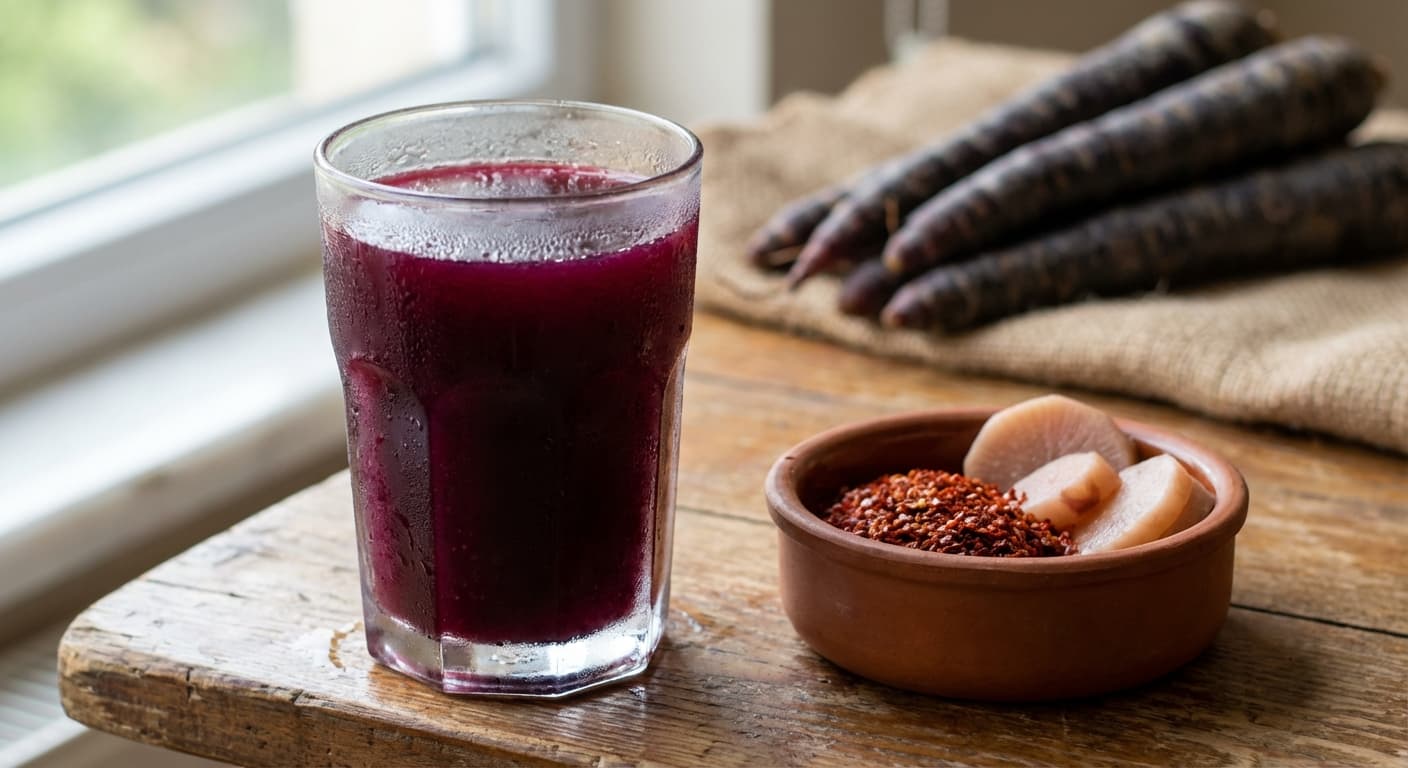
Salgam Juice (Şalgam) — Spicy, tangy fermented black-carrot drink
Turkish · Drinks · 25 min
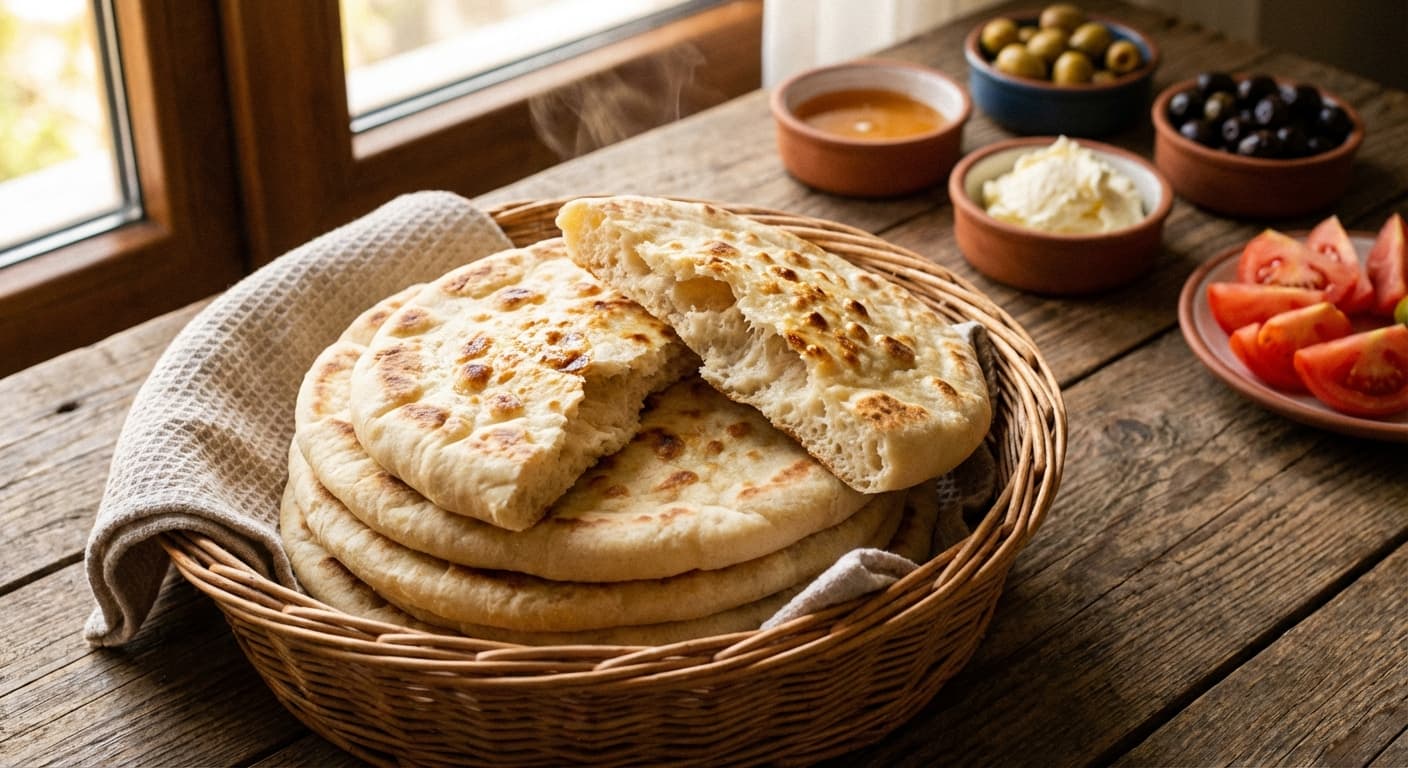
Bazlama (بازلاما) — Puffy Turkish Village Flatbread Cooked on a Saj
Turkish · Breads · 38 min
Azerbaijani Milk Rice Porridge (Südlü Sıyıq) — Creamy Breakfast Bowl
Azerbaijani · Rice Dishes · 40 min
Reviews
Cooked this recipe?
Tap the stars to rate it — that's all it takes. A few words are welcome but optional.
No ratings yet. Cooked this one? Be the first to rate it — it takes one tap.