The Complete Guide to Persian Rice: 7 Tahdig Methods You Need to Master
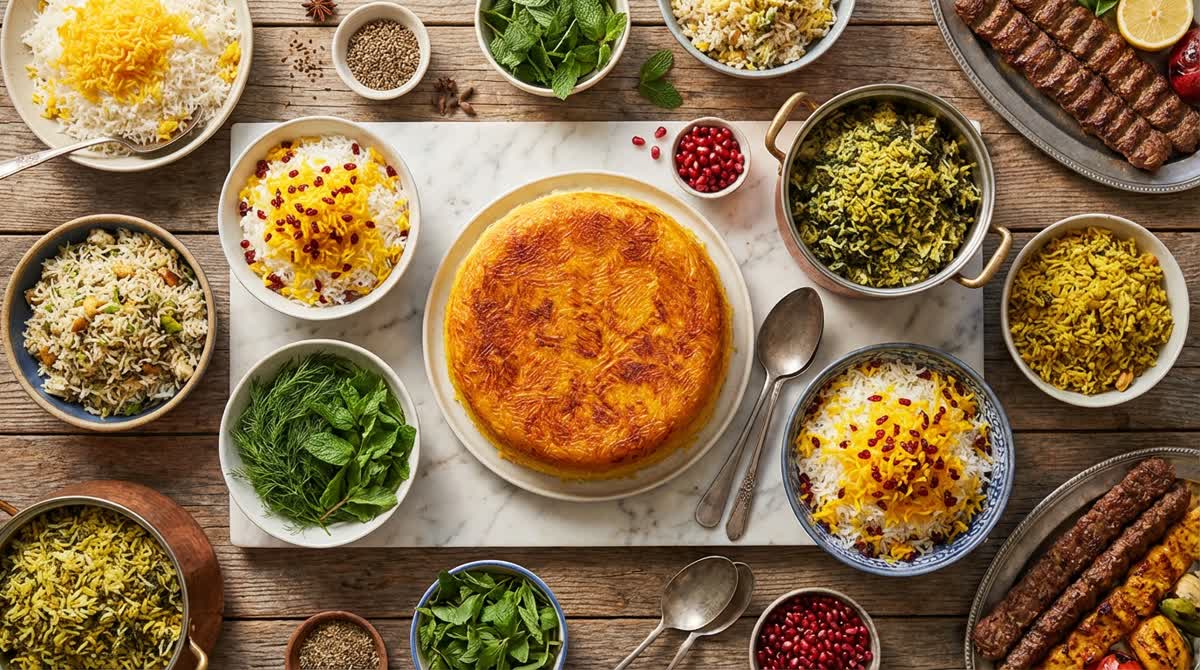
Persian rice isn’t just a side dish—it’s the quiet centerpiece of the table, the fragrance that fills the kitchen, the thing everyone “casually” checks on while pretending not to care. And then there’s tahdig: that golden, crunchy layer at the bottom of the pot that turns a simple pot of rice into a celebration.
If you’ve ever wondered why Persian families talk about tahdig the way sports fans talk about championships, this guide is for you. Below, you’ll learn the core technique behind a great persian rice recipe, plus 7 tahdig methods you can master at home—ranging from classic bread tahdig to potato, lettuce (yes, lettuce), and show-stopping tahchin-style crusts.
Along the way, I’ll share the small details Persians obsess over (in a loving way): the rinse, the soak, the steam, the butter vs oil debate, and the moment you flip the pot and hope the tahdig releases like a dream.
Persian Rice 101: What Makes It Different?
Persian rice (often called chelow or polow) is defined by two things:
- Distinct, separate grains (never mushy)
- Steam cooking after parboiling, which creates an airy texture—and sets the stage for tahdig
A reliable persian rice recipe usually follows this flow:
- Rinse rice thoroughly
- Soak (optional but recommended)
- Parboil in salted water
- Drain and steam in a pot with fat (oil/butter)
- Create tahdig at the bottom during steaming
This technique is the backbone of countless dishes on Zaffaron—whether the rice is layered with herbs, beans, noodles, or meat.
If you want a delicious example of how rice becomes a full meal, try Loobia Polo ba File Murg (لوبیا پلو با فیله مرغ) — Persian Green Bean Rice with Saffron Chicken or Reshteh Polo Gheysi (رشته پلو قیسی) — Persian Noodle Rice with Apricots. Both showcase how Persian rice techniques scale into something truly special.
The Golden Rules: Persian Rice Tips That Actually Matter
Before we dive into how to make tahdig, lock in these fundamentals. They’re the difference between “pretty good” and “why is this restaurant-quality?”
1) Choose the right rice
- Aged basmati is the most forgiving and aromatic.
- Long-grain rice with lower moisture content tends to produce better separation and better tahdig.
2) Rinse until the water runs mostly clear
This removes excess surface starch, reducing clumping and helping grains stay distinct.
3) Salt your parboil water generously
Persian rice is often seasoned primarily during boiling. Under-salting here can make the final dish taste flat, no matter how good your stew is.
4) Parboil “to the bite”
The rice should be softened on the outside but still firm in the center. If you fully cook it in the boil, steaming won’t fix it.
5) Steam with patience
Tahdig is built on controlled heat and time. Too hot too fast burns; too low too long dries out.
6) Use a towel under the lid (damkoni)
A clean kitchen towel wrapped around the lid absorbs condensation so it doesn’t drip back and make the rice soggy—one of the most important persian rice tips you can adopt instantly.
The Base Method (Your Master Template)
No matter which of the tahdig methods you choose, the rice process is similar.
Ingredients (core)
- 2 cups basmati rice
- Water (for soaking/boiling)
- 2–3 tbsp salt (for boiling water; adjust to taste)
- 3–4 tbsp oil and/or butter
- Optional: pinch of saffron bloomed in hot water
Steps (overview)
- Rinse rice 5–7 times.
- Soak 30 minutes to 2 hours (optional, but helps elongation).
- Bring a pot of water to a rolling boil. Add salt.
- Add rice. Boil until the grain bends but still has a firm core.
- Drain in a colander. Rinse quickly with lukewarm water (optional—some families do, some don’t).
- Add oil/butter to the pot and set up your chosen tahdig base.
- Add rice back in, shaping it into a pyramid to help steam circulate.
- Poke a few holes with the handle of a spoon.
- Cover with towel-wrapped lid.
- Cook on medium-high for 5–7 minutes to build heat, then low for 35–50 minutes to steam and crisp.
That’s the engine. Now let’s talk tahdig.
Tahdig: The Crunchy Heart of Persian Rice
Tahdig literally means “bottom of the pot.” It can be bread, potato, rice, yogurt-saffron rice, lettuce—each with its own personality. The goal is always the same:
- Deep golden color
- Crisp texture
- Clean release (ideally in one glorious piece)
If you’re learning how to make tahdig, start with one method and repeat it until your hands remember the timing. Then branch out.
7 Tahdig Methods You Need to Master
Method 1: Classic Bread Tahdig (Lavash or Pita)
Bread tahdig is the gateway: fast, forgiving, and wildly satisfying.
Best bread choices
- Lavash (thin = crisp)
- Pita (thicker = chewier-crisp)
- Tortilla in a pinch (not traditional, but works)
How to do it
- Add oil/butter to the pot and warm it.
- Lay bread flat across the bottom (overlap slightly).
- Optional: brush with saffron water for color.
- Add rice and steam as usual.
Pro Persian rice tips
- Don’t drown the bread in oil—too much makes it greasy.
- Medium heat at the start helps set the crust without scorching.
Flavor pairing idea: Bread tahdig is incredible with saucy dishes and stews—or with a rice-forward meal like Eslamboli Polo (اسلامبولی پلو) — Persian Tomato Rice with Tender Beef, where the tomato richness loves a crisp, neutral crunch.
Method 2: Potato Tahdig (Sib Zamini) — The Crowd Favorite
Potato tahdig is the one people fight over. It’s hearty, dramatic, and can be made picture-perfect.
What you need
- 1–2 potatoes, peeled
- Oil/butter
- Salt, optional turmeric or saffron
Two slicing styles
- Rounds (coins): classic look, easier to flip as a single sheet
- Thin slices: crispier but more fragile
How to do it
- Heat oil/butter in the pot.
- Arrange potato slices in a tight single layer.
- Salt lightly; optional saffron water.
- Add rice, steam as usual.
Common mistake
Potatoes burn before the rice is done if your heat is too high for too long. After the initial “set,” go low and trust the steam.
Try it with: herb or vegetable pilafs where the potato crust adds richness, like Polo va Sabzijat (پلو و سبزیجات) — Persian Saffron Vegetable Rice.
Method 3: Plain Rice Tahdig (Crispy Rice Crust)
This is the purest form: just rice, fat, and time. When done right, it’s like a giant savory rice cracker.
How it works
The bottom layer of rice fries gently in oil/butter while the rest steams.
How to do it (simple)
- Add oil/butter to the pot.
- Add a thin layer of rice first (about 1 to 1.5 cups).
- Press it gently to form an even base.
- Add the rest of the rice on top and steam.
Pro Persian rice tips
- A nonstick pot makes this easier when you’re learning.
- Butter adds flavor; oil adds stability. Many cooks use both.
Serve with: a rich protein dish—something like Khorak Mahicheh va Morgh (خوراک ماهیچه و مرغ) — Saffron-Infused Lamb and Chicken Stew where you’ll want crunchy contrast against tender meat.
Method 4: Yogurt & Saffron Tahdig (Tahdig-e Mast) — Creamy-Crisp Magic
This method creates a slightly thicker, more cohesive crust—golden, fragrant, and a little tangy.
Mix
- 1/2 cup yogurt
- 1 egg (optional but helpful for structure)
- 2–3 tbsp bloomed saffron water
- 2–3 tbsp oil/butter
- 1–2 cups parboiled rice
How to do it
- Mix yogurt + saffron + egg (if using) + oil.
- Fold in some parboiled rice to coat.
- Spread this mixture on the bottom of the pot as your base layer.
- Add remaining rice and steam.
Why it’s great
- More forgiving release than plain rice tahdig
- Stunning color and aroma
This style is a stepping stone toward tahchin (next method), and it’s a beautiful match for layered rice dishes.
For a dish that celebrates saffron structure, explore Tahchin Goosht va Bademjan (تهچین گوشت و بادمجان) — Saffron Rice Cake with Meat and Eggplant. It’s not just tahdig—it’s an entire saffron rice “cake” philosophy.
Method 5: Lettuce Tahdig (Tahdig-e Kahoo) — The Surprise Classic
If you’ve never heard of lettuce tahdig, you’re not alone. But it’s a real Persian home-cooking move—especially when you want a delicate, almost sweet crispness.
What it tastes like
Mild, slightly caramelized, and incredibly light—more like a thin vegetable chip than a heavy crust.
How to do it
- Choose sturdy lettuce leaves (romaine works well).
- Dry thoroughly.
- Heat oil/butter in the pot.
- Lay leaves flat on the bottom.
- Add rice and steam.
Key tip
Moisture is the enemy here. Dry the leaves well or you’ll steam them into softness instead of crisping.
Pairing: Lettuce tahdig works beautifully with aromatic rice dishes and fruit notes—something like Reshteh Polo Gheysi (رشته پلو قیسی) — Persian Noodle Rice with Apricots, where the gentle sweetness plays well with toasted edges.
Method 6: Onion Tahdig (Tahdig-e Piaz) — Deeply Savory and Jammy-Crisp
This is for people who love the edges of caramelized onions. The onion layer turns sweet-savory, and the rice above it picks up incredible aroma.
How to do it
- Slice onions into thin rings or half-moons.
- Heat oil/butter in the pot.
- Add onions and cook 3–5 minutes to soften slightly (not fully caramelized).
- Spread into an even layer.
- Add rice and steam.
Persian rice tips for success
- If the onions are too raw, they can steam and go limp.
- If they’re too caramelized before steaming, they can burn during the long cook.
- Aim for “translucent and softened,” then let the pot do the rest.
Serve with: bold, spiced dishes. A fun modern pairing from Zaffaron is Crispy Persian-Style Peanut Glazed Chicken Wings (بال مرغ با سس بادامزمینی) — Herb-crusted baked wings with tamarind-ginger peanut glaze. The onion tahdig stands up to that punchy glaze.
Method 7: Tahchin-Style Tahdig (The Showstopper Crust)
Tahchin is often a full dish—layered saffron yogurt rice with filling—but you can also use its logic to create an ultra-structured tahdig base under any steamed rice.
What makes it different
A tahchin-style base uses a saffron-yogurt-egg mixture that bakes/frys into a cohesive “cake-like” crust. It’s crisp outside, tender inside, and flips like a dream when done well.
Basic tahchin base (for tahdig)
- 1 cup yogurt
- 1 egg + 1 yolk (optional but excellent)
- 2–3 tbsp saffron water
- 3 tbsp oil + 1 tbsp melted butter
- 1.5–2 cups parboiled rice
Mix and press into the bottom of the pot, then add the rest of your rice and steam.
When to use it
- When you want a guaranteed “one-piece flip”
- When you’re serving guests
- When the rice is the main event
For a full tahchin experience with bold flavors, don’t miss Sabzi Polo ba Tahchin-e Morgh-e Torsh (سبزی پلو با تهچین مرغ ترش) — Tart Herb Rice with Saffron Chicken Tahchin. It’s a masterclass in how tahchin turns rice into architecture.
Heat Control: The Make-or-Break Skill for How to Make Tahdig
Most tahdig heartbreak comes down to heat. Here’s a reliable approach:
The two-stage heat method
- Stage 1 (Set the crust): medium-high for 5–7 minutes
- Stage 2 (Steam and crisp): low for 35–50 minutes
How to tell it’s done (without guessing)
- You smell a toasty, nutty aroma (not sharp or burnt)
- The rice is fully steamed and fluffy
- The pot sides look dry, not wet with condensation
If your tahdig won’t release
- Let it rest off heat for 5–10 minutes.
- Briefly place the pot bottom on a damp towel (carefully) to shock-release.
- Run a thin spatula around the edges.
These are the kinds of persian rice tips people learn from watching an auntie cook—now you’ve got them in your pocket.
The Flip: How to Unmold Tahdig Like a Pro
The flip is half technique, half confidence.
- Choose a plate slightly larger than the pot.
- Hold plate tightly against the pot rim.
- Flip in one decisive motion.
- Set down and lift pot slowly.
Personal note
The first time you flip tahdig for guests, your heart rate will spike. That’s normal. Persian cooking has these tiny moments of drama built in—like the cuisine is reminding you that food is also performance.
Troubleshooting: Fix the 10 Most Common Tahdig Problems
1) Burnt tahdig
- Heat too high or pot too thin
- Next time: lower heat earlier; use a heat diffuser if your stove runs hot
2) Pale, soft tahdig
- Not enough fat or not enough time
- Next time: add a touch more oil/butter; extend low cook by 10 minutes
3) Rice is mushy
- Overboiled during parboil
- Next time: drain earlier; the center should still be firm
4) Rice is undercooked
- Parboil too short or steaming time too short
- Next time: boil a bit longer; ensure lid is sealed with towel
5) Tahdig sticks badly
- Pot surface, not enough fat, or insufficient rest time
- Next time: use nonstick while learning; rest before flipping
6) Bread tahdig is greasy
- Too much oil
- Next time: brush lightly; don’t pool oil in the center
7) Potato tahdig breaks apart
- Slices too thick or uneven
- Next time: slice evenly; pack tightly like tiles
8) Tahdig is bitter
- Burnt oil or scorched spices
- Next time: avoid spices directly on the pot bottom; use saffron water instead
9) Rice clumps
- Not rinsed enough or stirred too much after draining
- Next time: rinse thoroughly; handle gently
10) Tahdig forms but rice on top dries out
- Heat too low with too little steam, or lid not tight
- Next time: seal lid better; consider a tiny splash of water/butter around edges early in steaming
Cultural Context: Why Tahdig Matters So Much
In many Persian homes, tahdig isn’t “extra.” It’s expected. Kids learn early that the best part of the rice is the part you can hear. And adults learn diplomacy: who gets the biggest piece, who likes it darker, who insists bread tahdig is superior to potato.
Tahdig also reflects Persian cooking values:
- Patience (steam takes time)
- Care (small details add up)
- Generosity (the best bite is meant to be shared)
And the beauty is that once you master a core persian rice recipe, you can apply it to countless meals—weeknight comfort food or holiday tables.
For more rice inspiration beyond tahdig, explore dishes like Shushtari Polo (شوشترى پلو) — Black-Eyed Pea and Dill Layered Rice with Chicken or Valak Polo (والک پلو) — Spring Wild Garlic Saffron Rice. Each one uses rice as a canvas for regional flavor.
Build Your Own Tahdig “Practice Plan” (So You Actually Master It)
If you want real progress, don’t rotate methods randomly. Practice in a smart order:
- Bread tahdig (fast feedback, easiest release)
- Plain rice tahdig (learn heat control)
- Potato tahdig (learn timing and layering)