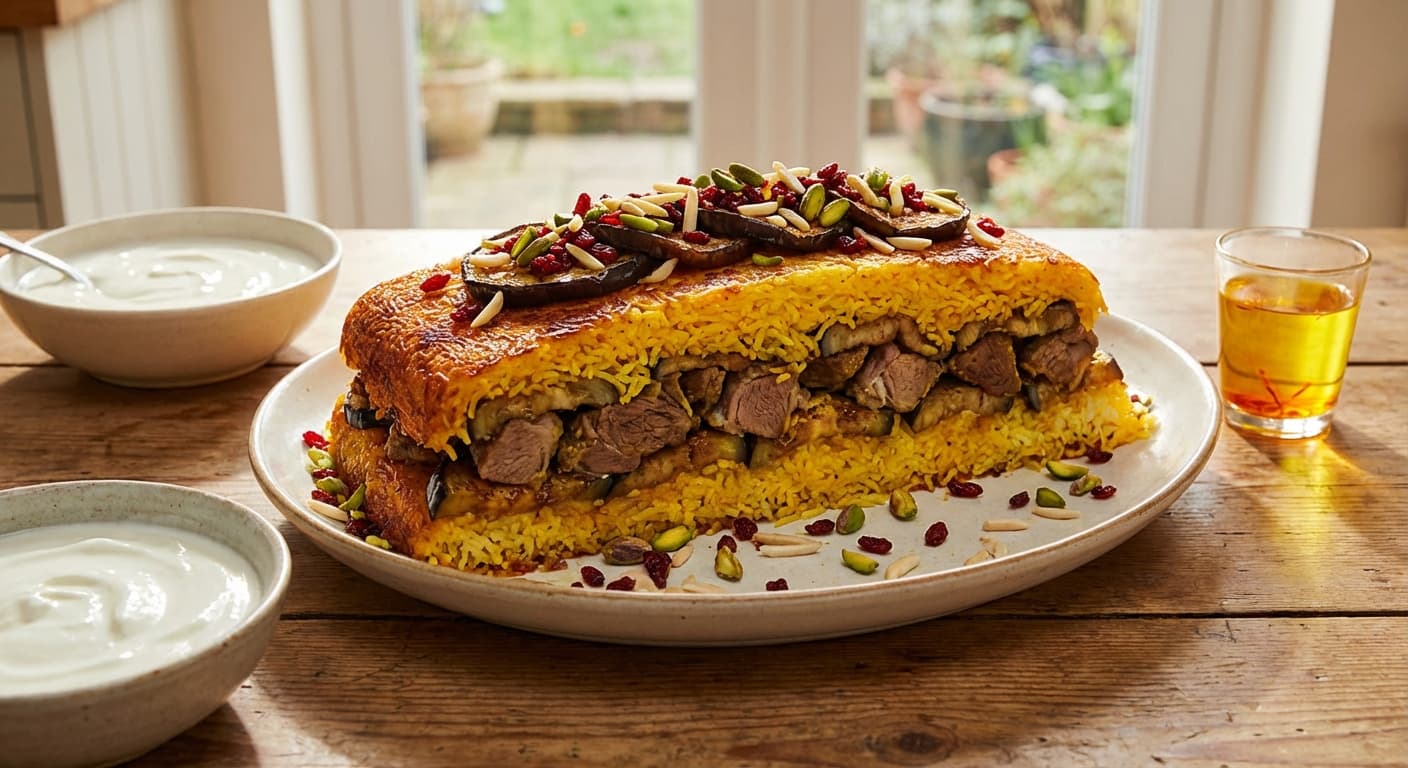
Tahchin Goosht va Bademjan (ته چین گوشت و بادمجان) — Persian Saffron Rice Cake with Meat and Eggplant
A celebratory Persian saffron rice cake with a crisp tahdig crust, layered with tender lamb or beef and golden eggplant. Yogurt and egg yolks bind the rice into a sliceable, aromatic centerpiece.
Printable Recipe Card
Servings: 6 · Total: 195 min · Difficulty: hard
Ingredients (quick list)
- 450 g Basmati rice (rinsed until water runs mostly clear)
- 18 g Fine sea salt (divided, plus more for salting eggplant)
- 0.5 tsp Saffron threads (finely crushed)
- 60 ml Hot water (for blooming saffron)
- 300 g Plain yogurt (full-fat, unsweetened)
- 3 large Egg yolks (about 54 g total)
- 60 ml Neutral oil (such as grapeseed or sunflower, divided)
- 1 tsp Ground turmeric
- 200 g Onion (finely diced)
- 12 g Garlic (minced (about 3 cloves))
- 450 g Lamb shoulder or beef chuck (cut into 2 cm cubes)
- 0.5 tsp Black pepper (freshly ground)
+ 3 more in the full ingredients section below.
Steps (summary)
- Bloom the saffron: crush the saffron threads to a fine powder, then stir with 60 ml hot water (about 80–90°C). Cover and steep…
- Braise the meat: heat 1 tbsp (15 ml) of the neutral oil in a heavy pot over medium heat. Add onion and cook 8–10 minutes until…
- Add 480 ml water, bring to a boil, then reduce to a gentle simmer. Cover and cook 60–75 minutes for lamb (75–90 for beef) until…
- Prepare the eggplant: sprinkle eggplant slices with 10 g salt and rest 20 minutes to draw out bitterness and moisture. Rinse qu…
- Parboil the rice: bring a large pot of water to a rolling boil (at least 3 liters). Add 18 g salt, then add the drained rice. B…
- Make the saffron-yogurt binder: in a large bowl whisk yogurt, egg yolks, 45 ml of the neutral oil, 1 tsp turmeric, and all bloo…
+ 4 more steps in the full instructions section below.
Cultural Background
Tahchin is often prepared for gatherings where a dramatic unmolding at the table is part of the enjoyment. The prized golden crust, known as tahdig, reflects a broader Persian tradition of textural contrast in rice dishes and is commonly shared as the most sought-after portion.
Equipment
💡 Tips
- For the cleanest slices, compact each rice layer firmly with a flat spatula; loose packing causes crumbling.
- Keep the meat juices reduced and concentrated; too much liquid will soften the crust and make the center soggy.
- If using a stainless-steel pot, line the base with parchment cut to size and increase butter by 10 g to help release.
- Eggplant must be very dry before frying; moisture drops oil temperature and leads to greasy slices.
- A towel-wrapped lid prevents condensation from dripping back onto the rice, protecting the crisp tahdig.
⚠️ Common Mistakes
❌ Overboiling the rice during parboil
💡 Why: Fully cooked grains break when mixed with yogurt and turn mushy, preventing a defined cake structure.
✅ Fix: Boil only until the outside is tender but the center is still firm (6–8 minutes), then drain immediately.
❌ Adding too much meat broth into the center
💡 Why: Excess liquid steams the rice from within, softening the tahdig and making slices collapse.
✅ Fix: Reduce braising liquid to a glossy, spoon-coating amount (about 120–180 ml) and add gradually.
❌ Condensation dripping from the lid
💡 Why: Water droplets fall onto the rice surface and create soggy patches that prevent crisping.
✅ Fix: Wrap the lid with a clean towel and tie or tuck ends securely before covering the pot.
❌ Unmolding too soon
💡 Why: The crust is fragile right off the heat and can tear or stick, especially in metal pots.
✅ Fix: Rest 10 minutes, loosen edges, and if needed warm the base briefly over a damp towel to release.
🧊 How to Store
Cool leftovers within 2 hours. Refrigerate airtight up to 3 days. Reheat slices in a covered skillet over low heat 8–10 minutes, then uncover 2–3 minutes to re-crisp. Freeze tightly wrapped up to 2 months; thaw overnight in the fridge before reheating.
📅 Make Ahead
Braise the meat up to 2 days ahead and refrigerate; rewarm and reduce juices before assembling. Fry or roast eggplant up to 1 day ahead. Parboil rice and assemble the same day for best texture; assembled tahchin can rest (uncooked) 30 minutes at room temperature before steaming.
🍽️ Pairs Well With
- Shirazi salad (cucumber
- tomato
- onion with lime)
- Plain yogurt with dried mint
- Pickled vegetables
- Fresh herbs and radishes
- Lime wedges
Regional Variations
- Tehran-style home cookingOften uses beef and includes a slightly higher proportion of saffron-yogurt rice for a thicker, more dramatic crust and cleaner wedge slices.
- Northern Iran (Caspian influence)May include more eggplant and a brighter tang from slightly more yogurt, sometimes paired with fresh herbs and pickles for a sharper contrast.
Ingredients
- 450 gBasmati rice (rinsed until water runs mostly clear)
- 18 gFine sea salt (divided, plus more for salting eggplant)
- 0.5 tspSaffron threads (finely crushed)
- 60 mlHot water (for blooming saffron)
- 300 gPlain yogurt (full-fat, unsweetened)
- 3 largeEgg yolks (about 54 g total)
- 60 mlNeutral oil (such as grapeseed or sunflower, divided)
- 1 tspGround turmeric
- 200 gOnion (finely diced)
- 12 gGarlic (minced (about 3 cloves))
- 450 gLamb shoulder or beef chuck (cut into 2 cm cubes)
- 0.5 tspBlack pepper (freshly ground)
- 480 mlWater (for braising)
- 700 gEggplant (2 medium, cut into 1 cm slices lengthwise or into 2 cm rounds)
- 30 gUnsalted butter (melted, for the pot and finishing crust)
🔄 Substitutions
- Lamb shoulder or beef chuck→ Boneless chicken thighs
- Plain full-fat yogurt→ Greek yogurt thinned with water
- Fried eggplant→ Roasted eggplant
Instructions
- 1
Bloom the saffron: crush the saffron threads to a fine powder, then stir with 60 ml hot water (about 80–90°C). Cover and steep 10 minutes to intensify color and aroma. Meanwhile, rinse the basmati rice 5–7 times until the water is mostly clear, then drain well.
- 2
Braise the meat: heat 1 tbsp (15 ml) of the neutral oil in a heavy pot over medium heat. Add onion and cook 8–10 minutes until golden. Add garlic and cook 30 seconds. Add lamb or beef, turmeric, black pepper, and 6 g salt; sear 6–8 minutes, stirring, until browned.
- 3
Add 480 ml water, bring to a boil, then reduce to a gentle simmer. Cover and cook 60–75 minutes for lamb (75–90 for beef) until tender and the liquid is reduced to about 120–180 ml. The filling should be moist but not soupy; uncover the last 10 minutes if needed to reduce.
- 4
Prepare the eggplant: sprinkle eggplant slices with 10 g salt and rest 20 minutes to draw out bitterness and moisture. Rinse quickly under cool water, then pat very dry. Heat 90 ml neutral oil in a skillet over medium-high; fry eggplant in batches 3–4 minutes per side until deeply golden. Drain on a rack.
- 5
Parboil the rice: bring a large pot of water to a rolling boil (at least 3 liters). Add 18 g salt, then add the drained rice. Boil 6–8 minutes, stirring once or twice, until the grains are softened on the outside but still firm in the center. Drain immediately and rinse briefly with cool water.
- 6
Make the saffron-yogurt binder: in a large bowl whisk yogurt, egg yolks, 45 ml of the neutral oil, 1 tsp turmeric, and all bloomed saffron (including liquid) until smooth. Add about two-thirds of the parboiled rice and fold gently until every grain is coated and tinted golden.
- 7
Assemble: choose a 24 cm nonstick pot or a well-seasoned heavy pot. Melt 30 g butter and brush or swirl to coat the base and 2–3 cm up the sides. Pack the saffron-coated rice firmly into the bottom and up the sides, creating a shallow well in the center for the filling.
- 8
Layer the center: arrange a single layer of fried eggplant in the rice well. Spoon in the tender meat with 120–180 ml of its reduced cooking juices (avoid excess liquid). Top with remaining eggplant. Cover the filling with the remaining plain parboiled rice, pressing firmly to seal and compact for clean slices.
- 9
Steam and crisp: poke 5–6 holes to the bottom with the handle of a spoon. Drizzle 45 ml water around the edges. Cover the lid with a clean towel and place tightly on the pot. Cook 10 minutes over medium heat, then reduce to low and steam 60–70 minutes until fragrant and set.
- 10
Unmold: turn off heat and rest 10 minutes to relax the crust. Run a thin spatula around the edges. Place a large plate over the pot and invert confidently. If needed, set the pot on a warm damp towel for 1 minute to release. Slice into wedges; serve immediately while the tahdig is crisp.
🪪 Recipe Passport
Cultural Background
Tahchin is often prepared for gatherings where a dramatic unmolding at the table is part of the enjoyment. The prized golden crust, known as tahdig, reflects a broader Persian tradition of textural contrast in rice dishes and is commonly shared as the most sought-after portion.
Regional Variations
Researched from multiple sources and validated by the Zaffaron editorial team. Every recipe is tested for accuracy, measurements, and cultural authenticity.
Nutrition per serving
Pairs well with
If you enjoyed this recipe, here are a few related Zaffaron recipes to try next.
- Yatimcheh-Style Eggplant with Melted Mozzarella (یتیمچه) — Persian-Inspired Eggplant Skillet
- Tahchin Sabzi Polo Torsh (ته چین سبزی پلو ترش) — Sour Herb Persian Rice Cake
- Tas Kebab-e Nokhod Farangi (تاس کباب نخود فرنگی) — Persian Green Pea & Meat Stew
- Makaron-e Gosht-e Gousaleh (ماکارون گوشت گوساله و جوانهها) — Persian Veal and Sprout Macaroni Stir-Fry
Does your family make this differently?
Every family has their own version. Maybe your grandmother adds a secret ingredient, or your aunt has a completely different technique. Preserve your family's version — with their name on it, forever.
You Might Also Like
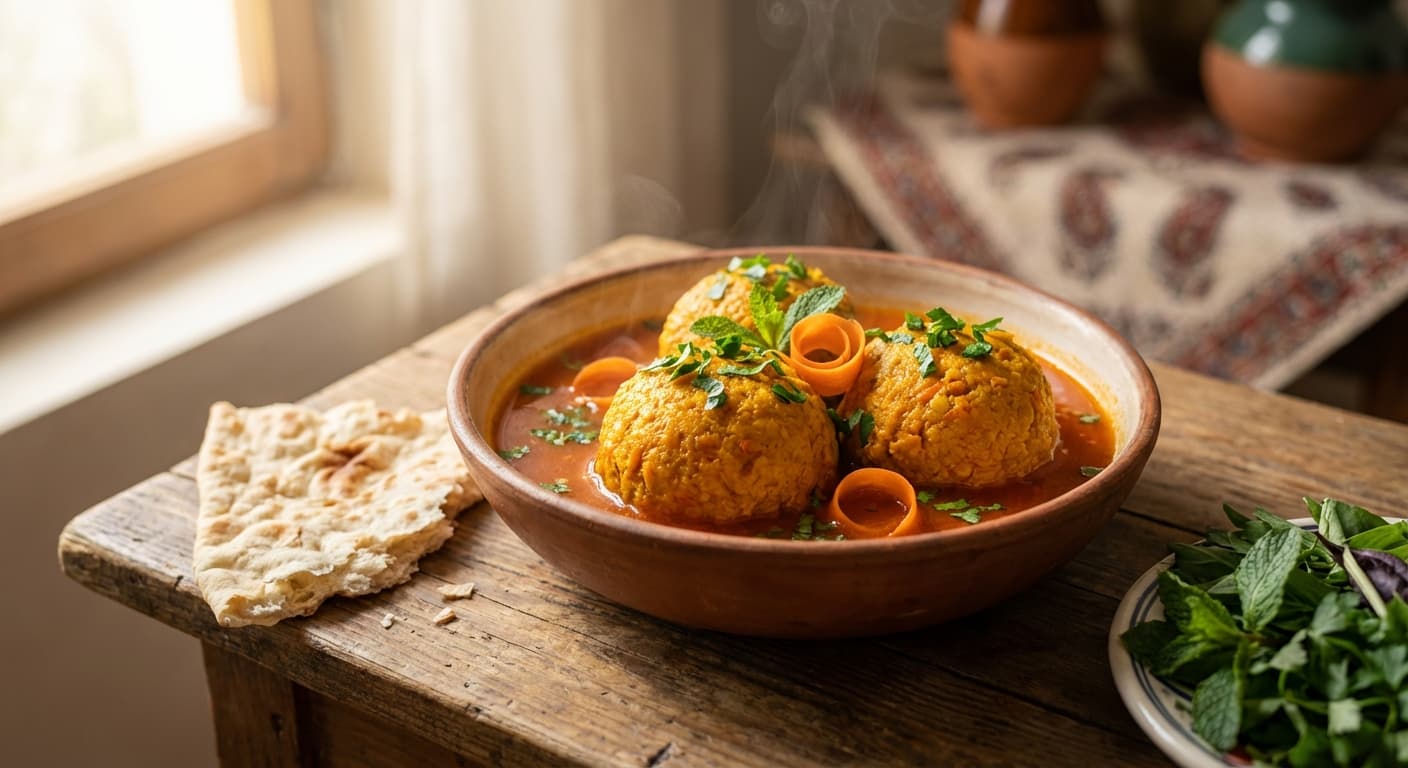
Koofteh Havij (کوفته هویج) — Persian Carrot Meatballs in Saffron-Tomato Broth
Persian · Main Courses · 120 min
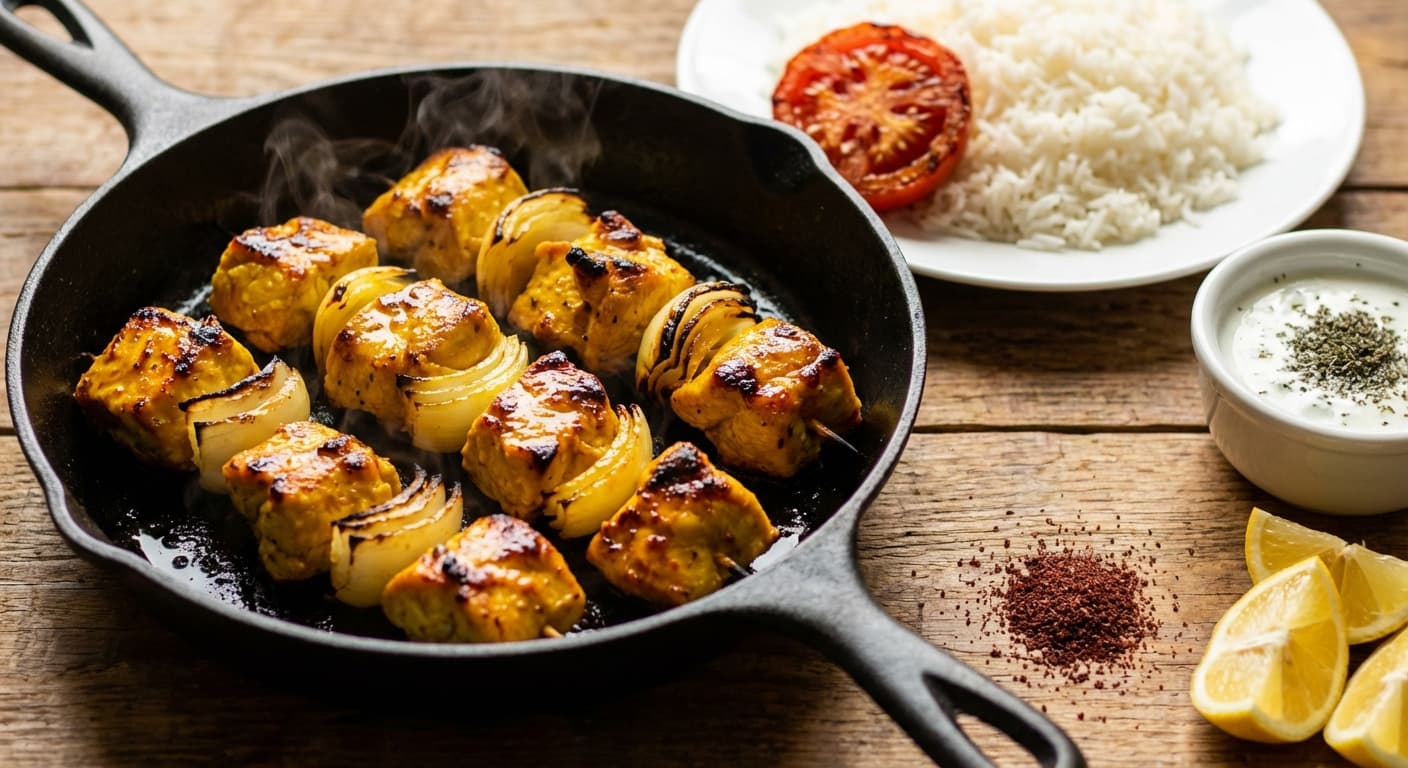
Pan-Seared Joojeh Kebab (جوجه کباب تابهای) — Persian Saffron Skillet Chicken
Persian · Kebabs · 34 min
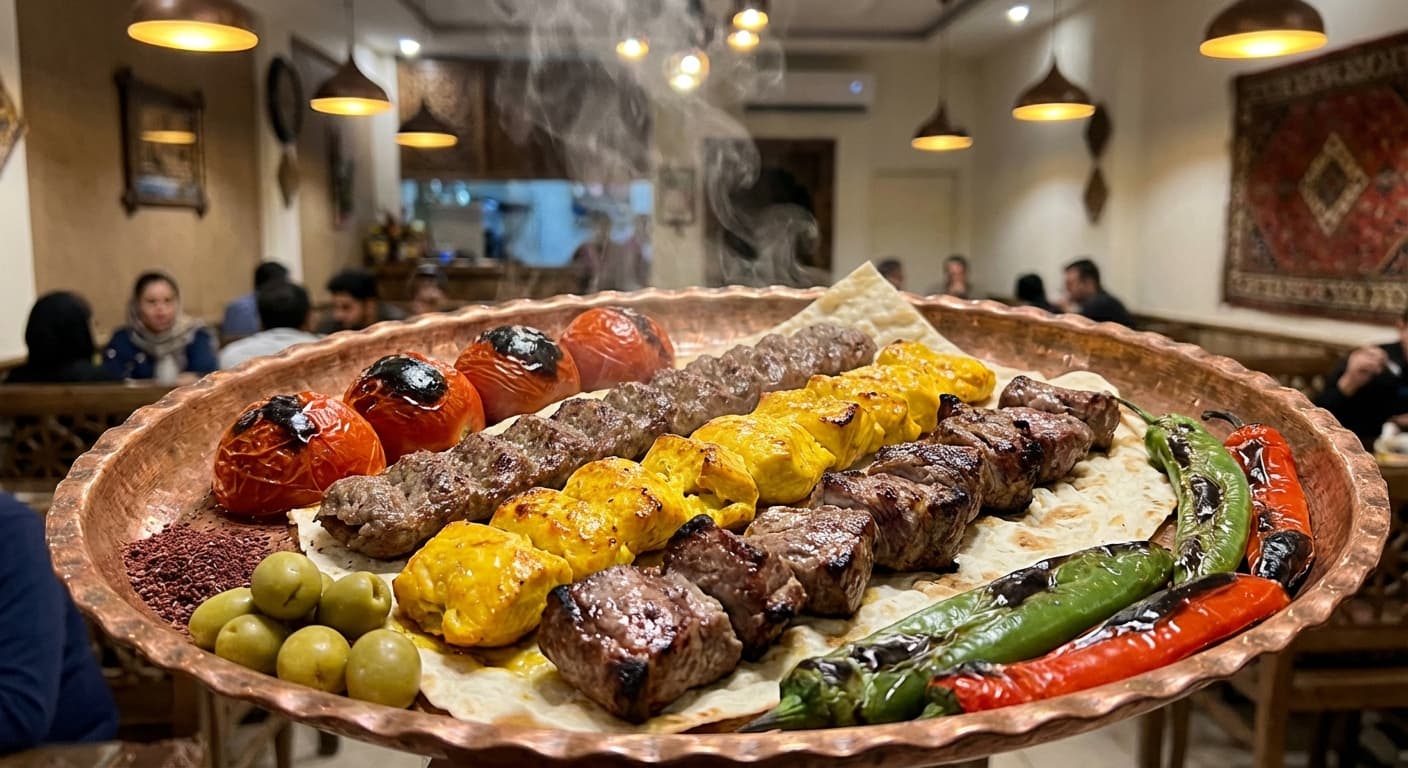
Kabab Vijeh (کباب ویژه) — Royal Persian Mixed Grill Platter
Persian · Kebabs · 70 min
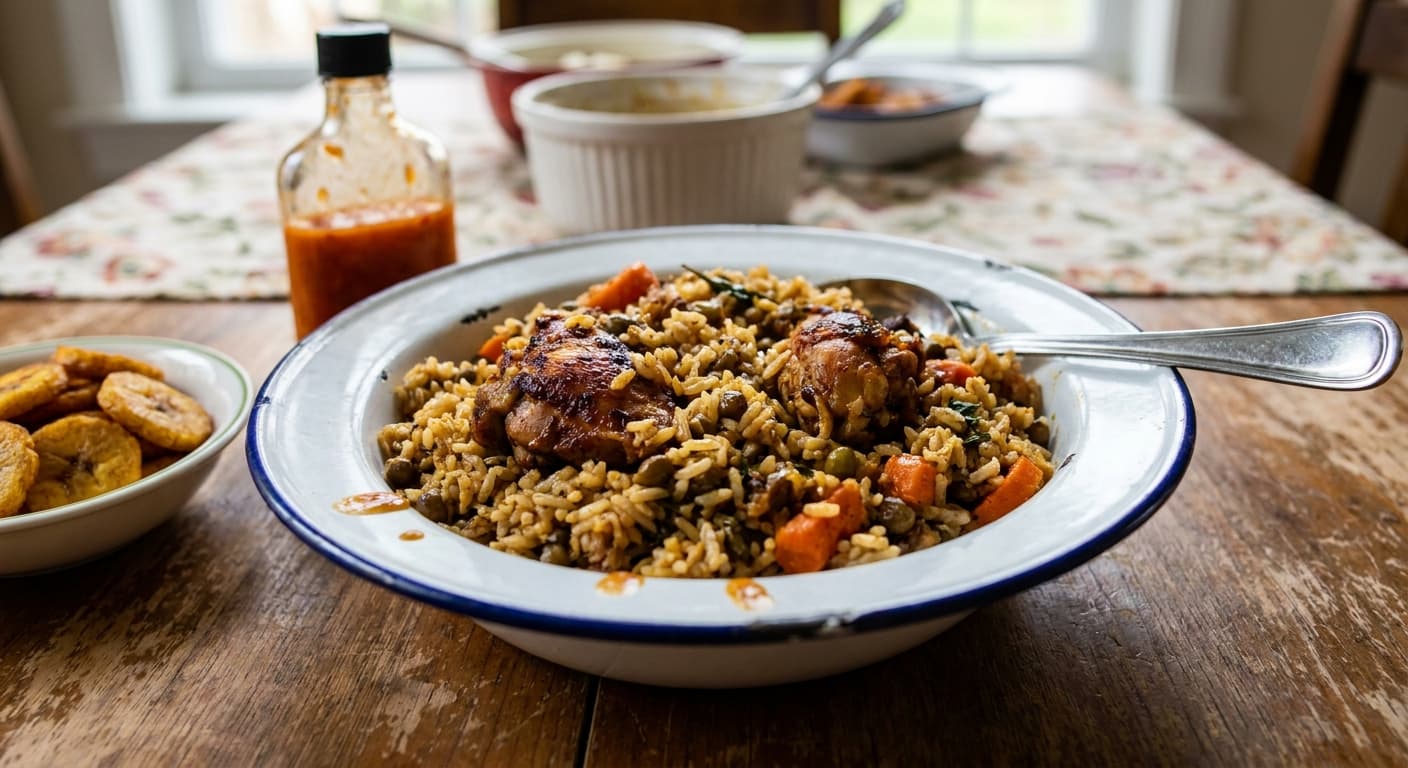
Trinidadian Pelau (Pelau) — Caramel-Browned Chicken, Rice, and Pigeon Peas
Trinidadian · Rice Dishes · 85 min
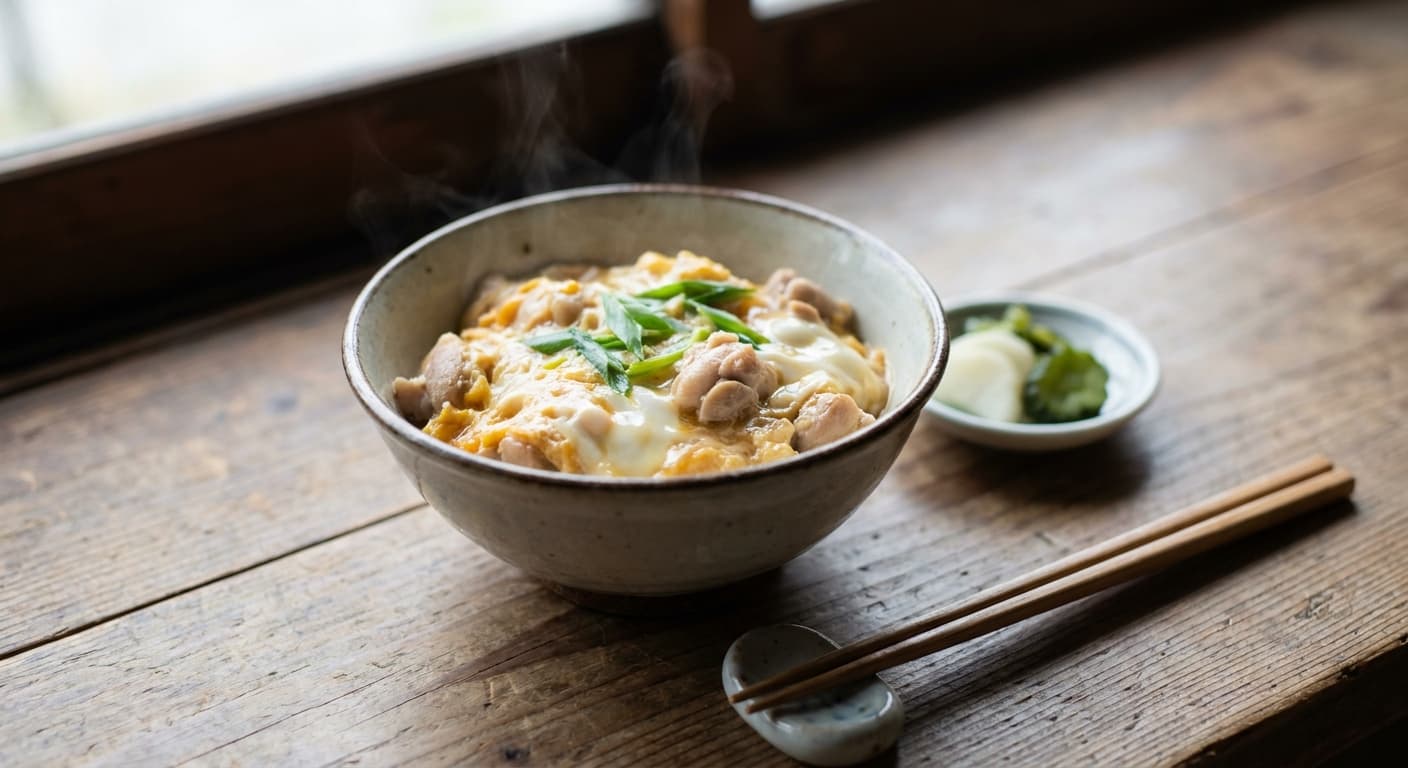
Japanese Oyakodon (親子丼) — Chicken and Egg Rice Bowl
Japanese · Rice Dishes · 29 min
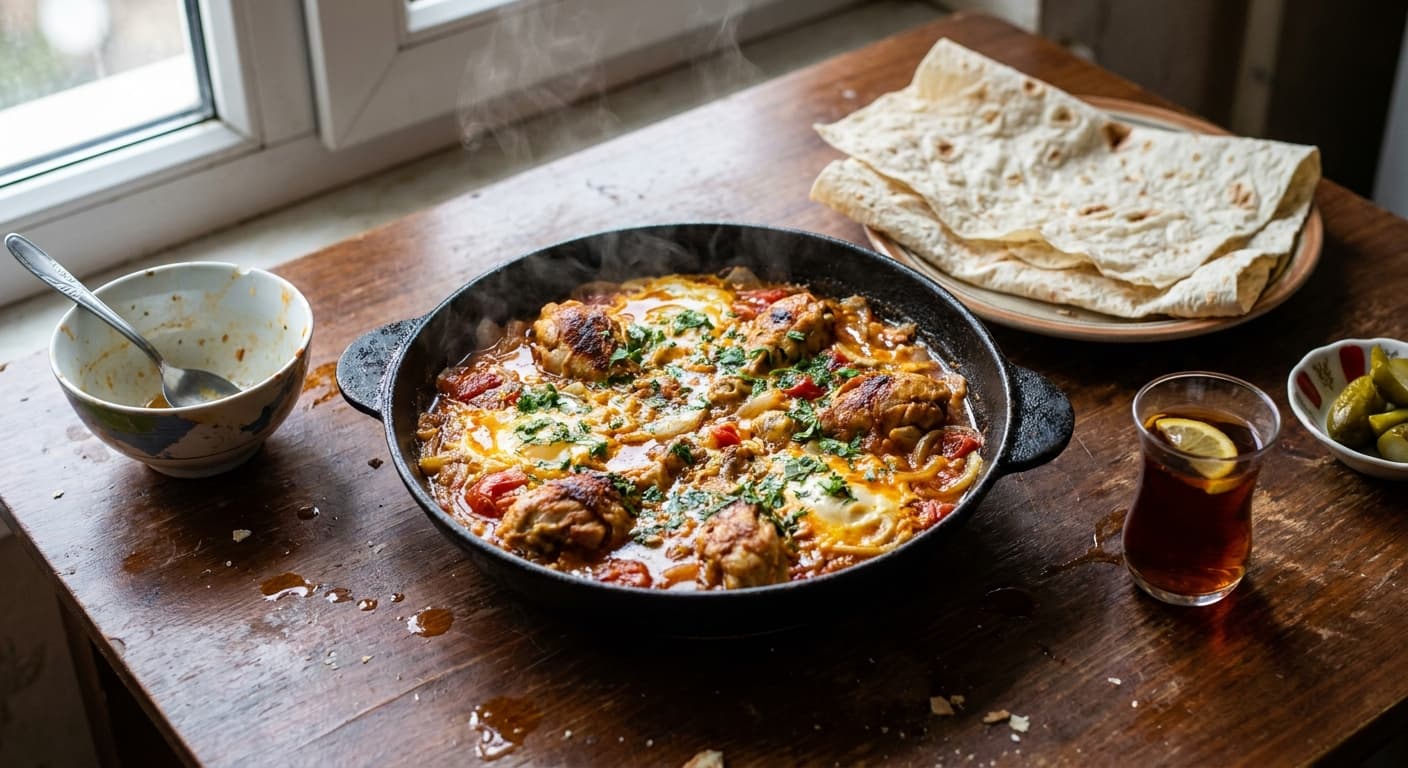
Chicken Chygyrtma (Toyuq Çığırtması) — Azerbaijani Chicken with Eggs and Tomatoes
Azerbaijani · Main Courses · 65 min
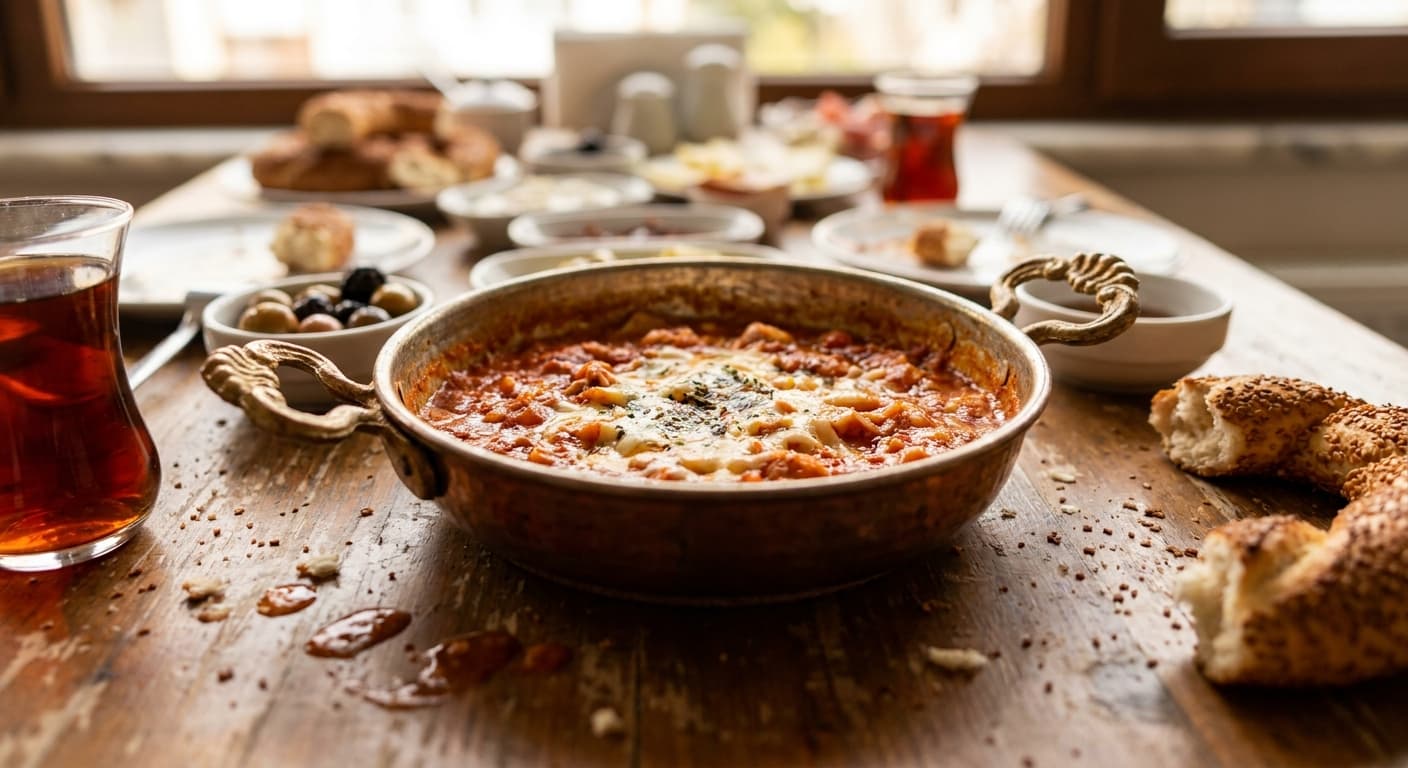
Turkish Menemen (Menemen) — Soft Eggs with Tomatoes and Peppers
Turkish · Main Courses · 37 min
Morog Polao (মোরগ পোলাও) — Bangladeshi Chicken Pilaf
Bangladeshi · Rice Dishes · 100 min
Reviews
Cooked this recipe?
Tap the stars to rate it — that's all it takes. A few words are welcome but optional.
No ratings yet. Cooked this one? Be the first to rate it — it takes one tap.