The Ultimate Turkish Breakfast Spread: A Complete Guide
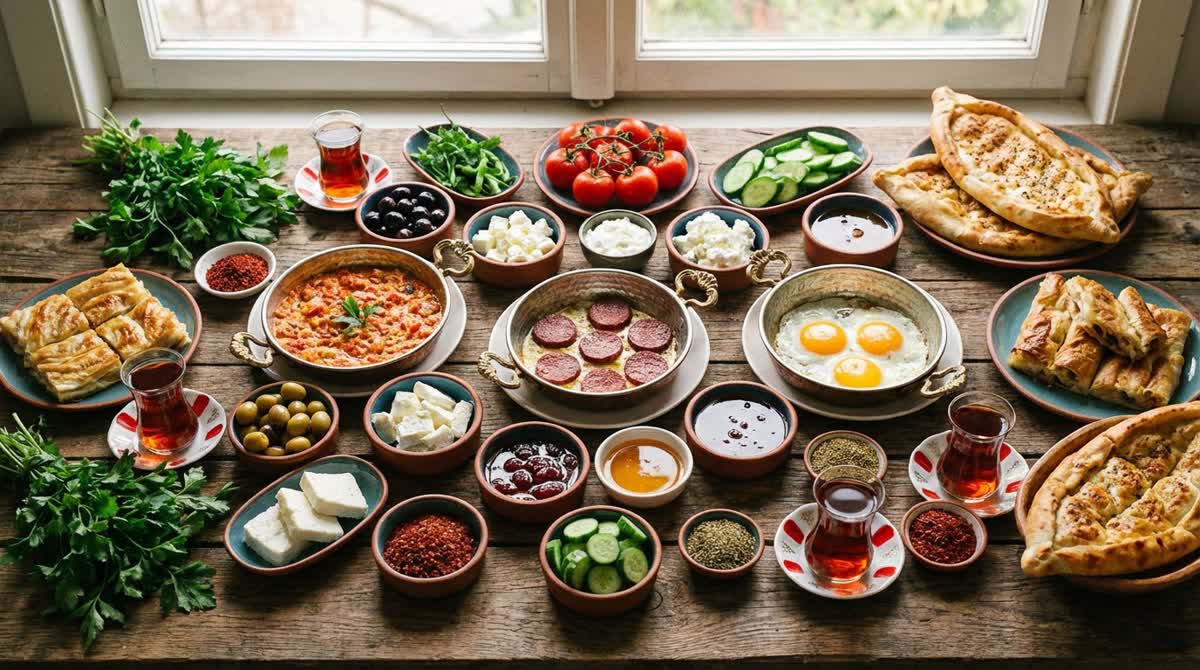
There are breakfasts you eat… and breakfasts you host. A proper turkish breakfast is the second kind: a table that expands as you set it, a slow morning that turns into late afternoon tea, and a spread so colorful it feels like a celebration even on an ordinary day.
In Turkey, this ritual has a name: kahvalti (literally “before coffee”). And once you’ve experienced it—warm bread, briny olives, creamy cheeses, jam that tastes like summer, eggs sizzling in a pan—you understand why people plan weekends around it.
This guide is your complete, practical roadmap to building the ultimate Turkish breakfast spread at home: what to serve, how to time it, what’s traditional vs. flexible, and which turkish breakfast recipes from Zaffaron to lean on when you want the full experience without guesswork.
What Makes a Turkish Breakfast Different?
A classic turkish breakfast isn’t one “main dish” with a side. It’s a mosaic: small plates, dips, breads, eggs, fresh vegetables, and endless tea. The goal isn’t speed—it’s abundance, balance, and conversation.
A few defining traits:
- Many small plates instead of one big plate
- A strong bread culture (fresh, warm, always central)
- Cheese + olives as everyday staples
- Eggs cooked simply but boldly (tomato, pepper, butter, spice)
- Tea first, coffee later—because kahvalti comes “before coffee”
And perhaps the most important difference: it’s meant to be shared. Even if you’re cooking for two, the spirit of kahvalti is generosity.
Kahvalti Essentials: The Core Components of the Spread
Think of kahvalti as a choose-your-own-adventure table. Not every household serves everything, but most tables include something from each category.
1) Bread: The Non‑Negotiable Centerpiece
Bread is the “plate” of a Turkish breakfast—used to scoop, dip, wrap, and chase every bite.
- Simit is the most iconic: sesame-crusted, chewy, and perfect with tea. If you want an authentic anchor for your table, bake or buy it first.
Try: Simit (سيميت) — Turkish Sesame-Crusted Bread Rings
Tip: Warm bread right before serving. Even store-bought bread feels special after 5 minutes in the oven.
2) Cheeses: Salty, Creamy, and Made for Pairing
Turkish breakfasts typically include a few cheeses with different textures: one crumbly (like beyaz peynir), one stretchy/melty (like kaşar), and sometimes a creamy spread.
How to serve: Drizzle olive oil over slices, add a pinch of oregano or pul biber (Aleppo-style pepper flakes), and pair with tomatoes and cucumbers.
3) Olives & Olive Oil: Briny Bites Between Richer Dishes
Expect both green and black olives, often cracked or marinated. A small dish of good olive oil for dipping bread is very on-brand.
Personal habit: I always put olives near the eggs—something about briny + buttery makes the whole table feel complete.
4) Fresh Vegetables: The Crunchy Reset Button
The simplest plate might be the most essential: sliced tomatoes, cucumbers, peppers, and herbs (mint, parsley).
For a more composed version, add a salad that still feels breakfast-friendly:
5) Sweet Corner: Jams, Honey, and Something Creamy
Turkish breakfast sweets aren’t usually heavy desserts. They’re spoonable, spreadable, and meant to be eaten with bread.
Common options:
- Jam or marmalade
- Honey (often served with clotted cream/kaymak)
- Tahini + grape molasses (tahin-pekmez)
Shortcut tip: If you’re short on time, choose one sweet element, but make it good.
The Hot Dishes That Make the Table Feel “Weekend-Level”
Cold plates set the stage. Hot dishes make it feel like a feast.
Menemen: The Star Egg Dish of Turkish Breakfast
If there’s one dish that screams kahvalti, it’s menemen—soft scrambled eggs cooked with tomatoes and peppers, usually finished with a glossy sheen of olive oil or butter.
Make it the centerpiece of your turkish breakfast recipes lineup:
Serving tip: Menemen should hit the table still bubbling. Put it in the center with a spoon and let everyone scoop with bread.
Börek: Flaky Layers That Disappear Fast
Börek is that magical category of savory pastry that feels like it took all morning—whether it did or not. It’s ideal because it can be made ahead, reheated, and served at room temperature without losing its charm.
Two excellent options:
- Börek (Börek) — Turkish Flaky Phyllo Pastry with Cheese and Spinach
- Sigara Böreği (Sigara Böreği) — Turkish Crispy Rolled Cheese Pastry
(If you’re hosting, do one large tray börek or a platter of sigara böreği—either way, it’s the first thing to vanish.)
A Meze-Style Plate for Extra Variety
Turkish breakfast often borrows from meze culture: small, flavorful dishes that make you keep reaching for “one more bite.”
A perfect addition is a vegetable-forward, tomato-rich dish like:
Why it works at breakfast: It’s bold, tangy, and pairs beautifully with bread and cheese—especially if your table leans savory.
Kısır: The Bright, Zesty Bowl That Balances Everything
If your spread includes buttery pastries and eggs, you’ll love having something lemony and fresh to cut through it. Kısır (fine bulgur salad) is a surprisingly natural breakfast side—especially for brunch-style kahvalti.
Add it as a make-ahead hero:
Building Your Turkish Breakfast Menu (3 Levels)
You can scale kahvalti based on time, appetite, and how many people you’re feeding. Here are three templates I use.
Level 1: The Everyday Turkish Breakfast (15–25 minutes)
- Warm bread (or Simit)
- Tomatoes + cucumbers
- Olives + cheese
- Jam or honey
- Tea
- Optional hot dish: Menemen
This is the “Tuesday morning in Istanbul” vibe—simple, satisfying, real.
Level 2: The Weekend Kahvalti (45–75 minutes)
Add:
- One börek option: Börek or Sigara Böreği
- A salad: Turkish Shepherd’s Salad
- A meze-like dish: Saksuka
This is the spread that makes people linger at the table.
Level 3: The Ultimate Turkish Breakfast Spread (Brunch Party Mode)
Go all in with:
- Simit
- Menemen
- Börek and/or Sigara Böreği
- Kısır
- Turkish Shepherd’s Salad
- Saksuka
- A sweet finish (choose one): Künefe or Sütlaç
- Tea, always
This version feels like a mini vacation—exactly what a great turkish breakfast should do.
How to Serve It Like a Turkish Table (Without Stress)
Use Small Plates, Not Big Platters
Kahvalti is all about variety. Small dishes make the table feel abundant even if each portion is modest.
Hosting trick: Put duplicates of a few items (like olives or tomatoes) at opposite ends of the table so people don’t constantly pass plates around.
Focus on Contrast: Crunchy, Creamy, Salty, Sweet
A memorable kahvalti isn’t “more food,” it’s better balance:
- Creamy cheese + crunchy cucumbers
- Buttery eggs + briny olives
- Flaky börek + fresh salad
- Sweet jam + sesame simit
Don’t Overcook the Eggs
For menemen, keep the eggs tender. The tomatoes should be saucy, not dry, and the eggs should be soft enough to scoop.
Make: Menemen
Tea Is Part of the Food
Turkish tea (çay) isn’t an afterthought—it’s the rhythm of the meal. Serve it continuously in small glasses if you have them, or in any small clear glassware.
Personal touch: I like to start brewing tea before I cook anything else. It sets the pace and makes the kitchen feel instantly “kahvalti-ready.”
Cultural Notes: What’s Traditional vs. What’s Totally Fine
Regional Differences Are Real
In the Black Sea region, you might see corn bread or anchovy dishes; in Gaziantep, breakfasts can be richer and more spice-forward. Big cities offer “serpme kahvaltı” (a sprawling mixed breakfast) at cafes—an experience that inspired many modern home spreads.
Breakfast Can Blend Into Lunch (And That’s the Point)
A long kahvalti often stretches into midday. That’s why it’s common to include dishes that feel brunchy or meze-like, such as Saksuka or a hearty bowl of Kısır.
Dessert Isn’t Mandatory—But It’s Welcome
In many homes, breakfast ends with fruit or something small and sweet. If you’re hosting, adding a dessert makes the meal feel complete and celebratory.
Two crowd-pleasers:
- Künefe (كنافة) — Turkish Cheese Pastry with Pistachio and Syrup
- Sütlaç (Sütlaç) — Turkish Baked Rice Pudding with a Lightly Caramelized Top
Make-Ahead Game Plan (So You’re Not Cooking All Morning)
If you want the “ultimate spread” without living in the kitchen, here’s a realistic schedule.
The Night Before
- Prep vegetables (store sliced tomatoes separately; cucumbers hold better)
- Make Kısır (it actually improves as it sits)
- Prepare börek for baking or reheat (depending on your plan): Börek
- Set the table: small plates, forks, knives, tea glasses
The Morning Of
- Start tea
- Warm bread / bake Simit if homemade
- Bake or crisp up börek
- Cook Menemen last
- Add a finishing dish (optional): Saksuka
If You Want a Sweet Finish
Make dessert after the main breakfast—or prep it ahead:
- Sütlaç can be made in advance and served chilled or at cool room temp.
- Künefe is best hot and dramatic—perfect if you want a “wow” moment.
Common Mistakes (and How to Avoid Them)
Mistake 1: Trying to Cook Everything Fresh
A kahvalti table looks abundant because much of it is assembled, not cooked. Use make-ahead dishes like Kısır and reheat-friendly pastries like Börek.
Mistake 2: Skipping Freshness
Even the richest turkish breakfast recipes rely on fresh contrast. Don’t skip tomatoes, cucumbers, herbs, and lemon.
Upgrade your veg plate with: Turkish Shepherd’s Salad
Mistake 3: Not Enough Bread
It sounds obvious, but it’s the #1 hosting issue. People eat more bread than you think because it’s the utensil. Add extra simit or a backup loaf.
Start here: Simit
A Sample “Ultimate Turkish Breakfast” Shopping List
Use this as a flexible checklist:
Bakery
- Simit or fresh bread
Dairy
- 2–3 cheeses (crumbly + melty + creamy if possible)
- Butter
- Yogurt (great on the side and for balance)
Produce
- Tomatoes, cucumbers, peppers
- Parsley, mint
- Lemons
Pantry
- Olives (green + black)
- Olive oil
- Honey and/or jam
- Pul biber, black pepper, oregano
- Pomegranate molasses (for Kısır)
Hot dishes ingredients
- Eggs (for Menemen)
- Phyllo/yufka + fillings (for Börek or Sigara Böreği)
Bring Kahvalti to Your Table (One Plate at a Time)
The beauty of kahvalti is that it’s both simple and endless: you can start with warm bread, tea, and tomatoes—and gradually build toward the full, unforgettable turkish breakfast spread with your favorite classics.
When you’re ready to cook, Zaffaron has you covered with crowd-pleasing, table-building staples like:
Explore more on Zaffaron, pick two or three dishes to start, and let your next morning turn into a proper Turkish-style feast—slow, generous, and meant to be shared.