Sütlaç (Sütlaç) — Turkish Baked Rice Pudding with a Lightly Caramelized Top
Sütlaç is a beloved Turkish milk-and-rice dessert, often finished in the oven for a gently bronzed, caramelized surface. This baked version balances creamy custard texture with simple pantry ingredients and a clean dairy aroma.
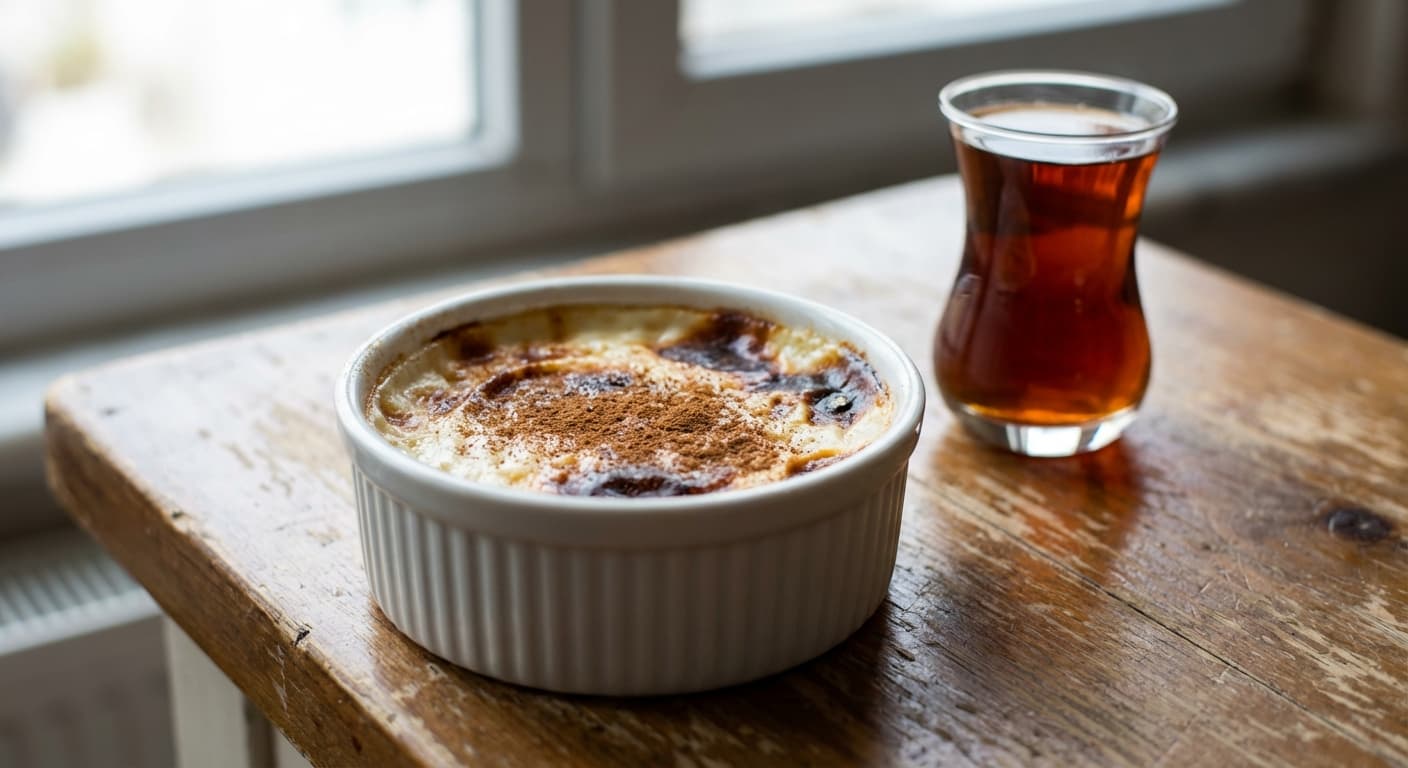
Printable Recipe Card
Servings: 6 · Total: 70 min · Difficulty: medium
Ingredients (quick list)
- 70 g short-grain rice (rinsed until water runs mostly clear)
- 300 ml water
- 1000 ml whole milk
- 160 g granulated sugar
- 18 g cornstarch (about 2 tbsp)
- 1 egg yolk (optional but traditional for better browning)
- 2 tsp vanilla extract
- 1 tsp fine sea salt
- 1 tsp ground cinnamon (for sprinkling after baking)
Steps (summary)
- Rinse the rice in a sieve under cool water until the runoff is mostly clear. Add the rice and 300 ml water to a small pot and s…
- Pour 1000 ml milk into a wide saucepan and add the cooked rice, sugar, and salt. Bring it just to a gentle simmer over medium h…
- In a bowl, whisk the cornstarch with 120 ml cold milk until completely smooth and lump-free. Pour this slurry into the simmerin…
- Continue cooking for 3–5 minutes, stirring steadily, until the pudding thickens to a lightly pourable custard that coats the ba…
- Heat the oven broiler/grill to 240°C and place a rack in the upper third of the oven. If using egg yolk, whisk it with 2 tbsp (…
- Divide the pudding into 6 oven-safe ramekins (about 180–200 ml each) and set them in a deep baking tray. Add hot water to the t…
+ 2 more steps in the full instructions section below.
Cultural Background
Sütlaç is a cornerstone of Turkish home desserts and restaurant meyhane menus alike, prized for its simplicity and comfort. The oven-baked, browned-top version is especially popular in Istanbul and coastal towns, served chilled in individual bowls.
Equipment
💡 Tips
- Use short-grain rice for the signature creamy body; long-grain stays too separate and gives a thinner pudding.
- Keep the milk at a gentle simmer, not a rolling boil, to avoid scorching and grainy dairy proteins.
- For a deeper caramelized top, broil 1–2 minutes longer but rotate the tray to prevent burnt spots.
⚠️ Common Mistakes
❌ The milk scorches and the pudding tastes smoky or bitter.
✅ Fix: Use a heavy-bottomed pan, stir every 20–30 seconds once simmering, and keep heat at a gentle simmer rather than a boil.
❌ Lumpy pudding after adding cornstarch.
✅ Fix: Dissolve cornstarch in cold milk until smooth and pour in slowly while whisking constantly; if needed, strain before portioning.
❌ Curdled or grainy texture after broiling.
✅ Fix: Bake in a hot-water bath and broil only until browned; chill fully to let the custard set and smooth out.
🧊 How to Store
Cover ramekins tightly and refrigerate for up to 3 days. To reheat, warm uncovered in a 160°C oven for 10–12 minutes; avoid microwaving on high, which can split the custard and soften the caramelized top.
📅 Make Ahead
Cook and portion the pudding up to 24 hours in advance, then broil just before serving for the freshest caramelized top. Alternatively, broil ahead and chill; the top will soften slightly but the flavor remains excellent.
🍽️ Pairs Well With
- Turkish tea
- fresh berries
- roasted pistachios
- a dusting of cinnamon.
Regional Variations
- Fırın sütlaç (baked sütlaç): finished under a broiler for the signature browned top and slightly firmer custard.
- Stovetop sütlaç: cooked and chilled without browning, often served in glass bowls with cinnamon.
- Mastic sütlaç: flavored with 0.25 tsp ground mastic for a piney, resinous aroma popular around the Aegean.
Ingredients
- 70 gshort-grain rice (rinsed until water runs mostly clear)
- 300 mlwater
- 1000 mlwhole milk
- 160 ggranulated sugar
- 18 gcornstarch (about 2 tbsp)
- 1egg yolk (optional but traditional for better browning)
- 2 tspvanilla extract
- 1 tspfine sea salt
- 1 tspground cinnamon (for sprinkling after baking)
🔄 Substitutions
- whole milk→ 2% milk
- cornstarch→ rice flour
- vanilla extract→ orange blossom water
Instructions
- 1
Rinse the rice in a sieve under cool water until the runoff is mostly clear. Add the rice and 300 ml water to a small pot and simmer over medium-low heat for 10–12 minutes, stirring twice, until the grains are tender and most of the water is absorbed.
- 2
Pour 1000 ml milk into a wide saucepan and add the cooked rice, sugar, and salt. Bring it just to a gentle simmer over medium heat, then reduce to medium-low and cook for 10 minutes, stirring often so the milk does not scorch on the bottom.
- 3
In a bowl, whisk the cornstarch with 120 ml cold milk until completely smooth and lump-free. Pour this slurry into the simmering pot in a thin stream while whisking constantly, and keep whisking for 1 minute to prevent clumps from forming.
- 4
Continue cooking for 3–5 minutes, stirring steadily, until the pudding thickens to a lightly pourable custard that coats the back of a spoon. Turn off the heat and whisk in the vanilla extract, then let the mixture stand for 5 minutes so bubbles settle and the rice suspends evenly.
- 5
Heat the oven broiler/grill to 240°C and place a rack in the upper third of the oven. If using egg yolk, whisk it with 2 tbsp (30 ml) of the hot pudding in a small bowl to temper it, then whisk this mixture back into the pot so the top browns more evenly.
- 6
Divide the pudding into 6 oven-safe ramekins (about 180–200 ml each) and set them in a deep baking tray. Add hot water to the tray to come about 2 cm up the sides of the ramekins, which helps the custard bake gently and prevents curdling.
- 7
Broil for 6–9 minutes, rotating the tray once, until the tops develop golden-brown patches and a lightly caramelized skin. Remove carefully, cool at room temperature for 20 minutes, then refrigerate for at least 2 hours to fully set and become creamy.
- 8
Serve chilled or cool, sprinkling exactly 1/6 tsp cinnamon over each ramekin for a classic finish. For the cleanest texture, avoid stirring the browned top into the custard and instead break through it with a spoon as you eat.
🪪 Recipe Passport
Cultural Background
Sütlaç is a cornerstone of Turkish home desserts and restaurant meyhane menus alike, prized for its simplicity and comfort. The oven-baked, browned-top version is especially popular in Istanbul and coastal towns, served chilled in individual bowls.
Regional Variations
Researched from multiple sources and validated by the Zaffaron editorial team. Every recipe is tested for accuracy, measurements, and cultural authenticity.
Nutrition per serving
Pairs well with
If you enjoyed this recipe, here are a few related Zaffaron recipes to try next.
- Turkish Tomato Soup (Domates Çorbası) — Velvety butter-finished grated tomato soup
- Arnavut Ciğeri (Arnavut Ciğeri) — Turkish Albanian-Style Fried Liver with Onions
- Cig Kofte (Çiğ Köfte) — Isot-kissed bulgur kneaded and served in lettuce
- Börek (Börek) — Turkish Flaky Phyllo Pastry with Cheese and Spinach
Does your family make this differently?
Every family has their own version. Maybe your grandmother adds a secret ingredient, or your aunt has a completely different technique. Preserve your family's version — with their name on it, forever.
You Might Also Like
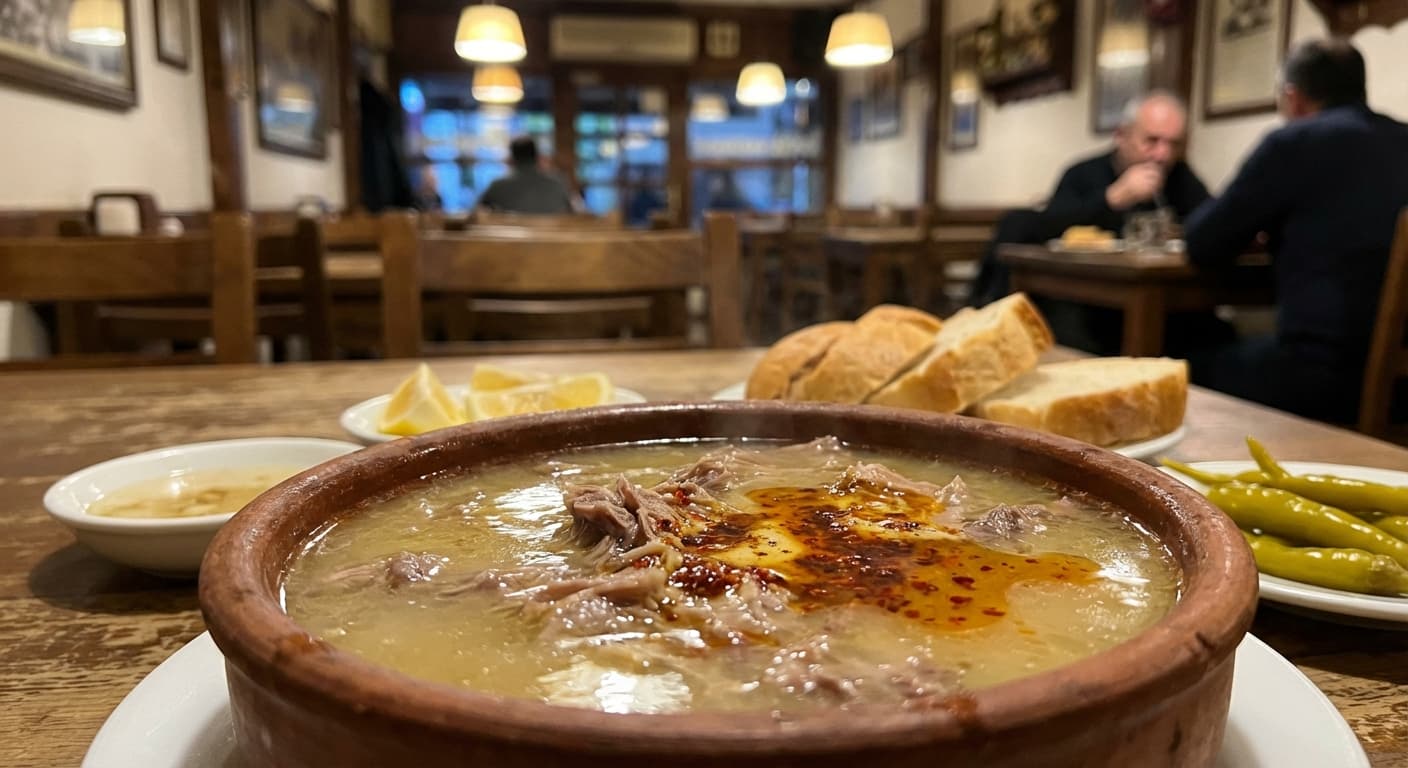
Kelle Paça (Kelle Paça) — Turkish Jelatinli et suyunda pişen şifa çorbası
Turkish · Soups · 275 min
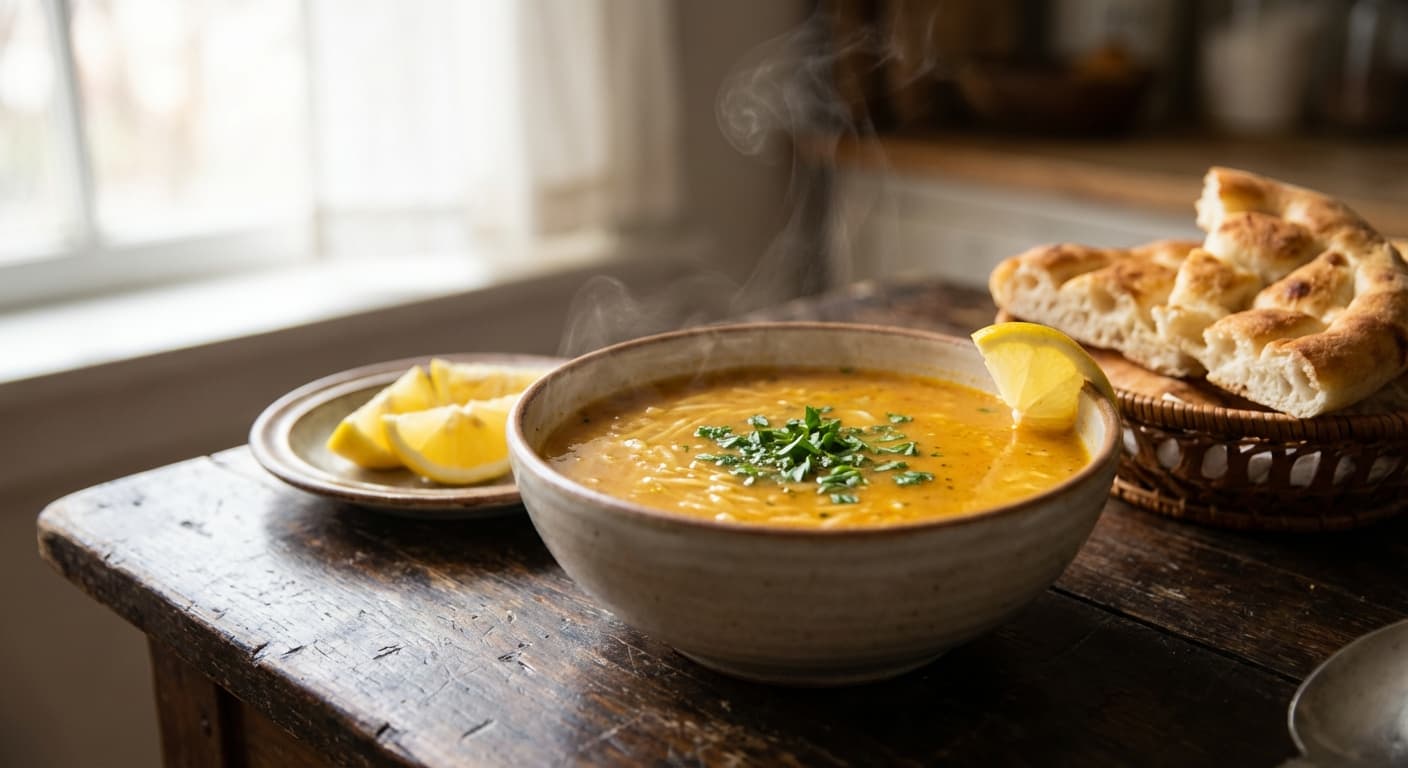
Sehriye Soup (Şehriye Çorbası) — Quick Turkish Vermicelli Soup with Chicken Broth
Turkish · Soups · 30 min
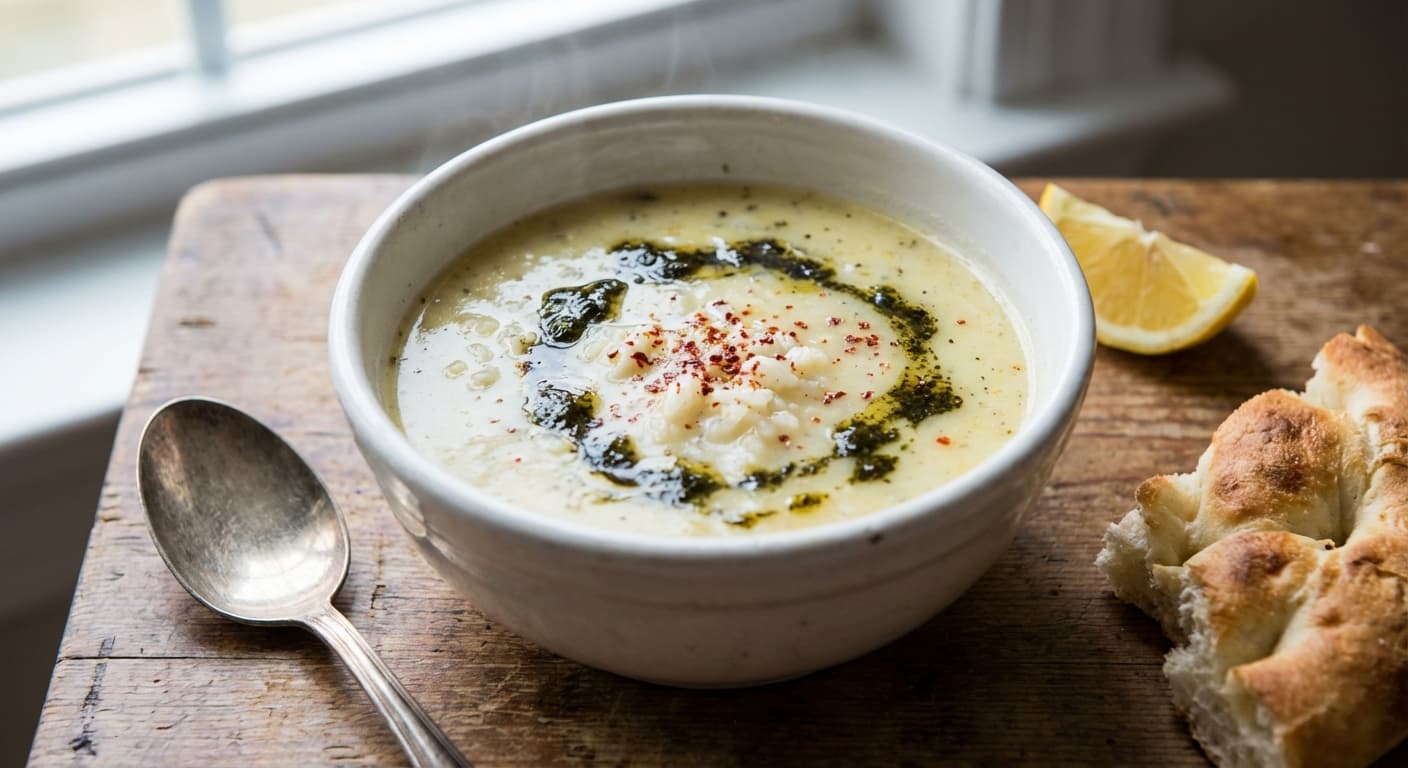
Yayla Soup (Yayla Çorbası) — Turkish yogurt, mint, and rice soup
Turkish · Soups · 40 min
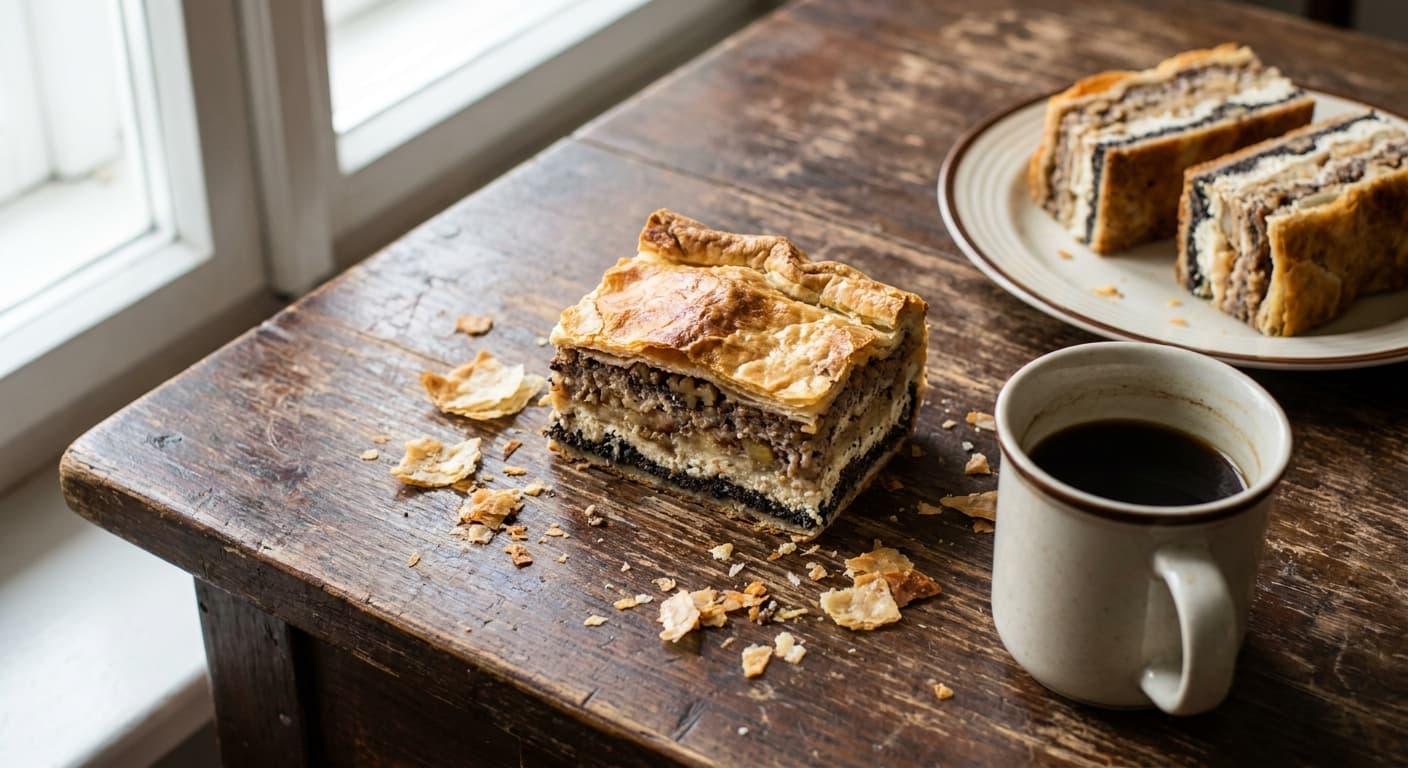
Prekmurje Layer Cake (Prekmurska gibanica) — Slovenian Festival Layer Pastry
Slovenian · Desserts · 185 min

Chimney Cake (Kürtőskalács) — Hungarian Spiral Pastry with Cinnamon Sugar
Hungarian · Desserts · 59 min
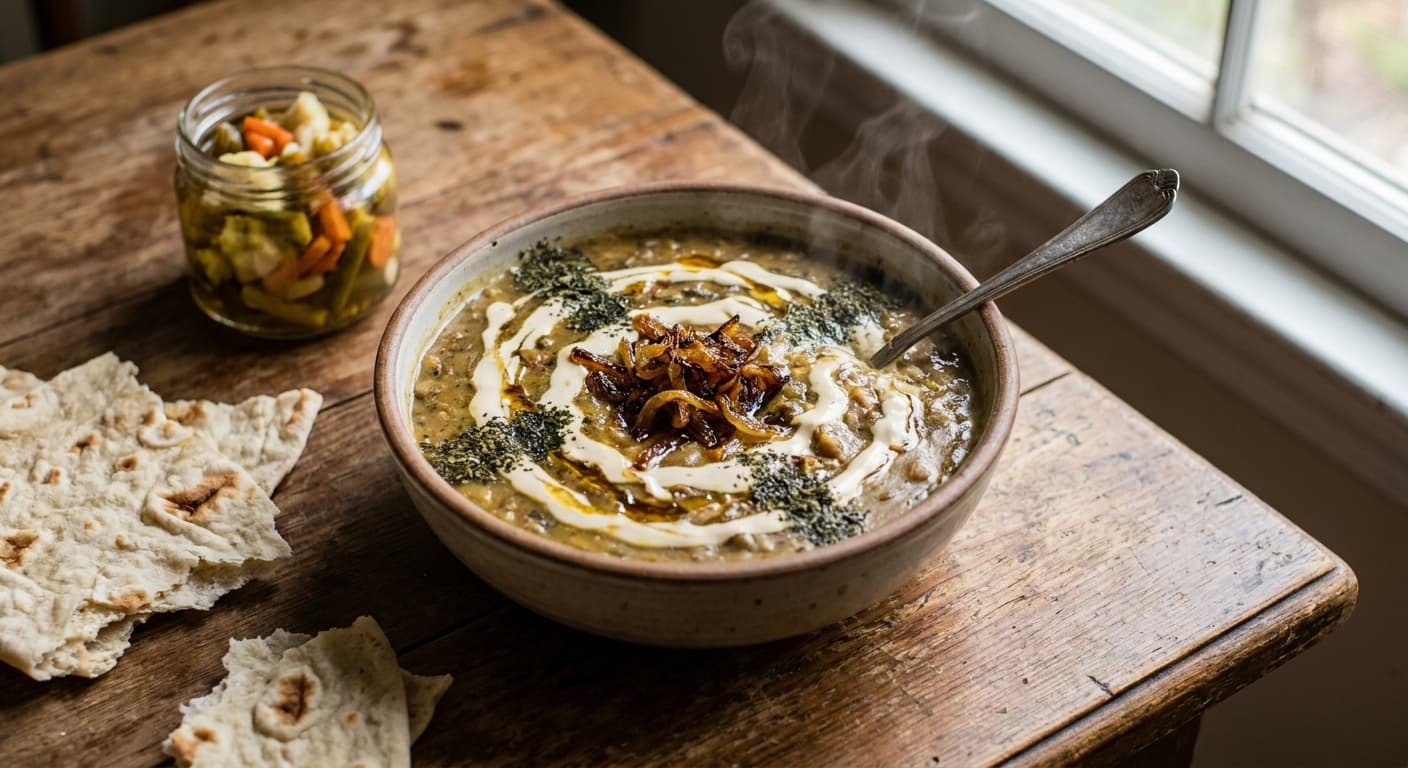
Ash-e Sak (آش ساک) — Gorgani Spinach and Lamb Ash
Persian · Soups · 175 min
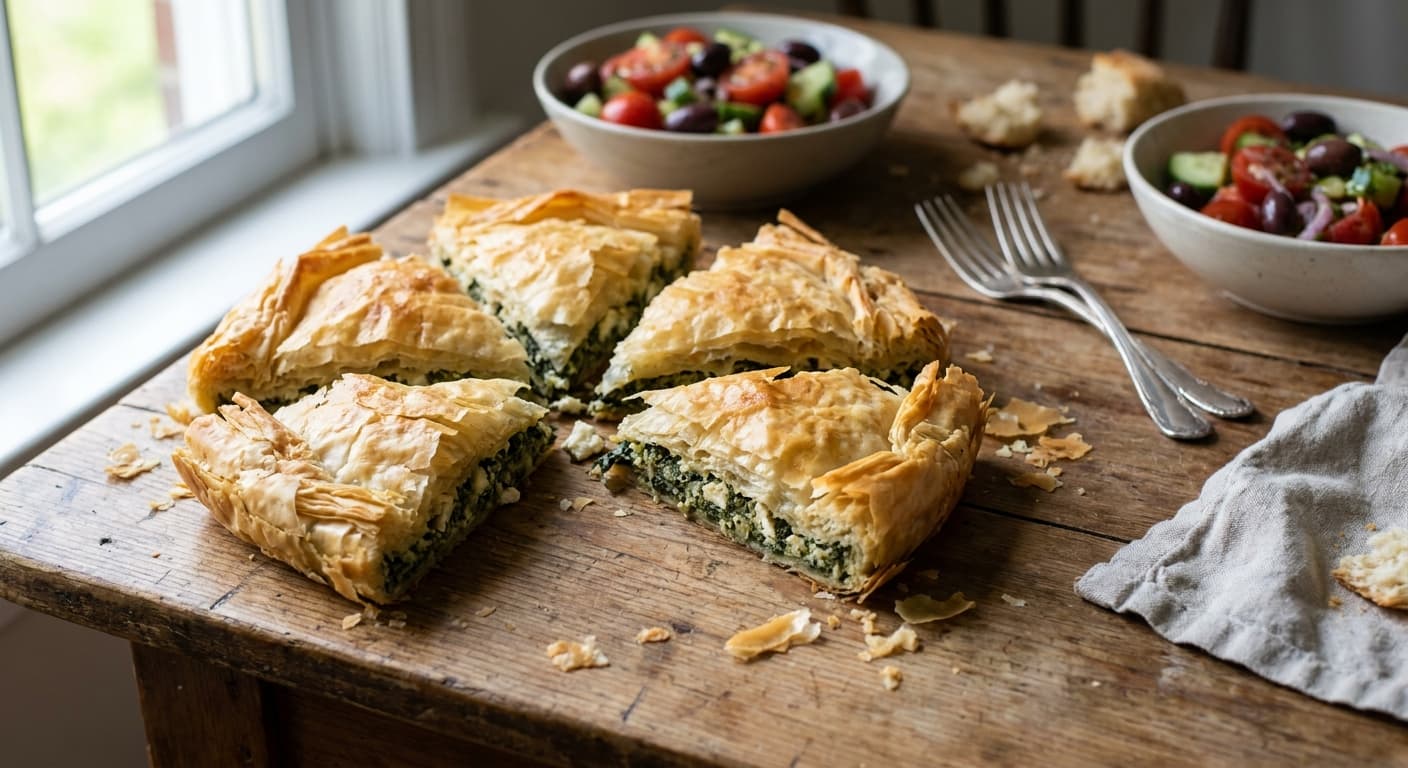
Greek Spinach Pie (Σπανακόπιτα) — Flaky Feta and Spinach Phyllo Pie
Greek · Main Courses · 95 min
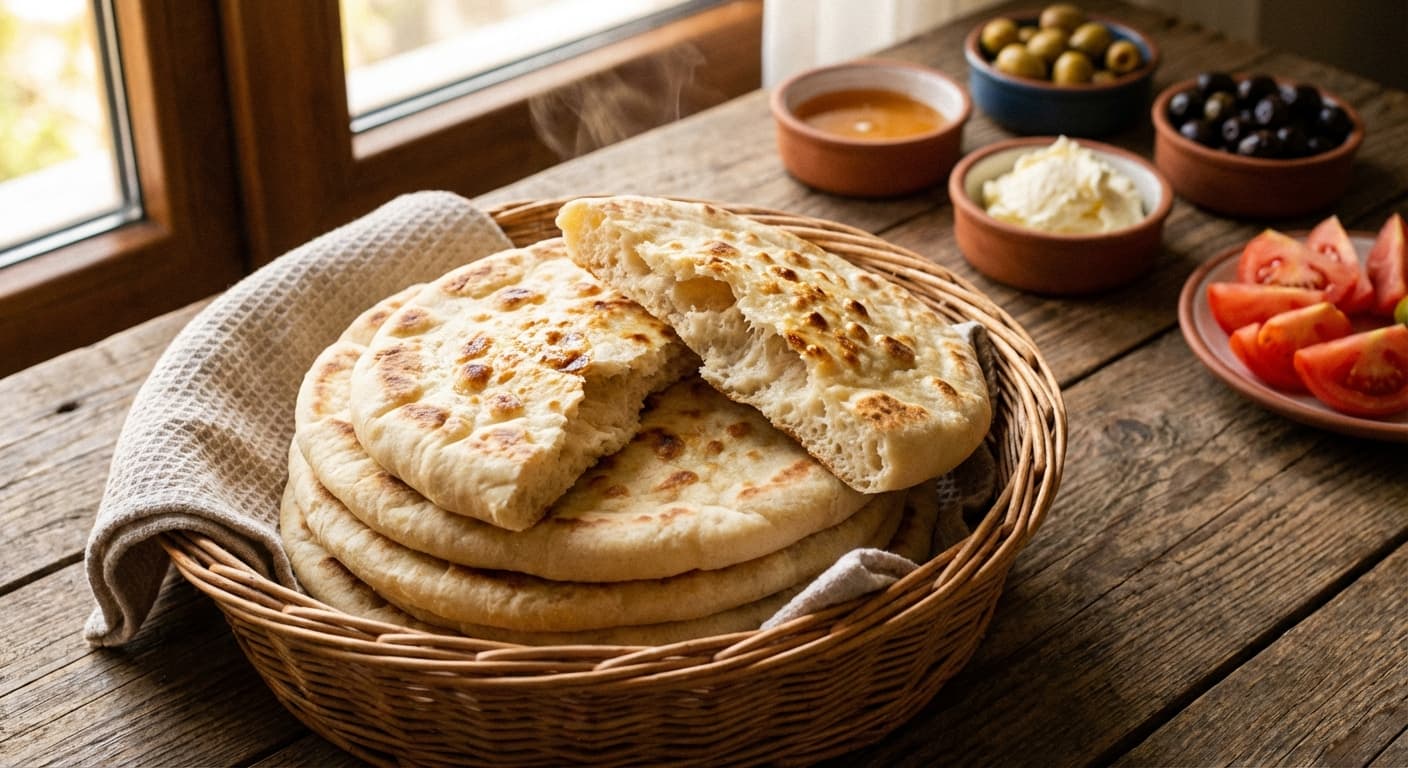
Bazlama (بازلاما) — Puffy Turkish Village Flatbread Cooked on a Saj
Turkish · Breads · 38 min
Reviews
Cooked this recipe?
Tap the stars to rate it — that's all it takes. A few words are welcome but optional.
No ratings yet. Cooked this one? Be the first to rate it — it takes one tap.