Eid al-Fitr
عيد الفطر
About Eid al-Fitr
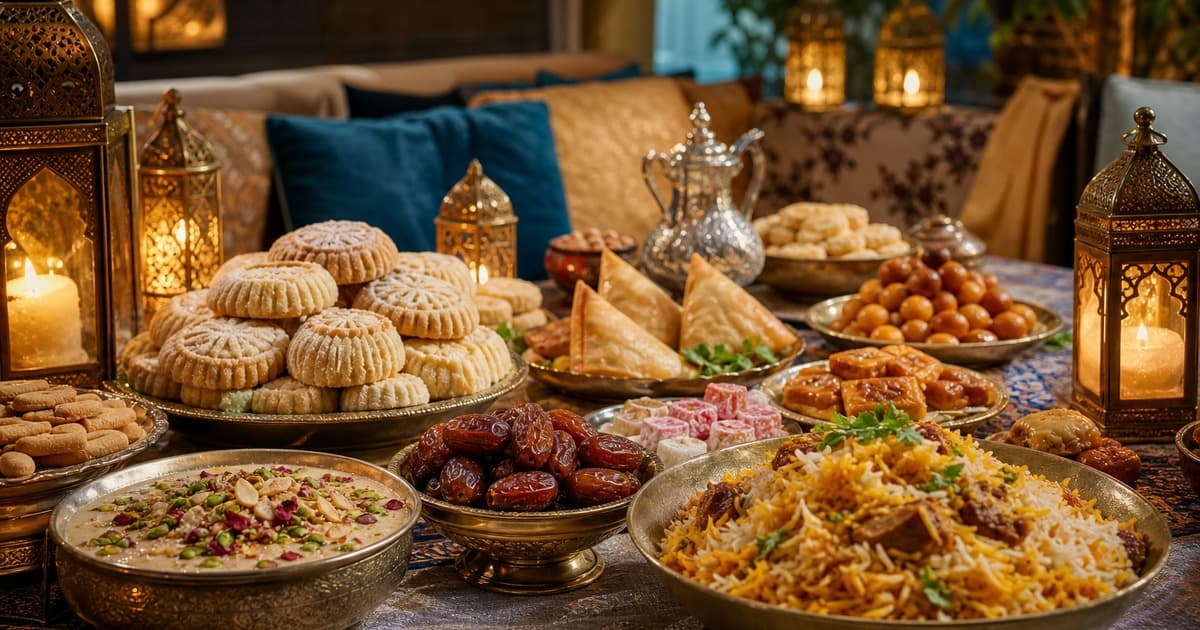
Eid al-Fitr, the “holiday of breaking the fast,” is commonly served through sweet, generous tables after Ramadan’s dawn-to-sunset fasting ends. Across South Asian homes, Sheer Khurma—milky vermicelli with dates and nuts—is often the first festive sweetness offered to guests, with Biryani, kebabs, and sometimes Samosas rounding out the meal. In Egypt, powdered-sugar Kahk is strongly associated with Eid visits, while Levantine families often prepare Ma'amoul filled with dates, walnuts, or pistachios. From Turkish lokum and baklava to Indonesian ketupat with rendang and West African jollof or thiéboudienne, the holiday’s foods vary widely but share themes of hospitality, charity, family visits, and joyful abundance.
Signature Dishes
Sheer Khurma
شیر خورما
Ma'amoul
معمول
Samosas
Biryani
Kahk
كحك
Regional Variations
Turkey
Known as Şeker Bayramı (Sugar Feast) or Ramazan Bayramı; lokum, baklava, kadayıf, güllaç, sütlaç; children kiss elders' hands for sweets and money.
Iran
Eyd-e Fetr (Shia majority); shirin polo (saffron sweet rice), Persian halva, sholezard, ash-e reshteh; subtler in scale than Nowruz.
Morocco / Algeria / Tunisia (Maghreb)
Ka'ak anise-sesame rings as signature sweet; chebakia, briouats, sellou; tagines as festive mains; ceremonial mint tea throughout the day.
Egypt
Kahk el-Eid powdered shortbread cookies (filled with malban, nuts, or agameya) as the iconic sweet; ghorayeba, basbousa, fata, and mahshi commonly served.
Levant (Syria, Lebanon, Jordan, Palestine)
Maamoul date/walnut/pistachio-filled semolina cookies molded in carved wooden tabe'; knafeh, basbousa; kharouf mahshi or kibbeh bil sanieh; mansaf central in Jordan.
Gulf (Saudi, UAE, Kuwait, Qatar, Bahrain, Oman)
Kabsa, mandi, and ouzi as festive mains; klaicha date-filled cookies, luqaimat with date syrup; Arabic qahwa with dates served throughout.
Pakistan / India
Called Meethi Eid (Sweet Eid); sheer khurma vermicelli pudding is signature; biryani, kebabs, korma, and mithai (barfi, gulab jamun, ladoo, jalebi) exchanged.
Bangladesh
Semai (Bangla vermicelli) takes the sheer khurma role at breakfast; korma and biryani central to festive table.
Indonesia
Hari Raya Aidilfitri / Lebaran; ketupat woven rice cakes with rendang, opor ayam, sambal goreng ati; kue lebaran (nastar, kastengel, putri salju) baked weeks ahead.
Malaysia
Hari Raya Aidilfitri; ketupat with Malaysian-style beef rendang; kuih raya assorted festive cookies prepared for open-house visits.
Senegal / Mali / Mandinka regions
Called Korité in Wolof/Mandinka; thiéboudienne (fish and rice) as festive main in Senegal; beignets and millet porridges accompany.
Nigeria / Ghana / West Africa
Jollof rice variants and goat-meat stews are central festive dishes; sweet kunu millet drinks and ginger drinks accompany.
Muslim-minority diaspora (US, UK, France, Germany, Canada, Australia)
Community Salat al-Eid at mosques/community centers; home or community festive meals; NYC public-school holiday since 2015; Trafalgar Square Eid lights in UK.
Observance Practices
Salat al-Eid: dawn congregational two-rakat prayer in open field or large hall, performed only in jamāʿat, followed by khutbah
Sunni liturgy: six additional Takbirs (three at start of first rakat, three before rukūʿ in second); some Sunni schools use twelve total
Sunni communities
Shia liturgy: six Takbirs in first rakat after qira'a and five in second rakat before rukūʿ
Shia communities
Zakat al-Fitr: obligatory pre-prayer charity (one sā' of staple food or cash equivalent) given so the poor can also celebrate
Exchanging 'Eid Mubarak' (Blessed Eid) greetings
Eidi / Eidiya: gifts of money to children and sweets to neighbors
Wearing new or one's best clothing for Eid
Visiting family elders, often with hand-kissing as a sign of respect
Turkey and broader region
Cemetery visits to remember departed relatives during the three-day celebration
Select regional traditions
Fasting is forbidden on Eid al-Fitr; the first daytime meal carries particular spiritual and social weight after Ramadan
Three-day celebration structure: Day 1 prayer and family meal; Days 2-3 continued visits, community feasts, communal sweets
Date determined by local moon sighting versus Saudi Umm al-Qura canonical calendar; may vary by ±1 day across regions
Baking signature Eid cookies in large family batches days ahead (kahk, maamoul, kue lebaran)
Egypt, Levant, Indonesia/Malaysia
Open-house hospitality where households welcome visitors throughout the day
Southeast Asia
National public holiday status in 30+ Muslim-majority countries
Muslim-majority countries
Regions
Cuisines
Related Recipes
Hyderabadi Lamb Biryani (بریانی حیدرآبادی) — Indian Layered Saffron Rice with Spiced Lamb
signature·South Asian Muslim communities, especially Hyderabad and diaspora
Firni (فرنی) — Afghan Milk Pudding with Cardamom and Pistachio
commonly served·Afghan Muslim communities
Gulab Jamun (गुलाब जामुन) — Indian Rose-Scented Milk Dumplings in Cardamom Syrup
commonly served·South Asia and diaspora
Atayef (قطايف) — Lebanese Stuffed Pancakes with Ashta Cream and Pistachio
commonly served·Levantine Arab Muslim communities
Ghriba (غريبة) — Moroccan crumbly almond cookies with orange blossom
regional variant·Moroccan and North African Muslim communities
Basbousa (بسبوسة) — Moroccan Semolina Syrup Cake Traybake
regional variant·North African and Arab Muslim communities