Tango no Sekku / Children’s Day
端午の節句
About Tango no Sekku / Children’s Day
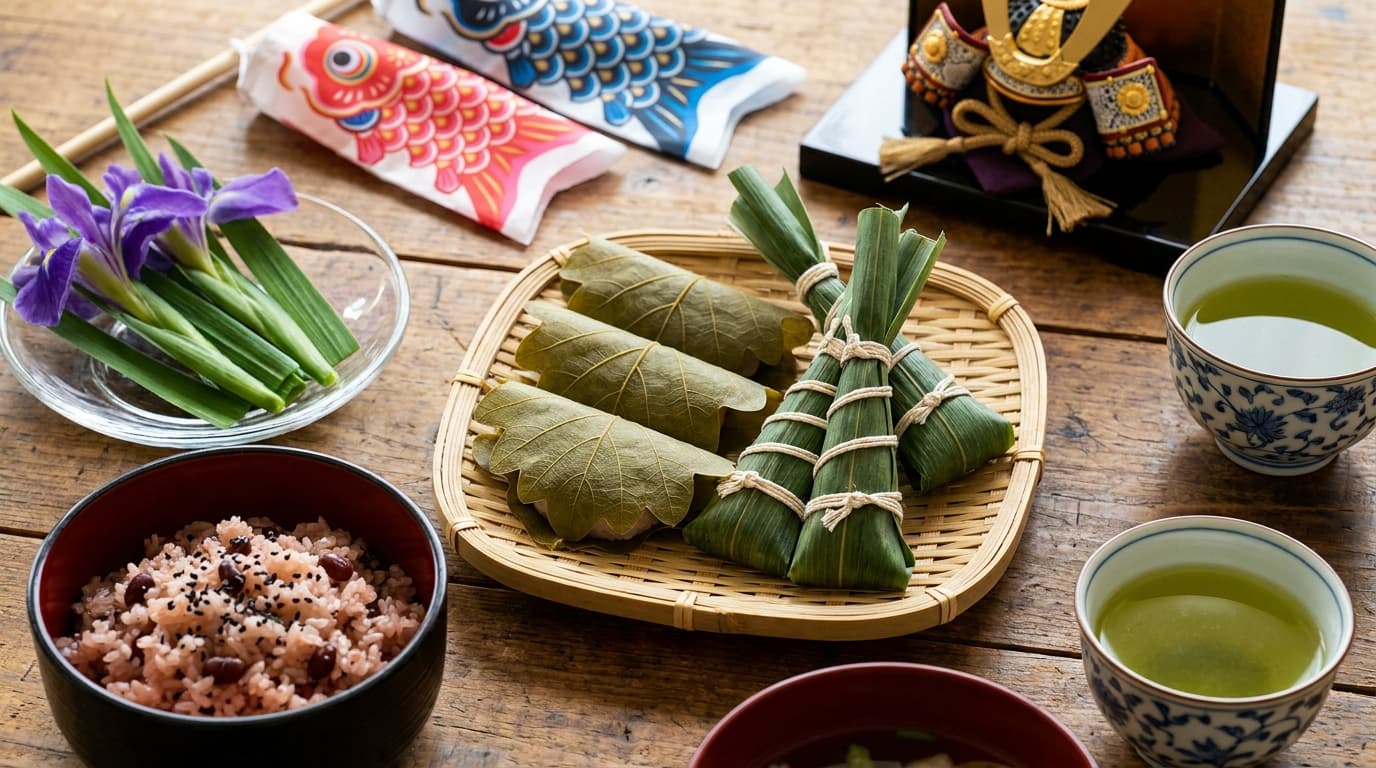
Tango no Sekku (端午の節句), nationally observed as Children's Day (Kodomo no Hi) on May 5th, originated as Boys' Day before being broadened in 1948 to celebrate all children's health and happiness. Households display koinobori (carp-shaped windsocks) outside and gogatsu-ningyō (warrior-themed dolls) inside, invoking strength and protection — the carp climbing the waterfall to become a dragon is the festival's enduring metaphor. The defining sweets are kashiwa mochi (柏餅), sweet rice cakes filled with red bean paste and wrapped in oak leaves: the oak does not shed old leaves until new ones grow, symbolizing family continuity. Chimaki (ちまき), bamboo-leaf-wrapped sweet or savory rice dumplings, are a Kansai parallel rooted in Chinese-influenced earlier court tradition. Sekihan (red-bean rice) anchors the family meal as a celebration staple. Iris-leaf baths (shōbu-yu) and iris-themed sweets close the day, the iris's sword-shaped leaves echoing the warrior-doll motif.
Signature Dishes
Kashiwa mochi
柏餅
Chimaki
ちまき
Seasonal wagashi sweets
Sekihan
Grilled fish and family meal dishes
Regional Variations
Kanto (Tokyo-style)
Emphasis on kashiwa mochi, koinobori displays integrate commercial nylon banners alongside heirloom cloth carp.
Kansai
Chimaki dominant alongside kashiwa mochi; Kyoto wagashi-shop variants produce regional confection styles.
Tohoku
Heirloom warrior-doll displays passed across generations; sekihan with locally-grown adzuki beans; iris bath tradition strongly maintained.
Kyushu
Regional carp-banner styles; satsuma-influenced sweet incorporations; bamboo-leaf chimaki using local bamboo cultivars.
Diaspora Japanese-American (Hawaii/California)
Simplified koinobori displays at temples and community centers; kashiwa mochi sometimes substituted with magnolia or grape leaves where oak unavailable.
Observance Practices
Koinobori windsock display outside the home: traditionally largest carp for household head, smaller for each son (now broadened to all children post-1948); carp-climbing-waterfall → dragon symbolism.
Gogatsu-ningyō interior warrior-doll display: miniature samurai armor (yoroi-kabuto) and weapons evoking protection.
Kashiwa mochi consumption: oak-leaf wrapping is symbolic (not eaten); the leaf passes family-continuity message visually.
Chimaki bamboo-leaf rice dumplings: Kansai-rooted parallel sweet; unwrapped and dipped in soy or eaten sweet depending on regional fill.
Kansai
Shōbu-yu (iris-leaf bath) + sekihan family meal: iris's sword-shaped leaves combine with red-bean rice as the protective-celebratory ritual close.