Arishta (Արիշտա) — Armenian Homemade Noodle Soup
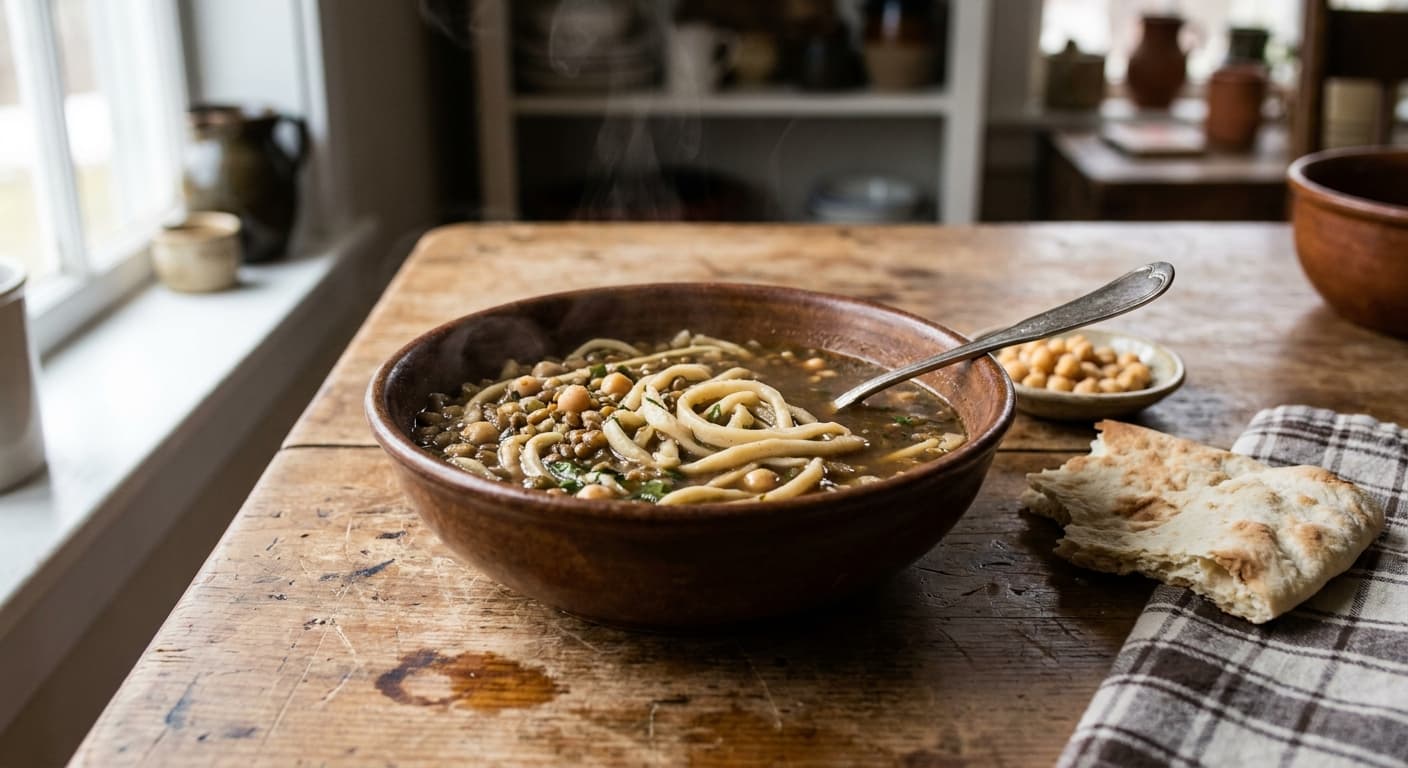
Arishta is Armenia's hand-cut noodle tradition, simmered here with lentils, chickpeas, browned onion, mint, and butter. It is a comforting home soup, often served with tonir-baked lavash and remembered alongside yogurt soups such as spas.
Printable Recipe Card
Servings: 6 · Total: 115 min · Difficulty: medium
Ingredients (quick list)
- 300 g all-purpose flour
- 2 eggs
- 45 ml water
- 3 g fine sea salt
- 150 g brown lentils
- 1.5 l low-sodium vegetable stock
- 1 yellow onion (finely diced, about 150 g)
- 30 g unsalted butter
- 15 ml olive oil
- 240 g cooked chickpeas (drained and rinsed)
- 1 tbsp tomato paste
- 1 tsp dried mint
+ 5 more in the full ingredients section below.
Steps (summary)
- Make the arishta dough by combining 300 g flour and 3 g salt in a wide bowl, then whisking the 2 eggs with 45 ml water in a sep…
- Turn the dough onto a clean board and knead for 8 minutes, pressing with the heel of your hand until the surface becomes smooth…
- Dust the board with 10 g of the measured rolling flour and roll the dough into a rectangle about 2 mm thick. Dust the top with…
- Fold the sheet loosely into thirds, using the remaining 10 g flour between folds to prevent sticking. Slice it crosswise into n…
- Rinse the brown lentils under cold water until the runoff is clear, then place them in a soup pot with 1.5 l low-sodium vegetab…
- While the lentils cook, warm the butter and olive oil in a skillet over medium heat and add the diced onion. Cook for 10 minute…
+ 3 more steps in the full instructions section below.
Cultural Background
Sonia Uvezian's work on Armenian cooking preserves the importance of flour-based pantry foods like arishta, made in quantity and dried for soups. This bowl reflects rural thrift, family labor, and the same comfort-food world as spas.
Equipment
💡 Tips
- Roll the dough thinner than you think; arishta swells in the broth and becomes pleasantly chewy.
- Dry the rolled sheet briefly before cutting, because a wet sheet compresses into sticky ribbons instead of clean noodles.
- For deeper flavor, brown the onion slowly until golden rather than merely translucent.
⚠️ Common Mistakes
❌ Cutting the noodle sheet immediately after rolling
✅ Fix: Let the sheet dry for 20 minutes so the knife makes clean strands instead of compressed strips.
❌ Boiling the noodles violently
✅ Fix: Keep the soup at a steady simmer so the handmade arishta cooks through without breaking apart.
❌ Using heavily salted stock
✅ Fix: Use low-sodium stock and the measured 6 g salt so the broth stays balanced after the noodles absorb liquid.
🧊 How to Store
Cool leftovers within 1 hour and refrigerate in an airtight container for up to 3 days. Reheat gently with 60 ml water per serving, because the arishta continues to absorb broth as it sits.
📅 Make Ahead
Cut noodles up to 1 day ahead and dry them uncovered for 2 hours, then refrigerate covered. The lentils and onion base can be cooked 24 hours ahead; add noodles only when serving.
🍽️ Pairs Well With
- Lavash
- matsoni
- Armenian cucumber pickles
- fresh herbs
- lemon wedges.
Regional Variations
- Some households dry arishta completely, toast part of it lightly, and store it for winter soups.
- A yogurt-enriched version related to spas uses matsoni and is kept at a gentle simmer to prevent curdling.
- Meat-based family versions may replace vegetable stock with chicken stock and add shredded cooked chicken.
Ingredients
- 300 gall-purpose flour
- 2eggs
- 45 mlwater
- 3 gfine sea salt
- 150 gbrown lentils
- 1.5 llow-sodium vegetable stock
- 1yellow onion (finely diced, about 150 g)
- 30 gunsalted butter
- 15 mlolive oil
- 240 gcooked chickpeas (drained and rinsed)
- 1 tbsptomato paste
- 1 tspdried mint
- 1 tspAleppo pepper
- 1 gblack pepper (freshly ground)
- 0.25 bunchflat-leaf parsley (finely chopped)
- 1lemon (cut into 6 wedges)
- 4lavash bread
🔄 Substitutions
- brown lentils→ green lentils
- low-sodium vegetable stock→ low-sodium chicken stock
- Aleppo pepper→ sweet paprika plus cayenne pepper
Instructions
- 1
Make the arishta dough by combining 300 g flour and 3 g salt in a wide bowl, then whisking the 2 eggs with 45 ml water in a separate cup. Pour the egg mixture into the flour and mix with a fork until a shaggy, firm dough forms with no dry flour at the bottom of the bowl.
- 2
Turn the dough onto a clean board and knead for 8 minutes, pressing with the heel of your hand until the surface becomes smooth and elastic. Cover the dough with an inverted bowl and rest it for 25 minutes so the gluten relaxes and the noodles roll thin without tearing.
- 3
Dust the board with 10 g of the measured rolling flour and roll the dough into a rectangle about 2 mm thick. Dust the top with another 10 g flour, leave it uncovered for 20 minutes, and let the surface dry slightly so the arishta strands separate cleanly after cutting.
- 4
Fold the sheet loosely into thirds, using the remaining 10 g flour between folds to prevent sticking. Slice it crosswise into noodles about 4 mm wide, shake the strands open with your fingers, and spread them on a tray while you begin the soup.
- 5
Rinse the brown lentils under cold water until the runoff is clear, then place them in a soup pot with 1.5 l low-sodium vegetable stock and 4 g of the soup salt. Bring to a steady boil, reduce to a lively simmer, and cook for 20 minutes until the lentils are nearly tender but not collapsing.
- 6
While the lentils cook, warm the butter and olive oil in a skillet over medium heat and add the diced onion. Cook for 10 minutes, stirring often, until the onion is golden at the edges, then stir in the tomato paste, dried mint, Aleppo pepper, black pepper, and the remaining 2 g salt for 1 minute.
- 7
Scrape the onion mixture into the soup pot and add the cooked chickpeas. Simmer for 5 minutes so the browned butter, mint, and tomato paste season the broth evenly before the handmade noodles go in.
- 8
Add the freshly cut arishta noodles to the simmering soup in loose handfuls, stirring gently after each addition to prevent clumping. Cook for 6 to 8 minutes until the noodles are tender but still springy, and add exactly 120 ml hot water if the soup becomes thicker than a spoonable noodle soup.
- 9
Let the soup stand off the heat for 5 minutes so the broth settles around the noodles and legumes. Ladle into warm bowls, scatter with parsley, and serve with lemon wedges and torn lavash, the everyday Armenian table partner that makes the bowl feel complete.
🪪 Recipe Passport
Cultural Background
Sonia Uvezian's work on Armenian cooking preserves the importance of flour-based pantry foods like arishta, made in quantity and dried for soups. This bowl reflects rural thrift, family labor, and the same comfort-food world as spas.
Regional Variations
Researched from multiple sources and validated by the Zaffaron editorial team. Every recipe is tested for accuracy, measurements, and cultural authenticity.
📚 Sources & Cultural References
- Sonia Uvezian — The Cuisine of Armenia — (1974)
- Kate Leahy, John Lee, and Ara Zada — Lavash: The Bread That Launched 1,000 Meals — (2019)
Sources cited by the Zaffaron editorial team during recipe research. Cultural and culinary references supporting authenticity claims.
Nutrition per serving
Pairs well with
If you enjoyed this recipe, here are a few related Zaffaron recipes to try next.
Does your family make this differently?
Every family has their own version. Maybe your grandmother adds a secret ingredient, or your aunt has a completely different technique. Preserve your family's version — with their name on it, forever.
You Might Also Like
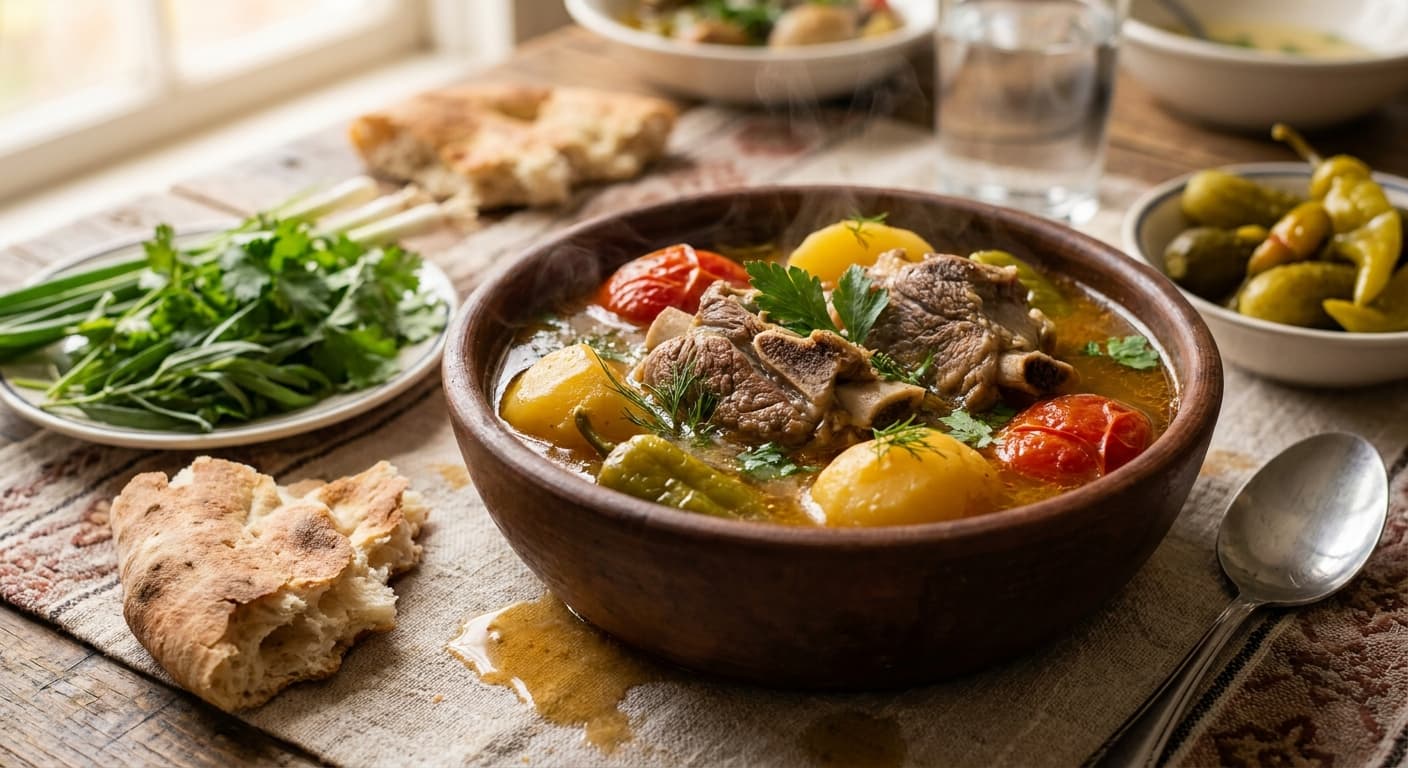
Khashlama (Խաշլամա) — Armenian Lamb and Vegetable Stew
Armenian · Stews · 160 min
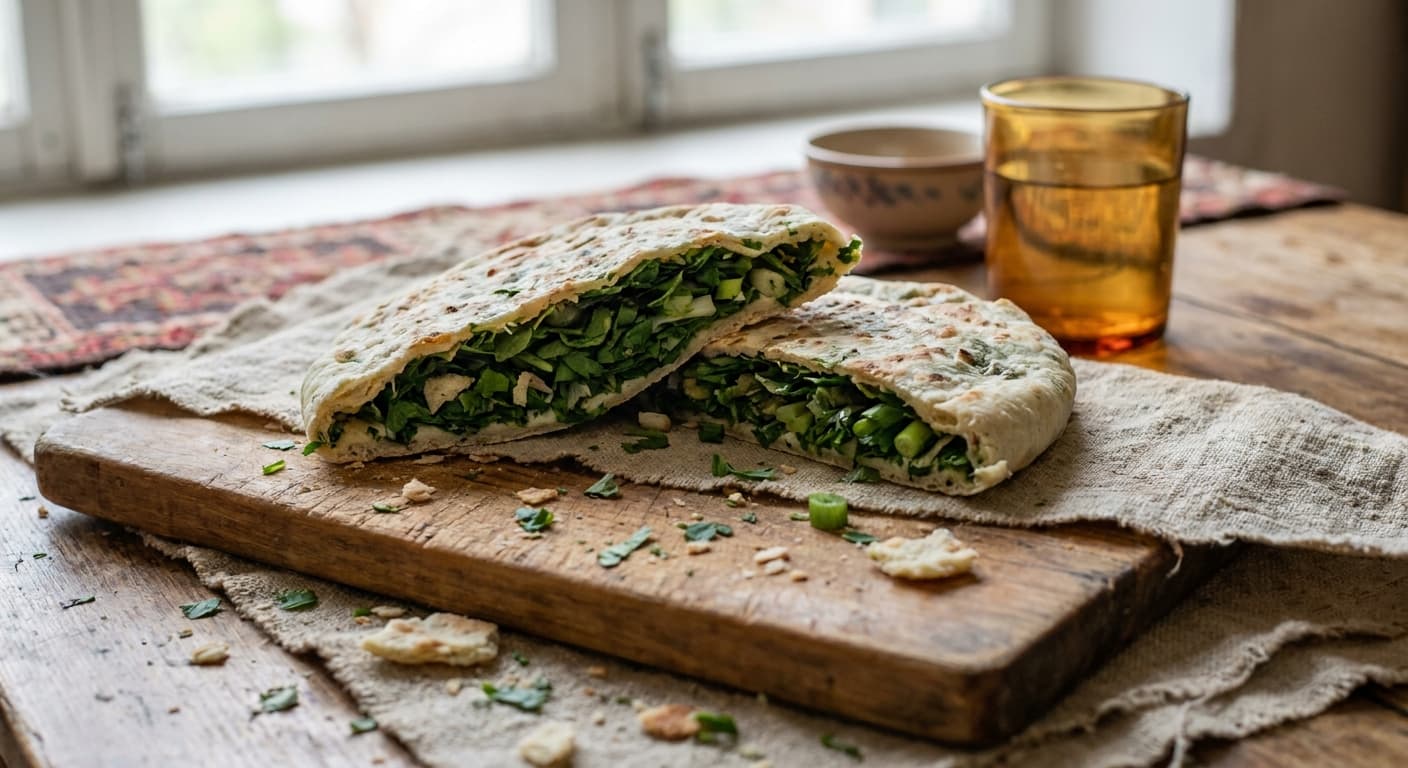
Zhingyalov Hats (Ժենգյալով հաց) — Artsakh Herb-Stuffed Flatbread
Armenian · Breads · 73 min
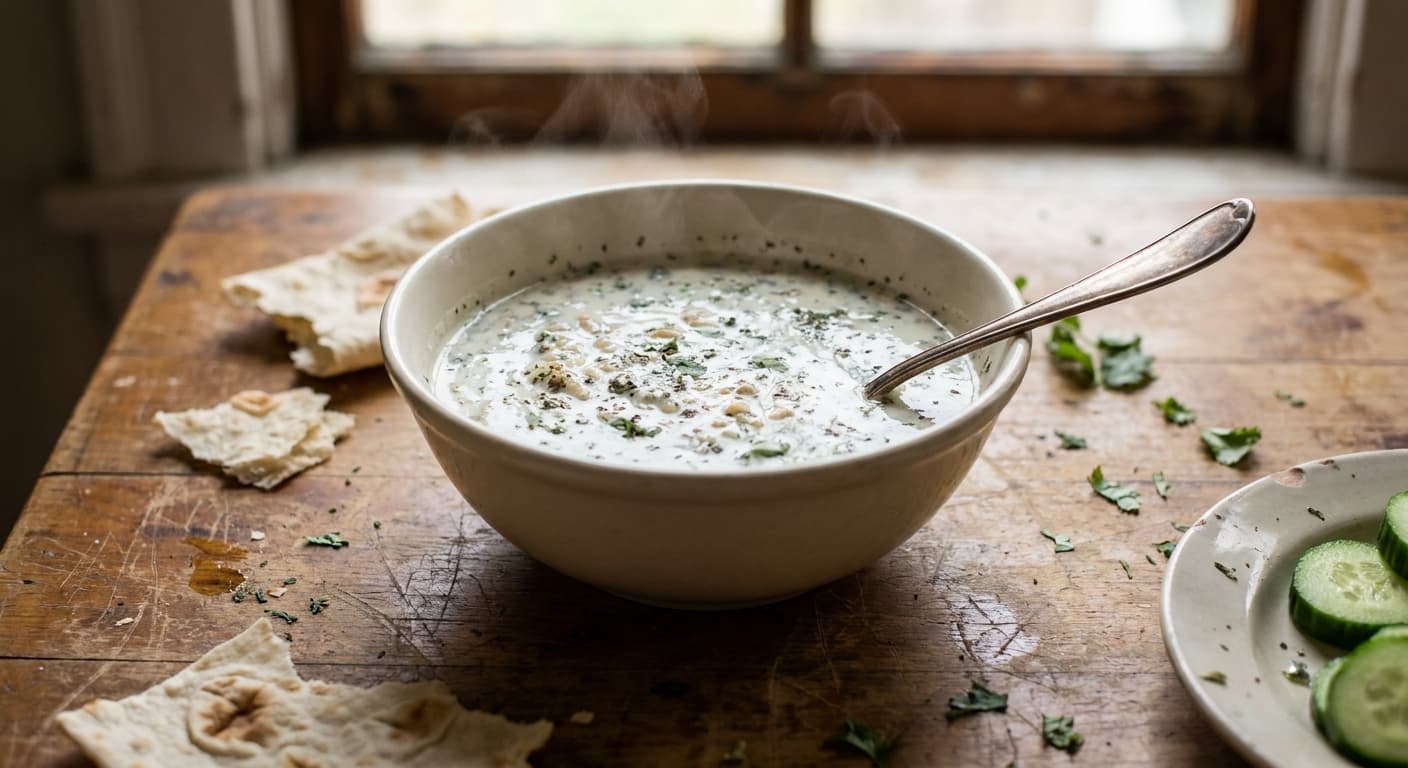
Spas (Սպաս) — Armenian Yogurt-and-Wheat Soup
Armenian · Soups · 70 min
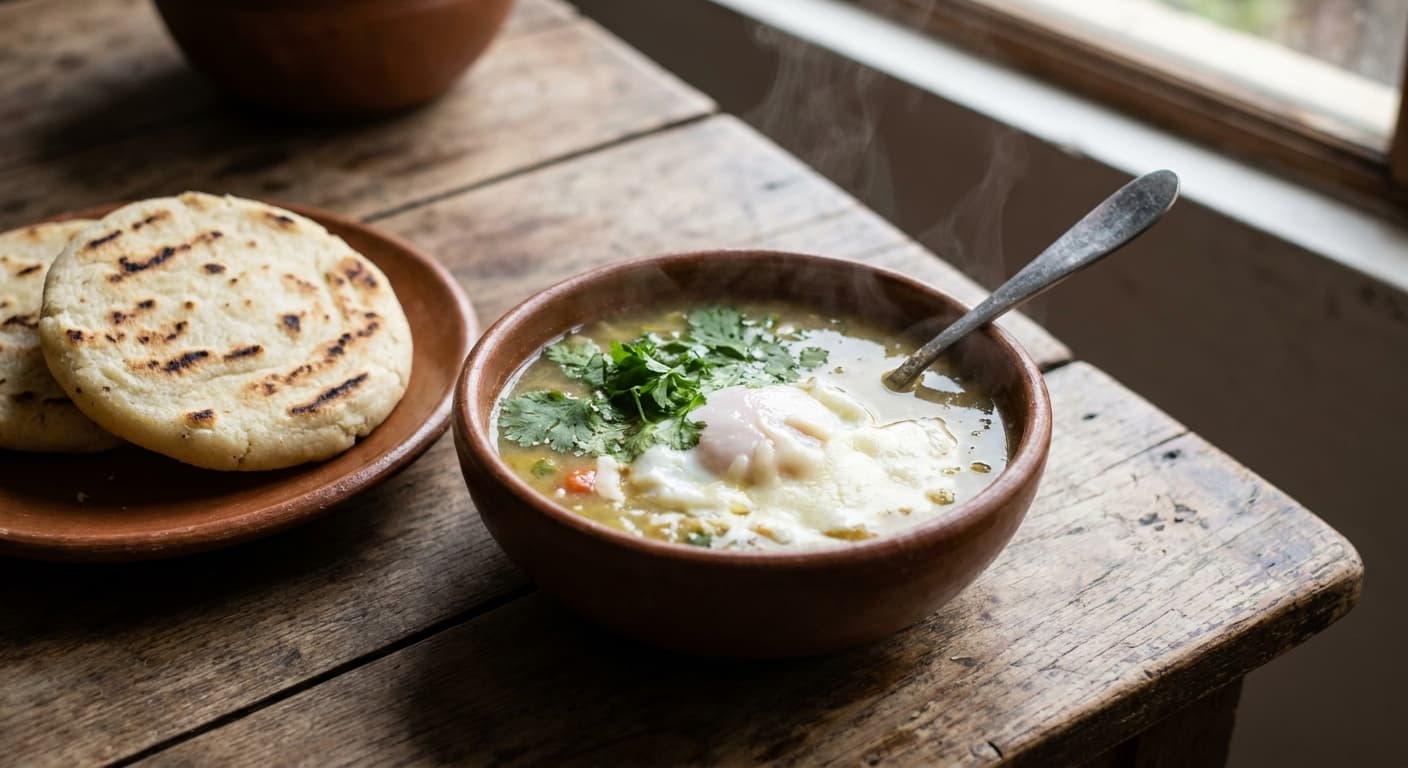
Andean Milk-and-Egg Soup (Pisca andina) — Venezuelan Breakfast Comfort
Venezuelan · Soups · 45 min
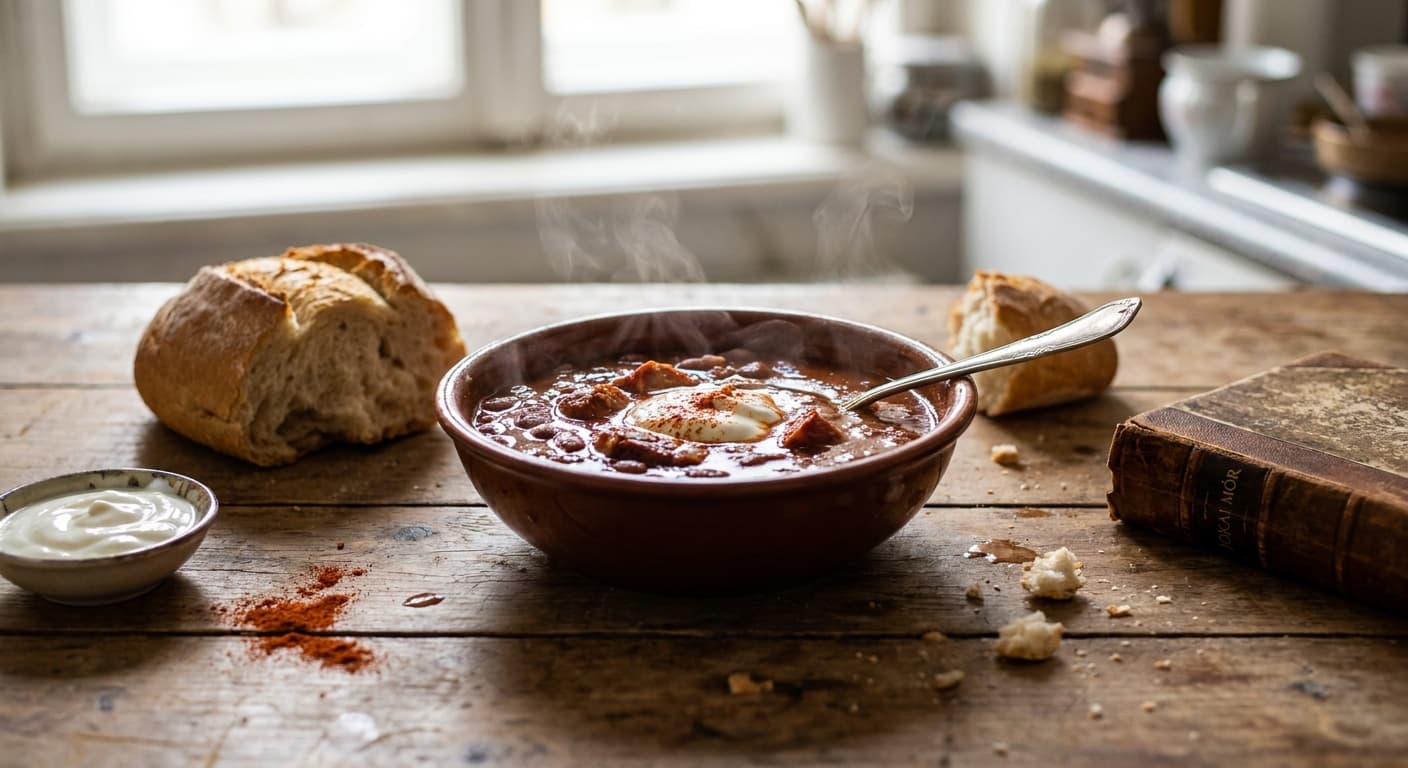
Jókai Bean Soup (Jókai-bableves) — Smoked Pork and Tejföl Bean Soup
Hungarian · Soups · 185 min
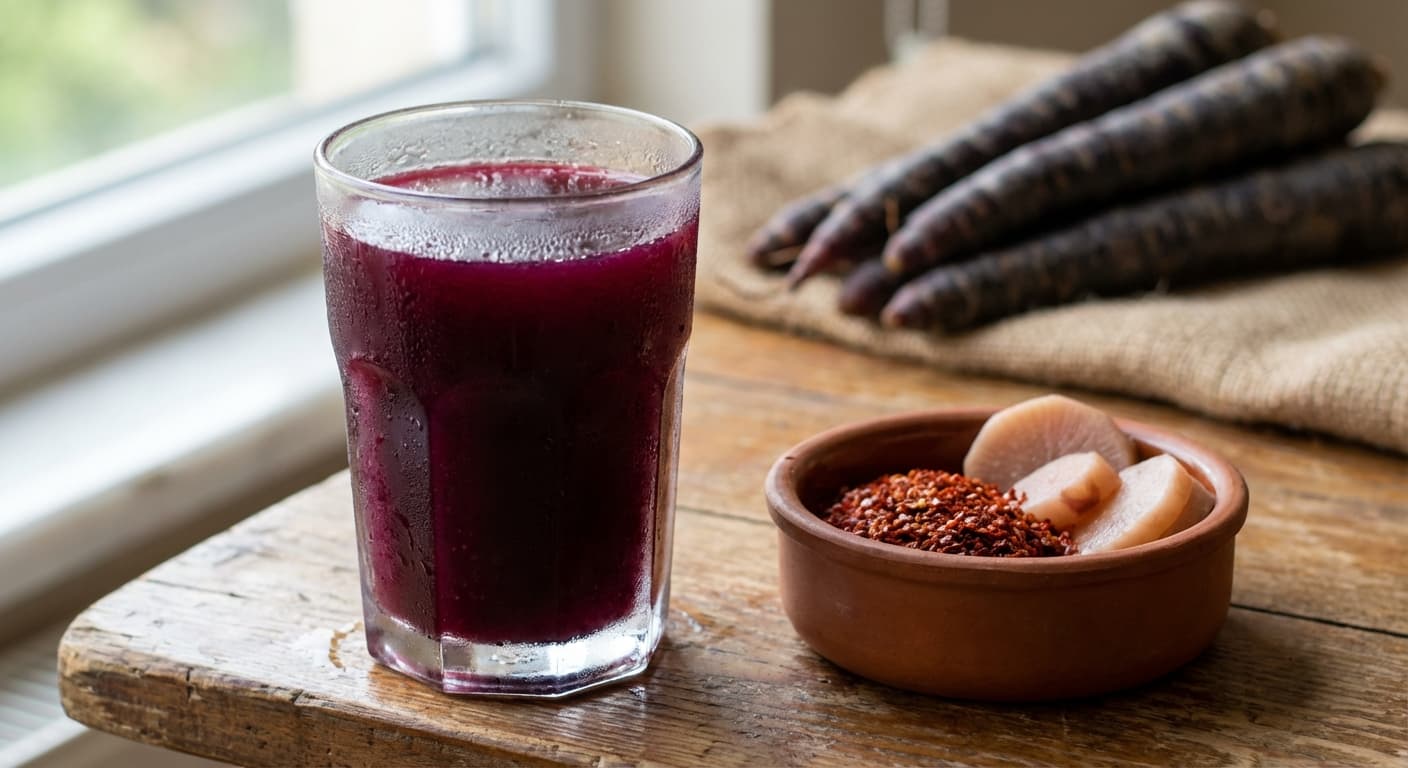
Salgam Juice (Şalgam) — Spicy, tangy fermented black-carrot drink
Turkish · Drinks · 25 min
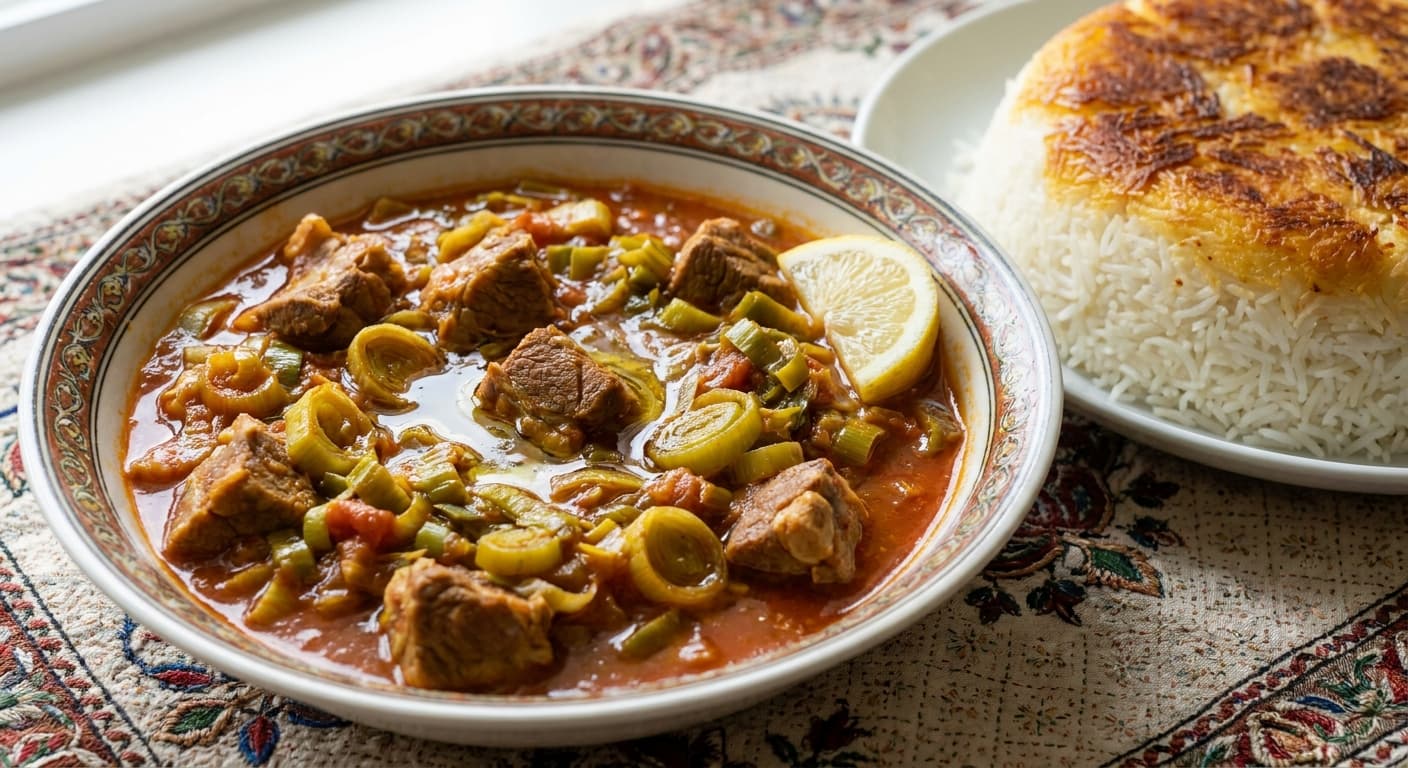
Khoresh Tareh Farangi (خورش تره فرنگی) — Persian Leek and Lamb Stew
Persian · Stews · 130 min
Armenian Ghapama (Ղափամա) — Festive Honeyed Rice-Stuffed Pumpkin
Armenian · Main Courses · 140 min
Reviews
Cooked this recipe?
Tap the stars to rate it — that's all it takes. A few words are welcome but optional.
No ratings yet. Cooked this one? Be the first to rate it — it takes one tap.