Armenian Ghapama (Ղափամա) — Festive Honeyed Rice-Stuffed Pumpkin
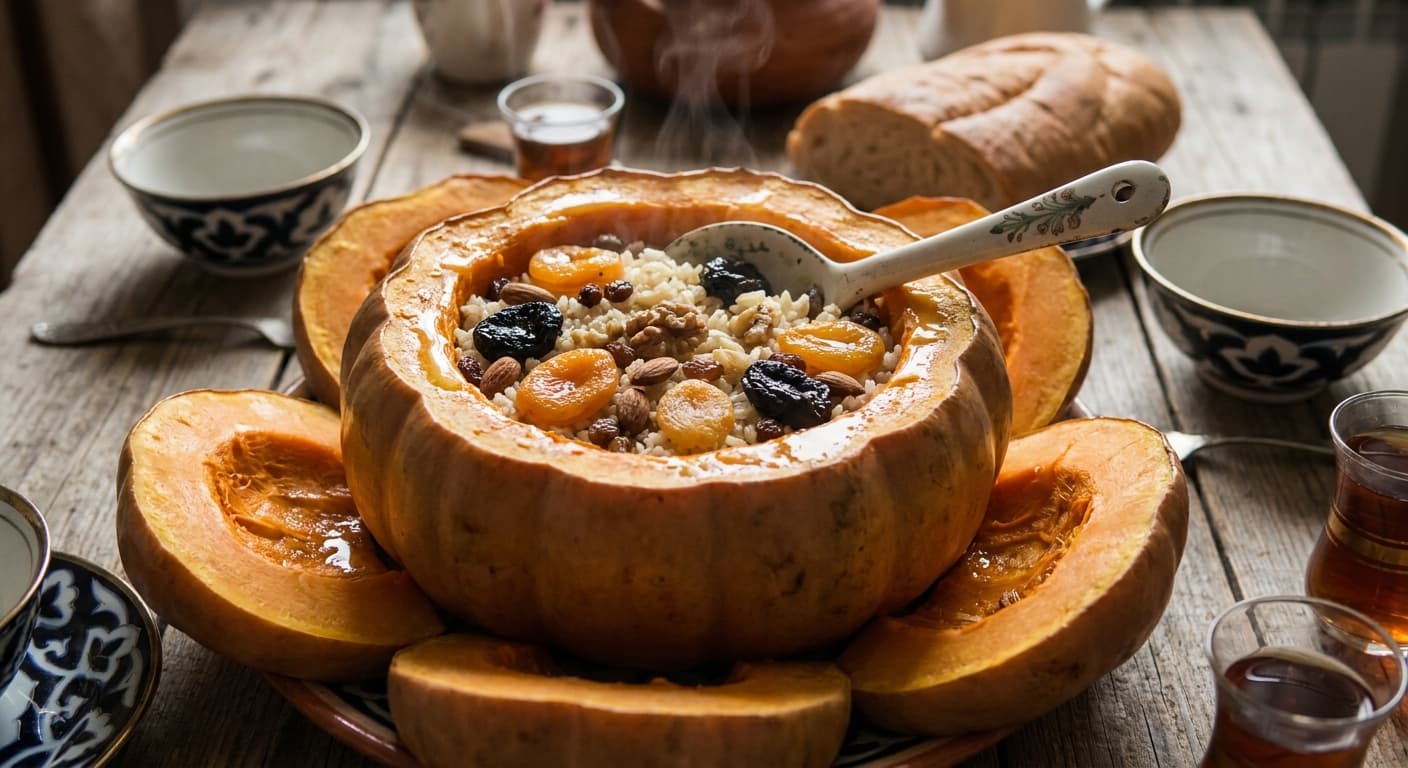
Ghapama is Armenia’s celebratory baked pumpkin filled with rice, dried fruits, nuts, butter, honey, and warm spices. It is commonly served as a generous centerpiece for New Year, Christmas, weddings, and family feasts.
Printable Recipe Card
Servings: 8 · Total: 140 min · Difficulty: medium
Ingredients (quick list)
- 1 medium sugar pumpkin or kabocha squash (about 3 kg, with firm skin and a flat base)
- 300 g short-grain rice
- 1.5 l water
- 6 g fine sea salt
- 85 g unsalted butter (melted, divided)
- 150 g dried apricots (cut into 1 cm pieces)
- 120 g pitted prunes (cut into 1 cm pieces)
- 100 g golden raisins
- 100 g walnuts (lightly toasted and chopped)
- 60 g blanched almonds (lightly toasted and chopped)
- 2 apples (about 180 g total after coring, diced into 1 cm pieces)
- 120 g honey
+ 4 more in the full ingredients section below.
Steps (summary)
- Heat the oven to 180°C and position a rack in the lower third of the oven. Wash and dry the pumpkin thoroughly, then cut a neat…
- Scoop out the seeds and stringy fibers with a sturdy spoon, keeping the inner pumpkin flesh intact. Rub the inside of the pumpk…
- Bring 1.5 l water to a boil in a medium saucepan and add the remaining 4 g salt. Stir in the rice and cook for 7 minutes, then…
- In a large bowl, combine the parboiled rice, dried apricots, prunes, raisins, walnuts, almonds, apples, honey, cinnamon, cloves…
- Spoon the filling into the pumpkin, stopping about 2 cm below the top because the rice and fruit will expand during baking. Dri…
- Place the filled pumpkin in a deep baking dish and add 120 ml water to the dish to prevent scorching. Bake for 85 to 100 minute…
+ 1 more steps in the full instructions section below.
Cultural Background
Ghapama is a symbol of abundance in Armenian cooking: a whole pumpkin filled with rice, fruit, honey, and nuts for communal slicing. Its dramatic presentation makes it especially beloved at winter holidays and weddings.
Equipment
💡 Tips
- Choose a pumpkin with dense, sweet flesh and a stable base so it bakes evenly and stands upright on the platter.
- Do not fully cook the rice before stuffing, because it needs room to absorb honey, butter, fruit juices, and steam inside the pumpkin.
- If the pumpkin browns too quickly, tent it loosely with 1 sheet of foil for the final 25 minutes of baking.
⚠️ Common Mistakes
❌ Using a watery carving pumpkin
✅ Fix: Choose sugar pumpkin or kabocha with dense flesh, because thin watery pumpkins collapse and dilute the filling.
❌ Packing the rice filling tightly to the top
✅ Fix: Leave 2 cm of headspace so the rice can expand and steam can circulate inside the pumpkin.
❌ Cutting the ghapama immediately after baking
✅ Fix: Rest it for 15 minutes so the filling firms slightly and the pumpkin slices cleanly.
🧊 How to Store
Store leftover pumpkin and filling in airtight containers for up to 4 days in the refrigerator. Reheat covered in a 160°C oven for 20 minutes, or microwave individual portions with 1 tbsp water to keep the rice moist.
📅 Make Ahead
Parboil the rice, toast the nuts, chop the dried fruit, and mix the dry filling up to 1 day ahead. Stuff and bake the pumpkin on the day of serving for the best texture.
🍽️ Pairs Well With
- Matsun yogurt
- lavash bread
- fresh herbs
- roasted vegetables
- pomegranate seeds
- Armenian tea.
Regional Variations
- Some Armenian families add dried sour cherries, cornelian cherries, or barberries for a sharper fruit flavor.
- A richer holiday version uses extra butter and a spoonful of sugar along with honey for a glossier filling.
- In some homes, the rice is perfumed with a small amount of orange zest or rosewater for special celebrations.
Ingredients
- 1medium sugar pumpkin or kabocha squash (about 3 kg, with firm skin and a flat base)
- 300 gshort-grain rice
- 1.5 lwater
- 6 gfine sea salt
- 85 gunsalted butter (melted, divided)
- 150 gdried apricots (cut into 1 cm pieces)
- 120 gpitted prunes (cut into 1 cm pieces)
- 100 ggolden raisins
- 100 gwalnuts (lightly toasted and chopped)
- 60 gblanched almonds (lightly toasted and chopped)
- 2apples (about 180 g total after coring, diced into 1 cm pieces)
- 120 ghoney
- 2 tspground cinnamon
- 0.25 tspground cloves
- 0.5 tspground allspice
- 80 gpomegranate seeds (optional but traditional for a festive table)
🔄 Substitutions
- sugar pumpkin→ kabocha squash
- golden raisins→ dried sour cherries
- unsalted butter→ clarified butter
Instructions
- 1
Heat the oven to 180°C and position a rack in the lower third of the oven. Wash and dry the pumpkin thoroughly, then cut a neat lid around the stem about 12 cm wide so it can be replaced after filling.
- 2
Scoop out the seeds and stringy fibers with a sturdy spoon, keeping the inner pumpkin flesh intact. Rub the inside of the pumpkin and the underside of the lid with 2 g of the salt and 25 g of the melted butter.
- 3
Bring 1.5 l water to a boil in a medium saucepan and add the remaining 4 g salt. Stir in the rice and cook for 7 minutes, then drain well so the grains are only partly cooked and still firm in the center.
- 4
In a large bowl, combine the parboiled rice, dried apricots, prunes, raisins, walnuts, almonds, apples, honey, cinnamon, cloves, allspice, and 45 g of the melted butter. Fold gently until the fruit and nuts are evenly distributed without crushing the rice.
- 5
Spoon the filling into the pumpkin, stopping about 2 cm below the top because the rice and fruit will expand during baking. Drizzle the remaining 15 g melted butter over the filling, then set the pumpkin lid back in place.
- 6
Place the filled pumpkin in a deep baking dish and add 120 ml water to the dish to prevent scorching. Bake for 85 to 100 minutes, until a skewer slides easily through the pumpkin wall and the rice is tender.
- 7
Let the ghapama rest for 15 minutes before serving so the filling settles and the pumpkin is easier to cut. Transfer it carefully to a platter, remove the lid, scatter with pomegranate seeds, and slice into wedges from top to bottom.
🪪 Recipe Passport
Cultural Background
Ghapama is a symbol of abundance in Armenian cooking: a whole pumpkin filled with rice, fruit, honey, and nuts for communal slicing. Its dramatic presentation makes it especially beloved at winter holidays and weddings.
Regional Variations
Researched from multiple sources and validated by the Zaffaron editorial team. Every recipe is tested for accuracy, measurements, and cultural authenticity.
📚 Sources & Cultural References
- Sonia Uvezian — The Cuisine of Armenia — (1974)
- Irina Petrosian and David Underwood — Armenian Food: Fact, Fiction & Folklore — (2006)
Sources cited by the Zaffaron editorial team during recipe research. Cultural and culinary references supporting authenticity claims.
Nutrition per serving
Pairs well with
If you enjoyed this recipe, here are a few related Zaffaron recipes to try next.
Does your family make this differently?
Every family has their own version. Maybe your grandmother adds a secret ingredient, or your aunt has a completely different technique. Preserve your family's version — with their name on it, forever.
You Might Also Like
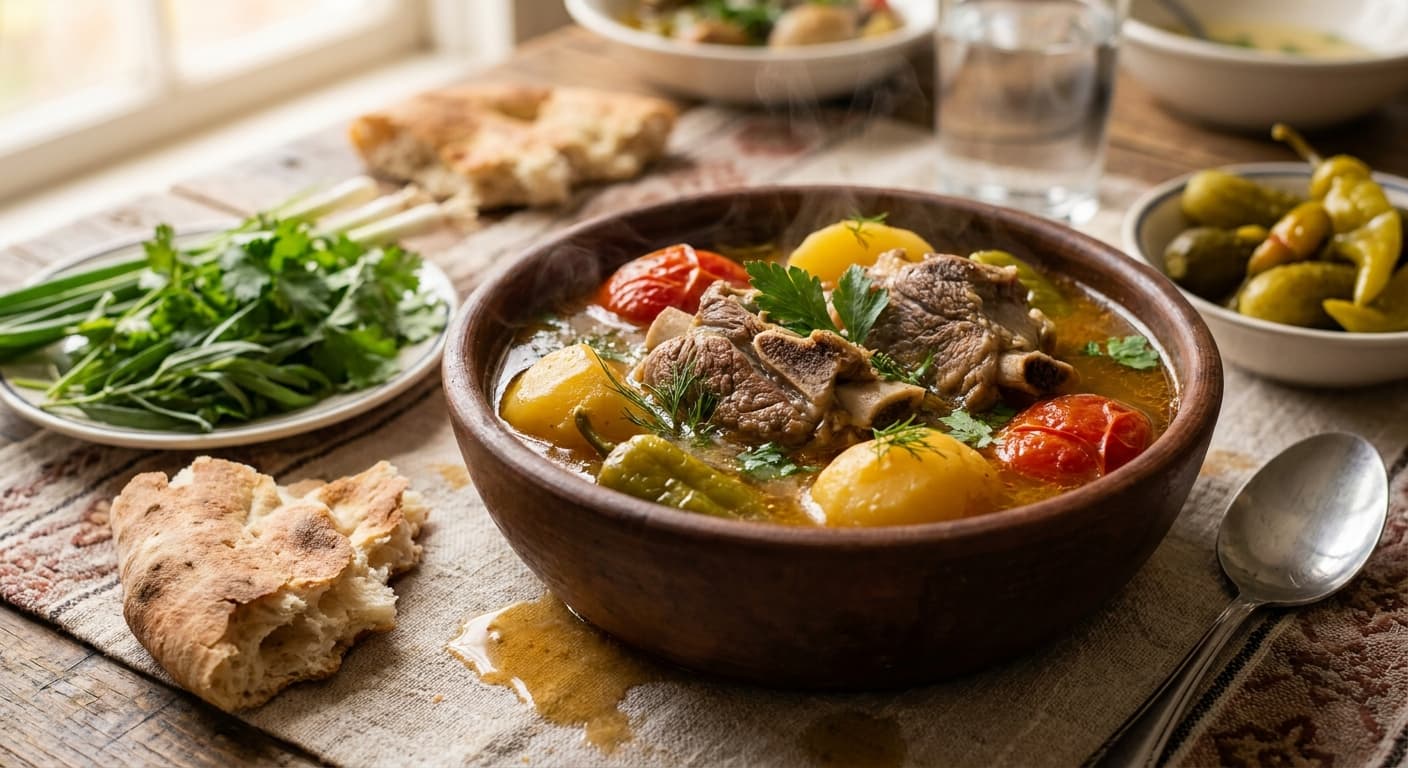
Khashlama (Խաշլամա) — Armenian Lamb and Vegetable Stew
Armenian · Stews · 160 min
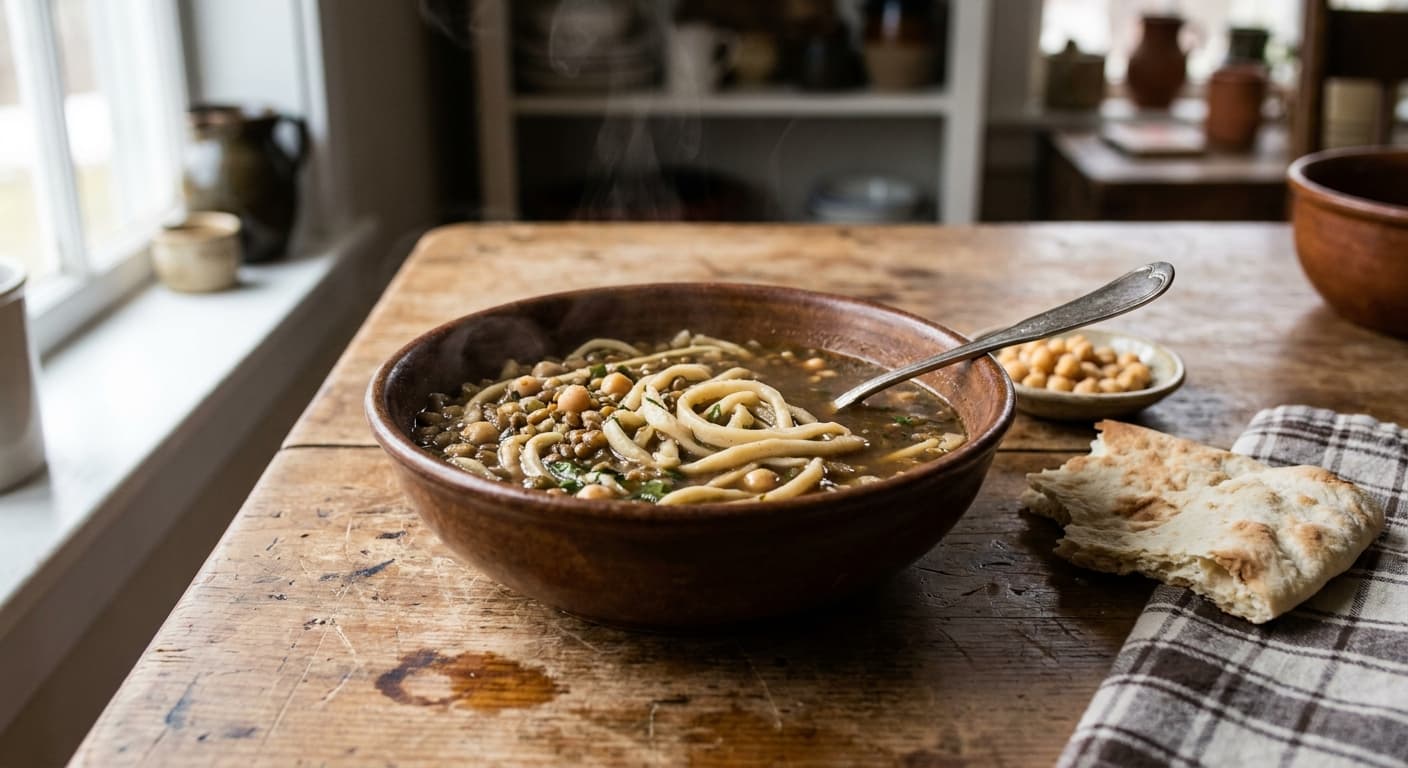
Arishta (Արիշտա) — Armenian Homemade Noodle Soup
Armenian · Soups · 115 min
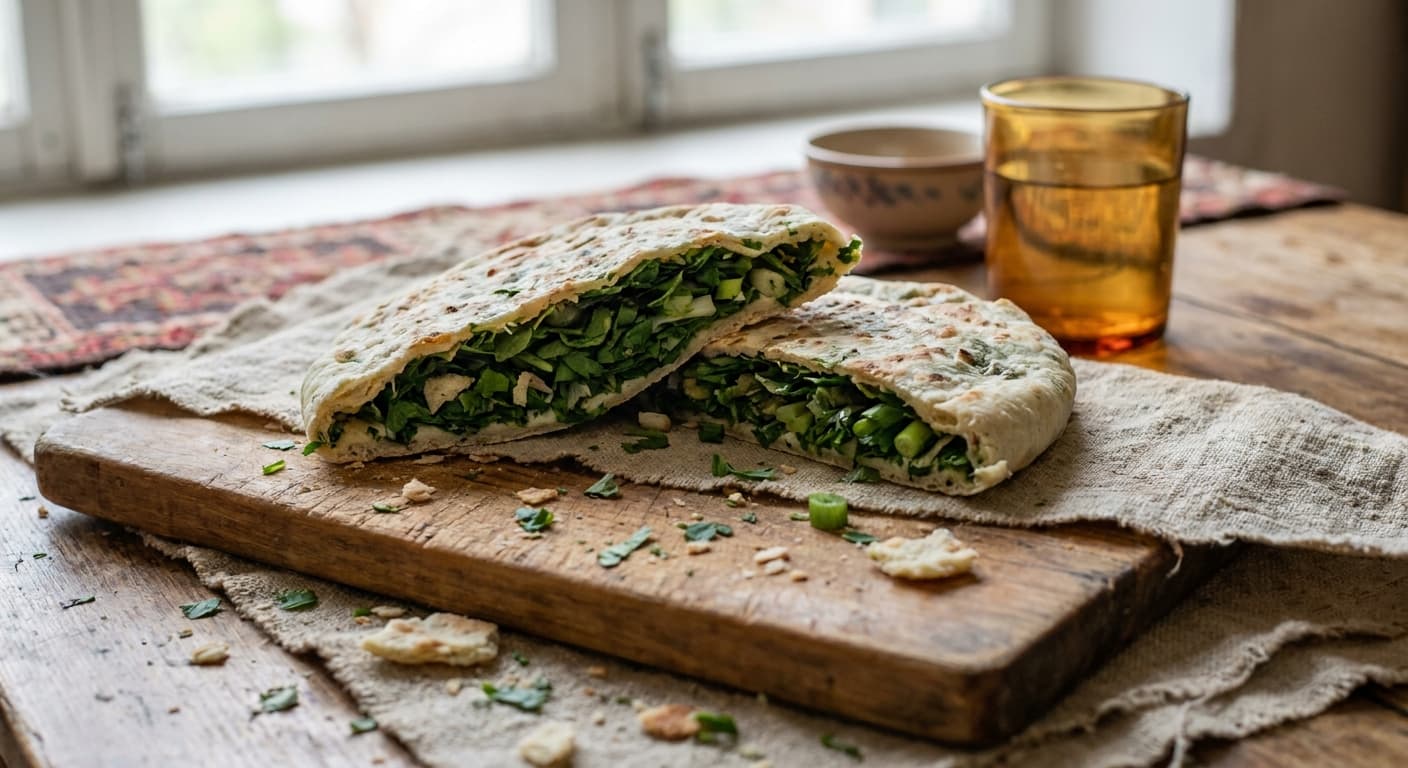
Zhingyalov Hats (Ժենգյալով հաց) — Artsakh Herb-Stuffed Flatbread
Armenian · Breads · 73 min
Egyptian Fatta (فتة) — Layered Meat, Rice, and Crisp Bread
Egyptian · Main Courses · 145 min
Biangbiang Noodles (油泼扯面) — Xi'an Hand-Pulled Belt Noodles
Chinese · Main Courses · 65 min
Persian Kachi (کاچی) — Saffron Rosewater Pudding
Persian · Desserts · 45 min
Satsivi (საცივი) — Georgian Chicken in Walnut Sauce
Georgian · Main Courses · 105 min
Kama with Sour Milk (Kama hapupiimaga) — Estonian Toasted Grain Drink
Estonian · Drinks · 5 min
Reviews
Cooked this recipe?
Tap the stars to rate it — that's all it takes. A few words are welcome but optional.
No ratings yet. Cooked this one? Be the first to rate it — it takes one tap.