Buddha Jumps Over the Wall (佛跳墙) — Fujian Banquet Treasure Soup
Buddha Jumps Over the Wall is a celebrated Fuzhou banquet soup built from superior stock, dried seafood, cured ham, poultry, and Shaoxing wine. This ethical version omits shark fin while preserving the luxurious layered aroma.
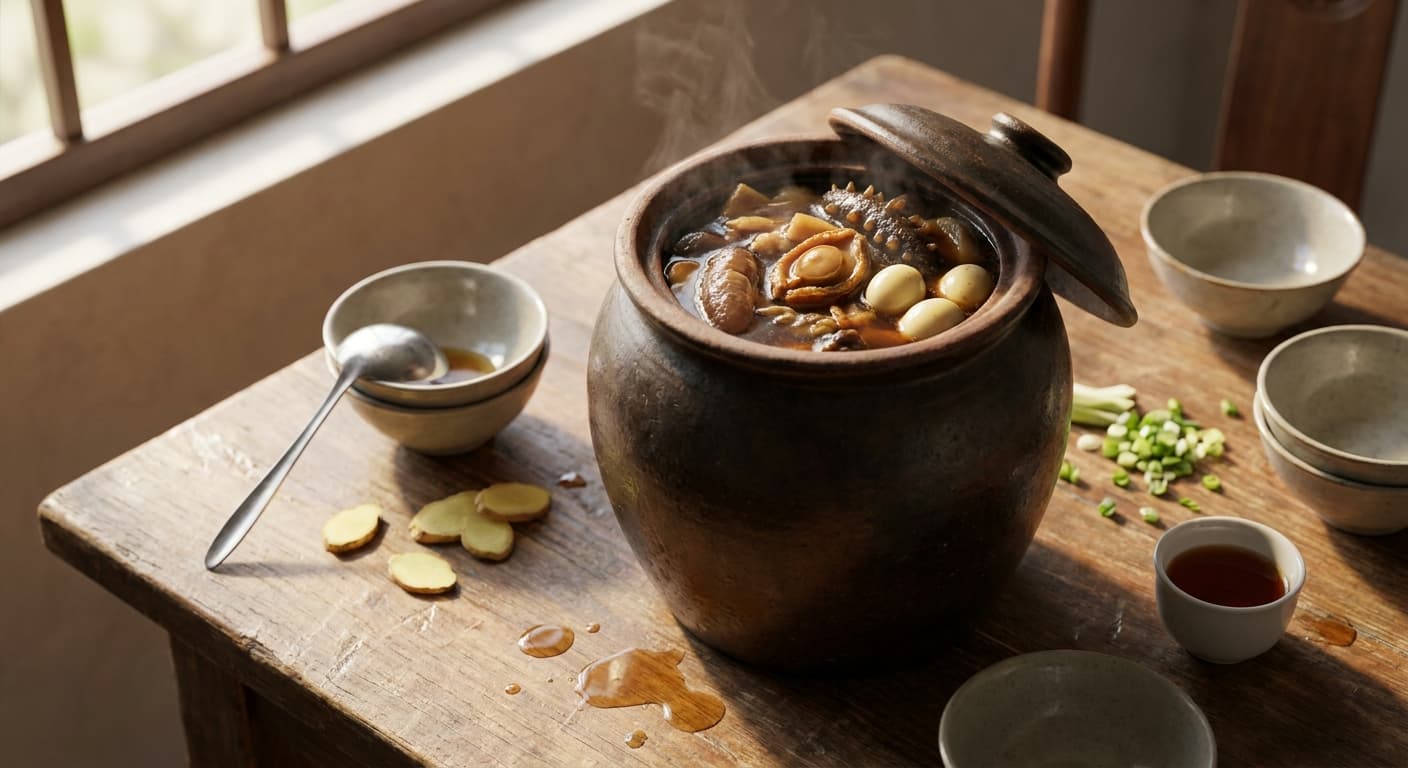
Printable Recipe Card
Servings: 8 · Total: 540 min · Difficulty: expert
Ingredients (quick list)
- 80 g dried sea cucumber (soak and simmer until rehydrated; yields about 300 g)
- 80 g dried fish maw (rehydrated before cooking)
- 120 g dried abalone (rehydrated before cooking)
- 40 g dried scallops
- 8 dried shiitake mushrooms
- 2 l water for soaking seafood
- 1 chicken carcass (about 900 g)
- 500 g pork ribs
- 700 g pork trotter (split by the butcher)
- 100 g Jinhua ham
- 2 inch fresh ginger (sliced)
- 4 scallions
+ 10 more in the full ingredients section below.
Steps (summary)
- Begin the dried ingredients 48 hours before the final cooking. Soak the dried sea cucumber, dried abalone, dried scallops, and…
- After soaking, simmer the sea cucumber in fresh water for 45 minutes and let it cool in the water until flexible. Simmer the ab…
- Rehydrate the fish maw by covering it with hot water for 30 minutes, then drain and rinse it well. Cut the fish maw, sea cucumb…
- Blanch the chicken carcass, pork ribs, pork trotter, chicken thighs, and pork tendon in boiling water for 5 minutes. Drain them…
- Make the superior stock by combining the blanched chicken carcass, pork ribs, pork trotter, Jinhua ham, 2 inch ginger, 4 scalli…
- Strain the stock through a fine sieve and discard the spent bones, ginger, and scallions. Measure 1.6 l of stock for the soup,…
+ 3 more steps in the full instructions section below.
Cultural Background
Fo Tiao Qiang is a Fuzhou prestige soup associated with banquets, Lunar New Year, and hospitality. Eileen Yin-Fei Lo’s writing on Chinese banquet cookery reflects the same respect for superior stock, dried seafood, and layered aroma.
Equipment
💡 Tips
- Keep each dried seafood item in a separate soaking bowl because their aromas develop at different strengths and speeds.
- A clay wine jar gives the most traditional aroma, but a heavy ceramic casserole with a tight lid works well if it fits inside your steamer.
- Do not boil the final soup directly; gentle steaming keeps the abalone, fish maw, and sea cucumber tender rather than rubbery.
⚠️ Common Mistakes
❌ Boiling the final soup rapidly
✅ Fix: Steam it gently in a sealed vessel so the seafood stays tender and the broth remains clear.
❌ Skipping the blanching step for bones and meats
✅ Fix: Blanch and rinse them before stock-making to remove blood proteins that cloud the broth.
❌ Adding canned abalone at the beginning
✅ Fix: If using canned abalone, add it in the last 60 minutes because it is already tender.
🧊 How to Store
Cool leftovers within 2 hours and refrigerate in a covered container for up to 3 days. Reheat gently in a covered saucepan at a bare simmer for 10 minutes, avoiding hard boiling because seafood can toughen.
📅 Make Ahead
Soak and pre-simmer the dried seafood up to 2 days ahead, keeping each item refrigerated in its own covered container. The superior stock can be made 1 day ahead and chilled so the fat is easy to lift off.
🍽️ Pairs Well With
- Steamed jasmine rice
- stir-fried bok choy
- chilled cucumber with sesame oil
- Chinese tea.
Regional Variations
- Fuzhou banquet versions may include pigeon, duck gizzard, pork belly, or deer tendon depending on the house recipe.
- Modern restaurant versions often omit shark fin for sustainability and rely on fish maw, sea cucumber, abalone, and superior stock for texture.
- Some Hong Kong versions are served in individual covered crocks rather than one large family-style jar.
Ingredients
- 80 gdried sea cucumber (soak and simmer until rehydrated; yields about 300 g)
- 80 gdried fish maw (rehydrated before cooking)
- 120 gdried abalone (rehydrated before cooking)
- 40 gdried scallops
- 8dried shiitake mushrooms
- 2 lwater for soaking seafood
- 1chicken carcass (about 900 g)
- 500 gpork ribs
- 700 gpork trotter (split by the butcher)
- 100 gJinhua ham
- 2 inchfresh ginger (sliced)
- 4scallions
- 60 mlShaoxing wine
- 3 lwater
- 4chicken thighs (bone-in, skin removed, about 650 g)
- 250 gpork tendon (blanched)
- 150 gbamboo shoots (sliced)
- 8quail eggs (hard-boiled and peeled)
- 1 tbsplight soy sauce
- 12 grock sugar
- 8 gfine sea salt
- 0.5 tspground white pepper
🔄 Substitutions
- dried abalone→ canned abalone
- Jinhua ham→ Chinese-style dry-cured ham
- dried sea cucumber→ additional rehydrated fish maw
Instructions
- 1
Begin the dried ingredients 48 hours before the final cooking. Soak the dried sea cucumber, dried abalone, dried scallops, and dried shiitake mushrooms in separate bowls using the 2 l soaking water, changing the sea cucumber and abalone water every 12 hours.
- 2
After soaking, simmer the sea cucumber in fresh water for 45 minutes and let it cool in the water until flexible. Simmer the abalone for 90 minutes, reserve 250 ml of its cooking liquid, and reserve the scallop and shiitake soaking liquids after straining them through a fine sieve.
- 3
Rehydrate the fish maw by covering it with hot water for 30 minutes, then drain and rinse it well. Cut the fish maw, sea cucumber, and abalone into large serving pieces so they remain recognizable after the long steaming.
- 4
Blanch the chicken carcass, pork ribs, pork trotter, chicken thighs, and pork tendon in boiling water for 5 minutes. Drain them, rinse away foam under warm water, and clean the pot so the superior stock stays clear rather than muddy.
- 5
Make the superior stock by combining the blanched chicken carcass, pork ribs, pork trotter, Jinhua ham, 2 inch ginger, 4 scallions, 60 ml Shaoxing wine, and 3 l water in a stockpot. Bring it to a gentle simmer, skim for 15 minutes, then cook uncovered at a low tremble for 3 hours.
- 6
Strain the stock through a fine sieve and discard the spent bones, ginger, and scallions. Measure 1.6 l of stock for the soup, then enrich it with the reserved abalone liquid, scallop soaking liquid, and shiitake soaking liquid.
- 7
Layer a heavy clay wine jar or deep ceramic casserole with the chicken thighs, pork tendon, sea cucumber, fish maw, abalone, dried scallops, shiitake mushrooms, bamboo shoots, and quail eggs. Add the 1 inch ginger and 2 scallions, then pour in the enriched stock, 120 ml Shaoxing wine, light soy sauce, rock sugar, salt, and white pepper.
- 8
Cover the vessel tightly with its lid, then wrap the rim with foil to trap aroma in the traditional sealed-jar spirit of the dish. Steam the covered vessel over gently boiling water for 3 hours, checking the steamer every 45 minutes and adding boiling water as needed.
- 9
Rest the sealed soup for 20 minutes before opening so the aromas settle back into the broth. Remove the ginger and scallions, skim excess surface fat, and serve each bowl with broth plus a balanced portion of seafood, meat, mushroom, bamboo shoot, and egg.
🪪 Recipe Passport
Cultural Background
Fo Tiao Qiang is a Fuzhou prestige soup associated with banquets, Lunar New Year, and hospitality. Eileen Yin-Fei Lo’s writing on Chinese banquet cookery reflects the same respect for superior stock, dried seafood, and layered aroma.
Regional Variations
Researched from multiple sources and validated by the Zaffaron editorial team. Every recipe is tested for accuracy, measurements, and cultural authenticity.
📚 Sources & Cultural References
- Eileen Yin-Fei Lo — The Chinese Kitchen — (1999)
- Alan Davidson — The Oxford Companion to Food — (2014)
Sources cited by the Zaffaron editorial team during recipe research. Cultural and culinary references supporting authenticity claims.
Nutrition per serving
Pairs well with
If you enjoyed this recipe, here are a few related Zaffaron recipes to try next.
Does your family make this differently?
Every family has their own version. Maybe your grandmother adds a secret ingredient, or your aunt has a completely different technique. Preserve your family's version — with their name on it, forever.
You Might Also Like
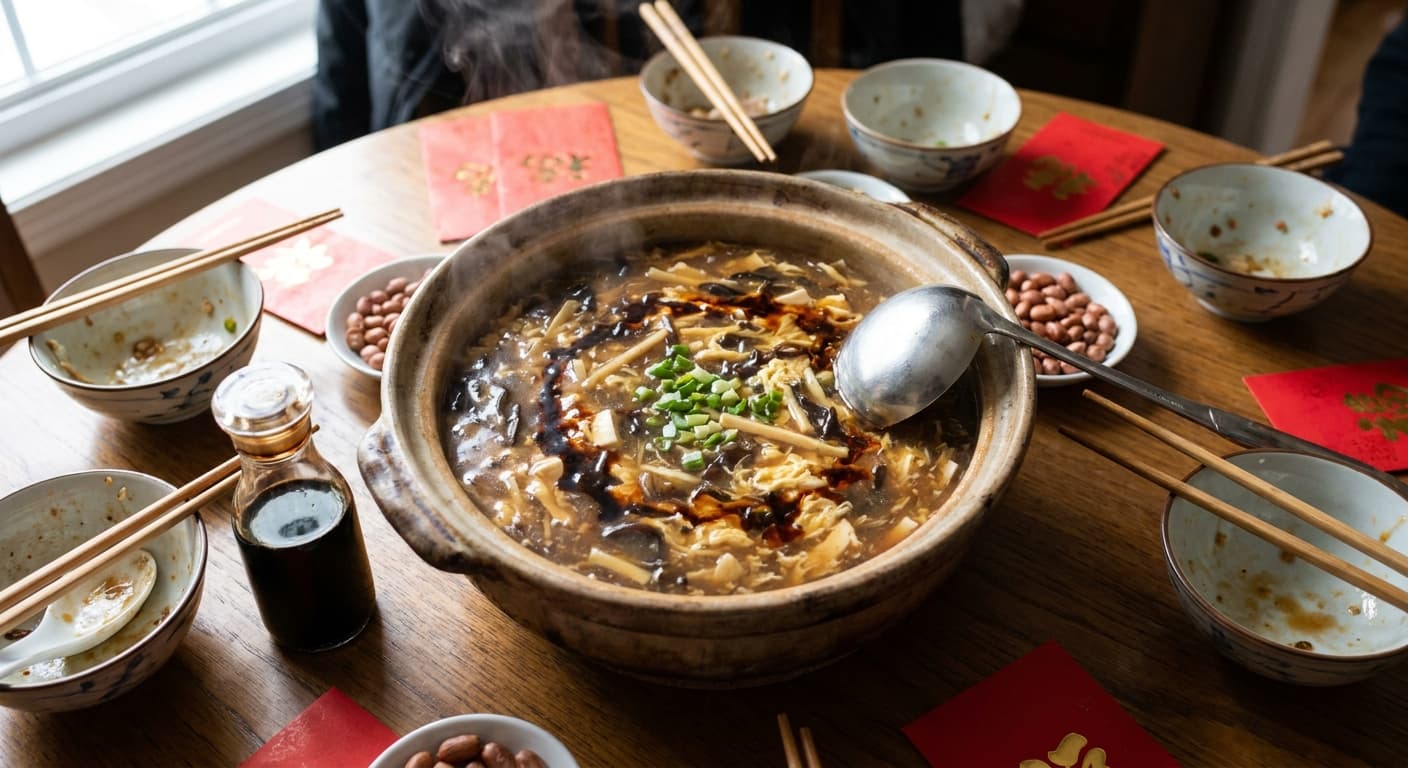
Hot and Sour Soup (酸辣汤) — Northern Chinese Soup with Tofu and Black Vinegar
Chinese · Soups · 45 min
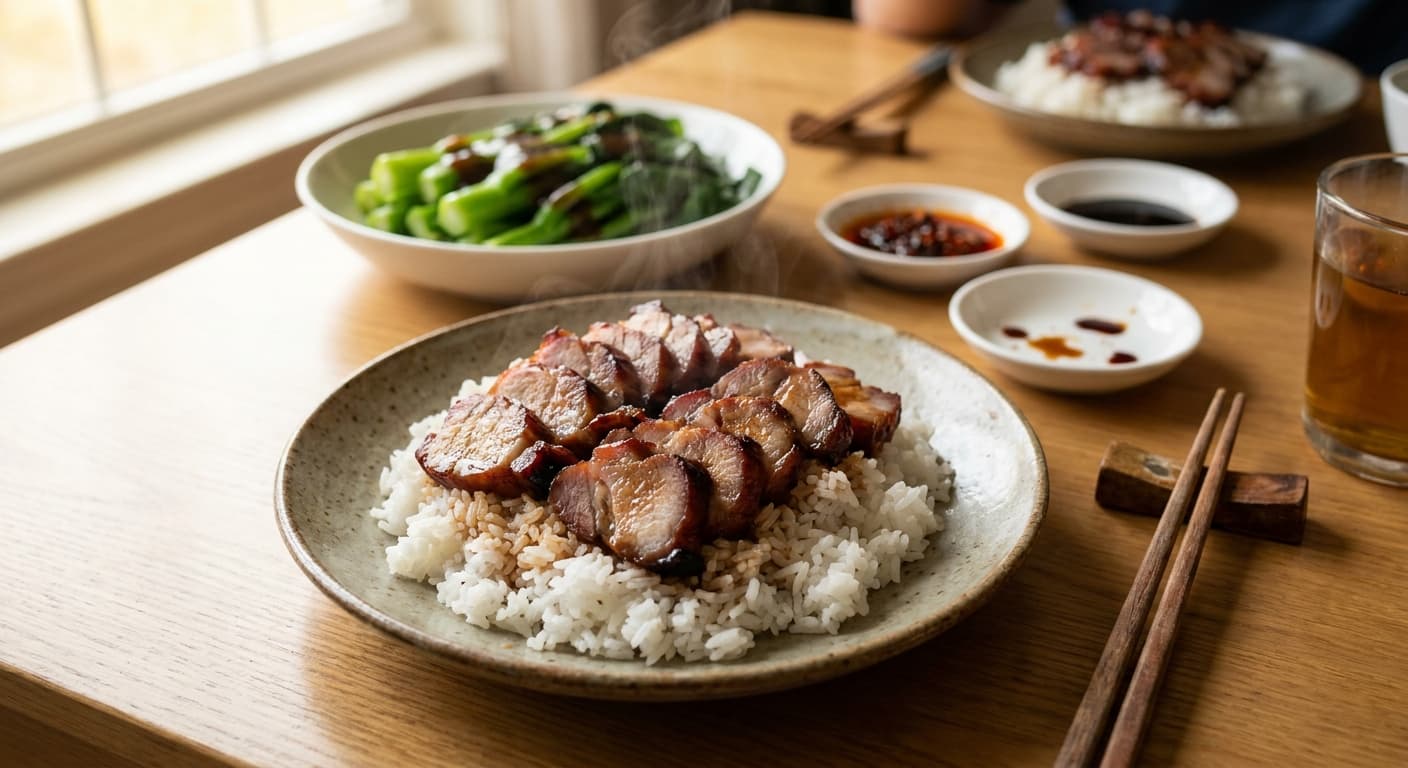
Char Siu (叉燒) — Cantonese Honey-Glazed Barbecue Pork
Chinese · Main Courses · 70 min
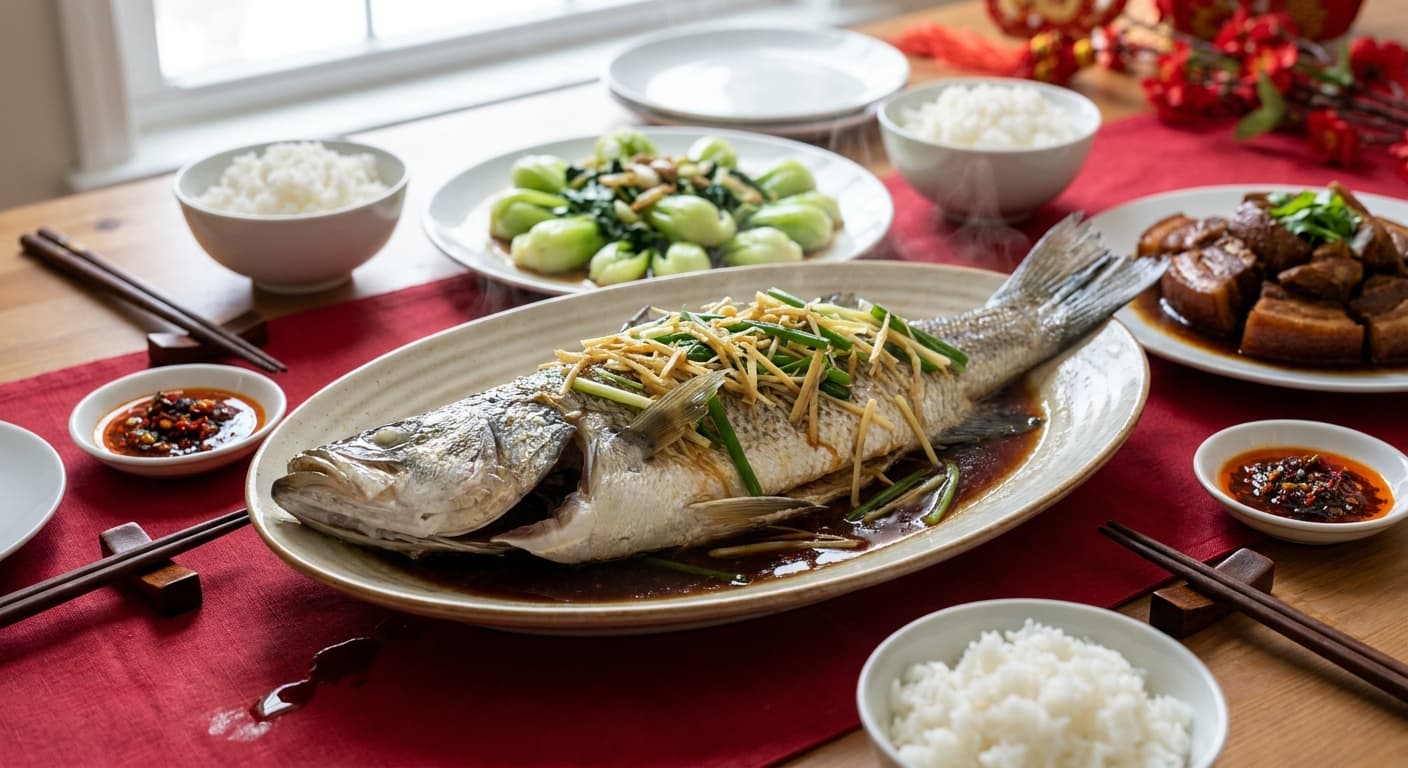
Cantonese Steamed Whole Fish (清蒸鱼) — Ginger-Scallion Soy Celebration Fish
Chinese · Main Courses · 32 min
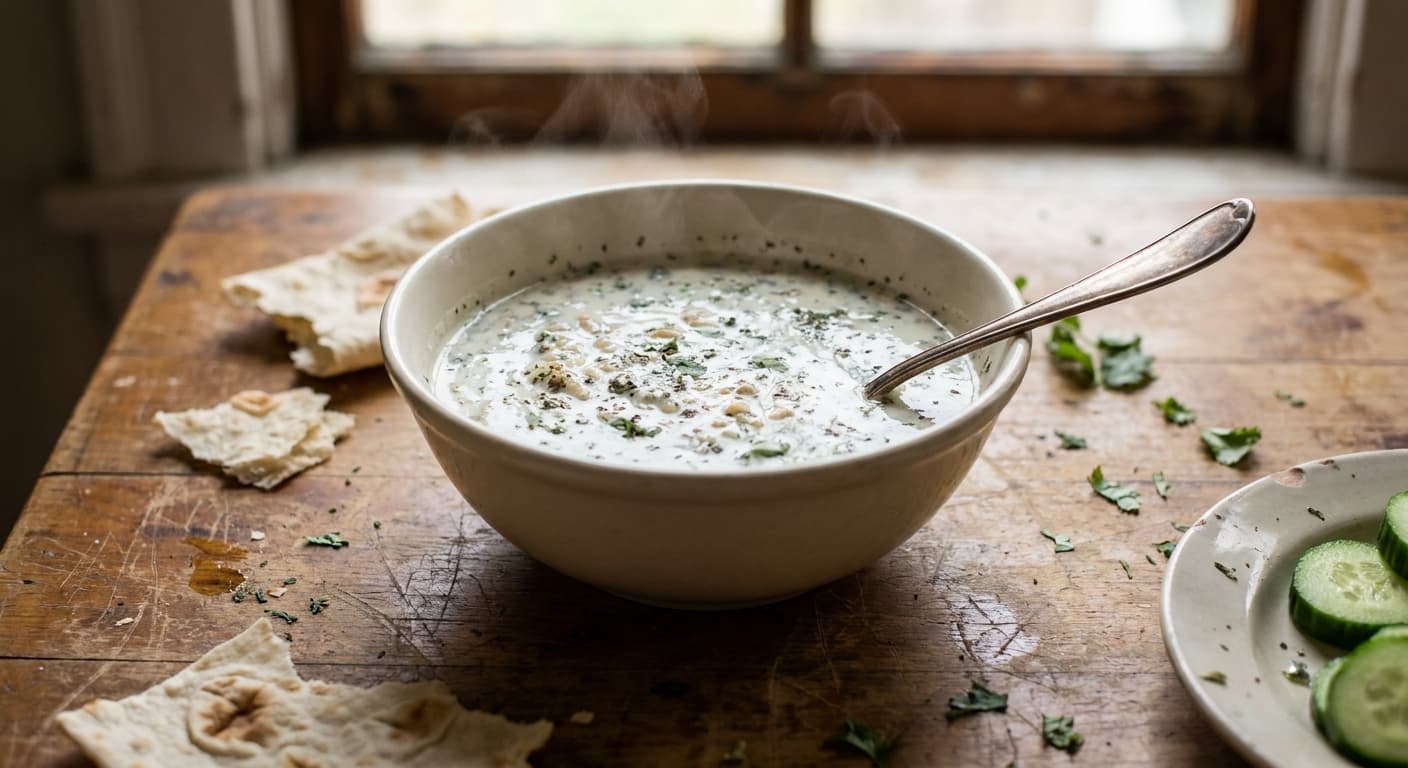
Spas (Սպաս) — Armenian Yogurt-and-Wheat Soup
Armenian · Soups · 70 min
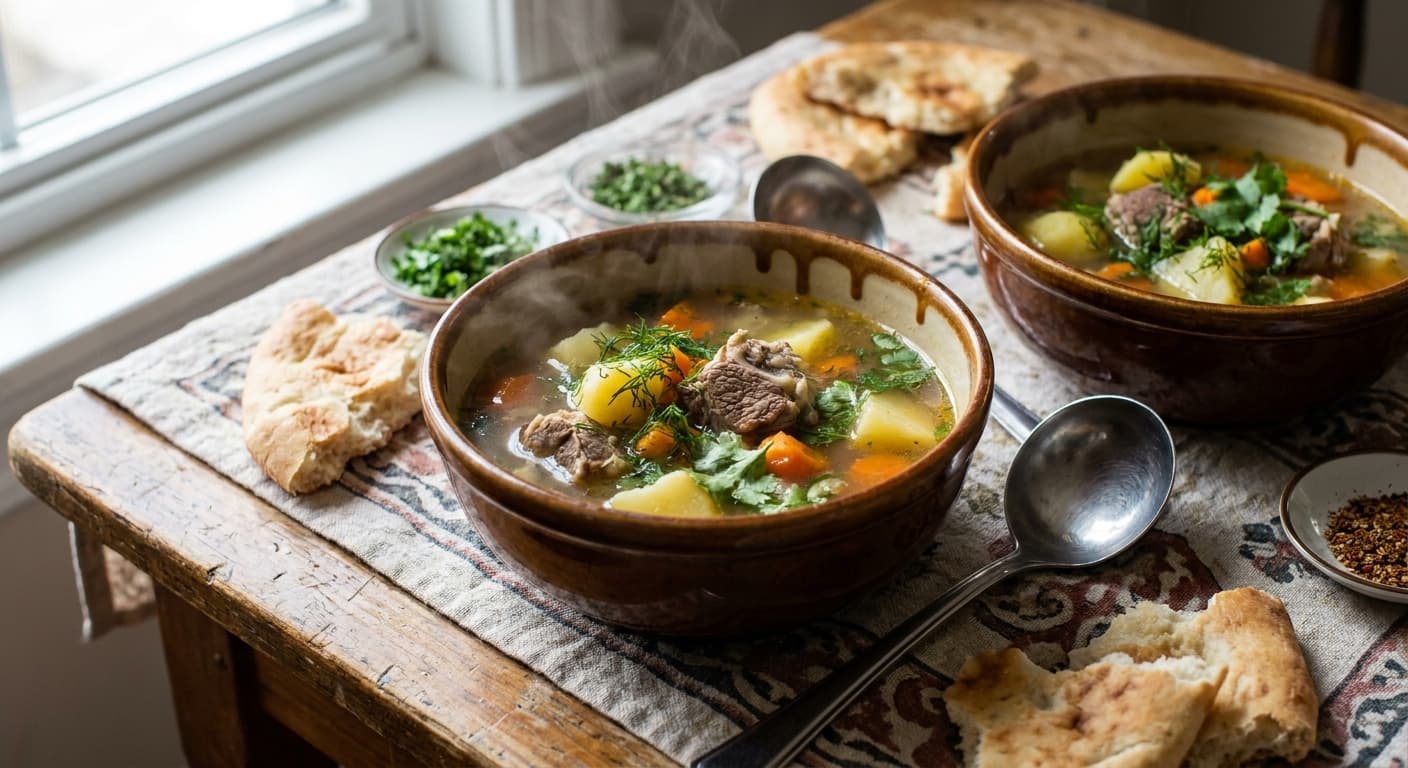
Uzbek Shurpa (Шўрпа) — Lamb and Vegetable Soup
Uzbek · Soups · 160 min
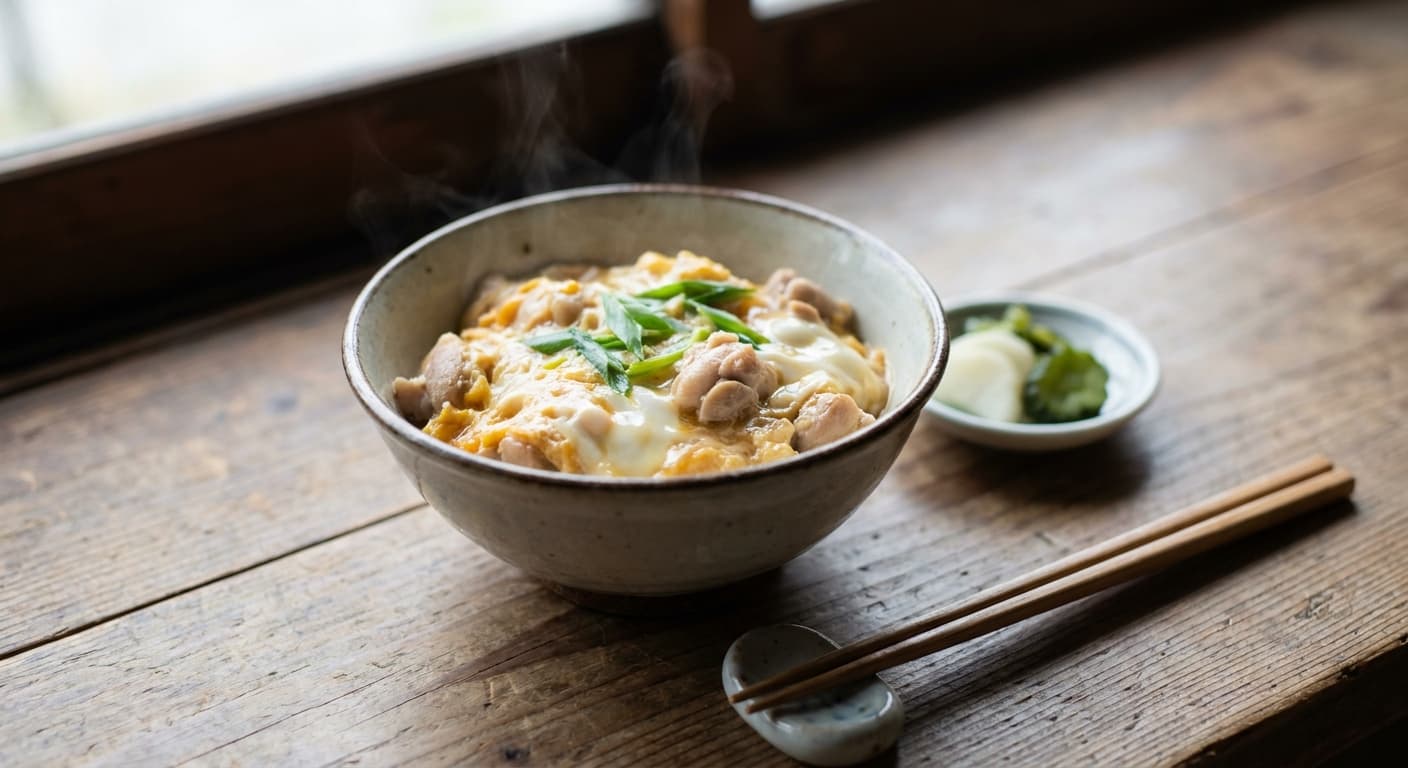
Japanese Oyakodon (親子丼) — Chicken and Egg Rice Bowl
Japanese · Rice Dishes · 29 min
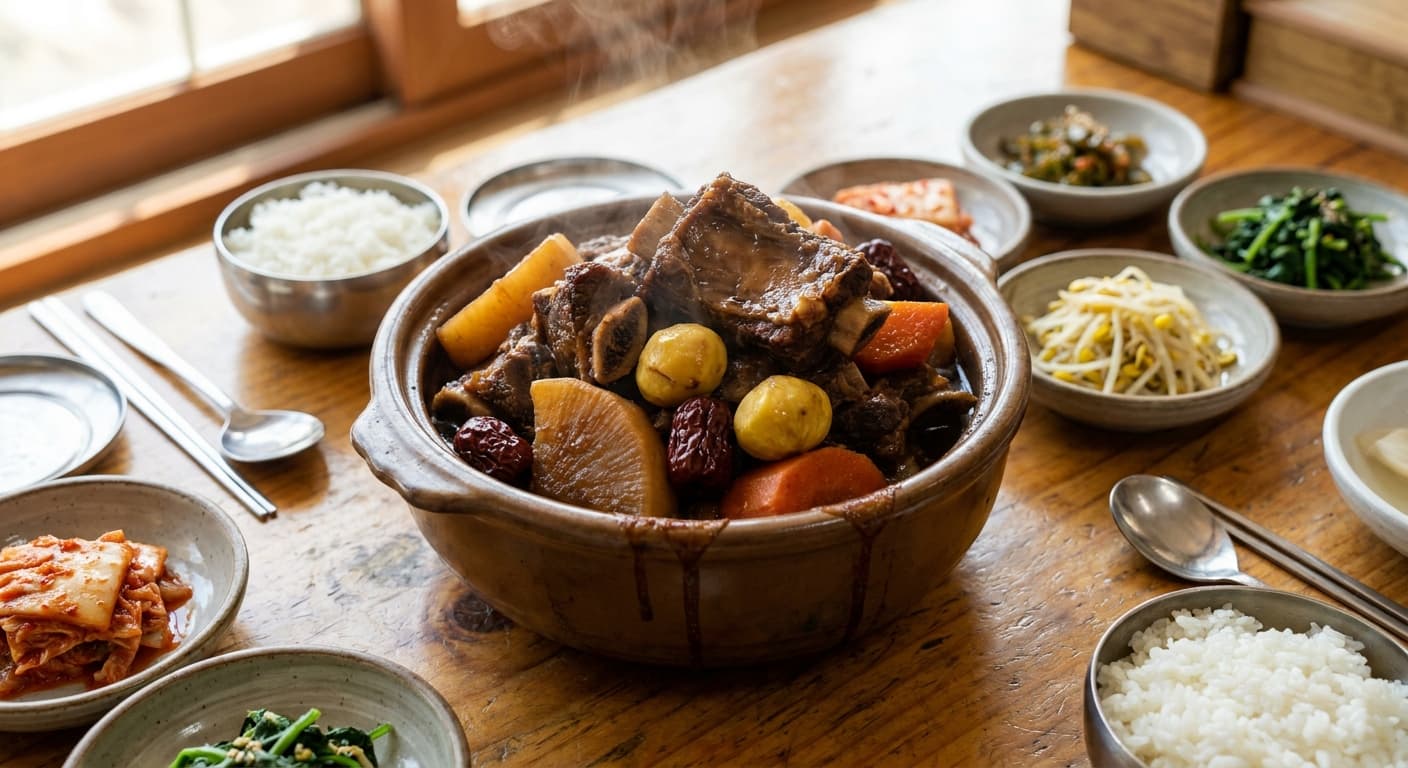
Galbi Jjim (갈비찜) — Korean Braised Short Ribs
Korean · Main Courses · 175 min
Biangbiang Noodles (油泼扯面) — Xi'an Hand-Pulled Belt Noodles
Chinese · Main Courses · 65 min
Reviews
Cooked this recipe?
Tap the stars to rate it — that's all it takes. A few words are welcome but optional.
No ratings yet. Cooked this one? Be the first to rate it — it takes one tap.