Ash Reshteh (آش رشته) — Persian Herb and Noodle Soup
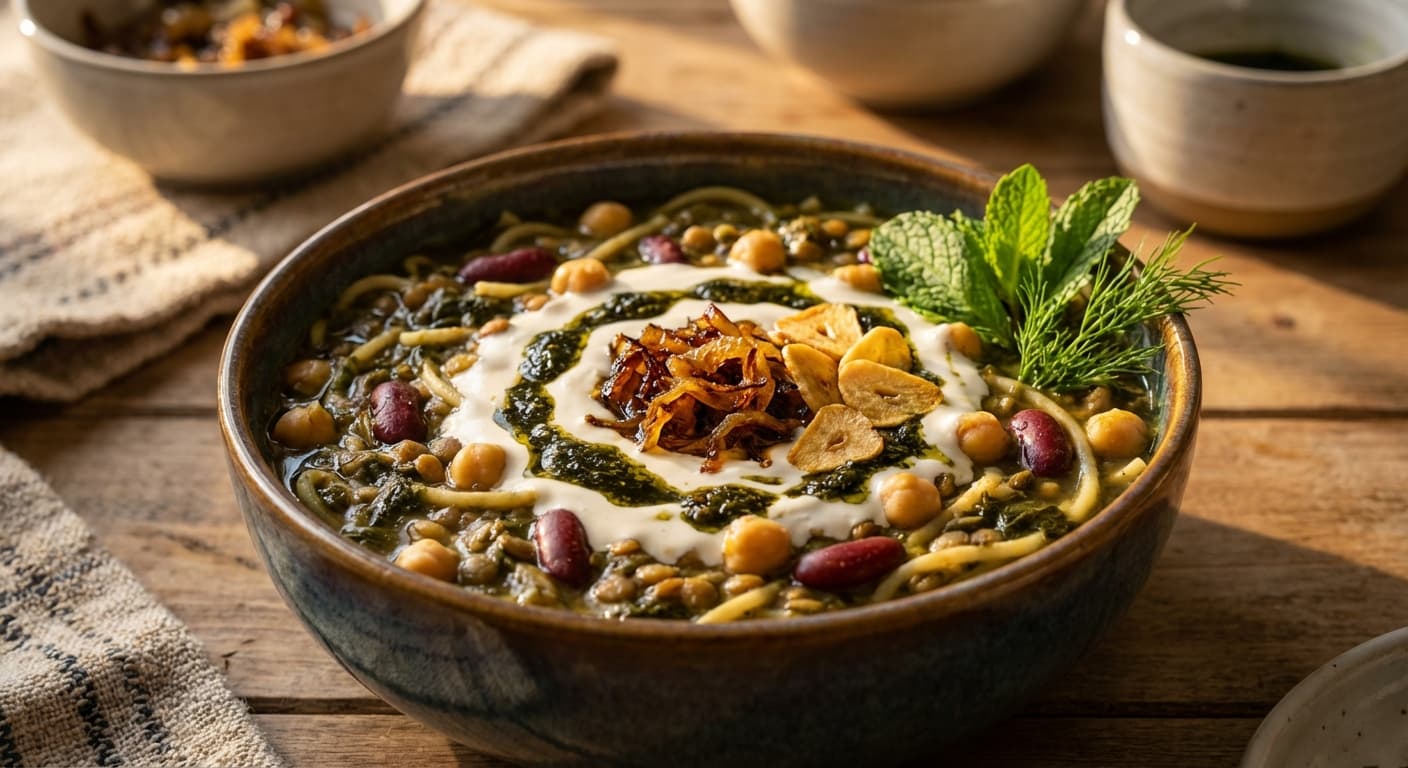
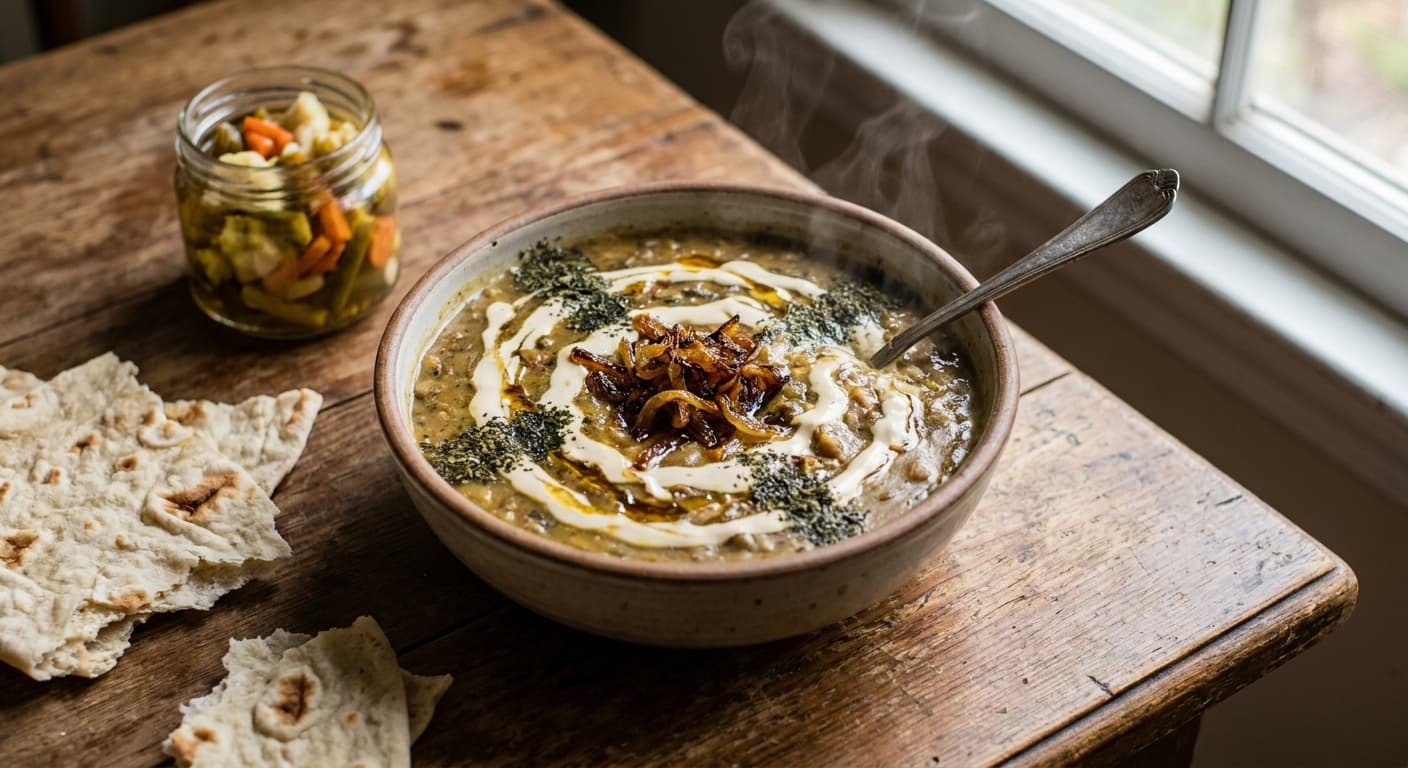
Ash Reshteh is a thick Persian herb and noodle soup with chickpeas, beans, lentils, and fragrant greens. Finished with fried onions, garlic-mint oil, and tangy whey dip, it is especially popular during Nowruz.
Printable Recipe Card
Servings: 6 · Total: 720 min · Difficulty: medium
Ingredients (quick list)
- 180 g Dried chickpeas (soaked 8–12 hours, drained and rinsed)
- 160 g Dried kidney beans (soaked 8–12 hours, drained and rinsed)
- 150 g Green lentils (rinsed)
- 350 g Yellow onions (thinly sliced)
- 60 ml Neutral oil (divided for frying onions and garlic)
- 18 g Garlic (thinly sliced (about 6 cloves))
- 2 tsp Dried mint (for garlic-mint oil)
- 250 g Fresh spinach (washed, roughly chopped)
- 120 g Fresh parsley (leaves and tender stems, finely chopped)
- 90 g Fresh cilantro (leaves and tender stems, finely chopped)
- 60 g Fresh chives (or scallion greens, finely sliced)
- 2000 ml Vegetable stock (or water, plus more as needed)
+ 7 more in the full ingredients section below.
Steps (summary)
- Soak chickpeas and kidney beans in plenty of cold water for 8–12 hours at room temperature, then drain and rinse well. In a lar…
- Add rinsed green lentils to the pot, stir, and simmer 20 minutes. Meanwhile, heat 45 ml oil in a skillet over medium heat. Add…
- In the same skillet, add remaining 15 ml oil and sliced garlic. Cook over medium-low heat for 60–90 seconds until pale golden (…
- Stir the remaining fried onions into the pot along with turmeric, black pepper, and salt. Add chopped spinach, parsley, cilantr…
- Whisk flour with 120 ml cool water until completely smooth, then slowly pour into the simmering pot while stirring constantly.…
- Add broken reshteh noodles, stir well, and simmer 12–15 minutes until tender. Stir frequently (every 2 minutes) to prevent stic…
+ 1 more steps in the full instructions section below.
Cultural Background
Ash Reshteh is commonly prepared for gatherings and seasonal celebrations, including Nowruz, where it is associated with warmth, hospitality, and abundance. The combination of herbs, legumes, and noodles reflects a long tradition of hearty soups in Persian home cooking, often finished with distinctive fried aromatics.
Equipment
💡 Tips
- For the best texture, keep the simmer gentle after adding herbs; a hard boil can dull the green color and make the soup taste grassy.
- If you cannot find reshteh, break spaghetti into short lengths and add 1 extra minute of cooking; check often to avoid mushiness.
- Fried onions are not just garnish: cooking them to deep gold adds sweetness that balances the herbs and legumes.
- Garlic-mint oil burns easily; always take the pan off heat before adding dried mint so it blooms without turning bitter.
- Ash Reshteh thickens as it sits; loosen leftovers with hot water or stock while reheating.
⚠️ Common Mistakes
❌ Boiling the soup hard after adding herbs
💡 Why: Aggressive boiling can dull the green color and make the herb flavor taste harsh.
✅ Fix: Keep the pot at a gentle simmer and stir regularly; add hot water if needed rather than increasing heat.
❌ Burning the dried mint in the oil
💡 Why: Dried mint scorches quickly and turns bitter, overpowering the soup.
✅ Fix: Remove the pan from heat before adding mint and bloom for 30 seconds only; if it darkens, start over with fresh oil.
❌ Adding noodles too early and overcooking them
💡 Why: Overcooked noodles break down and make the soup gummy and overly thick.
✅ Fix: Add noodles in the last 12–15 minutes and rest the soup off heat; loosen with hot water if it thickens too much.
❌ Under-seasoning the legumes
💡 Why: Legumes absorb salt and spices, and the soup can taste flat despite many ingredients.
✅ Fix: Season in stages: add some salt with herbs, then adjust again after noodles cook and the soup rests.
🧊 How to Store
Cool completely, then refrigerate in an airtight container for up to 4 days. Freeze up to 2 months, but note noodles may soften; for best results, freeze the soup without noodles and add freshly cooked noodles when serving. Reheat gently on the stove, adding hot water 100 ml at a time to adjust thickness.
📅 Make Ahead
Soak and cook chickpeas and kidney beans up to 2 days ahead and refrigerate in their cooking liquid. Chop herbs 1 day ahead and store wrapped in paper towels in an airtight container. For best texture, cook and add noodles on the day of serving; reheat soup gently and add fresh noodles if making far in advance.
🍽️ Pairs Well With
- Warm flatbread or lavash
- A side of mixed herbs and radishes
- Pickled vegetables
- Extra yogurt and lemon wedges
Regional Variations
- Tehran-style home cookingOften finished generously with fried onions and garlic-mint oil, with a thick, spoon-coating consistency and a prominent herb blend.
- Northern Iran (Caspian-influenced)May include more leafy greens and a brighter tang from additional souring at the table, keeping the soup slightly lighter while still hearty.
Ingredients
- 180 gDried chickpeas (soaked 8–12 hours, drained and rinsed)
- 160 gDried kidney beans (soaked 8–12 hours, drained and rinsed)
- 150 gGreen lentils (rinsed)
- 350 gYellow onions (thinly sliced)
- 60 mlNeutral oil (divided for frying onions and garlic)
- 18 gGarlic (thinly sliced (about 6 cloves))
- 2 tspDried mint (for garlic-mint oil)
- 250 gFresh spinach (washed, roughly chopped)
- 120 gFresh parsley (leaves and tender stems, finely chopped)
- 90 gFresh cilantro (leaves and tender stems, finely chopped)
- 60 gFresh chives (or scallion greens, finely sliced)
- 2000 mlVegetable stock (or water, plus more as needed)
- 12 gFine sea salt (about 2 tsp, adjust to taste)
- 2 tspGround turmeric
- 1 tspGround black pepper
- 200 gReshteh (Persian noodles) (broken into 5–7 cm pieces)
- 25 gAll-purpose flour (to thicken (optional but traditional-style))
- 240 gPlain yogurt (for serving (globally accessible alternative to tangy whey dip))
- 30 mlLemon juice (for serving, optional)
🔄 Substitutions
- Reshteh (Persian noodles)→ Spaghetti or linguine, broken into 5–7 cm pieces
- Plain yogurt (for serving)→ Sour cream or crème fraîche
- Fresh chives→ Scallion greens
Instructions
- 1
Soak chickpeas and kidney beans in plenty of cold water for 8–12 hours at room temperature, then drain and rinse well. In a large pot, add chickpeas, kidney beans, and 2,000 ml stock. Bring to a boil over high heat, skim foam for 5 minutes, then reduce to a gentle simmer and cook 60 minutes, partially covered.
- 2
Add rinsed green lentils to the pot, stir, and simmer 20 minutes. Meanwhile, heat 45 ml oil in a skillet over medium heat. Add sliced onions and cook 18–22 minutes, stirring often, until deeply golden and sweet. Transfer half the fried onions to a bowl for garnish; keep the rest ready for the soup.
- 3
In the same skillet, add remaining 15 ml oil and sliced garlic. Cook over medium-low heat for 60–90 seconds until pale golden (do not brown). Remove skillet from heat, stir in dried mint, and let it bloom 30 seconds. Transfer the garlic-mint oil to a small bowl; reserve for finishing so the aroma stays bright.
- 4
Stir the remaining fried onions into the pot along with turmeric, black pepper, and salt. Add chopped spinach, parsley, cilantro, and chives. Simmer uncovered for 20 minutes, stirring every 5 minutes so herbs cook evenly and the soup begins to thicken. If it reduces too fast, add 250–500 ml water to maintain a stew-like soup consistency.
- 5
Whisk flour with 120 ml cool water until completely smooth, then slowly pour into the simmering pot while stirring constantly. Simmer 8 minutes to cook out any raw flour taste. This step helps the soup hold a thick, cohesive texture similar to traditional versions that rely on long simmering and starch from noodles.
- 6
Add broken reshteh noodles, stir well, and simmer 12–15 minutes until tender. Stir frequently (every 2 minutes) to prevent sticking and to release starch for body. If the soup becomes too thick, add hot water 100 ml at a time; it should be spoon-coating and hearty, not dry.
- 7
Rest the soup off heat for 10 minutes to let noodles finish hydrating and flavors settle. Taste and adjust salt and pepper. Ladle into bowls and top each serving with reserved fried onions, a spoonful of garlic-mint oil, and a generous dollop of plain yogurt. Add lemon juice to taste for extra tang.
🪪 Recipe Passport
Cultural Background
Ash Reshteh is commonly prepared for gatherings and seasonal celebrations, including Nowruz, where it is associated with warmth, hospitality, and abundance. The combination of herbs, legumes, and noodles reflects a long tradition of hearty soups in Persian home cooking, often finished with distinctive fried aromatics.
Regional Variations
Researched from multiple sources and validated by the Zaffaron editorial team. Every recipe is tested for accuracy, measurements, and cultural authenticity.
Nutrition per serving
Pairs well with
If you enjoyed this recipe, here are a few related Zaffaron recipes to try next.
- Baghali Polo (باقالی پلو) — Persian Dill and Broad Bean Rice with Saffron
- Black-Eyed Pea Rice with Mini Meatballs (پلو چشم بلبلی با کوفته ریزه) — Saffron rice layered with peas and spiced meatballs
- Cauliflower and Garlic Meatball Stew (خورش گل کلم با سیر) — Aromatic Persian Khoresht with Piaz Dagh
- Astarayi Tareh (آستارایی تره) — Caspian Herb and Feta Flatbread
Does your family make this differently?
Every family has their own version. Maybe your grandmother adds a secret ingredient, or your aunt has a completely different technique. Preserve your family's version — with their name on it, forever.
You Might Also Like
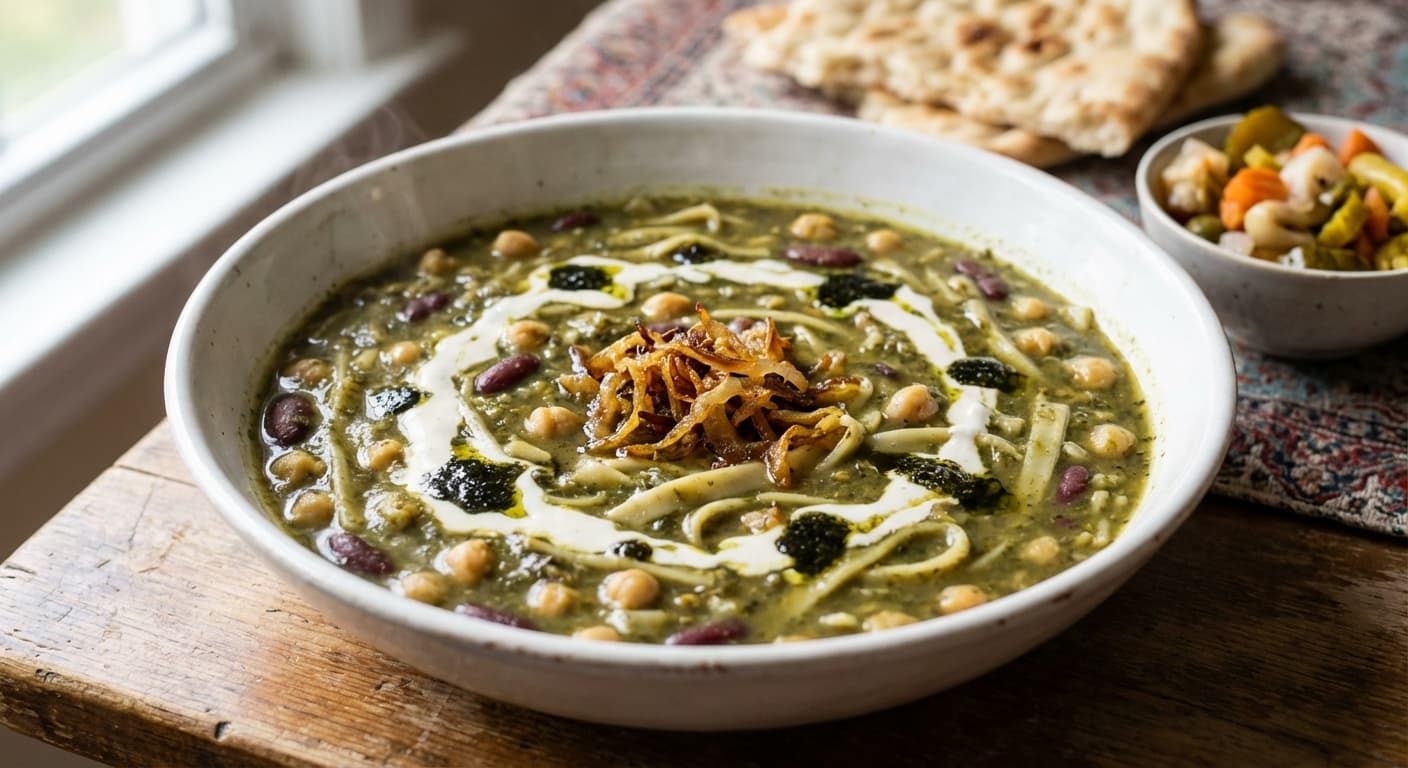
Ash Reshteh (آش رشته) — Persian Herb, Bean, and Noodle Soup
Persian · Soups · 145 min
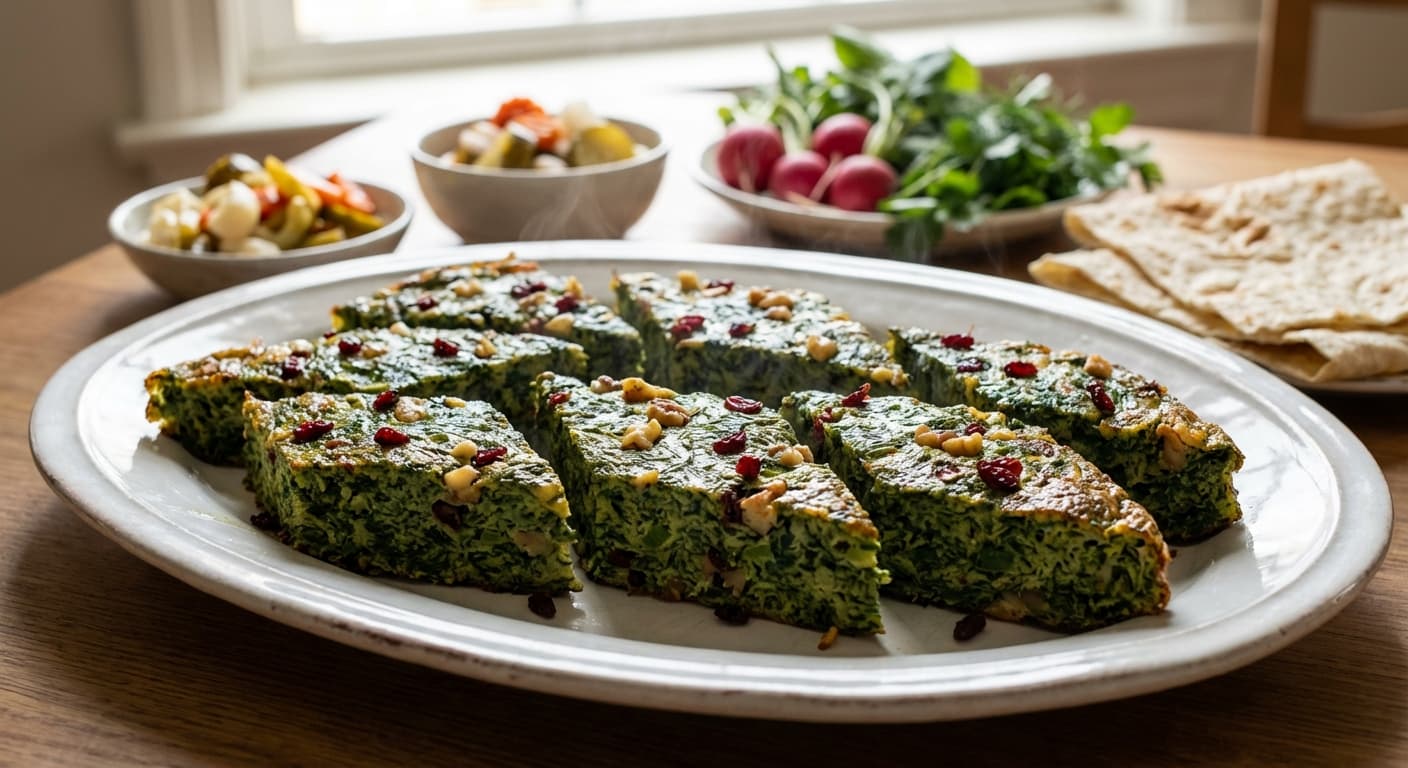
Kuku Sabzi (کوکو سبزی) — Emerald Persian Herb Frittata
Persian · Main Courses · 38 min
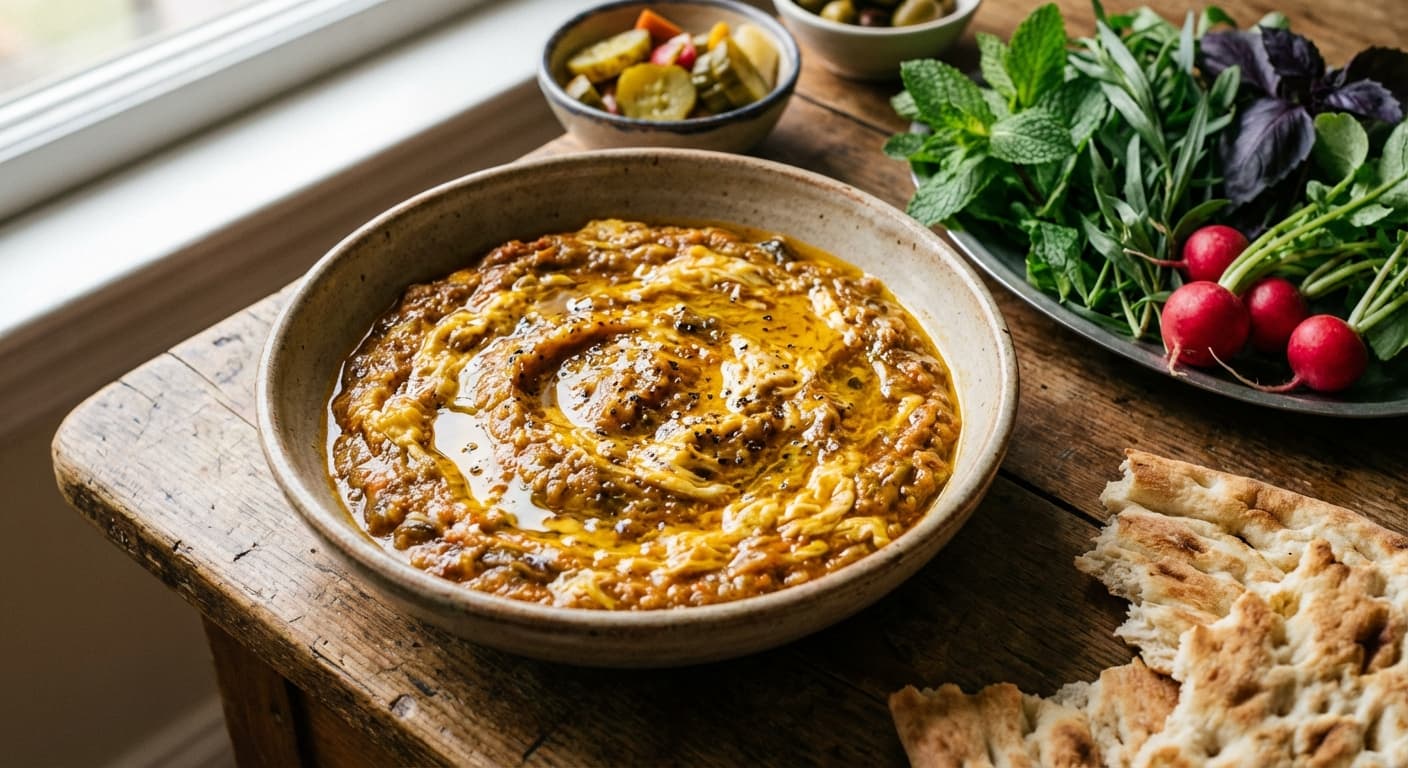
Smoked Silk Mirza Ghasemi (میرزا قاسمی) — Silky smoked eggplant with tomato, garlic, and eggs
Persian · Appetizers · 60 min
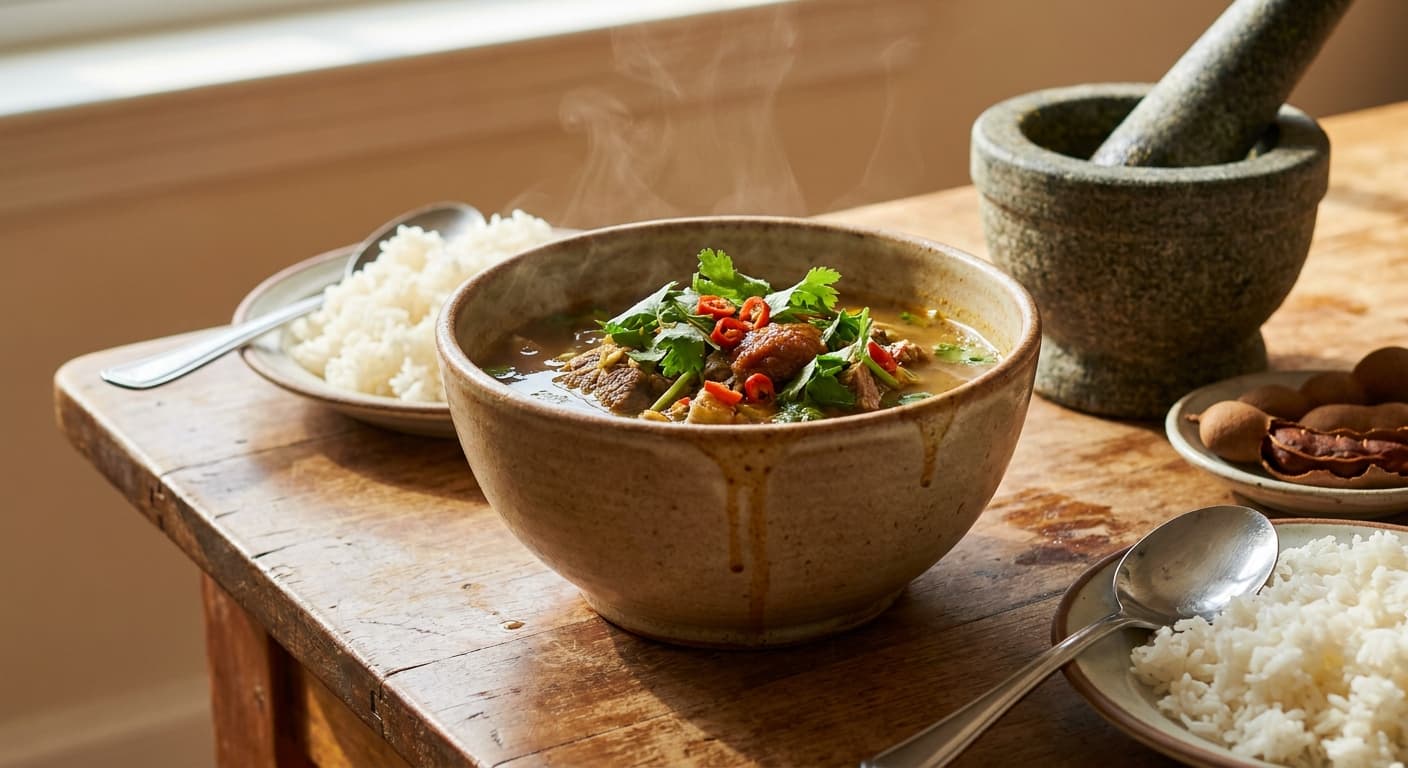
Samlor Machu Kroeung (សម្លម្ជូរគ្រឿង) — Cambodian Sour Kroeung Beef Soup
Cambodian · Soups · 130 min
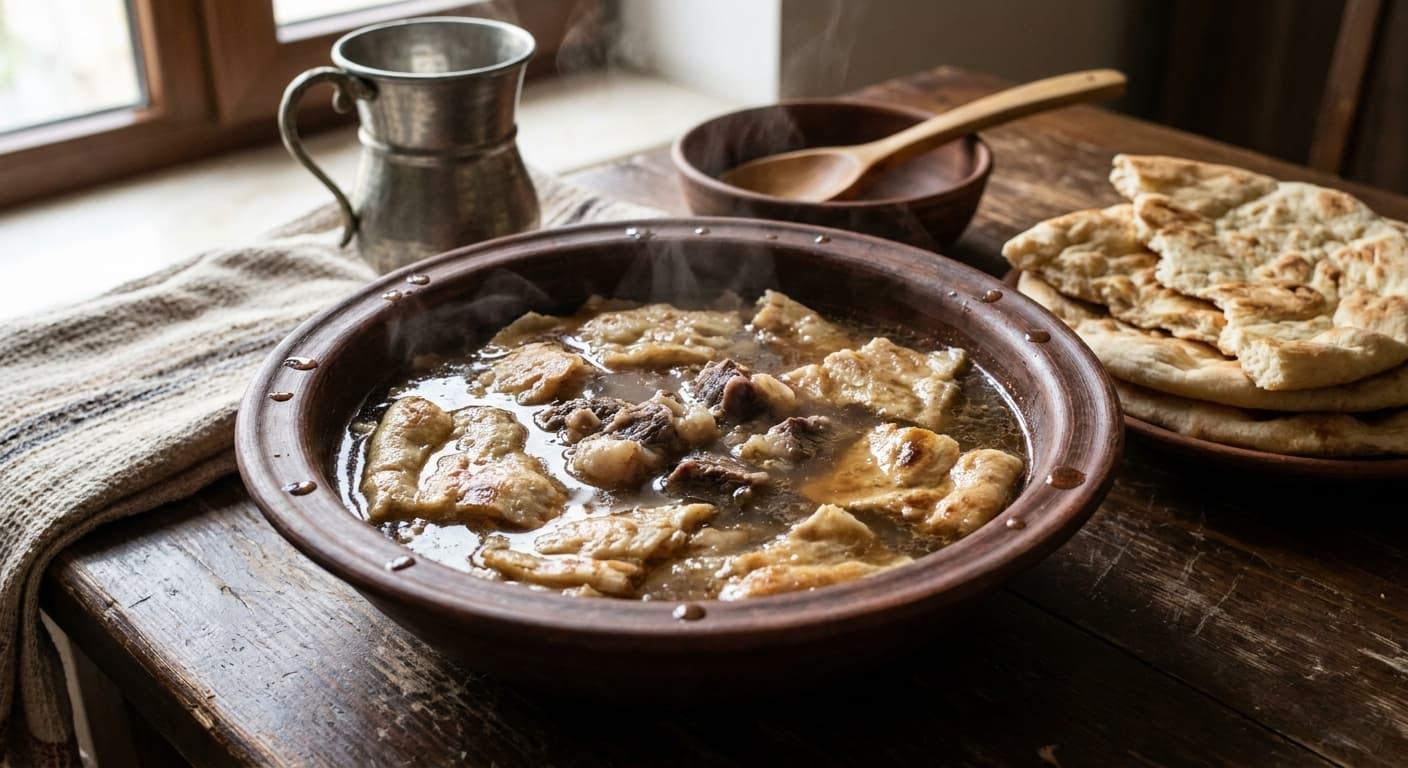
Dogroma (Dograma) — Turkmen Mutton and Bread Broth
Turkmen · Soups · 175 min
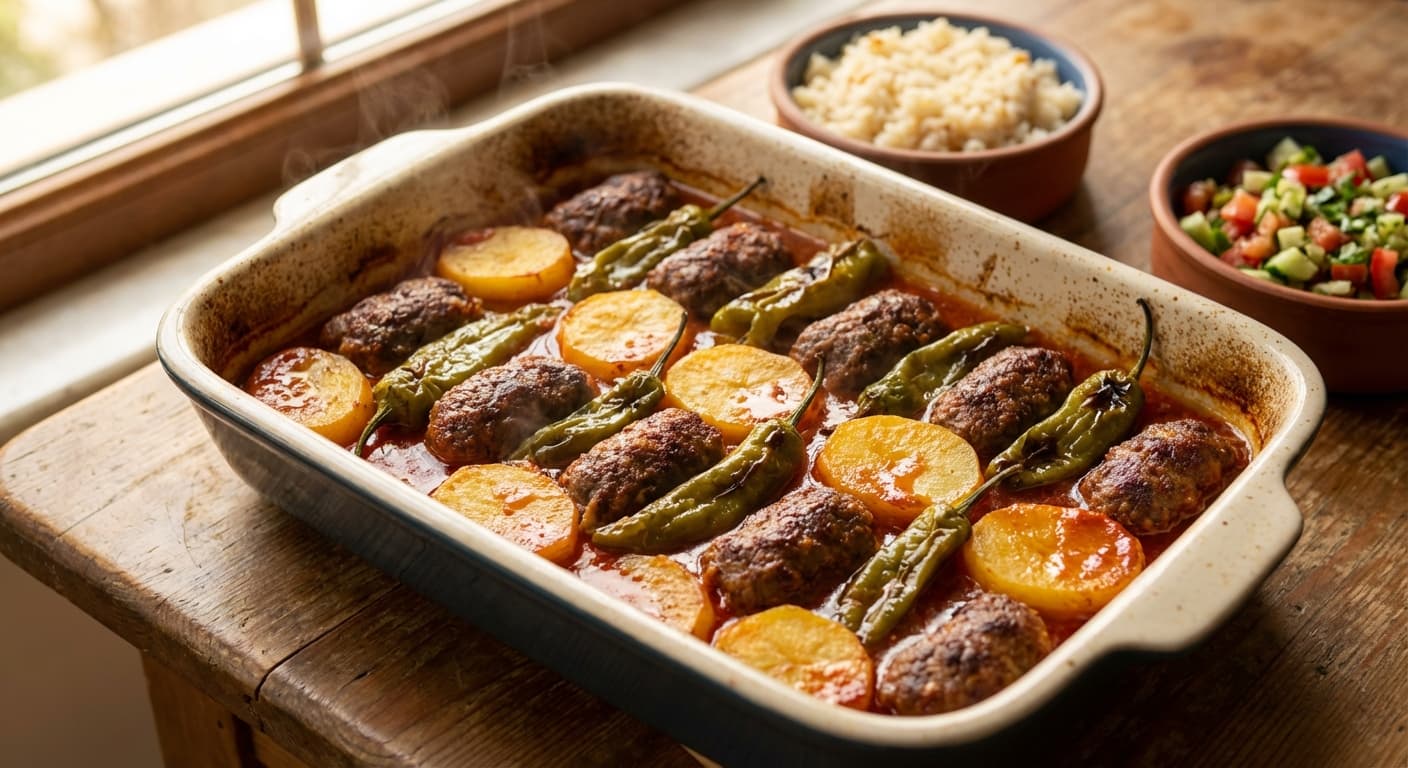
Izmir Kofte (İzmir Köfte) — Oven-Baked Meatballs with Tomato Sauce and Potatoes
Turkish · Main Courses · 70 min
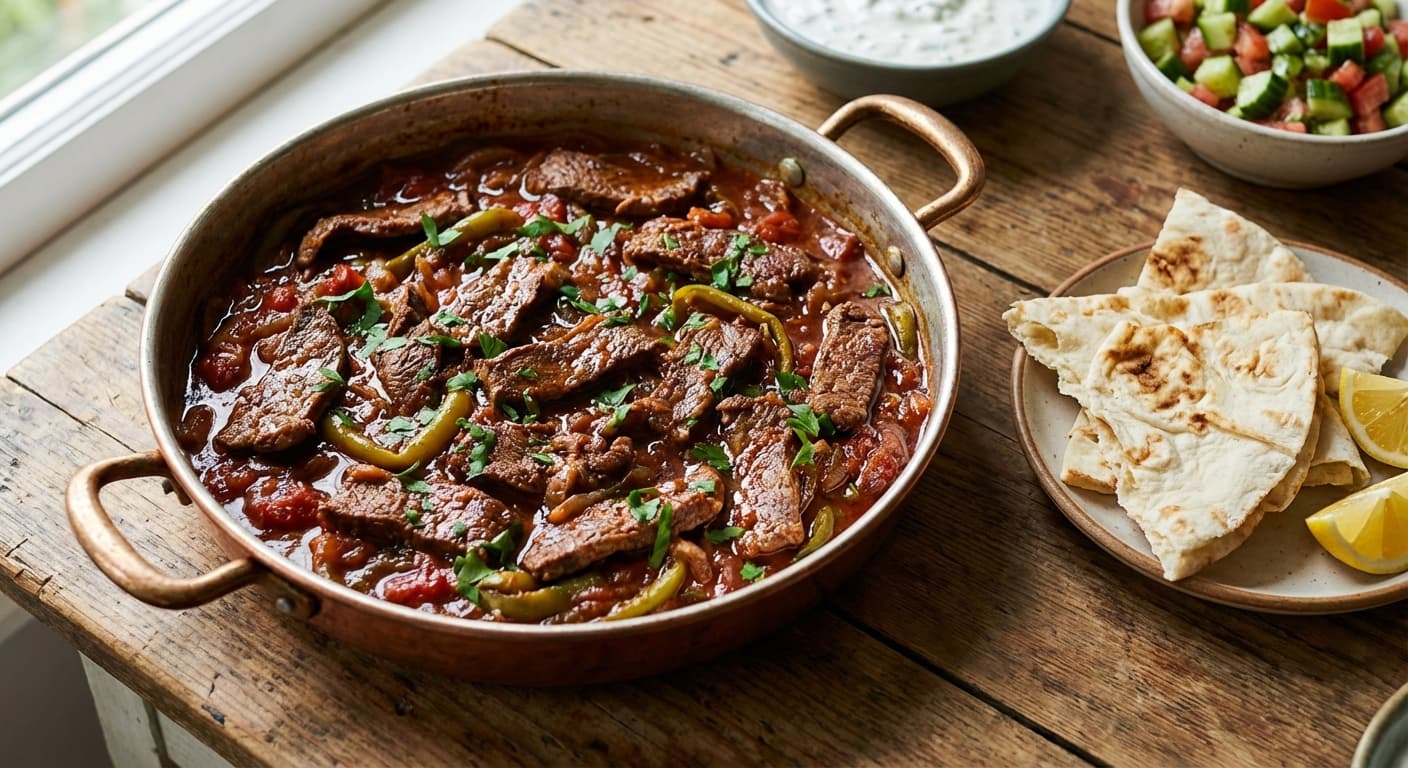
Sac Kavurma (Saç Kavurma) — Thin-Sliced Turkish Meat Sautéed with Onions
Turkish · Main Courses · 38 min
Ash-e Sak (آش ساک) — Gorgani Spinach and Lamb Ash
Persian · Soups · 175 min
Reviews
Cooked this recipe?
Tap the stars to rate it — that's all it takes. A few words are welcome but optional.
No ratings yet. Cooked this one? Be the first to rate it — it takes one tap.