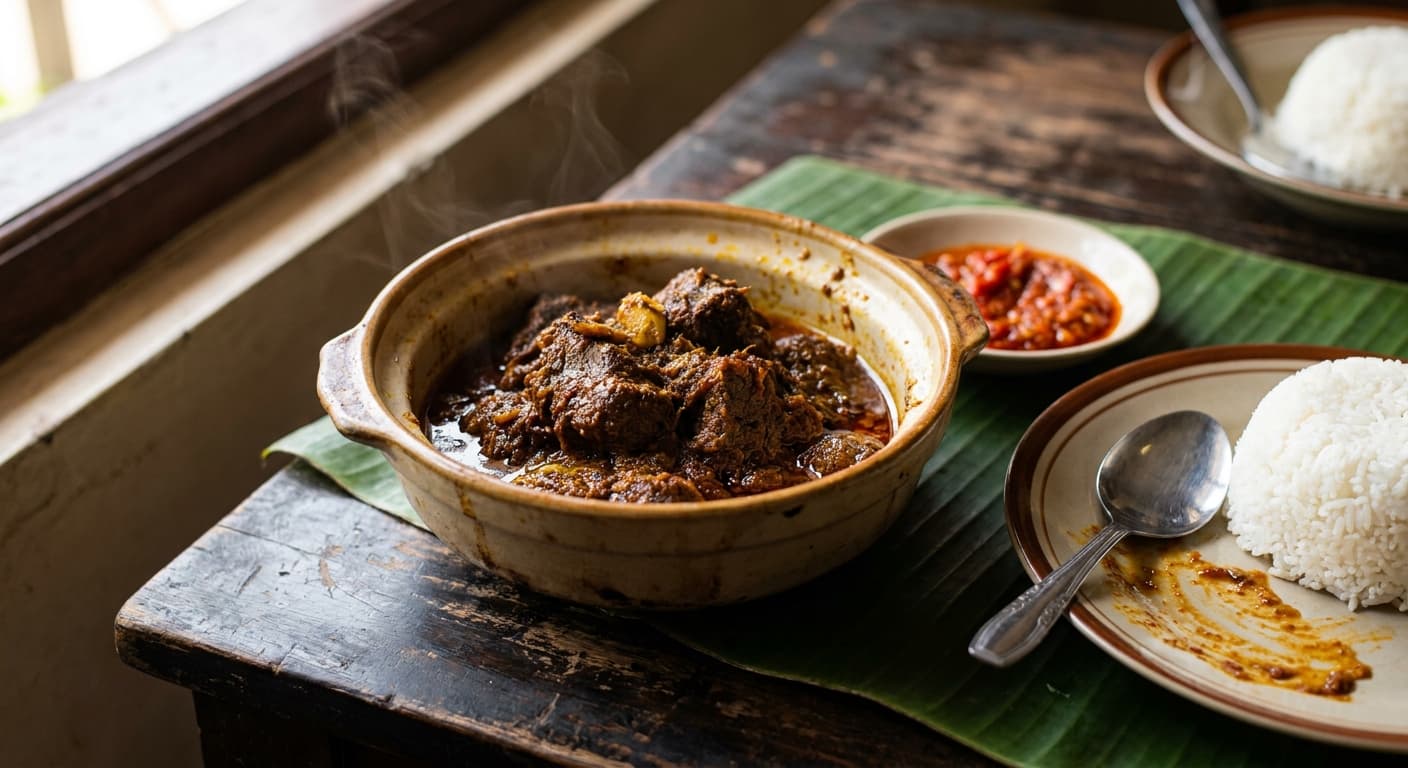
Beef Rendang (Rendang Daging) — Slow-Braised Coconut Beef
Beef rendang is a celebrated Minangkabau dish from West Sumatra, Indonesia, where beef is slowly cooked with coconut milk, chiles, herbs, and spices until dark, rich, and deeply aromatic.
Printable Recipe Card
Servings: 6 · Total: 245 min · Difficulty: medium
Ingredients (quick list)
- 1.2 kg beef chuck (cut into 4 cm cubes)
- 900 ml thick coconut milk
- 250 ml water
- 30 ml neutral oil
- 60 g unsweetened grated coconut
- 16 Asian shallots (peeled)
- 6 clove garlic (peeled)
- 8 large red chiles (stemmed and deseeded for medium heat)
- 4 bird's eye chiles (stemmed)
- 2 inch fresh galangal (peeled and sliced)
- 1 inch fresh ginger (peeled and sliced)
- 1 inch fresh turmeric (peeled and sliced)
+ 12 more in the full ingredients section below.
Steps (summary)
- Toast the grated coconut in a dry heavy skillet over medium heat for 6 to 8 minutes, stirring constantly until it turns deep go…
- Combine the shallots, garlic, red chiles, bird's eye chiles, galangal, ginger, turmeric, candlenuts, coriander, cumin, white pe…
- Heat the oil in a wide heavy pot or Dutch oven over medium heat, then add the spice paste. Fry for 10 to 12 minutes, stirring o…
- Add the beef cubes and stir until every piece is coated with the cooked spice paste. Pour in the coconut milk and the remaining…
- Bring the pot to a gentle boil, then reduce the heat to low and simmer uncovered for about 90 minutes. Stir every 10 to 15 minu…
- When the beef is tender and the sauce has reduced to a thick coating, stir in the prepared kerisik. Continue cooking for 60 to…
+ 1 more steps in the full instructions section below.
Cultural Background
Rendang is strongly associated with Minangkabau cooking and communal feasts in West Sumatra. Its long cooking time preserves meat and symbolizes patience, care, and hospitality at major gatherings.
Equipment
💡 Tips
- Use a wide pot so moisture evaporates steadily; a narrow pot will keep the rendang too wet for too long.
- Stir gently once the beef becomes tender so the cubes stay intact while the coconut sauce fries down.
- Rendang tastes better the next day, so cook it one day ahead for celebrations if time allows.
⚠️ Common Mistakes
❌ Cooking the rendang at a hard boil
✅ Fix: Keep the heat low after the first boil so the coconut milk reduces slowly and the beef becomes tender before the sauce dries.
❌ Stopping while the sauce is still pale and soupy
✅ Fix: Continue cooking until the liquid evaporates, oil separates, and the spice coating becomes dark brown and concentrated.
❌ Adding kerisik too early
✅ Fix: Add it only after the sauce has reduced, because early addition can make the bottom catch before the beef is tender.
🧊 How to Store
Cool completely, then refrigerate in an airtight container for up to 4 days or freeze for up to 3 months. Reheat gently in a covered pan with 30 ml water per serving, stirring until hot.
📅 Make Ahead
Prepare the spice paste and kerisik up to 2 days ahead and refrigerate them separately. The finished rendang can be cooked 1 day ahead, chilled, and reheated slowly for deeper flavor.
🍽️ Pairs Well With
- Steamed jasmine rice
- lontong
- cucumber slices
- sambal lado mudo
- urap vegetables.
Regional Variations
- West Sumatran dry rendang is cooked until dark and almost dry, with coconut oil visibly separating from the spice mixture.
- Kalimantan and Malaysian-style versions may be wetter and are often served sooner, closer to kalio in texture.
- Some Minangkabau cooks add more chiles and omit palm sugar for a sharper, more savory finish.
Ingredients
- 1.2 kgbeef chuck (cut into 4 cm cubes)
- 900 mlthick coconut milk
- 250 mlwater
- 30 mlneutral oil
- 60 gunsweetened grated coconut
- 16Asian shallots (peeled)
- 6 clovegarlic (peeled)
- 8large red chiles (stemmed and deseeded for medium heat)
- 4bird's eye chiles (stemmed)
- 2 inchfresh galangal (peeled and sliced)
- 1 inchfresh ginger (peeled and sliced)
- 1 inchfresh turmeric (peeled and sliced)
- 5candlenuts (must be fully cooked before eating)
- 2 tspground coriander
- 1 tspground cumin
- 0.5 tspground white pepper
- 3 stalklemongrass (white parts bruised)
- 8 leafmakrut lime leaves (torn)
- 1 leafturmeric leaf (tied in a knot if large)
- 2 leafIndonesian bay leaves (daun salam)
- 1 stickcinnamon
- 2dried asam kandis (optional but traditional for gentle sourness)
- 15 gpalm sugar (finely shaved)
- 12 gkosher salt
🔄 Substitutions
- candlenuts→ macadamia nuts
- turmeric leaf→ 2 additional makrut lime leaves
- dried asam kandis→ 1 tsp tamarind paste
Instructions
- 1
Toast the grated coconut in a dry heavy skillet over medium heat for 6 to 8 minutes, stirring constantly until it turns deep golden brown and smells nutty. Pound or process it into a coarse oily paste called kerisik, then set it aside because it will thicken and darken the rendang near the end.
- 2
Combine the shallots, garlic, red chiles, bird's eye chiles, galangal, ginger, turmeric, candlenuts, coriander, cumin, white pepper, and 100 ml of the measured water in a blender. Blend to a smooth paste, scraping the sides as needed, so the aromatics cook evenly and do not leave gritty pieces in the finished sauce.
- 3
Heat the oil in a wide heavy pot or Dutch oven over medium heat, then add the spice paste. Fry for 10 to 12 minutes, stirring often, until the paste thickens, darkens slightly, and the raw aroma of shallot and turmeric becomes rounded and fragrant.
- 4
Add the beef cubes and stir until every piece is coated with the cooked spice paste. Pour in the coconut milk and the remaining 150 ml water, then add the lemongrass, makrut lime leaves, turmeric leaf, Indonesian bay leaves, cinnamon, asam kandis, palm sugar, and salt.
- 5
Bring the pot to a gentle boil, then reduce the heat to low and simmer uncovered for about 90 minutes. Stir every 10 to 15 minutes, keeping the heat low enough that the coconut milk bubbles lazily rather than splitting harshly or scorching on the base.
- 6
When the beef is tender and the sauce has reduced to a thick coating, stir in the prepared kerisik. Continue cooking for 60 to 90 minutes more, stirring more frequently as the mixture dries, until the coconut oil separates and the rendang turns a dark brown color.
- 7
Remove the lemongrass, cinnamon stick, turmeric leaf, bay leaves, and asam kandis before serving. Let the rendang rest for at least 20 minutes off the heat, because the flavor becomes deeper as the spiced coconut coating settles around the beef.
🪪 Recipe Passport
Cultural Background
Rendang is strongly associated with Minangkabau cooking and communal feasts in West Sumatra. Its long cooking time preserves meat and symbolizes patience, care, and hospitality at major gatherings.
Regional Variations
Researched from multiple sources and validated by the Zaffaron editorial team. Every recipe is tested for accuracy, measurements, and cultural authenticity.
📚 Sources & Cultural References
- Sri Owen — Indonesian Food — (2008)
- Alan Davidson — The Oxford Companion to Food — (2014)
Sources cited by the Zaffaron editorial team during recipe research. Cultural and culinary references supporting authenticity claims.
Nutrition per serving
Pairs well with
If you enjoyed this recipe, here are a few related Zaffaron recipes to try next.
Does your family make this differently?
Every family has their own version. Maybe your grandmother adds a secret ingredient, or your aunt has a completely different technique. Preserve your family's version — with their name on it, forever.
You Might Also Like
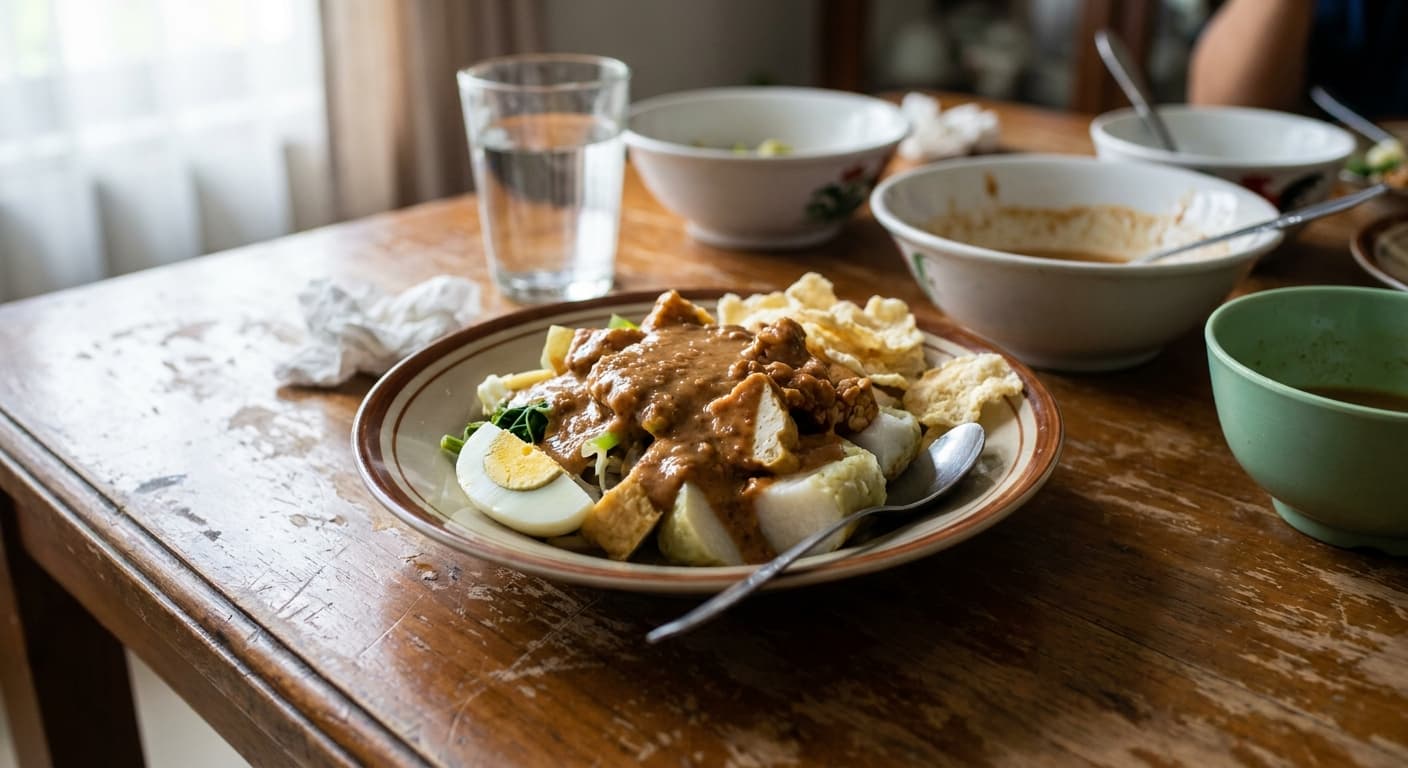
Gado-Gado (Gado-Gado) — Indonesian Salad with Peanut Sauce
Indonesian · Salads · 60 min
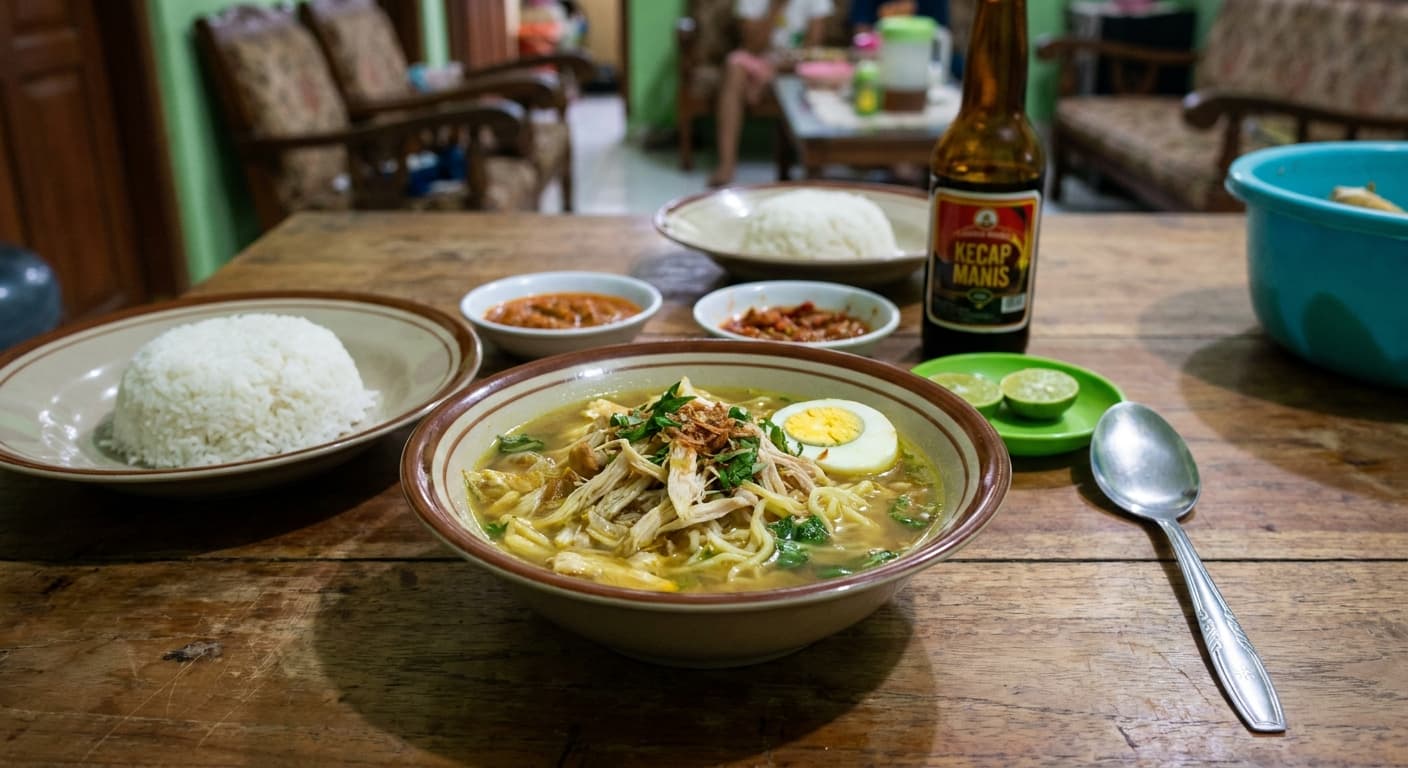
Indonesian Turmeric Chicken Soup (Soto Ayam) — Fragrant Shredded Chicken Broth
Indonesian · Soups · 100 min
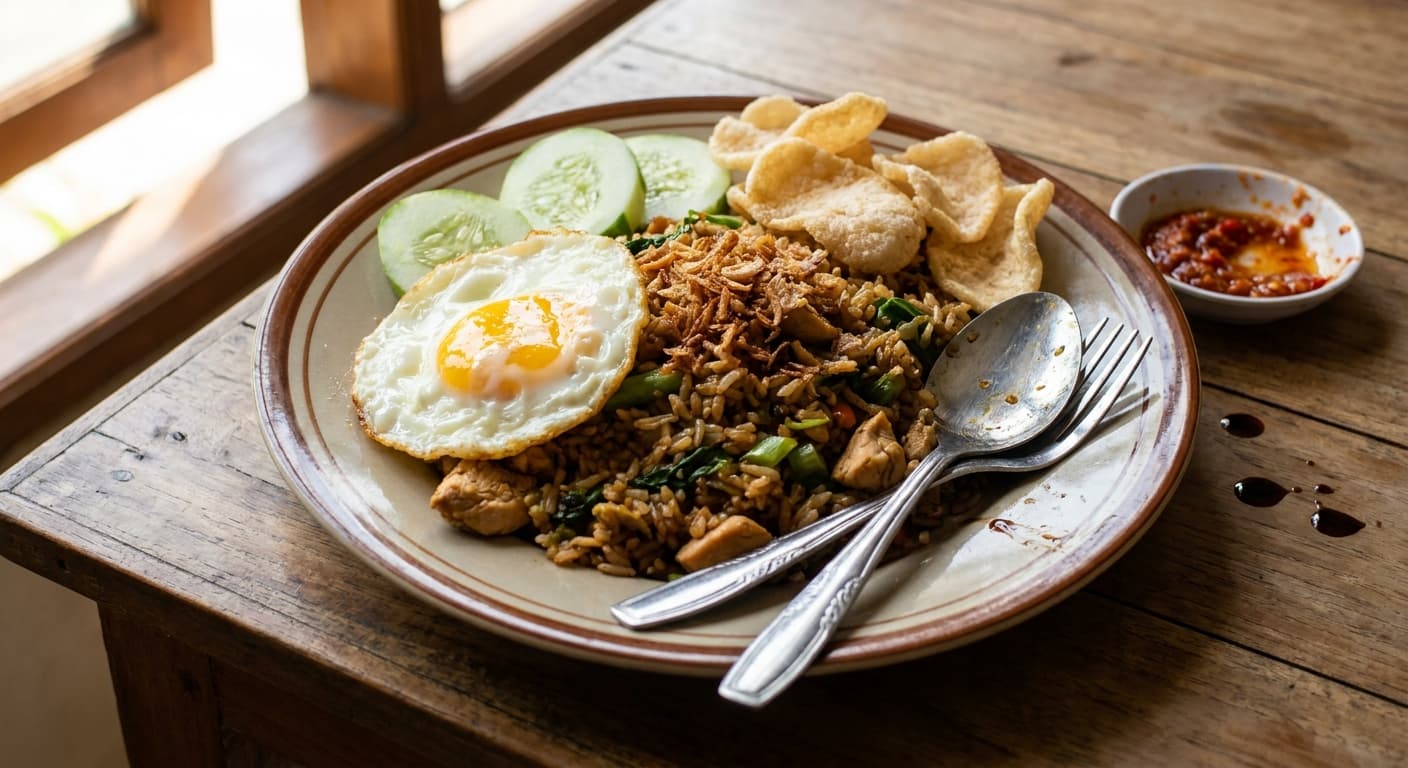
Indonesian Fried Rice (Nasi Goreng) — Sweet Soy Street-Style Rice
Indonesian · Rice Dishes · 35 min
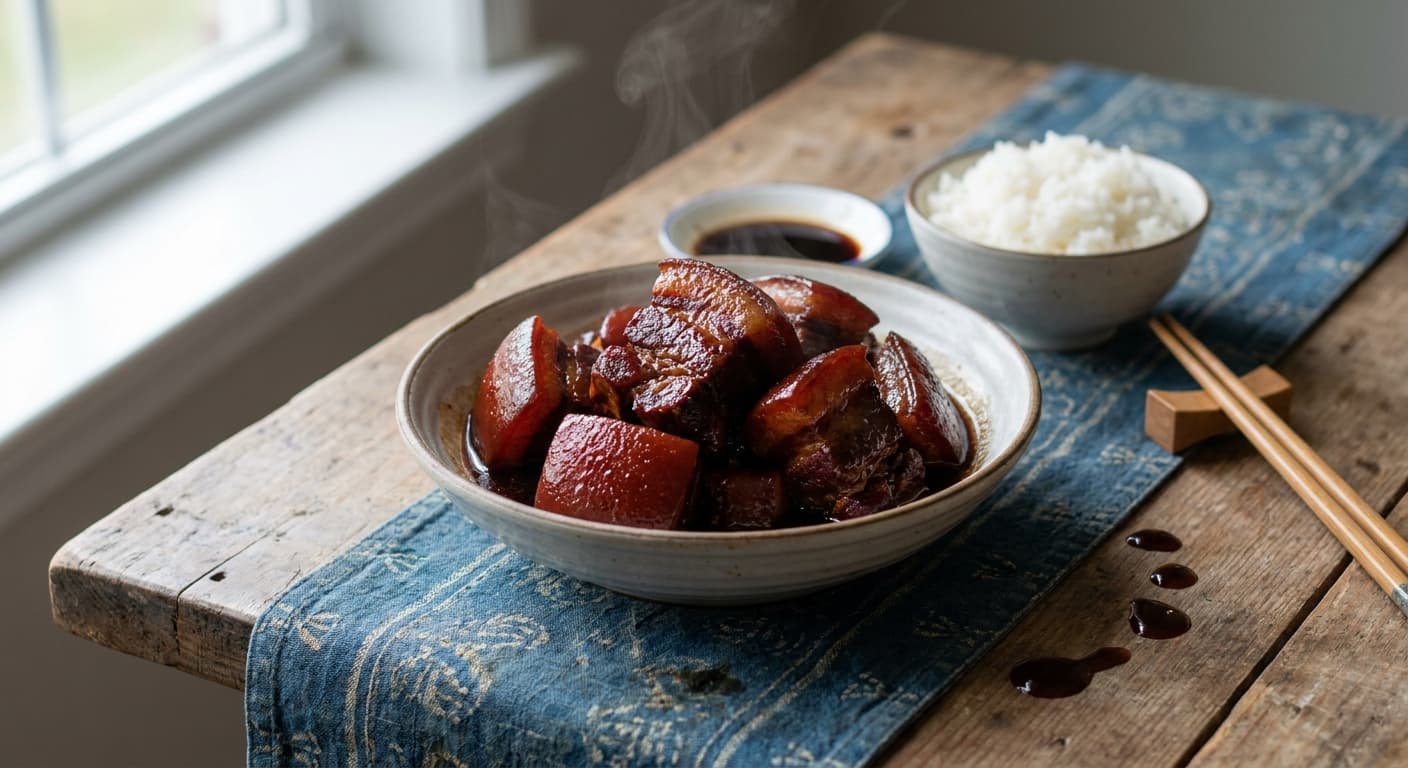
Dongpo Pork (东坡肉) — Hangzhou Red-Braised Pork Belly
Chinese · Main Courses · 205 min
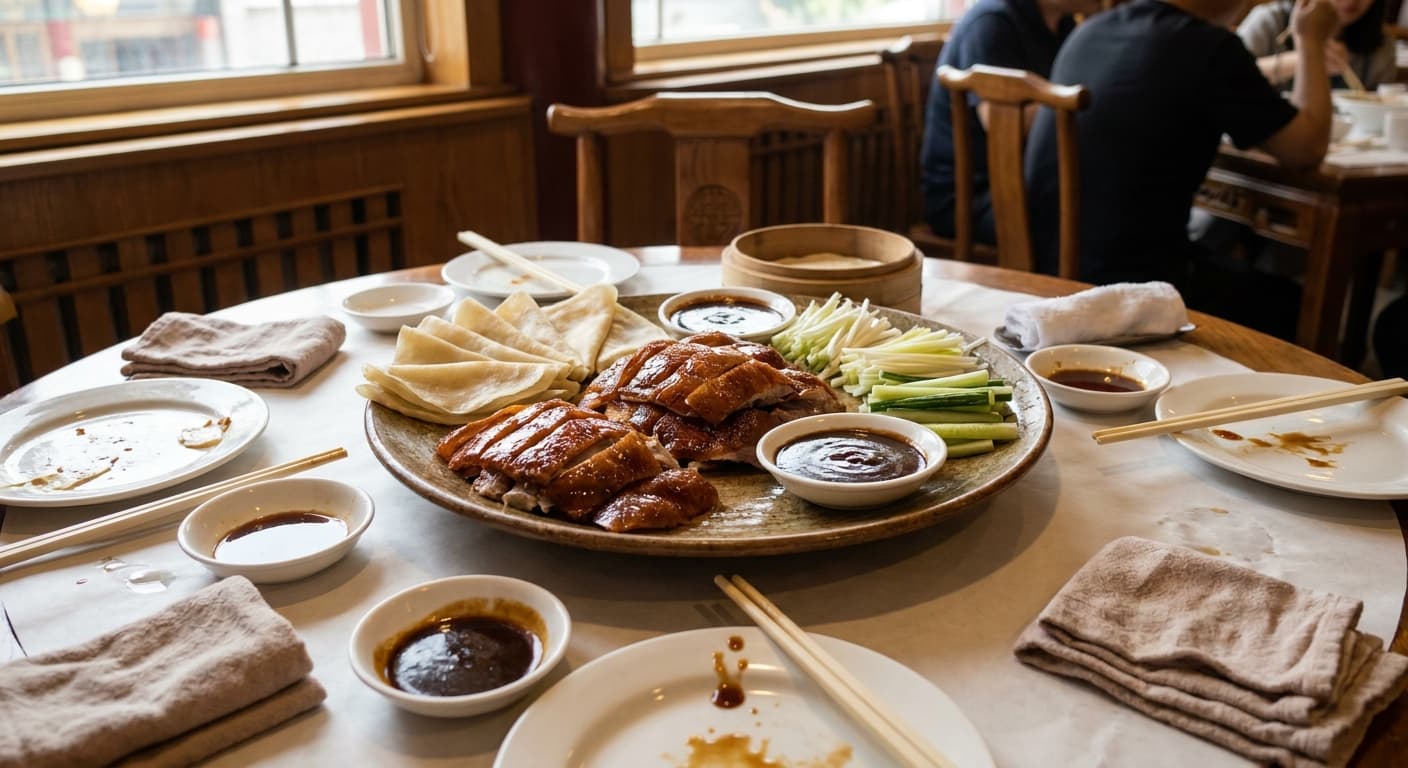
Peking Duck (北京烤鸭) — Crisp-Skinned Beijing Roast Duck
Chinese · Main Courses · 180 min
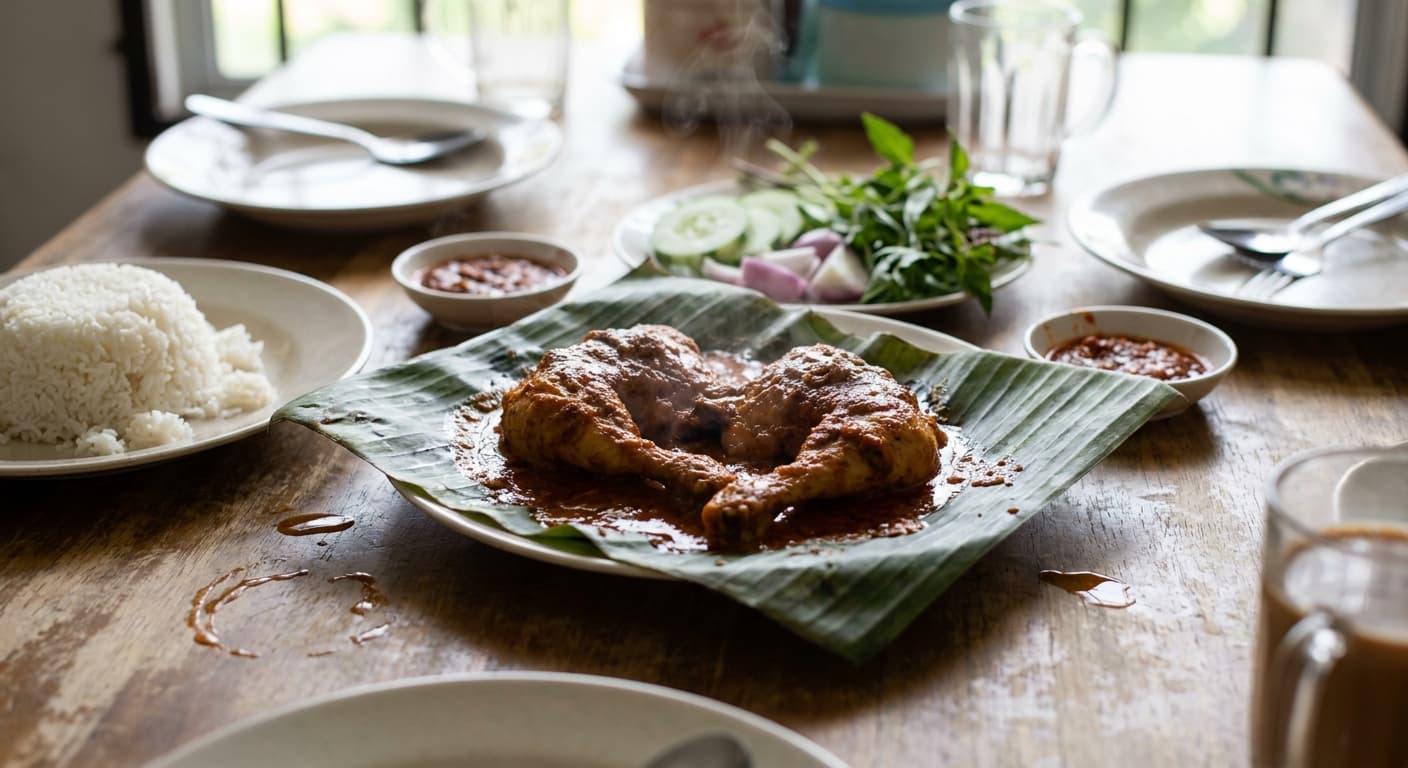
Ayam Percik (Ayam Percik) — Malaysian Coconut-Glazed Grilled Chicken
Malaysian · Main Courses · 80 min
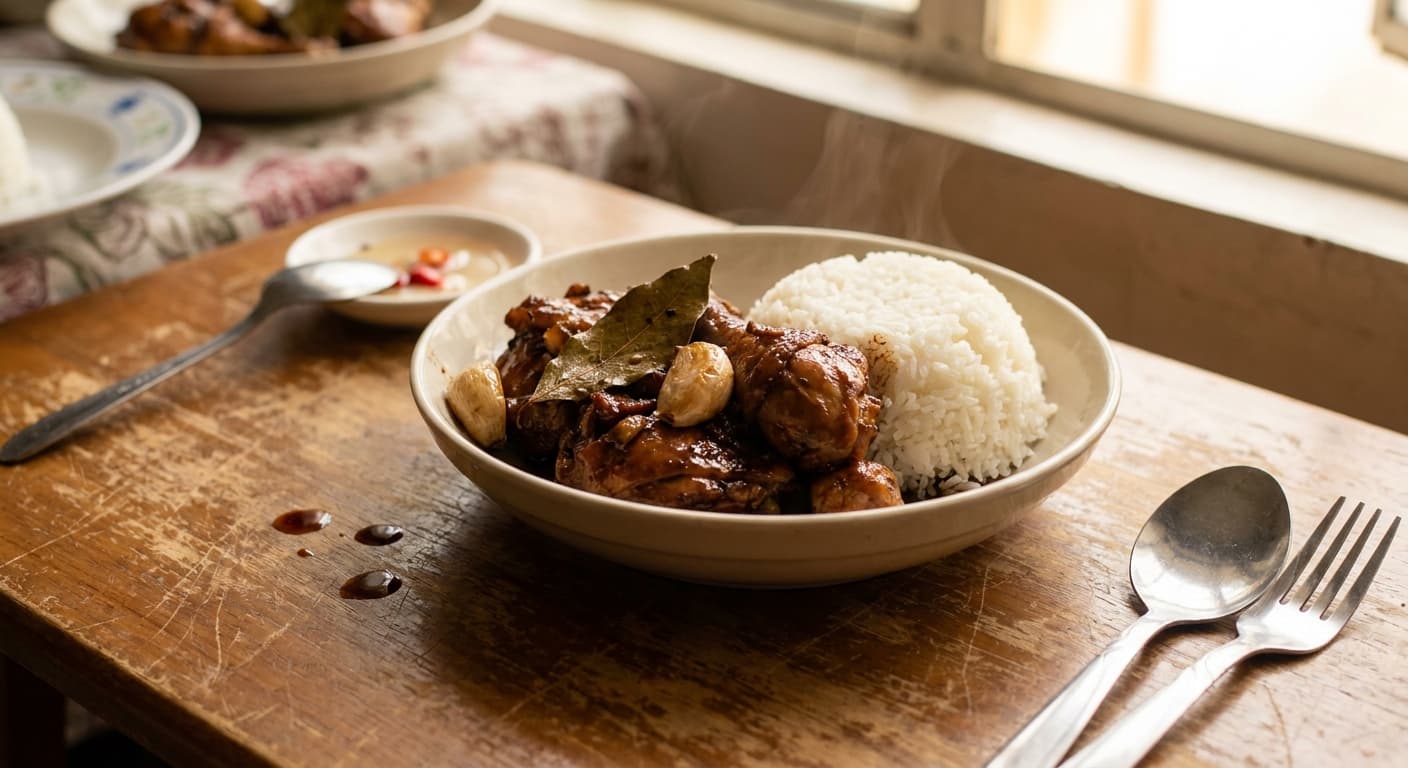
Chicken Adobo (Adobong Manok) — Filipino Soy-Vinegar Braised Chicken
Filipino · Main Courses · 90 min
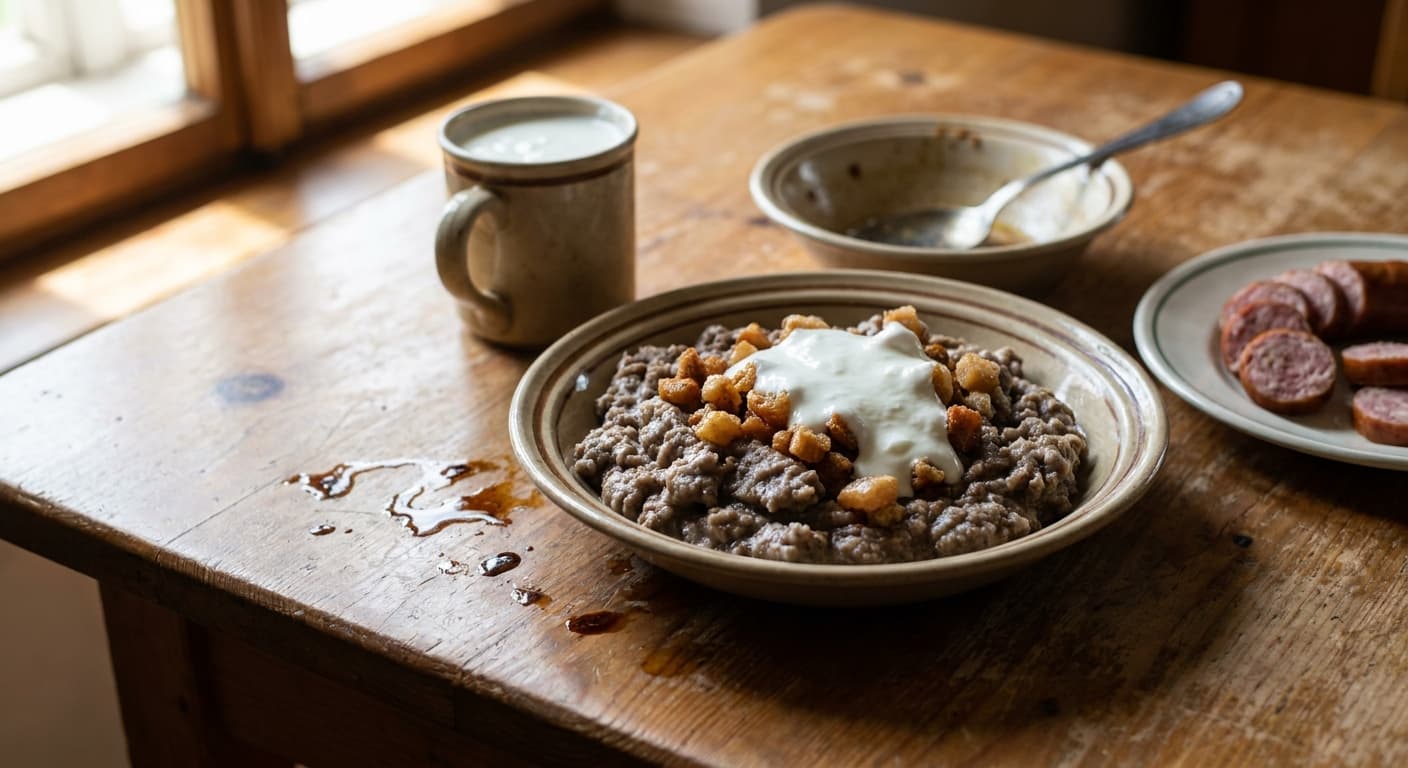
Buckwheat Žganci (Ajdovi žganci) — Slovenian Buckwheat Crumbs with Cracklings
Slovenian · Side Dishes · 45 min
Reviews
Cooked this recipe?
Tap the stars to rate it — that's all it takes. A few words are welcome but optional.
No ratings yet. Cooked this one? Be the first to rate it — it takes one tap.