Indonesian Fried Rice (Nasi Goreng) — Sweet Soy Street-Style Rice
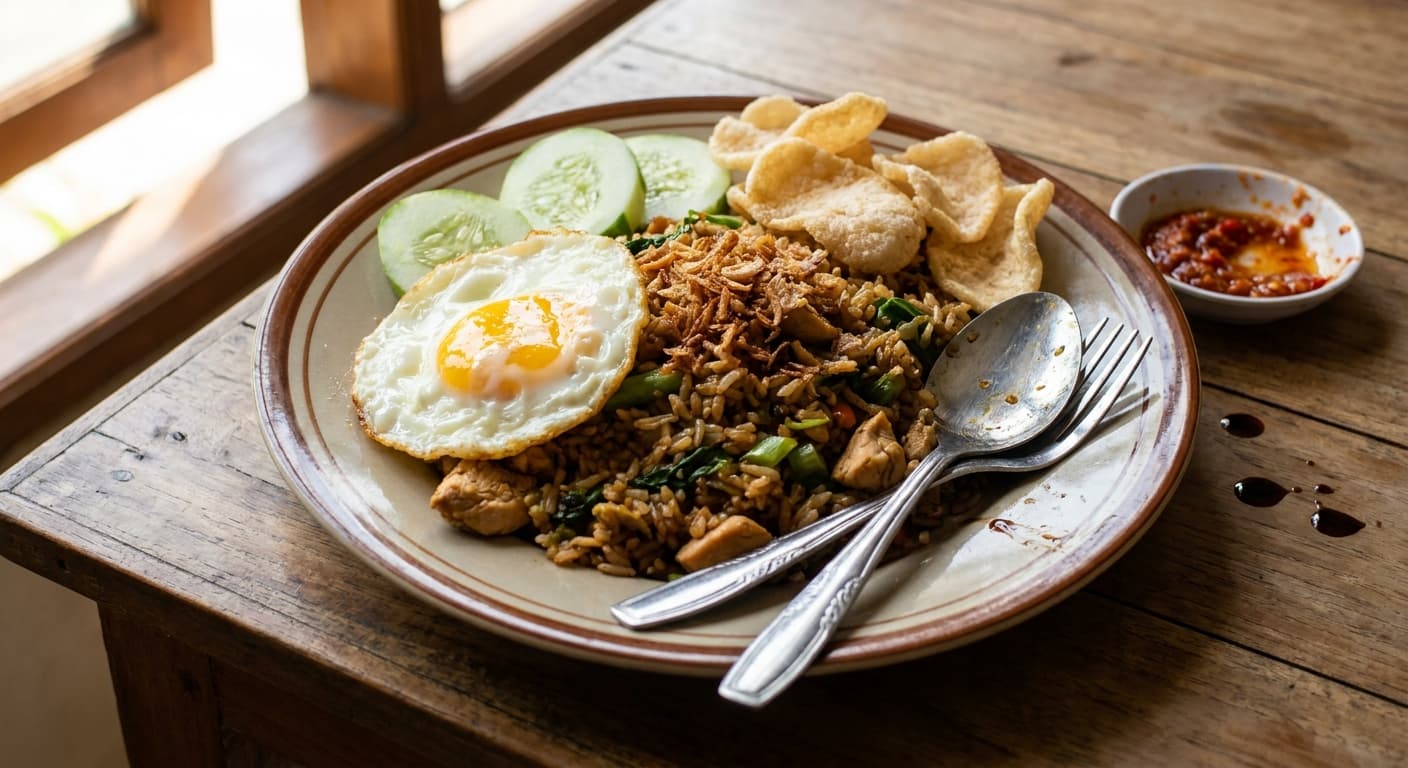
Nasi goreng is Indonesia’s beloved fried rice, built on cold rice, kecap manis, chile, shallot, garlic, and a little terasi for deep savoriness. It is served at home, in warung stalls, and as a satisfying breakfast or late-night meal.
Printable Recipe Card
Servings: 4 · Total: 35 min · Difficulty: medium
Ingredients (quick list)
- 720 g cooked jasmine rice, chilled overnight (break up clumps before cooking)
- 300 g boneless skinless chicken thighs (cut into 1 cm dice)
- 4 large eggs
- 120 g shallots (peeled and thinly sliced)
- 4 clove garlic
- 12 g red bird's eye chiles (use 6 g for milder heat)
- 8 g toasted terasi shrimp paste
- 0.75 tsp fine sea salt
- 0.5 tsp ground white pepper
- 45 ml neutral cooking oil
- 60 ml kecap manis
- 15 ml light soy sauce
+ 7 more in the full ingredients section below.
Steps (summary)
- Spread the chilled rice on a tray and separate any clumps with damp fingers. Cold, dry rice is essential because freshly cooked…
- Pound the shallots, garlic, chiles, toasted terasi, salt, and white pepper in a mortar until you have a coarse paste. If using…
- Heat a wok or large carbon-steel skillet over high heat until a drop of water evaporates almost immediately. Add 30 ml of the o…
- Add the diced chicken thighs to the wok and stir-fry for 4 to 5 minutes until the pieces are cooked through and lightly browned…
- Add the chilled rice and toss firmly, pressing and lifting with a spatula to coat every grain with the spice paste and chicken…
- Drizzle in the kecap manis, light soy sauce, and sambal oelek around the sides of the wok so the sauces hit the hot metal befor…
+ 2 more steps in the full instructions section below.
Cultural Background
Nasi goreng reflects Indonesia’s habit of transforming leftover rice into a full meal with local aromatics and kecap manis. It is both home cooking and street food, commonly eaten for breakfast, supper, or quick family meals.
Equipment
💡 Tips
- Use rice cooked the day before and refrigerate it uncovered for 1 hour before covering; this dries the surface and gives the best fried texture.
- Toast terasi by wrapping it in foil and heating it in a dry pan for 2 minutes per side before pounding it into the paste.
- Cook in two batches if your wok is small; overcrowding lowers the heat and makes the rice steam rather than fry.
⚠️ Common Mistakes
❌ Using freshly cooked hot rice
✅ Fix: Cook the rice a day ahead and chill it so the grains firm up and fry separately.
❌ Adding kecap manis before the rice is hot
✅ Fix: Stir-fry the rice first, then drizzle the sauces around the hot wok so they caramelize quickly.
❌ Skipping the terasi without replacing its savoriness
✅ Fix: Use fish sauce or extra soy sauce if necessary, but add it carefully because the dish can become too salty.
🧊 How to Store
Cool leftover nasi goreng within 1 hour and refrigerate in an airtight container for up to 3 days. Reheat in a hot wok with 10 ml oil per 2 servings until steaming throughout; fry fresh eggs just before serving.
📅 Make Ahead
Cook and chill the rice 1 day ahead, and pound the spice paste up to 24 hours ahead. Keep the paste refrigerated in a covered container and fry it thoroughly before adding chicken.
🍽️ Pairs Well With
- Fried egg
- cucumber slices
- tomato wedges
- krupuk
- sambal
- acar cucumber pickle.
Regional Variations
- Javanese nasi goreng is often sweeter and darker because it uses a generous amount of kecap manis.
- Nasi goreng kampung may include anchovies, leftover vegetables, and a rough chile-shallot paste.
- Coastal versions often replace chicken with shrimp or squid and may be served with extra sambal.
- Balinese-style versions can include bumbu spices such as turmeric, candlenut, and aromatic roots.
Ingredients
- 720 gcooked jasmine rice, chilled overnight (break up clumps before cooking)
- 300 gboneless skinless chicken thighs (cut into 1 cm dice)
- 4large eggs
- 120 gshallots (peeled and thinly sliced)
- 4 clovegarlic
- 12 gred bird's eye chiles (use 6 g for milder heat)
- 8 gtoasted terasi shrimp paste
- 0.75 tspfine sea salt
- 0.5 tspground white pepper
- 45 mlneutral cooking oil
- 60 mlkecap manis
- 15 mllight soy sauce
- 1 tbspsambal oelek
- 2scallions (thinly sliced)
- 20 gfried shallots
- 1cucumber (sliced)
- 2ripe tomatoes (cut into wedges)
- 1lime (cut into 4 wedges)
- 40 gkrupuk shrimp crackers
🔄 Substitutions
- kecap manis→ 45 ml dark soy sauce mixed with 20 g palm sugar
- toasted terasi shrimp paste→ 10 ml fish sauce
- chicken thighs→ 250 g peeled shrimp
Instructions
- 1
Spread the chilled rice on a tray and separate any clumps with damp fingers. Cold, dry rice is essential because freshly cooked rice steams in the wok and turns soft instead of frying.
- 2
Pound the shallots, garlic, chiles, toasted terasi, salt, and white pepper in a mortar until you have a coarse paste. If using a food processor, pulse briefly and scrape down the bowl so the mixture stays slightly textured rather than watery.
- 3
Heat a wok or large carbon-steel skillet over high heat until a drop of water evaporates almost immediately. Add 30 ml of the oil, then add the spice paste and fry for 2 to 3 minutes, stirring constantly, until it darkens slightly and smells sweet, savory, and aromatic.
- 4
Add the diced chicken thighs to the wok and stir-fry for 4 to 5 minutes until the pieces are cooked through and lightly browned at the edges. Keep the heat high and spread the chicken against the hot surface so it sears instead of simmering.
- 5
Add the chilled rice and toss firmly, pressing and lifting with a spatula to coat every grain with the spice paste and chicken juices. Stir-fry for 3 minutes, breaking up any remaining lumps and letting the rice pick up a lightly smoky wok aroma.
- 6
Drizzle in the kecap manis, light soy sauce, and sambal oelek around the sides of the wok so the sauces hit the hot metal before coating the rice. Toss for 2 minutes until the rice is evenly stained deep brown, glossy, and no wet sauce pools at the bottom.
- 7
Stir in the sliced scallions and cook for 30 seconds, then divide the nasi goreng among 4 plates. Keep the plates warm while you fry the eggs so the rice remains hot and fragrant.
- 8
Heat a small skillet with the remaining 15 ml oil over medium-high heat and fry the eggs until the whites are set and the edges are crisp, about 2 minutes. Place 1 fried egg on each serving and finish with fried shallots, cucumber, tomato, lime wedges, and krupuk.
🪪 Recipe Passport
Cultural Background
Nasi goreng reflects Indonesia’s habit of transforming leftover rice into a full meal with local aromatics and kecap manis. It is both home cooking and street food, commonly eaten for breakfast, supper, or quick family meals.
Regional Variations
Researched from multiple sources and validated by the Zaffaron editorial team. Every recipe is tested for accuracy, measurements, and cultural authenticity.
📚 Sources & Cultural References
- Sri Owen — Indonesian Food — (2008)
- Eleanor Ford — Fire Islands: Recipes from Indonesia — (2019)
Sources cited by the Zaffaron editorial team during recipe research. Cultural and culinary references supporting authenticity claims.
Nutrition per serving
Pairs well with
If you enjoyed this recipe, here are a few related Zaffaron recipes to try next.
Does your family make this differently?
Every family has their own version. Maybe your grandmother adds a secret ingredient, or your aunt has a completely different technique. Preserve your family's version — with their name on it, forever.
You Might Also Like
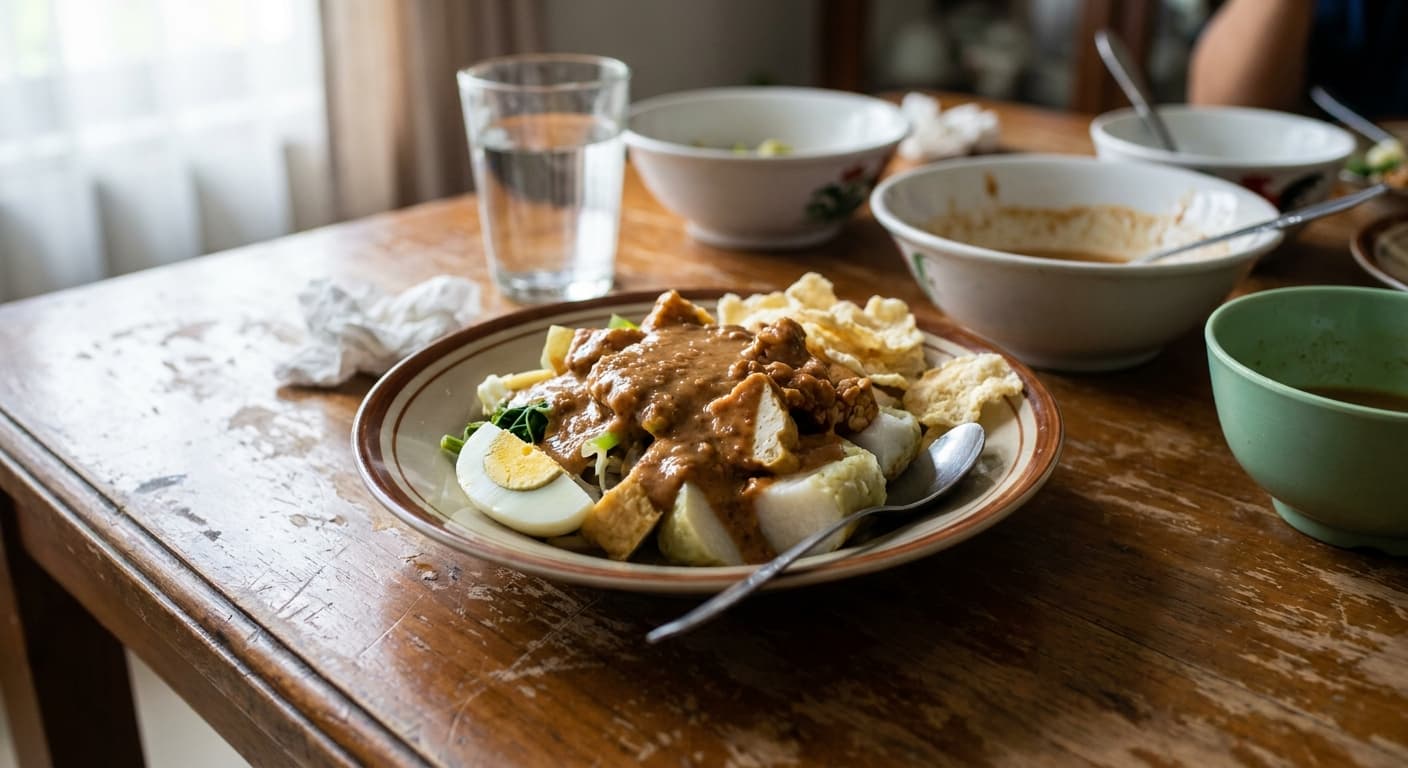
Gado-Gado (Gado-Gado) — Indonesian Salad with Peanut Sauce
Indonesian · Salads · 60 min
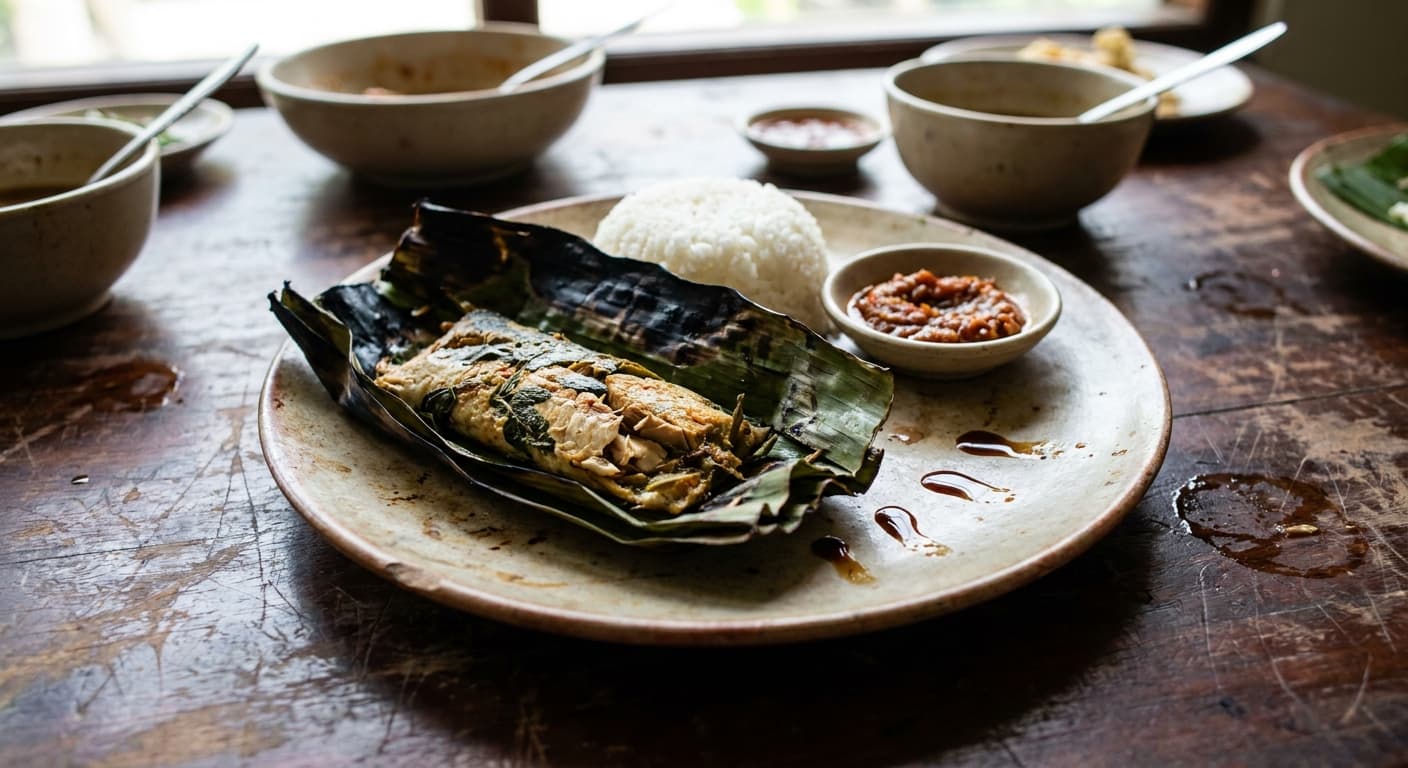
Pepes Ikan (Pepes Ikan) — Indonesian Banana-Leaf Steamed Fish
Indonesian · Main Courses · 65 min
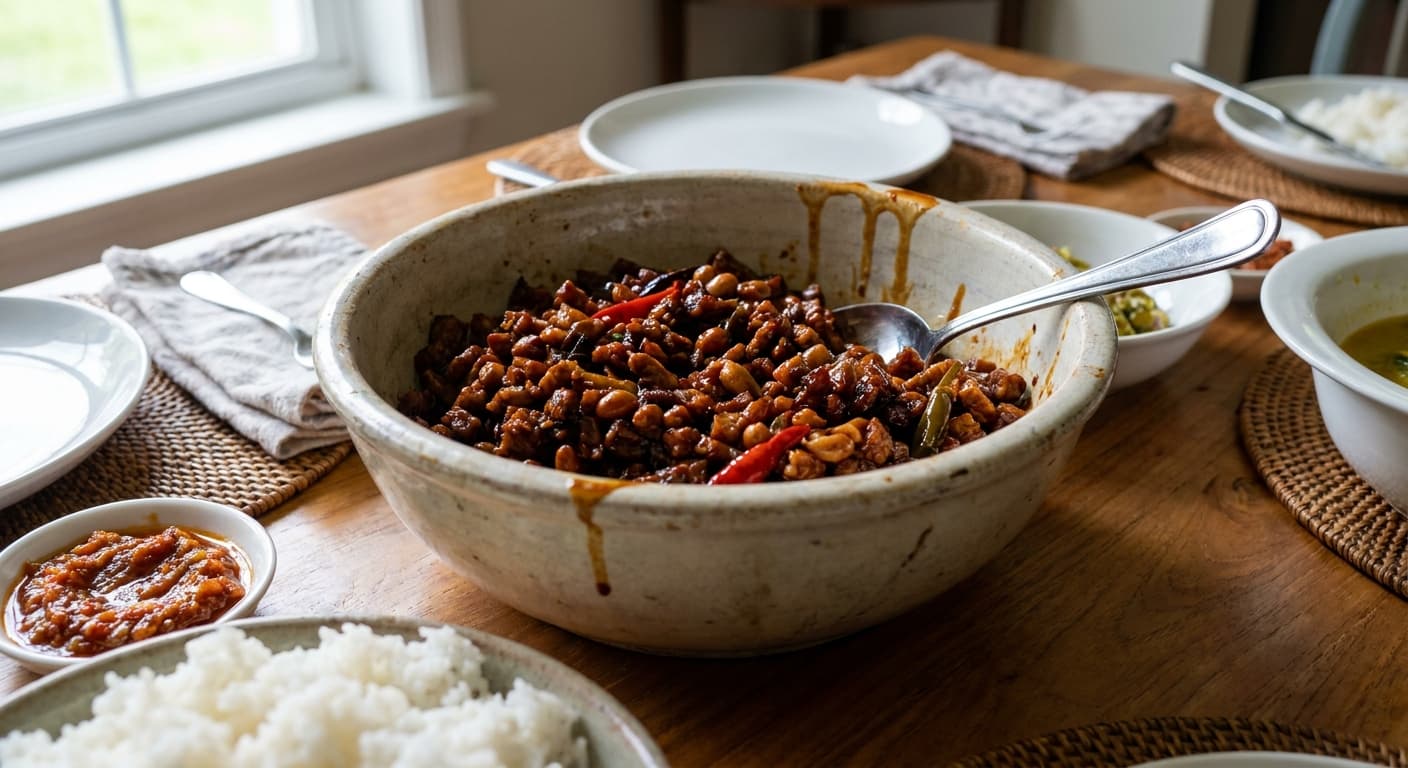
Sweet-Spiced Tempeh Stir-Fry (Tempe Orek) — Crisp Indonesian Soy-Glazed Tempeh
Indonesian · Side Dishes · 45 min
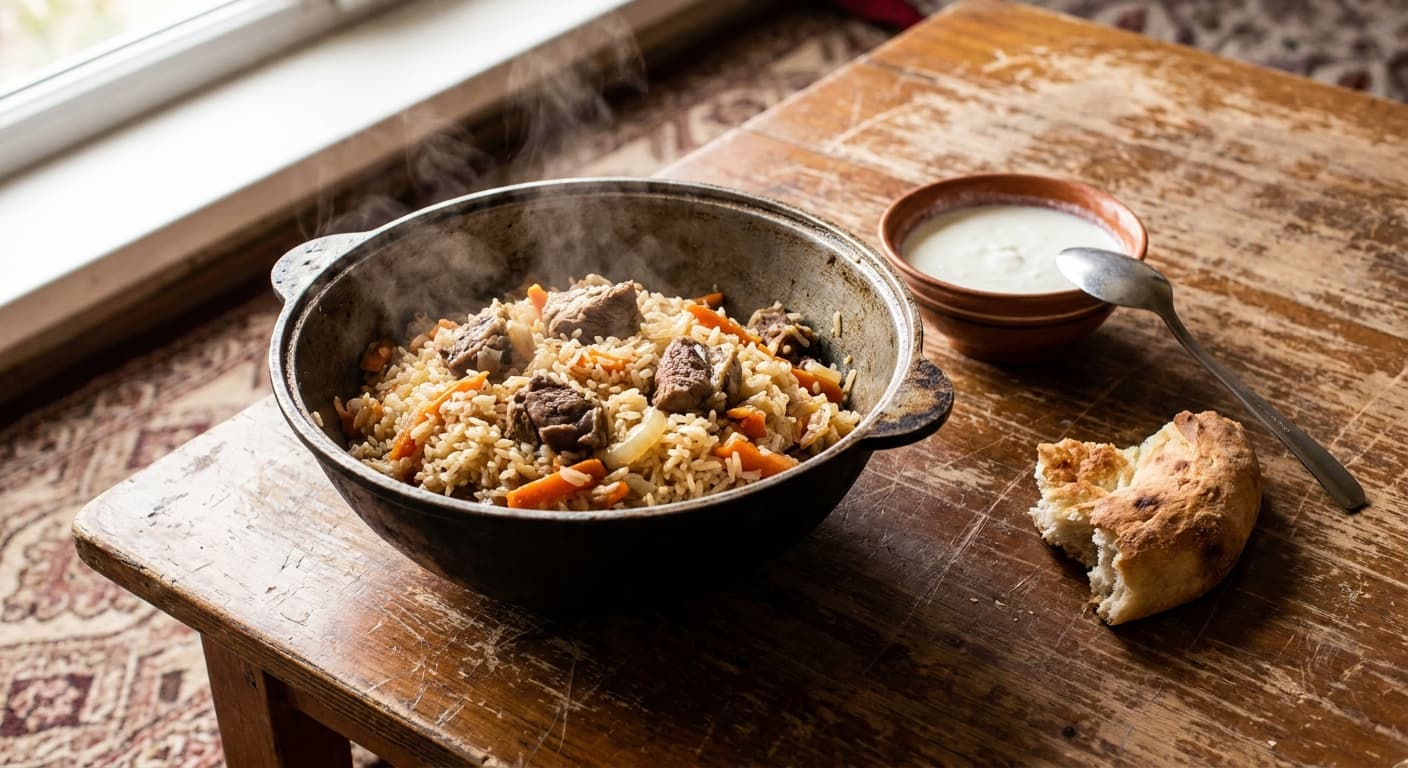
Chekdirme (Çekdirme) — Turkmen Lamb and Tomato Rice
Turkmen · Rice Dishes · 100 min
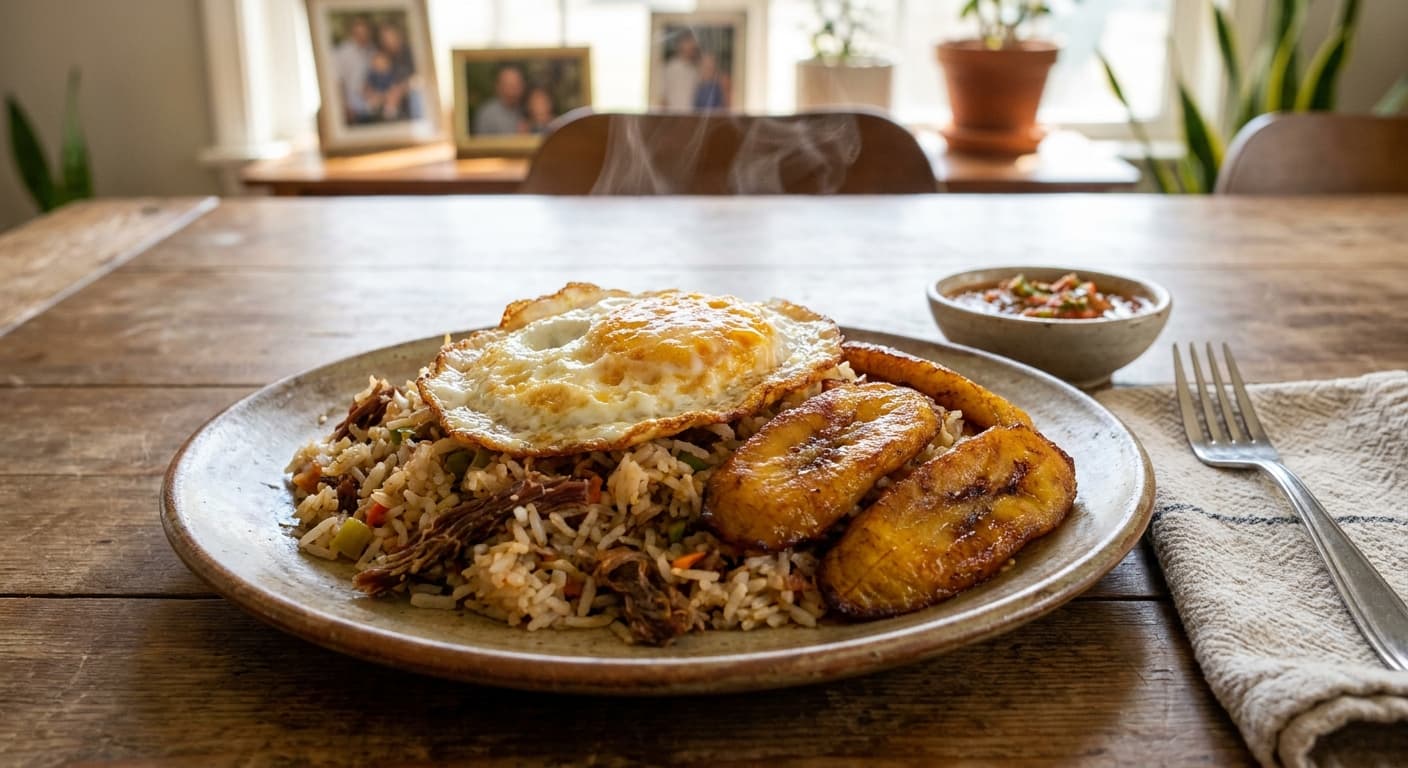
Majadito (Majadito) — Bolivian Rice with Charque and Fried Egg
Bolivian · Rice Dishes · 90 min
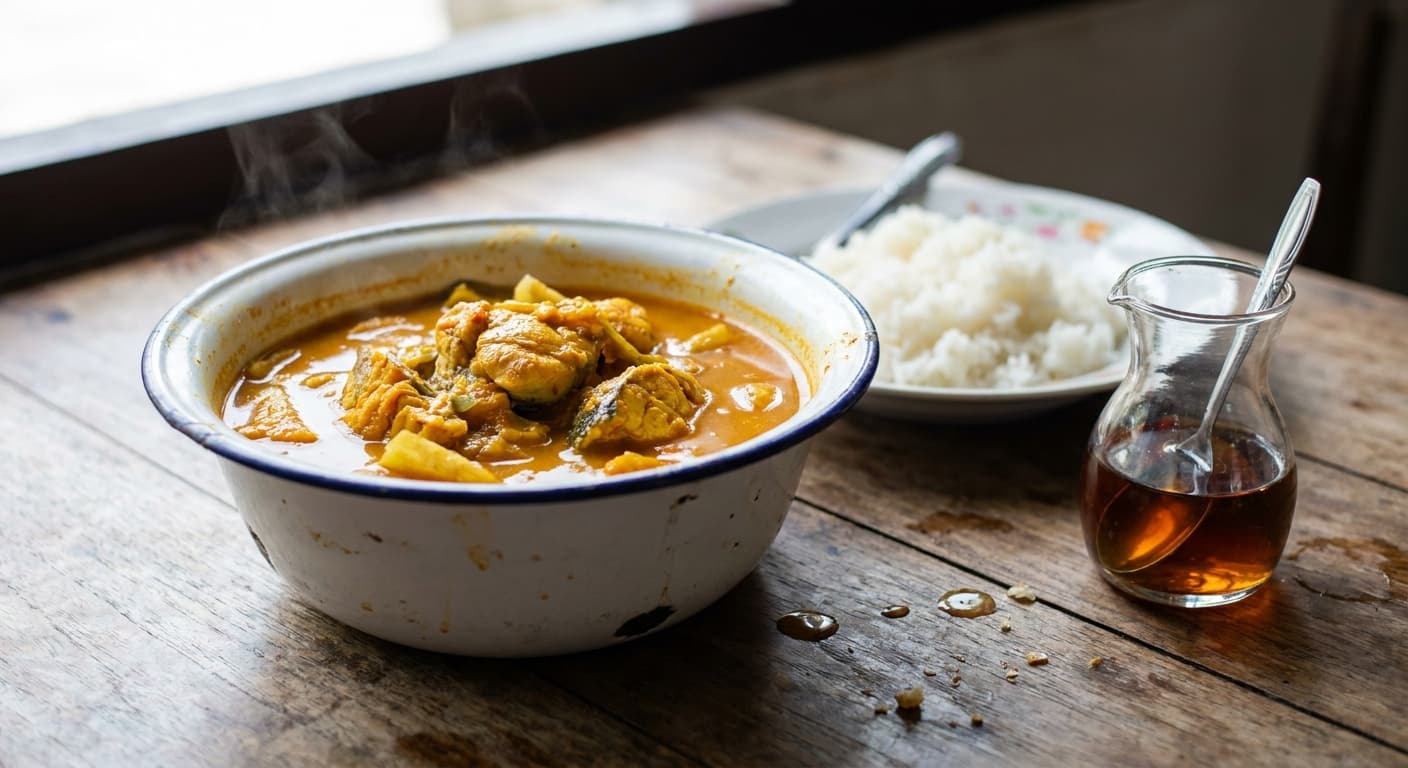
Gaeng Som (แกงส้ม) — Thai Sour Curry with Fish and Vegetables
Thai · Soups · 60 min
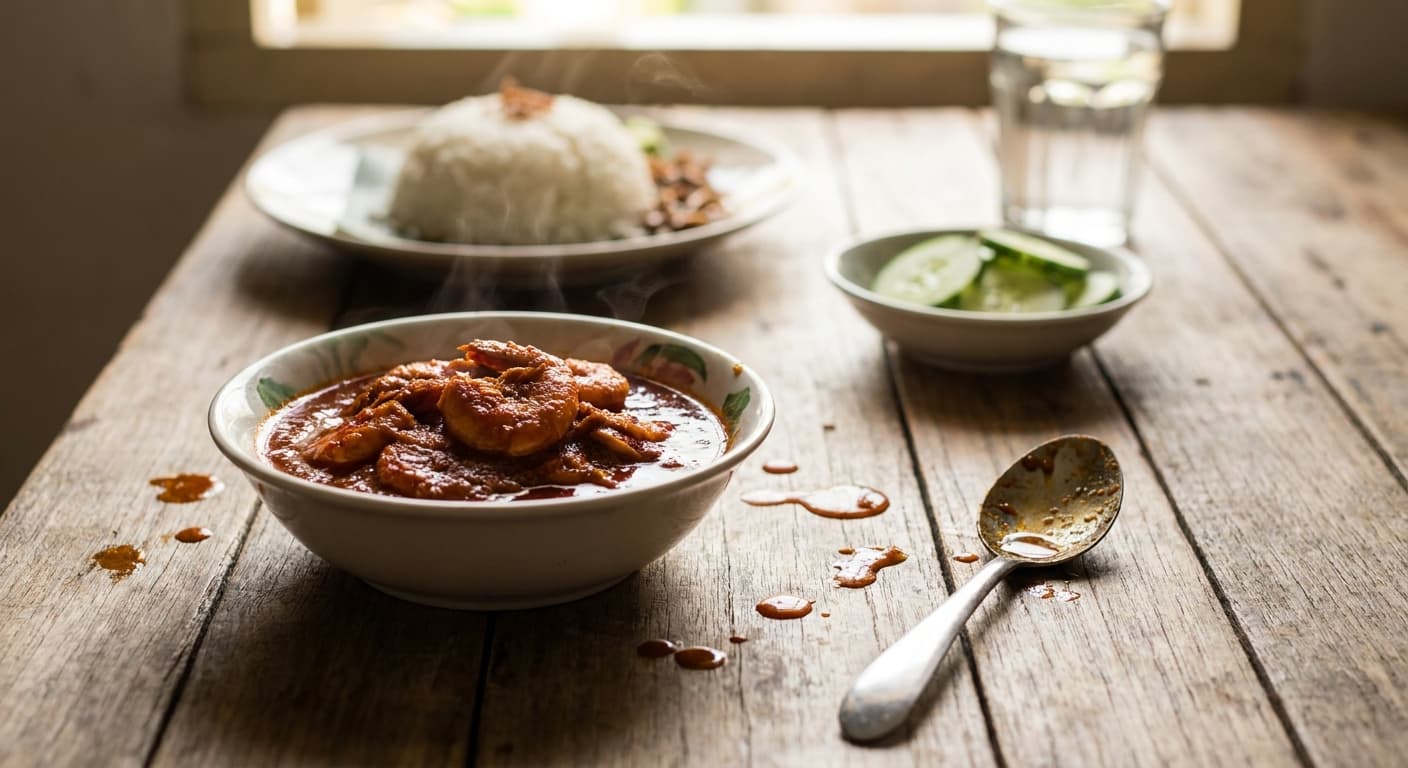
Sambal Udang (Sambal Udang) — Malaysian Chili Prawns
Malaysian · Main Courses · 47 min
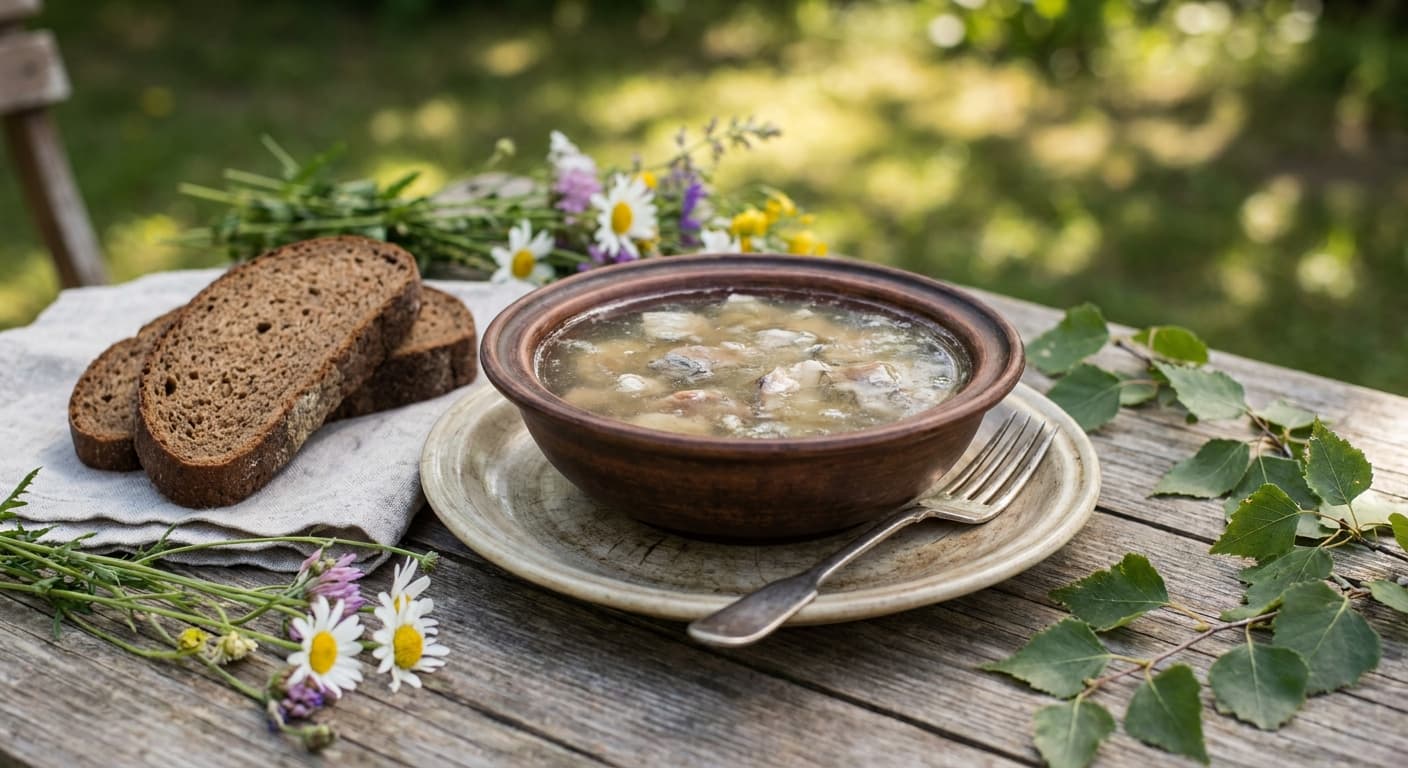
Latvian Fish Aspic (Zivju galerts) — Clear Dill-Scented Baltic Fish Jelly
Latvian · Appetizers · 90 min
Reviews
Cooked this recipe?
Tap the stars to rate it — that's all it takes. A few words are welcome but optional.
No ratings yet. Cooked this one? Be the first to rate it — it takes one tap.