Bolivian Salteñas (Salteñas) — Juicy Baked Meat Empanadas
Salteñas are Bolivia’s beloved mid-morning baked empanadas, famous for a sweet golden crust and a spoon-worthy, gelatin-set beef filling called jigote. They are eaten carefully, tip-first, so the savory juices do not spill.
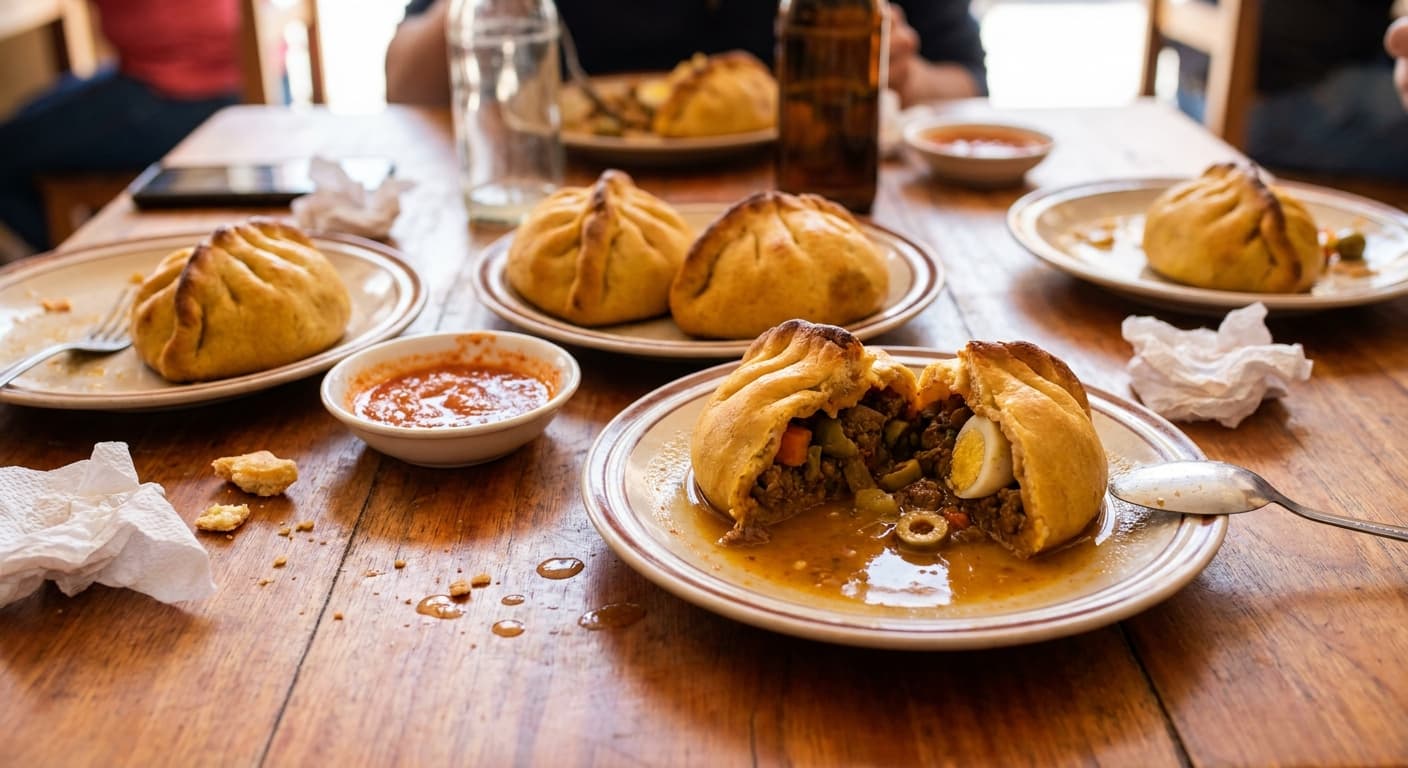
Printable Recipe Card
Servings: 12 · Total: 120 min · Difficulty: hard
Ingredients (quick list)
- 500 ml beef stock (well seasoned but not reduced)
- 18 g unflavored powdered gelatin
- 450 g beef chuck (trimmed and diced into 5 mm cubes)
- 2 tbsp vegetable oil
- 2 yellow onions (finely diced)
- 3 clove garlic (minced)
- 2 tbsp Bolivian aji colorado paste
- 1 tsp ground cumin
- 1 tsp dried oregano
- 1.5 tsp fine sea salt
- 0.5 tsp ground black pepper
- 2 waxy potatoes (about 300 g total, peeled and diced into 1 cm cubes)
+ 13 more in the full ingredients section below.
Steps (summary)
- Pour 120 ml of the beef stock into a small bowl and sprinkle the gelatin evenly over the surface. Let it bloom for 10 minutes w…
- Heat the vegetable oil in a wide heavy pot over medium heat, then add the diced onions and cook for 8 minutes until soft and tr…
- Add the diced beef chuck and cook for 5 minutes, stirring often, just until the outside loses its raw color. Pour in the remain…
- Bring the filling to a gentle simmer, cover partially, and cook for 18 minutes until the beef is nearly tender. Add the diced p…
- Remove the pot from the heat and fold in the raisins and chopped parsley. Spread the filling in a shallow dish, cool it for 30…
- For the dough, whisk the flour, sugar, salt, and ground achiote in a large bowl. Add the warm melted butter, warm water, and eg…
+ 7 more steps in the full instructions section below.
Cultural Background
In Bolivia, salteñas are a cherished morning street food and family treat, especially associated with La Paz, Sucre, and Cochabamba. Their carefully sealed crust reflects the practical craft of carrying a hot, brothy stew inside pastry.
Equipment
💡 Tips
- The filling must be fully chilled and gelatin-set before assembly; this is the key technique that creates the famous juicy interior without leaking.
- Dice the beef very small rather than grinding it, because small cubes give the traditional texture while still becoming tender in the short cooking time.
- Seal the seam at the top, not along the side, so the salteña can sit upright and keep the broth trapped inside.
⚠️ Common Mistakes
❌ Using warm or liquid filling during assembly.
✅ Fix: Chill the jigote until firm enough to scoop cleanly, then work quickly so it stays cold.
❌ Rolling the dough too thin at the center.
✅ Fix: Keep the middle slightly thicker than the edges so the base can support the juicy filling.
❌ Leaving weak spots in the crimp.
✅ Fix: Press the seam firmly before braiding and avoid getting flour or filling on the sealing edges.
🧊 How to Store
Store baked salteñas in an airtight container in the refrigerator for up to 3 days. Reheat upright on a tray at 180°C for 12 to 15 minutes; microwaving softens the crust and can make the filling burst.
📅 Make Ahead
Prepare the jigote filling 1 day ahead and keep it refrigerated until firm. Dough balls can be made 12 hours ahead, lightly oiled, covered, and refrigerated, then brought to room temperature before rolling.
🍽️ Pairs Well With
- Llajwa
- sliced avocado
- hot black coffee
- fresh fruit juice.
Regional Variations
- Cochabamba-style salteñas are often sweeter and very juicy, with a rounded balance of raisins, olives, and mild chile.
- La Paz versions may be spicier, with a more pronounced chile flavor and a slightly deeper orange crust.
- Chicken salteñas replace beef with diced chicken and chicken stock while keeping the same gelatin-set technique.
Ingredients
- 500 mlbeef stock (well seasoned but not reduced)
- 18 gunflavored powdered gelatin
- 450 gbeef chuck (trimmed and diced into 5 mm cubes)
- 2 tbspvegetable oil
- 2yellow onions (finely diced)
- 3 clovegarlic (minced)
- 2 tbspBolivian aji colorado paste
- 1 tspground cumin
- 1 tspdried oregano
- 1.5 tspfine sea salt
- 0.5 tspground black pepper
- 2waxy potatoes (about 300 g total, peeled and diced into 1 cm cubes)
- 100 ggreen peas
- 45 graisins
- 12green olives (pitted and halved)
- 3large eggs (hard-boiled, peeled, and quartered)
- 10 sprigflat-leaf parsley (leaves finely chopped)
- 600 gall-purpose flour
- 25 ggranulated sugar
- 1 tspground achiote (for color)
- 120 gunsalted butter (melted and cooled until warm)
- 220 mlwarm water
- 2large egg yolks
- 1large egg
- 1 tbspwhole milk
🔄 Substitutions
- Bolivian aji colorado paste→ aji amarillo paste plus 1 tsp sweet paprika
- beef chuck→ boneless chicken thighs
- unsalted butter→ beef tallow or vegetable shortening
Instructions
- 1
Pour 120 ml of the beef stock into a small bowl and sprinkle the gelatin evenly over the surface. Let it bloom for 10 minutes while you prepare the aromatics, so the powder hydrates fully and will dissolve smoothly later.
- 2
Heat the vegetable oil in a wide heavy pot over medium heat, then add the diced onions and cook for 8 minutes until soft and translucent. Stir in the garlic, aji colorado paste, cumin, oregano, salt, and black pepper, and cook for 2 minutes more until the chile paste smells rounded rather than raw.
- 3
Add the diced beef chuck and cook for 5 minutes, stirring often, just until the outside loses its raw color. Pour in the remaining 380 ml beef stock and the bloomed gelatin mixture, scraping the bottom of the pot so the spices dissolve into the liquid.
- 4
Bring the filling to a gentle simmer, cover partially, and cook for 18 minutes until the beef is nearly tender. Add the diced potatoes and peas, then simmer for 10 minutes more until the potatoes are cooked but still hold their shape.
- 5
Remove the pot from the heat and fold in the raisins and chopped parsley. Spread the filling in a shallow dish, cool it for 30 minutes at room temperature, then refrigerate it for at least 4 hours until it becomes firm and scoopable like savory jelly.
- 6
For the dough, whisk the flour, sugar, salt, and ground achiote in a large bowl. Add the warm melted butter, warm water, and egg yolks, then knead for 8 minutes until the dough is smooth, elastic, and no longer crumbly.
- 7
Cover the dough and rest it at room temperature for 30 minutes, which relaxes the gluten and makes shaping easier. Divide it into 12 equal balls of about 80 g each, keeping them covered with a towel so the surface does not dry.
- 8
Roll each dough ball into a circle about 16 cm wide and 2 mm thick, keeping the center slightly thicker than the edges. Place the circles on parchment paper as you work, dusting only lightly with flour so the seams can still seal properly.
- 9
Place about 75 g chilled jigote in the center of each dough circle, then add 2 olive halves and 1 quarter of hard-boiled egg. Keep the filling cold and compact, because a warm or loose filling will leak before the crust sets in the oven.
- 10
Lift the edges of the dough together over the filling and press firmly to seal, forming a plump half-moon. Crimp the seam into a tight braided repulgue along the top, or fold and pinch in small overlapping pleats so the juices remain enclosed.
- 11
Arrange the salteñas upright on a parchment-lined baking sheet with the seam facing upward. Chill them for 20 minutes while you heat the oven to 220°C, which helps the dough firm and reduces bursting.
- 12
Whisk the egg with the milk and brush the salteñas lightly, avoiding heavy pools of egg wash near the seam. Bake for 18 to 22 minutes until the crust is glossy, deeply golden, and firm enough to hold the hot broth inside.
- 13
Let the salteñas stand for 8 minutes before serving because the filling will be extremely hot. Serve them upright and eat from the pointed end first, taking small bites and sipping the broth as you go.
🪪 Recipe Passport
Cultural Background
In Bolivia, salteñas are a cherished morning street food and family treat, especially associated with La Paz, Sucre, and Cochabamba. Their carefully sealed crust reflects the practical craft of carrying a hot, brothy stew inside pastry.
Regional Variations
Researched from multiple sources and validated by the Zaffaron editorial team. Every recipe is tested for accuracy, measurements, and cultural authenticity.
📚 Sources & Cultural References
- Maria Baez Kijac — The South American Table — (2003)
- Maricel E. Presilla — Gran Cocina Latina — (2012)
Sources cited by the Zaffaron editorial team during recipe research. Cultural and culinary references supporting authenticity claims.
Nutrition per serving
Pairs well with
If you enjoyed this recipe, here are a few related Zaffaron recipes to try next.
Does your family make this differently?
Every family has their own version. Maybe your grandmother adds a secret ingredient, or your aunt has a completely different technique. Preserve your family's version — with their name on it, forever.
You Might Also Like
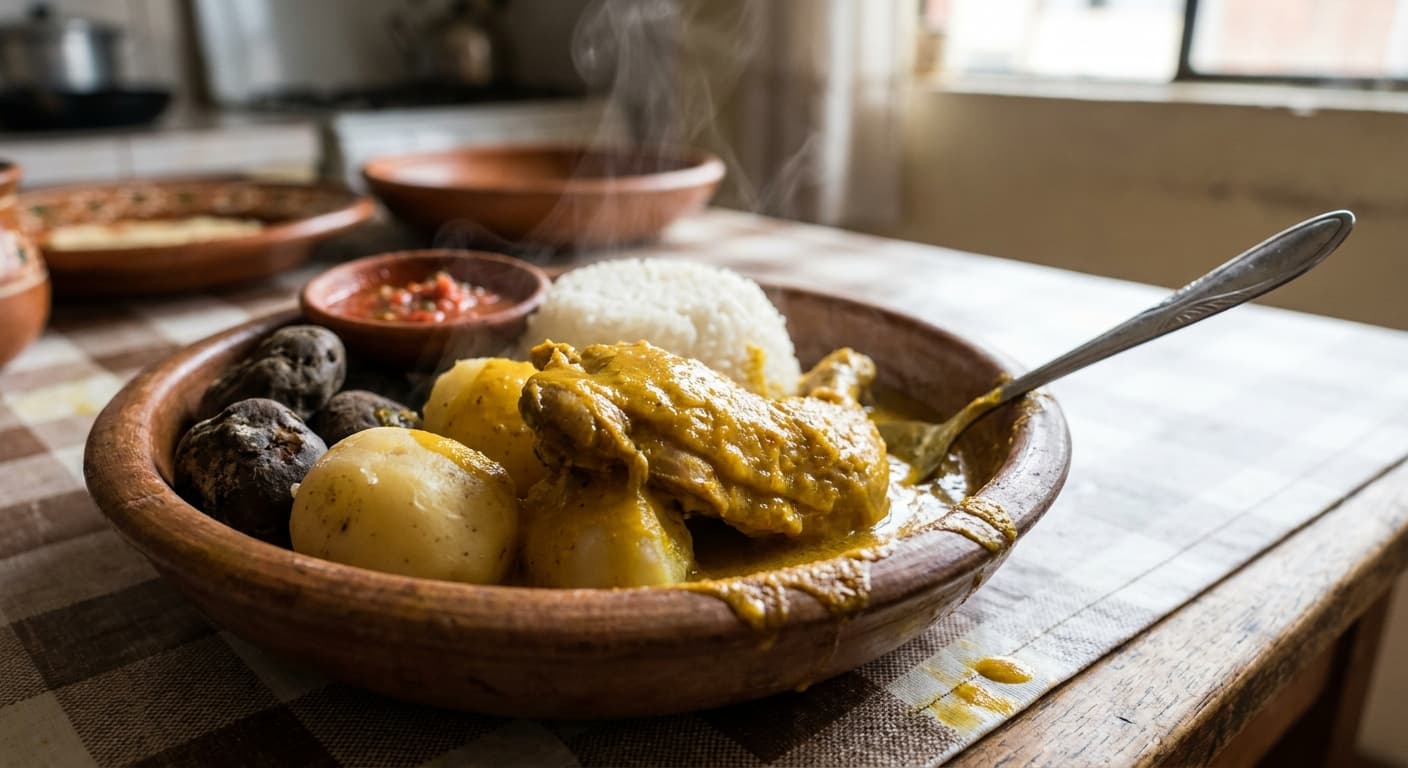
Bolivian Spicy Chicken Stew (Sajta de Pollo) — Aji Amarillo Chicken with Chuño
Bolivian · Main Courses · 95 min
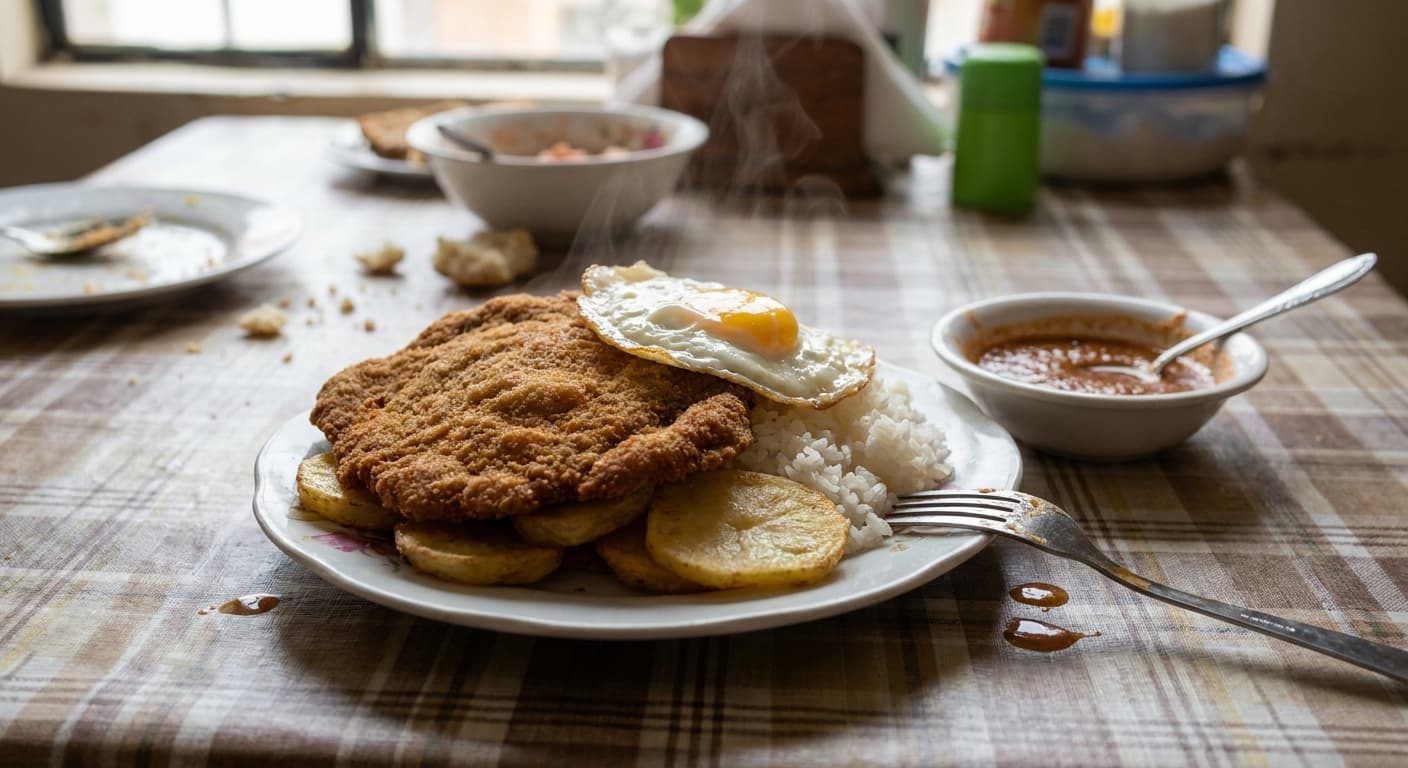
Silpancho (Silpancho cochabambino) — Bolivian Breaded Beef Plate
Bolivian · Main Courses · 70 min
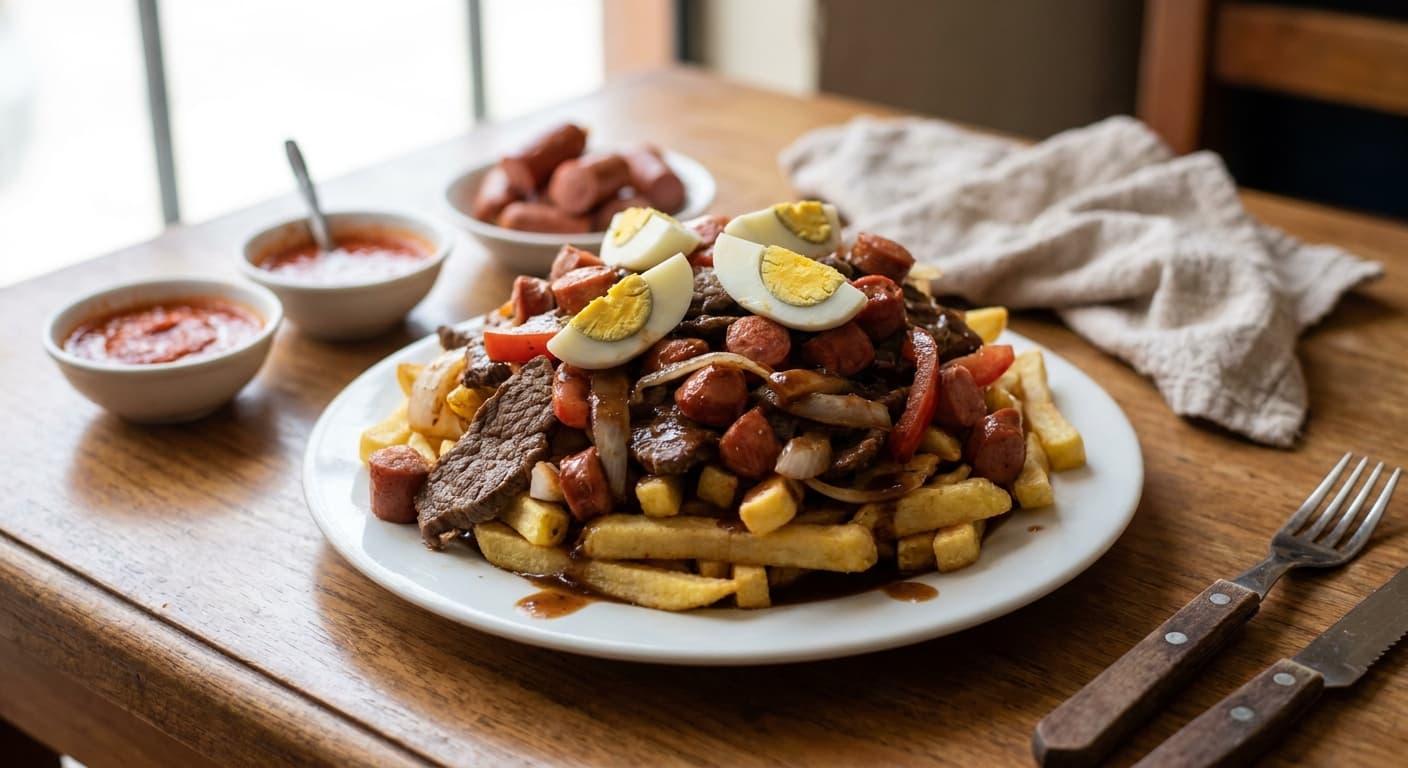
Pique a lo Macho (Pique a lo macho) — Bolivian Beef, Sausage, and Fries
Bolivian · Main Courses · 65 min
Prahok Ktis (ប្រហុកខ្ទិះ) — Cambodian Coconut Pork Dip
Cambodian · Appetizers · 55 min
Toast Skagen (Toast Skagen) — Swedish Shrimp Toast with Dill and Roe
Swedish · Appetizers · 26 min
Peruvian Rotisserie Chicken (Pollo a la Brasa) — Charred Spice-Marinated Roast Chicken
Peruvian · Main Courses · 100 min
Chilean Curanto (Curanto) — Chiloé Seafood and Meat Feast
Chilean · Main Courses · 110 min
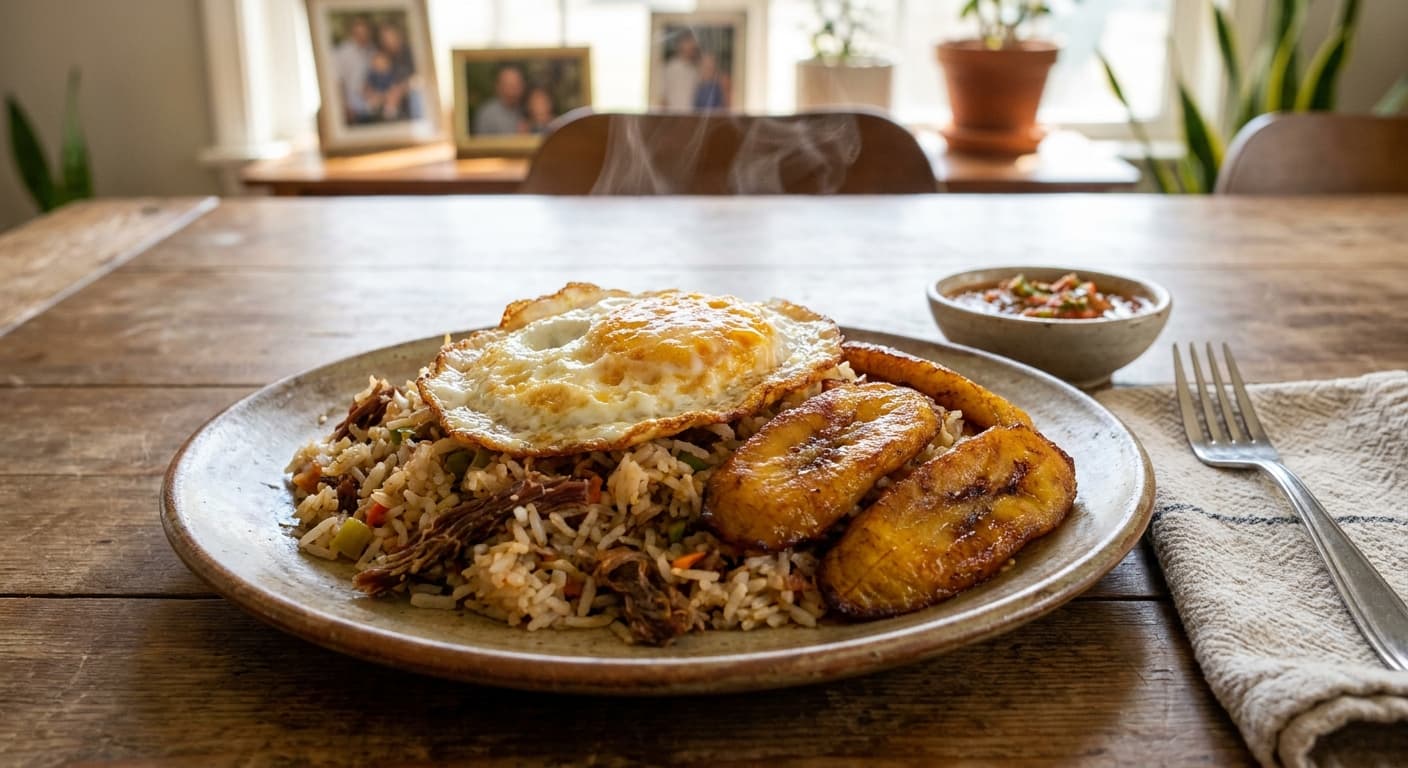
Majadito (Majadito) — Bolivian Rice with Charque and Fried Egg
Bolivian · Rice Dishes · 90 min
Reviews
Cooked this recipe?
Tap the stars to rate it — that's all it takes. A few words are welcome but optional.
No ratings yet. Cooked this one? Be the first to rate it — it takes one tap.