Burmese Mohinga (မုန့်ဟင်းခါး) — Fish Noodle Soup with Lemongrass
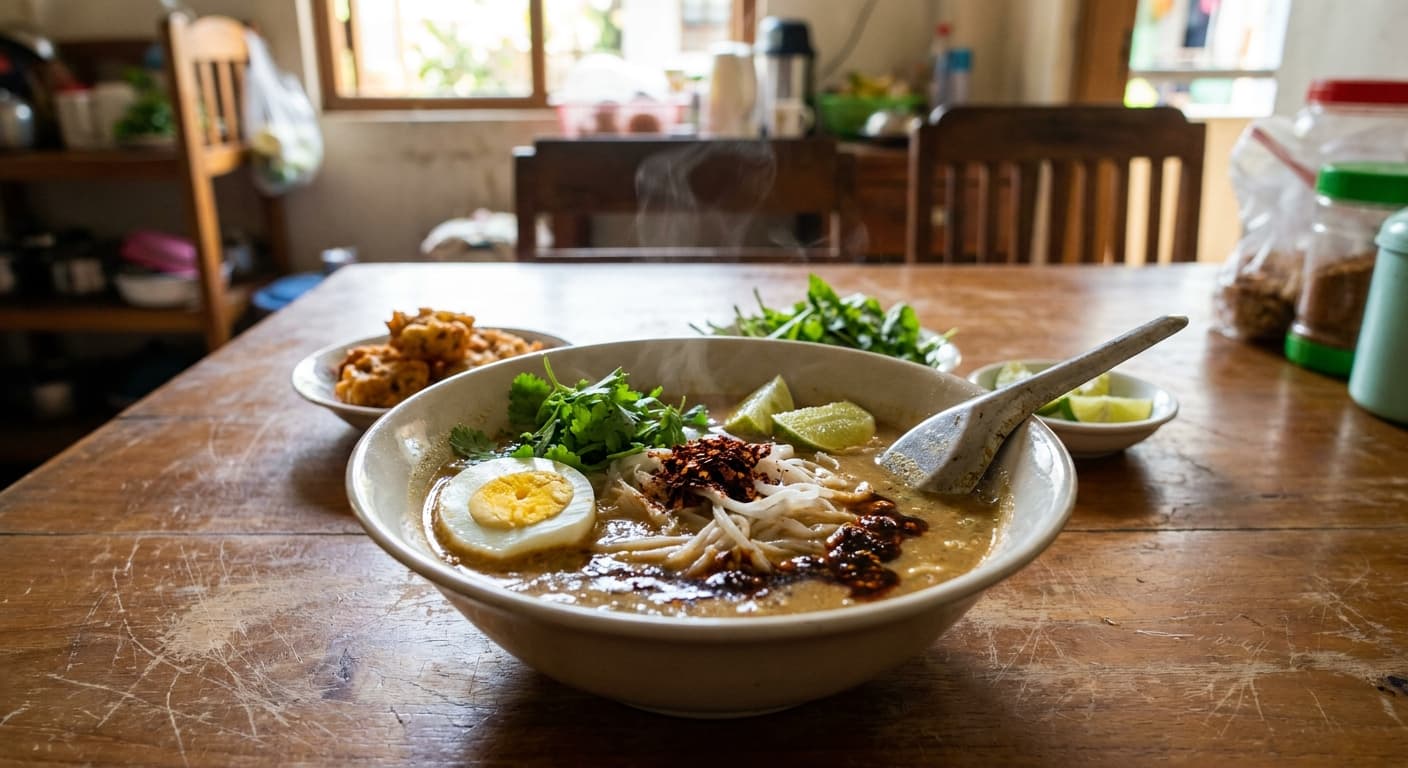
Mohinga is Myanmar’s beloved rice-noodle fish soup, eaten at breakfast, from street stalls, and at family gatherings. The broth is thickened with chickpea flour and scented with lemongrass, ginger, turmeric, and ngapi.
Printable Recipe Card
Servings: 6 · Total: 110 min · Difficulty: medium
Ingredients (quick list)
- 900 g catfish fillets (skinless, boneless)
- 2.5 l water
- 4 stalk lemongrass (tender lower halves bruised)
- 2 inch fresh ginger (sliced)
- 1 tsp turmeric powder
- 2 tsp sea salt
- 45 ml neutral oil
- 2 large onions (about 300 g total, finely chopped)
- 4 shallots (about 120 g total, finely chopped)
- 6 clove garlic (minced)
- 2 tsp paprika
- 2 tsp ground coriander
+ 12 more in the full ingredients section below.
Steps (summary)
- Place the catfish, water, bruised lemongrass, sliced ginger, turmeric, and salt in a large pot. Bring to a gentle simmer over m…
- Lift the fish onto a tray and let it cool until it can be handled comfortably. Strain the cooking liquid through a fine sieve,…
- Flake the fish into small pieces with your fingers, checking carefully for any stray bones. Keep the flakes moist by spooning 6…
- Heat the oil in a heavy soup pot over medium heat and add the chopped onions and shallots. Cook for 12 to 15 minutes, stirring…
- Add the minced garlic, grated ginger, paprika, ground coriander, black pepper, and ngapi to the pot. Fry the mixture for 3 minu…
- Stir in the flaked fish and cook for 5 minutes so the fish absorbs the oil and spices. Pour in the reserved fish broth and fish…
+ 3 more steps in the full instructions section below.
Cultural Background
Often called Myanmar’s unofficial national dish, mohinga is sold by dawn vendors, served at monastery donations, and cooked in large pots for community events. Its variations reflect local fish, noodles, and thickeners.
Equipment
💡 Tips
- Toast chickpea flour in a dry pan for 4 to 5 minutes if it is not already roasted; it should smell nutty but remain pale beige.
- Keep the broth at a gentle simmer after the fish is added back, because hard boiling can make the flakes dry and grainy.
- Banana stem darkens quickly after slicing, so soak it in cold water with 15 ml lime juice while the broth cooks.
⚠️ Common Mistakes
❌ Adding dry chickpea flour directly to the pot.
✅ Fix: Whisk it with warm broth first to form a smooth slurry, then pour it in while stirring.
❌ Boiling the fish aggressively.
✅ Fix: Use a gentle simmer so the fish stays tender and the broth remains clean-tasting.
❌ Combining noodles with broth before storing.
✅ Fix: Store them separately because rice noodles absorb liquid and become swollen.
🧊 How to Store
Store broth and noodles separately in airtight containers for up to 3 days in the refrigerator. Reheat the broth gently until steaming, adding 60 to 120 ml water if thickened, and warm noodles with hot water before serving.
📅 Make Ahead
The broth can be cooked 1 day ahead and refrigerated after cooling. Boil the eggs and chop the garnishes in advance, but cook the rice noodles shortly before serving.
🍽️ Pairs Well With
- Lime wedges
- cilantro
- chili oil
- crispy split-pea fritters
- sliced shallots
- hot Burmese tea.
Regional Variations
- Yangon-style mohinga is often thick, onion-rich, and served with split-pea fritters and boiled egg.
- Delta versions may use more fresh river fish and a lighter broth with less chickpea flour.
- Some home cooks add sliced young banana stem, while others rely mainly on toasted rice powder for body.
Ingredients
- 900 gcatfish fillets (skinless, boneless)
- 2.5 lwater
- 4 stalklemongrass (tender lower halves bruised)
- 2 inchfresh ginger (sliced)
- 1 tspturmeric powder
- 2 tspsea salt
- 45 mlneutral oil
- 2large onions (about 300 g total, finely chopped)
- 4shallots (about 120 g total, finely chopped)
- 6 clovegarlic (minced)
- 2 tsppaprika
- 2 tspground coriander
- 1 tspblack pepper (freshly ground)
- 15 gngapi fermented fish paste
- 45 mlfish sauce
- 60 groasted chickpea flour
- 25 gtoasted rice powder
- 300 gbanana stem core (thinly sliced and soaked in water)
- 600 grice vermicelli noodles (dried, thin round rice noodles)
- 3eggs (hard-boiled, halved)
- 1 bunchcilantro (roughly chopped)
- 2lime (cut into wedges)
- 120 gcrispy split-pea fritters (broken into bite-size pieces)
- 2 tspred chili flakes
🔄 Substitutions
- catfish fillets→ tilapia fillets
- banana stem core→ banana blossom
- ngapi fermented fish paste→ anchovy paste
Instructions
- 1
Place the catfish, water, bruised lemongrass, sliced ginger, turmeric, and salt in a large pot. Bring to a gentle simmer over medium heat, then cook for 18 minutes until the fish is opaque and just cooked through.
- 2
Lift the fish onto a tray and let it cool until it can be handled comfortably. Strain the cooking liquid through a fine sieve, discard the spent aromatics, and reserve the golden fish broth for the soup.
- 3
Flake the fish into small pieces with your fingers, checking carefully for any stray bones. Keep the flakes moist by spooning 60 ml of the reserved broth over them while you prepare the aromatic base.
- 4
Heat the oil in a heavy soup pot over medium heat and add the chopped onions and shallots. Cook for 12 to 15 minutes, stirring often, until they are soft, sweet-smelling, and lightly golden but not browned hard.
- 5
Add the minced garlic, grated ginger, paprika, ground coriander, black pepper, and ngapi to the pot. Fry the mixture for 3 minutes, pressing the fish paste into the oil so it melts into the aromatics and loses its raw edge.
- 6
Stir in the flaked fish and cook for 5 minutes so the fish absorbs the oil and spices. Pour in the reserved fish broth and fish sauce, then bring the soup back to a steady simmer.
- 7
Whisk the roasted chickpea flour and toasted rice powder with 250 ml of warm broth in a bowl until smooth. Pour this slurry into the soup while stirring constantly, then add the sliced banana stem and simmer for 25 minutes until the broth is lightly thickened and the banana stem is tender.
- 8
Cook the rice vermicelli in boiling water according to the packet timing, usually 4 to 6 minutes, then rinse briefly with hot water and drain well. Divide the noodles among 6 bowls and ladle the hot mohinga broth over them.
- 9
Top each bowl with half a boiled egg, cilantro, broken split-pea fritters, chili flakes, and a lime wedge. Serve immediately, encouraging diners to squeeze in lime and stir the crisp garnish into the thick, fragrant broth.
🪪 Recipe Passport
Cultural Background
Often called Myanmar’s unofficial national dish, mohinga is sold by dawn vendors, served at monastery donations, and cooked in large pots for community events. Its variations reflect local fish, noodles, and thickeners.
Regional Variations
Researched from multiple sources and validated by the Zaffaron editorial team. Every recipe is tested for accuracy, measurements, and cultural authenticity.
📚 Sources & Cultural References
- MiMi Aye — Mandalay: Recipes and Tales from a Burmese Kitchen — (2019)
- Naomi Duguid — Burma: Rivers of Flavor — (2012)
Sources cited by the Zaffaron editorial team during recipe research. Cultural and culinary references supporting authenticity claims.
Nutrition per serving
Pairs well with
If you enjoyed this recipe, here are a few related Zaffaron recipes to try next.
Does your family make this differently?
Every family has their own version. Maybe your grandmother adds a secret ingredient, or your aunt has a completely different technique. Preserve your family's version — with their name on it, forever.
You Might Also Like
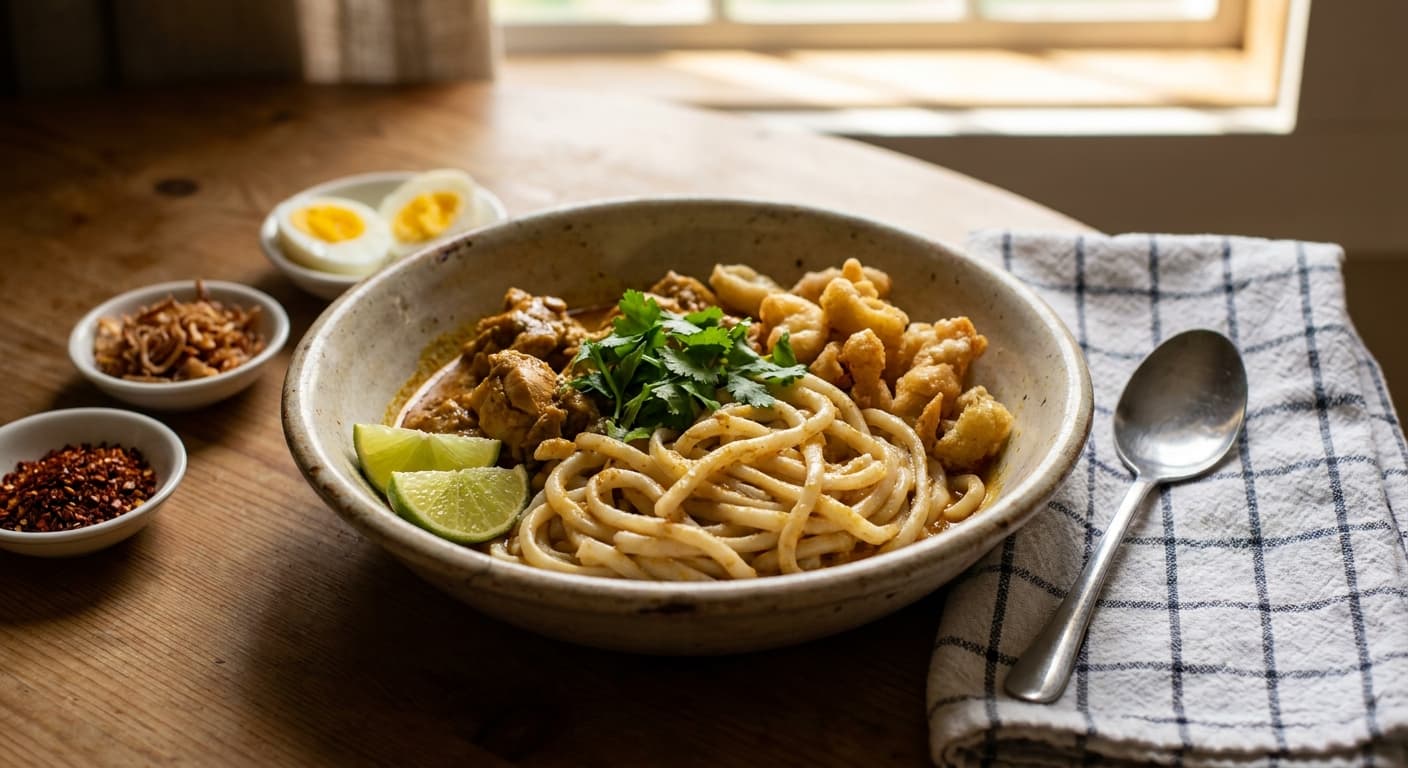
Nan Gyi Thoke (နန်းကြီးသုပ်) — Burmese Thick Rice Noodle Salad
Burmese · Salads · 80 min
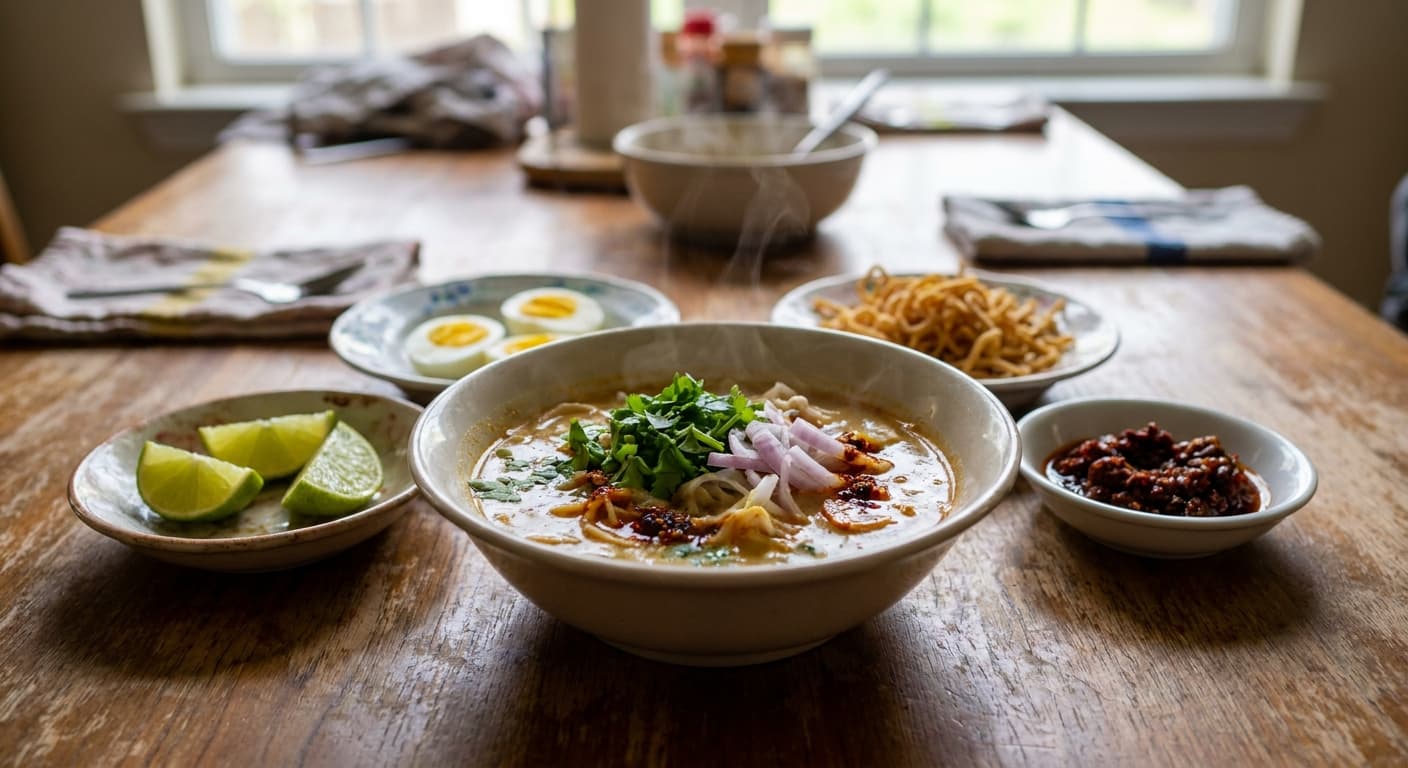
Ohn No Khao Swe (အုန်းနို့ခေါက်ဆွဲ) — Burmese Coconut Chicken Noodles
Burmese · Main Courses · 75 min
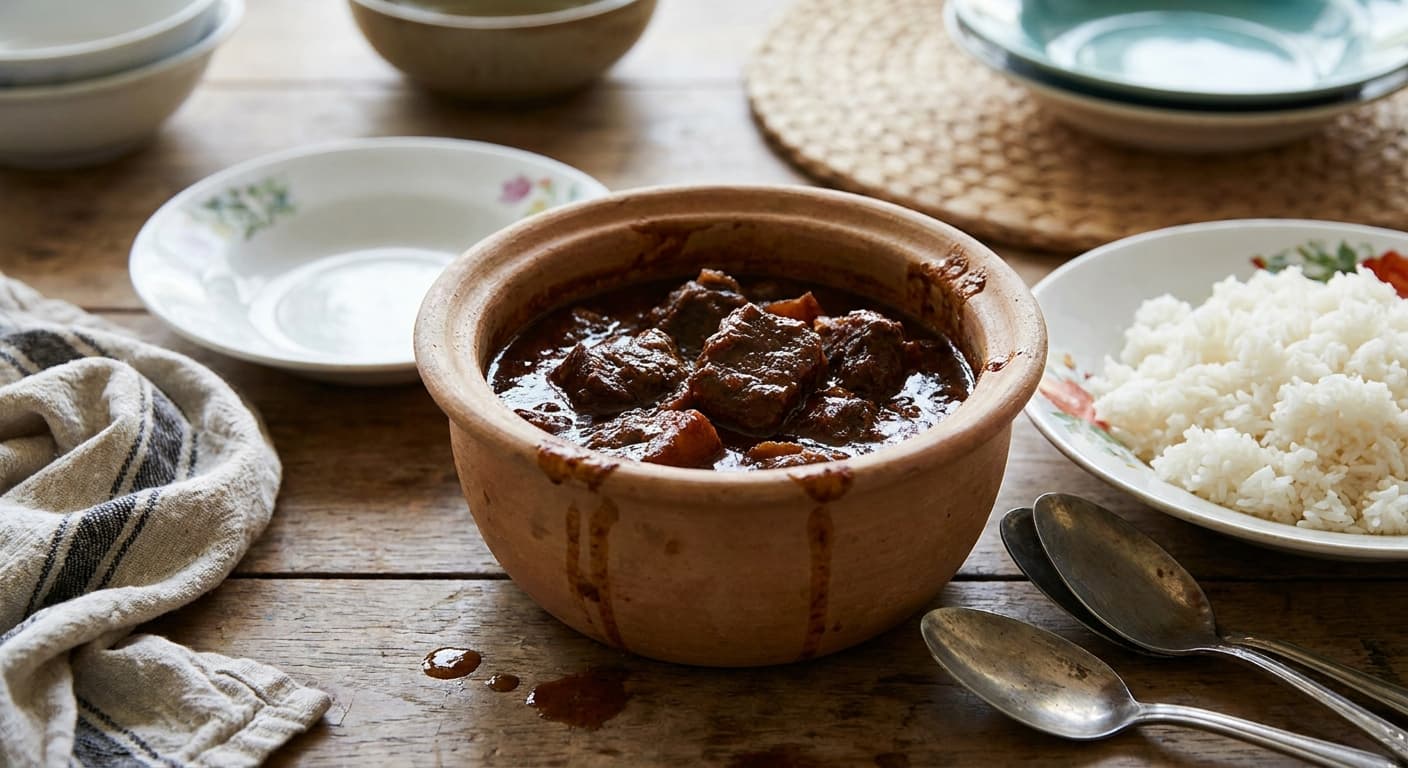
Pone Yay Gyi Curry (ပုန်းရည်ကြီးဟင်း) — Burmese Pork and Fermented Bean Paste
Burmese · Main Courses · 115 min
Spas (Սպաս) — Armenian Yogurt-and-Wheat Soup
Armenian · Soups · 70 min
Uzbek Shurpa (Шўрпа) — Lamb and Vegetable Soup
Uzbek · Soups · 160 min
Peking Duck (北京烤鸭) — Crisp-Skinned Beijing Roast Duck
Chinese · Main Courses · 180 min
Kala Bhuna (কালা ভুনা) — Chittagong Dark Beef Bhuna
Bangladeshi · Main Courses · 175 min
Samlor Machu Kroeung (សម្លម្ជូរគ្រឿង) — Cambodian Sour Kroeung Beef Soup
Cambodian · Soups · 130 min
Reviews
Cooked this recipe?
Tap the stars to rate it — that's all it takes. A few words are welcome but optional.
No ratings yet. Cooked this one? Be the first to rate it — it takes one tap.