Nan Gyi Thoke (နန်းကြီးသုပ်) — Burmese Thick Rice Noodle Salad
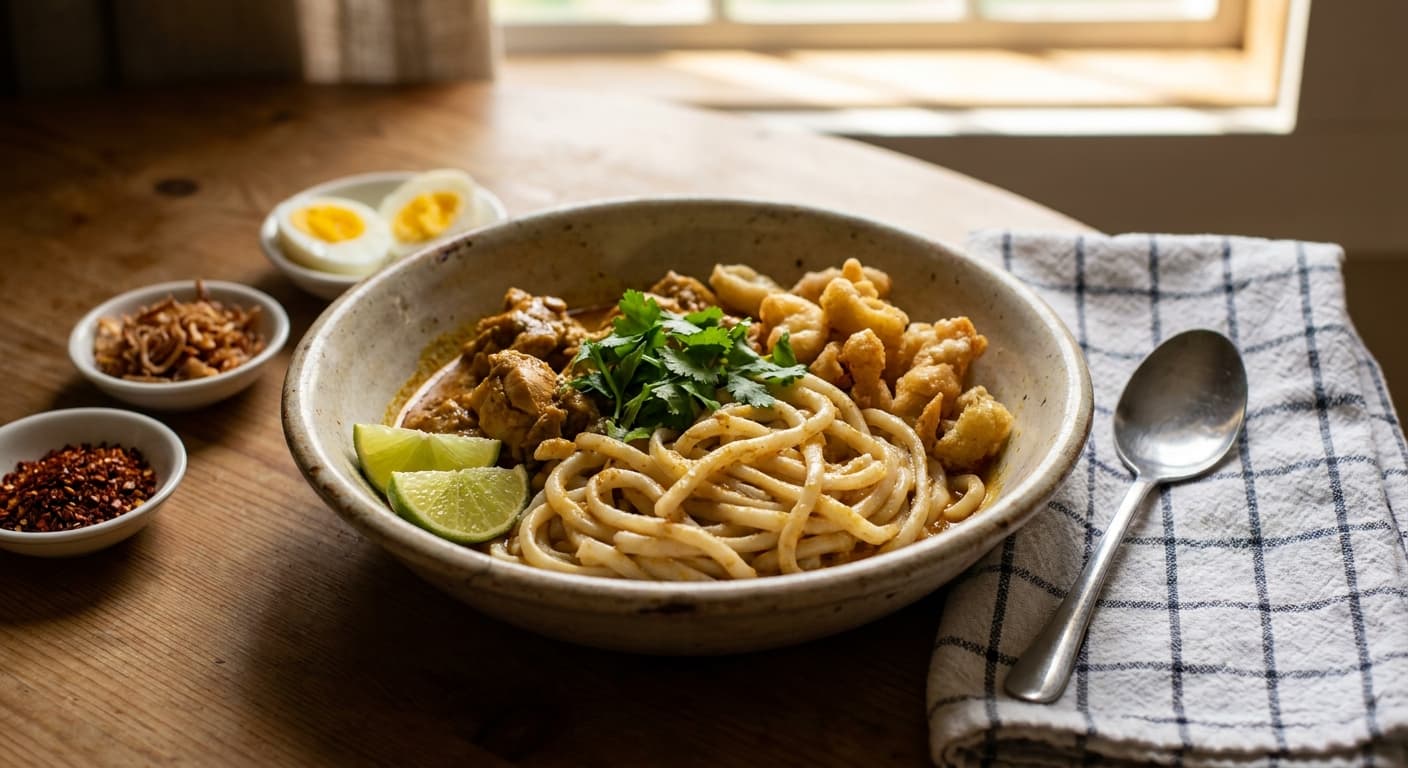
Nan gyi thoke is a beloved Burmese thoke made with thick round rice noodles, chicken curry, toasted chickpea flour, lime, and crispy shallot oil. Often described as a dry cousin of mohinga, it is hearty street food served for breakfast, lunch, or family meals.
Printable Recipe Card
Servings: 4 · Total: 80 min · Difficulty: medium
Ingredients (quick list)
- 800 g fresh thick round rice noodles (nan gyi-style noodles; use thick rice udon or banh canh noodles if needed)
- 500 g boneless skinless chicken thighs
- 2 medium yellow onions (finely chopped)
- 5 clove garlic (minced)
- 1 inch fresh ginger (peeled and grated)
- 3 tbsp peanut oil
- 1 tsp ground turmeric
- 2 tsp sweet paprika
- 0.5 tsp ground cayenne pepper
- 1 tsp ngapi fermented fish paste (optional but traditional for deep savory flavor)
- 2 tbsp fish sauce
- 0.75 tsp fine sea salt
+ 9 more in the full ingredients section below.
Steps (summary)
- Toast the chickpea flour in a dry skillet over medium-low heat for 6 to 8 minutes, stirring constantly, until it smells nutty a…
- Make the crispy shallot oil by heating 120 ml peanut oil in a small pan over medium heat, then add the sliced shallots. Fry for…
- Cut the chicken thighs into 2 cm pieces and pat them dry with kitchen paper. Season them with 0.5 tsp of the salt, turmeric, pa…
- Heat 3 tbsp peanut oil in a heavy saucepan over medium heat and cook the chopped onions for 10 to 12 minutes until soft, sweet,…
- Stir in the seasoned chicken, ngapi fermented fish paste, and fish sauce, coating the meat thoroughly in the onion-spice base.…
- Pour in 240 ml water, reduce the heat to low, and simmer uncovered for 22 to 25 minutes until the chicken is tender and the liq…
+ 4 more steps in the full instructions section below.
Cultural Background
Nan gyi thoke reflects Myanmar's love of noodle salads, or thoke, where texture and seasoning are tossed together just before eating. MiMi Aye describes this Mandalay-style food culture as generous, practical, and deeply tied to family kitchens and street stalls.
Equipment
💡 Tips
- Do not skip toasting the chickpea flour; raw chickpea flour tastes grassy, while toasted flour gives nan gyi thoke its nutty body.
- Keep the noodles slightly warm before tossing so the chicken curry coats them evenly without clumping.
- Add lime at the table rather than too early, because its brightness fades if mixed into the hot curry long before serving.
⚠️ Common Mistakes
❌ Leaving too much water on the noodles
✅ Fix: Drain and shake the noodles thoroughly, because excess water dilutes the chicken curry and prevents the toasted chickpea flour from coating properly.
❌ Frying shallots until dark brown in the pan
✅ Fix: Remove them when golden, since they continue to darken after straining and can become bitter quickly.
❌ Serving the curry as a wet soup sauce
✅ Fix: Reduce it until glossy and fairly thick, then bind it with toasted chickpea flour so it clings to the noodles.
🧊 How to Store
Store noodles, chicken curry, crispy shallots, eggs, herbs, and lime separately for up to 3 days in airtight containers. Reheat the curry gently with 1 tbsp water per serving, warm the noodles briefly, then toss fresh.
📅 Make Ahead
Cook the chicken curry, boil the eggs, toast the chickpea flour, and fry the shallots 1 day ahead. Cook or warm the noodles and toss the thoke only just before serving.
🍽️ Pairs Well With
- Lime wedges
- extra crispy shallots
- roasted chili flakes
- Burmese milk tea
- cucumber slices.
Regional Variations
- Mandalay versions often emphasize a rich chicken curry and generous toasted chickpea flour.
- Street vendors may serve extra chili oil, sliced raw onion, or shredded cabbage for crunch.
- Some home cooks omit ngapi and rely on fish sauce when cooking for guests who prefer a cleaner, lighter aroma.
Ingredients
- 800 gfresh thick round rice noodles (nan gyi-style noodles; use thick rice udon or banh canh noodles if needed)
- 500 gboneless skinless chicken thighs
- 2medium yellow onions (finely chopped)
- 5 clovegarlic (minced)
- 1 inchfresh ginger (peeled and grated)
- 3 tbsppeanut oil
- 1 tspground turmeric
- 2 tspsweet paprika
- 0.5 tspground cayenne pepper
- 1 tspngapi fermented fish paste (optional but traditional for deep savory flavor)
- 2 tbspfish sauce
- 0.75 tspfine sea salt
- 240 mlwater
- 150 gshallots (thinly sliced)
- 50 gchickpea flour (toasted until nutty and beige)
- 4hard-boiled eggs (halved or quartered)
- 2limes (cut into wedges)
- 0.5 bunchcilantro (roughly chopped)
- 4scallions (thinly sliced)
- 1 tsproasted chili flakes
- 2 tbsptoasted chickpea flour (reserved from the toasted chickpea flour for sprinkling)
🔄 Substitutions
- fresh thick round rice noodles→ dried thick rice noodles
- ngapi fermented fish paste→ 0.5 tbsp additional fish sauce
- peanut oil→ neutral sunflower oil
Instructions
- 1
Toast the chickpea flour in a dry skillet over medium-low heat for 6 to 8 minutes, stirring constantly, until it smells nutty and turns a light beige color. Transfer it immediately to a bowl so it does not scorch from the residual heat.
- 2
Make the crispy shallot oil by heating 120 ml peanut oil in a small pan over medium heat, then add the sliced shallots. Fry for 8 to 12 minutes, stirring often, until the shallots are evenly golden, then strain and keep the fragrant oil and crispy shallots separately.
- 3
Cut the chicken thighs into 2 cm pieces and pat them dry with kitchen paper. Season them with 0.5 tsp of the salt, turmeric, paprika, and cayenne so the spices begin to stain the meat before cooking.
- 4
Heat 3 tbsp peanut oil in a heavy saucepan over medium heat and cook the chopped onions for 10 to 12 minutes until soft, sweet, and lightly golden. Add the garlic and ginger, then cook for 1 minute more until the raw aroma disappears.
- 5
Stir in the seasoned chicken, ngapi fermented fish paste, and fish sauce, coating the meat thoroughly in the onion-spice base. Cook for 5 minutes, turning the pieces, until the outside of the chicken is no longer raw.
- 6
Pour in 240 ml water, reduce the heat to low, and simmer uncovered for 22 to 25 minutes until the chicken is tender and the liquid has reduced to a glossy curry sauce. Taste the sauce and add the remaining 0.25 tsp salt only if the fish sauce and ngapi have not made it savory enough.
- 7
Shred about half of the cooked chicken directly in the pan with two forks and leave the rest in small chunks for texture. Stir 3 tbsp of the toasted chickpea flour into the curry to thicken it into the characteristic coating sauce for nan gyi thoke.
- 8
Prepare the noodles according to their type: blanch fresh thick rice noodles in boiling water for 1 to 2 minutes, or cook dried noodles according to the package until tender but not mushy. Drain well, rinse briefly with warm water to remove excess starch, and shake off as much water as possible.
- 9
For each serving, place one quarter of the noodles in a wide bowl and add one quarter of the chicken curry, 1 tbsp shallot oil, 1 tbsp toasted chickpea flour, scallions, cilantro, and a squeeze of lime. Toss thoroughly in the Burmese thoke style so the noodles are stained yellow and evenly coated rather than sauced only on top.
- 10
Finish each bowl with crispy shallots, roasted chili flakes, extra toasted chickpea flour, and 1 hard-boiled egg. Serve immediately with more lime wedges on the side, because nan gyi thoke tastes best when the warm curry, chewy noodles, crisp shallots, and bright citrus are freshly mixed.
🪪 Recipe Passport
Cultural Background
Nan gyi thoke reflects Myanmar's love of noodle salads, or thoke, where texture and seasoning are tossed together just before eating. MiMi Aye describes this Mandalay-style food culture as generous, practical, and deeply tied to family kitchens and street stalls.
Regional Variations
Researched from multiple sources and validated by the Zaffaron editorial team. Every recipe is tested for accuracy, measurements, and cultural authenticity.
📚 Sources & Cultural References
- MiMi Aye — Mandalay: Recipes and Tales from a Burmese Kitchen — (2019)
- Naomi Duguid — Burma: Rivers of Flavor — (2012)
Sources cited by the Zaffaron editorial team during recipe research. Cultural and culinary references supporting authenticity claims.
Nutrition per serving
Pairs well with
If you enjoyed this recipe, here are a few related Zaffaron recipes to try next.
Does your family make this differently?
Every family has their own version. Maybe your grandmother adds a secret ingredient, or your aunt has a completely different technique. Preserve your family's version — with their name on it, forever.
You Might Also Like
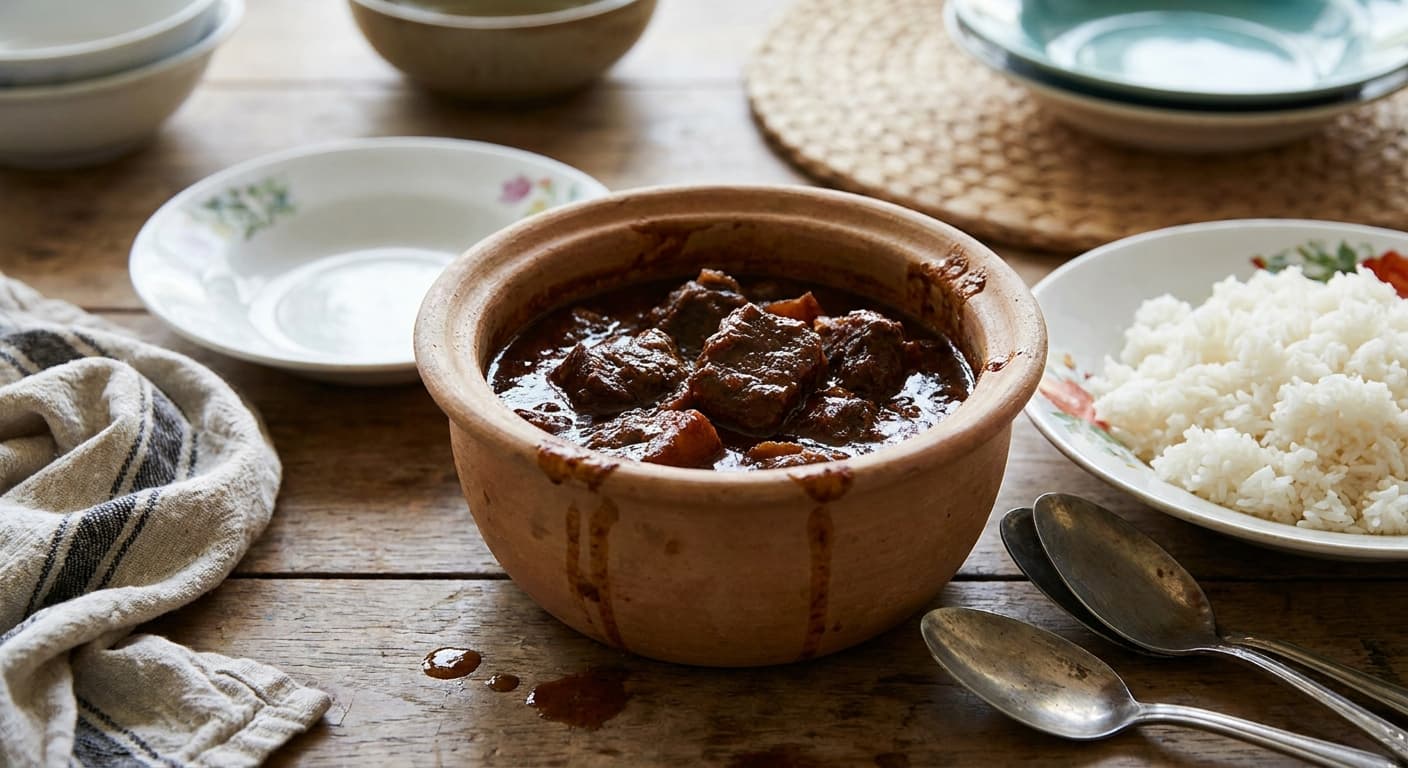
Pone Yay Gyi Curry (ပုန်းရည်ကြီးဟင်း) — Burmese Pork and Fermented Bean Paste
Burmese · Main Courses · 115 min
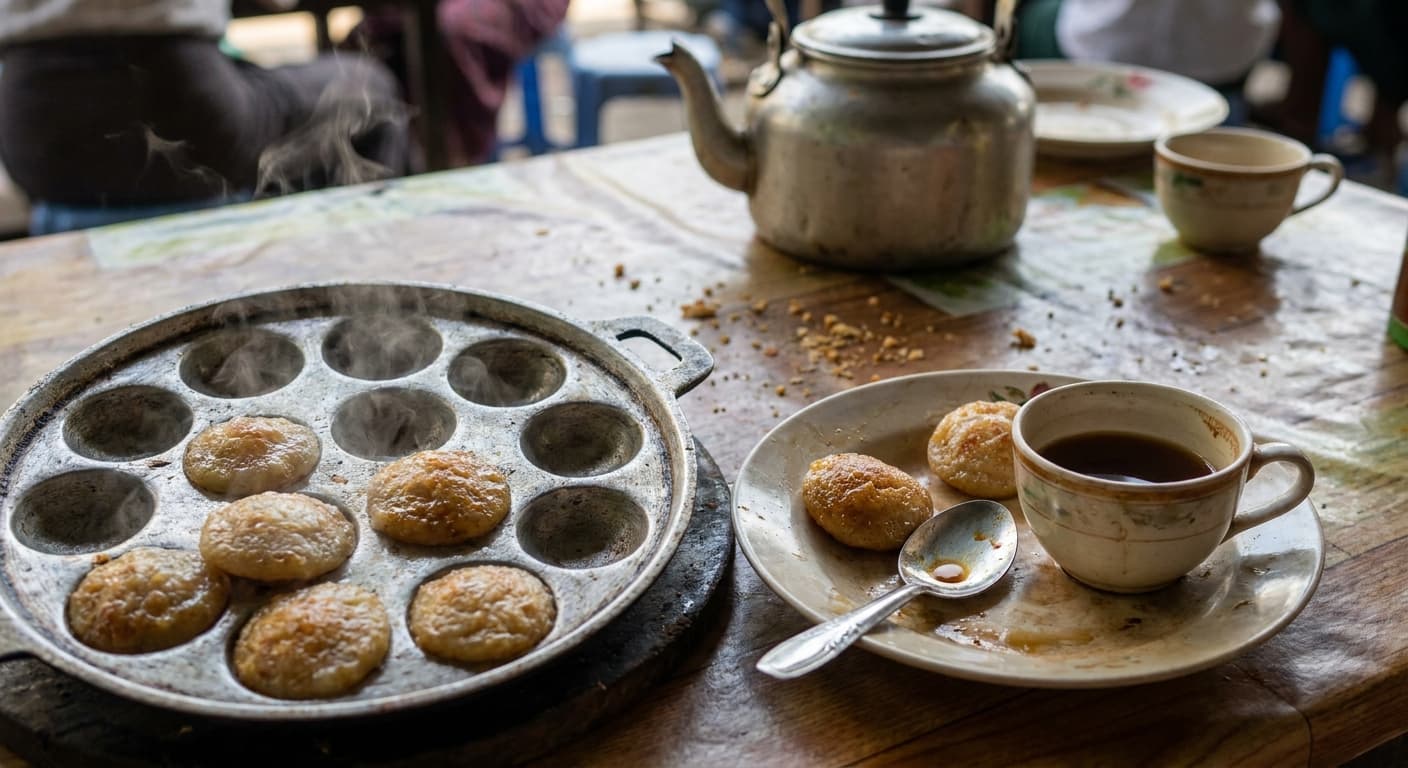
Mont Lin Ma Yar (မုန့်လင်မယား) — Burmese Husband-and-Wife Rice Cakes
Burmese · Appetizers · 65 min
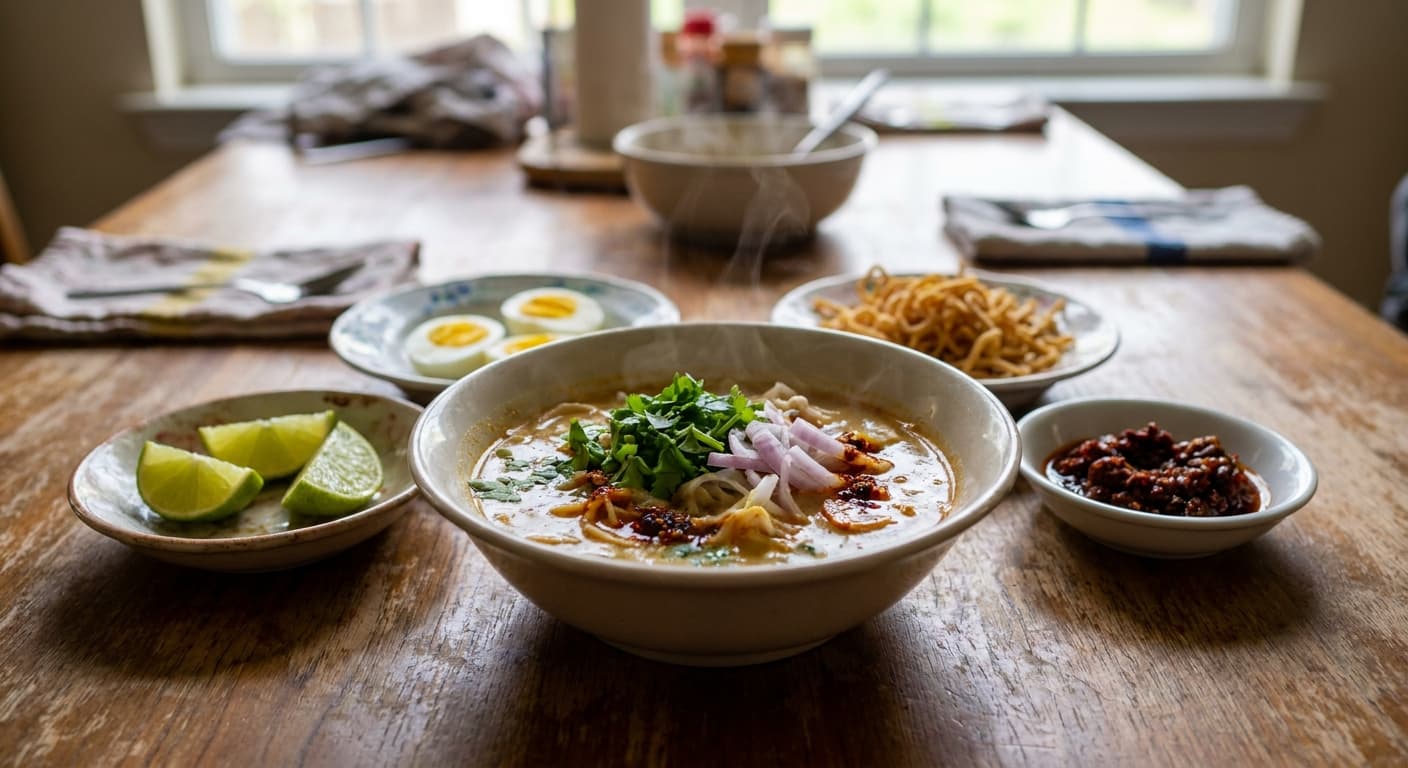
Ohn No Khao Swe (အုန်းနို့ခေါက်ဆွဲ) — Burmese Coconut Chicken Noodles
Burmese · Main Courses · 75 min
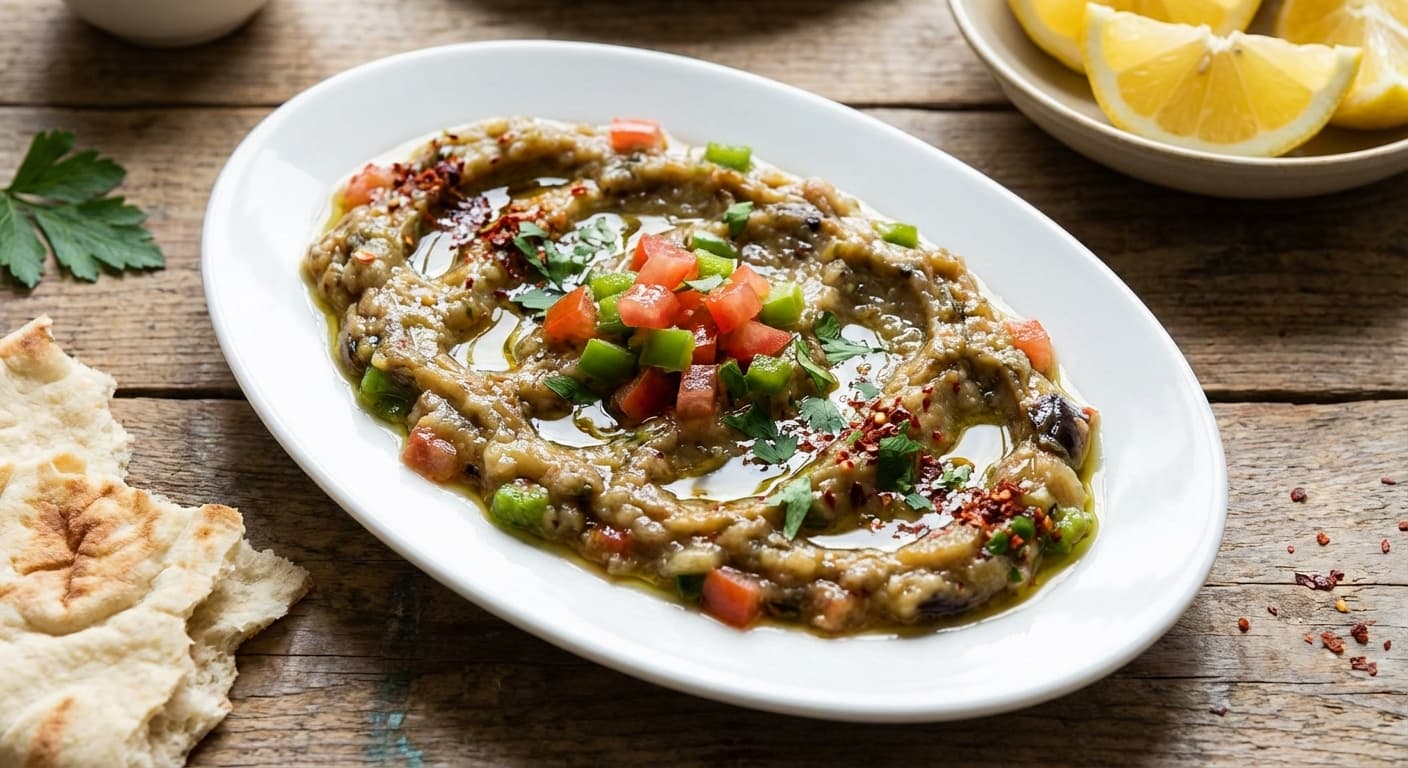
Smoky Eggplant Salad (Köz Patlıcan Salatası) — Charred eggplant with garlic and olive oil
Turkish · Salads · 45 min
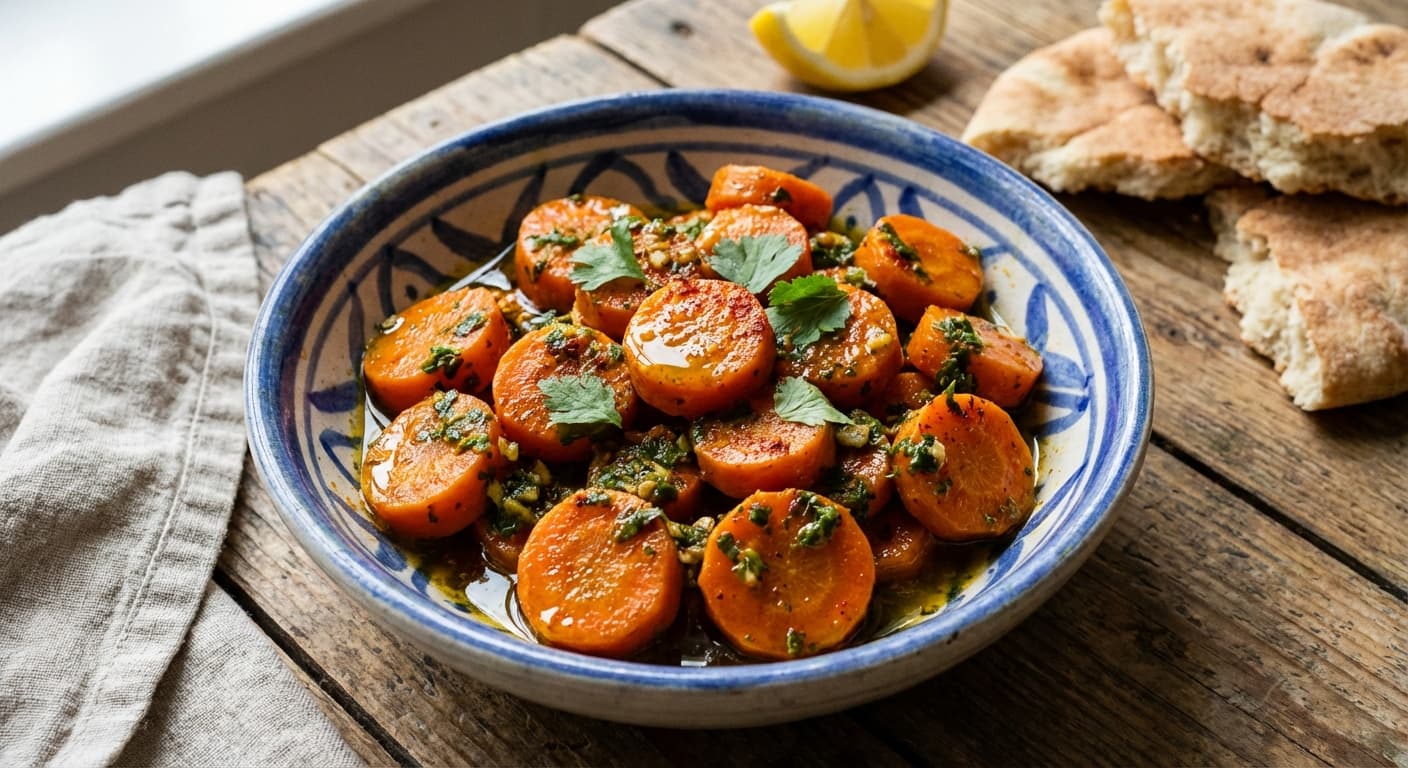
Carottes Mchermla (جزر مشرملة) — Moroccan Carrots in Chermoula with Cumin and Paprika
Moroccan · Salads · 35 min
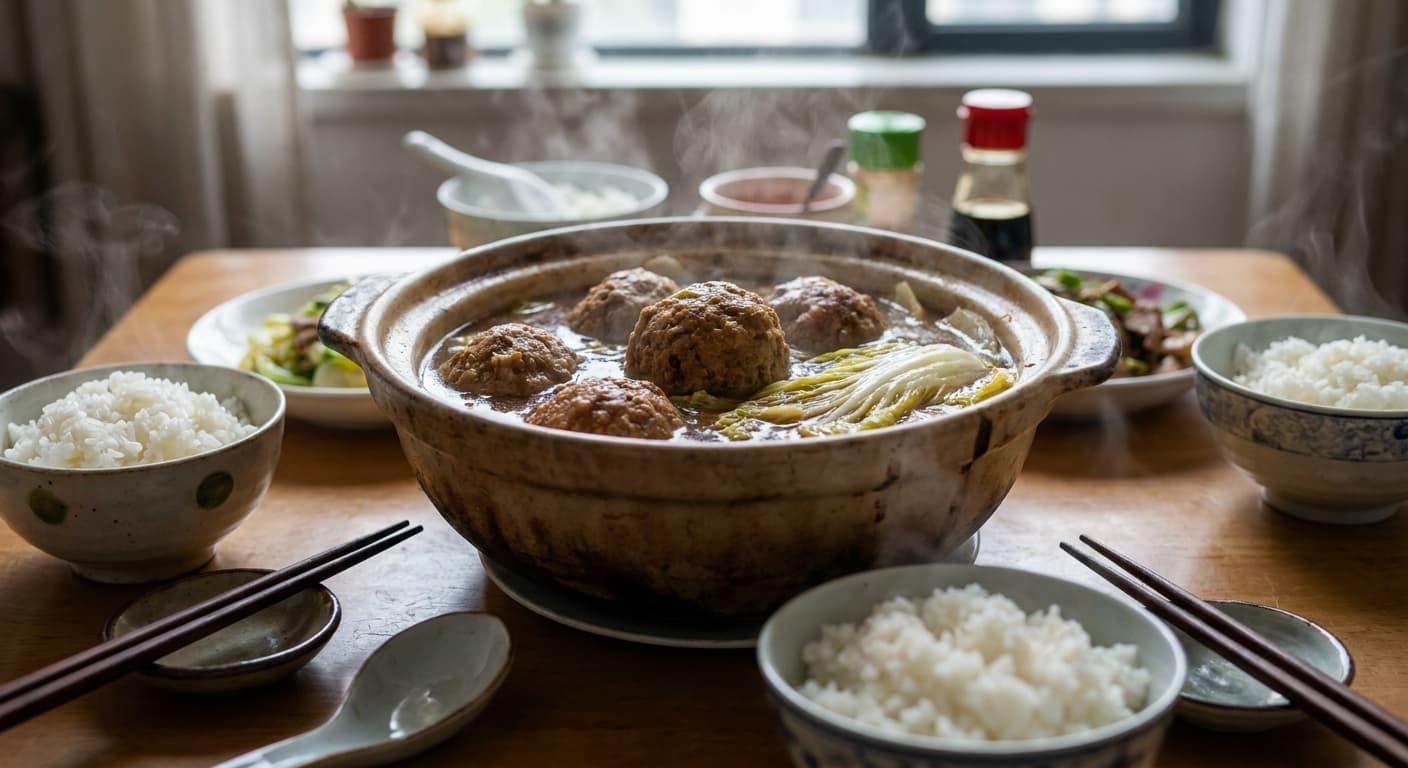
Lion's Head Meatballs (狮子头) — Braised Huaiyang Pork Meatballs
Chinese · Main Courses · 110 min
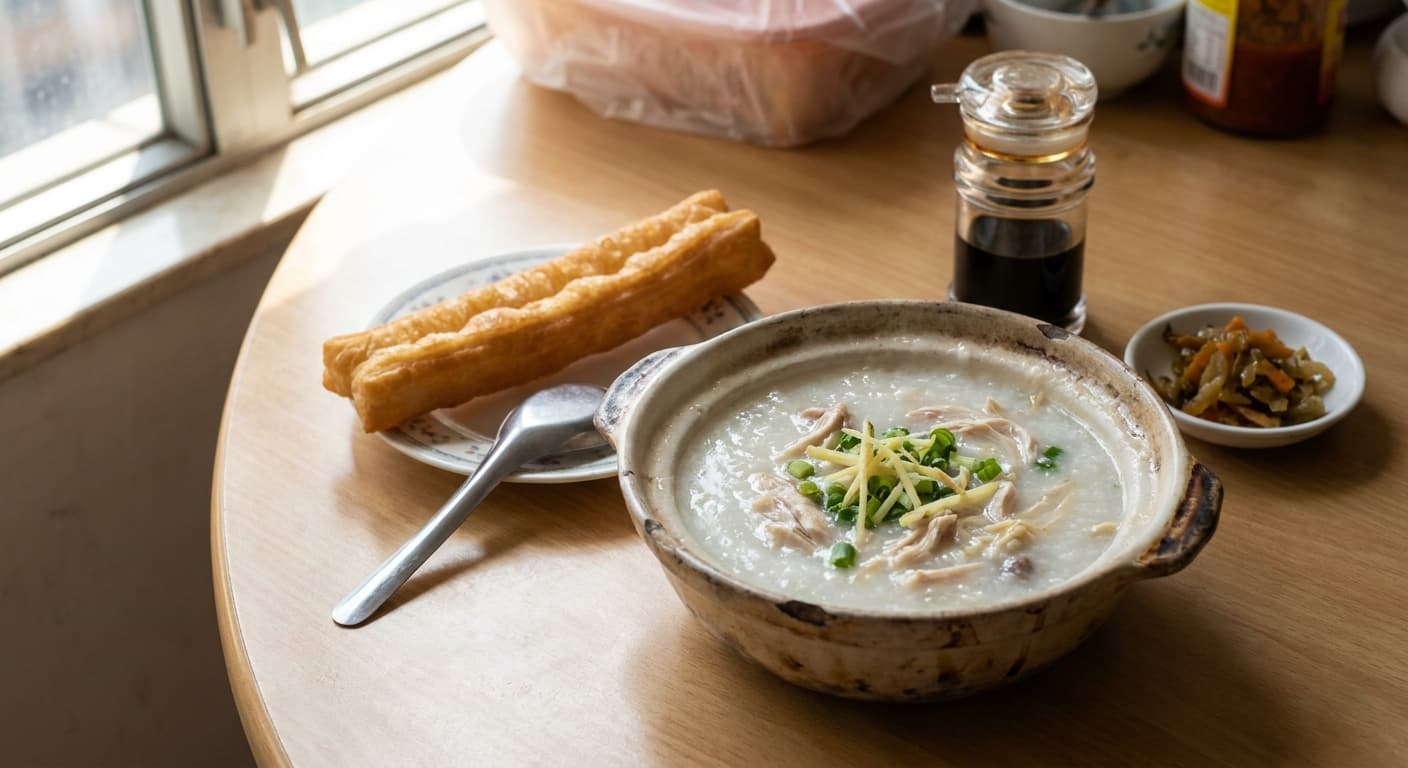
Cantonese Chicken Congee (粵式雞粥) — Silky Rice Porridge with Ginger
Chinese · Rice Dishes · 95 min
Khashlama (Խաշլամա) — Armenian Lamb and Vegetable Stew
Armenian · Stews · 160 min
Reviews
Cooked this recipe?
Tap the stars to rate it — that's all it takes. A few words are welcome but optional.
No ratings yet. Cooked this one? Be the first to rate it — it takes one tap.