Cheeken Polo (چیکن پلو) — Persian-Style Savory Chicken Rice
Cheeken Polo is a Persian-inspired chicken and rice dish with sautéed onion, tomato, bell peppers, herbs, and fresh lemon. Bright, comforting, and aromatic, it’s finished with buttery rice and a lightly crisp bottom.
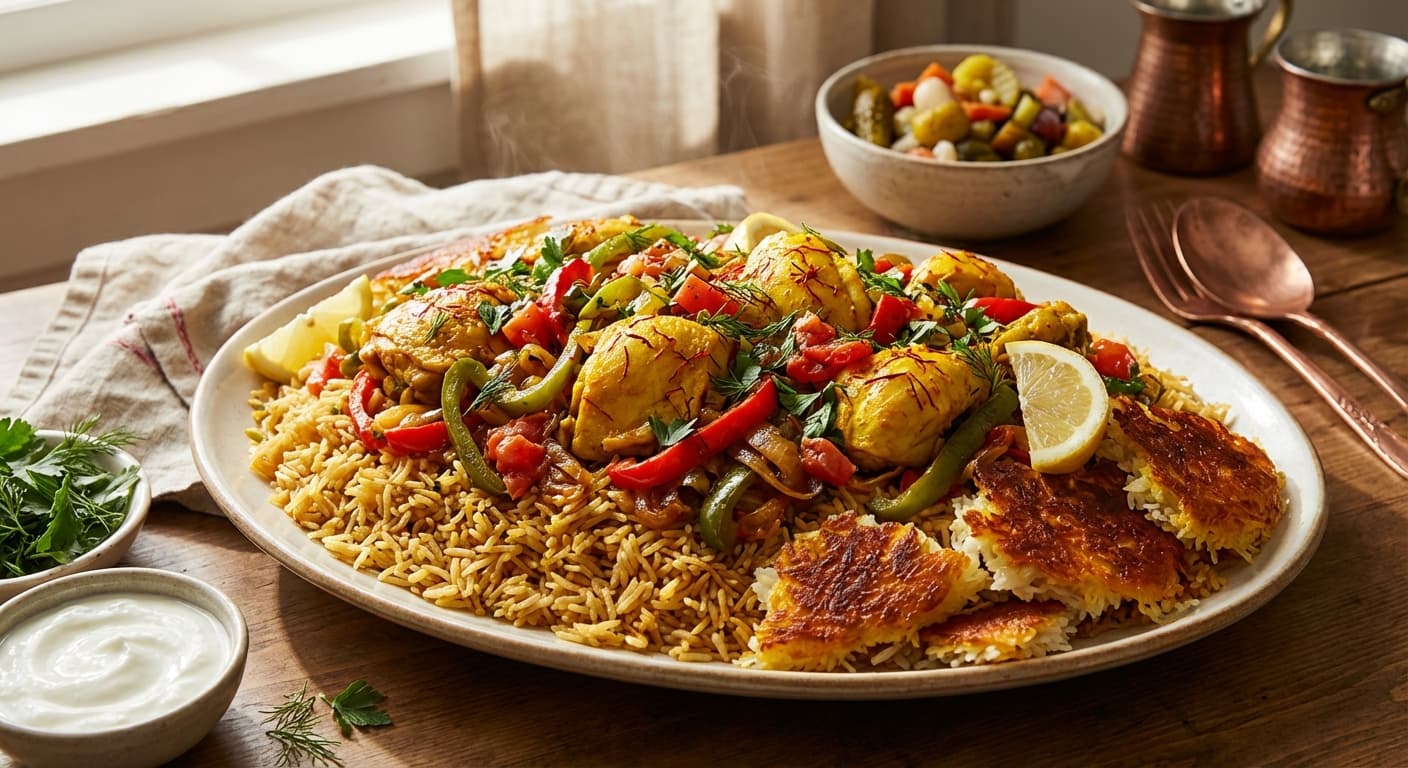
Printable Recipe Card
Servings: 4 · Total: 105 min · Difficulty: medium
Ingredients (quick list)
- 350 g Basmati rice (rinsed until water runs mostly clear)
- 24 g Fine sea salt (for boiling water (about 2 tbsp); rice water will be drained)
- 2500 ml Water (for parboiling rice)
- 45 g Unsalted butter (divided)
- 120 g Plain yogurt (for tahdig base)
- 0.25 tsp Saffron threads (ground, then bloomed in hot water)
- 30 ml Hot water (to bloom saffron)
- 500 g Chicken breast (cut into 2 cm cubes)
- 200 g Onion (finely diced)
- 30 ml Olive oil (2 tbsp)
- 250 g Tomatoes (grated or finely chopped)
- 20 g Tomato paste (1 tbsp)
+ 9 more in the full ingredients section below.
Steps (summary)
- Rinse the basmati rice in several changes of cool water until mostly clear. Cover with fresh water and let it soak for 30 minut…
- Heat 30 ml olive oil in a wide skillet over medium-high heat. Add diced onion and cook 6–8 minutes, stirring, until golden at t…
- Stir in tomato paste and cook 1 minute to remove raw flavor. Add grated tomatoes and 120 ml water; bring to a gentle simmer. Co…
- Turn off the heat and fold in basil, sliced chili, lemon zest, and 30 ml (2 tbsp) of the lemon juice. Taste and adjust salt if…
- Bring 2500 ml water to a rolling boil in a large pot. Add 24 g salt, then add the soaked, drained rice. Boil 6–8 minutes, stirr…
- In a bowl, mix yogurt with 15 g melted butter and 1 tbsp of the bloomed saffron water. Heat a heavy nonstick or well-seasoned p…
+ 3 more steps in the full instructions section below.
Cultural Background
Layered steamed rice with a crisp base is a hallmark technique in Iranian home cooking, often used to turn simple ingredients into a celebratory meal. Modern households frequently adapt the filling with seasonal vegetables, fresh herbs, and citrus for a lighter, everyday style.
Equipment
💡 Tips
- For distinct, fluffy grains, avoid overboiling the rice; it should be slightly firm before draining because it finishes cooking by steaming.
- Keep the chicken mixture thick, not soupy; excess liquid can make the rice gummy and soften the crust.
- If your pot runs hot, place a heat diffuser under it during the low-heat steaming stage to prevent burning the tahdig.
- For a deeper citrus aroma, rub the lemon zest into the basil with your fingers before adding to the filling.
⚠️ Common Mistakes
❌ Overcooking the rice during boiling
💡 Why: Rice continues cooking during steaming; overboiled grains break and turn sticky.
✅ Fix: Boil only until the grain is elongated with a slightly firm center (6–8 minutes), then drain immediately.
❌ Adding a watery chicken-tomato mixture to the layers
💡 Why: Excess moisture makes the rice soggy and prevents a crisp tahdig.
✅ Fix: Simmer the sauce until thick and glossy; if needed, cook uncovered 2–4 extra minutes to reduce.
❌ Steaming on heat that is too high for too long
💡 Why: The bottom can burn before the rice finishes steaming.
✅ Fix: Use medium heat only for the first 10 minutes to build steam, then switch to low for 35 minutes; use a diffuser if your stove runs hot.
❌ Skipping the resting time before unmolding
💡 Why: The crust is fragile right off the heat and can tear.
✅ Fix: Rest covered for 10 minutes, then loosen edges with a spatula before inverting or lifting tahdig pieces out.
🧊 How to Store
Cool leftovers within 2 hours. Refrigerate airtight up to 3 days. Reheat covered with 1–2 tbsp water in a pan over low heat 8–10 minutes, or microwave covered 2–3 minutes. Tahdig will soften; re-crisp in a lightly oiled skillet.
📅 Make Ahead
Cook the chicken-vegetable mixture up to 24 hours ahead and refrigerate airtight. Bring to room temperature for 20 minutes before layering. Rice should be parboiled and steamed the day of serving for best texture and a reliable tahdig.
🍽️ Pairs Well With
- Shirazi salad (cucumber
- tomato
- onion with lemon)
- Plain yogurt with cucumber and dried mint
- Pickled vegetables
- Fresh herbs and radishes
Regional Variations
- Tehran-style modern home cookingOften includes colorful bell peppers, extra lemon, and fresh herbs for a lighter profile, with chicken breast used for quick cooking.
- Northern Iran-inspiredMay lean more herbaceous and tangy, sometimes adding more fresh greens and a sharper citrus finish, while keeping the same steamed rice technique.
Ingredients
- 350 gBasmati rice (rinsed until water runs mostly clear)
- 24 gFine sea salt (for boiling water (about 2 tbsp); rice water will be drained)
- 2500 mlWater (for parboiling rice)
- 45 gUnsalted butter (divided)
- 120 gPlain yogurt (for tahdig base)
- 0.25 tspSaffron threads (ground, then bloomed in hot water)
- 30 mlHot water (to bloom saffron)
- 500 gChicken breast (cut into 2 cm cubes)
- 200 gOnion (finely diced)
- 30 mlOlive oil (2 tbsp)
- 250 gTomatoes (grated or finely chopped)
- 20 gTomato paste (1 tbsp)
- 150 gRed bell pepper (cut into thin strips)
- 150 gYellow bell pepper (cut into thin strips)
- 80 gSpring onions (thinly sliced (white and green parts))
- 25 gFresh basil leaves (finely sliced)
- 10 gFresh green chili (thinly sliced; remove seeds for milder heat)
- 2 tspLemon zest (from 1 large lemon)
- 45 mlFresh lemon juice (3 tbsp, divided)
- 1.5 tspGround turmeric
- 1 tspGround black pepper
🔄 Substitutions
- Chicken breast→ Boneless skinless chicken thighs
- Plain yogurt (tahdig base)→ Thinly sliced potatoes
- Fresh basil→ Fresh parsley plus fresh mint
Instructions
- 1
Rinse the basmati rice in several changes of cool water until mostly clear. Cover with fresh water and let it soak for 30 minutes at room temperature, then drain. Meanwhile, grind the saffron and bloom it in 30 ml hot water; set aside so the color fully develops.
- 2
Heat 30 ml olive oil in a wide skillet over medium-high heat. Add diced onion and cook 6–8 minutes, stirring, until golden at the edges. Add chicken cubes, turmeric, black pepper, and 6 g salt; sauté 5–7 minutes until the chicken turns opaque and lightly browned.
- 3
Stir in tomato paste and cook 1 minute to remove raw flavor. Add grated tomatoes and 120 ml water; bring to a gentle simmer. Cook 10–12 minutes over medium heat until thick and glossy. Add bell peppers and spring onions; cook 4–5 minutes until slightly softened but still colorful.
- 4
Turn off the heat and fold in basil, sliced chili, lemon zest, and 30 ml (2 tbsp) of the lemon juice. Taste and adjust salt if needed. Keep the mixture warm; it should be moist but not watery so the rice steams properly in the next step.
- 5
Bring 2500 ml water to a rolling boil in a large pot. Add 24 g salt, then add the soaked, drained rice. Boil 6–8 minutes, stirring once or twice, until the grains are longer and the center is slightly firm. Drain immediately in a colander and rinse briefly with warm water.
- 6
In a bowl, mix yogurt with 15 g melted butter and 1 tbsp of the bloomed saffron water. Heat a heavy nonstick or well-seasoned pot (24–26 cm) over medium heat. Add 15 g butter, then spread the yogurt mixture over the base to form an even layer for a crisp tahdig.
- 7
Layer one-third of the rice over the tahdig base, then spoon on half of the chicken-vegetable mixture. Repeat with another third of rice and the remaining filling, finishing with the last third of rice. Drizzle remaining saffron water and 15 g butter (melted) over the top.
- 8
Poke 5–6 holes through the rice to the bottom with the handle of a spoon to vent steam. Cover the lid with a clean towel and place it on the pot. Steam 10 minutes over medium heat, then reduce to low and steam 35 minutes until fragrant and fully tender.
- 9
Turn off the heat and rest, covered, for 10 minutes to set the crust. Sprinkle the remaining 15 ml (1 tbsp) lemon juice over the rice for brightness. Fluff the rice gently, lifting the filling through without breaking grains. Invert for tahdig, or serve crust pieces alongside.
🪪 Recipe Passport
Cultural Background
Layered steamed rice with a crisp base is a hallmark technique in Iranian home cooking, often used to turn simple ingredients into a celebratory meal. Modern households frequently adapt the filling with seasonal vegetables, fresh herbs, and citrus for a lighter, everyday style.
Regional Variations
Researched from multiple sources and validated by the Zaffaron editorial team. Every recipe is tested for accuracy, measurements, and cultural authenticity.
Nutrition per serving
Pairs well with
If you enjoyed this recipe, here are a few related Zaffaron recipes to try next.
- Classic Boneless Joojeh Kebab (جوجه کباب) — Saffron-Yogurt Grilled Chicken Skewers
- Crispy Persian-Style Fried Chicken Thighs (مرغ سوخاری) — Golden crust with minty yogurt sauce
- Dami Gojeh Farangi (دمی گوجه فرنگی) — Persian Tomato Rice
- Chelow-e Sadeh (چلو ساده) — Golden Persian Steamed Rice with Saffron Yogurt Tahdig
Does your family make this differently?
Every family has their own version. Maybe your grandmother adds a secret ingredient, or your aunt has a completely different technique. Preserve your family's version — with their name on it, forever.
You Might Also Like
Persian Smoked Torshi Liteh (ترشی لیته) — Caspian-style smoky mixed vegetable pickle
Persian · Side Dishes · 60 min
Aged Garlic Pickle (سیر ترشی) — Gilan’s seven-year-style black garlic torshi
Persian · Side Dishes · 45 min
Persian Kotlet (کتلت) — Saffron-Infused Meat & Potato Patties
Persian · Main Courses · 55 min
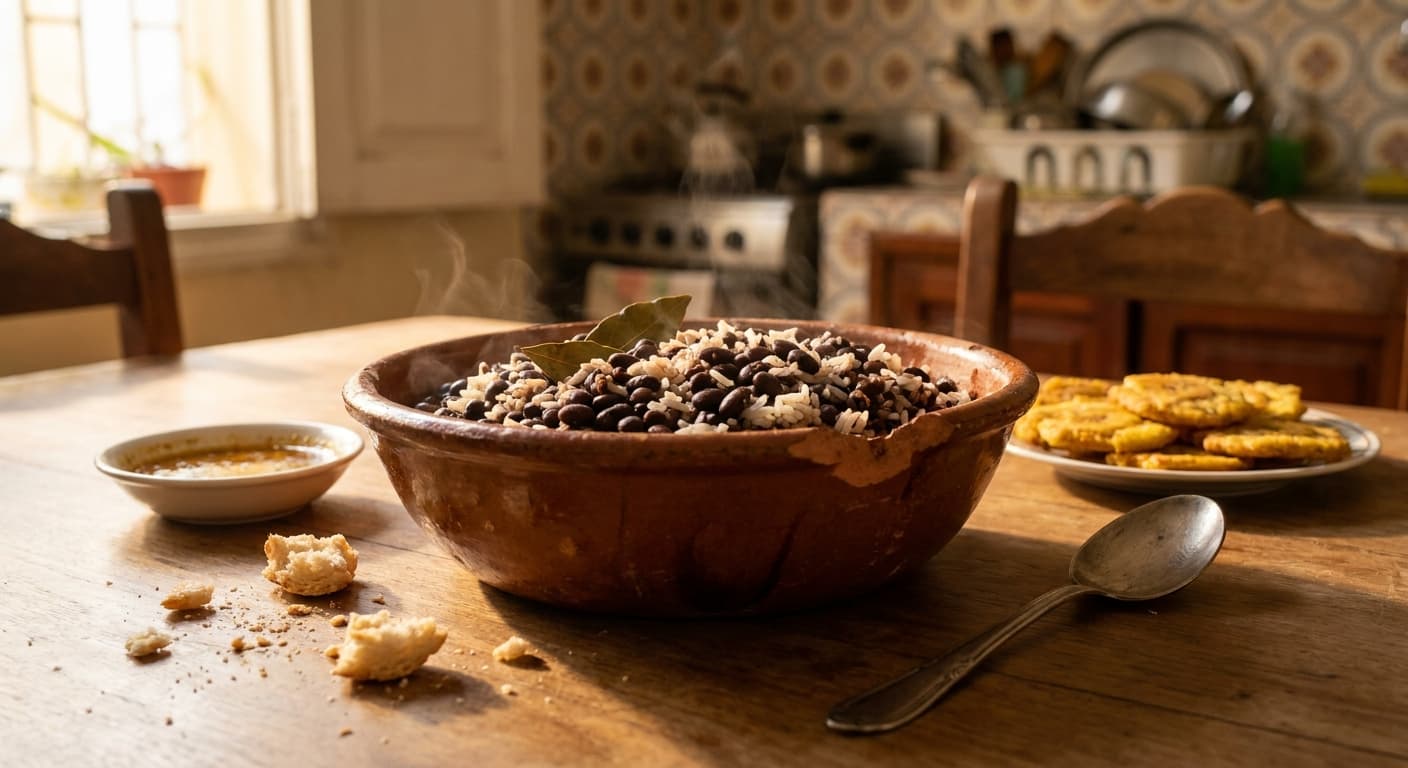
Moros y Cristianos (Moros y Cristianos) — Cuban Black Beans and Rice
Cuban · Rice Dishes · 130 min
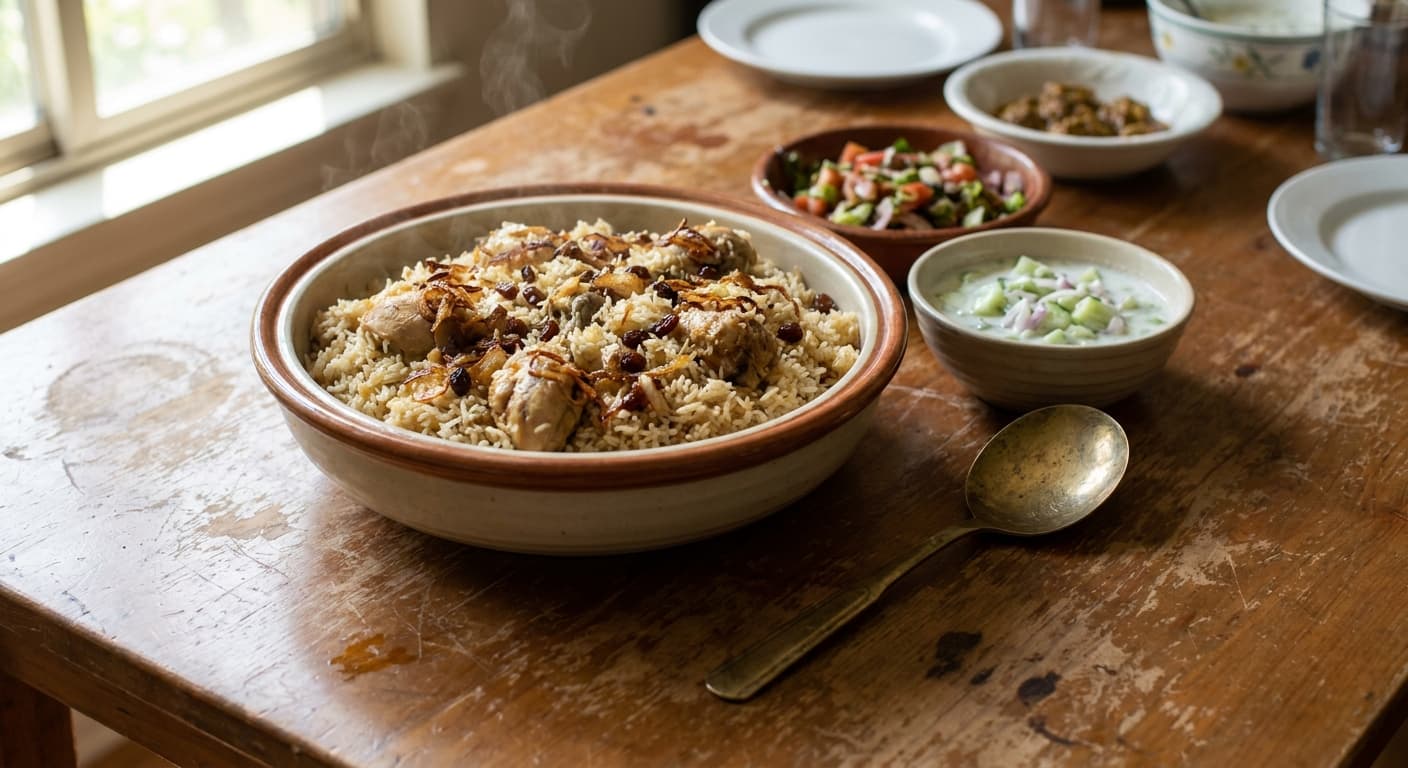
Morog Polao (মোরগ পোলাও) — Bangladeshi Chicken Pilaf
Bangladeshi · Rice Dishes · 100 min
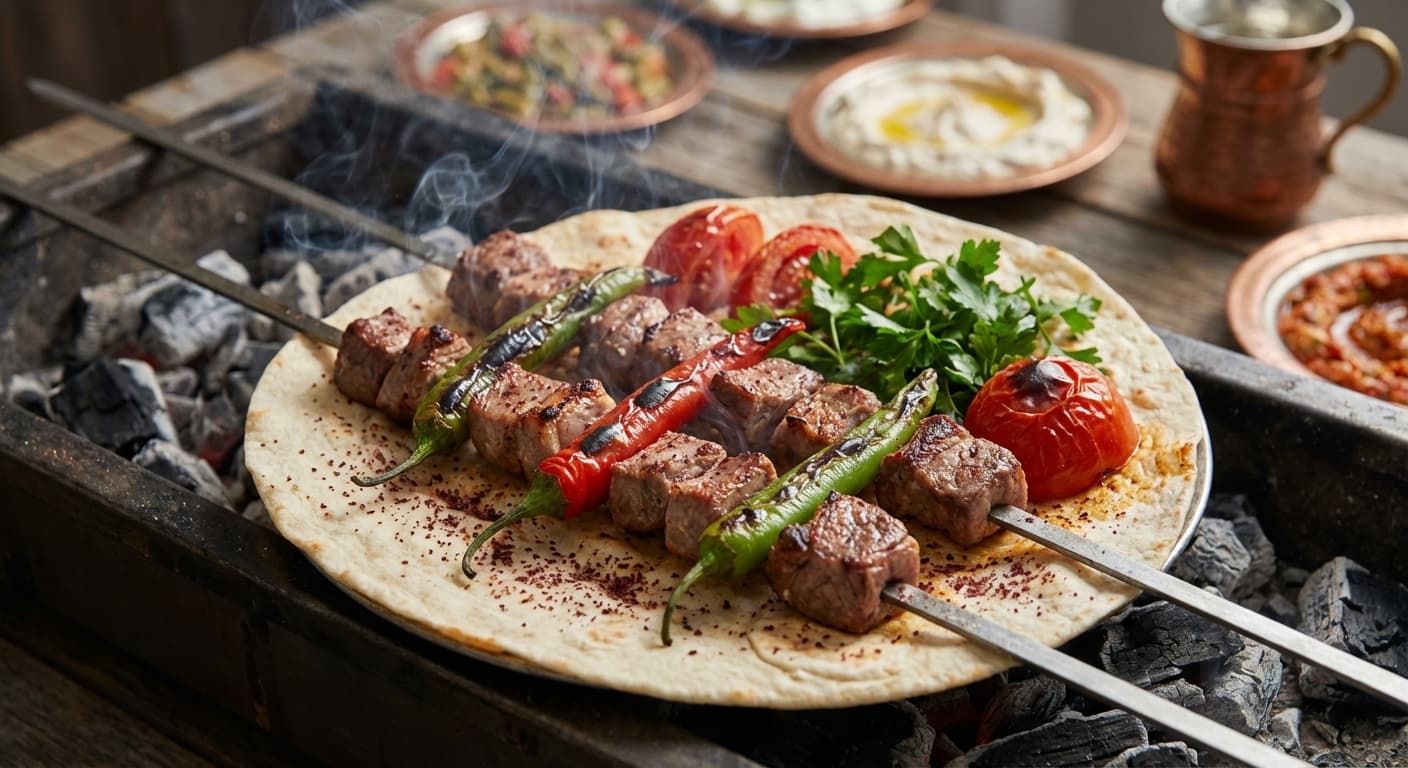
Turkish Shish Kebab (Şiş Kebap) — Charcoal-Grilled Marinated Lamb Skewers
Turkish · Kebabs · 37 min
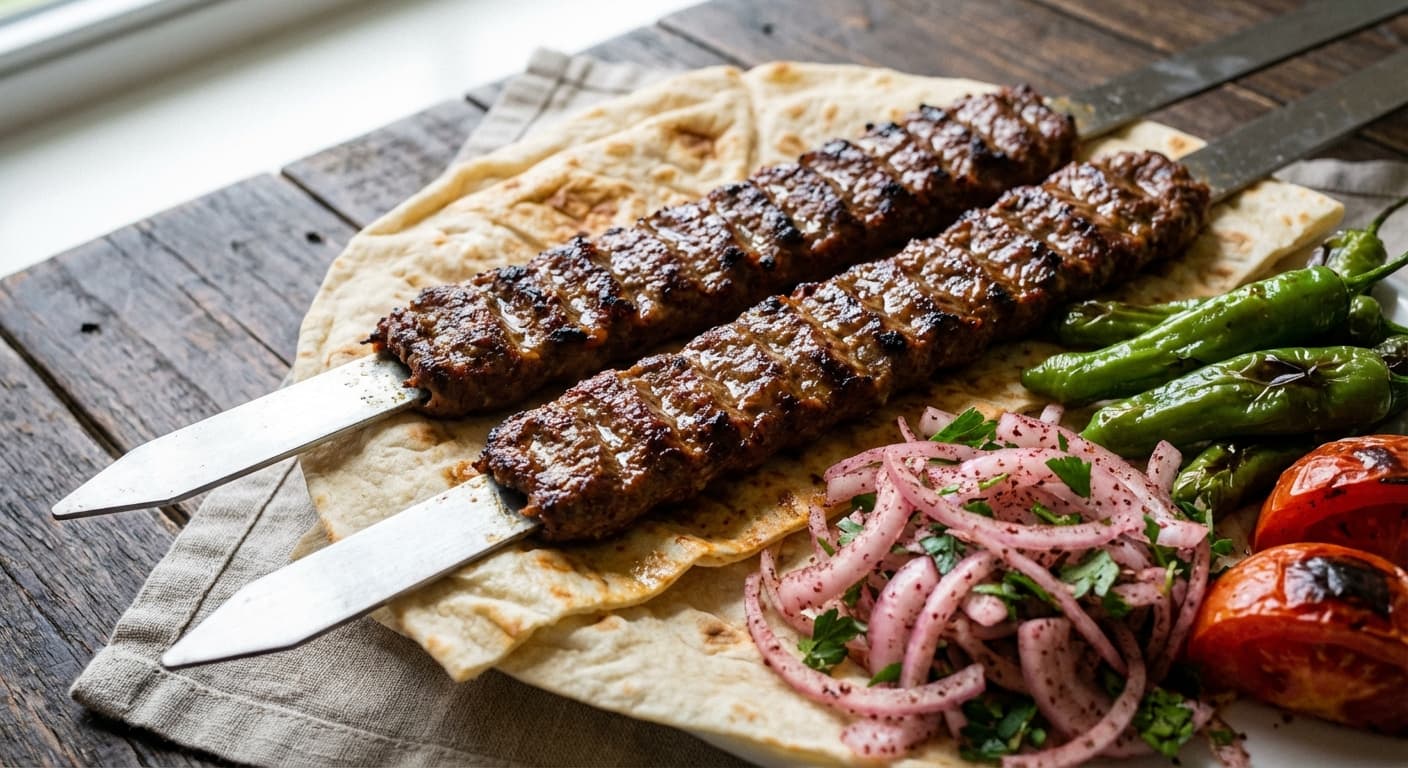
Urfa Kebab (اورفا کباب) — Mild Turkish minced skewer with sumac onions
Turkish · Kebabs · 37 min
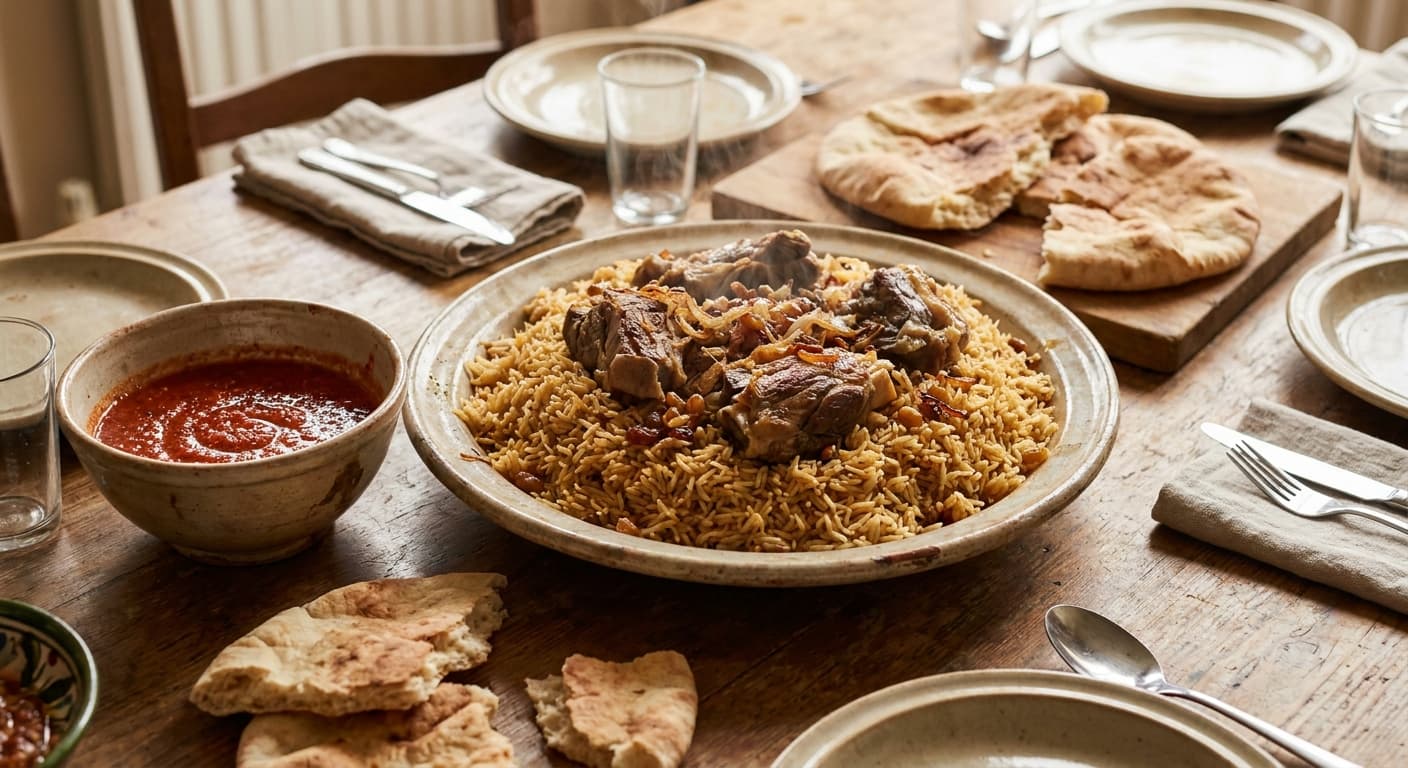
Yemeni Mandi (مندي) — Smoke-Scented Spiced Rice and Lamb
Yemeni · Main Courses · 170 min
Reviews
Cooked this recipe?
Tap the stars to rate it — that's all it takes. A few words are welcome but optional.
No ratings yet. Cooked this one? Be the first to rate it — it takes one tap.