Dami Adas va Havij (دمی عدس و هویج) — Persian Lentil & Carrot Rice
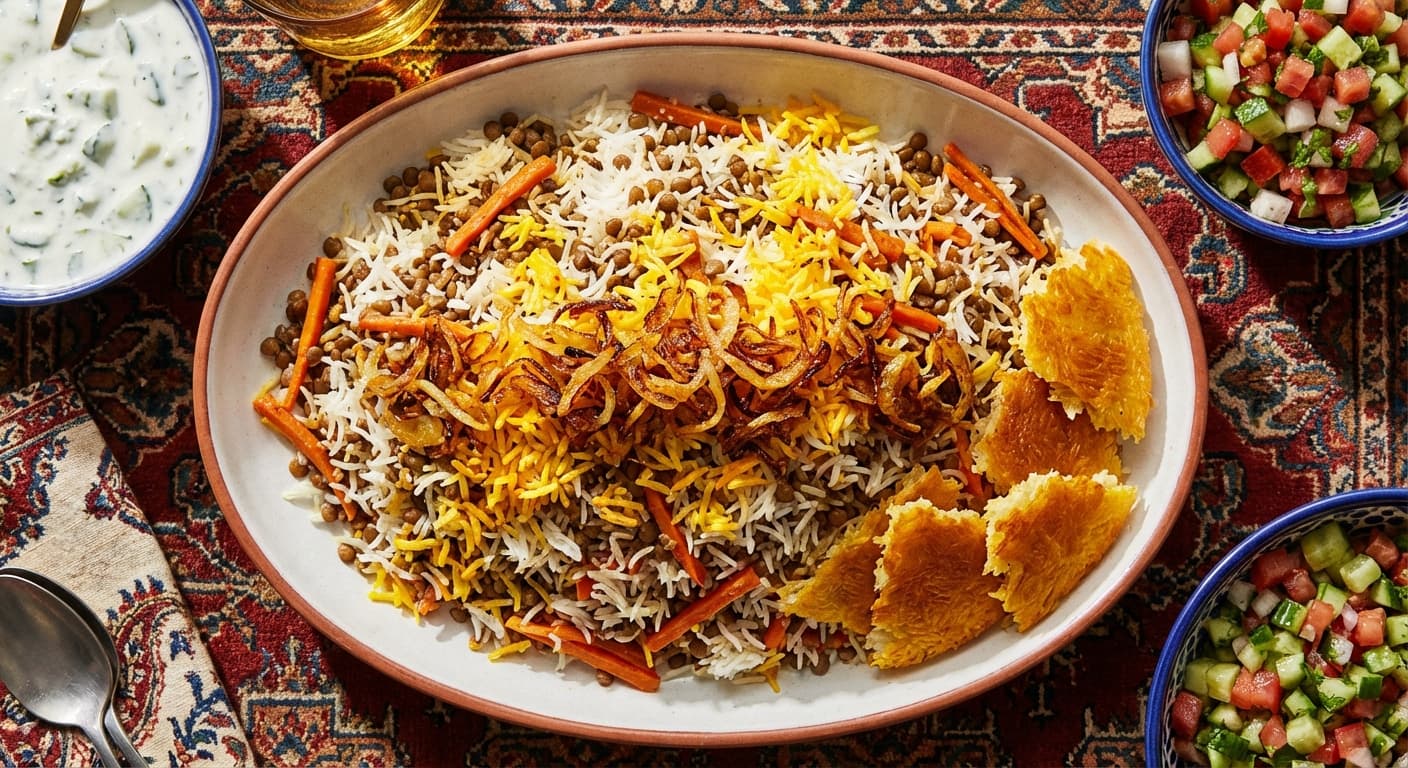
A fragrant, home-style Iranian dami in which basmati rice steams together with brown lentils and sweet carrots. Crispy fried onions and warm Persian spices create a cozy, comforting flavor, and everything comes together evenly in a single pot.
Printable Recipe Card
Servings: 4 · Total: 105 min · Difficulty: medium
Ingredients (quick list)
- 300 g Basmati rice (rinsed until water runs mostly clear)
- 1200 ml Water (for soaking rice and cooking lentils (separate uses as directed))
- 18 g Salt (divided: 12 g for rice soak, 6 g for final seasoning)
- 160 g Brown lentils (picked over and rinsed)
- 250 g Carrots (julienned into 4–5 cm matchsticks)
- 200 g Yellow onion (thinly sliced for piaz dagh)
- 45 g Ghee (or unsalted butter; divided)
- 30 g Tomato paste (about 2 Tbsp)
- 3 g Turmeric powder (about 1 tsp)
- 2 g Advieh (Persian mixed rice spice) (about 1 tsp)
- 1 g Ground black pepper (about 1/2 tsp)
- 0.2 g Saffron threads (optional, for aroma and color)
+ 2 more in the full ingredients section below.
Steps (summary)
- Rinse the basmati rice 4–5 times until the water is mostly clear. Combine rice with 700 ml water and 12 g salt in a bowl and so…
- Cook the lentils: add lentils to a small pot with 500 ml water. Bring to a boil over medium-high heat, then reduce to a lively…
- Make piaz dagh (crispy fried onions): heat 40 g vegetable oil in a skillet over medium heat. Add sliced onion and fry 12–15 min…
- In a heavy 4–5 liter pot, melt 25 g ghee over medium heat. Add carrots and sauté 6–8 minutes until slightly softened and glossy…
- Drain the soaked rice well. Add drained rice to the pot along with the cooked lentils and 6 g salt. Sprinkle advieh evenly over…
- Add 360 ml fresh water (not from soaking) around the edges of the pot. Increase heat to medium-high and bring to a strong simme…
+ 3 more steps in the full instructions section below.
Cultural Background
Dami dishes are a cornerstone of Iranian home cooking—one-pot meals where the ingredients steam together and the flavors meld. Dami adas va havij is especially popular on cold days or as a packed lunch for school and work, and with fried onions it brings back that unmistakable “mom’s home cooking” feeling.
Equipment
💡 Tips
- Keep lentils slightly undercooked before steaming; they finish during steaming and won’t turn mushy.
- Cook the tomato paste in fat until it darkens; this reduces acidity and gives the rice a deeper, sweeter color.
- For a stronger tahdig, use a heavier pot and keep the last 10 minutes of steaming at a slightly higher low heat.
⚠️ Common Mistakes
❌ Overcooking lentils until they split
💡 Why: They continue cooking during steaming and will turn the rice muddy and heavy.
✅ Fix: Simmer only until just tender (15–18 minutes), drain promptly, and rinse briefly to halt cooking.
❌ Adding soaking water to the pot
💡 Why: Soaking water contains excess starch and salt, which can make the dami gummy and overly salty.
✅ Fix: Drain soaked rice thoroughly and add measured fresh water (360 ml) for consistent texture.
❌ Steaming on too high heat
💡 Why: High heat burns the bottom before the rice finishes steaming and can dry out the top layer.
✅ Fix: After water absorption, cover with a towel-wrapped lid and keep heat on low for 35 minutes; adjust only if no steam is visible.
❌ Skipping tomato paste frying
💡 Why: Raw tomato paste tastes sharp and can dominate the dish with acidity.
✅ Fix: Cook paste in ghee 2 minutes until it darkens and smells sweet and toasted.
🧊 How to Store
Cool to room temperature within 2 hours, then refrigerate in an airtight container up to 4 days. Reheat covered with 2–3 Tbsp water in a pot over low heat 12–15 minutes, or microwave covered 2–3 minutes, stirring once. Tahdig is best fresh; re-crisp in a dry skillet 3–4 minutes.
📅 Make Ahead
Fry the onions up to 2 days ahead and refrigerate airtight; re-crisp in a dry skillet 2–3 minutes. Cook lentils 1 day ahead and chill; bring to room temperature before mixing. The full rice can be cooked ahead and reheated gently with a splash of water, but tahdig is best made fresh.
🍽️ Pairs Well With
- Mast-o Khiar (yogurt with cucumber and herbs)
- Shirazi salad
- Pickled vegetables (torshi)
- Fresh herbs (sabzi khordan) and radishes
Regional Variations
- Tehran (home-style)Often includes a little more piaz dagh and sometimes a small pinch of cinnamon in the advieh for a warmer aroma; served with mast-o khiar and torshi.
- KhorasanSaffron is used more generously, and carrots may be cut thinner for a sweeter, more perfumed rice; occasionally finished with a touch of barberries for contrast.
Ingredients
- 300 gBasmati rice (rinsed until water runs mostly clear)
- 1200 mlWater (for soaking rice and cooking lentils (separate uses as directed))
- 18 gSalt (divided: 12 g for rice soak, 6 g for final seasoning)
- 160 gBrown lentils (picked over and rinsed)
- 250 gCarrots (julienned into 4–5 cm matchsticks)
- 200 gYellow onion (thinly sliced for piaz dagh)
- 45 gGhee (or unsalted butter; divided)
- 30 gTomato paste (about 2 Tbsp)
- 3 gTurmeric powder (about 1 tsp)
- 2 gAdvieh (Persian mixed rice spice) (about 1 tsp)
- 1 gGround black pepper (about 1/2 tsp)
- 0.2 gSaffron threads (optional, for aroma and color)
- 30 mlHot water (to bloom saffron (optional))
- 40 gVegetable oil (for frying onions (piaz dagh))
🔄 Substitutions
- Ghee→ Unsalted butter (same amount)
- Brown lentils→ Green lentils (same amount)
- Advieh (Persian mixed rice spice)→ Ground cumin 1 g + ground cinnamon 0.5 g + ground cardamom 0.5 g
Instructions
- 1
Rinse the basmati rice 4–5 times until the water is mostly clear. Combine rice with 700 ml water and 12 g salt in a bowl and soak for 30 minutes at room temperature. Meanwhile, pick through lentils for debris and rinse well; set aside to drain.
- 2
Cook the lentils: add lentils to a small pot with 500 ml water. Bring to a boil over medium-high heat, then reduce to a lively simmer and cook 15–18 minutes until lentils are just tender but not falling apart. Drain immediately and rinse briefly with warm water to stop cooking; set aside.
- 3
Make piaz dagh (crispy fried onions): heat 40 g vegetable oil in a skillet over medium heat. Add sliced onion and fry 12–15 minutes, stirring often, until deep golden and crisp at the edges. Transfer onions to a paper-towel-lined plate; reserve 15 g of the onion oil for extra flavor.
- 4
In a heavy 4–5 liter pot, melt 25 g ghee over medium heat. Add carrots and sauté 6–8 minutes until slightly softened and glossy. Stir in turmeric and black pepper for 30 seconds, then add tomato paste and cook 2 minutes, stirring constantly, until the paste darkens and smells sweet, not raw.
- 5
Drain the soaked rice well. Add drained rice to the pot along with the cooked lentils and 6 g salt. Sprinkle advieh evenly over the mixture. Gently fold for 30–45 seconds to distribute carrots and lentils without breaking rice grains, then level the surface with a spoon.
- 6
Add 360 ml fresh water (not from soaking) around the edges of the pot. Increase heat to medium-high and bring to a strong simmer; cook uncovered 8–10 minutes until the water is absorbed and small steam holes appear on the surface. Taste a few grains; they should be mostly tender with a slight bite.
- 7
For saffron (optional), grind 0.2 g saffron and mix with 30 ml hot water; let steep 5 minutes. Drizzle half over the rice surface. Using the handle of a spoon, poke 5–6 holes down to the bottom to vent steam and prevent sogginess during dam-keshidan.
- 8
Make tahdig and steam: melt remaining 20 g ghee and mix with reserved onion oil. Drizzle around the pot’s edge and over the surface. Cover the lid with a clean towel, tie it up, and cover the pot. Reduce heat to low and steam 35 minutes, keeping a gentle, steady heat.
- 9
Rest 10 minutes off heat, still covered, to set the grains. Fluff the rice gently with a spatula, lifting from the bottom. Plate the rice, then top with crispy fried onions. If using saffron, drizzle the remaining saffron water over the serving platter for a classic Persian aroma.
🪪 Recipe Passport
Cultural Background
Dami dishes are a cornerstone of Iranian home cooking—one-pot meals where the ingredients steam together and the flavors meld. Dami adas va havij is especially popular on cold days or as a packed lunch for school and work, and with fried onions it brings back that unmistakable “mom’s home cooking” feeling.
Regional Variations
Researched from multiple sources and validated by the Zaffaron editorial team. Every recipe is tested for accuracy, measurements, and cultural authenticity.
Nutrition per serving
Pairs well with
If you enjoyed this recipe, here are a few related Zaffaron recipes to try next.
- Dolmeh Felfel va Bademjan (دلمه فلفل و بادمجان) — Persian Stuffed Peppers and Eggplants
- Dolmeh Lavash (دلمه لواش) — Persian Stuffed Flatbread Rolls with Mozzarella
- Dami Yarmeh (دمی یارمه) — Persian Bulgur Pilaf with Meat and Vegetables
- Dolmeh Bademjan Baqcheh’i (دلمه بادمجان باغچهای) — Persian Stuffed Eggplant Pouches
Does your family make this differently?
Every family has their own version. Maybe your grandmother adds a secret ingredient, or your aunt has a completely different technique. Preserve your family's version — with their name on it, forever.
You Might Also Like
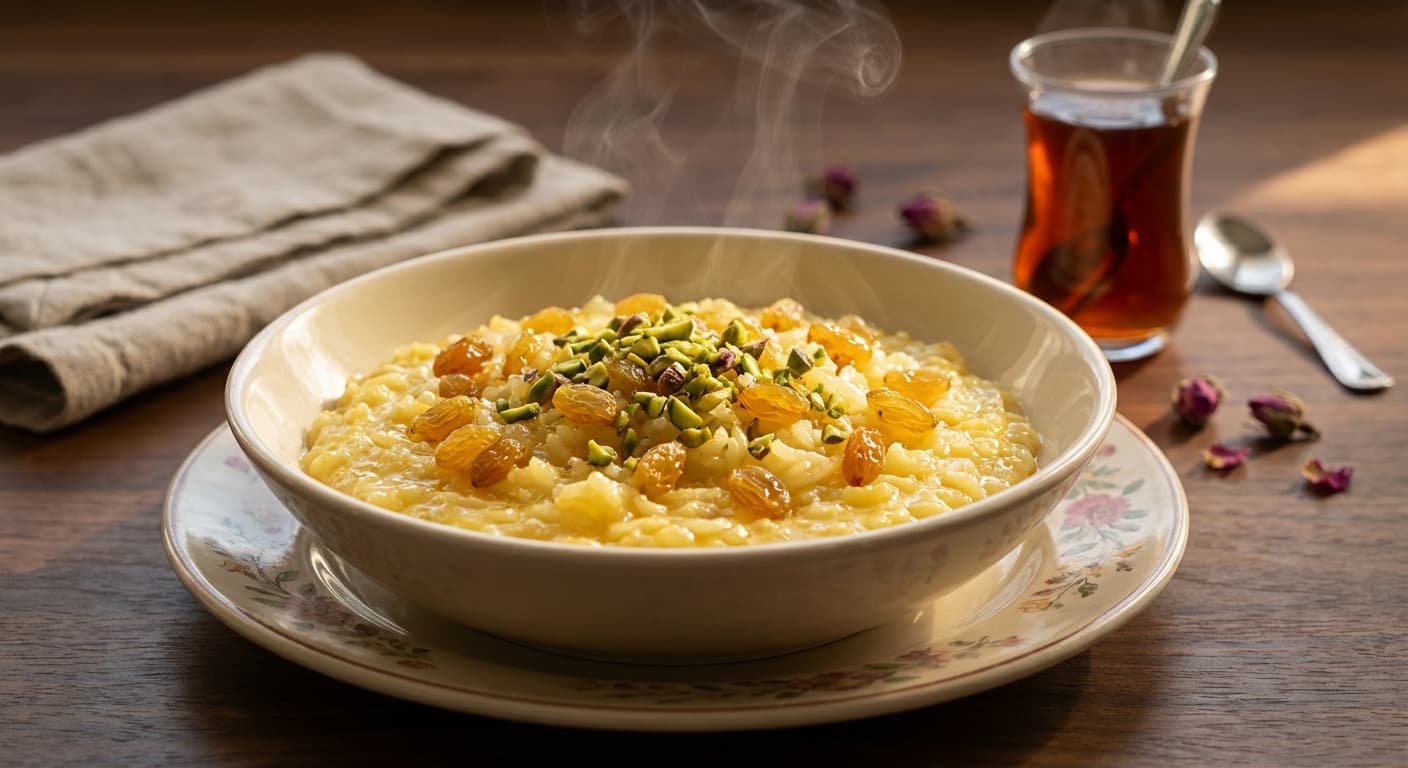
Saffron Sweet Rice (پلو شیرینی زعفرانی) — Festive Persian milk-saffron rice with nuts
Persian · Rice Dishes · 75 min
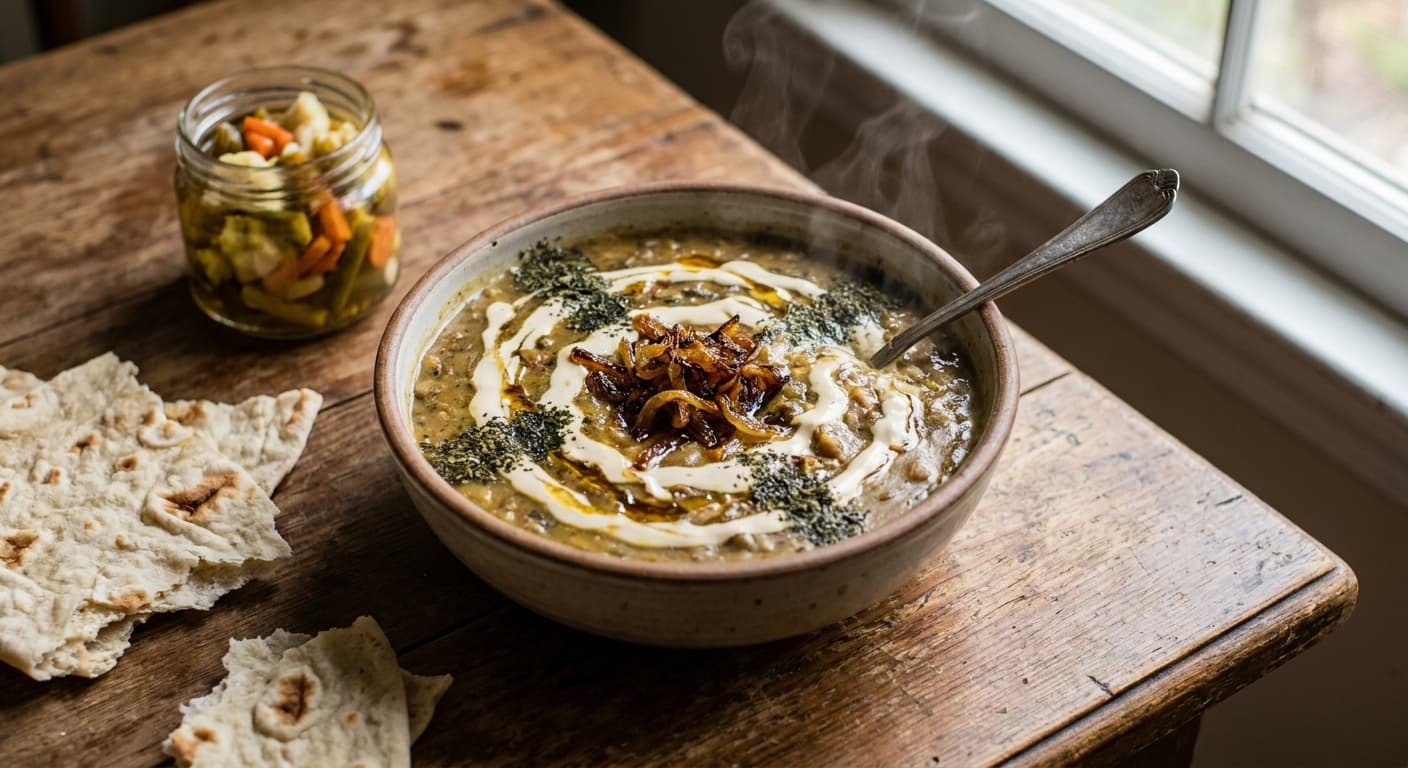
Ash-e Sak (آش ساک) — Gorgani Spinach and Lamb Ash
Persian · Soups · 175 min
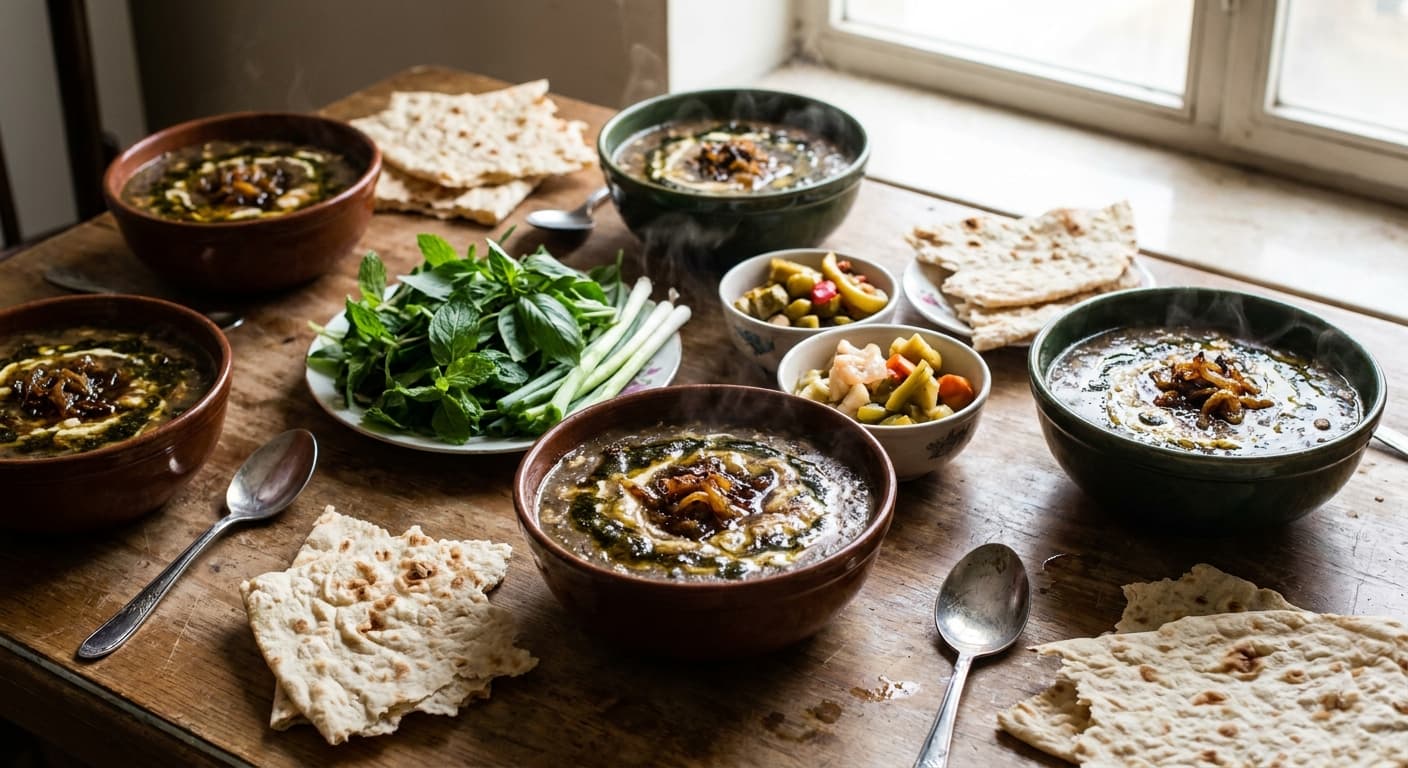
Ash-e Torsh (آش ترش) — Sour Herb and Legume Soup
Persian · Soups · 145 min
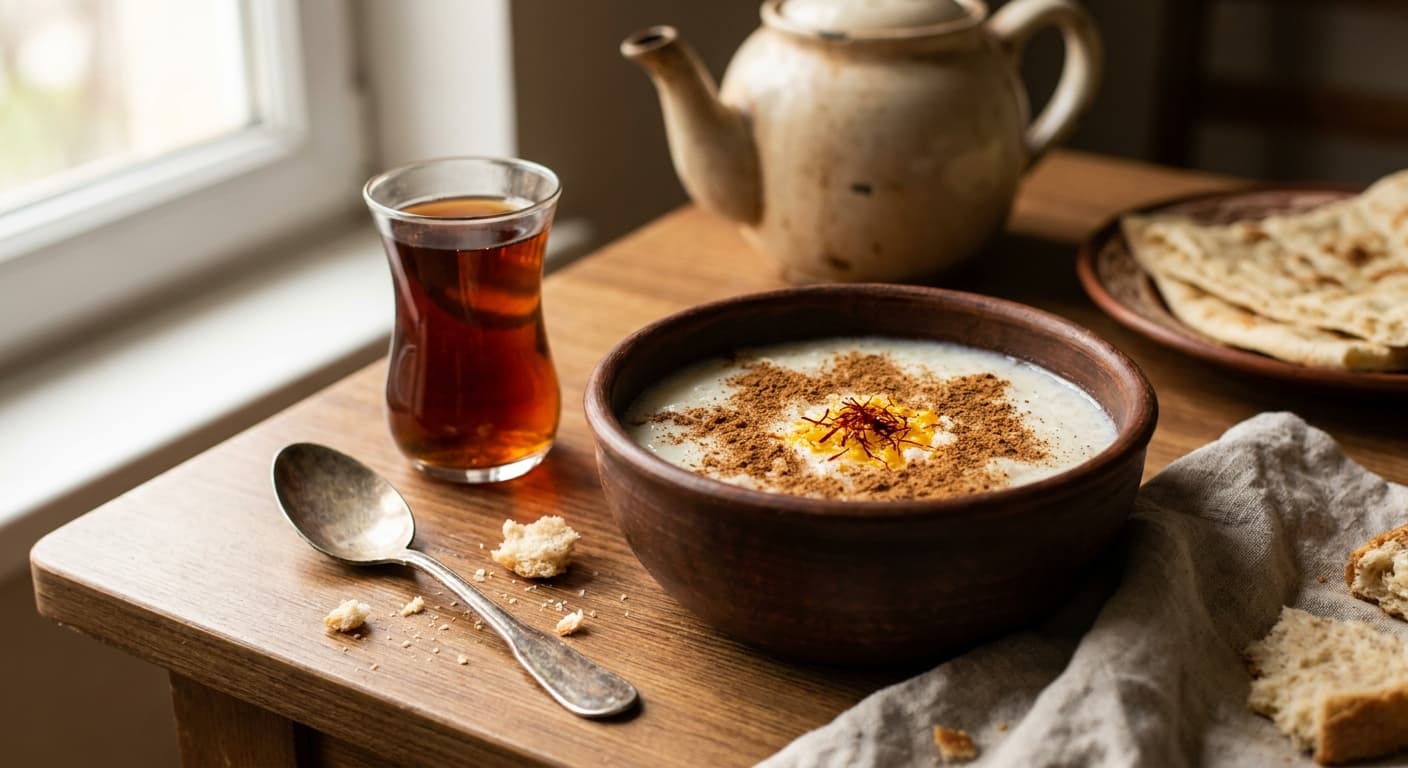
Azerbaijani Milk Rice Porridge (Südlü Sıyıq) — Creamy Breakfast Bowl
Azerbaijani · Rice Dishes · 40 min
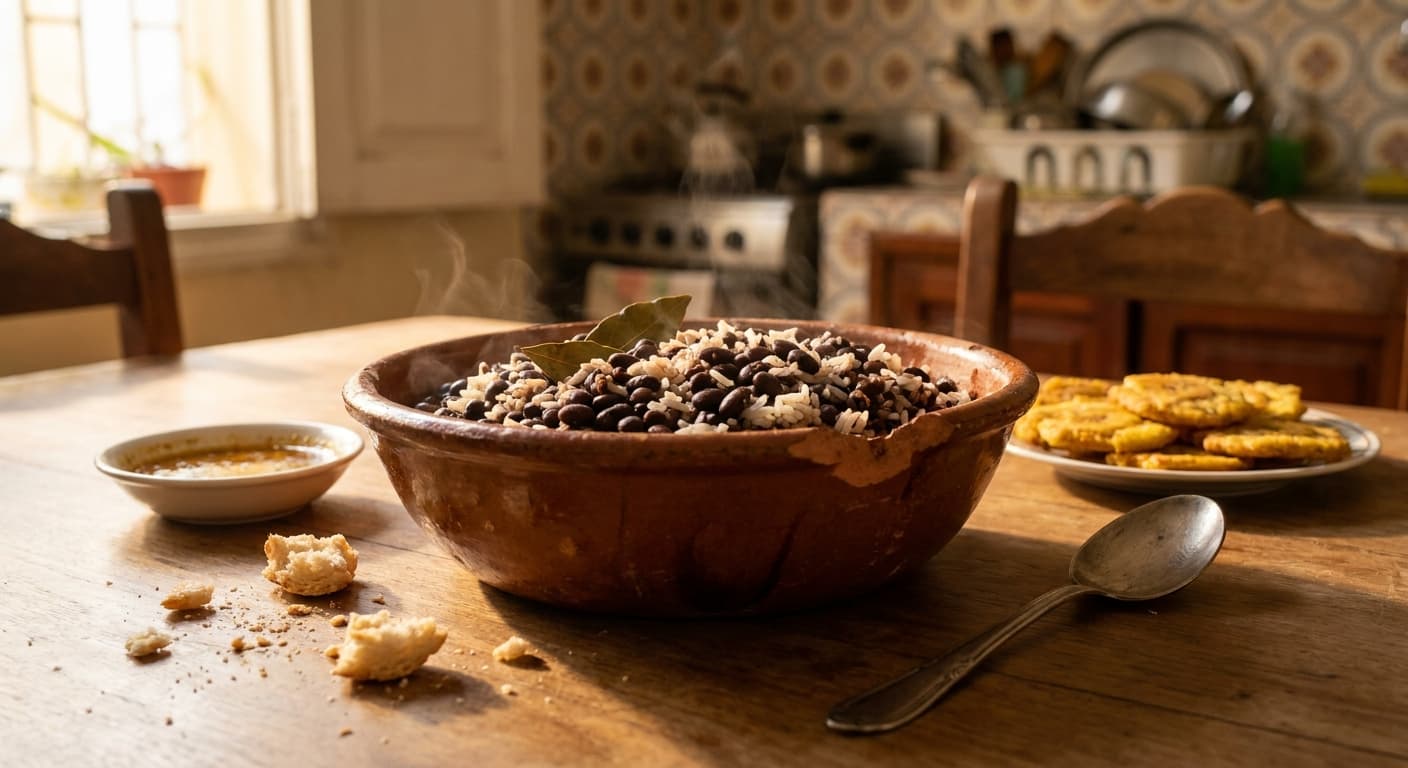
Moros y Cristianos (Moros y Cristianos) — Cuban Black Beans and Rice
Cuban · Rice Dishes · 130 min
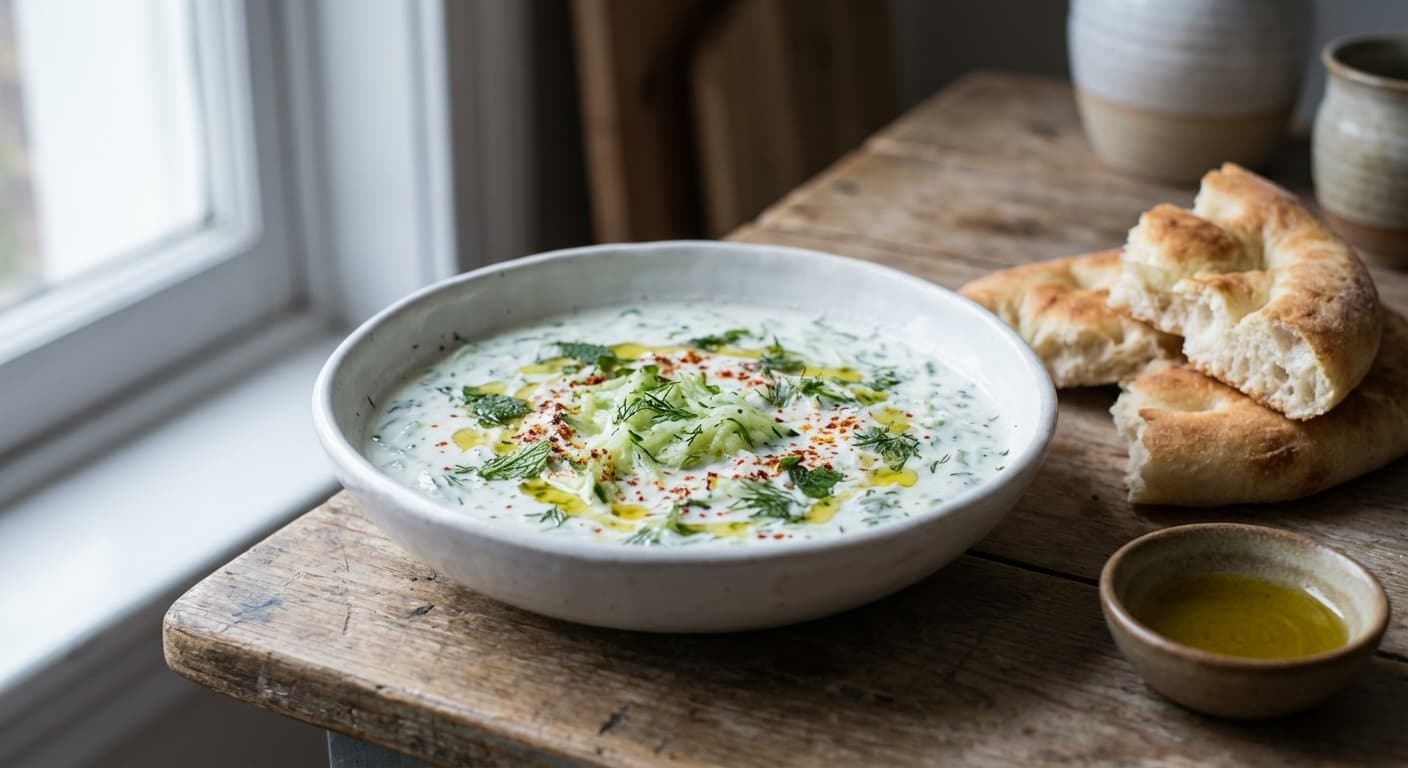
Cacık (Yoğurtlu Salatalık Mezesi) — Chilled Turkish Yogurt, Cucumber & Mint Dip
Turkish · Appetizers · 15 min
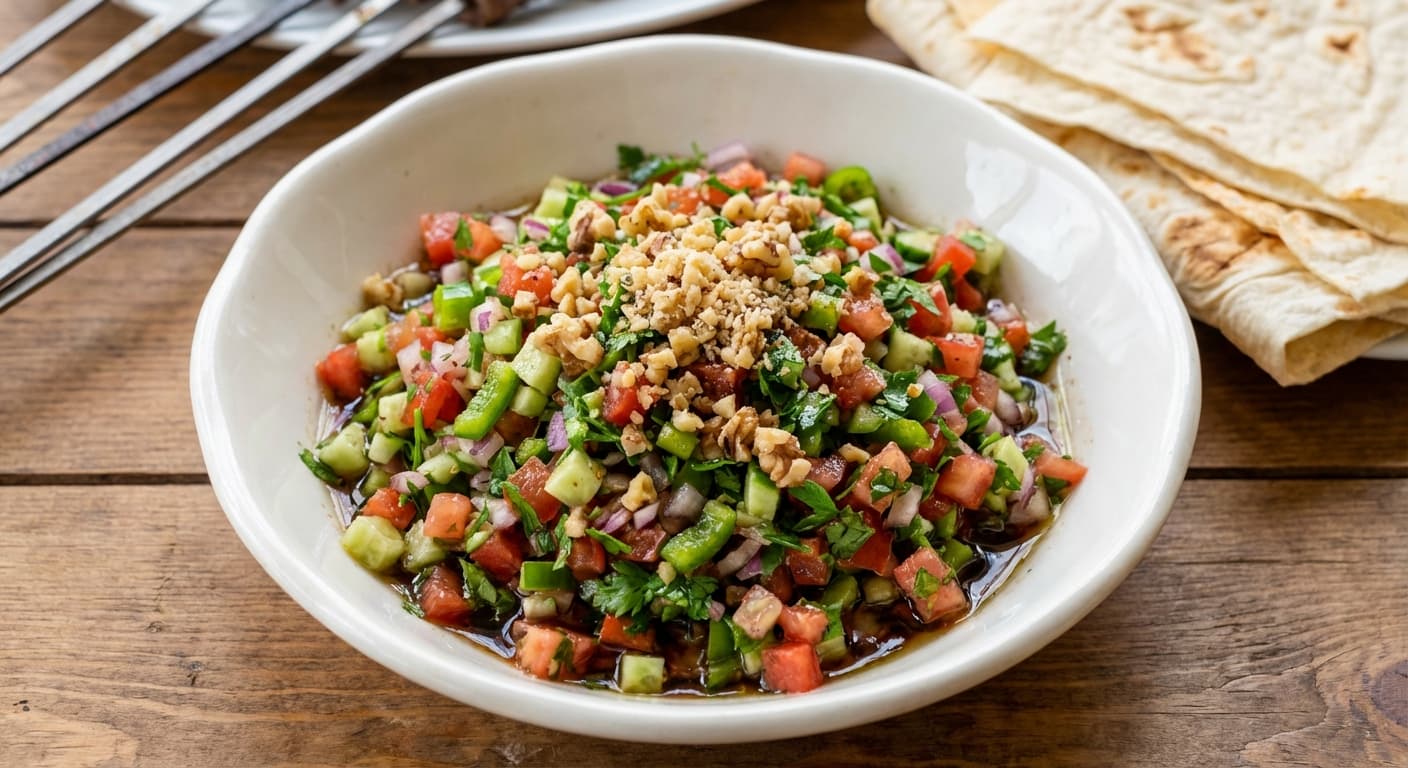
Gavurdağı Salad (Gavurdağı Salatası) — Finely Chopped Walnut & Pomegranate Salad
Turkish · Salads · 20 min
Indonesian Grilled Chicken (Ayam Bakar) — Sweet Soy-Spiced Charred Chicken
Indonesian · Main Courses · 85 min
Reviews
Cooked this recipe?
Tap the stars to rate it — that's all it takes. A few words are welcome but optional.
No ratings yet. Cooked this one? Be the first to rate it — it takes one tap.