Romanian Polenta (Mămăligă) — Firm Cornmeal Porridge
Mămăligă is Romania’s beloved cornmeal staple, often spelled mamaliga without diacritics. Made from mălai, water, and salt, it is served with sarmale, tochitură, cheese, sour cream, or stews.
Printable Recipe Card
Servings: 4 · Total: 30 min · Difficulty: easy
Ingredients (quick list)
- 1000 ml water
- 240 g coarse yellow cornmeal or Romanian mălai (use coarse or medium-coarse grind for traditional texture)
- 8 g fine sea salt
Steps (summary)
- Bring 1000 ml water to a steady boil in a heavy 3-liter saucepan or, traditionally, a small ceaun if you have one. Stir in the…
- Rain the mălai into the pot in a slow, steady stream while whisking constantly. This Romanian technique is essential for smooth…
- When all the cornmeal has been added, reduce the heat to low and switch to a sturdy wooden spoon. Cook for 20 to 25 minutes, st…
- The mămăligă is ready when it pulls slightly from the sides of the pan, looks glossy, and holds soft ridges when stirred. If it…
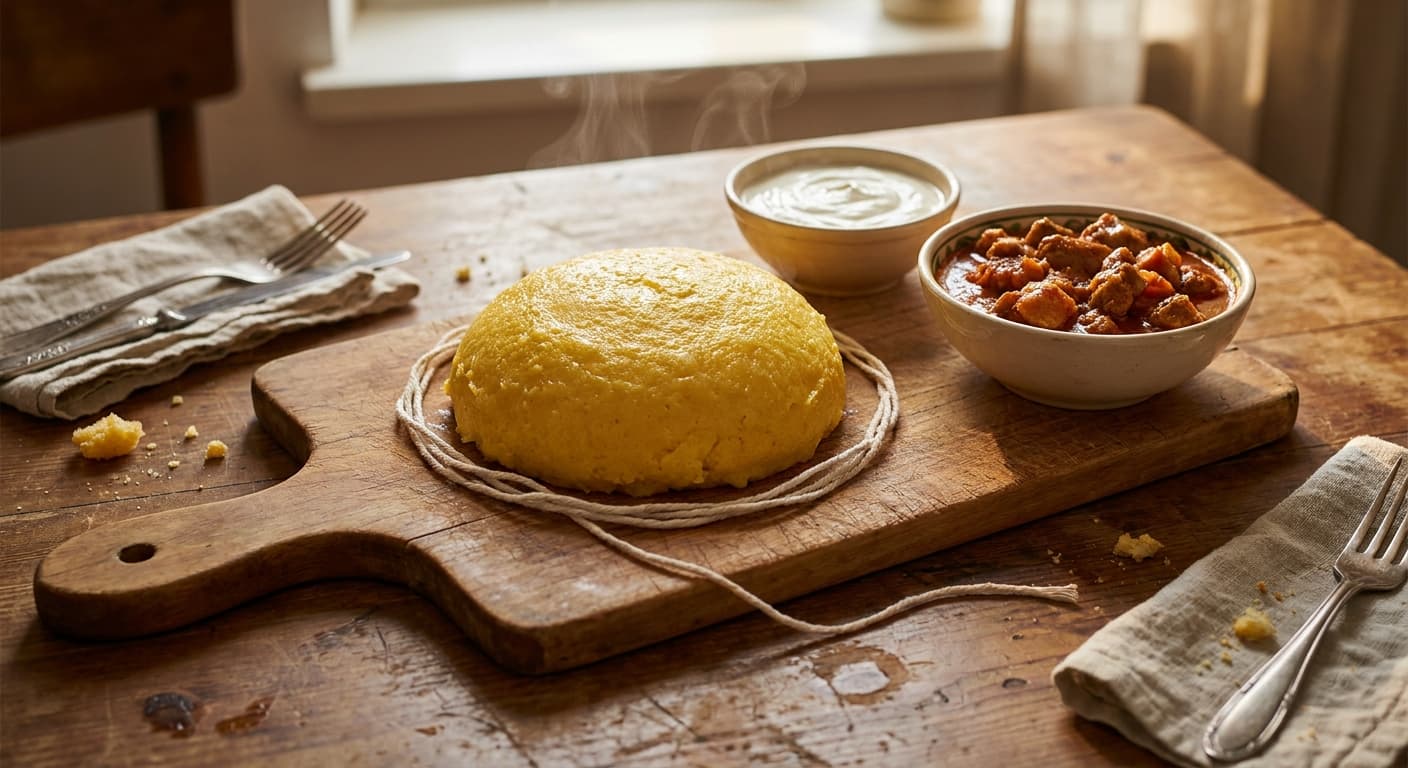
- For a firm table-style mămăligă, scrape it onto a damp wooden board or wide platter and shape it into a low mound with a wet sp…
Cultural Background
Sanda Marin presents mămăligă as a foundation of Romanian home cooking, a humble cornmeal dish that replaced older millet porridges and still anchors meals with sarmale, cheese, fish, and rustic stews.
Equipment
💡 Tips
- Use coarse or medium-coarse cornmeal; very fine corn flour turns gluey and lacks the rustic bite expected in Romanian mămăligă.
- Keep the heat low after the cornmeal thickens, because gentle cooking hydrates the grains and prevents scorching.
- For a softer porridge to spoon under stews, increase the water to 1200 ml while keeping the cornmeal at 240 g.
⚠️ Common Mistakes
❌ Adding the cornmeal all at once
✅ Fix: Sprinkle it in gradually while whisking so each grain hydrates before it can form lumps.
❌ Cooking over heat that is too high
✅ Fix: Lower the heat once the mixture thickens and stir frequently to prevent scorching and dangerous spitting.
❌ Stopping the cooking too early
✅ Fix: Cook for the full 20 to 25 minutes so the cornmeal loses its raw taste and the mămăligă becomes glossy.
🧊 How to Store
Cool leftover mămăligă completely, wrap tightly, and refrigerate for up to 4 days. Reheat slices in a covered skillet with 30 ml water, or pan-fry them until crisp on the outside and hot in the center.
📅 Make Ahead
Cook mămăligă up to 1 day ahead, spread it in a shallow dish, and chill it covered. Slice and pan-fry or re-steam before serving.
🍽️ Pairs Well With
- Sarmale
- tochitură
- ciorbă de fasole
- grilled trout
- brânză
- sour cream
- fried eggs.
Regional Variations
- Mămăligă cu brânză și smântână layers hot cornmeal with salty sheep’s cheese and sour cream.
- Bulz shapes firm mămăligă around cheese, then bakes or grills it until the center melts.
- Softer Moldavian-style mămăligă is often spooned rather than sliced and served under stews or fish.
Ingredients
- 1000 mlwater
- 240 gcoarse yellow cornmeal or Romanian mălai (use coarse or medium-coarse grind for traditional texture)
- 8 gfine sea salt
🔄 Substitutions
- Romanian mălai→ medium-grind Italian polenta cornmeal
- water→ whole milk
- fine sea salt→ kosher salt
Instructions
- 1
Bring 1000 ml water to a steady boil in a heavy 3-liter saucepan or, traditionally, a small ceaun if you have one. Stir in the salt and lower the heat to medium so the water is bubbling but not splashing.
- 2
Rain the mălai into the pot in a slow, steady stream while whisking constantly. This Romanian technique is essential for smooth mămăligă because dumping the cornmeal in at once creates hard lumps that are difficult to break later.
- 3
When all the cornmeal has been added, reduce the heat to low and switch to a sturdy wooden spoon. Cook for 20 to 25 minutes, stirring every 1 to 2 minutes and scraping the bottom and corners so the mamaliga thickens evenly without scorching.
- 4
The mămăligă is ready when it pulls slightly from the sides of the pan, looks glossy, and holds soft ridges when stirred. If it is bubbling aggressively, lower the heat further because thick cornmeal can spit and burn.
- 5
For a firm table-style mămăligă, scrape it onto a damp wooden board or wide platter and shape it into a low mound with a wet spatula. Let it stand for 3 minutes, then slice it with cotton kitchen string or a wet knife and serve hot with sarmale, tochitură, brânză, or sour cream.
🪪 Recipe Passport
Cultural Background
Sanda Marin presents mămăligă as a foundation of Romanian home cooking, a humble cornmeal dish that replaced older millet porridges and still anchors meals with sarmale, cheese, fish, and rustic stews.
Regional Variations
Researched from multiple sources and validated by the Zaffaron editorial team. Every recipe is tested for accuracy, measurements, and cultural authenticity.
📚 Sources & Cultural References
- Sanda Marin — Carte de bucate — (1936)
- Irina Georgescu — Carpathia: Food from the Heart of Romania — (2020)
Sources cited by the Zaffaron editorial team during recipe research. Cultural and culinary references supporting authenticity claims.
Nutrition per serving
Pairs well with
If you enjoyed this recipe, here are a few related Zaffaron recipes to try next.
Does your family make this differently?
Every family has their own version. Maybe your grandmother adds a secret ingredient, or your aunt has a completely different technique. Preserve your family's version — with their name on it, forever.
You Might Also Like
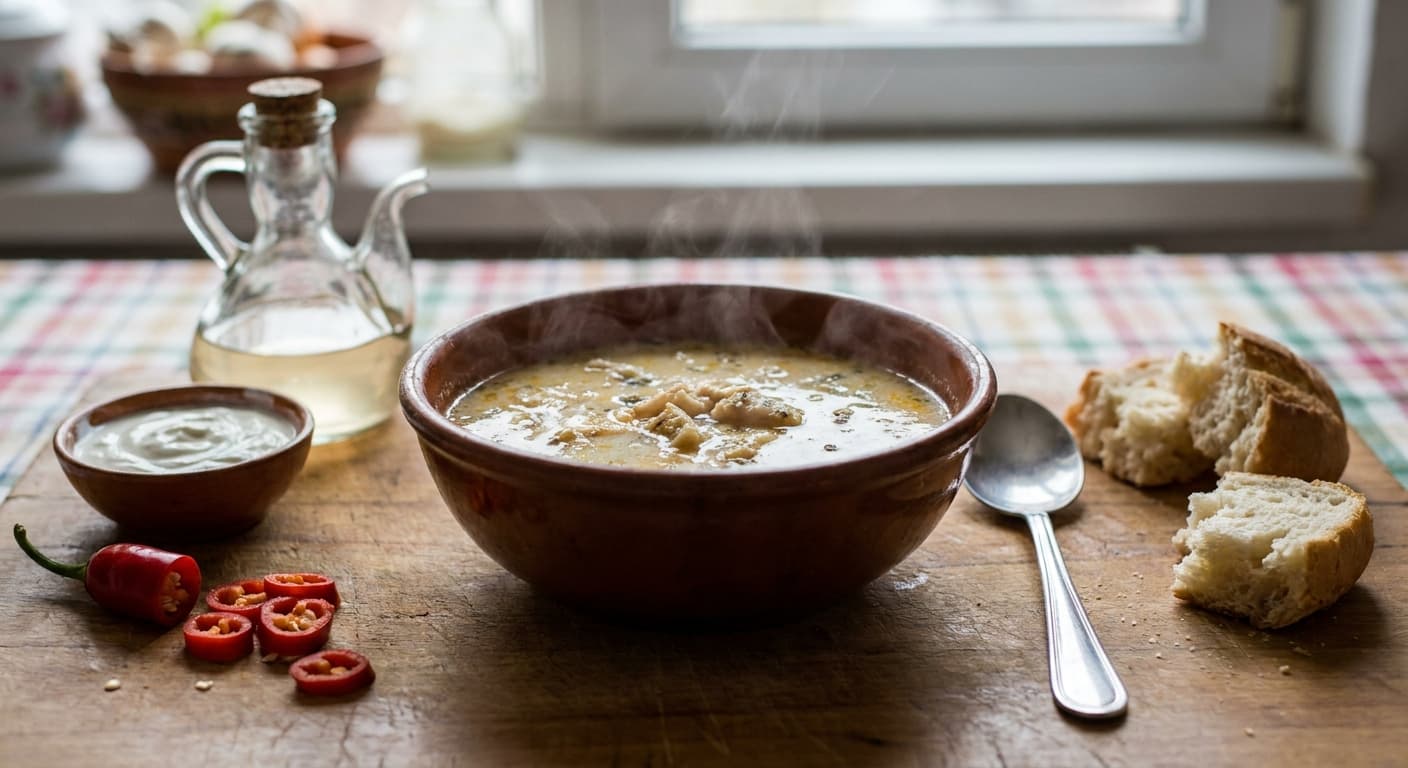
Romanian Tripe Soup (Ciorbă de burtă) — Creamy Sour Beef Tripe Soup
Romanian · Soups · 270 min
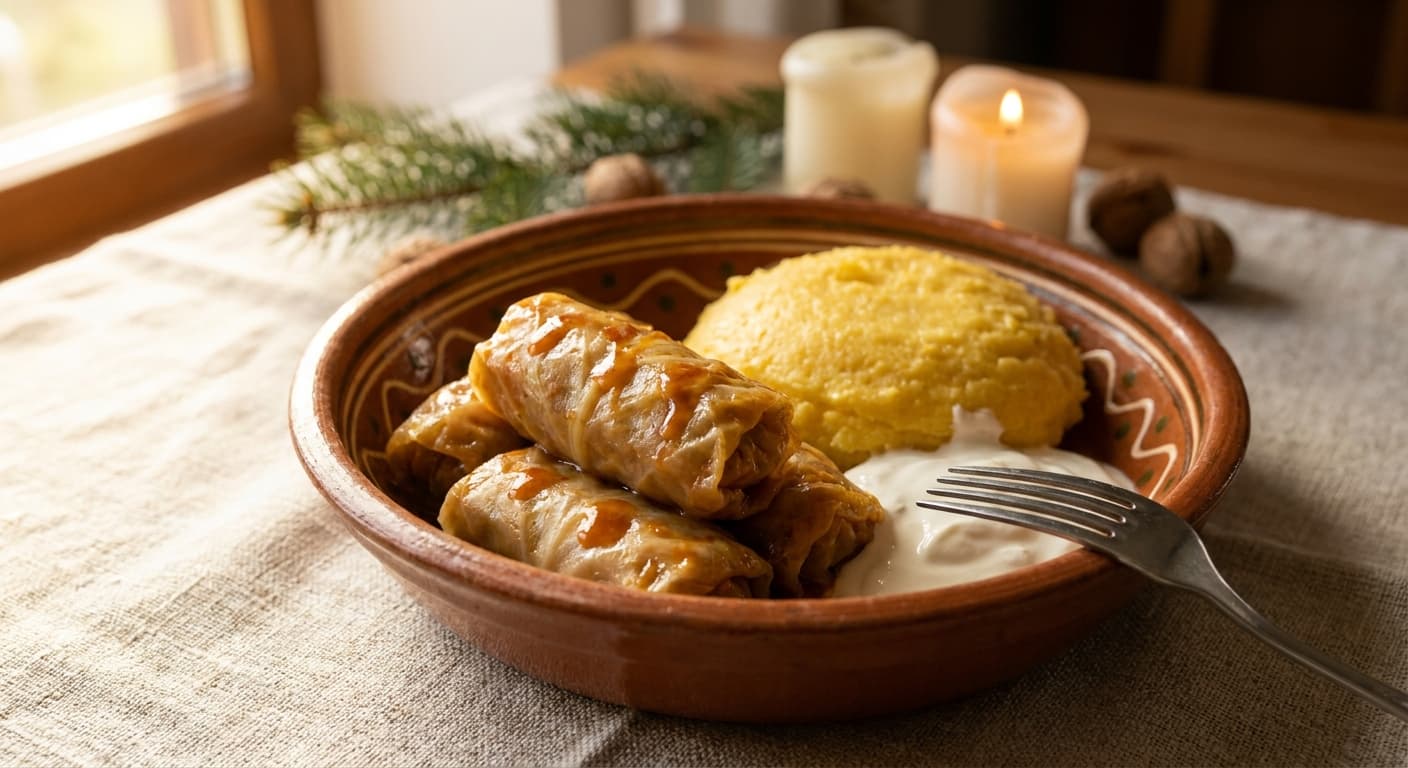
Romanian Sarmale (Sarmale) — Sour Cabbage Rolls with Pork and Rice
Romanian · Main Courses · 235 min
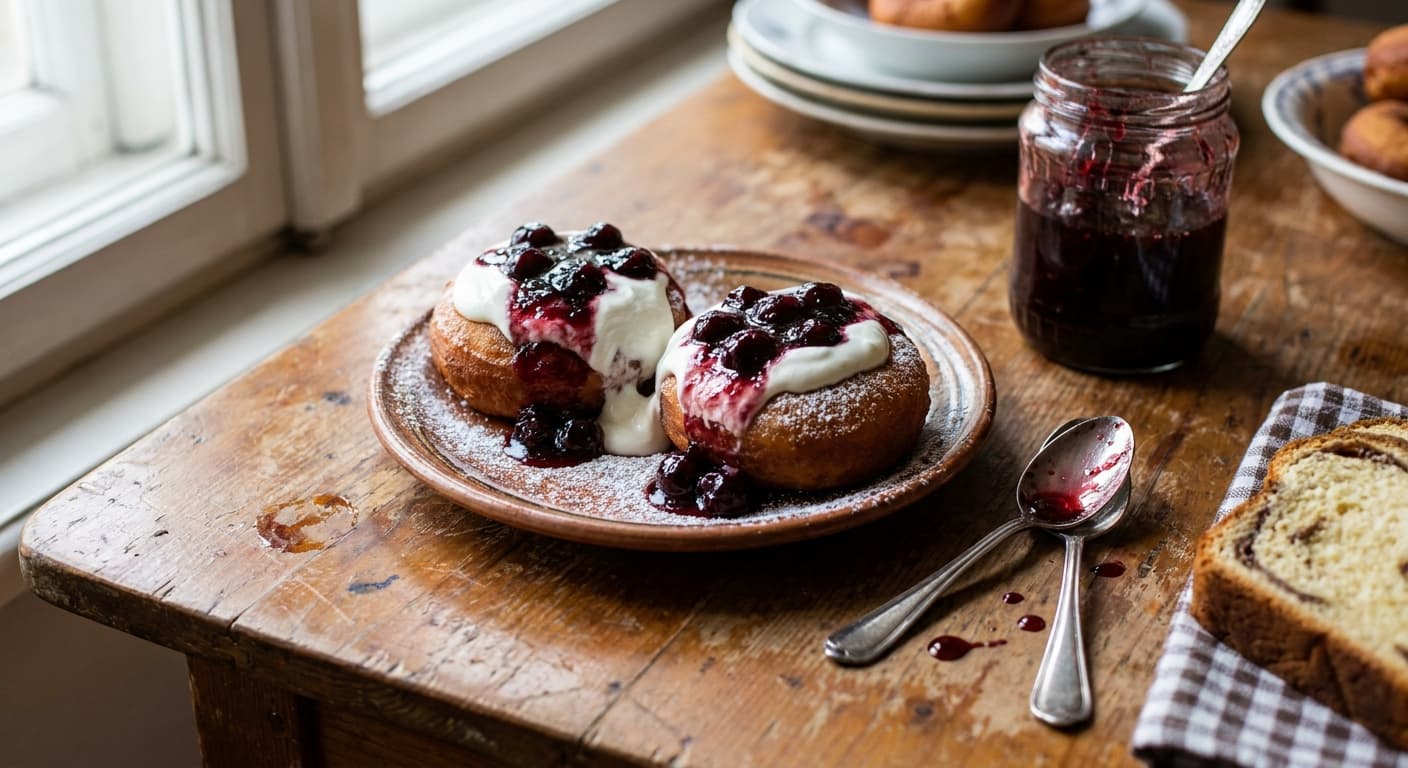
Romanian Cheese Doughnuts (Papanași) — Fried Curd-Cheese Rings with Sour Cream and Jam
Romanian · Desserts · 45 min
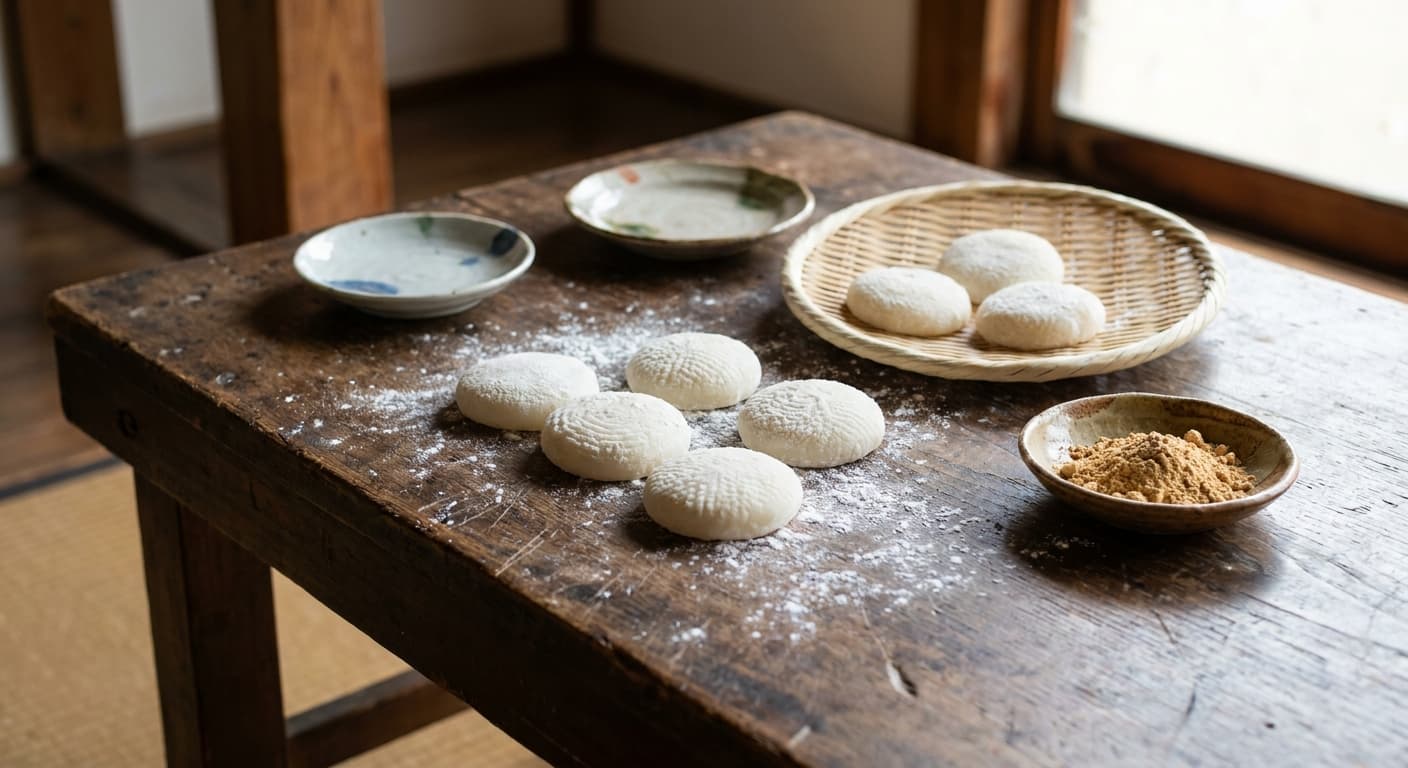
Mochi (餅) — Traditional Pounded Glutinous Rice Cakes
Japanese · Side Dishes · 100 min
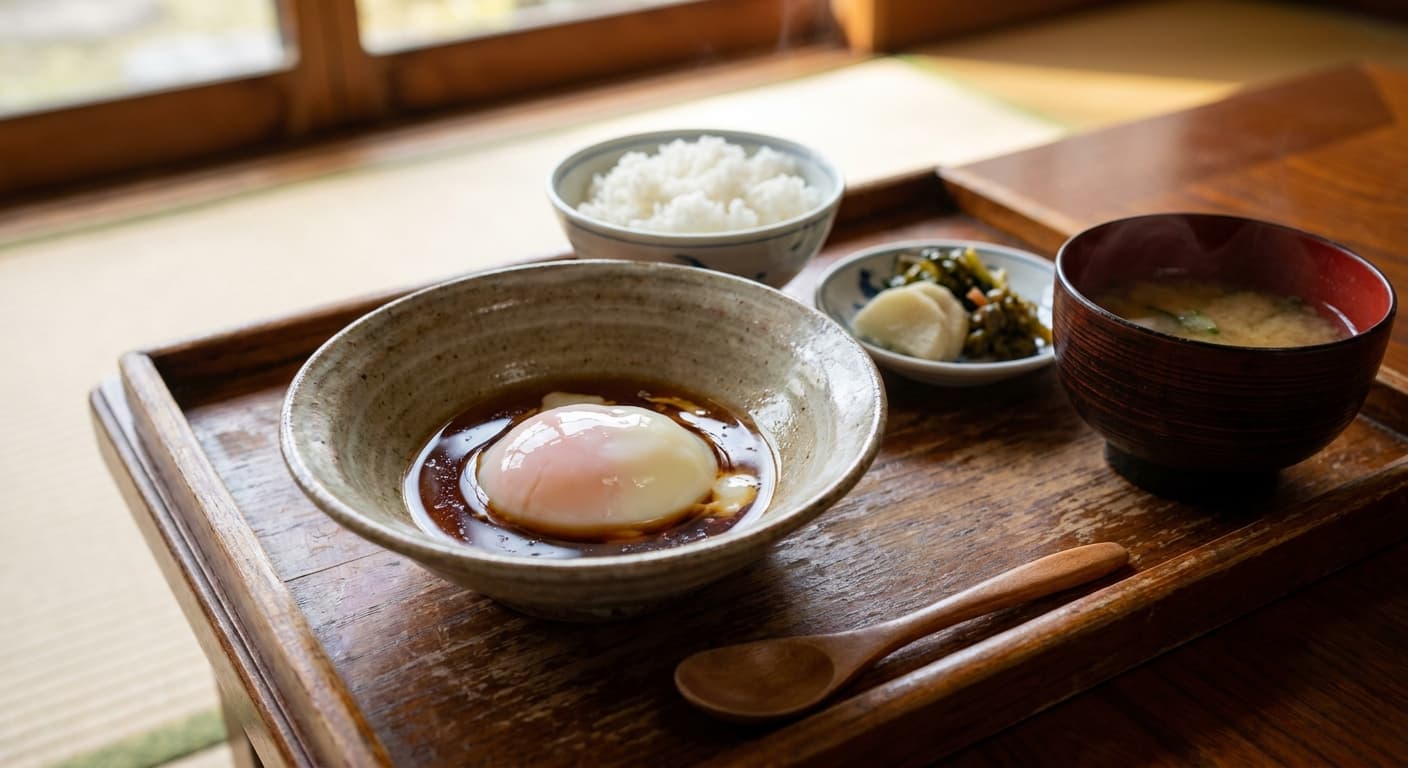
Onsen Tamago (温泉卵) — Silky Japanese Hot-Spring Egg
Japanese · Side Dishes · 40 min
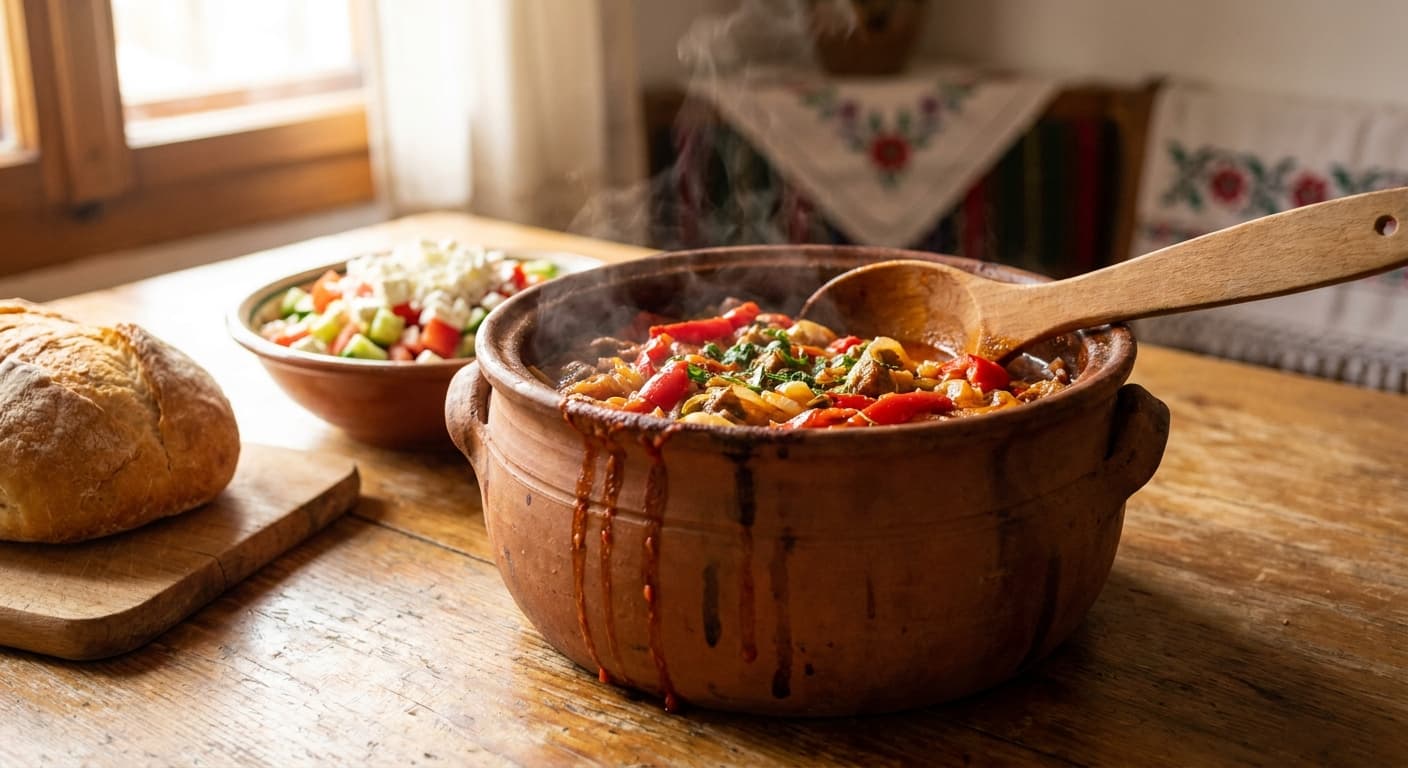
Bulgarian Pork Kavarma (Каварма) — Clay-Pot Pepper and Pork Stew
Bulgarian · Stews · 115 min
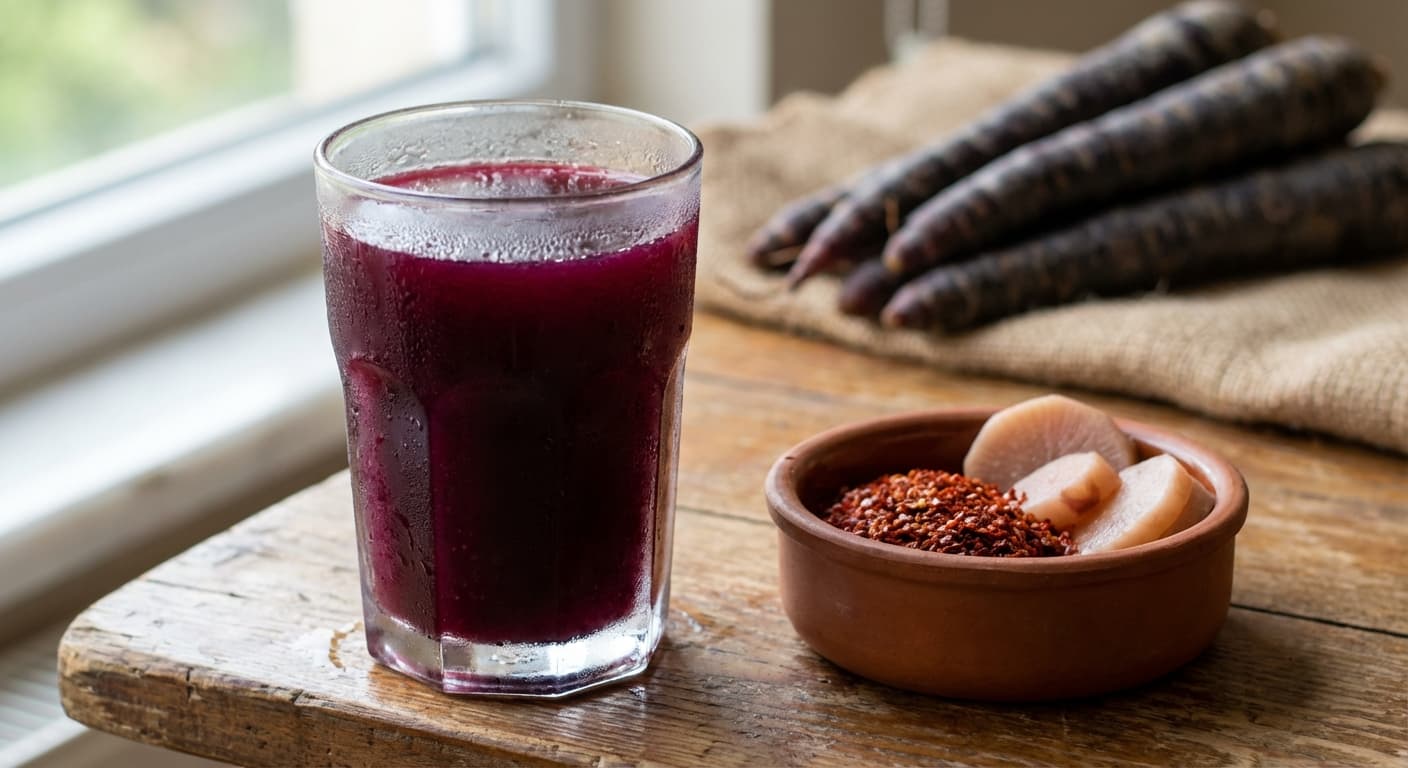
Salgam Juice (Şalgam) — Spicy, tangy fermented black-carrot drink
Turkish · Drinks · 25 min
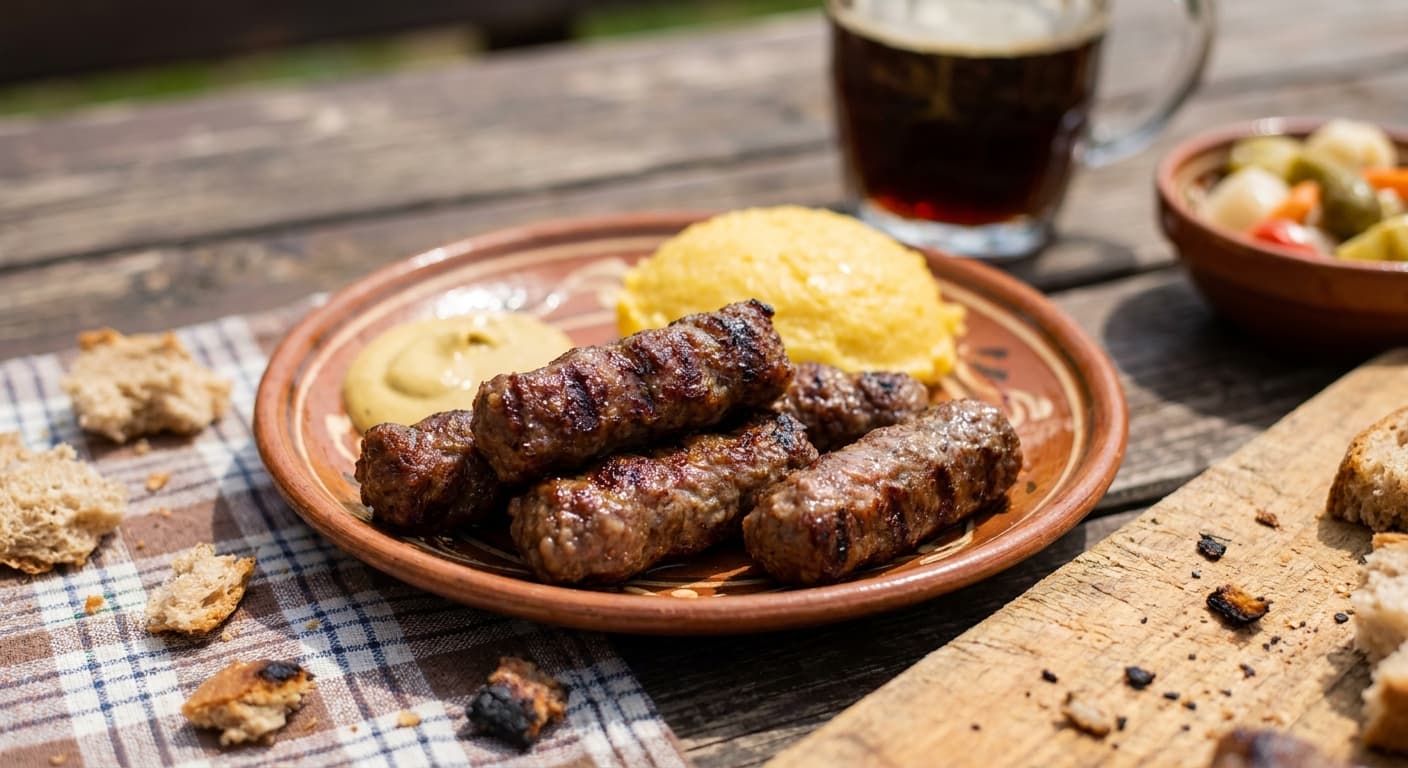
Mici (Mititei) — Romanian Grilled Garlic Sausages
Romanian · Kebabs · 47 min
Reviews
Cooked this recipe?
Tap the stars to rate it — that's all it takes. A few words are welcome but optional.
No ratings yet. Cooked this one? Be the first to rate it — it takes one tap.