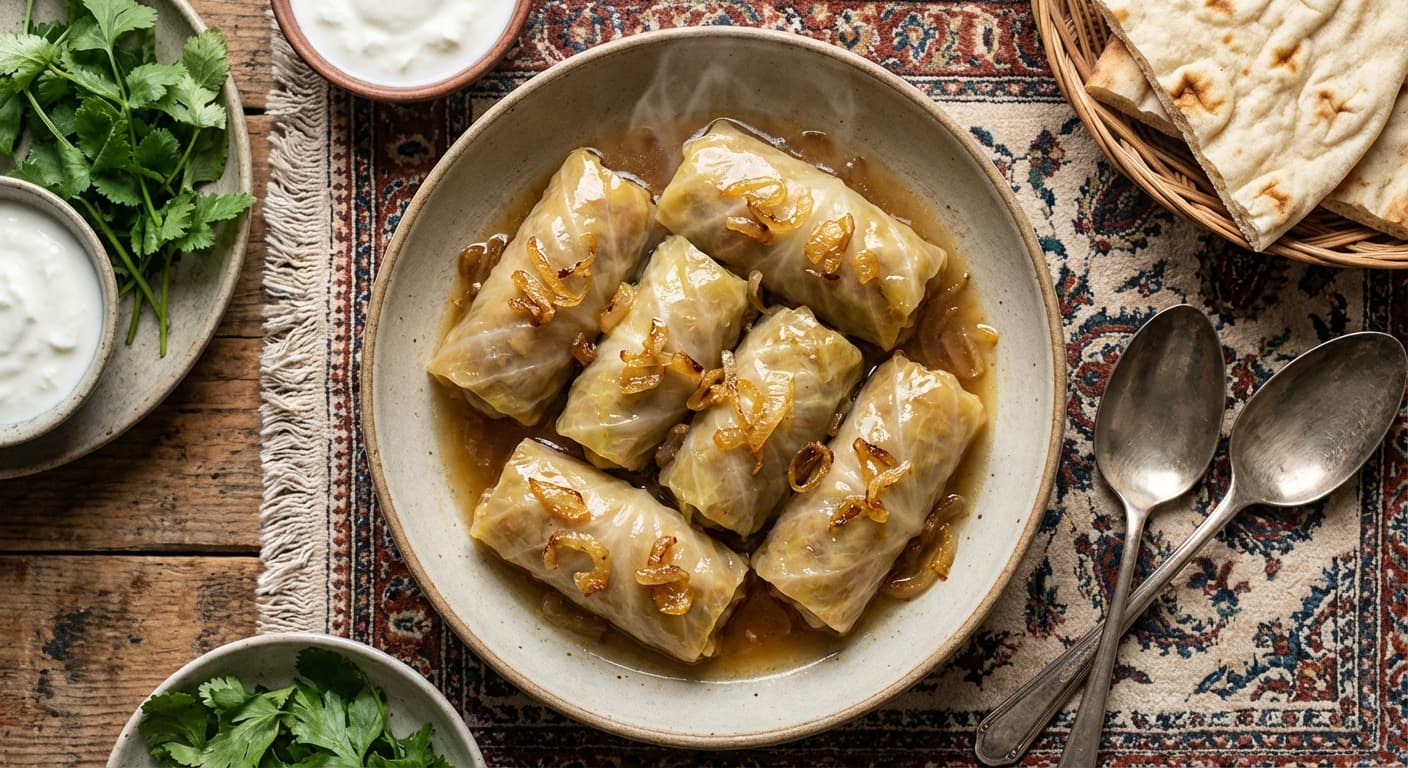
Dolmeh Kalam (دلمه کلم) — Persian Stuffed Cabbage Rolls
Tender cabbage leaves wrapped around a savory ground beef filling with fried onions and breadcrumbs, gently simmered in a buttery beef broth until juicy and aromatic. A comforting Persian home-style dolmeh served warm with rice or bread.
Printable Recipe Card
Servings: 6 · Total: 120 min · Difficulty: medium
Ingredients (quick list)
- 1200 g Green cabbage (or red cabbage) (1 medium head; outer leaves removed, core trimmed)
- 18 g Fine salt (divided; includes salting blanching water and seasoning filling/broth)
- 500 g Ground beef (85–90% lean) (halal-certified if needed)
- 300 g Yellow onions (finely diced)
- 60 g Unsalted butter (divided)
- 90 g Sandwich bread (crumbed finely; about 3 slices, crusts optional)
- 50 g Large egg (1 egg; helps bind the filling)
- 2 g Black pepper (about 1 teaspoon, divided)
- 720 ml Beef broth (low-sodium preferred)
- 30 g Tomato paste (about 2 tablespoons; optional but adds color and depth)
- 30 ml Lemon juice (about 2 tablespoons; balances the buttery broth)
- 2000 ml Water (for blanching cabbage leaves)
Steps (summary)
- Prepare the cabbage leaves: bring 2000 ml water to a steady boil in a large pot. Stir in 10 g of the salt. Lower in the cabbage…
- Cool and trim: spread blanched leaves on a tray to cool 10 minutes. For each leaf, shave the thick center rib with a knife so i…
- Fry the onions: heat 30 g butter in a skillet over medium heat. Add diced onions and cook 12–15 minutes, stirring often, until…
- Mix the filling: in a large bowl, combine ground beef, fried onions, bread crumbs, egg, 6 g salt, and 1 g black pepper. Mix wit…
- Roll the dolmeh: place a cabbage leaf rib-side up. Add 45–55 g filling near the base, shape into a short log, then fold in the…
- Arrange for simmering: line the bottom of a wide pot or Dutch oven with any torn cabbage leaves. Pack the rolls snugly in one o…
+ 2 more steps in the full instructions section below.
Cultural Background
Stuffed vegetables are a long-standing home-cooking tradition across Iran and neighboring regions, with families adapting fillings and cooking liquids to local tastes and seasons. Cabbage dolmeh is commonly prepared in cooler months when cabbages are abundant and hearty dishes are preferred.
Equipment
💡 Tips
- Choose a cabbage with large, flexible leaves; green cabbage is easiest to roll, while red cabbage gives a slightly sweeter, earthier flavor and a deeper color.
- Shaving the thick rib (instead of cutting it out) keeps the leaf intact and helps prevent leaks during simmering.
- Keep the simmer very gentle; a hard boil can split the leaves and toughen the meat.
- If your pot is narrow, cook in two layers and place a small heatproof plate on top to keep rolls from floating and unrolling.
- For cleaner flavor, use low-sodium broth and season at the end after reduction.
⚠️ Common Mistakes
❌ Boiling the rolls vigorously
💡 Why: A hard boil can burst the cabbage leaves and make the filling dense, while also emulsifying fat into a greasy broth.
✅ Fix: Bring to a simmer, then reduce to low so the surface barely trembles; keep covered and adjust heat as needed.
❌ Not trimming the thick leaf ribs
💡 Why: Thick ribs prevent tight rolling, causing gaps that let broth in and filling out, leading to unraveling.
✅ Fix: Shave the rib with a knife to flatten it while keeping the leaf intact; work gradually to avoid cutting through.
❌ Overmixing the meat filling
💡 Why: Overworked ground meat becomes springy and tough after simmering, losing the tender, home-style texture.
✅ Fix: Mix just until cohesive (about 60–90 seconds) and then rest the mixture so crumbs hydrate instead of extra mixing.
❌ Using very salty broth and salting heavily early
💡 Why: As the liquid reduces, salt concentration increases and can make the dish unpleasantly salty.
✅ Fix: Use low-sodium broth, add salt in measured amounts, and adjust at the end after tasting the reduced broth.
🧊 How to Store
Cool to room temperature within 2 hours, then refrigerate in a sealed container with some broth up to 4 days. Reheat covered in a saucepan over low heat 12–15 minutes (do not boil). Freeze up to 2 months; thaw overnight in the refrigerator and reheat gently with a splash of broth or water.
📅 Make Ahead
Blanch leaves and fry onions up to 2 days ahead (refrigerate). Form rolls up to 24 hours ahead and refrigerate in a single layer. Cook the next day, adding 5–10 minutes if starting from cold. Cooked dolmeh tastes even better after resting overnight in the broth.
🍽️ Pairs Well With
- Steamed basmati rice
- Plain yogurt or yogurt-cucumber salad
- Fresh herbs and radishes
- Flatbread
Regional Variations
- Tehran-style home cookingOften emphasizes a buttery, clear broth with mild seasoning, letting fried onion and cabbage sweetness lead; served with rice and a spoon of broth.
- Azerbaijan region (northwest Iran)Commonly includes a slightly brighter, more tangy cooking liquid and may use a mix of meats; rolls are often packed tightly and served with extra sauce.
Ingredients
- 1200 gGreen cabbage (or red cabbage) (1 medium head; outer leaves removed, core trimmed)
- 18 gFine salt (divided; includes salting blanching water and seasoning filling/broth)
- 500 gGround beef (85–90% lean) (halal-certified if needed)
- 300 gYellow onions (finely diced)
- 60 gUnsalted butter (divided)
- 90 gSandwich bread (crumbed finely; about 3 slices, crusts optional)
- 50 gLarge egg (1 egg; helps bind the filling)
- 2 gBlack pepper (about 1 teaspoon, divided)
- 720 mlBeef broth (low-sodium preferred)
- 30 gTomato paste (about 2 tablespoons; optional but adds color and depth)
- 30 mlLemon juice (about 2 tablespoons; balances the buttery broth)
- 2000 mlWater (for blanching cabbage leaves)
🔄 Substitutions
- Ground beef→ Ground lamb
- Sandwich bread crumbs→ Panko bread crumbs
- Butter→ Ghee
Instructions
- 1
Prepare the cabbage leaves: bring 2000 ml water to a steady boil in a large pot. Stir in 10 g of the salt. Lower in the cabbage, cover, and simmer 8–10 minutes, turning once, until outer leaves loosen. Remove, peel off softened leaves, and return cabbage to pot 2–4 minutes as needed to release more leaves.
- 2
Cool and trim: spread blanched leaves on a tray to cool 10 minutes. For each leaf, shave the thick center rib with a knife so it bends without tearing (do not cut through). Aim for 14–18 usable leaves. If any leaves tear, reserve them to line the pot later so the rolls do not stick or scorch.
- 3
Fry the onions: heat 30 g butter in a skillet over medium heat. Add diced onions and cook 12–15 minutes, stirring often, until deeply golden and sweet. Transfer to a bowl and cool 5 minutes. This step builds the characteristic home-style flavor and prevents raw onion taste in the finished rolls.
- 4
Mix the filling: in a large bowl, combine ground beef, fried onions, bread crumbs, egg, 6 g salt, and 1 g black pepper. Mix with clean hands 60–90 seconds until evenly distributed and slightly tacky, but do not overwork. Let the mixture rest 10 minutes so the crumbs hydrate and the filling holds together.
- 5
Roll the dolmeh: place a cabbage leaf rib-side up. Add 45–55 g filling near the base, shape into a short log, then fold in the sides and roll tightly like a small burrito. Repeat with remaining leaves. Keep rolls uniform so they cook evenly; set them seam-side down on a plate as you work.
- 6
Arrange for simmering: line the bottom of a wide pot or Dutch oven with any torn cabbage leaves. Pack the rolls snugly in one or two layers, seam-side down. Snug packing prevents unrolling during cooking. Dot the top with the remaining 30 g butter in small pieces so it melts evenly into the broth.
- 7
Make the buttery broth and cook: whisk beef broth with tomato paste (if using), lemon juice, remaining 2 g black pepper, and remaining 2 g salt. Pour over rolls; liquid should come about halfway up. Cover, bring to a gentle simmer over medium heat, then reduce to low and cook 55–60 minutes at a quiet simmer.
- 8
Rest and serve: turn off heat and rest, covered, 10 minutes so juices redistribute and the rolls firm up. Taste the broth and adjust salt if needed. Serve 2–3 rolls per person with a spoon of buttery broth over the top. Keep warm over very low heat up to 20 minutes without boiling.
🪪 Recipe Passport
Cultural Background
Stuffed vegetables are a long-standing home-cooking tradition across Iran and neighboring regions, with families adapting fillings and cooking liquids to local tastes and seasons. Cabbage dolmeh is commonly prepared in cooler months when cabbages are abundant and hearty dishes are preferred.
Regional Variations
Researched from multiple sources and validated by the Zaffaron editorial team. Every recipe is tested for accuracy, measurements, and cultural authenticity.
Nutrition per serving
Pairs well with
If you enjoyed this recipe, here are a few related Zaffaron recipes to try next.
Does your family make this differently?
Every family has their own version. Maybe your grandmother adds a secret ingredient, or your aunt has a completely different technique. Preserve your family's version — with their name on it, forever.
You Might Also Like
Chelo Kebab Koobideh (چلو کباب کوبیده) — Persian Minced Meat Skewers with Saffron Rice
Persian · Kebabs · 75 min
Koofteh Havij (کوفته هویج) — Persian Carrot Meatballs in Saffron-Tomato Broth
Persian · Main Courses · 120 min
Pan-Seared Joojeh Kebab (جوجه کباب تابهای) — Persian Saffron Skillet Chicken
Persian · Kebabs · 34 min
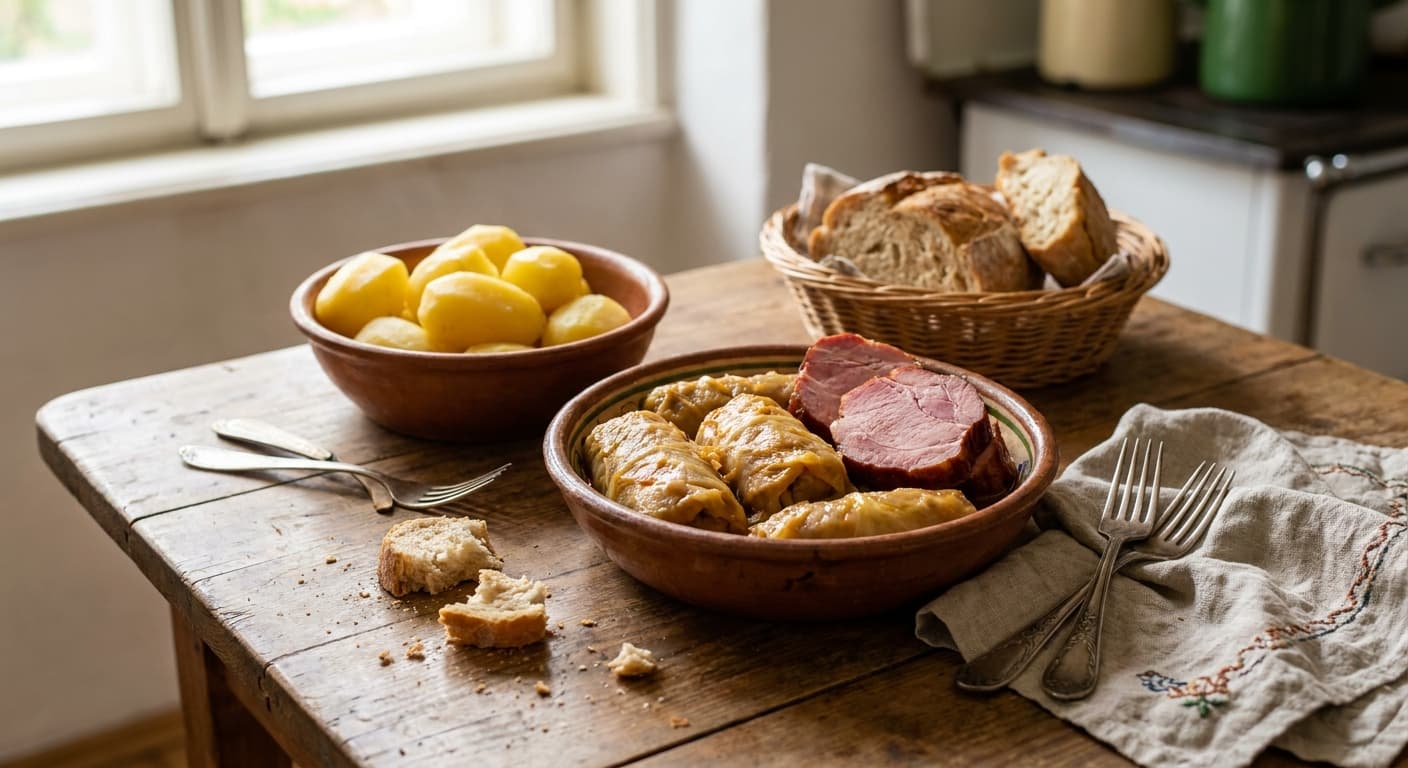
Sinj Stuffed Cabbage Rolls (Sinjski arambaši) — Hand-Chopped Meat in Sour Cabbage
Croatian · Main Courses · 245 min
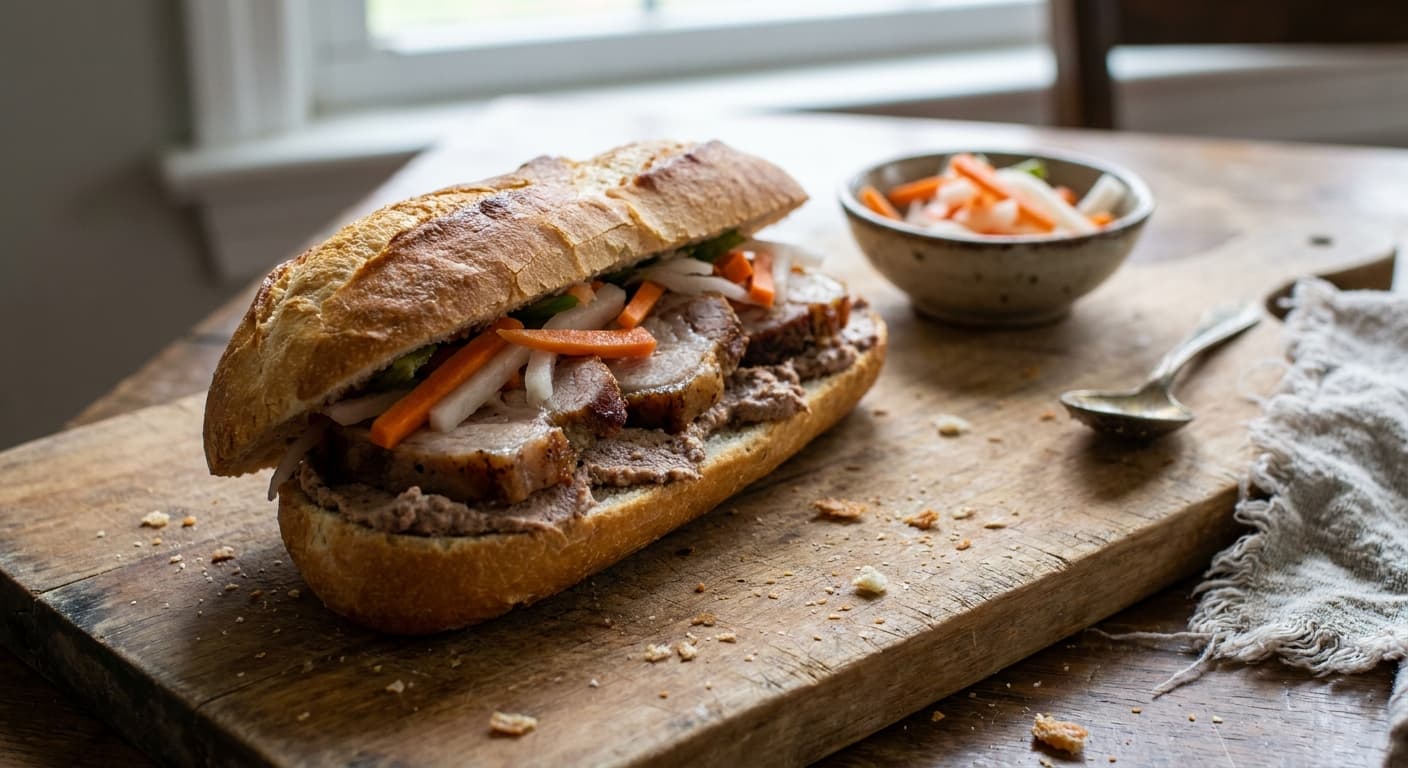
Num Pang Pate (នំប៉័ងប៉ាតេ) — Cambodian Baguette with Pate and Pickles
Cambodian · Main Courses · 60 min
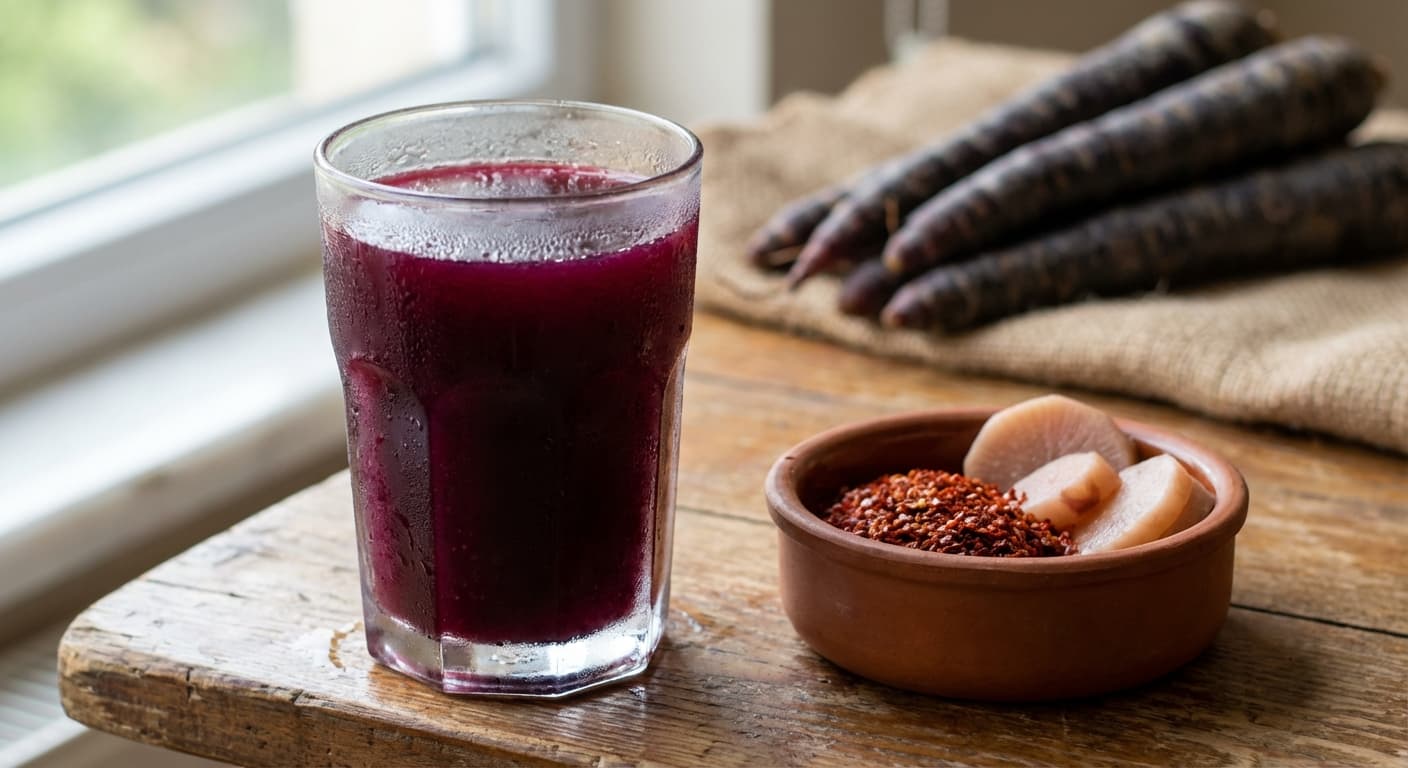
Salgam Juice (Şalgam) — Spicy, tangy fermented black-carrot drink
Turkish · Drinks · 25 min
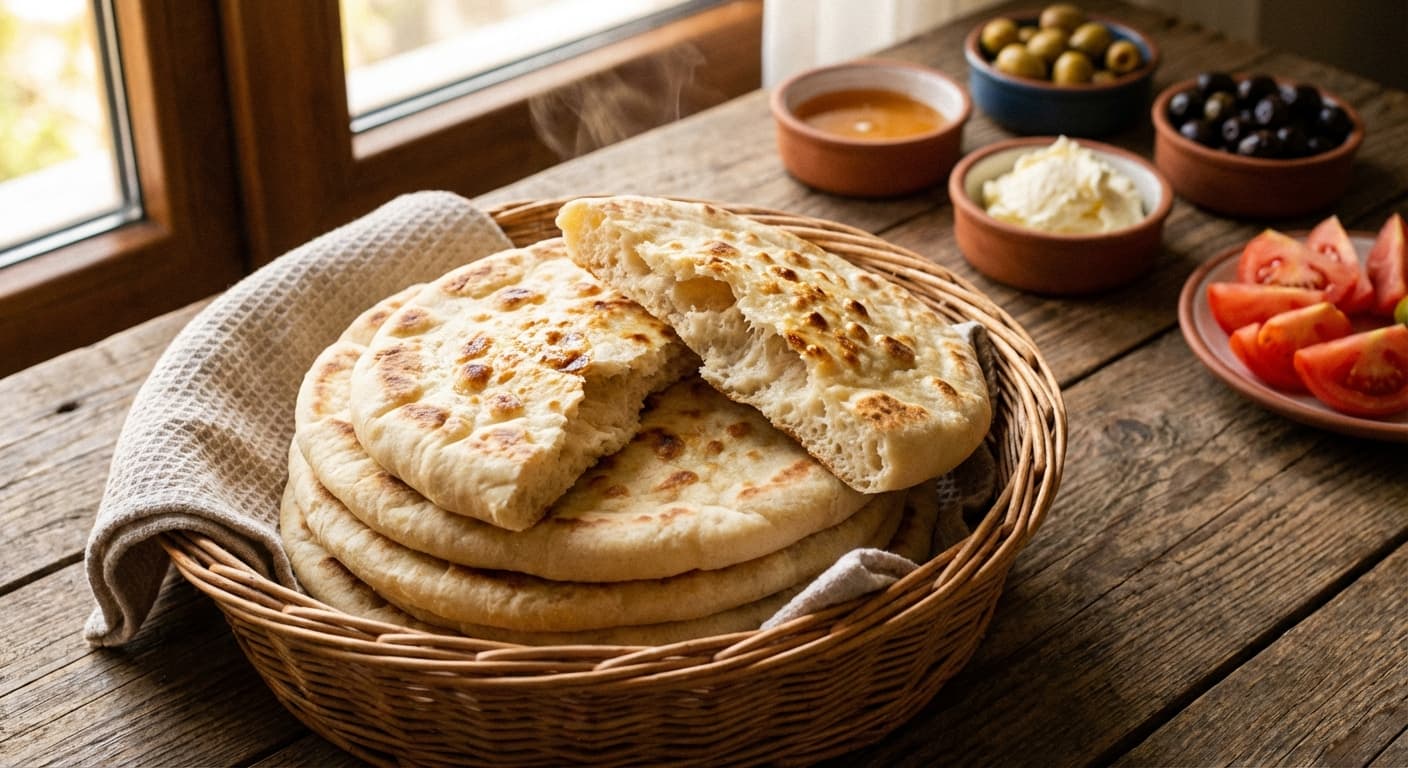
Bazlama (بازلاما) — Puffy Turkish Village Flatbread Cooked on a Saj
Turkish · Breads · 38 min
Beggar's Chicken (叫化鸡) — Lotus-Wrapped Clay-Baked Jiangnan Chicken
Chinese · Main Courses · 240 min
Reviews
Cooked this recipe?
Tap the stars to rate it — that's all it takes. A few words are welcome but optional.
No ratings yet. Cooked this one? Be the first to rate it — it takes one tap.