Kama (Kama) — Estonian Toasted Grain Kefir Drink
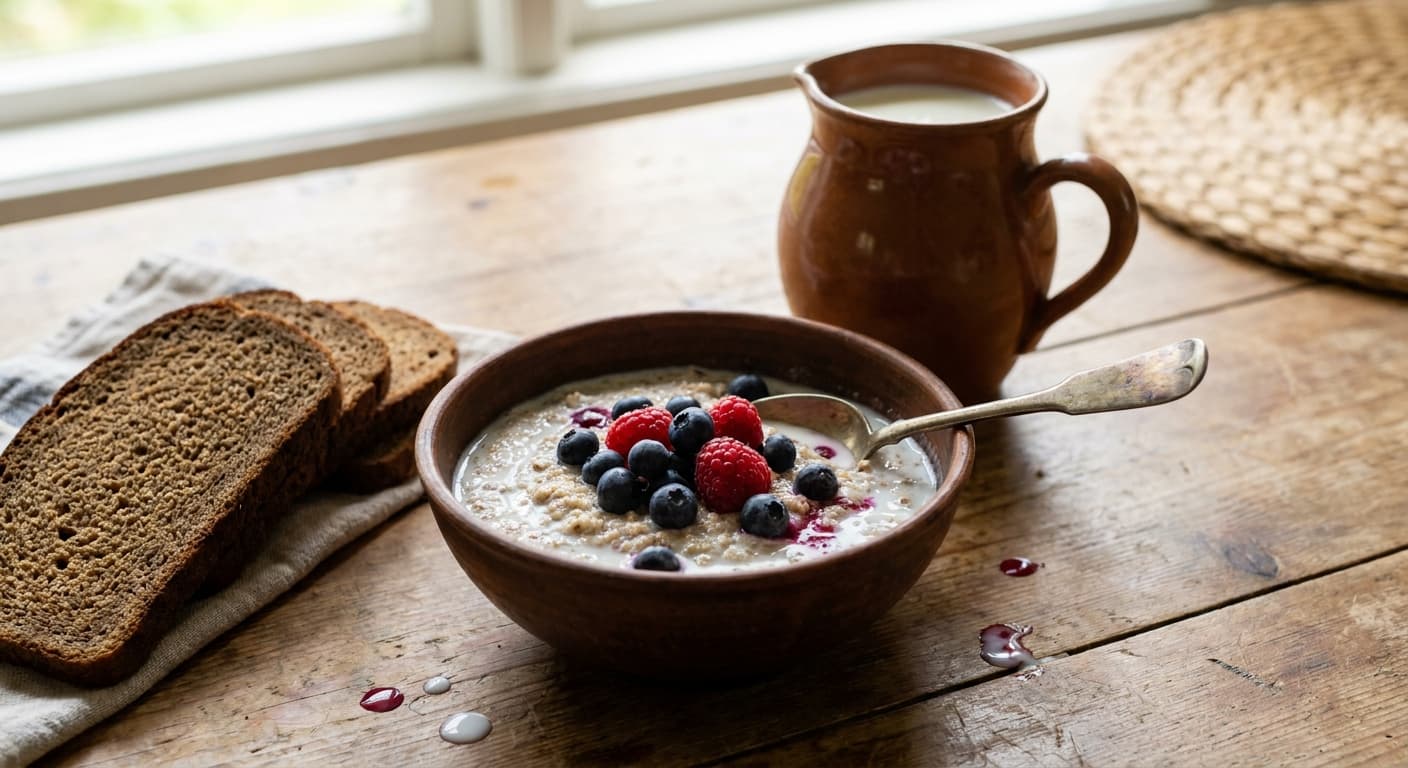
Kama is Estonia’s beloved no-cook blend of roasted grains and peas, whisked into kefir for a tangy summer drink or spoonable bowl. It sits naturally beside rye leib and, like kohuke, reflects Estonia’s affection for dairy snacks.
Printable Recipe Card
Servings: 4 · Total: 10 min · Difficulty: easy
Ingredients (quick list)
- 80 g kama flour (traditional roasted barley, rye, oat, and pea blend)
- 680 ml whole-milk kefir (chilled, divided)
- 200 g plain whole-milk yogurt (chilled)
- 42 g honey
- 1.5 g fine sea salt
- 160 g wild blueberries (fresh or thawed)
Steps (summary)
- Chill the kefir, yogurt, and serving bowls for at least 30 minutes before mixing. Kama is at its best when cold, because the ro…
- Place the kama flour in a medium mixing bowl and break up any compacted lumps with a whisk. The flour is already roasted, so do…
- Pour 600 ml of the chilled kefir into the bowl, then add the yogurt, honey, and fine sea salt. Whisk for 60 seconds, scraping t…
- Let the mixture stand for 5 minutes so the roasted grains hydrate and the texture becomes smooth. For a drinkable Estonian summ…
- Divide the kama among 4 chilled bowls or glasses and top each serving with 40 g wild blueberries. Serve immediately with rye le…
Cultural Background
As Silvia Soide records in Estonian Cuisine, kama belongs to the everyday repertoire of Estonian home cooking. Its roasted grain-and-pea flour made a nourishing, quick meal when mixed with sour milk, kefir, or yogurt.
Equipment
💡 Tips
- Use fresh kama flour with a nutty, toasted smell; stale kama tastes flat and slightly dusty.
- Whisk the flour into cold dairy rather than warm dairy, because warmth dulls the clean sour flavor of kefir.
- For a smoother drink, rest the mixed kama for exactly 5 minutes and whisk again for 15 seconds before serving.
⚠️ Common Mistakes
❌ Adding too much kama flour at once creates dry lumps that are hard to dissolve.
✅ Fix: Start with the measured 80 g flour and whisk it thoroughly into 600 ml kefir before adjusting the final texture.
❌ Serving kama warm makes the dairy taste heavy and the grain flavor muddy.
✅ Fix: Chill the kefir, yogurt, and bowls before mixing, then serve the kama immediately after its 5-minute rest.
❌ Using sweetened flavored yogurt overwhelms the roasted grain flavor.
✅ Fix: Use plain whole-milk yogurt and add the measured 42 g honey so the sweetness stays balanced.
🧊 How to Store
Store mixed kama in an airtight container in the refrigerator for up to 24 hours. It will thicken as it stands; before serving, whisk in 30 ml chilled kefir per serving to restore a drinkable texture.
📅 Make Ahead
Measure the kama flour, honey, and salt up to 1 day ahead, and keep the dairy chilled. Mix the drink only 5 to 10 minutes before serving so it stays fresh and does not become overly thick.
🍽️ Pairs Well With
- Rye leib
- fresh strawberries
- lingonberry preserves
- black coffee
- cold milk.
Regional Variations
- In many Estonian homes, kama is mixed only with kefir or hapupiim for a thinner, sharper drink.
- A spoonable dessert version uses more yogurt and is topped with berries gathered in summer.
- Some families sweeten kama with granulated sugar rather than honey for a plainer farmhouse flavor.
Ingredients
- 80 gkama flour (traditional roasted barley, rye, oat, and pea blend)
- 680 mlwhole-milk kefir (chilled, divided)
- 200 gplain whole-milk yogurt (chilled)
- 42 ghoney
- 1.5 gfine sea salt
- 160 gwild blueberries (fresh or thawed)
🔄 Substitutions
- whole-milk kefir→ cultured buttermilk
- honey→ 24 g granulated sugar
- kama flour→ 20 g toasted rye flour, 20 g toasted barley flour, 20 g toasted oat flour, and 20 g roasted pea flour
Instructions
- 1
Chill the kefir, yogurt, and serving bowls for at least 30 minutes before mixing. Kama is at its best when cold, because the roasted grain aroma stays clean and the cultured dairy tastes bright rather than heavy.
- 2
Place the kama flour in a medium mixing bowl and break up any compacted lumps with a whisk. The flour is already roasted, so do not toast or cook it again, as extra heat can make the pea and rye notes taste harsh.
- 3
Pour 600 ml of the chilled kefir into the bowl, then add the yogurt, honey, and fine sea salt. Whisk for 60 seconds, scraping the sides of the bowl, until the kama is evenly suspended and the mixture looks lightly speckled.
- 4
Let the mixture stand for 5 minutes so the roasted grains hydrate and the texture becomes smooth. For a drinkable Estonian summer-style kama, whisk in the remaining 80 ml chilled kefir; for a thicker spoon dessert, leave it as it is.
- 5
Divide the kama among 4 chilled bowls or glasses and top each serving with 40 g wild blueberries. Serve immediately with rye leib on the side if desired, because the drink continues to thicken as the flour absorbs liquid.
🪪 Recipe Passport
Cultural Background
As Silvia Soide records in Estonian Cuisine, kama belongs to the everyday repertoire of Estonian home cooking. Its roasted grain-and-pea flour made a nourishing, quick meal when mixed with sour milk, kefir, or yogurt.
Regional Variations
Researched from multiple sources and validated by the Zaffaron editorial team. Every recipe is tested for accuracy, measurements, and cultural authenticity.
📚 Sources & Cultural References
- Silvia Soide — Estonian Cuisine — (1988)
Sources cited by the Zaffaron editorial team during recipe research. Cultural and culinary references supporting authenticity claims.
Nutrition per serving
Pairs well with
If you enjoyed this recipe, here are a few related Zaffaron recipes to try next.
Does your family make this differently?
Every family has their own version. Maybe your grandmother adds a secret ingredient, or your aunt has a completely different technique. Preserve your family's version — with their name on it, forever.
You Might Also Like
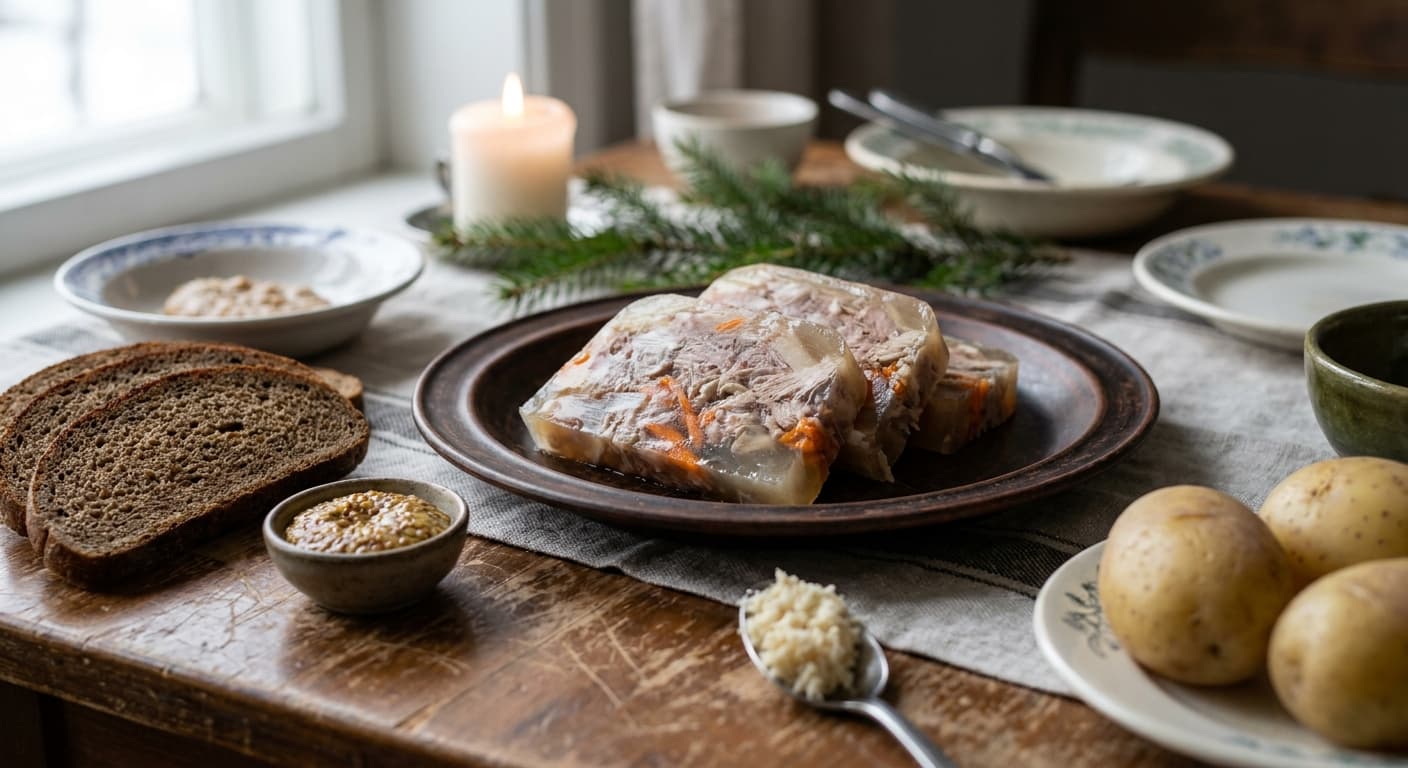
Estonian Jellied Pork (Sült) — Clear Pork Aspic with Garlic and Bay
Estonian · Appetizers · 245 min
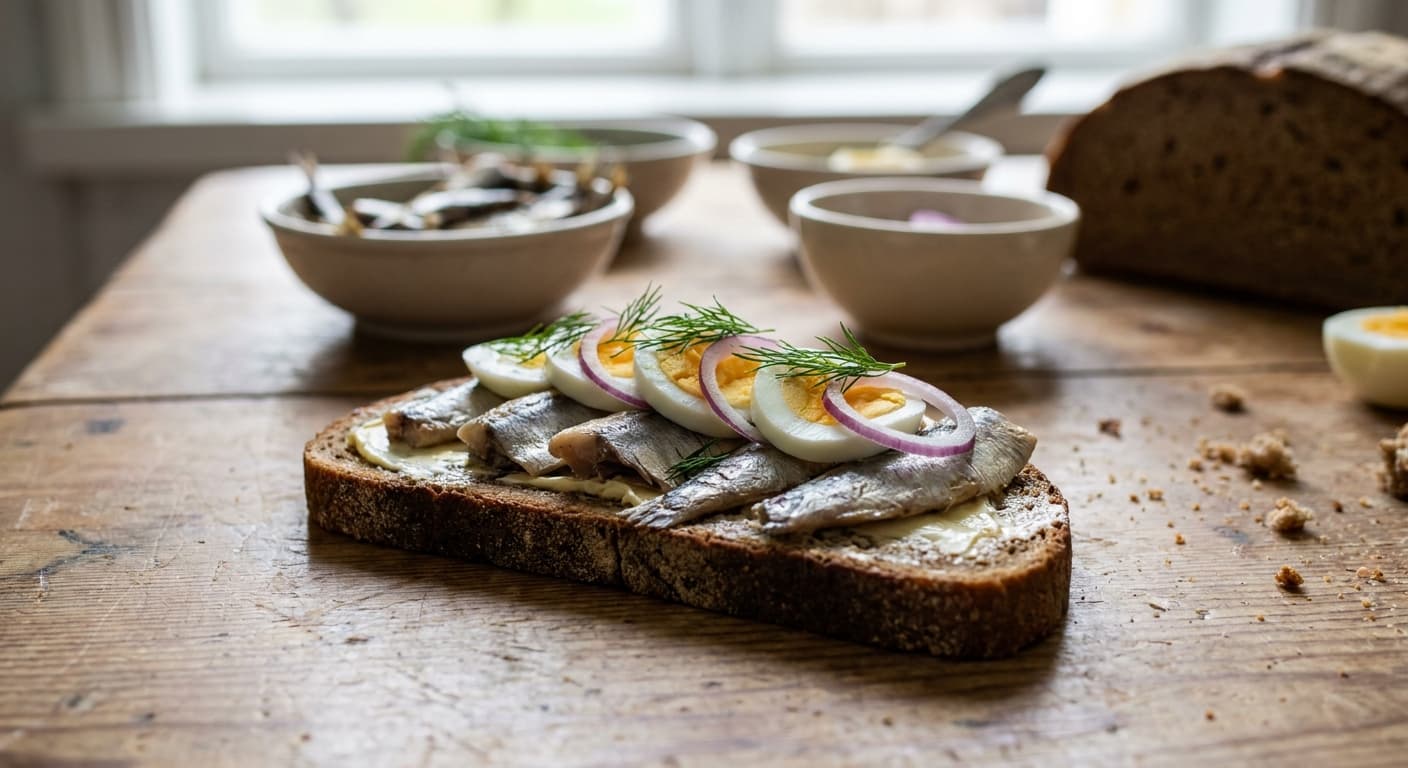
Sprat Sandwich (Kiluvõileib) — Estonian Rye and Baltic Sprat Open-Face
Estonian · Appetizers · 25 min
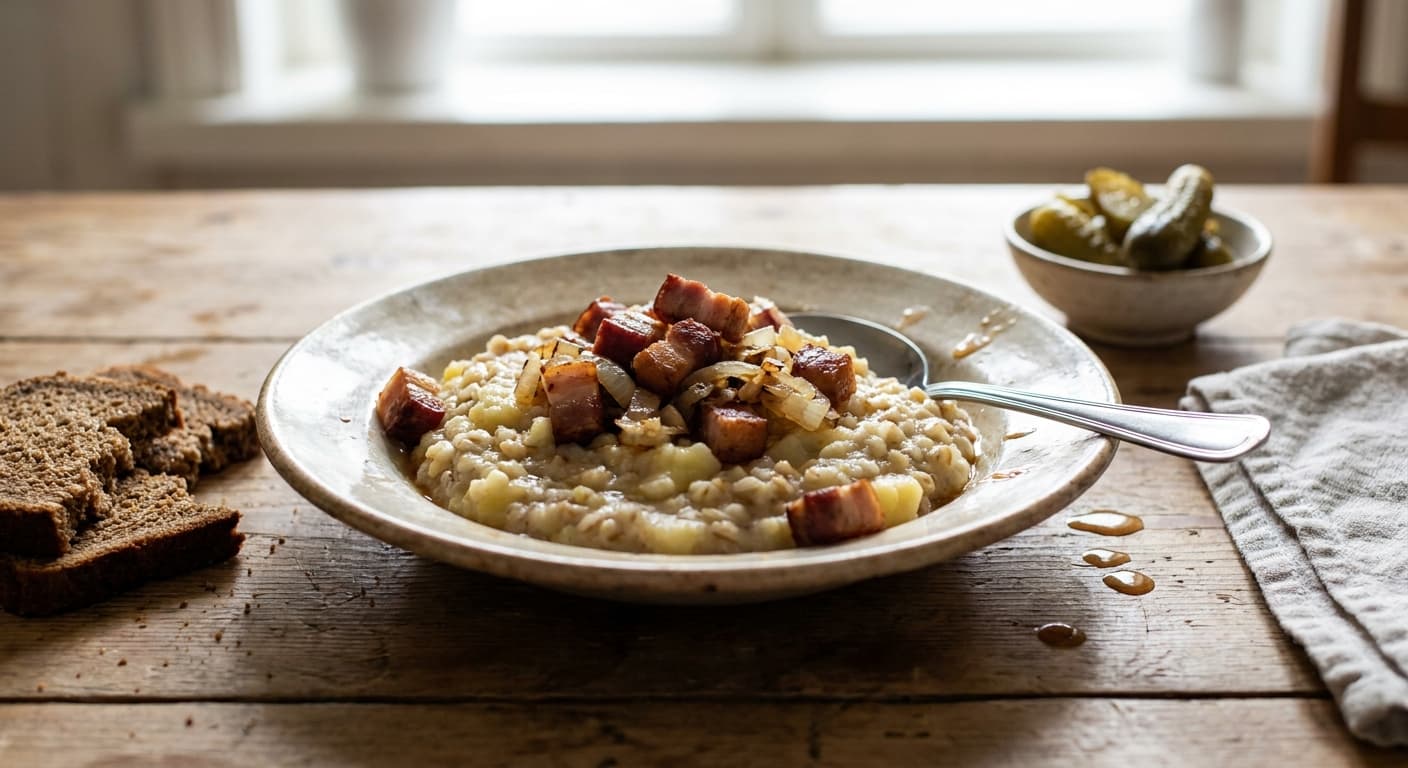
Estonian Barley-Potato Mash (Mulgipuder) — Rustic Mulgimaa Comfort Food
Estonian · Main Courses · 70 min
Salgam (Şalgam) — Spicy Sour Fermented Purple Carrot Drink
Turkish · Drinks · 35 min
Jellab (جلاب) — Moroccan Date-Raisin Drink with Pine Nuts
Moroccan · Drinks · 30 min
Finnish Fish-Rye Pie (Kalakukko) — Savonian Rye Loaf with Vendace and Pork
Finnish · Main Courses · 405 min
Lithuanian Cepelinai (Cepelinai) — Potato Dumplings with Pork and Sour Cream Sauce
Lithuanian · Main Courses · 115 min
Cornbread (Cornbread) — Classic Cast-Iron American Quick Bread
American · Breads · 40 min
Reviews
Cooked this recipe?
Tap the stars to rate it — that's all it takes. A few words are welcome but optional.
No ratings yet. Cooked this one? Be the first to rate it — it takes one tap.