Norwegian Fish Balls (Fiskeboller) — Tender whitefish dumplings in curry cream sauce
Fiskeboller are classic Norwegian fish balls made from finely worked whitefish, milk, and starch. They are often served in a mild white sauce with curry powder, boiled potatoes, and carrots for a comforting family meal.
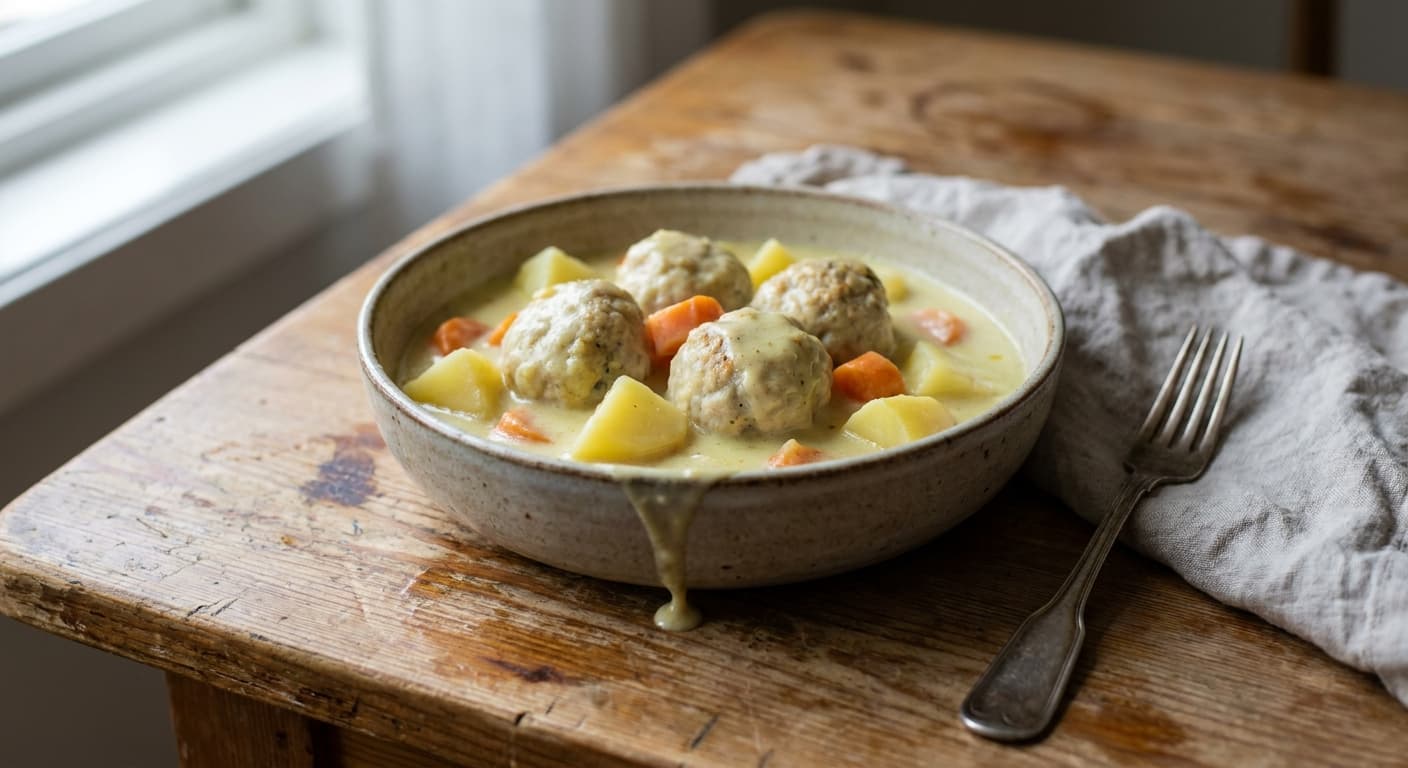
Printable Recipe Card
Servings: 4 · Total: 70 min · Difficulty: medium
Ingredients (quick list)
- 600 g skinless boneless cod or haddock fillets (very cold, cut into 3 cm pieces)
- 12 g fine sea salt
- 0.5 tsp white pepper
- 0.25 tsp ground nutmeg
- 35 g potato starch
- 2 egg whites
- 300 ml whole milk (ice cold)
- 100 ml heavy cream (ice cold)
- 1.5 l water
- 40 g unsalted butter
- 35 g all-purpose flour
- 300 ml reserved fish poaching liquor
+ 4 more in the full ingredients section below.
Steps (summary)
- Chill the fish, milk, cream, egg whites, processor bowl, and blade for at least 20 minutes before mixing. A cold mixture is ess…
- Put the cold fish pieces and 12 g salt in the food processor and pulse until the fish becomes sticky and finely chopped. Scrape…
- Add the white pepper, nutmeg, potato starch, and egg whites, then process until the mixture looks smooth and elastic. With the…
- Cook a small 15 g test spoonful in barely simmering water for 3 minutes to check the texture and seasoning. If it is too firm,…
- Bring 1.5 l water and 10 g salt to a gentle simmer in a wide pot, then reduce the heat so the liquid trembles but does not boil…
- Poach the fiskeboller for 8 to 10 minutes, turning them once after they float to the surface. Lift them out with a slotted spoo…
+ 4 more steps in the full instructions section below.
Cultural Background
Fiskeboller reflect Norway's long reliance on whitefish and dairy cookery. Sold canned and made at home, they became a practical weekday dish, especially with potatoes, carrots, and a mild curry-scented white sauce.
Equipment
💡 Tips
- Keep the fish mixture very cold at every stage for the lightest texture and cleanest flavor.
- Do not let the poaching liquid boil hard, because vigorous bubbling can make the fish balls rubbery or break them apart.
- A small test dumpling is the best way to correct seasoning and texture before shaping the full batch.
⚠️ Common Mistakes
❌ Processing warm fish until the mixture turns loose.
✅ Fix: Chill the fish and liquids thoroughly, and pause to refrigerate the mixture if the bowl feels warm.
❌ Boiling the fish balls aggressively.
✅ Fix: Keep the poaching liquid at a bare simmer so the fiskeboller set gently and stay tender.
❌ Adding all the liquid to the roux at once.
✅ Fix: Whisk in the milk and poaching liquor gradually to prevent lumps and maintain a smooth sauce.
🧊 How to Store
Store cooled fiskeboller and sauce together in an airtight container for up to 2 days in the refrigerator. Reheat gently over low heat with 30 to 60 ml milk, stirring carefully so the sauce stays smooth and the fish balls do not toughen.
📅 Make Ahead
The fish farce can be mixed and chilled for up to 4 hours before poaching. The fish balls can also be poached 1 day ahead, then reheated gently in freshly made sauce.
🍽️ Pairs Well With
- Boiled potatoes
- steamed carrots
- cucumber salad
- lingonberry jam
- flatbrød.
Regional Variations
- In many Norwegian homes, fiskeboller are served with plain white sauce seasoned only with nutmeg and white pepper.
- Coastal versions may use a mixture of haddock, cod, saithe, or pollock depending on the local catch.
- Some family tables add crisp bacon, peeled shrimp, or peas to the sauce for a richer Sunday-style meal.
Ingredients
- 600 gskinless boneless cod or haddock fillets (very cold, cut into 3 cm pieces)
- 12 gfine sea salt
- 0.5 tspwhite pepper
- 0.25 tspground nutmeg
- 35 gpotato starch
- 2egg whites
- 300 mlwhole milk (ice cold)
- 100 mlheavy cream (ice cold)
- 1.5 lwater
- 40 gunsalted butter
- 35 gall-purpose flour
- 300 mlreserved fish poaching liquor
- 2 tspmild curry powder
- 800 gwaxy potatoes (peeled or scrubbed)
- 400 gcarrots (peeled and cut into batons)
- 6 sprigflat-leaf parsley (finely chopped)
🔄 Substitutions
- cod or haddock→ pollock or saithe
- potato starch→ cornstarch
- mild curry powder→ 0.25 tsp ground nutmeg plus 0.25 tsp white pepper
Instructions
- 1
Chill the fish, milk, cream, egg whites, processor bowl, and blade for at least 20 minutes before mixing. A cold mixture is essential because fiskeboller depend on a smooth fish emulsion that can split if it warms.
- 2
Put the cold fish pieces and 12 g salt in the food processor and pulse until the fish becomes sticky and finely chopped. Scrape down the bowl twice so the salt is evenly worked through the fish protein.
- 3
Add the white pepper, nutmeg, potato starch, and egg whites, then process until the mixture looks smooth and elastic. With the machine running, pour in the cold milk in a thin stream, followed by the cold cream, and stop as soon as the farce is glossy and spoonable.
- 4
Cook a small 15 g test spoonful in barely simmering water for 3 minutes to check the texture and seasoning. If it is too firm, beat in 30 ml more cold milk; if it is too loose, chill the mixture for 10 minutes before shaping.
- 5
Bring 1.5 l water and 10 g salt to a gentle simmer in a wide pot, then reduce the heat so the liquid trembles but does not boil hard. Shape the fish mixture into 16 oval balls using two wet tablespoons, dropping each one carefully into the poaching liquid.
- 6
Poach the fiskeboller for 8 to 10 minutes, turning them once after they float to the surface. Lift them out with a slotted spoon and keep them warm in a covered dish while reserving 300 ml of the poaching liquor for the sauce.
- 7
Boil the potatoes in salted water for 18 to 22 minutes, depending on size, until a knife slides through easily. Steam or boil the carrots for 6 to 8 minutes until tender but still bright and lightly firm.
- 8
Melt the butter in a saucepan over medium heat and whisk in the flour to make a pale roux. Cook for 2 minutes while whisking constantly so the flour loses its raw taste without browning.
- 9
Whisk in the milk gradually, then add the reserved poaching liquor in several additions to keep the sauce smooth. Stir in the curry powder, 3 g salt, and white pepper, then simmer for 5 minutes until the sauce lightly coats the back of a spoon.
- 10
Return the fiskeboller to the sauce and warm them gently for 3 to 4 minutes without boiling. Serve them with boiled potatoes and carrots, spoon extra sauce over the top, and finish with chopped parsley.
🪪 Recipe Passport
Cultural Background
Fiskeboller reflect Norway's long reliance on whitefish and dairy cookery. Sold canned and made at home, they became a practical weekday dish, especially with potatoes, carrots, and a mild curry-scented white sauce.
Regional Variations
Researched from multiple sources and validated by the Zaffaron editorial team. Every recipe is tested for accuracy, measurements, and cultural authenticity.
📚 Sources & Cultural References
- Magnus Nilsson — The Nordic Cookbook — (2015)
Sources cited by the Zaffaron editorial team during recipe research. Cultural and culinary references supporting authenticity claims.
Nutrition per serving
Pairs well with
If you enjoyed this recipe, here are a few related Zaffaron recipes to try next.
Does your family make this differently?
Every family has their own version. Maybe your grandmother adds a secret ingredient, or your aunt has a completely different technique. Preserve your family's version — with their name on it, forever.
You Might Also Like
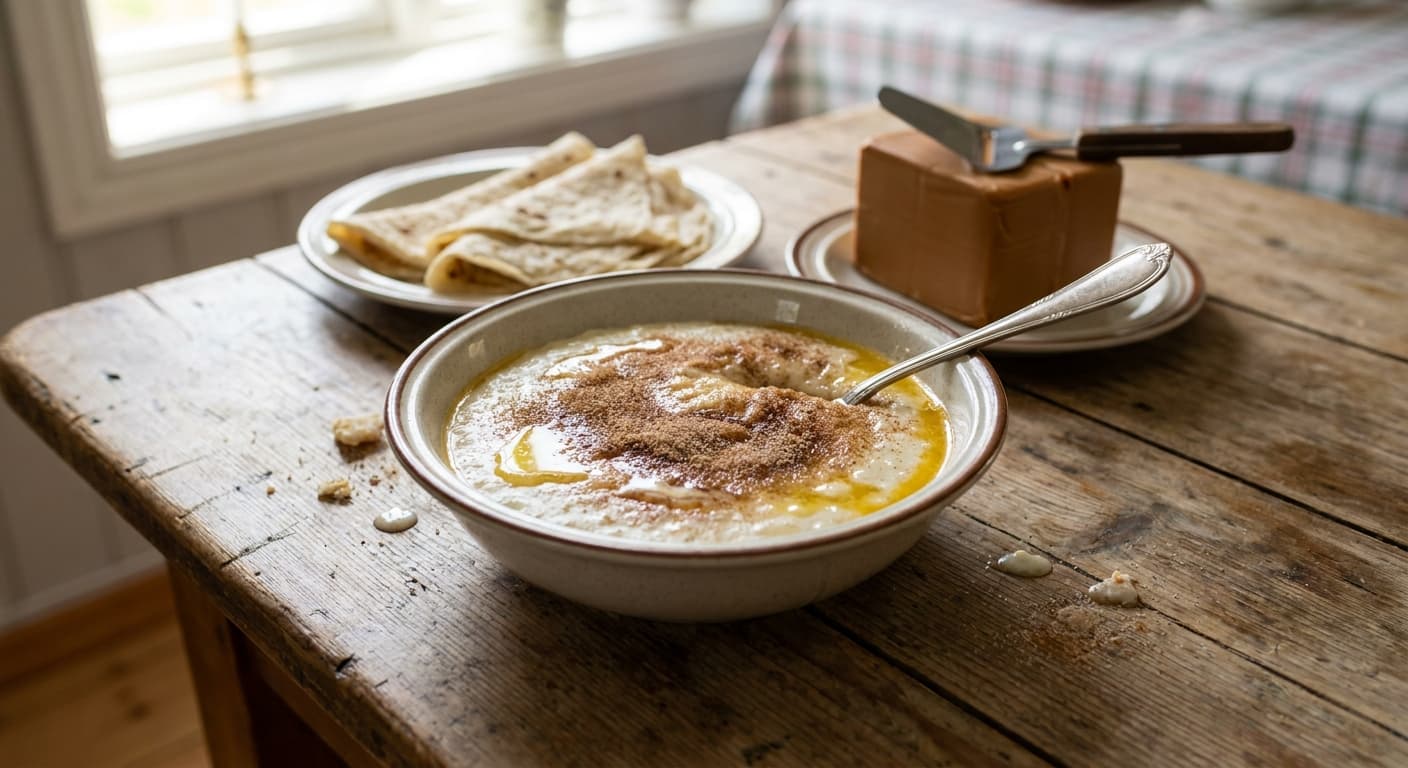
Norwegian Sour Cream Porridge (Rømmegrøt) — Festive Dairy Porridge with Cinnamon Sugar
Norwegian · Side Dishes · 35 min
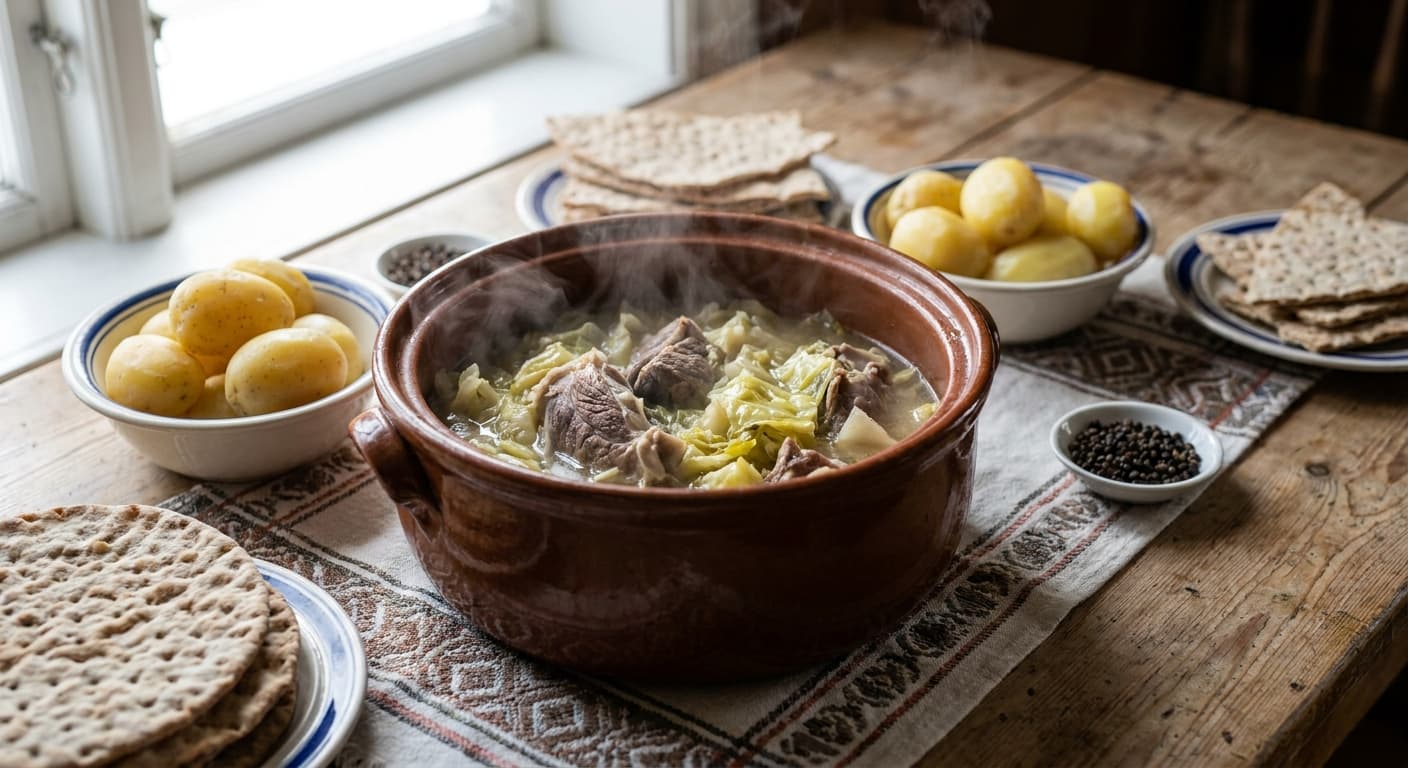
Norwegian Lamb and Cabbage Stew (Fårikål) — Peppery Autumn National Dish
Norwegian · Stews · 170 min
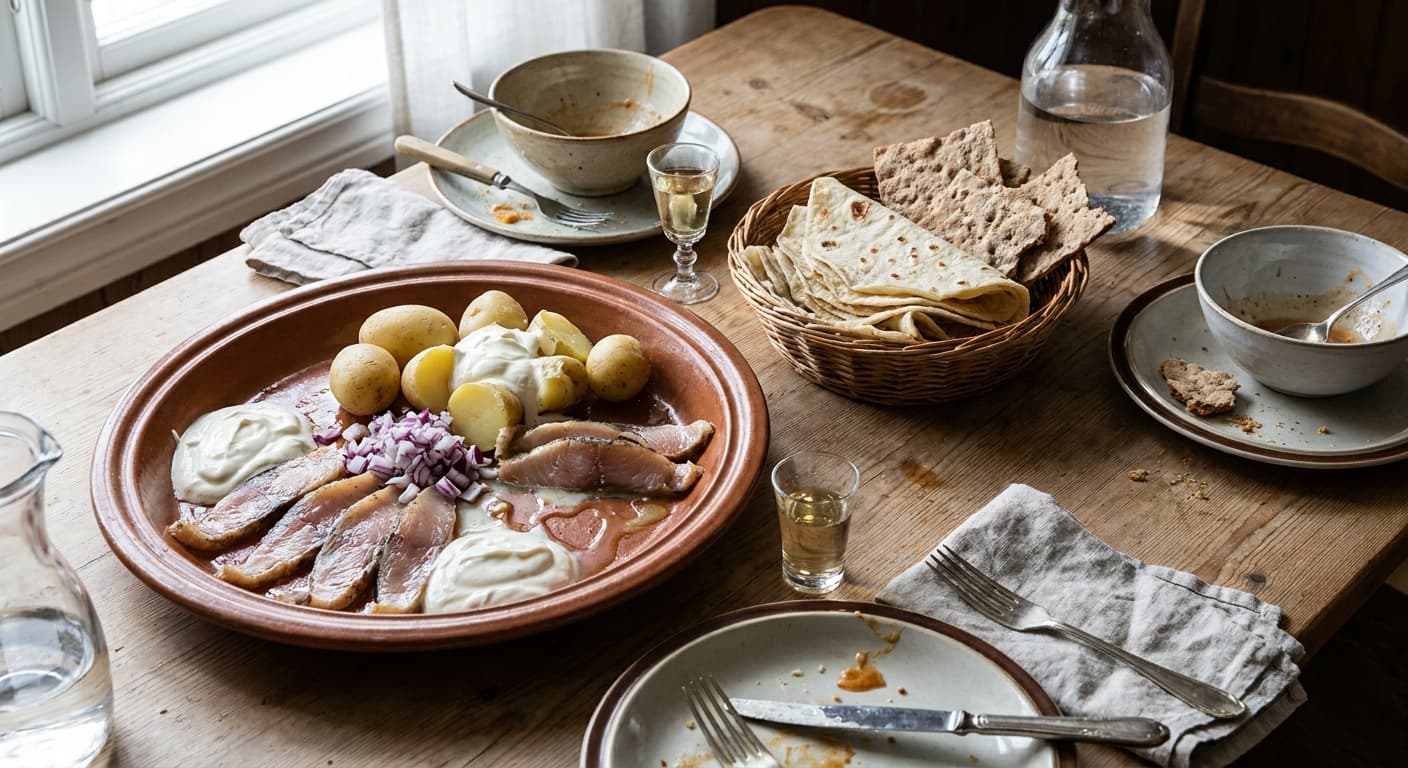
Rakfisk (Rakfisk) — Norwegian Fermented Trout with Lefse and Potatoes
Norwegian · Main Courses · 45 min
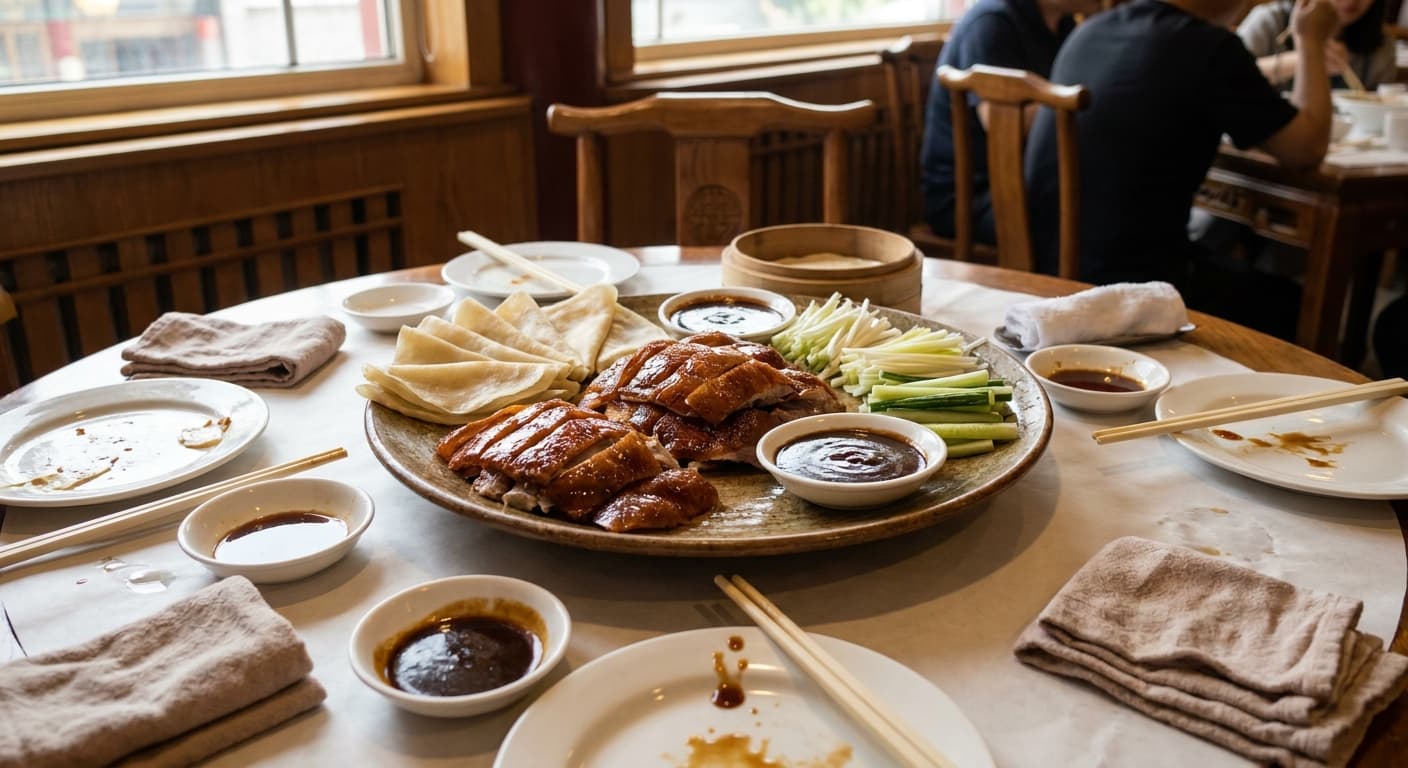
Peking Duck (北京烤鸭) — Crisp-Skinned Beijing Roast Duck
Chinese · Main Courses · 180 min
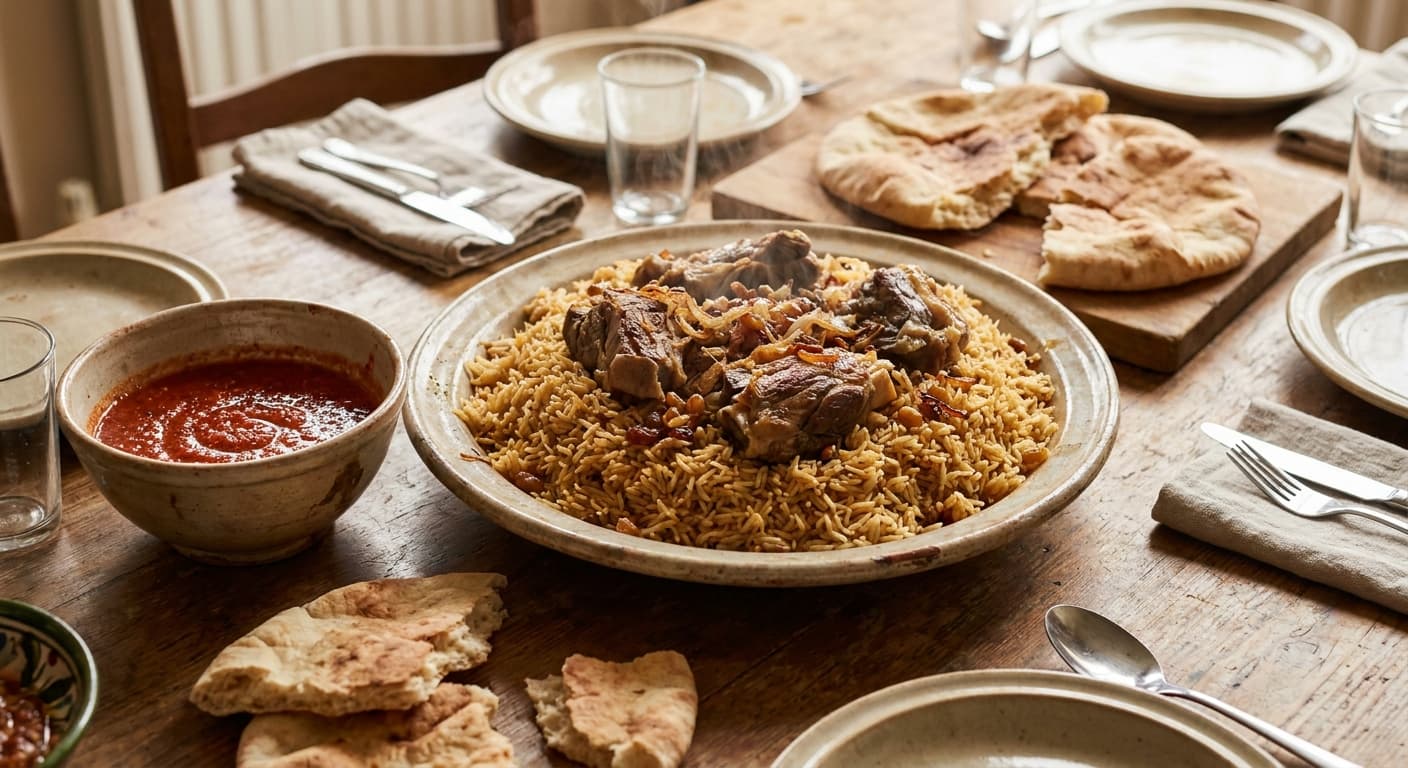
Yemeni Mandi (مندي) — Smoke-Scented Spiced Rice and Lamb
Yemeni · Main Courses · 170 min
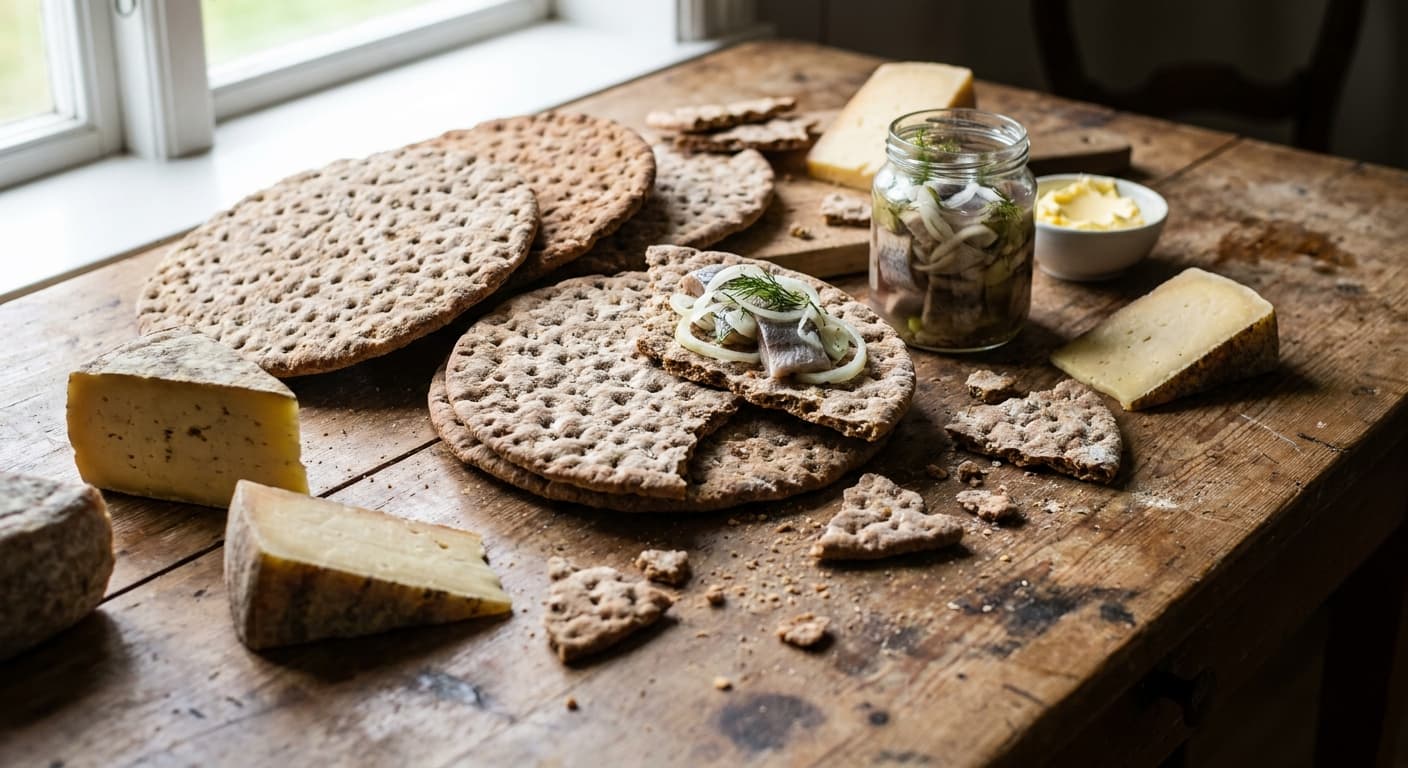
Swedish Crispbread (Knäckebröd) — Thin Rye Crackers for Smörgåsbord
Swedish · Breads · 105 min
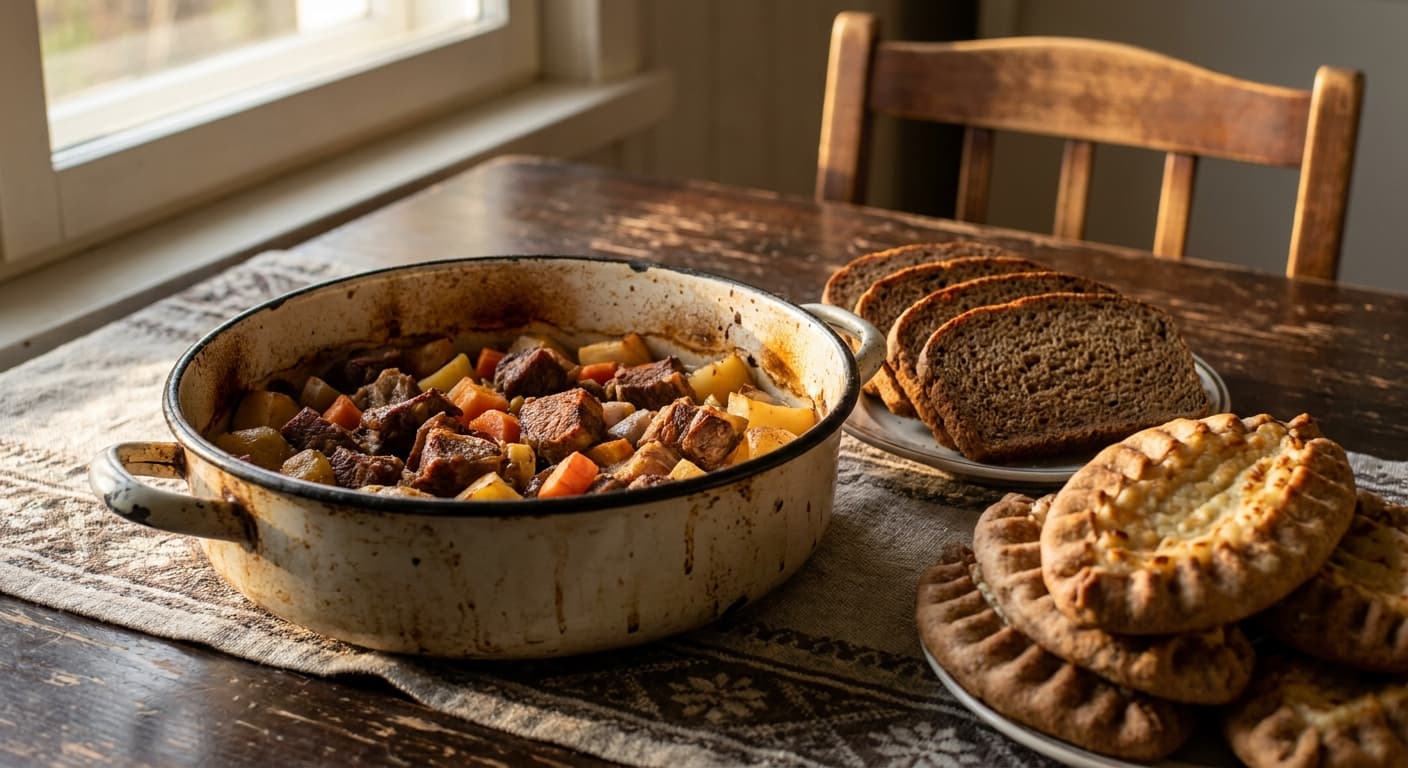
Karelian Hot Pot (Karjalanpaisti) — Finnish Oven-Braised Meat Stew
Finnish · Stews · 230 min
Lutefisk (lutefisk) — Lye-Cured Cod with Potatoes and Pea Stew
Norwegian · Main Courses · 90 min
Reviews
Cooked this recipe?
Tap the stars to rate it — that's all it takes. A few words are welcome but optional.
No ratings yet. Cooked this one? Be the first to rate it — it takes one tap.